I have a writer’s group. It’s not my group per se, but when a fellow blogger started a meetup group I couldn’t resist. It’s not strictly a critique group, though. It’s more a safe and fun place to talk about all things writing.
I’ve been to two meetings and have made some good friends and potential future collaborators.
At our previous meeting, they decided I might as well share the first couple of pages of a feature screenplay. I was psyched because there were a few points I’d like different opinions on. So I gave my elevator pitch and talked about my first 2 scenes, but I couldn’t get any further than that.
A fellow screenwriter didn’t like (or more like didn’t approve of) the transition between two scenes. He was adamant it had to be more obvious than what I had presented. I was adamant the transition was obvious enough.
We didn’t argue, mind you. It was a friendly, polite yet stubborn discussion. It looked like I wasn’t receptive to the feedback. And I wasn’t. Here’ why:
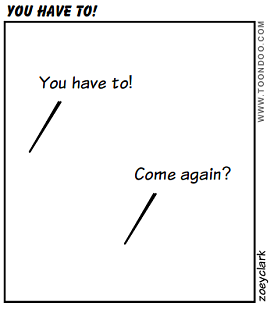
He kept saying “You have to….”.
I didn’t have to do anything. I’d thought about his suggestion before, and I had decided against it. I still was partially considering a similar approach, but I kept saying no.
I really couldn’t see the value of his advice objectively, because when you start any of your feedback sentences with “you have to”, chances are you won’t persuade anyone, unless you’re a studio executive holding my contract, and what you’re suggesting is highly radical and unacceptable.
So in the spirit of giving and receiving feedback more effectively, here are a few sincere pointers from this writer:
- Keep in mind it’s *all subjective. (More details are below.)
- Don’t start your suggestions with “you have to”, no matter.
* There are few things in writing that’s set in stone. For instance, whether it’s a novel or a screenplay, there’s certain formatting rules you need to abide by. So if your writer friend or mentee has the formatting wrong, by all means, tell him what he has to do. But any artistic choice that has nothing to do with formatting or expected length (don’t turn over a screenplay that is 300 pages) is just that: a choice.
- Keep it friendly and polite, and even if you hate it.
“That sucks” is not constructive, and not the slightest bit creative. Where’s the writer in you?
*
I’m not saying you have to lie or sugarcoat. But if you’re giving feedback, I’m guessing you care. So why not try to make it work?
So try these instead:
“These parts don’t work for me because….”
“I don’t like these because ………….”
You can even say you hate it, but many scripts have their redeemable/positive points, so pair the hate with the positive.
I’m not saying you can’t ever be brutal, but honestly, unless you’re given permission to be so (and possibly even then), it won’t really have the effect you’re aiming for.
This advice isn’t about being nice or cute. It’s about making sure you don’t waste your time, breath and effort.
What do you think? Is it just me, or do you also not welcome advice with open arms that start with “you have to….”?

I’ve critiqued other writers’ work before, and I also recently was a beta reader for the first time!
That being said, this is great advice. Feedback is a necessary part of being a writer. I actually LOVE getting feedback because it makes me better. But blatantly telling a writer what to do doesn’t help. Where’s the room for creativity?
Instead, when I give feedback, as well as what I expect from others, is that you discuss your feelings and then make suggestions.
For instance, you might say, “I didn’t feel hooked by the beginning of the story, but I started loving it when I got to chapter 2. Maybe consider starting with that scene and working the information from chapter 1 in more subtly.”
Now, I won’t say that’s the best example, but I do believe it’s a better form of constructive criticism than saying, “The beginning sucked,” or “You need to cut out chapter 1.”
Yep, me too. I love giving and receiving feedback, but do refrain from saying things like “suck, have to, terrible, etc.” I always keep in mind that most things are subjective, and that’s the fun of it.
I work with professional editors on my screenplays, and I keep going back to the ones that see both the strengths and the weaknesses.
I believe you’d be an awesome beta reader,Alicia. Let me know if you need anything beta-read or have time to beat-read some fiction. 🙂
And thanks for commenting!
Good points, and a great example.
You may have noticed how you used “I” statements in your “correct” way of doing it. These are pretty useful, as they subconsciously remind us it’s all subjective (as you rightly point out).
Another great way to offer criticism is the “sandwich” technique: first, say one thing you like, then what you don’t. Finish up with another thing you like. This makes criticism much easier to swallow (if you’ll pardon the terrible pun) 🙂
Great tip, Nicholas. The pun works. 🙂 Thanks for commenting. I thought it was time to mention it. A lot of people tend to forget how it’s all meant to be subjective.