Addicted to Writing

Manage Your Freelance Writing Career While Writing What You Love

  • About Pinar Tarhan
  • Blog
  • Books
  • Hire Me: Services
  • Contact Me
  • Portfolio
  • Favorite Resources
  • Newsletter

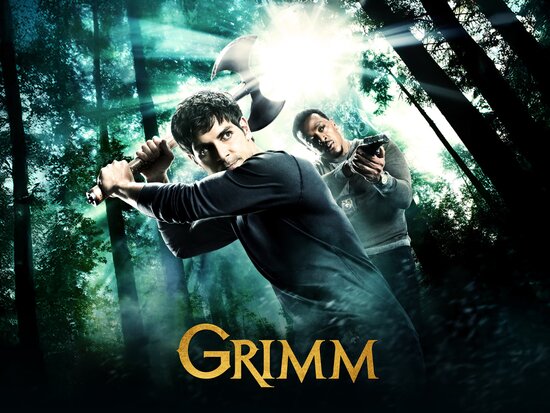
Why the Enemies-to-Lovers Romance in Grimm Works So Well

Posted on April 18, 2026 Written by Pinar Tarhan Leave a Comment

Enemies-to-lovers is one of the hardest romance tropes to pull off well.

Yet Grimm does exactly that. Over six seasons, it transforms one of its most antagonistic dynamics into a surprisingly grounded, emotional, and believable love story.

Even more impressively, it does this while juggling crime procedural plots, supernatural worldbuilding, and multiple romantic arcs.

So what makes this enemies-to-lovers storyline work so well?

Let’s break it down:

What Is Grimm About? (Quick Overview)

At 29, Nick’s shocked to discover he’s a Grimm, hunter of diverse supernatural creatures named Wesen, and that there’s an entire supernatural world out there. At this point in his life, he’s happy: He loves working with his best friend/partner detective (Hank), and he adores his live-in girlfriend Juliette.

Grimms can see “Wesen” when they go through intense emotions. Since regular people can only see them if the Wesen chooses, most people don’t know Wesen or Grimms exist.

As Nick struggles with his new identity and the mountain of new information he needs to digest, his secret puts a strain on all his relationships. Moreover, unbeknownst to him, his boss Captain Renard knows his secret, and he just might be one of his biggest enemies.

A new case leads Nick to a not-so-fun first interaction with Monroe (Blutbad) – a wolf-like Wesen. But as Monroe teaches Nick, there are good Wesen too. Soon, Nick’s relationship with Monroe turns into one of the most wholesome bromances of supernatural television.

As we solve one isolated case in each episode, we learn more about the Wesen world, Nick’s past, and who exactly Renard is.


The Romantic Dynamics in Grimm

Spoiler Warning: This post discusses major plot points from all six seasons of Grimm.

Please note that this is not meant to be a chronological, all-encompassing summary. However, I included the most pivotal moments to provide a sufficient overview of the romances. The friends-to-lovers and established couple romances are included to provide context for the enemies-to-lovers romance.

1. Nick and Juliette — The Established Relationship

Starting the show with a main character in a loving relationship is an excellent choice. We root for Nick harder, and it makes it even more devastating when things go wrong because of his destiny.

If you like men and enjoy healthy romances, Nick’s the guy you want: smart, sweet, loving, loyal, and painfully gorgeous.

We also get to see a healthy adult relationship as opposed to the angsty, star-crossed romances most supernatural stories have.

What goes wrong (1): Adalind, a witch-like Wesen called Hexenbiest.

When Nick makes her lose her powers after everything she has done to him and his loved ones, she turns into a regular woman. Adalind’s disappointed mom shows no sympathy.

Adalind still finds a way to use magic for revenge: She puts Juliette in a coma where she loses all her memory of Nick.

Eventually, Juliette regains her memory, and they resume their relationship, but not before putting both through hell. But there’s a silver lining: Shortly after getting her memories back, she learns Nick’s secret.

What goes wrong (2): Adalind.

Adalind gets pregnant with Renard’s baby, and later manages to get her powers back. But with her powers still inconsistent, and her baby under the threat of the Royals (a significant subplot), she finds herself under the protection of Kelly Burkhardt, Nick’s mom, and another powerful Grimm.

Not knowing who Adalind is, Kelly brings them to Nick for protection. Nick and Renard (an ally at this point) are both convinced that the best way to protect this child with royal blood is raising her away from everyone, including Adalind, so they devise a plot. Enraged with grief, Adalind cuts a deal with the Royals and does something horrific to take away Nick’s powers: She “becomes” Juliette through powerful magic and has sex with him.

Nick and Juliette work through this while adjusting to a life without Nick’s powers. But with so much Wesen crime, and Rosalee (a friendly Wesen) and Monroe in mortal danger because of an extremist Wesen group, they make Nick a Grimm again: Juliette uses similar magic and “turns into” Adalind temporarily and has sex with Nick. This decision comes with unforeseen side effects: Juliette slowly becomes a hexenbiest.

At first, she’s afraid to tell Nick, creating distance. When she finally tells him, she is convinced their relationship will never survive this. As she embraces her powers, she becomes a formidable enemy.

While Nick and Juliette are broken up at this point, their forever end comes when Juliette makes a deal with the Royals to lure Kelly (Nick’s mom) back to Portland. Kelly’s murdered, and Juliette tries to kill Nick.

Nick only survives as Trubel, a fellow Grimm, “kills” Juliette. Trubel and Juliette’s body are both taken from the crime scene by an unknown organization.


2. Rosalee and Monroe — Friends to Lovers

When Wesen Rosalee becomes a target, Nick asks Monroe to help keep an eye on her.

They become friends, and it slowly turns into a deep connection. After dating for a while, they move in together.

Before their wedding, they have to deal with Monroe’s parents who are against inter-species dating, but Monroe makes it clear that if they don’t accept their relationship, they will lose him forever.

After their wedding, they reckon with a Wesen hate group kidnapping Monroe.

They manage to put an end to the group, and Rosalee and Monroe get their happily (eventful) ever after.


 3. Nick and Adalind — Enemies to Lovers

 

If you’d told me this was going to happen during season 1, I wouldn’t have believed you. But the writers made it organic and lovely.

After Adalind, disguised as Juliette, sleeps with Nick, she becomes pregnant. She realizes that her only means of survival is Nick’s protection against Juliette, a furious and powerful hexenbiest hellbent on killing her.

Nick chooses to protect his child. In an effort to “fix” Julitte, Adalind helps the group out, even testing the hexenbiest “suppressor” – a potion that will suppress her powers – on herself to make sure it will work. This marks the start of Adalind being helpful and trustworthy.

Juliette turns it down and almost makes Nick kill Monroe using her powers, burning all her bridges in one go.

Adalind gives birth and names the baby boy Kelly after Nick’s mom, as she was the one who kept Adalind and her baby alive.

She also asks Nick to raise the baby together, and she moves in with him. He sells the house and moves them to a safer warehouse-type loft.

Unable to sleep due to nerves, Adalind asks Nick to sleep beside her since she will sleep better knowing he will kill anyone wanting to hurt them or their baby. Nick agrees. (Which also gives us the one-bed trope).

Living together, raising a child together, and seeing Adalind be a good mom/friend/roommate brings them closer together. Adalind has changed for the better: She sincerely apologizes for what she has done to Nick and Juliet, and says she wishes she could take it all back. Nick corrects her by saying except for their son, and she agrees. They kiss, but afterwards they agree that it might be too complicated.

(Side note: I should briefly mention that at this point Juliette is alive and working for an organization that deals with bad Wesen – the group Trubel is also with. Her evil tendencies are broken down. She’s powerful, but doesn’t feel. She calls herself Eve. Meeting Eve and getting used to her is an adjustment.)

Nick and Monroe need to go to Germany to find what Nick’s ancestors buried centuries ago. Before Nick leaves, Adalind tells Nick she’s worried and she loves him. They make love for the first time. They are both surprised by how much their relationship has changed.

Meanwhile, there are still some secrets between them. Adalind’s powers are slowly coming back, but she’s afraid to tell Nick. Renard calls her, asking to meet up.

With Nick’s support, Adalind returns to work at her old law firm where they know what she is.

When the city’s mayoral candidate, who Renard publicly supported, is murdered, the candidate’s campaign team asks Renard to replace him. As a zauberbiest (male hexenbiest) who loves power, he accepts.

To guarantee victory, they want Renard to have a family, so they threaten Adalind with Nick and Kelly. To protect them and reunite with her daughter Diana (her child with Renard), she goes to live with Renard. She leaves a note for Nick explaining why, and it takes all his friends and his willpower to stop Nick from violently confronting Renard.

But he still has to work for Renard. And after he wins the election, Nick confronts him. Renard has him arrested. When Wesen cops take over, Nick’s life is put in danger. With the help of Wu (another cop/friend in the know) and Hank, he manages to escape, but he has to remain on the run.

When he gets the chance, he reunites with Adalind. However, the Zauberbiest in charge of this new order, Bonapart, is more powerful than her. She misses Nick and their family. Nick tells Adalind to hold on a little longer. (Luckily, Diana gets her father to kill Bonapart using her powers.)

Nick finally beats Renard for good: He uses the spell Adalind used to replace Juliet. He “becomes” Renard and resigns on camera before he officially takes office. Renard agrees to reinstate Nick and lets Adalind and the kids go.

Nick and his friends return to work, though they still work for Renard.

Adalind and Nick’s relationship is stronger this time, as there are no more secrets.

Nearing the series finale, Nick and Eve cross over to the other world to battle a devil-like creature seeking Diana to make her his child bride. Inadvertently, they bring him back to this world, so a protective spell’s placed on Diana.

Nick takes Adalind, Renard, and the kids to a remote place the creature won’t be able to find. Before he leaves, Nick tells Adalind that he loves her. She tells him that she loves him too.

Nick eventually wins after what seems like an all-is-lost forever moment and reunites with his loved ones.

20 years later, Nick and Adalind are still together, and Diana and Kelly are keeping up the family legacy with them.


Why Nick and Adalind’s Enemies-to-Lovers Arc Works

If you’re a romance writer or trope lover, you might want to bookmark this for later.

 1. Supernatural Stories Allow Moral Flexibility

Supernatural stories have a better shot at making enemies-to-lovers work, precisely because our morals are more flexible while reading and watching such genres.

Take me, for instance. I’m all for healthy relationships where couples haven’t stabbed each other in the back prior to getting together. But this is also the type of story where we don’t care if a centuries-old being falls in love with a teenage/young adult human, readers love a bad “boy” character with a serial killer past (hello Stefan from TVD!) or even a psychotic present (hello, *Damon from TVD!).

Compared to many other supernatural show characters, what Adalind did is relatively mild and forgivable, especially since she changed, took accountability, and made up for it with her later behavior. There were also many mitigating circumstances.,

 2. Adalind’s Actions Are Contextualized, Not Excused


  • When she slept with Nick as Juliette, she didn’t know she was going to be pregnant, just like she didn’t know Juliette would turn into a hexenbiest.
  • How Juliette handled being a hexenbiest wasn’t on her.
  • She didn’t have a loving childhood or anyone who loved her unconditionally. Both Renard and her mom used her, and then they discarded her.
  • Nick’s mom saving her was kindness she’d never experienced before. And we do feel for her when her daughter Diana’s taken away. While Nick and Renard meant well, there was no way she was going to take it sitting down while postpartum and not knowing where her kid was.
  • As much as she tried to kill Nick and Hank while she was a hexenbiest, that came from Renard, who she was romantically involved with earlier in her life.
  • She never set a trap for Nick’s mom. Juliette felt bad when she found out what happened to Kelly, but that didn’t stop her from trying to kill Nick.


 3. Compatibility Matters

Attraction is great, but making a committed relationship work takes compatibility.

Before Nick was a Grimm, Juliette and Nick were right for each other.

But having to constantly keep secrets from each other doesn’t make a healthy relationship. She didn’t take it well when Nick tried to tell her either.

Adalind is a supernatural. They have a kid together. She is powerful, and the final time she became a hexenbiest, she carried her love for her family with her. There were no evil side effects that came with her powers.

The enemies-to-lovers trope was expertly helped by one-bed, close proximity, and surprise pregnancy tropes.

4. The Relationship Evolved Through Close Proximity

Former enemies turned to coparents first. Then their peaceful coparenting was helped by:

  • Close proximity (by living together)
  • One-bed

And let’s not forget the trope that started it all:

  • Surprise pregnancy


 5. Nick’s Perspective Shifts Gradually

Nick doesn’t just wake up one day and find himself inexplicably drawn to Adalind. He sees her change and be consistent in the change day after day.


 Final Thoughts on Grimm’s Enemies-to-Lovers Romance

This enemies-to-lovers arc is earned because the writers took their time and didn’t “forget” or ignore anything in the past. This main trope was supported by several other well-chosen tropes that felt natural.  These aren’t just romantic conveniences; they create repeated, unavoidable moments of vulnerability and intimacy.

From the moment they moved into the loft together, I was rooting for Adalind and Nick, and this is coming from someone who loved to hate Adalind for about 4,5 seasons.


*


How do you feel about this enemies-to-lovers storyline? Let me know in the comments. 🙂


Filed Under: Fiction Writing, Romance Tagged With: Grimm enemies to lovers, Grimm romance analysis, Grimm TV show relationships, Nick and Adalind relationship, supernatural romance tropes, why enemies to lovers works

The Allure of the Self-Aware Villain: One Villain Writing Tip to Keep in Mind

Posted on July 17, 2024 Written by Pinar Tarhan


I asked Leonardo.Ai to create the image of a typical action/thriller villain, and it looks quite good. Although the guy in the center looks more like a hero to me…:)


“All villains think they are the hero of their own story,” is a statement we hear again and again. And mostly, it’s a solid tip to keep in mind when creating your bad guy.

Most villains think they are the hero of their own story. If they thought they were the scum of the earth, it’d be hard for them to get out of the bed and chase our hero all over town.

But there is a line between thinking you are justified in (at least some of your) actions versus being completely delusional. A villain who constantly thinks he is in the right while actively harming people makes the villain look delusional.

Let me give you an example.

Suppose the villain and his girlfriend are both criminals. During a shootout with the police where they were looking to escape without killing anyone, a cop kills the girlfriend. Now, our villain is on a mission to avenge his loved one and thinks the police are the villains, even though he and his girlfriend caused this.

Still, we don’t hate him 100%. But he isn’t exactly a saint, right? And if he tries to kill the cop who killed his girlfriend, we might understand (though not condone) up to a point. But if he goes after said cop’s family and/or unrelated cops, the villain loses all sympathy and empathy from our end.

Now let’s go deeper with better examples from movies and TV series. I’ll give you two self-aware (and therefore memorable) villains, and two delusional ones.

John Wick starring Keanu Reeves, Alfie Allen, and Michael Nyqvist

Self-Aware Villain: Viggo

I love all four John Wick movies but I have the softest spot for the first one as it started the franchise. And I like the father of the villain.

In the film, John Wick (Keanu Reeves) is a retired assassin whose only joys in life are his car and the puppy his beloved late wife left him. But when Iosef (Alfie Allen), the son of his former boss Viggo (the late Michael Nyqvist, as seen in the photo above) steals his car, beats him up and kills his puppy, John is out for blood.

What gives John Wick a delightful edge over other revenge movies, in addition to what he’s avenging, is how his former boss initially reacts.

When Iosef brings the stolen car to Aurelio’s (John Leguizamo) shop, he recognizes the shop and strikes Iosef. Viggo calls him to find out why he hit his son. When Aurelio explains, Viggo hits his son too, and explains who John Wick is. Then he calls Wick and asks if bygones could be bygones.

Viggo is an unwilling villain. He is only involved because John (rightly) wants to kill his son. I mean who breaks into someone’s house, kills their puppy, beats the man severely, and steals his car? But Viggo’s son is still his son, so he sends all his men after John which leads to the death of many, many men since John’s just that lethal.

If you love action/revenge thrillers and still haven’t seen this one, don’t wait anymore.

Delusional Villain: Iosef

As I covered above, Iosef is an entitled brat. He wants John’s car and when John- who is a stranger, he decides to go full-on psycho. After all, John is just one guy and Iosef is young and he has men. Insert me laughing my butt off.

While there are stupid decisions made by Viggo, there would be no deaths and no trying to off Wick had his son not started all this.

Seven starring Brad Pitt and Morgan Freeman

Self-aware Villain: John Doe

I know that calling a serial killer self-aware is a bit weird, but if you watched Seven (aff.link), you know where I am going with this. And if you haven’t, go watch now because I’m going to spoil the whole movie.

Veteran detective Somerset (Freeman) and newbie Mills (Pitt) are after serial killer John Doe (Kevin Spacey) who chooses and kills his victims according to the seven deadly sins.  As we see one gruesome crime scene after another, we can’t help but think how delusional the killer is. After all, who is a psychotic killer to judge other people’s sins?

But as one of the movies with the most brilliant endings and twists, we realize Doe is a bit more self-aware than we thought. He kills Mills’ young pregnant wife (Gwyneth Paltrow) and delivers her head in a box to Mills. Mills, unable to control his grief-stricken rage, executes Doe. And at the end of the movie, Mills is the one handcuffed sitting at the back of a police car.

Doe knew he was going to be murdered. He wanted it. His sin was envy. He was envious of Mills’ happiness. Mills’ sin? Wrath.

I saw this movie only once when I was a teen, and I still remember it like yesterday. Great movie, but it is also scary and disgusting.

Marked Heart starring Michel Brown, Sebastián Martínez, and Ana Lucía Domínguez

Characters from left: Zacarías (the villain), Camila, Simon.

The Marked Heart is a two-season Spanish-language Netflix original series. In this soapy but highly engaging romantic thriller, we meet two couples: Zacarías (Sebastián Martínez) and Camila (Ana Lucía Domínguez); and Simon (Michel Brown) and Valeria (Margarita Muñoz). Their paths would have never crossed paths had it not been Camila’s heart condition.

When it becomes obvious Camila will die without a heart transplant, successful and rich political advisor Zacarías does the unthinkable: He enlists the services of the organ mafia. They even let him choose “the heart” personally: Valeria Duque: a healthy sax player and mother of two.

Zacarías keeps this secret from everyone. After all, he knowingly signed the death warrant of a healthy woman (and the fates of her family) who didn’t consent to any of this.

But when a grieving Simon and a recovering Camila meet by chance and a friendship blossoms, Zacarías grows increasingly paranoid and controlling. Just how much further will he go to protect his secret and keep his relationship? And what will Simon do when he finds out what exactly happened to his wife?

I find the premise quite addictive. The acting is good and the actors are attractive, but the creators/writers have done a fine job of keeping the stakes high and conflicts complicated. While we can frown a bit at how quickly Simon and Camila fall for each other – especially considering Simon was/is also very much in love with his wife. But then again, the show does question whether getting a heart transplant changes us, and if we do inherit personality and emotional characteristics from the organ donor.

Delusional Villain: Zacarías

At first, he has our sympathy. Madly in love with his wife, he is desperate for her to be cured. But the road he chooses is unforgivable. He has an innocent healthy and decent woman killed. (Not that he had the right to kill anyone, but Valeria being a good person/mother/wife makes things so much worse.) Then when his marriage starts going awry, he turns into a control freak and cheats on Camila AND has fits of rage when she starts falling for someone else. Now, for the audience, we enjoy his pain. We enjoy that his career and life are at risk. But…his constant claiming that he is the victim and the hero and the ultimate husband…. You roll your eyes so hard. It’s not “I made my bed now I have to lie in it.” “Never I deserve this on some level.” “Maybe I suck as a husband/romantic partner even without the murder part.”

Nope. He actively tries to destroy Simon and control/destroy Camila. He even goes further.

In the end, he partially redeems himself by fixing another deadly problem he creates, but we are happy he finally has the common sense to grant us that favor at least.

All I can say is Zacharias being a little greyer….with a little more remorse would have made his character less detestable.

Still, it’s a fun show.


***

What are some of your favorite/least favorite villains? Why? Do you prefer self-aware ones or delusional ones? Let me know in the comments.


Filed Under: Fiction Writing Tagged With: fiction writing, john wick, self-aware villains, seven movie, the marked heart, villain writing tips

Anyone But You: Haters to Lovers Trope Done Right

Posted on March 15, 2024 Written by Pinar Tarhan

*This post features affiliate links. If you purchase through them I make a little something at no extra cost to you.


Anyone But You is the 2023 romcom starring Sydney Sweeney and Glen Powell that has brought more than $210 million at box offices worldwide against a 25 million budget, giving romcom lovers and writers hope everywhere.

As a romcom writer and fan, I was curious to see if the film would meet my expectations and it has. Before I get into the spoiler-including analysis of the film’s haters-to-lovers trope, let’s talk briefly about the film and the plot so that you can decide if you want to see it.

Based loosely on Shakespeare’s Much Ado About Nothing, Anyone But You centers on Bea (Sweeney) and Ben (Powell) who have a great first meeting but “circumstances” turn their initial attraction and bond into “hatred.”

So when Bea’s sister and Ben’s good friend announce their engagement, these two are less than thrilled to have to spend a few days together in the same (albeit big and gorgeous) house. To prevent Bea and Ben from destroying the wedding with their animosity, the parents, brides-to-be, and friends plot to get Bea and Ben together. Noticing this early on, the duo fakes their relationship to get everyone off their back and help Ben get back together with an ex who happens to be his best friend’s cousin.

Expectedly, faking a relationship is never not complicated or hilarious.

My thoughts on Anyone But You

I really liked the movie. Was it always perfect? No. But it was a sweet and entertaining comedy with a great cast including Dermot Mulroney, Rachel Griffiths, and Bryan Brown. Haters-to-lovers trope rarely includes mature characters, and this one is no exception. So yes, there will be some cringy moments and scenes where you want to shout “Why don’t you just talk honestly?” to the main characters. But as a whole, it’s a satisfactory R-rated romcom, and I wouldn’t mind seeing Powell and Sweeney play a couple again in another movie, hopefully, another romantic comedy.

The problem with haters-to-lovers:

As far as romance tropes go, this is one of my least favorites. I don’t believe two people who get on each other’s nerves can ever make a compatible couple. And does anyone still buy into the myth of “If they are mean to you, it’s because they like you.”? Sure, the world has billions of people. There must be people who do confuse flirting with bullying or just downright being insufferable around the person they are crushing on. But that’s not a healthy attitude, and the relationship will be a disaster.

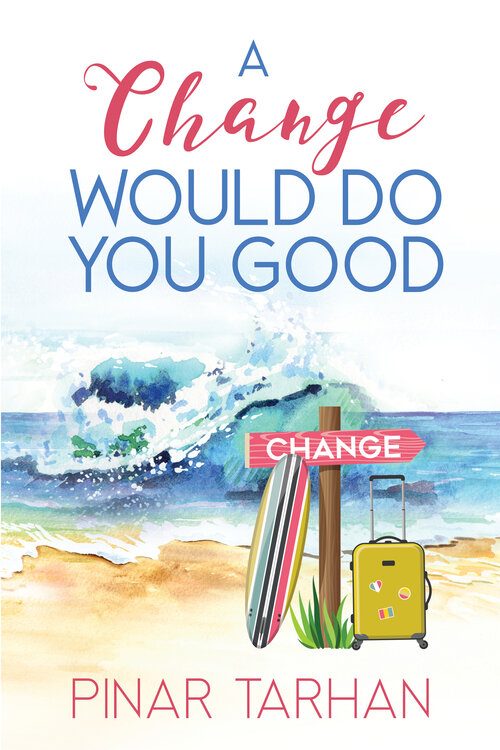
But you can of course play around with tropes and give it your own twist. I did in my romcom novel A Change Would Do You Good. When my protagonists Kevin and Janie first meet, it’s all sparks and chemistry. They are new neighbors, and they are nice to one another. The problem is, Kevin finds her incredibly attractive while Janie is still recovering from a loss and isn’t ready to date anyone. And just when he thinks something is going to happen, she’s thinking they are making good friends. It’s when their wildly romantic pasts and current expectations clash that they turn into haters. But the sparks and chemistry are always there, and they are two people in their 30s. You can bet they don’t stay in the haters zone for long.

Bea and Ben follow a similar pattern. When they first meet, it’s fireworks. Their first date is the stuff of dreams. But two misinterpretations start an immature animosity. They have never really hated each other, though. They just hated thinking the other person didn’t feel the same way. And we are all prone to being a little childish when we are majorly disappointed.

And who doesn’t want to spend the majority of 103 minutes at a gorgeous villa in Sydney?

Romcoms are supposed to be predictable

Yes, and that’s why we love them. I just read a review that bashed Anyone But You for capitalizing on the looks of how the lead actors are and predictability.

News flash: 99% of romcoms – whether book, movie, or film – love to feature hot characters. We want to be with one character and we want to be the other. And if it’s not predictable in certain ways, then it’s not a romcom. If you don’t give us a couple who fall madly in love and stay together, it’s not what we wanted.

Now, not all romcoms are created equal. Some will be steamier. Some will be cleaner. Some will surprise you more. Some will be more annoying. And of course, one person’s cringe is another one’s favorite love story. There are several extremely popular romcoms that I hate. So while severely disagreeing with that one reviewer, I do respect their right to hate it – just not the reasons they gave for it.

My only beef with the movie…

It makes me feel old. While I’m from the same generation as Glen Powell, I’m just not ready to watch Dermot Mulroney as an adult’s dad or the supporting guy in a romantic movie. Whether he’s marrying his adorable girlfriend (My Best Friend’s Wedding), falling in love big time while fighting cancer (Griffin and Phoenix), or realizing he’s marrying the wrong woman after all (The Family Stone), I need him in the lead role in a romantic movie. 🙂


Other featured tropes in the film:

  • Love/attraction at first sight
  • Close Proximity
  • Plotting friends and family
  • Fake relationship

Also recommended:

  • The Hating Game. As immature as the characters can be, they at least have a somewhat valid reason to hate each other. I loved both the movie and the book.
  • Much Ado About Nothing (93 movie). You might not be in the mood to read Shakespeare, but what if you could watch a period romcom starring Emma Thompson, Kenneth Branagh, Denzel Washington, Michael Keaton and Keanu Reeves?
  • Griffin and Phoenix. Yes, watch My Best Friends’s Wedding and The Family Stone if you haven’t already. But Griffin and Phoenix is a romantic drama that is superior to both romcoms. And this is huge coming from me because I’m usually not in the mood for watching romantic films where both characters might die and a happy ending is improbable. But like I’ve covered in my book How to Write the Ultimate Non-Tragic Romance, it is one thing to suddenly tell your audience/reader that your character has cancer after they have invested in their relationship versus telling them right away. When the audience knows right away, all the drama feels more organic and it will be sadder. And it’s a healthy, realistic, sweet, and sexy romance between two adults – which is unfortunately not done that often.

*

Have you seen any of the movies I mentioned in the post? What did you think? Comment away. 🙂


Filed Under: Fiction Writing Tagged With: anyone but you, anyone but you movie, glen powell, haters to lovers, romance tropes, romantic comedy, sydney sweeney

How to Use Excess to Create Memorable Characters in Your Fiction

Posted on January 13, 2024 Written by Pinar Tarhan

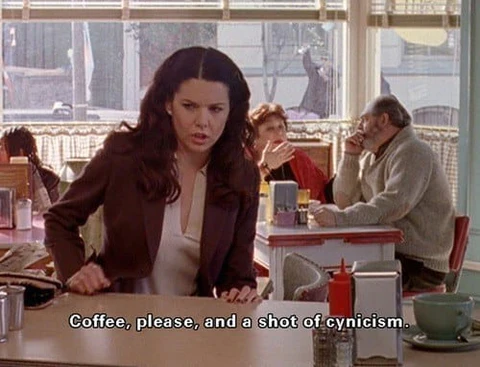
This looks like a smaller version of my cup collection. Or just how much coffee Lorelai drinks in a day…


“Everything in moderation” is good life advice in general. It helps us maintain healthy diets, not neglect or overdo exercise, don’t go bankrupt on shopping sprees… All sensible stuff.

But if there’s one place where excess is welcome, and it’s fiction.

Most of our favorite books, shows, and movies feature main characters with extreme habits and/or personality traits. Many stretch the courtesy to supporting characters as well.

While how much excess (and in what areas) one prefers can vary, here are some of my favorite “excess” examples:

Excess Examples in TV Series

Gilmore Girls

One of my all-time favorite shows Gilmore Girls centers around best friend mother-daughter duo Lorelai and Rory Gilmore. They share similar taste in music, movies, food, and clothing. They order too much takeout, consume a scary amount of coffee, and talk at a million miles a minute.

The show is funny, romantic and emotional, and the excesses don’t end with Lorelai and Rory. It merely begins there.

The maker of their favorite coffee, Luke (Scott Patterson), owns Luke’s diner. A town issue will up his grumpiness and ranting to the max.

Lorelai’s best friend Chef Sookie (Melissa McCarthy) is extremely clumsy, forgetful, and in love with her cooking.

Lorelai’s co-worker Michel couldn’t be more stereotypically French if he tried.

Town spokesperson Taylor is always annoying one poor soul or another with his demands, festivals, problems, complaints, etc… And when it’s not one or two people, he’s pissing off the entire town.

The town’s weirdest resident Kirk makes Phoebe from Friends seem sane and normal. There’s no job he won’t try, for one.

Lorelai’s next-door neighbor Babette is loud, loving, very fond of her cat and her husband, and doesn’t exactly know boundaries (but in a cute, warm way).

Last but not least, Lorelai’s estranged rich parents, Emily (Kelly Bishop) and Richard (Edward Herrmann) are excessively elitist, opinionated, lacking in empathy, and unappreciative of boundaries. Friday night dinners are a battleground. And both Emily and Richard are prone to tantrums that would make 5-year-olds facepalm.

Gilmore Girls is a quintessential feel-good comedy drama, and this beautifully written excess is one of the elements making it so memorable and addictive even after all these years.

*

Friends

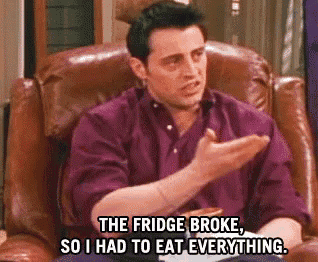
Actual footage and quote.

If you don’t think Friends isn’t funny, we can’t be friends. I’m kidding. Of course, we can. We probably shouldn’t watch a comedy together, though.

If Friends isn’t your kind of sitcom, pick yours. Sitcoms mine excess to hilarious results.

Whether it’s The Office, The Bing Bang Theory, How I Met Your Mother, or another show, you will notice the excess immediately.

In Friends, Joey (Matt LeBlanc) eats anything and everything. He covets food more than his own life, and almost as much as he loves sex. He is also very stupid. He is cute and loveable, but he likely wouldn’t survive long outside of a TV show. But there is an exception: If he’s trying to pick up a girl, his IQ suddenly spikes.

Initially, Rachel (Jennifer Aniston) is spoilt and clueless about the real world. As seasons progress, her remaining excess is her love for fashion and shopping.

Monica (Courteney Cox) is an amazing cook and terribly organized, clean, and competitive. She exhibits a love for cleaning that would prompt a psychological diagnosis. She once cleaned several cars in her neighborhood because they looked dirty.

Ross (David Schwimmer) is a massive dinosaur nerd. He gets excessively jealous when he dates Rachel, but outside of that, he is all about academia and dinosaurs and putting his friends to sleep.

Chandler (Matthew Perry) IS sarcasm. He is also hilarious. He manages to be extremely commitment-averse and afraid to be alone at the same time.

Phoebe (Lisa Kudrow) is just quirkiness personified. Bohemian, unique, and flaky, she is a lot of people’s favorite character.


*


Excess Examples in Movies

John Wick

John Wick is very stylish and although bloody, it’s not too gory. Which is how I love my action thrillers.

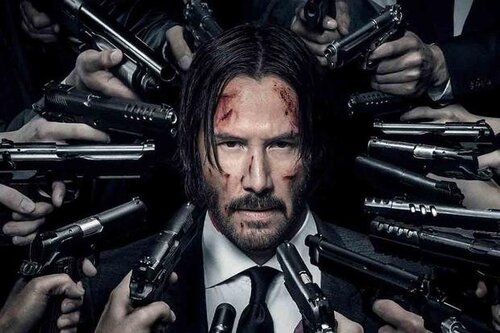
Wrong John Wick (Keanu Reeves), and he will kill you. Even if you bring 100 people along. And we love him for it. Whether it’s guns, swords, hand-to-hand combat, or pencils, he will take you out. So don’t get in his way.

Any kickass action hero with kickass killing and survival skills fits here: Rambo, Robert McCall (The Equalizer), Lorraine Broughton (Atomic Blonde), Ethan Hunt (Mission Impossible), Jack Reacher (is a great example because Reacher was/is a book series first, movie and then TV adaptation), Bryan Mills (Taken, of movie and TV series fame), Duncan Vizla (Polar), Evelyn Salt (Salt), Mr. and Mrs. Smith (Mr. and Mrs. Smith), Cataleya (Colombiana)…

The list is long, but let me finish with Smith (Clive Owen) from Shoot ‘Em Up. Not only does the movie have a fantastic cast, action scenes, and a kickass rock soundtrack, but I’ll forever be grateful to have learned how deadly carrots can be in the right hands.

These people are deadly, but they will look after the people they take care about.

Excess Examples in Books

Pride and Prejudice

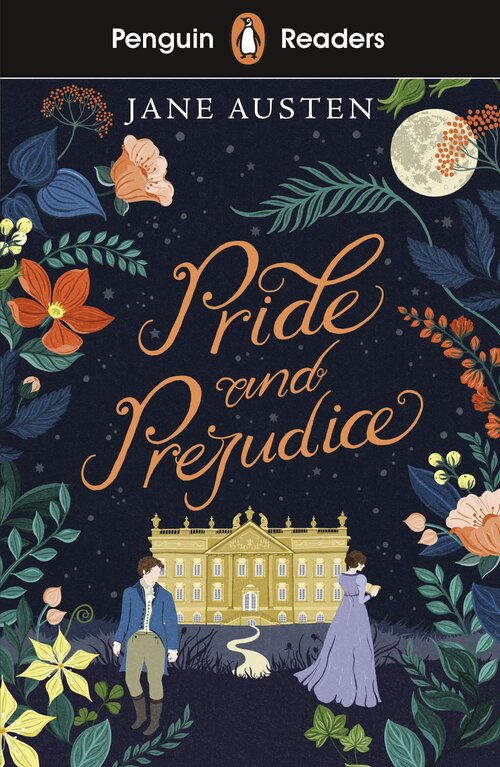
True to its title and theme, Elizabeth can be very prejudiced and proud. And so can the male main character Mr. Darcy.

Moreover, Elizabeth is incredibly modern and ahead of her time. She’d rather read and walk all day and night rather than conform to her society’s norms. Darcy is very introverted and prejudiced, so he comes off as rude.

But that’s not all. Elizabeth’s mother is so obsessed with marrying off her daughters, love and compatibility don’t even cross her mind. Collins’ lack of emotional intelligence and self-awareness are astoundingly hilarious.

A Change Would Do You Good


A Change Would Do You Good is a short, escapist rom-com trilogy, and is also the title of the first book in the series.

Excess in opposite directions works wonders for creating conflict.

My main character Janie is still recovering from a loss. She experienced true love and an amazing relationship, and she is certain she will never feel the same way about anyone.

On the other hand, her new neighbor Kevin has had a blessed existence. He is a top surfer, has never met a beautiful woman he couldn’t seduce, and has no interest in a romantic, serious relationship. Put these extreme ends together, and the sparks are electrifying.

But because this is an ensemble romcom novel, plenty of excess can be found in other characters: How well Ben and Greg’s lives are going vs. how much of a rut Linda’s in, Ashley’s apathy and disregard for others, the career Tom and Sam want vs. the career they have…

***

Love it or hate it, any successful work of fiction has excess. When you write fiction, it’s okay to go all the way with character quirks, tastes, and personality traits.

When you are reading or watching and the excess puts you off, it might be that you aren’t the intended target audience. And it’s okay.

For writers:

If you find yourself lacking inspiration, look at yourself and your friends. What about you/them seems strange/over the top to other people? What have been some of your weirdest encounters? Remember how life is often stranger than fiction, and you’ll have more material than you can handle.

***

What are your favorite excess examples in fiction? Let me know in the comments.

Related Posts Plugin for WordPress, Blogger...

Filed Under: Fiction Writing, Writing Tagged With: character creating tips, character creation, character creation for fiction writers, fiction writing tips, gilmore girls, john wick, writing fiction, writing tips for fiction writers

  • 1
  • 2
  • 3
  • …
  • 16
  • Next Page »

Blogroll

  • My Entertainment Blog

My Other Blogs

  • Beauty, Fitness & Style for the Fun-Loving Gal
  • Dating & Relationships in the 21st Century

Categories

  • Author Interviews
  • Author news and coverage
  • Blogging
  • Book Launches and Excerpts
  • Book News and Author Interviews
  • Book Recommendations
  • Book Reviews
  • Career Management for Writers
  • E-Book Reviews
  • Fiction Writing
  • Fictional Writers: Writer Characters in Movies, TV Series and Books
  • Inspiration and Motivation
  • Marketing
  • Marketing Fiction
  • Movie and TV Series Recommendations
  • Novel Reviews
  • Paying Markets-Web and Print
  • Productivity & Time Management
  • Recommended Resources
  • Reviews for Tools and Devices
  • Romance
  • screenwriting
  • Self-publishing
  • Story Conflicts
  • Website & Blog Reviews
  • Writer Tools
  • Writing
  • Writing Tools
  • Writing Updates

Copyright © 2026 · Focus Pro Theme on Genesis Framework · WordPress · Log in

This website uses cookies to improve your experience. We'll assume you're ok with this, but you can opt-out if you wish.Accept Reject Read More
Privacy & Cookies Policy

Privacy Overview

This website uses cookies to improve your experience while you navigate through the website. Out of these, the cookies that are categorized as necessary are stored on your browser as they are essential for the working of basic functionalities of the website. We also use third-party cookies that help us analyze and understand how you use this website. These cookies will be stored in your browser only with your consent. You also have the option to opt-out of these cookies. But opting out of some of these cookies may affect your browsing experience.
Necessary
Always Enabled
Necessary cookies are absolutely essential for the website to function properly. This category only includes cookies that ensures basic functionalities and security features of the website. These cookies do not store any personal information.
Non-necessary
Any cookies that may not be particularly necessary for the website to function and is used specifically to collect user personal data via analytics, ads, other embedded contents are termed as non-necessary cookies. It is mandatory to procure user consent prior to running these cookies on your website.
SAVE & ACCEPT