Addicted to Writing

Manage Your Freelance Writing Career While Writing What You Love

  • About Pinar Tarhan
  • Blog
  • Books
  • Hire Me: Services
  • Contact Me
  • Portfolio
  • Favorite Resources
  • Newsletter

Writing Fiction During A Pandemic: Should Your Story’s World Include The Current Reality?

Posted on March 26, 2020 Written by Pinar Tarhan

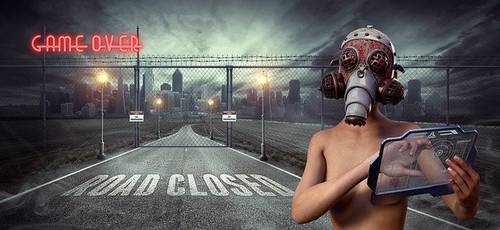
Writing during a pandemic
This awesome image is by Stefan Keller on Pixabay.

I have a short and relevant one for you today.

I saw (virtually, of course) a lot of writers discussing whether their current works in progress set in the present should include the realities of today.

And everyone will have their answer according to their taste, current mental state, themes in the story, storylines as well as what they want to accomplish with their work.

For me, the answer is a big whopping no. Not only am not including anything c-word related in my current novel, but I also don’t plan to change what I write afterward. Unless it is a dystopian feature or sci-fi where the story would benefit from my real-world experience.

Here’s why:

I write to entertain. I write to escape. I write to make people laugh, to put a smile on their faces, give them hope and make sure they have faith in themselves, their lives, and the world.

It doesn’t mean my stories don’t or won’t include harrowing conflicts.

In fact, the current novel I’m editing has plenty of real-world issues. It’s a romantic comedy drama featuring ensemble characters. Among other things, it has:

  • Loss of a loved one and grief
  • A severe anxiety disorder
  • Drug use
  • Prejudice
  • Feeling lost and hopeless in one’s career
  • Professional screw-ups
  • Blaming others for your mistakes
  • Failing romantic relationships.
  • Dysfunctional family relationships

Of course, because it is a romantic comedy, it also has:

  • Happy endings
  • Getting through loss and grief
  • Recovery
  • Making positive changes in one’s life
  • Realistic self-evaluation and changing for the better
  • Laughter, fun, partying
  • New and strong friendships
  • Reconnecting with old friends
  • Enjoying life to the fullest
  • Exciting romances

Now, I’d say it is fairly well-balanced. But despite being set in the real world, albeit a pre-pandemic one, notice what it doesn’t have:

  • Cancer
  • Alzheimer’s
  • Abusive partners
  • Sexism
  • Racism
  • Serial killers
  • Heart disease
  • Poverty
  • …..


The list goes and on. My point? No one novel is going to reflect the world as is – whether you are talking about good or bad. It’s impossible.

It would be a depressing, mundane, and mostly boring  20-part series where each novel is 7000 pages long.

*

That said, I’d like to underline once again that there is no one correct, absolute, universally valid answer to this question.

You have to make the right call for yourself, readers, and your story.

How am I going to write an R-rated romantic comedy with sex scenes featuring smart characters if my story is set during a pandemic? And as for writing about a post-pandemic world, we haven’t seen the end of this yet.

It would also beat my purpose of escaping and helping the readers escape with me.

While a lot of people are binging movies like Contagion, Outbreak, 28 Days Later, and Train to Busan, I’m avoiding those kinds of movies like the plague – despite having enjoyed Contagion and Outbreak being one of my 90s’ favorites. These are literally the last films I want to see right now.

The other day, I went in the completely opposite direction and watched A Thousand Words starring Eddie Murphy.

I laughed my ass off!

While some of its messages regarding family and relationships are on the nose, it is hilarious enough to make up for it.

And while the character shares none of our problems like not being able to touch people or going outside, I’d argue he has a worse problem:

He has 1000 words left to say or write. Once he says the 1000th, he will die!

Imagine that! Can you think of a worse fate for a writer? Especially if it is a writer who also loves to talk, like myself?

Since that movie is set in the literary world due to the protagonist’s profession, expect a review from me for this blog’s Writing Characters in Movies section soon.

Until then, read and watch what makes you happy.

And if watching outbreak movies make you feel better, keep at it!

What about you? How’s the current situation affected your fiction?


Filed Under: Fiction Writing Tagged With: fiction writing, fiction writing tips, writing fiction, writing fiction during a pandemic

Writer Characters in Movies: The Decoy Bride and Writing About Places You’ve Never Been

Posted on March 8, 2020 Written by Pinar Tarhan

The Decoy Bride
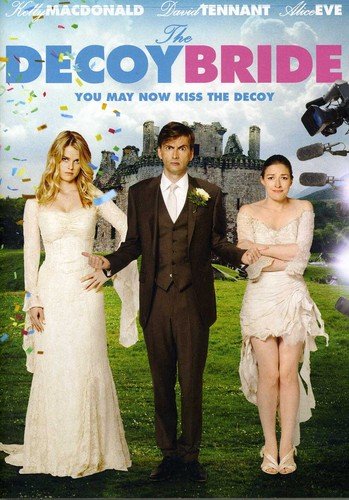
The Decoy Bride. As Chandler would say “Oh my God! Two beautiful women love me, and my diamond shoes are too tight!” 🙂

I’ve recently watched The Decoy Bride (aff. link), a gem of a romcom from 2011. Maybe the Scottish countryside got to me. Maybe it was David Tennant and Kelly MacDonald’s collective charms, but I enjoyed every single moment of this film.

And since the male protagonist of the film, James, is an author, it fits my writing characters in film and TV series perfectly. Katie is also a writer in her own right. And as a bonus, the film is a good romcom example for writers and lovers of the genre, like myself.

So without further ado:

The Decoy Bride: Plot Summary (with Some Spoilers)

James (David Tennant) can’t wait to marry his beautiful and extremely famous fiancée Lara (Alice Eve). Unfortunately, the paparazzi (especially relentless Marco) are hot on their tail, and Lara will be damned if she lets her important day be photographed. So, she picks the perfect spot: remote and scarcely populated Scottish island Hegg, described to great detail in James’s book – Lara’s favorite. Never mind the fact that this is the first time James ever set foot on the place. (Complements of Google!)

But when Lara sees the diligent paparazzo Marco even there, she disappears on her wedding day. Unbeknownst to James, her agent Steve (Michael Urie) and his assistant (Sally Philips) enlist the help of unlucky-in-love Katie (Kelly Macdonald) to play decoy. James freaks out when he finds out the ruse and that he and Katie have accidentally actually gotten married.

Moreover, Steve locks them in the castle where the wedding was to take place, but soon restless James, and sick-of-his-attitude Katie find a way to escape. Once they both drop the attitude, though, they realize they have more in common then they initially thought. And their chemistry is off the charts. Can James find Lara before he falls in head over heels with Katie?

The Decoy Bride: Writing Characters (with Spoilers)

This film is a double treat in terms of writing characters as Katie worked as the writer of a pants catalog in the city and writes guide books of the island. There’s quite a bit of talk about how residents of the place view James’ book (hint: 4 out of 10 stars!) and one resident even uses it as toilet paper! Paparazzo Marco even reads it as he waits for Lara to appear, and is baffled when the couple of the novel don’t seem to be kissing any time soon. And Katie comments how the romance seems unbelievable.

When Katie opens up about how her fiance cheated on her, she says she was apparently one song and not an album. As James finds out where Lara is and they are about to part, Katie says. “One chapter. Not a book, right?” sadly. James kisses her on the forehead before leaving.

We don’t see exactly what happens after Lara and James meet the priest. We are shortly led to believe it might not be the happy ending we hoped. Luckily, it doesn’t last, though they do keep us wondering for a bit more.

And then we learn that James has written a second book (much more appreciated by the Hegg folk) and dedicated to his wife. Katie thinks it is dedicated to Lara and doesn’t even read the book. Apparently, this book is much better and only has one chapter.

As Katie is leaving the island by ferry, James arrives with a backpack and clears up the misunderstanding. His wife means Katie. And the dedication reads, sometimes a chapter can be a book. (Aww! I’m melting.) Kiss.

The End.

A note on writing about places you’ve never been:

Frankly, I am a fan of this concept. Write what you know is a misused, misinterpreted and often misguided writing advice. If we could only write about what we knew, we’d seriously worry about Stephen King’s mental state, wouldn’t we? Or thriller writers who are fascinated by serial killers?

Outlander (aff.link) is awesome, Diana Gabaldon wrote the first book without ever being there. I’m also pretty sure she never time-traveled.

You can write about anything and anywhere as long as you do your research. Maybe James could have done a better job by seeking people from the island and interviewing them, but in his defense, the island folk didn’t seem that easily accessible online to me. Maybe Katie would help if he could have found her?

So the lesson here is if you can imagine it and research it, you can write it.

Important note: Please don’t write an entire book with one chapter. 🙂 Leave it as what it is: a great line in a fictional story. We like chapters. Chapters are good. They make reading easier and more fun. 😉

*

Written by Neil Jaworski and Sally Phillips. Directed by Sheree Folkson.

Filed Under: Writing Tagged With: David tenant, films with writer characters, Kelly macdonald, sally phillips, the decoy bride, writer characters, writing characters

Where Has This Writer Been Since December? A Writing Life Update

Posted on March 4, 2020 Written by Pinar Tarhan

Damn, 2020 has been crazy!

It’s the first week of March, and I haven’t posted on my blog since December, my birthday week. It’s insane! So, what the hell happened to me?

Don’t worry, it wasn’t all bad. Unfortunately, it wasn’t all good either.

First the bad:

Winter is a bad time for my immune system. I wrote about my health issues before. Even though I’m lucky that I mostly deal with colds and gastritis (and a lot of people deal with a lot worse), being sick for a long time really brings you down emotionally, socially, financially and professionally. It kills or severely damages your productivity, inspiration, and motivation. Not only you don’t have the energy or the health to write, but you lack things to write about as well.

A writer’s nightmare. Poor health, and a boring life.

As I’m writing this, I’m recovering from a bad stomach week. And this was after having recovered for a cold that stayed for two weeks.

Yikes! Of course, not all the news and panic about this Coronavirus is helping my anxiety. I’m not panicking, but I’m not feeling very confident about staying healthy in the long term.

OK, that is the bad stuff. Off to the good:

  • I did go to Norway for a week in late December!
  • I took up dancing again. I was lindy hopper a while back. Now I’m practicing regularly (when I’m not sick), and I’m taking blues lessons.

For those who are wondering what lindy hop looks like (when you are a pro, which I’m not, but it does look awesome!):

  • I finished my second novel’s first draft, and I started talks about my cover design.
  • I’m collecting story ideas and looking for places to pitch.
  • Got some rejections. (Which means I pitched.)
  • Going through Nick Stephenson’s Your First10KReaders course. I love it, though I’d have loved audio transcripts (I know, it would be insane amount of more work!) but thankfully slides are downloadable. The content is great (and I’ll be writing a review soon.)


*


And here you go! I’ll be back with more writing craft posts, but I wanted to get this out of the way in case you are feeling like you are going through a slump.

Let’s write!


Filed Under: Writing Updates Tagged With: writing, writing update

6 Ways to Find and Develop Your Romance Novel Idea: Free Chapter from How to Write An Amazing Romance Novel

Posted on December 6, 2019 Written by Pinar Tarhan

Hey fellow writers!

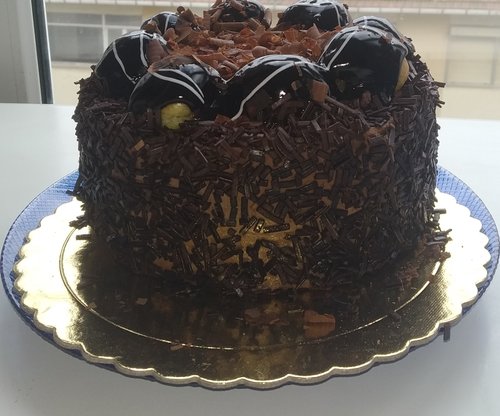
My birthday gifts continue. My official birthday is tomorrow, but I already had one delicious chocolate cake yesterday.

My chocolate profiterole cake. Yum.


For the last three days, I’ve posted the first three chapters of my romcom novel Making A Difference (M.A.D.) (aff. link). Chapter links are below:

  • Chapter 1
  • Chapter 2
  • Chapter 3

For romance writers, I crafted How to Write an Amazing Romance Novel.

If you want to get a taste of the book before you buy it, here’s the chapter on finding and developing your romance novel idea.


Finding the Idea: 6 Ways to Find and Develop Your Romance Idea

Sometimes it just comes to you, and everything’s just right. Often, the idea needs to be tweaked a bit. But there will be occasions when you’ll need to fight for it. You’ll only find a concept worth writing about by digging deep, which might include some long and frustrating brainstorming sessions.

  1. When it comes to you

The idea for Making A Difference (M.A.D.), my romance novel, came to me during my second year in college. I was sitting at a Public Relations class taught by this famous professor who was a PR legend in my country. She was in her late seventies, early eighties and shared fascinating true stories. One story stood out in particular, and she became the basis of Faye, a cool supporting character whose influence shaped my romantic hero into the man he is.

My hero Jay, aka the male protagonist, was partly inspired by this other great teacher I had the year before. Here’s the funny part: They don’t really resemble each other. The one thing they had in common was how entertaining, informative, and engaging their lectures are. I loved this teacher so much I’d drag myself out of bed for his classes, come hell or high water, bad health or sleepless nights. I felt betrayed when we ended up getting only one class from him.

College is a time when a lot of students develop crushes on their professors or TAs. While I didn’t develop a crush on a teacher, I had several friends who did. And I wondered what it would be like if I had. What if there was a teacher who I was so attracted to that it distracted me? And wouldn’t it be complicated if that teacher was attracted to me too?

But professors having affairs with students is not exactly fresh, or very romantic, is it? Think about it. There is a power imbalance. There is usually an age difference. And the yuck factor is high if the teacher is married. The yuck factor intensifies if this teacher has done it more than once. Now you, and potentially your readers, have zero respect for both of your main characters.

But what if…this teacher was so not happy with his feelings for his student? What if he wasn’t a full-time teacher? What if he went out of his way to avoid his feelings? What if the student was extremely passionate and believed in following her heart no matter what? What if the age difference was minimal? What if he was obsessed with ethics and walked the walk? What if they were both single?

Now, you have no reason not to root for your characters. Sure, it is still awkward and difficult, but it could happen to you. Have you never been attracted to someone you shouldn’t be attracted to? Is ten years of age difference really that bad when it comes to love? And you have created a ton of internal and external conflict by making characters’ personality and values differ from each other.

So Making A Difference (M.A.D.) was born:

“Everybody loves Jay. He’s that humanitarian PR guru who doesn’t live like the rich and runs a profitable company so that he’ll have more resources to help people. He defines himself through how much he and his company make a positive impact.

He’s engaged to a gorgeous CEO whose purse collection could feed the homeless in NYC, but he’s only human.

If anyone notices the irony, it’s Jay’s new partner Zoe. 10 years older than her, Jay is the reason she studied PR. So when Jay’s business partner/best friend takes a less pressuring position, she’s delighted to return to the firm she interned for.

But Jay and Zoe have a big secret: 5 years ago, they fell hard for each other. She was a student at NYU where Jay was a lecturer. To Jay, his legacy was everything, and he’d never risk his reputation by dating a student. Moreover, he’d die before he let Zoe ruin her career. She is furious he doesn’t take the risk for them. She even leaves the country for a year to get over him.

And now she’s happily coupled-up with lovely writer Colin.
Colin detests Jay, and he doesn’t even know the entire story. Zoe’s upset Colin’s turning into a whiny jerk, but he’s the first guy she has felt strongly for in a long time.

Jay can no longer dismiss his feelings as nostalgia, but Zoe’s still furious at him. And the last time he tried to fix things, she left the company and the country. And now that the stakes are even higher.

Will Jay be able to follow his heart even when improving the world seems easier?”


How the what ifs and following questions came together

So Jay Clark, my male protagonist, became the grandson of a PR guru, the co-owner of a successful PR company and humanitarian who was dedicated to making the world a better place. There is no catch, no hidden agenda. He just wants to improve the world – and he does so by helping as many people as he can with healthcare, food, and shelter. He is a workaholic who defines himself through his work, so he doesn’t really care much about dating or romance.

I have read and watched too many characters who care about their reputation and will do anything to protect it. What makes Jay different is that he avoids doing anything that might harm his reputation in the first place. If you have nothing to hide, it’s much easier to avoid a scandal.

So if he doesn’t pursue his romantic interest, how do you get them to spend time together? By making them mentor/mentee, boss/employee, and really good friends. This is contemporary romance. The novel isn’t set in the 20s. It is expected to see professors hanging with their students. So it is both heaven and hell for these characters to be together all the time (and they want to be), but not being able to actually be together as a couple.

How do you throw them together after college is over? How do you create new (or redefine former) obstacles to keep them apart?

Another common thing to do is giving your main characters other love interests. Nothing complicates things further than other significant people.

They don’t live in a vacuum, and the purpose of their existence isn’t just to find love or to be together. The trick is to get them to be with these other people without making their feelings for each other seem less special. But also you don’t want your main characters to come off as completely selfish jerks. You want them flawed, but not as heartless or cruel.

But how much your characters can get away with, how much they can be forgiven for depends on the world you created and your own values. If you are going to have your characters commit adultery or murder, for instance, you better show us damn good reasons for us to still root for them. Most of us flex our values and morals for fiction, especially if you give us enough redeeming circumstances.

Let’s take adultery. I am, as a person, 100% against the concept. I’m so against it, in fact, that when someone forgives a cheating partner and stays with them in a story, I’m immediately turned off. But there have been some exceptional fictional examples that inspired me to start a fun blog post series called “When Adultery is Okay.” On my entertainment site pinartarhan.com/blog.

For instance, in the movie Revenge (based on the novella by Jim Harrison), Kevin Costner falls in love with (and of course has sex with) the wife (Madeleine Stowe) of his friend (Anthony Quinn). Gross, right? Who does that?

But his “buddy” is a much older, ruthless Mexican mobster. His wife is totally trapped. And have you seen the younger Kevin Costner? You can’t help but want the star-crossed lovers to be together.

And with this example, let’s look at the other side of the coin, the characters our protagonists are with now – the Mr./Miss Right Nows. While stories like Revenge give the hero and heroine a clear out, you need to check if it is not too easy. So easy, that it might backfire.

Let me tell you what I mean. In the Revenge example, there is no contest between Anthony Quinn’s character and Kevin Costner’s. If the current significant other is such a jerk, it only makes sense that he loses the girl. But here are two things the writer did that avoid clichés and easy-way-outs. For one thing, Madeleine Stowe’s marriage was not arranged. She wanted to marry him. He was charismatic, wealthy, impressive. We are pretty sure he promised a gentler, kinder future where he didn’t have mistresses. (Oh, yes, he cheats too. What a prize!) The second is that you understand why she hasn’t tried to leave him. How can you divorce a powerful mobster? So dumping the guy isn’t an option.

But in most modern settings and sub-genres, this doesn’t work. When you want to offer your readers an escapist fantasy rooted in realism, when you want to write a feel-good romance, you don’t generally write abusive or dangerous partners. You create characters that are not impossible to leave. And since the character isn’t dangerous, there is no good reason your main character stays with them:

Suppose you created strong heroes and heroines who are nice people at their cores. They don’t use people for their own pleasure. They are emotionally intelligent.

Then why would they stay with an annoying partner who doesn’t value them? Why would they waste their time? When you make their current romantic partner insufferable, you make it easy for your reader not to feel sorry for them. But if they are so insufferable, why is your strong, self-respecting lead with them?

A better option would be to make the temporary love interests human too: flawed, but lovable. So that staying doesn’t seem like a cruel, stupid or unnatural thing to do. But don’t make them more loveable than your main character, obviously.

I know, writing can be so complicated!


How to wire your brain so that ideas will come to you 

I can hear some of you shaking your head and saying “Yeah, that’s just great, but ideas don’t just come to me!”

Maybe they don’t. Maybe they do, and you don’t recognize them yet. In any case, here are some tips to stimulate your brain so that it creates, captures, welcomes, and stores ideas:

  1. Live your life to the fullest to the best way you can. This doesn’t mean you have to do things out-of-character or things that make you uncomfortable, although that sometimes helps as well.

Traveling inspires. If you can’t afford to venture far, discover more things to do in or around your neighborhood.

I don’t think my current novel idea would have come to me had I not spent a month in Santa Barbara, California. I created that novel as a screenplay at first. While I was getting notes from a professional reader in Hollywood, she asked if I was from California because I had captured the atmosphere so well.

Take that dancing class. Go to that language course. Meet up with that friend you haven’t seen in more than ten years.

Live! Live, especially when you are healthy and you have some money. When

you need to do less due to work, health or financial reasons, the stored up fun from your past will come to you as inspiration.


  1. Read. Listen.

The news. Memes. Books. Blogs, magazines, newspapers, comics, graphic novels, spam emails….Whatever comes to you, read, learn, forget. You never forget the most useful stuff. And if you want to make sure you remember a certain something, take notes.

I’m not a fan of reality TV. I don’t think reality shows will inspire you to create anything unless you are interested in conjuring up reality shows or stories featuring reality shows.

That said, everyone is different. If it is fun for you, go for it. Just don’t forget to watch other stuff too. Variety is key. I rarely watch documentaries (though I’ve watched some magnificent ones), and I’m not a fan of gory horror. Besides those, I watch anything and everything that seems interesting.


  1. Learn, even if it is trivia or obscure.

While one of my ideas was inspired by a true event (an inspiration source I go into detail about in Section 4: True Stories and Memes), it wouldn’t have been possible without my intensive trivia knowledge of rock music, particularly about rock music history in the 80s and 90s).

I have always been a huge rock fan. Writing that story was second nature to me. When you already know so much, writing, researching and developing your story all become easier.

It might also make sense to incorporate some of the real-life events into your characters’ dialogue. If your characters first meet during the grunge scene in the 90s, it’d make sense to have them talk about Pearl Jam and Nirvana, even if you made up the main musicians and songs for your story.

Juliet, Naked (aff. link) is a 2018 movie starring Ethan Hawke and Rose Byrne. Based on Nick Hornby’s novel, it’s a charming romantic drama and comedy about a 40-something woman re-evaluating her life choices through her boyfriend’s obsession with a former famous rock musician.

The musician character played by Ethan Hawke feels so authentic. While it is a credit both to the actor and the screenwriters (and of course, Nick Hornby), it’s hard to imagine Hornby wasn’t inspired at all by what happened to some real-life musicians when he created the story.

You can watch the Juliet, Naked trailer on YouTube.

You don’t have to give two hoots about music. Your passion might be about football, knitting, racing, or gardening. Your knowledge about your interests might spark your imagination, as well as add authenticity to your characters.


  1. Dreams… and Nightmares

I dreamed about the current romantic comedy-drama I’m working on. Set in Los Angeles, it’s about the unconventional relationship a disgraced actor forms with a fan. I took the plot of the dream, added a supporting cast, and some minor characters. I included some personal experiences and real-life struggles and expanded on it.

But the idea came within the dream.

When I woke up, I remembered it vividly and enjoyed it immensely, so I started taking notes. Before I knew it, I had my next story.

I also recently dreamed this weird sci-fi, dystopian romance I’m trying to differentiate from others of its kind, but I quite like the bare bones of the story.

Unfortunately, I don’t always dream writeable-plots. More often than not, it is ordinary stuff featuring people I know in real life. Sometimes they are so weird even director David Lynch wouldn’t use them in a film. But once in a while, I wake up all inspired, thanks to the dream muses.

But you can also take the other definition of dreams and run with that.

For instance, what did you dream about becoming growing up? Maybe you wanted to be a doctor but you hated science classes, or the sight of blood made you nauseous. Maybe you desired to be a pilot, but your eyesight prevented you from realizing that. There is no reason your characters can’t fulfill your dreams and fantasies for you. Even the sky isn’t the limit when you are writing fiction.

What about nightmares? What are your greatest fears? Maybe you are secretly terrified of being accused of something you didn’t do and being sent to prison for it. Perhaps your worst nightmare is being kidnapped by some lunatic and being tortured.

If you are thinking one nightmare doesn’t make a story, or you are not satisfied where this line of thinking got you, why not combine the elements?

What if you were a doctor wrongly accused, and then you emerge from prison a different person and decide to kidnap the people responsible? Or maybe you just got out of prison, and to add insult to the injury, you got bitten by a werewolf? What if the accuser was a vampire and had a good reason to sully your good name? It could be a dark, Stockholm Syndrome-y story.

Don’t be afraid to brainstorm. Bad ideas will come. So will good ones.


  1. Speaking of bad ideas: sometimes a tweak in the right place is all you need

The first romantic comedy story I thought about was a love triangle. But the happiness of inspiration was overshadowed by disappointment. It was cliché. It didn’t feel worth pursuing. But there were too many things about the storyline that I had enjoyed, so I decided to reverse one situation. It became funnier and a lot more romantic. Then I gave it one more twist, and voila! It turned into something I would be happy spending so much time with.

Tweaks can include anything from changing the location to altering jobs of characters, from transforming how characters feel for each other to reversing personality traits…anything goes. Change anything and everything until you come up with a central idea that you are happy with.


  1. True Stories and memes

I’m co-writing a screenplay inspired by two funny memes we saw on the Internet.

And one of my favorite romantic stories that I wrote as a screenplay, which will probably be my third or fourth novel, was inspired by true events.

Now, the story inspired by true events is not related to what happened in real life at all. I just thought of a tragic event, reversed it with a “what if this  happened instead of that” question, and imagined my own reaction if that tragic thing had happened to someone I was a fan of. And jackpot!

If you are basing your novel on actual true events, however, I recommend doing your research on not getting sued. Here’s some initial reading on the matter:

How Not to Get Sued When Writing about Real People (article on LitReactor)

A Writer’s Guide to Defamation and Invasion of Privacy (article on Writer’s Digest)


  1. Brainstorming from scratch…. or prompts 

We talked about using your own dreams and nightmares. You can mine your experiences, what you would change in books you felt meh about, endings you never got to see, but you wish you had…

However, if you are feeling stuck and nothing seems to help, it might be time for writing exercises. Many writing websites offer free prompts and methods for stimulating your brain. My favorite so far has been “The Blank from Hell” exercise suggested in ScriptMag.

The “blank” from hell can be used for any genre, and it is a fun and creative way to create any character, especially your antagonist.

You can use it for animals, locations, jobs, relationships and so on.


  1. Being Inspired by Popular Works and Writing Parallels

If a creative work is public domain, it means it’s not protected by intellectual property laws. It belongs to no one. Because it doesn’t belong to one person, anyone can use a public domain work without getting permission.

This is how it was possible for Seth Grahame-Smith to write the novel Pride and Prejudice and Zombies (aff.link), a highly successful twist on the Jane Austen classic. It was even made into a movie in 2016 starring Lily James as Elizabeth Bennett.

You can watch the movie trailer here.

Now, instead of a romantic comedy, you have a romantic horror story with a lot of kickass fight scenes.

If you want to use this method for creating your story or finding inspiration, check out this list of public domain works.


Other True Stories of Inspiration from Published Romance Authors

Carmen Radtke

Carmen Radtke fell in love with romantic comedies as a child in front of a TV set. Katharine Hepburn and Cary Grant, Audrey Hepburn and Peter O’ Toole shaped her sense of adventure and love of foreign places as well as her expectations in witty dialogue. Because real life turned out to be sadly lacking in this respect, she’s recreating her ideals in The Case of The Missing Bride, and A Matter of Love and Death. More novels are with her agent, and she’s also busy trying her hand with screenplays, encouraged by cat and daughter.


About The Case of the Missing Bride

When a girl goes missing on board of an ocean liner, only one person is convinced that the disappearance is no accident.

Alyssa has found herself with a group of impoverished girls who are embarking from Australia to Canada in the hope of marriage. As the daughter of a senior official, Alyssa doesn’t share this goal. She hopes to return to England via Canada.

But the girls all share one problem. Their presence on the ship is not known to many of its passengers, but their worlds collide when one of the gentlemen discovers them. Then Emma, one of the intended brides, goes missing. Alyssa is convinced the disappearance is no accident and will risk her own life to search for the killer.

What happened to Emma? Is there a murderer on board the ship?

Alyssa is about to discover that there is more to her voyage than she bargained for.


About A Matter of Love and Death

Adelaide, 1931. Telephone switchboard operator Frances’ life is difficult as the sole provider for her mother and adopted uncle. But it’s thrown into turmoil when she overhears a suspicious conversation on the phone, planning a murder.

If a life is at risk, she should tell the police; but that would mean breaking her confidentiality clause and would cost her the job. And practical Frances, not prone to flights of fancy, soon begins to doubt the evidence of her own ears – it was a very bad line, after all…

She decides to put it behind her, a task helped by the arrival of their new lodger, Phil. Phil takes her to a nightclub, where she meets charming but slightly dangerous club owner Jack. Jack’s no angel – prohibition is in force, and what’s a nightclub without champagne? But he’s a good man, and when Frances’ earlier fears resurface, she knows that he’s the person to confide in.

Frances and Jack’s hunt for the truth put them in grave danger, and soon enough Frances will learn that some things are a matter of love and death…


Carmen Radtke on How She Found the Inspiration for Her Books 

“ While researching The Case of the Missing Bride I read that Australia was only topped by Germany when it came to unemployment during the Great Depression. I didn’t know that. I read up on the prohibition after 6pm, and since I’ve always loved the Thin Man movies and 1940s movies, I had this idea of a girl supporting her whole family, so she has to do whatever it takes to not jeopardise her job, and a decent guy feeling the same kind of responsibility. Jack breaks the law because he’s a good guy… I took it from there, with the added bonus of Uncle Sal turning up unplanned, but fully formed, as the connection between Frances and Jack’s worlds. It’s very much a homage to classic movies, only set in Australia.

A matter of love and death has romantic subplots which directly influence the mystery. Most of my favourite mysteries are to a certain extent romantic novels.

I was living in New Zealand when I stumbled upon that one paragraph that became the basis for Missing Bride. It made me sad and angry, and got me thinking about how something like this could as easily happen today, a group of poor young women nobody would care about if they vanish…

With A Matter of Love and Death, it was my lack of knowledge about Australia during the Great Depression. I knew heaps about the effects in the US, UK, and Germany, but down under? And it’s fascinating. It truly is, frog cakes included… I could see Frances dancing on board the Floating Palais, Dolores singing, the gaiety and the desperation goes my hand in hand…

Everything can spark a story, even a place…”


Fiona Leitch

Fiona Leitch is a novelist and screenwriter from the UK. Her debut novel, the dark romantic comedy Dead in Venice was published by Audible as one of their Crime Grant finalists, while her romantic comedy screenplay ‘Parliamentary Affairs’ was recently optioned by a producer in LA. She dreams of living in a crumbling Venetian palazzo and enjoys scaring her cats by trying out dialogue on them.


About Dead In Venice by Fiona Leitch

Bella Tyson is a famous 40-something crime writer suffering from writer’s block ever since a bitter divorce two years before. When a fan offers her the use of an apartment in Venice, Bella jumps at it, hoping a change of scene will have her writing again. Once there, she soon meets Will, a charming Englishman, who shows her around the city.

Enchanted by both Will and her new surroundings, Bella decides to write a supernatural murder mystery and begins researching local legends and the city’s more sinister side, including an illicit visit to the island of Poveglia, spooky former home of Venice’s asylum. Soon Bella uncovers more than she has bargained for and finds herself enmeshed in a series of gruesome real-life murders that uncannily mirror the legends she is researching.

As she and Will join forces to investigate, real life and local lore merge disconcertingly – for nothing in Venice turns out to be what seems, including Will…


Fiona Leitch on How She Found the Inspiration for Her Books

“My main inspiration was Venice itself. I visited it before I had any ideas about a story set there. It is without doubt one of the most romantic places in the world, but it’s also really easy to get lost and disoriented. If you end up down one of the back streets at night, when it’s dark and deserted and quiet, it has a real atmosphere. You can easily imagine dark deeds being done, bodies in the canal, ghosts… So it inspired me to think about love and death, and I thought ‘what if you fell madly in love with someone in this romantic place, and then found out he was a murderer? Could you forgive him?’ And that’s the story behind the book…!”


Inga Batur

Inga Batur the author of Faodail: Lucky Find in the North of Scotland (Romance in Scotland) and Second Chances (Romance in Scotland Book 2)

She lives in the city with her husband, who makes sure she looks great on all the photos and two kids. She dreams of moving into a cottage in the most remote corner of Scotland, where she can write steamy contemporary romances, stare at the Ocean and eat scones. Her daughters aren’t impressed.


Inga Batur on How She Found the Inspiration for Her Books

“We were on holiday in the North of Scotland, and we were staying at this small whitewashed cottage on the cliffs. We had no wi-fi, no TV, no schedule, we spent our days walking around and doing nothing. With no other stimuli, my brain had no distractions. So, I kept getting these flashes of images, kind of like my brain playing a film for me. 

The whole setting made me think of a story. I had fragments in my mind from before, because I had wanted to write a book for a long time. But I was always too busy with something else. Here I finally wasn’t. I was able to play with it, as we explored the beaches and the cliffs. Each place was a small aha moment. I could use this and this…

Besides, I had such a hard time leaving, and then I thought, if I write about it, then I don’t have to leave, I can return in my mind over and over again.

So, it seems my real inspiration are the places we travel to. Last year we were in Ireland, and I had a story set there in a second. I think it has to do with scenery, with a new setting, new experiences, of relaxing, not being stuck in a routine…

I have now written two books set in Scotland, they work as a series but can be read as standalones, and I am just about to start on the third, making it a trilogy. But I am also starting to think where else can I stage a book.”


 N J Simmonds

N J Simmonds, author of YA fantasy romance series The Indigo Chronicles, began her career in glossy magazines. She went on to manage marketing campaigns for big brands before becoming a freelance writer and consultant.

In 2015 she co-founded online magazine The Glass House Girls and has since contributed to many publications. She writes books filled with fearless teens, magic, and adventure, and also lectures on storytelling and self-branding. Originally from North London, with Spanish parentage, N J lives in the Netherlands with her husband and two daughters.


N J Simmonds on How She Found the Inspiration for Her Books

“Everywhere. It could be from a dream, something my children said (I got the title of a new book I’m working on that way), lyrics of a song or an emotion or event I’ve experienced. Sometimes it’s from a story we all know and love, but by changing the setting, time, a few events or perspective you can create a brand new and original tale. As Mark Twain famously said – “There’s no such thing as a new idea.”


*************************************************************************************************


Related Posts Plugin for WordPress, Blogger...

Filed Under: Fiction Writing, Story Conflicts, Writing Tagged With: finding ideas, how to write a romance novel, how to write an amazing romance novel, how to write romance, ideas for romance novels, ideas for romance writers, romance ideas for writers, romance writing ideas, writing a romance novel

  • « Previous Page
  • 1
  • …
  • 16
  • 17
  • 18
  • 19
  • 20
  • …
  • 76
  • Next Page »

Blogroll

  • My Entertainment Blog

My Other Blogs

  • Beauty, Fitness & Style for the Fun-Loving Gal
  • Dating & Relationships in the 21st Century

Categories

  • Author Interviews
  • Author news and coverage
  • Blogging
  • Book Launches and Excerpts
  • Book News and Author Interviews
  • Book Recommendations
  • Book Reviews
  • Career Management for Writers
  • E-Book Reviews
  • Fiction Writing
  • Fictional Writers: Writer Characters in Movies, TV Series and Books
  • Inspiration and Motivation
  • Marketing
  • Marketing Fiction
  • Movie and TV Series Recommendations
  • Novel Reviews
  • Paying Markets-Web and Print
  • Productivity & Time Management
  • Recommended Resources
  • Reviews for Tools and Devices
  • Romance
  • screenwriting
  • Self-publishing
  • Story Conflicts
  • Website & Blog Reviews
  • Writer Tools
  • Writing
  • Writing Tools
  • Writing Updates

Copyright © 2026 · Focus Pro Theme on Genesis Framework · WordPress · Log in

This website uses cookies to improve your experience. We'll assume you're ok with this, but you can opt-out if you wish.Accept Reject Read More
Privacy & Cookies Policy

Privacy Overview

This website uses cookies to improve your experience while you navigate through the website. Out of these, the cookies that are categorized as necessary are stored on your browser as they are essential for the working of basic functionalities of the website. We also use third-party cookies that help us analyze and understand how you use this website. These cookies will be stored in your browser only with your consent. You also have the option to opt-out of these cookies. But opting out of some of these cookies may affect your browsing experience.
Necessary
Always Enabled
Necessary cookies are absolutely essential for the website to function properly. This category only includes cookies that ensures basic functionalities and security features of the website. These cookies do not store any personal information.
Non-necessary
Any cookies that may not be particularly necessary for the website to function and is used specifically to collect user personal data via analytics, ads, other embedded contents are termed as non-necessary cookies. It is mandatory to procure user consent prior to running these cookies on your website.
SAVE & ACCEPT