Addicted to Writing

Manage Your Freelance Writing Career While Writing What You Love

  • About Pinar Tarhan
  • Blog
  • Books
  • Hire Me: Services
  • Contact Me
  • Portfolio
  • Favorite Resources
  • Newsletter

Updated May, 2021: 7 Awesome Resources For Querying Agents About Your Novel

Posted on April 20, 2014 Written by Pinar Tarhan

Update: This post was written some time ago, so an update is in order. While I still love these resources for querying agents, I decided to go the self-publishing route. I guess a post in favor of self-publishing is in order, so stay tuned to the blog. You can subscribe to the blog here. 

Want to check out how my self-published novels and books look? Check out my Amazon Author page here.

*

My agent search has begun. So while I have several  posts in progress including (but not limited to):

  •  Review for extremely helpful and fun guide by Kirsty Stuart for making money travel blogging,
  •  Review for another terrific resource for bloggers, The Blogger’s Guide to Freelancing by Ali Luke,
  •  A descriptive piece on steampunk,
  •  Getting attached to fictional characters (and how sometimes writers need to kill off key characters).

But it’s only relevant and timely that I update you on my agent search, as well as the resources – yep, there’ll be some affiliate links- I’m using during the dreaded query and synopsis-writing phase:

Submitting and Formatting Your Manuscript by Chuck Sambuchino

Written by freelance writer/editor Chuck Sambuchino, this Writer’s Digest book guides you on the process of writing, formatting and querying both fiction and non-fiction. You’ll find invaluable tips on querying, cover letters, manuscript pages; as well as samples for anything you will need to write.

In addition to novel writing and submitting, the book includes sections for non-fiction, memoirs, graphic novels, screenplays and more.

2014 Guide to Agents

After having spent two hours and having only completed a detailed list for a handful of agents, I wanted to have a readily compiled book at hand with tips on the querying process as well:

2014 Guide to Agents includes contact details, agent interviews and their genre preferences, query letters agents liked, percentage of new writers vs. established writers, contracts and more.

Yes, I couldn’t recommend this book enough. That said, always check the website of the agency in question and combine the information you find in the book and on the site. Agencies tend to update their needs, so make sure you do your homework well.

For instance, while some agencies preference for romance is not mentioned in the book, you might find they’re especially after romance these days. Yeah, I’m speaking from experienceJ

AGENTQUERY. COM

AgentQuery, by their definition, is an online database of literary agents.

Agent Query is more than just a database, however. It includes information on the industry, including genre descriptions, reasons for needing an agent, other resources for writers and more.

QueryTracker

QueryTracker, by their definition, is a free database of agents and publishers. It’s free to register, and you can use it to track your own queries, hence the appropriateness of the name. The site has been repeatedly named as one of the best sites for writers by Writer’s Digest.

Query Shark

Image via Query Shark blog.


Literary Agent Janet Reid runs the essential query critique blog Query Shark where she analyzes real queries on what works and what doesn’t. Read her submission guidelines (and the rich well of previously critiqued queries) before querying yourself. There’s a chance she already corrected your mistakes and evaluated your strengths and weaknesses on somebody else’s query.

Writer’s Digest Posts on Agents

Just keep clicking on the related links you come across while reading these. There’s a ton, and it would take me months to generate a complete list here. I’ve,  however, selected a few to get you started:

SUCCESSFUL QUERIES: AGENT ALYSSA REUBEN AND “HIDDEN CITIES” (MEMOIR / TRAVEL)

LITERARY AGENT INTERVIEW: MELISSA FLASHMAN OF TRIDENT MEDIA GROUP, LLC

AGENT ADVICE: SHIRA HOFFMAN OF MCINTOSH & OTIS, INC.

The Write Life Blog Posts:

This is a very insightful and practical resource on all aspects of writing in general.

But when you are looking for an agent, there are some questions you’d like answered to do a better job, including:

–       What does an agent want to see when they google you?

–       What do they want or hate in a query letter?

–        Is it OK to query multiple agents at the same agency?

–       How many queries without answers should be a warning sign for you to improve that query?


(*Please note that some of these have been excerpted from the 2014 Guide to Literary Agents, the book recommended earlier in this post.)

How Many Literary Agents Should You Query to have the Best Chance of Success?

Querying Literary Agents: Your Top 9 Questions Answered

What Does a Literary Agent Want to See When They Google You?

13 Ways to Convince a Literary Agent to Represent You


Frankly, I was a fan of The Write Life before. But these posts above turned me into an addict.:)


*


Of course it’s a good idea not to only apply these tips, but take notes of the names of agents that offered them as well. They might be amongst the people you’ll be submitting your work to after all.

Agents information are generally featured on the websites of the literary agencies they work for. However they tend to offer even more about what they want through interviews, tweets and blogs.

So learn what you can about each agent’s preferences before you send that query letter.


*

Currently, I’m absorbing and deploying these resources. Please add what you use in the comments.J

And good luck to everyone, whether you need it for inspiration, submission or just selling more.:)

 

Filed Under: Fiction Writing, Recommended Resources, Writing Tagged With: how to format a manuscript, how to write a query letter, querying agents, tips for finding agents

Why I’m Forming My Own Thesaurus

Posted on March 20, 2014 Written by Pinar Tarhan

thesaurus
Image via: snorgtees.com

Thesauruses are often one of writers’ best friends, especially in times of drafting and editing. You don’t want to be repetitive. You want the word that sounds just right, and sometimes a nice Thesaurus provides you with some nifty words that for some reason elude your mind.

As someone who still has a fondness for paperbacks, I own an Oxford Thesaurus. I also make use of my built-in one that came with my MacBook Air. I occasionally use dictionary.com.

But I recently took up the habit of making a list of most-needed/liked words and phrases. I’ll be reading an article and I’ll see a word that fits the image I have in my head. I underline the stuff I loved in other books/magazines/blogs…Some of them even served as unintentional writing prompts. Ah…the mysterious (and slightly crazy) mind of the writer…

And let’s face it, while there are many ways your character can walk/enter/move/run…etc., only one or two will describe his mood and speed perfectly without contrasting his personality or situation.

Using the right word also eliminates unnecessary adverbs and adjectives. Don’t get me wrong. I might be the in the minority as a writer as I love those parts of speech. Still, some of them are redundant and if you can make your piece smoother, you go ahead and do it.

So there. I’m, with the help the stuff I’m reading and other Thesauruses at hand, forming my own. Because I know what I need. I know what my characters need.

And it makes the process much faster.

What are your go-to resources for the writing process? Have you thought about collecting your favorite vocabulary? 

To conclude, here’s a funny video from Friends on why we shouldn’t overuse anything, thesauruses.:)

P.S. I was also recommended Chambers Dictionary for Mac.

Filed Under: Fiction Writing, Writing Tagged With: friends joey thesaurus clip, thesaurus for writers, thesaurus for writing, tools for writing, writer tools

Turn-Offs in Novels: Jargon, Foreign Languages and Detailed Description of Very Minor Characters

Posted on March 2, 2014 Written by Pinar Tarhan

I’ve fallen out with a novel I had eagerly bought. I picked it out the ways I always do. I went to one of my favorite bookstores (aka a big store with a decent, varied collection and offering comfy seating and quiet to explore), took 5-10 books whose premise (and genre) I was intrigued by and read a little. I chose the one that appealed to my current reading need: a fun, fast-paced, emotional romance novel. (While I’m also a huge fan of thrillers, I’m working on a romantic/comedy/drama  manuscript myself, it makes more sense to research the market – seeing what sells while getting the escapism I need.)

And it started fine enough. For the first 50/100 pages or so, it was unputdownable. I read it on the bus, on the escalators, before I went to bed… If I wasn’t working (or resting my eyes), I was reading it. Sure, there were some wordy descriptions, a few mentions in a foreign language and some jargon related to the characters’ work. It set the mood. It was sort of relevant. I didn’t mind.

Image via evalblog.com

But then the characters dropped their foreign language randomly in their sentences regularly. Some characters were from that foreign country so it made sense. Regrettably, it wasn’t one of the languages I sort of spoke. No, they went beyond your typical travel phrases or widely-known vocabulary. Then there was the jargon rain. It kept coming and coming.

Now, the book is aimed more at a female audience. The romantic storyline, a typical female character (I’ll get into the “typical” in my next post) and even the job (decoration-related) probably made the majority of female readers happy. But, you see, when it comes to interior design, I’m more like a  guy than a girl . I don’t have an extended furniture vocabulary . Sure, I love shopping and decorating myself, but I don’t want to know the name/root/history of every single thing. So the book slowed down further. I kept giving breaks and then coming back.

The third turn-off was the detailed description of the more minor characters- characters we run into once or twice as the reader. Yes, I could picture them all vividly, but it took me off from the plots and subplots. Now, there are some things the book did very well. The woven storylines, the setting and the dialogue were pretty good. But I started rolling my eyes way too often, and the initial love and enthusiasm disappeared.

The good news is, the book breaks some rules with novel-writing advice. It’s good news, because it proves you can follow your heart, write your novel your own way and get it published. The bad news is, this book isn’t a debut. So the writer had some leeway. First-timers don’t usually have this luxury.

Now, the point is this post isn’t to critique one particular book (hence the absence of the the title and the name of the author), but to spark a discussion about using other languages, jargon, and the amount of details insignificant characters deserve. Basically, this author hasn’t killed her darlings but has given birth to them over and over and over again.

How do you feel about the use of them? How generous are you with these when it comes to your fiction? As for my musings on “typical“ female character, that’ll be in my next post, so please stay tuned. Until then, you can check out the problem with following advice in this post The Problem With Following Advice, and Writing Your Novel Your Way.

Filed Under: Fiction Writing, Writing Tagged With: character descriptions in novels, fiction writing, novel writing, novel writing advice, use of foreign languages in writing, using jargon in writing

So Everybody Knows How to Write Compelling TV… Or Do They?

Posted on February 17, 2014 Written by Pinar Tarhan

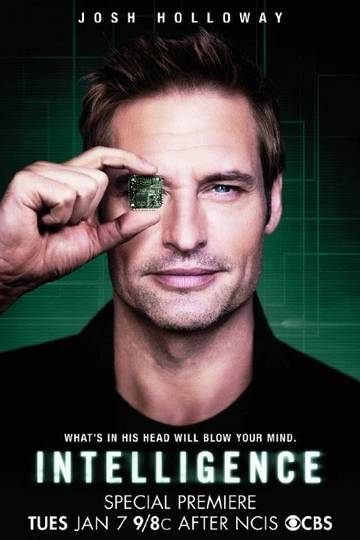
intelligence_tv_show
Intelligence starring Josh Holloway and Meghan Ory. Image via metslilled.blogspot.com.tr.

One of the gifts and curses of these blogging, social-media-savvy years is that everyone has got something to say about everything. It’s a gift, because it enables us to share our goals, dreams and writing with a lot more people than we could have imagined. As writers and bloggers, this is priceless.

However it also brings out the worst in some people. The more someone enjoys the anonymity of the Internet, the more likely they are to attack with no holds barred. Anyone who doesn’t enjoy or dislike any point of view is prone to name-calling and all sorts of criticism. And who gets some of the worst of these? Writers.

You should see some of the TV series’ boards on IMDB. The way some people “review” shows, you would think they were all trained pros who have been running the best, most intelligent shows you’ve watched.

Of course you can have an opinion. Of course you can argue. But why does politeness have to be sacrificed? And why is anyone against a certain opinion deemed stupid?

I don’t usually participate except when I see a completely civil board. But I do like to browse for research purposes (I run an entertainment blog) to see how people are reacting to certain shows, events, characters… etc. Anyhow, it is sometimes scary to see how passionately someone loves or hates a show.

Recently, I’ve developed a fondness for the sci-fi/action show Intelligence. It stars Josh Holloway (Sawyer of Lost) and Megan Ory (Red from Once Upon a Time). It’s fast, fun and full of action. It’s sometimes ridiculous, but never in an off-putting way. For me, that only increases the fun. I also love the one-liners numerous watchers seem to despise.

When a show’s concept revolves around a former kick-ass soldier with a computer chip in his brain that enables him to access pretty much anything electronic/online, you know you need a certain level of suspension of disbelief. I have no such problems when it comes to pure entertainment. (Yes,I liked Face/Off too. So what? We can’t always watch movies like The Hunt, which is excellent, but ultimately depressing.)

Now, back to Intelligence. Some claim it’s the worst show of this year. Some declare it the worst show ever. Of course this “accusation” pretty much goes to all the shows…Anyway, a few quite like it the way it is.

I don’t know why people can’t just relax, and let everyone have a good time with their tastes. There are so many shows I can’t stand, but I don’t waste my time crossing my fingers for their cancellation. 

Now, as for why everyone is a writer:

For every show, the number of people cursing the writers is astounding. Many of the writers are regarded as stupid.” A kindergarten kid could do a better job”. Seriously? Then why are all the studios still after great stories? After all, if anyone who claimed they could do better than a show’s writers actually wrote and sold something better, surely all producers would be done looking for the next big thing.

I get that taste varies. I respect that. I don’t shy away from pointing out something I don’t like in a film, book or show. But wishing some parts could be done better is different to claiming, boldly and confidently, that you could have created something much more superior. And even if you could come up with something better, it still doesn’t give you the right to personally insult the writer’s skills.

What do you think about all these aggressive, “closeted” writers? Should they or shouldn’t they chill a bit? How do you react to such aggression when it is thrown upon your way?

Related Posts Plugin for WordPress, Blogger...

Filed Under: Writing Tagged With: Intelligence, intelligence josh holloway, intelligence tv show, josh holloway, meghan org, tv show writing, tv shows, TV writing, writers

  • « Previous Page
  • 1
  • …
  • 43
  • 44
  • 45
  • 46
  • 47
  • …
  • 76
  • Next Page »

Blogroll

  • My Entertainment Blog

My Other Blogs

  • Beauty, Fitness & Style for the Fun-Loving Gal
  • Dating & Relationships in the 21st Century

Categories

  • Author Interviews
  • Author news and coverage
  • Blogging
  • Book Launches and Excerpts
  • Book News and Author Interviews
  • Book Recommendations
  • Book Reviews
  • Career Management for Writers
  • E-Book Reviews
  • Fiction Writing
  • Fictional Writers: Writer Characters in Movies, TV Series and Books
  • Inspiration and Motivation
  • Marketing
  • Marketing Fiction
  • Movie and TV Series Recommendations
  • Novel Reviews
  • Paying Markets-Web and Print
  • Productivity & Time Management
  • Recommended Resources
  • Reviews for Tools and Devices
  • Romance
  • screenwriting
  • Self-publishing
  • Story Conflicts
  • Website & Blog Reviews
  • Writer Tools
  • Writing
  • Writing Tools
  • Writing Updates

Copyright © 2026 · Focus Pro Theme on Genesis Framework · WordPress · Log in

This website uses cookies to improve your experience. We'll assume you're ok with this, but you can opt-out if you wish.Accept Reject Read More
Privacy & Cookies Policy

Privacy Overview

This website uses cookies to improve your experience while you navigate through the website. Out of these, the cookies that are categorized as necessary are stored on your browser as they are essential for the working of basic functionalities of the website. We also use third-party cookies that help us analyze and understand how you use this website. These cookies will be stored in your browser only with your consent. You also have the option to opt-out of these cookies. But opting out of some of these cookies may affect your browsing experience.
Necessary
Always Enabled
Necessary cookies are absolutely essential for the website to function properly. This category only includes cookies that ensures basic functionalities and security features of the website. These cookies do not store any personal information.
Non-necessary
Any cookies that may not be particularly necessary for the website to function and is used specifically to collect user personal data via analytics, ads, other embedded contents are termed as non-necessary cookies. It is mandatory to procure user consent prior to running these cookies on your website.
SAVE & ACCEPT