Addicted to Writing

Manage Your Freelance Writing Career While Writing What You Love

  • About Pinar Tarhan
  • Blog
  • Books
  • Hire Me: Services
  • Contact Me
  • Portfolio
  • Favorite Resources
  • Newsletter

Writing Your Best First 10 Pages, Crafting Impressive Loglines & Getting Read

Posted on August 9, 2013 Written by Pinar Tarhan

screenplay
Image via writingwonderland.blogspot.com.


Doing something scary and challenging for the first time can be difficult. It took a lot of persuading on my friend’s part to get me on my first roller coaster (that also turned you upside down) and then I couldn’t get enough. I made her ride the same thing over and over again after that.

The process of sending my first query letter was intimidating, but now I actually like querying. Sure, it’s annoying when you aren’t drowning in exciting sellable ideas and the wait is never fun, but querying is no longer the nerve-wracking part.

Now that I entered a screenwriting competition (where you got to submit your entire script), I’m on the constant lookout for other contests.  Two scripts (one movie, one TV pilot) are ready, the loglines are written and all I have to do is find approaching deadlines.

Image via scribendi.com.

There are several prestigious competitions with awesome rewards (yes, this will be a post later), and coming up as a finalist from those can give you a decent break in the industry.

Sure, most charge a certain fee to enter, but I think it is worth it. If anything, you are even more tempted to make your story tighter and more compelling since you don’t exactly have money to burn in the beginning of your career. And you cringe at the thought of a judge hating your idea or your storytelling. So you try harder.

But how patient are the judges? How much time do they give you before they toss your story away and pick up the next entry? I’d like to think they read about a third before giving up, but maybe that’s just wishful thinking on my part.

What brought this on? Well, as writers we are always told to make our openings and first pages (and obviously the following pages after that) as unputdownable as possible. This is common sense. We don’t read stories that bore us. So it’s only fair that we make our stories interesting. It’s also fair to us too – it’s not like we’d be wiling to put hundreds of hours into something unexciting.

But completing the first 10 pages is a bit tricky, isn’t it? There’s a lot to be introduced, and there is a certain purpose to our scenes. Yes, we experiment a lot and come up with the best order possible, but in the end, we choose what makes the best sense for our story, characters and genre. Shaking up things for solely attention’s sake wouldn’t get us very far.

Why the first 10?

I was researching about other screenwriting competitions when I came across a comment from a writer who had participated as a judge in a contest and said they were allowed to pass after 10 pages. Ouch.

Thinking back, a lot of the movies I watched and novels I read weren’t that amazing in the first 10 pages or minutes.  If I had passed on all the novels and movies with non-brilliant (but quite alright) starts, I’d have missed on a great deal of amazing work.

Ah, the limitations of a logline…

A logline is a short description of your story (preferably 1-3 sentences, depending on the preference of the competition/agent/etc).

Yes, it is a must element of fiction writing. You need to be able to come up with a concise yet intriguing description of your script – you will need to impress agents, studio execs, other writers, etc. in a very short time frame. And it is also great writing practice.

But the problem with brevity is that it doesn’t involve any of the alluring details that made the story worth writing; something other than a generic, done-a-million-times-before premise.

And even if you manage to squeeze in a unique point without breaking an essential logline rule (like acceptable length), it is still far away from what made your story worth telling.

John Evans’ How to Craft a Compelling Logline (obtained via PAGE International Screenwriting Awards’ newsletter) is one useful logline writing resource, and it lists some good examples of some famous stories (it also includes how it shouldn’t be done):

Potential Logline for Gladiator: “When a Roman general is betrayed and his family murdered by a corrupt prince, he returns to Rome as a gladiator to seek revenge.”

Potential Logline for Up in the Air: “A corporate vagabond’s high-flying lifestyle is jeopardized when a woman just like him captures his heart and an ambitious new co-worker threatens his job.”

Now, I watched Up in the Air and I liked it. I also find Evans’ logline to be spot-on. But would this logline compel me to read the script or watch the movie? I’m not so sure.

This is where your 10 pages (or hopefully at least bit more than that) come in. Along with your logline, your beginning is your chance to hook your readers. 

After reading the 10 pages comment that inspired this post, I went back and read my first 10 pages of the two scripts I submitted. And while they do a good job introducing characters and foreshadowing, they need a bit more time (aka more scenes) to escalate.

Fingers crossed for patient judges who see what you see in your story and keep reading. And may we write better and better loglines and the most impressive beginnings (and more.)

How do you feel about loglines?

*



Filed Under: Fiction Writing, Writing Tagged With: how to write a compelling logline, screenplay competitions, screenplay contests, writing a compelling logline, writing a screenplay, writing compelling beginnings

Defining, Writing and Selling Creative Non-Fiction: A Shortcut

Posted on August 7, 2013 Written by Pinar Tarhan

Image via ithaca.edu.

I don’t know about you but the term creative non-fiction has often confused me.

Sure, the distinction between fiction and non-fiction isn’t that blurry. And we know that non-fiction can require creativity depending on what you are writing.

So I decided to clarify the term for myself and other writers who might also be a tad puzzled by it.

According to about.com, creative non-fiction is a “a branch of writing that employs the literary techniques usually associated with fiction or poetry to report on actual persons, places, or events.” And it includes “travel writing, nature writing, science writing, sports writing, biography, autobiography, memoir, interviews and essays”.

The founder/editor of the Creative Nonfiction magazine, Lee Gutkind, describes this type of writing as “true stories well told”, a definition I really liked. I recommend reading his What Is Creative Non-Fiction page (linked above).

Selling Creative Non-Fiction

Selling creative non-fiction isn’t different from selling any other non-fiction piece. You need to find the right markets, research them and query accordingly.

There are many markets for personal essays, though some tend to accept work from writers living in certain locations.

Below are some markets that buy personal essays:

– Fifteen Paying Markets for Personal Essays and Life Stories  – This is a post on Writing World, listing 15 markets

–Sasee is a magazine for women, written by women. Just study the magazine, and submit timely & relevantly, following their editorial calendar.

– 20 Great Places to Publish Personal Essays – Freelance writer Megan Ward has listed her favorite personal essay markets.

– Paying Personal Essay Markets from Writer Abroad

Of course there are a lot more, but the ones above are bound to get you started. Also remember that creative non-fiction includes travel writing, blog posts and more, so there are way more markets than I can list in a post.

*

So far, when it comes to creative non-fiction, I’ve written essays and travel articles. What’s your relationship with it?


Filed Under: Writing Tagged With: creative non-fiction, creative non-fiction markets, markets for creative non-fiction, personal essay markets, personal essay markets for writers, selling creative non-fiction, what's creative non-fiction, writing creative non-fiction

The Unbearable Lightness (and Sleep Deprivation) of Having Submitted Your Screenplay

Posted on July 31, 2013 Written by Pinar Tarhan

screenwriting competition big break
Image via bigbreakcontest.com


* I wrote this post on the morning of the 25th (of July), but I could post it today because I was on vacation (and very happy about it) with a rare and impossibly slow Internet connection (not that I cared that much about it – thanks to the holy trio of sun, sand and sea.)

I finally did it! I finally submitted my screenplay to Final Draft’s Big Break Screenwriting Competition.

After weeks and weeks strenuous of editing, and double-checking the page limit (80-120 for feature scripts, over 150 to be disqualified), I managed to rewrite my originally 240-page script to a tightly written 142-page one.

To my delight, it had become a lot tighter, and I hadn’t lost too many solid scenes. I was congratulating myself on the delicate balance I had found between showing and telling. It was past 2  on the morning of *my self-inflicted deadline (more on this in a bit), and I was still not completely finished editing.

Every time I looked I noticed stuff I could word better, repetition I could avoid, extra spaces that had been previously missed. But I had to give it up sometime, and I was looking forward to some shut eye:  I was to get up only 4 hours later to catch a plane towards my hard-earned vacation.

So I crossed my fingers, hoped I hadn’t overlooked some deadly errors and opened the submitting page and to my horror, I saw the note: 135 pages max. Oops. Anything over 135 couldn’t even be downloaded. So cursing myself for not having checked the tiny number on the submission page earlier (but in my defense, why mention 150 as the absolute max. here and have a different number on the submission page?), I started, in panic, to brainstorm about what more I could possibly cut, without damaging the story.

I did my best to sharpen the dialogue further, edit some obvious parenthetical stuff and I did cut all the transitions (though I think some of them remained – I know you are not supposed to edit at the last minute, but desperate times…).

So I submitted my freshly edited, 135-page story at about 3.30 AM. I crossed my fingers, and got my confirmation email shortly after.

The irony is, I was hell-bent on not rushing things. I had started the rewrite  months before. But I am one of those people who sometimes get the best inspiration hours before the impending doom deadline, even if the deadline is self-inflicted.

As opposed to the latest possible deadline of  31st, I’d wanted to finish it by 24th, since I’d be on a plane on the 25th and I wouldn’t have access to a fast and secure internet connection.

Some of my favorite scenes were actually finished on the night of 24th, and you did read about my final editing adventures…

*

This part was written today:

I submitted another script today, this time the pilot episode of a comedy/drama series.

Funnily enough, this time if I were to have a problem with the page number, it would be that I didn’t have enough.  It’s 41 pages, and an-hour dramas are supposed to be a bit more than that, typically somewhere around 60-65. And well, it is not a sit-com. So I guess it would be an half-hour comedy/drama. Oh well…obviously I do hope it is liked. And if it is liked, the initial page number won’t matter a bit.

The thing is, when I created it, I didn’t know that much about standard lengths, and my episode page numbers (I wrote about 22 for this series) ranged from 40 to 90. Ah, the sweet oblivion of writing freely when you don’t have a clue about industry standards…

*

Wish me luck.  And I do wish you the best of luck with all of  your writing ventures. May luck, inspiration and correct (and timely) editing be with us all…


Filed Under: Fiction Writing, Writing Tagged With: big break screenwriting competition, editing a screenplay, final draft big break, screenwriting competitions, writing a screenplay

Favorite Cartoons and Images on Writing: The Funny and The Inspiring

Posted on July 6, 2013 Written by Pinar Tarhan

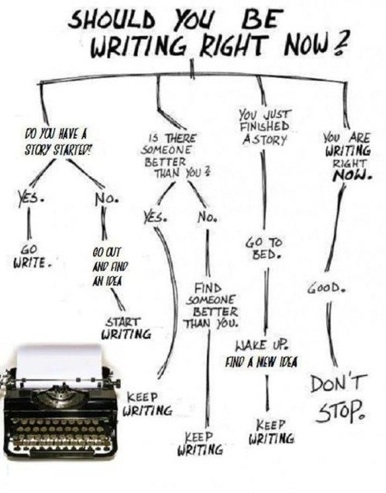
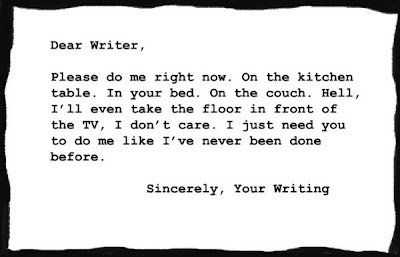
How’s your Saturday going so far? Since its the weekend, I wanted to cheer you up  by sharing some of the writing-related images that made me smile or just laugh out loud. Some of them also fueled me to move my butt and get to work. I’m sure you can guess which one(s).

Enjoy! And please don’t neglect to share your thoughts and stuff you like.

P.S. You can check out my Plain Old Writing Fun: My Favorite Cartoons on Writing post for my funny writing cartoons.


seo writer joke
I think I first found this through the Facebook page of PAGE International Screenwriting Awards.
inspirational words on writing
Image via WOW’s Facebook page.

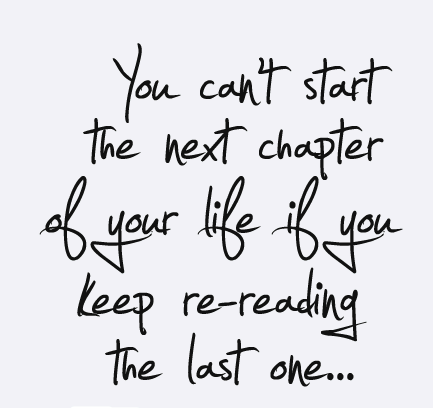
 OK, this also goes for re-reading your previous stories. Getting hung up on old stories keeps us from writing new ones. And while I love creating a new story (it’s a great rush!), I also find it hard to say goodbye to the ones I spent so much time with.


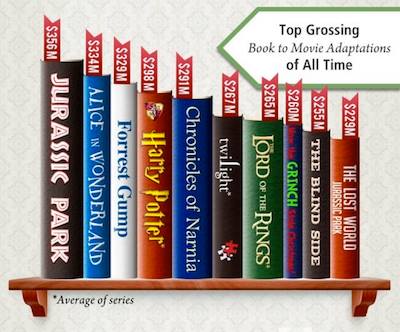
novels adapted into movies
Image via PAGE International Screenwriting Awards.


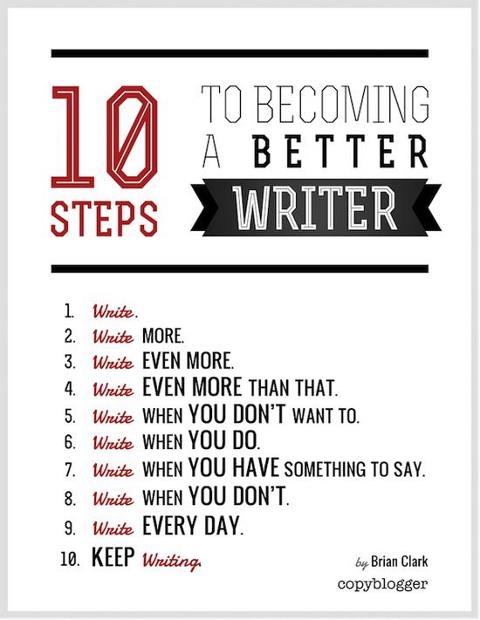
how to become a better writer


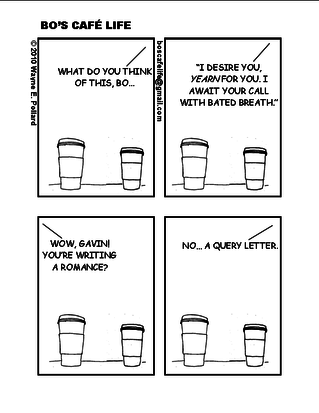
query letter, writing query letters
Image via boscafelife.wordpress.com.

 I used this cartoon in  my  Why I Like Querying: 7 Reasons Querying Is Good for Writers post, but it is just too fun not to fun here. Wayne E. Pollard is terrific with writing cartoons, so you might just head to his site for more.

Image via elissabassist.com.
Image via mymthos.tumblr.com


Related Posts Plugin for WordPress, Blogger...

Filed Under: Inspiration and Motivation, Writing Tagged With: funny cartoons about writers, funny images on writing, funny writing cartoons, motivation for writers, wayne e. pollard, writing, writing inspiration

  • « Previous Page
  • 1
  • …
  • 48
  • 49
  • 50
  • 51
  • 52
  • …
  • 76
  • Next Page »

Blogroll

  • My Entertainment Blog

My Other Blogs

  • Beauty, Fitness & Style for the Fun-Loving Gal
  • Dating & Relationships in the 21st Century

Categories

  • Author Interviews
  • Author news and coverage
  • Blogging
  • Book Launches and Excerpts
  • Book News and Author Interviews
  • Book Recommendations
  • Book Reviews
  • Career Management for Writers
  • E-Book Reviews
  • Fiction Writing
  • Fictional Writers: Writer Characters in Movies, TV Series and Books
  • Inspiration and Motivation
  • Marketing
  • Marketing Fiction
  • Movie and TV Series Recommendations
  • Novel Reviews
  • Paying Markets-Web and Print
  • Productivity & Time Management
  • Recommended Resources
  • Reviews for Tools and Devices
  • Romance
  • screenwriting
  • Self-publishing
  • Story Conflicts
  • Website & Blog Reviews
  • Writer Tools
  • Writing
  • Writing Tools
  • Writing Updates

Copyright © 2026 · Focus Pro Theme on Genesis Framework · WordPress · Log in

This website uses cookies to improve your experience. We'll assume you're ok with this, but you can opt-out if you wish.Accept Reject Read More
Privacy & Cookies Policy

Privacy Overview

This website uses cookies to improve your experience while you navigate through the website. Out of these, the cookies that are categorized as necessary are stored on your browser as they are essential for the working of basic functionalities of the website. We also use third-party cookies that help us analyze and understand how you use this website. These cookies will be stored in your browser only with your consent. You also have the option to opt-out of these cookies. But opting out of some of these cookies may affect your browsing experience.
Necessary
Always Enabled
Necessary cookies are absolutely essential for the website to function properly. This category only includes cookies that ensures basic functionalities and security features of the website. These cookies do not store any personal information.
Non-necessary
Any cookies that may not be particularly necessary for the website to function and is used specifically to collect user personal data via analytics, ads, other embedded contents are termed as non-necessary cookies. It is mandatory to procure user consent prior to running these cookies on your website.
SAVE & ACCEPT