Addicted to Writing

Manage Your Freelance Writing Career While Writing What You Love

  • About Pinar Tarhan
  • Blog
  • Books
  • Hire Me: Services
  • Contact Me
  • Portfolio
  • Favorite Resources
  • Newsletter

The 7 Challenges of Writing a Screenplay

Posted on June 26, 2013 Written by Pinar Tarhan

frustrated-writer
Image via susanarscott.com.

Nope, I am not going to talk about the challenges of trying to sell one. Not here. Because I’m not at that stage yet. Although considering the plausibility of my script events has been keeping me awake a bit (Plausibility is included in the list below)…

This post isn’t about finding that brilliant idea either. Yeah, your journey starts with that idea. But it is merely the beginning. Funnily enough, I didn’t use to know that. The naive, pre-writing career me used to think that the most frustrating part of being a writer was finding a great story concept. An idea worth pursuing, characters worth living with…

And while it is indeed a challenge to come up with a story that you won’t mind sharing your life with, the road after you have found your inspiration is not exactly smooth either.

Below are the current 7 challenges I’m facing:

1)   Writing dialouge. Writing compelling, flowing, natural dialogue. Most of the time my characters have interactions in my head. When this just happens, I don’t intervene. I just write down whatever they say.

But keeping the dialogue engaging for 100+ pages is not exactly effortless. And it’s important to write a story that will hook you. But will it also hook the agents or studios or contest judges?

2)   Finding the right title is one of the most difficult aspects of any kind of writing. But I find it harder when it comes to naming fiction.

And let’s face it, a lot of movie titles suck. If all fails, they go and name it after the characte(r), and it can work like magic if characters (and the names) are interesting and colorful.

Tango & Cash, to me, works as a title because the movie has enough conflicts and humor from the main characters’ differences and interactions. But I’ll admit that when I first heard it I thought it’d be about dogs. It’s not. It’s a cop action/comedy with Stallone and Russell from 1989. Tango and Cash are our characters’ surnames. Oh, the creativity…

3)   Plausibility. Especially if you are adding some crime elements. I didn’t think I’d have to deal with this one until I started writing mysteries and thrillers. After all, grounding a drama/romance/comedy in reality isn’t that difficult.

But unfortunately one of my main characters in the romantic drama I’m working on has to go and do something extreme. And I need to be able to justify how he pulls it off.

Of course, in theory, I could change what he is “pulling off”. However, if I did that, the impact would lessen, the stakes would get lower and a lot in the story wouldn’t make sense.

If I get to sell this story, in one form or the other, I’ll tell you what inspired me to write it. And the inspiration alone needs me to write that extreme and make it worth.

On the other hand, some of the stuff we watch doesn’t make much sense. We love them despite the ridiculousness. If any fans of  The Following are reading this, they will probably relate very easily.

I love, love that show. I can’t wait for season two. But even though it is set in our reality, you’ll see some of the most illogical, incompetent, amusing law enforcement behavior ever portrayed.

Yet despite those flaws, or maybe because of them (the behavior results in the villains winning over and over), the show is damn fun and addictive. But of course that show’s script comes with Kevin Williamson’s (Scream series, Dawson’s Creek, I Know What You Did Last Summer…) name and Kevin Bacon and James Purefoy are starring. My story doesn’t have such priveleges. Or any creepy yet charismatic villains (James Purefoy) going around slashing people…

But the existence of The Following does give me hope in the possibility of selling the implausible in the name of some delicious drama and conflicts.

4)   The scene order. Do you go linear or non-linear? Do you write it in form linear with the occasional flashback? Do you do a crazy linear where it starts with the end and ends with the beginning? (Memento is a terrific example.)

Perhaps you just write different timelines for different characters and then have them interact, while the audience has to watch the drama like a detective solving a puzzle. 21 Grams, anyone?

The possibilities are endless. And eventually the director can play/mess with the order so that he will have his version.

But our goal is for our script to get to a director in the first place. It is crucial to write a winning version to get read and liked.

For the most part, I prefer a well-written linear story. I like to surprise and move and entertain in order, though I do have a weakness for some relevant flashbacks.

Some of my favorite linear films:

–Braveheart

-The Man without a Face

-A Perfect World

–Equilibrium (has flashbacks)

–A Royal Affair (through letters, the narrator takes us back in time and tells the story in order.)

-The Crow (has flashbacks- the character has returned from the dead)

The list goes on.

5)   The ending. The ending matters. Big time. It might even matter more than it should. There are movies with a huge fan base, mostly related to the ending. The Sixth Sense, anyone?

The perfect ending makes you happy that you spent time watching the film.  It shouldn’t be too happy if a happy ending would betray the story.

But make it too depressing, at the end of a depressing movie, you could question the writer’s motive. Was he trying to create tragedy for tragedy’s sake?

Then there’s the matter of being obvious. Ideally you shouldn’t see it coming from scene one, especially if it is a thriller/mystery. If it is a drama/comedy/action, it is more or less doomed in the predictability department.

Of course you can go with the modern romantic comedy trend and base the entire premise on the guy not getting the girl (or vice versa.) You might please a lot of cynics and romcom-haters this way, but a part of your audience will feel cheated. Just like you shouldn’t kill Bryan Mills at the end of a Taken movie (and of course he doesn’t die!), I think the main girl and boy should end up together – given it is really love and they aren’t hideous human beings. (Yeah, I’m talking about personality.)

And one other pet peeve…Ambiguity. A little open ending can be inspiring. But too much ambiguity can get in the way of closure.

No one said finding the right ending is easy.

6)   Rewriting. You might decide to submit a previously written manuscript, thinking all you need to do is edit and format. But then you realize the whole thing will need to be rewritten because (fortunately) you are a better writer now, and you know at least a bit more about writing and selling. Of course realizing you have 2 weeks for all the rewriting, editing and formatting is one of the many “delights” of screenwriting.

7)   Length. After you’ve poured your heart’s work onto the page, it might be troubling to realize that you are a couple dozen pages short. Or over.

This is one of my current problems. I do need to cut it much shorter (about 100 pages). But I find that shortening is easier than coming up with events that aren’t there. And since I’m doing a major rewrite anyway…

*

Right now rewriting (to match a deadline) and plausibility are my most troubling problems. After all a title can be changed. Directors can change the plans to suit their vision and for the most part, adding or subtracting a few scenes comes naturally when I’m going over the manuscript anyway.

To see how “valid” these challenges are, I recommend reading Breaking &  Entering: Great Writing – A Love Story on Script Mag, a useful industry resource.

Now, it’s time to head to work and work on the screenplay for this writer. Wish me luck, and please feel free to share all your joys and frustrations about screenwriting or any kind of fiction writing.
Filed Under: Fiction Writing, Writing Tagged With: challenges of writing a screenplay, screenplay writing, screenwriting, script writing, writing a screenplay

Man of Steel’s Writer Character Lois Lane and Her Compelling Conflicts: Protecting Your Subject, Falling for Your “Subject” and More

Posted on June 20, 2013 Written by Pinar Tarhan

Thanks to Man of Steel’s story, this is both a “Compelling Movie Conflicts” and a “Writer Characters in Movies” post.

The 2013 Superman reboot Man of Steel is a pleasant addition to the superhero movies with its brilliant cast (Kevin Costner, Russell Crowe, Diane Lane, Michael Shannon, Amy Adams, Henry Cavill), a satisfactory (back)story and some great effects that unfortunately didn’t exist in the time of Christopher Reeve (Superman from 1978).

However one of the things that made me like this Superman movie a lot more than all the other Superman movies (and this coming from a Reeve & Donner fan) and many other comic book adaptations is that there are several compelling “writer” conficts that are relatable.

Now, you can read the plot and movie review here. But I’ll provide strictly Louis Lane-related plot points (and conflicts) below:

Lois Lane (Amy Adams) is an award-winning journalist sent to a military base in Canada to observe the weird craft (ruled out as a submarine) found. There she follows one of the new workers (Clark Kent, played by Henry Cavill) there as he finds the answers to his origins. He gets to save Lois’ life and then disappears, working to improve his abilities.

But when Lois’s boss refuses to publish her story (that doesn’t sound plausible), she leaks the story other channels, and then looks for Clark herself. Up to now, including the story, he’s a mystery man whose identity and background are unknown.

When she finds him (or he lets her find him), and Clark explains her the reason for his hiding the truth, she decides to keep his secret. But then Zod, the killer of Clark’s biological father,  sends a threatening message: Either humans give Clark to him, or he destroys them all.

Lois is arrested by the FBI, but she isn’t exactly willing to talk. Clark doesn’t trust Zod, but he agrees to turn himself in for the safety (and freedom) of Lois.

Then Lois and Clark find themselves on the spacecraft of Zod. He tries to persuade Clark to join their plans of recreating Krypton on earth, but Clark doesn’t want anyone to be killed. On the craft, Lois gets to “meet” Clark’s father, and learns some critical strategical information.

From then on, Lois becomes an integral part of the team determined to stop Zod from destroying everything.

The Famous Writer Character: Lois Lane 

amy-adams-lois-lane-man-of-steel
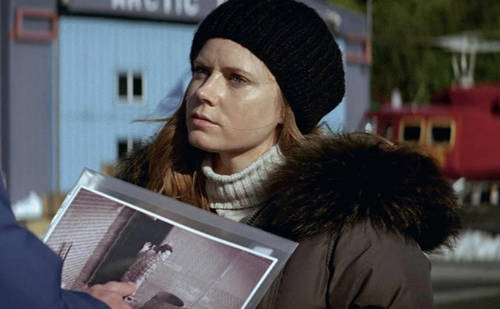
Amy Adams as Lois Lane, searching for Clark. Image via flicksandbits.com.

Lois in Man of Steel is the ideal journalist. She goes to whereever her leads (and curiousity) take her, no matter how dangerous things might be. She then writes about her experiences without holding back, and gets frustrated at her boss for not giving her the green-light, even though her story sounds, quite improbable. And when she can’t make herself heard through the publication she works for, she gives her story to a guy who is famous for writing stuff like that- even though this could cost her her job.


But when she learns why Clark has been hiding who he really is, she keeps his secret- even if it eventually leads to her arrest. When Zod asks her to come on board with them, she willingly leaves; and this has nothing to do with the story.


Of course the more Clark and Lois know each other as a person, they more connected they feel. So we have a mutually protective, risk-taking and loyal relationship combined with a lot of attraction.


And as much as things got very complicated and dangerous, all ended well for both characters. But things could have gone really wrong for Lois, had she been a real person and her “subject” not a superhero.


She could have lost her job, the guy she wrote about would probably be less sweet and understanding about her story, and none of them would probably survive such dangerous situations.


But it makes for a fun and appealing story. The romance is delightful because it includes friendship, chemistry, understanding, loyalty and bravery. Lois proves to be more into her story than her career (and her life), which is really admirable (though this would probably send her parents to an early grave.) And she has the courage to step up when the world needs her.


Of course Man of Steel isn’t just for writers. But with all the Loises I have seen on both TV and big screen, Amy Adams’ is the coolest and most likeable. She is also a lot more than a damsel in distress.


*


How far would you go for your story? For your subject (love)?

And did your stories ever bring you real life romance?

Filed Under: Fictional Writers: Writer Characters in Movies, TV Series and Books, Story Conflicts Tagged With: amy adamds as lois lane, amy adams as lois lane in man of steel, creating compelling story conflicts, lois lane man of steel, lois lane superman, story conflicts, writer characters in movies

Bradley Cooper Writes: Cooper’s Writing Character in The Words and His Other Writer Roles

Posted on June 12, 2013 Written by Pinar Tarhan

Bradley Cooper doesn’t write in real life as far as we know. But he sure did play some remarkable writer characters in his films, the most recent being The Words.

Before talking about his character in The Words, let’s remember what Bradley Cooper has been writing:

Alias – Will Tippin

Bradley Cooper as Will Tippin, Alias
Will Tippin hard at work, cracking cases. Image via alias-tv.com.

Alias is one of my favorite shows of all time. It tells the story of double-agent Sydney Bristow (Jennifer Garner) who’s working for CIA to bring down a terrorist organization network-a network that originally hired her disguised as the actual CIA.

When she realizes that she’s been working for the enemy after a very tragic event, she goes to the real CIA, and starts an even more dangerous life as a double agent.

Of course being a double agent requires her to lie to her very best friends for their own safety. This includes Will Tippin, a newspaper reporter who doesn’t let go of investigating the death of Sydney’s fiance (the tragic event that opened her eyes) and gets into a whole new level of trouble afterwards…

Will Tippin is a nice, smart and fun guy. A great friend. He was also a bit in love with Sydney, but he was unlucky when it came to timing. First there was Danny, the fiance she was mourning. And then there was Michael Vaughn (Michael Vartan), her CIA handler- who happened to be the only person she could share everything with. It’s hard to compete with that.

But worry not. Alias is too good for girls-fall-for-bad-guys cliche. Michael Vaughn, despite being a field-trained agent, was one of the nicest guys ever seen on television.

The writer character aside, it is a great action/drama example created by the talented and prolific writer/creator J.J.Abrams (Lost, Forever Young, Regarding Henry, Fringe…)


Limitless – Eddie Mora

bradley-cooper-as-eddie-morra-in-limitless
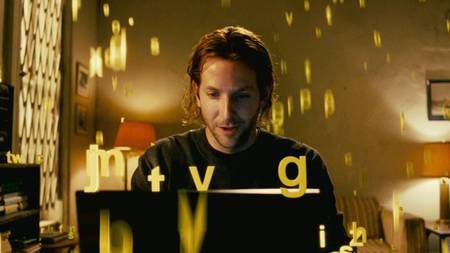
Words just flow after the drug’s effects have kicked in.Image via eatsleeplivefilm.com


Eddie Mora (Bradley Cooper) is a struggling writer. But when he stumbles upon a pill that allows him to use his brain in a capacity beyond his wildest dreams, he also gets to become a bestselling author – his manuscript finished overnight.

Of course the pills, fame and super talents will come with a price; threatening his and his girlfriend’s (Abbie Cornish) lives.


Limitless is a great movie for writers, becuase one part of the movie is about a fanasty coming true- ultimate creativity and productivity resulting in the fame and recognition we have always wanted (meaning we sold our manuscripts and can make a good living writing!). And of course part of it brings the price he pays because of the “unnatural” means he used to achieved this.

It doesn’t stop me from fantasizing about something that will come without the side effects and the bad guys,though. Nope, I don’t want drugs.


The Words – Rory Jansen


the-words-bradley-cooper
Our writer has taken the advice of “copy great work” a tad further! Image via bristowbeat.com.

Rory Jansen is a struggling writer who lives with his girlfriend (Zoe Saldana).Their happiness is sometimes threatened by his unrealized dreams as he can’t find a publisher for his novel.

But during a visit to an antique shop, his girlfriend buys him an old briefcase, which turns out to hold a manuscript. As Rory devours it, he feels both mesmerized and inadequate. He starts typing it, just so he can feel  like those are his words for a while.

However his girlfriend reads it, and loves it so much that she pressures him into sending it to an agent. To his surprise, the publishing house he works for (in a non-writing capacity) publishes it and he becomes a best-selling author with critical acclaim. He later successfully publishes again.

But he is being followed by an old man (Jeremy Irons), the writer of the manuscript, who later confronts him and tells his story.

As Rory struggles with his conscience, the old man doesn’t help him much with the process.


In addition to Bradley Cooper, Jeremey Irons, Ben Barnes (Irons’ youth) and Dennis Quaid also play writers. Dennis Quaid is the first writer we meet, as he tells us the story of Rory. It’s up to the viewer to decide whether Rory’s story is fiction, or a semi-autobiographic confession.


***

Have I missed any of Cooper’s writer characters?  And what’s your favorite writer character from him?

And how about you? Have you created any writer characters?


Filed Under: Fictional Writers: Writer Characters in Movies, TV Series and Books Tagged With: alias tv series, bradley cooper, bradley cooper movie roles, limitless bradley cooper, the words, the words movie, writer characters in movies

Why I Like Querying: 7 Reasons Querying Is Good for Writers

Posted on June 7, 2013 Written by Pinar Tarhan

query letter, writing query letters
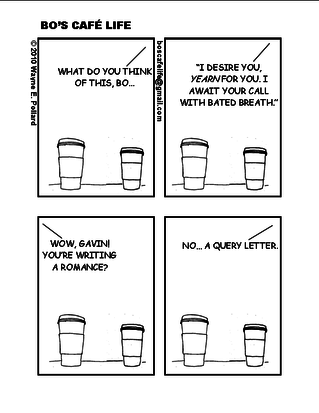
Image via boscafelife.wordpress.com.

Call me crazy, but I’ve grown quite fond of querying. Gone are the days I was terrified of coming up with something the editor would laugh at (not in a good way).

Sure, I still get a bit of an adrenalin rush before I hit send and wait for the reply, but I’ve become a lot more apt and confident at querying.

A lot of writers will advise you to do whatever you can to eliminate the process, and they have a good point: It’s not very practical (or lucrative) to depend on making your entire living out of the yeses you get out of your queries. Because there will be lots of rejections and no responses, especially in the beginning. And they never completely go away. So it makes sense to land ongoing gigs and clients so you’d not go through a feast or famine cycle.

But unless you become a famous writer with a ready and sealed 10-book deal (yes, I’m aware of how “often” that happens), you will need to query, a lot.

You’ll need to query editors, other clients, agents and publishers. So the better you get, the more you’ll write for your favorite publications.

A regular stream of good ideas (accepted through good queries) will help you establish a relationship with an editor – and that editor will tend to send assignments your way, directly or indirectly.

The more yeses you get, the more confident you’ll feel and the more comfortable you’ll feel sending out more queries.

But don’t feel discouraged when you get rejected. Study, practice and improve. And if you still shudder at the thought of writing more queries, below are some wonderful resources that I’ve compiled: 7 Great Query Letter Resources: A List of (E-)Books, Articles and Blog Links.

OK, now that we’ve gotten that sorted out, let’s get to the reasons:

1)   It’s good practice on being concise and interesting. You’ve limited space, and what you say and how you say it are extremely important.

2)   This practice will make you a better writer, and it is what you do. You write. Novels, screenplays, articles, essays, posts, newsletters…

Whatever you write, you want to be read, liked, shared, published, taken action upon.  And you’ll always have limited space and time to get your target audience’s attention.

3)   The more you are read and sold, the more you make. So queries do help you on getting the writing career you’ve always wanted. And yes, you’ll need to query agents and publishers too.

4)   It makes your skin grow thicker –which is one of the essentials of being a healthy, happy and earning freelance writer.

5)   It makes you more confident, especially after you have gotten your first acceptance(s).

6)   It’s fun. The more ideas you sell, the more you want to brainstorm.

7) You do end up earning more, and querying less (if you want.)

So how do you feel about querying?


Related Posts Plugin for WordPress, Blogger...

Filed Under: Writing Tagged With: benefits of querying for writers, query, querying for writers, writing, writing queries, writing query letters

  • « Previous Page
  • 1
  • …
  • 49
  • 50
  • 51
  • 52
  • 53
  • …
  • 76
  • Next Page »

Blogroll

  • My Entertainment Blog

My Other Blogs

  • Beauty, Fitness & Style for the Fun-Loving Gal
  • Dating & Relationships in the 21st Century

Categories

  • Author Interviews
  • Author news and coverage
  • Blogging
  • Book Launches and Excerpts
  • Book News and Author Interviews
  • Book Recommendations
  • Book Reviews
  • Career Management for Writers
  • E-Book Reviews
  • Fiction Writing
  • Fictional Writers: Writer Characters in Movies, TV Series and Books
  • Inspiration and Motivation
  • Marketing
  • Marketing Fiction
  • Movie and TV Series Recommendations
  • Novel Reviews
  • Paying Markets-Web and Print
  • Productivity & Time Management
  • Recommended Resources
  • Reviews for Tools and Devices
  • Romance
  • screenwriting
  • Self-publishing
  • Story Conflicts
  • Website & Blog Reviews
  • Writer Tools
  • Writing
  • Writing Tools
  • Writing Updates

Copyright © 2026 · Focus Pro Theme on Genesis Framework · WordPress · Log in

This website uses cookies to improve your experience. We'll assume you're ok with this, but you can opt-out if you wish.Accept Reject Read More
Privacy & Cookies Policy

Privacy Overview

This website uses cookies to improve your experience while you navigate through the website. Out of these, the cookies that are categorized as necessary are stored on your browser as they are essential for the working of basic functionalities of the website. We also use third-party cookies that help us analyze and understand how you use this website. These cookies will be stored in your browser only with your consent. You also have the option to opt-out of these cookies. But opting out of some of these cookies may affect your browsing experience.
Necessary
Always Enabled
Necessary cookies are absolutely essential for the website to function properly. This category only includes cookies that ensures basic functionalities and security features of the website. These cookies do not store any personal information.
Non-necessary
Any cookies that may not be particularly necessary for the website to function and is used specifically to collect user personal data via analytics, ads, other embedded contents are termed as non-necessary cookies. It is mandatory to procure user consent prior to running these cookies on your website.
SAVE & ACCEPT