
Addicted to Writing

Manage Your Freelance Writing Career While Writing What You Love

  • About Pinar Tarhan
  • Blog
  • Books
  • Hire Me: Services
  • Contact Me
  • Portfolio
  • Favorite Resources
  • Newsletter

Challenges of Writing A Novel & Some Great Resources for Tackling Them

Posted on July 11, 2011 Written by Pinar Tarhan

writing a novel
Image via originalbliss.typepad.com


I used to think that there were two challenges about writing a novel: 1) finding a great story, and 2) trying to get that great story published.

While I still believe these are the biggest challenges a writer faces, I realized there are 4 more challenges that came along my way:


1) Novel or Screenplay?

You love reading novels. You love watching movies. And you love creating dialogue-heavy stories. So how do you decide whether your story works best as a novel or a screenplay?


As a writer with no connections to Hollywood, I realized that I had a better chance of finding a publisher that might be interested in my novel. Now, please notice that I said easier, and not easy.


Getting a novel published seems to be relatively easier than getting a screenplay to Hollywood. I had a sneaking suspicion this might be the case and this is the article that helped me make up my mind: The Novel vs. the Screenplay: a Tough Love Guide for Talented Writers.


2) POV : Point of View


So you decided you’d rather write a novel. You have your characters, and you have your story. But from which point of view are you going to tell everything?


I really struggled with this decision. I tried different ones through several chapters, and then saw what worked best. I also looked at my favorite books in the same genre to see what other authors did.


Remember your options:

Third Person Limited

Third Person Multiple (or Author Omniscient)

First Person

Second Person


Articles That Helped Me With POV

Whose Point of View?

Picking the Perfect POV

Good reasons for multiple POV

Point of View, Parts 1 & 2


3) Order of Scenes

Which chapter will you start with? How do you order your scene?

I think that with all the other decisions regarding your novel, you have to decide what works best for you. I rewrote, reordered and rewrote again. And, I did eventually go back to my first order. It provided the best flow.


4) Quantity of Dialogue

Since I was originally planning to write a screenplay, my chapters are filled with dialogue. I am not saying it is all dialogue, but my characters talk a lot. And because I decided to go with Third Person Omniscient, I think the amount of dialogue works for the story.


**


But of course I have to remind you that I am only in the writing stage. I haven’t finished the story, and haven’t sent queries to any literary agents. Right now, my only concern is to put my story on paper. There might be many changes along the way. And of course we don’t know if agents/ publishers are going to be interested yet.


However you should keep in mind that you need to have a story to be able to get a rejection or approval.  So come on! If you have a story to tell, start writing it. Then you can deal with formatting and querying.


Filed Under: Writing Tagged With: challenges of writing a novel, deciding on your novels pov, different types of pov, novel or screenplay, point of view, pov, writing a novel

8 Awesome (Free & Paid) Places to Find Market Guidelines

Posted on July 4, 2011 Written by Pinar Tarhan

Writer’s Market – (from Writer’s Digest)

Writer’s Market 2018 can be found at the newsstands, or you can access the online Writer’s Market database. It is a paid resource, and some writers complain that it is not as up-to-date and extensive as it should be. I agree to a certain point, but I wouldn’t give it up on it just yet.

It offers some solid information, such as when the magazine was established, how to submit, who to submit, how much of it is freelance written, its response time, length and much more. However, you need to check the information yourself, as publications change editors/websites/pay rates, and many even cease to exist.

I bought the VIP program which cost me $49.95 – it gives me a year’s subscription to the Writer’s Digest Magazine, a year’s access to the database, The Essentials of Online Marketing & Promotion Webinar, 10% off all Writers Online Workshop courses and 10% off all Writers Digest Shop purchases.

Remember that Writer’s Digest also works with freelancers, and you can find the submission guidelines here.

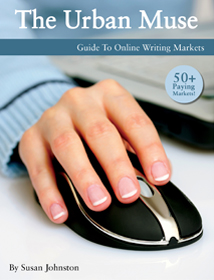
Susan Johnston’s The Urban Muse Guide to Online Writing Markets

Guide to Online Writing Markets
image via Susan-Johnston.com

Susan Johnston is a published author who runs her own blog The Urban Muse. Her e-book, The Urban Muse Guide to Online Writing Markets. She offers the website’s name, its attitude and who it targets. It also includes its pay rate (if it is specified), the topics covered and a link to the masthead/contact page/submissions page wherever possible.

At the very least, you have the link to the magazine’s main page where you can do your own digging. The book also features the reasons you might want to write for the web, how to approach the editors, and Susan’s own successful e-mail queries, including the background stories of these queries.

The book costs $17.99. I bought it after seeing it recommended on Carol Tice’s Make a Living Writing blog. I think it is a must for web writers, as her listing includes online publications in diverse areas, including web design, social commentary, relationships, parenting, stock markets, writing and more.

She also lists other resources where you can search for online writing markets.

Writing for Dollars

Writing for Dollars has its own free guidelines database, as well as a free newsletter that comes with useful articles on writing. The newsletter also contains a group of markets, but to find more, you need to dig in to the database. As far as free resources go, it is pretty good. For instance some of the publications writing you can find on the database include Freelance Market Writer’s News, FundsforWriters, WOW! Women on Writing, The Write Markets Report and more.

You can search according to the subject, market name, pay rate, submission style (simultaneous or not) and payment time (on acceptance or publication).

The markets are divided into three according to their pay: High (over $500) Medium ($125-$500) and Low (less than $125).

Writing for Dollars is itself a low-paying market. It starts from $10 (for reprints) and goes up to $25 for solicited articles. You can read its guidelines here.

Freelance Writing

Freelance Writing.com is a wonderful website that it comes with its own free (albeit) small markets database, job listings, writing contests and resources (such as useful articles and free e-books). If you subscribe to the newsletter, you will get freelance writing jobs. Currently they have free e-books on writing persuasively, writing good sales pages, online copyrights, time management, creativity and many more.

Towse’s Links to Online Submission Guidelines

Towse’s Links to Online Submission Guidelines is a quite comprehensive (and free) guide to submission guidelines (listed alphabetically) and agents (also listed alphabetically).

Writer’s Weekly

Writer’s Weekly is a wonderful e-zine that comes with a free newsletter, free guidelines database, news from the industry and free articles. Just like Writing for Dollars, it is also a paying market itself (in the subject of writing of course). It pays more than Writing for Dollars.

Freelance Market News

You can subscribe to Freelance Market News Magazine at £17 for 6 months (6 issues), and £29/year (11 issues). The site offers a free sample issue. The magazine is also a paying market. You can find its guidelines here. The pay ranges from £40 to £50.

Worldwide Freelance

WorldwideFreelance.com offers a free newsletter with useful articles, links and some market guidelines. Their premium database costs 24.95/year and 39.95/2 years, and it is supposed to have 2.500 writing markets. The site also offers e-books on writing, blogging and writing markets. Market List E-Books (such as 50 Women’s Writing Markets or Travel or 50 Traveling Writing Markets) cost $6.95 each.

As you can guess from the website’s name, you can find info on markets from Canada, Australia and the UK as well.

**

This is all from me for now. Please feel free to add your favorite resources.


*Note: Only Amazon links and Susan Johnston’s e-book link are affiliate links, so I make a small commission when you buy through them.

Filed Under: Recommended Resources, Writing Tagged With: freelance market news, guide to online writing markets, magazine guidelines database, market guidelines, online writing markets, submission guidelines, susan johnston, urban muse writer, worldwide freelance, writers digest submission guidelines, writers market 2011

How to Handle Rejection (and When It Might Be A Good Thing)

Posted on June 28, 2011 Written by Pinar Tarhan

Rejection Letters
Rejection Letters. Image via elle.com


Writers are constantly exposed to a form of rejection.  Well, no one likes to be rejected in any area, but we writers need to face the music more often than others. We apply to a lot of writing gigs both online and offline, try to get our stories/novels published, and/ or get our scripts read by producers/agents. And it doesn’t always matter whether we targeted the right market or abided by the guidelines. It doesn’t always make a difference that our writing is good, or the query letters rocked. John Grisham got rejected. J.K. Rowling got rejected.  Do I really need to give more examples?

And having been writing full time since late 2009, I can say that I am pretty much at the start of the rejection cycle. Because although I have been writing since I was basically a preteen, I had never sent my writing to anyone besides my friends. I loved being read and I enjoyed a loyal following that loved what story I would come up with next.

But we all grew up and our lives became much more hectic than just going to school, socializing or dating. We were distracted by our career and family plans. That’s when I finally decided that I was not satisfied with writing just for me and my friends. I also wasn’t going to settle for some job I didn’t want because the economy sucked. It was time to follow my. So I dove straight into heavy research. I studied how magazine queries were made, how articles were formatted. I read about how you could sell your screenplays even if you lived a world away from Hollywood.

I read about blogging and writing, and applied what I learned. In addition to running several blogs, I got some decent gigs and continue to have them. I also keep getting rejected. Here is what I’ve learned so far:


1)      Obviously, your samples won’t impress everyone. For many jobs, you will be either be overqualified or under-qualified. If you are overqualified, the job is highly unlikely to satisfy you.


2)      With some gigs, you’ll have been 10 minutes/2 days/50 applicants too late to have applied.


3)      Job-hunting for writers isn’t all that different from job-hunting for others.


4)      You will be rejected, even if you avoided every rookie mistake you were supposed to avoid.


5)      Many editors will not reply at all.


6)      Some editors will just reply “No, Thanks”, only after you followed up twice.


7)      It is be frustrating, but the acceptance e-mail and the check are all worth it. Yes, I am assuming the check is decent.


8)      You constantly have to work on writing better, marketing and networking. And you need to keep querying.

**

A writer friend of mine recently mentioned that he hated the rejection letters that said that he was a good writer, the story was good but they were just not interested. I hate the letters that don’t come at all, or come very late. I have a whole article about it.

While obviously the news (of rejection) stinks, it at least enables you to move on, and learn. So try not to let it get you down so much. I once read somewhere that the more rejection letters you have in your drawer, the closer you are to being published. And then the author of the article had gone on to list the number of rejection letters famous authors got before they got lucky. The list is quite impressive.

Proof? John Grisham’s first novel is A Time to Kill. His first published worked however is The Firm. A Time to Kill got published after The Firm. Same guy, same style, same quality, both bestsellers. One just happened to be misjudged.

So the ultimate lesson is to hang in there. Your turn will come too, whether it is getting constant magazine gigs, or getting your fiction out there. You are just going to get rejected a lot in the process.


Filed Under: Writing Tagged With: blogging, handling rejection, how to handle rejection, John Grisham, rejection, rejection letters, writers, writing, writing gigs

8 Essential Blogging Terms for Beginners

Posted on June 27, 2011 Written by Pinar Tarhan

blogging terms image
blogging terms image via bloggingbasics101.com

Here are the definitions to some of the most used terms in the world of blogging. Relax, grab a (healthy) drink and go over some of the most used terms in blogging. And remember, in this glossary, I don’t get technical. Just practical.

Blogging platform: This is basically where you blog. WordPress and Blogger are the most famous ones. I like to use them both.

Blogger is free, and you can monetize it. WordPress has a lot more options, but any monetization comes after you buy your own hosting. So there are pros and cons to both.

For instance, this blog is a self-hosted WordPress blog. My entertainment blog is also on WordPress.

For a Blogger example, you can check my Dating and Relationships in the 21st century.

Webhost: Webhosting basically means that you pay to have your own websites and blogs to be out there. Why should you pay when there are many free platforms? Well, it depends on your intent.

The webhost lets you choose your own domain name. And even though my platform is WordPress, my blog URL doesn’t have WordPress, a benefit of having a self-hosted blog.

Webhosts also allow you to be free with your storage capacities (obviously up to a certain point, but you are much more comfortable with space than you are on the free platform), create an e-mail address (many advertising networks) require you to have a hosted email address and not a free one such as from Yahoo or Gmail).

And there is the fact that WordPress.com (free WordPress platform) doesn’t let you put advertising on your site. If you are in this for making a living for yourself, you need to get a webhost. Mine is Justhost. While it has its ups and downs, I have been using them since late 2009. They are cheap, and the customer service is pretty accessible. I occasionally get the message that I need to upgrade. I handle this by getting rid of the things I don’t use for the site.

But alternatively, you can monetize Blogger with Adsense, Amazon and other advertising opportunities – as long as you are allowed to have a URL on a free platform. It is best to check with the Publisher FAQ’s of the advertising company you want to use.

I heard that Bluehost is pretty good, but I have been too lazy to move. As long as Justhost keeps it up with the customer service and prices, I am happy.

Monetizing: You can put ads, make affiliate deals and sell other people’s stuff, sell your own product and services, make paid reviews…but these all have pros and cons. One of the cons is money is hard to make, especially if you are low on traffic.

Traffic: How many unique visitors do you get? Daily? Monthly?

Guestblogging: Writing for other blogs or other bloggers write for you. Guest-writing for popular blogs will be great for prestige and your popularity. There is a couple of lines for writing your bio, which includes your website link. You’ll also get to interact with people who comment on your piece. Just apply to guest-post and abide their guidelines. Then give it your best shot.

* Carol Tice pays her guestbloggers $50, but of course she selects them carefully.

Link building: How powerful your blog is usually dependent on how many (powerful/quality) sites are linking to you.

One great method is networking with others. Another fun, albeit less effective, way is blog commenting.

Problogging: Blogging about blogging- how to monetize, attract readers, etc…

Some of the problogging blogs I like are Problogger, Blogginglabs, Blogging Teacher (especially if you want to make money writing blog posts) and Carol Tice’s Make a Living Writing (especially if you are a writer who blogs).  I have a lot more, but these four should get you going for starters.

Seo: Seach Engine Optimization. You need to optimize your blog for search engines like Yahoo, Google, etc… so that your blog will be easier to find on the Internet. In order to do that, you need to pick the right keywords.

What are your blog posts about? What keywords are in demand? What words are people typing into search engines? What are they interested in?

You can either search first and prepare a post accordingly or write your post first and make the search and optimize it later.

Frankly, I have read so many blog posts and e-books about SEO that I wouldn’t be able to direct you to one individual source.

**

Let me know if you need/want any other concepts explained. I’ll either explain here on the comments, or will link to a resource I like. Or both:)

Related Posts Plugin for WordPress, Blogger...

Filed Under: Blogging Tagged With: blogger, blogging, blogging 101, blogging definitions, blogging terms, blogging tips, cheap web hosting, problogging, search engine optimization, self-hosted blogs, seo, web hosting, wordpress, wordpress vs. blogger

  • « Previous Page
  • 1
  • …
  • 68
  • 69
  • 70
  • 71
  • 72
  • …
  • 76
  • Next Page »

Blogroll

  • My Entertainment Blog

My Other Blogs

  • Beauty, Fitness & Style for the Fun-Loving Gal
  • Dating & Relationships in the 21st Century

Categories

  • Author Interviews
  • Author news and coverage
  • Blogging
  • Book Launches and Excerpts
  • Book News and Author Interviews
  • Book Recommendations
  • Book Reviews
  • Career Management for Writers
  • E-Book Reviews
  • Fiction Writing
  • Fictional Writers: Writer Characters in Movies, TV Series and Books
  • Inspiration and Motivation
  • Marketing
  • Marketing Fiction
  • Movie and TV Series Recommendations
  • Novel Reviews
  • Paying Markets-Web and Print
  • Productivity & Time Management
  • Recommended Resources
  • Reviews for Tools and Devices
  • Romance
  • screenwriting
  • Self-publishing
  • Story Conflicts
  • Website & Blog Reviews
  • Writer Tools
  • Writing
  • Writing Tools
  • Writing Updates

Copyright © 2026 · Focus Pro Theme on Genesis Framework · WordPress · Log in

This website uses cookies to improve your experience. We'll assume you're ok with this, but you can opt-out if you wish.Accept Reject Read More
Privacy & Cookies Policy

Privacy Overview

This website uses cookies to improve your experience while you navigate through the website. Out of these, the cookies that are categorized as necessary are stored on your browser as they are essential for the working of basic functionalities of the website. We also use third-party cookies that help us analyze and understand how you use this website. These cookies will be stored in your browser only with your consent. You also have the option to opt-out of these cookies. But opting out of some of these cookies may affect your browsing experience.
Necessary
Always Enabled
Necessary cookies are absolutely essential for the website to function properly. This category only includes cookies that ensures basic functionalities and security features of the website. These cookies do not store any personal information.
Non-necessary
Any cookies that may not be particularly necessary for the website to function and is used specifically to collect user personal data via analytics, ads, other embedded contents are termed as non-necessary cookies. It is mandatory to procure user consent prior to running these cookies on your website.
SAVE & ACCEPT