Addicted to Writing

Manage Your Freelance Writing Career While Writing What You Love

  • About Pinar Tarhan
  • Blog
  • Books
  • Hire Me: Services
  • Contact Me
  • Portfolio
  • Favorite Resources
  • Newsletter

Why I Shut Down My Travel Blog, and What’s Next

Posted on December 20, 2022 Written by Pinar Tarhan

Once upon a time, I had a travel blog called Overstuffed Suitcase. I talked about my travels, my city Istanbul and how to navigate it, and practical travel tips.

But then the pandemic happened, and my traveling came to a halt – give or take a few careful vacations in the south of Turkey.

Since I, and most of the world, was traveling a lot less often, keeping the blog didn’t seem worth it.

But even though the pandemic sort of slowed down, I had other reasons not to have a self-hosted travel blog on WordPress.

Here’s why I shut it down:

  • Expensive hosting.

Hosting companies love boasting extremely reasonable prices, but once you host an entire blog with images and start getting traffic, that price goes up considerably.

  • The upkeep: maintenance, updating

Starting a blog is only half the battle. Not only do you need to update it with solid content, but you also need to maintain it. Plugins need to be updated, new ones need to be added and buggy ones need to be deleted. You need to check for broken links, create organic traffic by linking relevant old posts to new ones, update posts when necessary, back up your posts, and on and on.

  • Promoting

If you want your writing to be seen and shared, you need to promote it. And promoting successfully takes strategy, time, and effort – things I am really short on at the moment.

  • Having to come up with ideas

Coming up with solid ideas regularly can be a challenge even for the most veteran writers. But trying to come up with ideas for several blogs, editors of other magazines, and promoting my books
 Yeah, I didn’t have the brain space.

  • Lack of time, and lack of need

One function of a writing blog is to serve as a portfolio.

But the truth is, I didn’t have a travel blog when I got into travel writing. And now that I have many more clips under my belt, I didn’t need the travel blog anymore.

Don’t get me wrong, I’ll still have a travel blog. It will just take a different form.

  • I still have one main website/blog to show I know how to write for/edit/manage a WordPress.org site.

When you are pitching clients, it’s useful to show you know how to run, edit, and promote a blog. I already have such a blog.

What’s next:

  • Overstuffed Suitcase will be moving to Medium for now.
  • I’ll be pitching travel pieces to other pubs and magazines.
  • You can always read up on what I’m up to here at Addicted to Writing, my writing website and sign up for my newsletter where I share writing/pitching/marketing tips and free excerpts from my novels.

*

Too Long, Didn’t Read?

Running a blog takes time, energy, and money, especially if you want it to make money for you. When it takes more than it gives, it’s time to restrategize.

*

Do you blog? Where are you in your blogging journey? Let me know. And if you leave links, I’ll check them out.

Filed Under: Blogging Tagged With: blogging, running a blog, travel blogging

10 Blogging Mistakes Even Pros Are Making (And How to Avoid Them)

Posted on May 30, 2019 Written by Pinar Tarhan

Unrealistic aspect of the photo: The desk is NEVER this tidy. 😀

Blogging is fun! Our blogs serve as portfolios, provide entertainment, therapy, make money, and keep us on your toes by motivating us to develop new skills and improve our current ones.

But let’s be honest, blogging is a lot of work. Deciding on your name, hosting, and design is only the beginning.

In addition to crafting regular and awesome content that helps your audience, draws eyeballs, and gets the attention of your potential clients, you have to maintain that blog. Maintenance includes (but isn’t limited to) making sure your plugins are up-to-date, and there aren’t many broken links in your posts (luckily, there is a plugin for that too!), creating an email subscriber magnet (like a free ebook, course, etc.), and sending well-written and beautifully for formatted newsletters to those subscribers.

With so much to do on a regular basis, it is easy to overlook things, no matter how long you have been blogging for.

And please note that I’m aware I make some mistakes as well, like not updating my blog enough or sending my newsletters too far apart.

So here’s a checklist we can all take advantage of.

  1. Not making sure the link opens in a new tab.

I lost count of how many times I’ve run across this. You are reading a blog post. There’s a link. You know it’s worth checking out because this blogger always links to relevant content, either her own or outside resources. But the moment you click, the link doesn’t open in a new tab; it replaces the current page.

It is easy for your readers to remember to hit the back button when you link to another post or article on your own website. But when you direct them to another site, you risk losing them even more. Remember, you want your readers to stay on your site as long as possible. The more they stay, the more they discover.

As a blogger myself, I “know” to hit the back button and resume whatever I was reading before, but I still find it a bit annoying. Don’t make your readers work for it. They are time-crunched as it is.

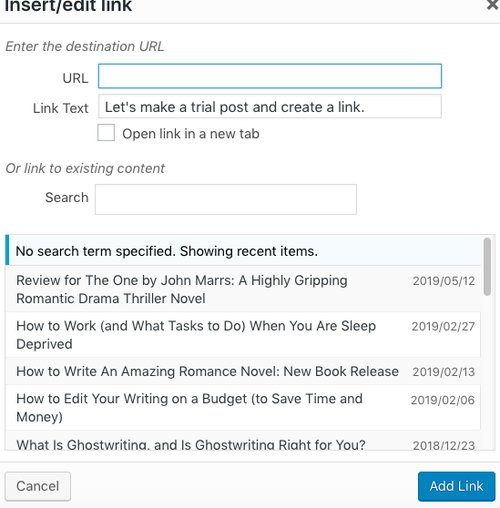
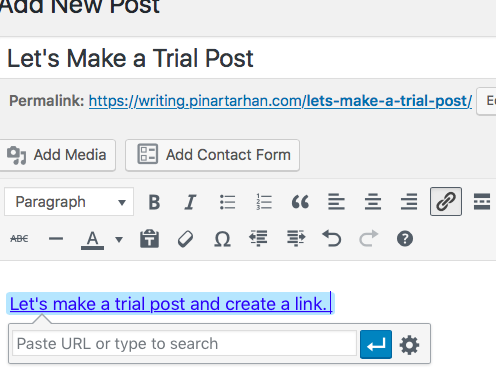
If you are using WordPress, just click the insert link button. Then you need to click the “edit” link because it doesn’t automatically do it itself.

After you add you link, you click “open link in a new tab,” and you are done.

  1. Badly-formatted newsletters

At this point, everyone knows about the importance of email subscribers and email newsletters. There are many resources on how to gain more subscribers and which autoresponder to choose. (I use Convertkit (aff.link.) for this blog.)

However, not enough bloggers pay attention to how they format their newsletters.

I’ve seen it all: tiny fonts, next-to-zero white space, too many emojis in the subject line… Then there’s the trend of long-as-hell newsletters that read like novels. (PS This is not about my short attention span. I read books all the time. Lengthy newsletters? Not so much.)

Yes, I want to hear about your new post and what’s going on in your life. That’s why you have my email. I don’t give it to just anyone. But give my inbox and the million things on my to-do list a chance. Please.

Regardless of how successful, interesting, helpful, or entertaining you are, and no matter how much value you are providing in your newsletters, it’s better to direct us to your website instead of posting your entire articles in the body of your email. If you are going to send your whole article, also provide a link so subscribers can choose where they will read it.

It is okay and expected to switch it up. You can occasionally send longer ones when you have more to share. But if it is always long, exceptions aside, your message will get lost. Attention will be diverted. I save some long newsletter issues from bloggers I really love. Then life gets in the way, and I forget about it. They are deleted when I go into Inbox Zero mood.

If you need to send longer ones, make sure you format really well. Photos are appreciated.

  1. Too-frequent newsletters

Understated representation of our inboxes.

Even if you are John Grisham, I don’t want to hear from you every day. This is saying something as he is my all-time favorite author.

And I definitely don’t want to hear from you multiple times a day.

Sure, there are exceptions.

Maybe you are hosting a webinar, and you want to remind people it’s about to start. This is okay because I subscribed to your webinar. Or maybe, you are offering a huge discount, and it’s the last day.

But apart from that, don’t bother people too much. You are not the only person whose newsletter they subscribed to. There isn’t enough time in the day. If you feel you serve your audience best by sending daily newsletters, give them a choice between daily and weekly.

Of course, the opposite – not sending the newsletter frequently enough- is also a mistake, and it’s one I need to stop making. However, I’ve never unsubscribed from a newsletter because the blogger wasn’t flooding my inbox.

  1. Too-frequent newsletters that sell all the time

We all need to make money. And we work hard on creating great products and services. Even if we don’t sell our own products, we benefit both ourselves and our audiences when we promote the products and services we love and use ourselves.

That said, I don’t want to hear about the same product 50 times in the same week, which happens especially if there is a special discount on a popular product.

People in the same niche promote similar products. It’s only natural. But it also means bloggers in the same niche – aka your readers- are probably following all of these people promoting that one product. That means 10 emails, maybe more, selling the same thing, in the course of one week, if not one day!

So use caution when you decide on the frequency of your email, as well as its contents. Otherwise, the unsubscribe button becomes way too tempting.

  1. Having broken links on your blog or in your newsletter

URLs change. Sites move or go offline. Links that worked a short time ago may not work right now. There are several free WordPress plugins you can use to check all the links at once and fast. Just search for “link checker” in the search box in the plugins section.

Maybe you linked to the wrong thing in your email.

This isn’t the end of the world. You can always send a follow-up email with a quick and cute apology and the right link. But you don’t want to make it a habit, and it’s easily preventable. Just send the draft to yourself first and check if the links work. You can also look at how things look and change formatting if it doesn’t read well.

  1. Not updating their websites frequently

Forgive me, readers, for I have sinned. My previous post was over two weeks ago. The one before that was in February.

I was going through project overwhelm, writing anxiety, existential crises, and health problems. Yes, all of them at the same time.

But apart from reasons out of our control, it’s a disservice to ignore our sites for too long. Your audience will seek guidance elsewhere, and they might forget about you. Posting consistently also helps keep your writing game strong.

  1. Not getting back to their readers about their questions

Not all questions or comments warrant a reply. Stuff you already answered on your website in easily found spots, obvious trolling, job requests that you didn’t advertise for, and mass emails that don’t include a sliver of personalization can and should go answered.

But when your readers fill in your contact form or emails you directly about something you told them they could ask about, you cannot afford to make them wait.

By all means, answer your client and editor emails faster. Send that invoice that is due in a week. Read the lab results your doctor sent you.

However, urgencies aside, you shouldn’t ignore your readers. They are why you have a blog. (And yes, this happens. A lot.)

It doesn’t hurt to occasionally check your spam folder either since unknown addresses can easily fall there.

  1. Not recommending the obvious

 Audiences don’t appreciate being aggressively sold to, but if you are a blogger whose readers also blog, I recommend you have a resources page and tells us the basics. Which hosting company did you choose? Why did you go with that autoresponder? Who designed your website? If you designed it yourself, what is your theme? Which courses and other information products did you buy and got the most use of?

Maybe you can do this by creating a simple “Tools I Recommend” or “Favorite Resources” page. If you use affiliate links for the services you prefer, you will make money in addition to having helped your audience. Isn’t that awesome?

  1. Not giving their clients/readers/fans alternative formats and payment methods for their products

This is a big pet peeve of mine, and I covered it in more detail on this Medium piece: Little Things That Cost Entrepreneurs Money: What Planning Ignores About Selling Products.

Let’s say you created a product. You should consider offering it in multiple formats and with different payment methods.

I understand that the product is valuable and contains your experience and wisdom. However, it’s likely your audience just bought a similar product. And now they can’t afford yours. Not because they aren’t investing in themselves, but because they already did.

You know it best when it comes to pricing. Don’t sell yourself short. And make it easy for yourself to get paid. But don’t ignore your audience’s needs. It’s not that hard to offer a transcript in addition to a video course or offering three credit card installments.

  1. Not placing a search button on your site

I was guilty of this until recently. It is not that I didn’t want to put a search button, my WordPress theme had some quirks I had to figure out.

While some bloggers aren’t a fan of the search function (though I forget their reasoning), I believe it is a wasted opportunity. Why should your audience go through extra effort through Google to see if you have exactly what they are looking for?

Let’s say you want to see if I covered crowdfunding for writers on Addicted to Writing. (I haven’t, though I’m currently working on a story for another pub). Just type the word crowdfunding, and see what comes up.

Similarly, it makes your job easier as a content creator. If you don’t remember how many posts you wrote on the subject, you can use the search option without logging into your admin page.

*

What are some professional blogger oversights did you notice? What mistakes do you catch yourself doing?


Filed Under: Blogging Tagged With: blogging, blogging mistakes, blogging tips, email newsletter tips, problogging, wordpress tips

How to Work (and What Tasks to Do) When You Are Sleep Deprived

Posted on February 27, 2019 Written by Pinar Tarhan


In an ideal world, one or two things would happen:

  • We wouldn’t be sleep-deprived.
  • We wouldn’t have to work when we were sleep-deprived.

But it isn’t an ideal world, alas both situations occur quite often. If you don’t have anything urgent, it’s best putting off urgent tasks until you are rested. If you do, it might be better to try and take a nap first.

Not possible? Pour some coffee (or tea, your choice) and get to it.

Also, think of activities that make you happy, alert, and energetic. Different activities have different effects on people. Showers wake some people up while making others sleepier. (I’m in the second group.)

  • Blog maintenance. Updating plugins and themes don’t require much attention and energy. Get this sucker off your plate.
  • Marie Kondo-ing your office space. While I like Marie Kondo, I don’t recommend trying to catch the feeling of joy when it comes to organizing important stuff. Instead, go for the thought of useful and/or new information. I don’t want you to end up fileless and freaking about not being able to find important story drafts or reference books!
  • Marie Kondo-ing your desktop files. See the point above about joy.
  • Email checking and cleaning: unsubscribing from people you don’t like. Sometimes, I go on a binge email unsubscribing spree. I might even unsubscribe if I am a huge fan of the person. Because I am a huge fan, I don’t need a daily or weekly reminder to check out their new post or product. I already have. So I remain subscribed to newsletters that share stuff that is not on their website, or newsletters that are so useful that I cannot afford not being updated. And sometimes, I remain subscribed because while I am a fan, I often forget to check out their latest work because I’m only human and I don’t remember to regularly read every blog I enjoy. What makes a newsletter worth subscribing to and remain on their email list? Check out my article Newsletter Writing 101: The Dos and Don’ts.
  • Drafting posts. Funnily enough, you can actually write even if you are tired. It might not be a masterpiece, and you probably shouldn’t be working on the polished version your editor will read. Drooping eyes miss more errors. But if you are in the zone, you are in the zone. If your health allows it, don’t let your energy level trick you into not writing.
  • Noting down ideas. Your brain might be too tired to do certain things, but ideas also don’t give two hoots about how you feel. If they want to arrive, they will. So you better not let them go. You might not remember them later.
  • Free-writing. What better excuse to write without limits and rules? Just let your subconscious take over.
  • Collecting scattered ideas in two places: one digital and one physical – and then backing them up. Be honest with me. How many idea files and notebooks do you have? Even the most organized of us can fall prey to buying too many notebooks or creating too many files to save our ideas. It doesn’t take too much mental effort to copy paste with your mouse or with your hand, so take advantage of these “tired” times to gather your ideas in one place. Then make several copies. You can never be too careful or safe when you are saving and recording your ideas. The idea is to have all the ideas in one place, and copies of the big list. Not 500 different files with different ideas. Think about your scattered notes the next time you think you don’t have something to pitch or write about. You should do the same with the writing markets, while you are at it.
  • Going over your to-do lists and goal sheets. If you’ve been meaning to do something for months, just go ahead and do it. It is okay to change your mind and delete the task if you feel it was unnecessary. But if you neglected something essential, it is time you prioritize it.
  • Responding to emails. Try not to make too many typos, especially if you are corresponding with editors and clients. But let’s face it, most email communication is about you confirming things or following up on them. Do those.
  • Backing-up your work and research. All you need to do is to get them on to Cloud, a hard drive, a USB or emailing them to yourself. Better to be safe than sorry.
  • Social media posting. Afraid people forgot who you are? Start reminding them. Hanging out at social media is a better way to spend your time when you are tired. Just don’t post something embarrassing you can’t take back. Unless embarrassing is your brand. Then by all means, go all for it!
  • Profile updates. You have a new book out? Published on some amazing pubs? Time to polish those clips and social media profiles.
  • Bookmark and reading list cleaning. No need to keep useless stuff around. Read and decide what to discard.
  • Reading stuff that doesn’t hurt your brain. It can be reading for fun – since you are a writer, reading is always a part of your job. I know, we are so lucky! But we’ve all been there. Sometimes we can’t just bare to process overly technical stuff or brand new information. Ignore those and come back when you are feeling alert and capable.
  • Watching things that are necessary for your idea-collecting, craft-building and relaxing. Bonus points if they help with all three. Watching Netflix is a part of my job. So no one pays me just to watch something, but a lot of my ideas and stories have ties to pop culture. So watching movies and series help me grow as a writer, while also fueling my creative juices. So when in doubt and too tired to do anything else, go watch something.

*

There you go, those were my humble suggestions. Let me know how you deal with work when you are sleep-deprived or sick. They often attack together!

Related posts you can check out:

A Love Letter to All Freelancers With a Health Condition

How to Get Back to Work After Vacation (Even If You Are Exhausted)

Sleepy Writer’s Wake-up Ritual: How to Start A Writing Day Well

Benefits of Having a Cold for Freelance Writers

9 Productive Things Writers Can Do When They Have a Cold


Filed Under: Blogging, Productivity & Time Management, Writing Tagged With: how to work when tired, how to work when you are sleep deprived, how to work when you are sleepy, productivity tips, productivity tips for writers

Newsletter Writing 101: The Dos and Don’ts

Posted on November 8, 2018 Written by Pinar Tarhan

Brace yourselves, a long post is coming.

Fear not, though, this is all useful stuff. Ready? Superb!

Raise your hand if your inbox is crammed to the brim with newsletters you haven’t had time to open yet. You have every intention of checking them out. After all, you are fans of the writers, bloggers, and entrepreneurs who put them out.

You know most of them offer invaluable advice. Some are genuinely funny to boot. The problem? There isn’t enough time. So you hit delete if you are feeling pressed for time, or you’ve lost your will to work (or do anything) after you have seen your inbox always has hundreds of unread messages, and this is not even your work email. Your friends don’t email you. This is all newsletters. Aargh!!!

Right. What was that thing on the top of your to-do list?

“Write newsletter. Send it to email subscribers.”

Oops! How do you stand out, get read, and keep the subscribers when you yourself can’t keep up with the newsletters you wanted to receive?

Don’t despair. It is less art and science, but more empathy and trial/error. Oh, and our dear friend common sense.

I’m assuming you already have decided on an autoresponder, but if you haven’t, I recommend ConvertKit. (Yes, this is an affiliate link.)

I use ConvertKit for this blog. It is fairly easy to use and costs $29/month for 0-1000 subscribers.

Now to the essential dos and don’ts:

Don’t write an epic!

While you might occasionally need to write a very long newsletter issue, you shouldn’t do it every single time. It is not just about attention spans; people have work to do.

Do think twice before promoting a product.

Before sending a glowing recommendation on this amazing bundle/course/book/webinar/whatever, ask yourself this question: How hot is this product?

I’m not asking you if you trust the product. I believe you do. Otherwise, you’d not be encouraging your audience to check it out.

But I can’t tell you how many times I’m recommended the same product. The first person to send the newsletter is the luckiest. I get curious, check out what is all about, and if it is of interest, I subscribe/purchase/etc. The second person gets a nod from me, but I delete the email quickly. Boredom is slowly kicking in. Because I know I’m about to get more emails promoting the same thing.

The third person? It’s already annoying. So if you have gotten the recommendation email from another blogger, maybe don’t send it to your subscribers. Send something else instead.

Look, I get it. It is your income we are talking about. You are thinking about potential purchases. Or you are thinking about how impressed your affiliate partner will be when you send many new potential customers and fans their way.

Never forget, however, that your most important relationship is the one with your own subscribers. You don’t want to annoy them.

Think about your timing. If it has been recommended it to you, if you aren’t one of the first people the creator notified about it, people have already gotten the promotional email.

Do occasionally do a Seth Godin.

seth godin
Seth Godin. Image via entrepreneur.com

If you have something meaningful to say and you can say it in a few words, do it. It is all the rage nowadays to send long, long text. Change it up when it comes to length. Your subscribers will thank you for it.

Marketing master Seth Godin excels at the short stuff. Okay, admittedly he is great at longer stuff too, but you get the point.

Don’t send them too often.

I unsubscribe from a lot of newsletters because I can’t keep up with the sender’s frequent messages.

It is commendable that you want to educate and entertain your audience frequently. You might be thinking “I’m not even promoting anything! This is just valuable information!”

Great, but we all have Google. What I mean is, as much as we might be dying to become experts on any given topic, we don’t want to stay married to our inboxes. I strive to save as many excellent newsletter issues as I can, but occasionally I’ll just say, “Sod it!” and start deleting everything to get to Inbox 0.

And gasp!, I might even unsubscribe. The good news is, if you are so productive that you’re flooding my inbox daily, I already know your name. I will even occasionally remember to check out your blog. The bad news is, you’ve still lost a subscriber.

Don’t be that person.

Do offer your subscribers options.

Some sayings are clichĂ© because they are true: You can’t please everyone. Even people who enjoy your blog enjoy it for different posts and reasons. So it’s wise to check in with your subscribers every once in a while and asks them what kind of news, topics, and frequency they are interested in. It is more work on your part, but I assure you, it is worth it.

Don’t send them too infrequently.

I have to admit this is one of the sins I commit. I tend to send a newsletter once a month or less. This bullet point is a reminder to both me and you to remind your audience of your existence more often.

Once a week or at least once in two weeks is fine – unless your audience notified you otherwise.

Do write an engaging subject line.

We all know subject lines matter at this point. However, writing a captivating one is easier said than done. If you don’t want to spend too much time obsessing over this (and you shouldn’t), at least try to capture the essence of what it is about.

Don’t be a drama queen with your subject lines or the content itself.

This point might seem like it contradicts with the previous one, but it doesn’t.

When we study marketing, we are encouraged to be personal. To determine an urgent need/want of our target audience and to capture their ever-fleeting attention. But when you overdo it, you can end up losing people.

What do I mean by not using too much drama?

I literally just deleted this email from a publication I like and subscribe to without opening it. The subject line said: “You Will Wonder How You Ever Lived Without These Tips and Tricks.”

No, I won’t. I don’t think you have found the holy grail of tips and tricks (and congrats on not even telling me what they are about, by the way!), and there is much doubt on my part that a subject line like that can deliver on its promise.

While I advise being specific, you might hurt your chances if you are too specific, or if you appear condescending.

For instance, let’s say you are launching a product or service that promises to help your audience increase their income level from a certain point. That’s awesome!

But how do you frame that certain point without pissing off the audience that is at or below that income level and find that interval not disappointing or low at all?

Saying “Want to make …. $ more a month?” can yield better results than “Ever grow tired of making just …. $?”

It doesn’t matter if you deliver on your promise and every client you worked with succeeded through your advice. You don’t want to make your readers feel less than.

Don’t use emojis.

This might be me giving away my age, but we are all adults here. Do emojis really belong in the newsletter? Let me know if it is my own personal pet peeve.

I’m in my 30s, and I have seen the times when emojis didn’t exist. Of course, I might be wrong, but I’m willing to bet I’m not the only annoyed by this.

It is okay – even recommended – to use images and a fun, friendly language in your newsletters. Even emojis, depending on your personal style and subject matter. But use caution when dropping emojis in subject lines.

Do balance the promotional with the informative.

We all have something to promote, even if we aren’t selling anything. Otherwise, we wouldn’t need a newsletter.

You might just want to be heard. You are still promoting your ideas. And that is fine.

Writing is meant to be read and shared. Ideas are meant to be spread and talked about.

And it is more than okay – expected even – for you to be selling something. You need to make a living. And what better way to make money than by helping others achieve something?

So your readers are ready for – and mostly fine with – emails that want to sell them something. Still, you don’t want to do that with every email, or even every two emails.

Balance them. It is best if even your promotional stuff is filled with freebies, helpful links (that go to free-to-read articles and resources), and a ton of practical information.

Do pay attention to your formatting.

Technology pisses off even the more experienced or patient of us. Formatting can get awry even though you didn’t do anything wrong or different. The best thing you can do is to preview the email you are planning on sending, and then send it to only yourself to check how it looks before everyone on your list receives it.

That said, the same format might look different on Hotmail vs. Gmail vs. Yahoo, so there is only so much you can do.

Still, for peace of mind, I recommend previewing and sending it to yourself.  And if a subscriber alerts you to an issue, you can take a look then.

Do include images and links when you can.

I touched upon this in a previous bullet point, but it deserves its own. It’s tempting to send someone all text. Some readers might even prefer it that way. But most people are not happy without much white space to wake them up. You don’t want an active subscriber, someone who bothered to open your message, to get lost in all the writing.

So spice it up. Make it visually appealing. Links and images mean you have gone the extra mile. Your readers will appreciate it.

Do lure them in, but deliver in the whole post as well.

I talked about enthralling your audience with a subject line that will attract their attention. Now, your newsletter has to deliver. Don’t just work on getting opened; work on being read fully.

Do send them freebies and promotional codes.

Have you created a freebie resource yourself? Did someone you admire craft one? Let your audience know. Is the hosting company you are using offering a discount? Is your autoresponder running a sale? They should know.

If people need that service, they will take you up on it. The one thing you need to do is let the audience know if you are getting paid for the recommendation. 

Do share your favorite resources.

What are you reading? What courses are you taking? What blogs are forever bookmarked on your computer? Share these with your readers.

If links are applicable, use them so you will save your readers time. They appreciate people who make their life easier.

Do disclose affiliate relationships.

This is worth repeating. If you are getting paid, just noting “aff. link” next to the whatever you are linking to will suffice.

Do choose a reliable autoresponder.

There are free options out there. You can also opt for a different autoresponder later down the line and migrate your existing subscribers. Just read the features of the service you are interested in.

  • How much does it cost?
  • Do they offer a free trial?
  • Do they allow affiliate links in emails?

and so on.

Do a bit of reading. I’ve used TinyLetter (free) before for this blog. I later converted to (pun intended!) ConvertKit (aff. link), and for my travel blog, I’m currently experimenting with MailerLite (which is free for 1000 subscribers) on my travel blog.

Do brainstorm ideas with friends and colleagues.

Don’t know what to put in your newsletters? Brainstorm with writer friends. Also take a look at what your fellow writers are putting in theirs.

For instance, my good friend Olga Mecking invented a sort of national newsletter writing month where she is sending her subscribers a newsletter every day for November.

Yes, I told you not to flood people’s inboxes, but this is a special, themed occasion inspired by NaNoWriMo, and will only last a month. And people know what they are in for when they sign up.

*

Now that you’ve armed yourself with information on how to rock your newsletter, get to work on applying these babies.

Related Posts Plugin for WordPress, Blogger...

Filed Under: Blogging, Marketing, Writing Tagged With: how to write a newsletter, how to write an effective newsletter, newsletter writing tips, newsletters, writing a newsletter

  • 1
  • 2
  • 3
  • …
  • 11
  • Next Page »

Blogroll

  • My Entertainment Blog

My Other Blogs

  • Beauty, Fitness & Style for the Fun-Loving Gal
  • Dating & Relationships in the 21st Century

Categories

  • Author Interviews
  • Author news and coverage
  • Blogging
  • Book Launches and Excerpts
  • Book News and Author Interviews
  • Book Recommendations
  • Book Reviews
  • Career Management for Writers
  • E-Book Reviews
  • Fiction Writing
  • Fictional Writers: Writer Characters in Movies, TV Series and Books
  • Inspiration and Motivation
  • Marketing
  • Marketing Fiction
  • Movie and TV Series Recommendations
  • Novel Reviews
  • Paying Markets-Web and Print
  • Productivity & Time Management
  • Recommended Resources
  • Reviews for Tools and Devices
  • Romance
  • screenwriting
  • Self-publishing
  • Story Conflicts
  • Website & Blog Reviews
  • Writer Tools
  • Writing
  • Writing Tools
  • Writing Updates

Copyright © 2026 · Focus Pro Theme on Genesis Framework · WordPress · Log in

This website uses cookies to improve your experience. We'll assume you're ok with this, but you can opt-out if you wish.Accept Reject Read More
Privacy & Cookies Policy

Privacy Overview

This website uses cookies to improve your experience while you navigate through the website. Out of these, the cookies that are categorized as necessary are stored on your browser as they are essential for the working of basic functionalities of the website. We also use third-party cookies that help us analyze and understand how you use this website. These cookies will be stored in your browser only with your consent. You also have the option to opt-out of these cookies. But opting out of some of these cookies may affect your browsing experience.
Necessary
Always Enabled
Necessary cookies are absolutely essential for the website to function properly. This category only includes cookies that ensures basic functionalities and security features of the website. These cookies do not store any personal information.
Non-necessary
Any cookies that may not be particularly necessary for the website to function and is used specifically to collect user personal data via analytics, ads, other embedded contents are termed as non-necessary cookies. It is mandatory to procure user consent prior to running these cookies on your website.
SAVE & ACCEPT