Addicted to Writing

Manage Your Freelance Writing Career While Writing What You Love

  • About Pinar Tarhan
  • Blog
  • Books
  • Hire Me: Services
  • Contact Me
  • Portfolio
  • Favorite Resources
  • Newsletter

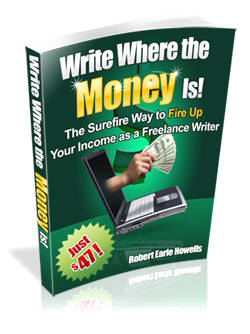
Write Where the Money Is by Robert Earle Howells: E-Book Review

Posted on September 2, 2013 Written by Pinar Tarhan


write where the money is e-book
Image via writewherethemoneyis.com.

Write Where the Money is one well-rounded resource that can, and will explain pretty much any question you might have about any stage of writing for a magazine or a website. It was written by veteran writer/blogger Robert Earle Howells.

There are many amazing resources I’ve found about querying, contracts, formatting, writing and such, but I don’t think I have seen all of together, and written so well, in one place.

It’s a must for beginner writers, although it has a lot to teach and/or remind all levels of writers. And even if you’ve been writing and getting published successfully for years, it is still a handy resource to have because it does cover pretty much everything.

It’s a 154-paged PDF document, but it reads as fast as a page-turning work of fiction. Honestly. First time I was reading it, I almost forgot to get off at my bus stop.

But let’s give you more details on why you might need it too.

Below is a breakdown of basically what the book covers, though I interpreted chapter headings to give you a better idea. For the actual chapter names, take a look at the book’s sales page. (Yep, it’s an affiliate link. I stand by the book, and wish I had purchased it much sooner. It’s $47.)

I should mention that all chapters include quotes from other writers, editors and publishers, as well as experiences of Robert, and stuff he used for his own queries. And each chapter ends with a summarized action plan for you.

Here we go:

-How you know if you can write (or know about what to write)

-How to organize your ideas

-Why experience/clips don’t matter as much as good ideas

Now, technically, this is common sense. But it’s easy to get intimidated by our lack of experience in one area even if we have experience in others. So keep in mind that great ideas (and how well you present them) are what matters. And we were all beginners in a niche once.

Just keep brainstorming, and studying publications.

– How/where to get valid experience

He guides you on different strategies to get those first clips.

– What to pay attention to when choosing how to get your clips

– How to write something editors would want (aka how to write well)

– How to study and pitch a publication

– How to understand/interpret writer’s guidelines

There’re some very useful, but not-always mentioned tips on how to read a publication’s guidelines, what to believe and what (not) to take seriously, and what is said vs. what is meant.

– Tips on how to really write a successful query letter

Again, unless you’ve just started writing (congratulations, this is a resource that will get you very far without you having to collect all the information you need about writing, submitting and publishing from a hundred different resources), you are familiar most of the tips. But it’s practical to have a solid checklist.

– What comes after the query, deciphering contract terms, negotiating, rights

The book doesn’t leave you high and dry after sending the query letter. It features insights on how to follow-up, when to give up, how to react to similar ideas published in the same magazine that rejected yours and so on.

Then there’s the breakdown of not just rights, but other terms as well.

– Formatting/submitting

– Working with editors

This part informs you about how to react to edit and rewrite requests professionally; as well as developing long-lasting relationships that will land you assignments without querying (much).

– How much you earn, and how to know an article’s actual worth, what to do when the payment is late

Plenty of magazines do in fact pay a lot better than blogs. Even the publications that pay for both print and online content pay more for the print articles. However, they also happen to expect a lot more in terms of research, experts and interviews.

I’m not saying you shouldn’t do your best when you are writing for the web. You definitely should. However you will see that sometimes an article that pays 3 grand won’t have paid as much as the 50 bucks you got for that 500-word piece for a blog. He explains how.

This section also gives you ideas on how to re-slant your articles and what more you can do with them. Moreover, there’s detailed information service articles vs. feature pieces.

– Defining/finding markets

Different types of publications are explained, along with tips on what to expect from them. Job boards are analyzed. And there’s also information on how to monetize your own blog.

– Qualities you need to become successful: This is divided into two chapters.

And it’s not just about clear writing or being more productive (though they are obviously covered). It pretty much tells you what you need to manage your business, writing and life properly so that you will be a successful writer.

– Wisdom, tips and experiences of fellow writers

This part is great for gaining (and keeping) you faith and confidence.

– Glossary for the writing business terms

– Resource Listing: from markets to associations.

*

All in all, it is a book to keep as a resource as long as you are writing non-fiction. It should be kept where you can refer to as fast as you need, whenever you need it.
Click Here!


Filed Under: Blogging, Recommended Resources, Writing Tagged With: make money from your writing, make money writing, resources for writers, robert earle howells, write where the money is, write where the money is e-book review

Write Your Revolution: 9 Simple Ways Writers Can Find Paying Web Markets

Posted on March 22, 2013 Written by Pinar Tarhan

Hi everyone!

Sorry about the absence.

I’m publishing my new post very soon, and until then you might want to head over to Sarah Russell’s Write Your Revolution blog to read my article 9 Simple Ways Writers Can Find Paying Web Markets. The article lists how to create your own ever-growing list of web markets in any niche since when it comes to web markets, we don’t have a definite resource.


My cold struck back, but I also did some great research, found and pitched cool ideas and I’m formatting a screenplay.

And hopefully this month will be the month when I’ll turn bulk-writing a habit. I’m good at taking notes and brainstorming in bulk when ideas hit from north and south, but maybe because I’m good at with the brainstorming, I end up writing one post at a time.

Do you occasionally take posting breaks without wanting to?

Filed Under: Blogging, Writing Tagged With: finding web markets, how to find paying markets for writers, how to find paying web markets, markets for web writers, web writing markets

Review for Tom Ewer’s Blog Leaving Work Behind

Posted on December 17, 2012 Written by Pinar Tarhan

leaving_work_behind_logo
Image via leavingworkbehind.com.

Tom Ewer is enjoying his well-deserved popularity as he runs the popular and authoritative blog Leaving Work Behind where he writes about quitting your job and building a career that’s right for you.

While his posts aim to help you realize your goals of quitting your job and running a successful online business, he focuses a lot on freelance writing/blogging which makes it very relevant for writers.

But another thing that makes Tom’s posts relatable is that he is not so far gone in his freelance income that he’s doing $500/hour copywriting gigs or $1/word magazine writing jobs.

Yes, he could accomplish that if he wanted to but with his current schedule he has the time to work on other projects. And flexibility is one of the best things about working for yourself.

He encourages you to take well-paying, respectable jobs but he knows that if you’re just starting out, you might not want to pass up on $30/piece blogging gigs, especially if it is from a growing, respectable company.

He started taking gigs on the side before he left his full-time job.

He’s all for passive income, but he suggests you improve your writing, and start making money through it because passive income streams take a lot of time and effort to develop.

Tom also offers useful additions to topics when you think you’ve heard it all before.

Below are 3 of my favorite posts:

1)      How to Spot Viable Freelance Writing Opportunities on Job Boards

This is primarily a video post, and I’m usually more into reading than watching or listening. But he makes great points on how to pick the best jobs on job boards by actually following all the links, looking at and analyzing the employer’s site and giving you the pros and cons, including educated guesses on what the pay might be.

This is by far the most comprehensive and useful post I’ve encountered about job boards.

2)      Paid Blogging: Why it Should Be Your First Option

This post isn’t just for freelance writers. It points out how internet marketers/online business owners shouldn’t disregard the power and potential of blogging. Even if they don’t get paid for it, writing good web copy plays a crucial part in making money online.

But if you could, why not get paid for it?

3)      Freelance Writing: How To Find Your First Job

This is a great guide that covers how/where you should go about looking, how you should apply (including the template of his application) and how to handle the project once you land it.

*

Tom Ewer’s Leaving Work Behind is informative, easy to relate to and fun. Established writers are following him too, so I suggest you take a look if you haven’t already.

Filed Under: Blogging, Book Reviews, Website & Blog Reviews Tagged With: advice for bloggers, blogging resources, freelance blogging, freelance writing, leaving work behind, paid blogging, tom ewer

Paying to Guest Post vs. Getting Paid for Your Guest Posts

Posted on October 13, 2012 Written by Pinar Tarhan

Image via seo-hacker.com

Yep, you’ve read it right. We aren’t talking about paying guest posters, but getting payment from guest posters so that they will have a chance to be published. And it’s not like these blogs are just selling spots to anyone who wants to have their articles published- they want the same quality, original and targeted posts that other respectable blogs (that either pay by bylines and exposure or the ones that do pay actual money in addition to that) do. And while these blogs that require you to pay do offer the bylines and exposure, they have the added requirement of payment exchange for a quality guest post from you.

I first came across this on We Blog Better’s guest posting guidelines. Now, in all fairness, the editor gives you two options:

1)      You can apply to be a regular contributor (though the contributor will be paid by exposure only),

2)      Or you can deposit $40 with your guest post, and if it is not accepted, you will get a refund. If it is published, you’re not getting the refund.


She also explains her reason for these options: crappy, time-consuming submissions. And while her new set of guidelines seem to be an effective way of eliminating the careless and generic articles, it might put off bloggers/writers who actually pay attention to their pitches and writing.

Granted, this successful blog doesn’t exactly need all the guest post writers out there, but I don’t think many good writers would tempted to deposit or apply for a regular position (which probably doesn’t pay either.)

It just might be easier for them to apply to other popular blogs that they don’t have such guidelines. They might have to wait longer for a response, but that comes with the pitching territory.

But there is another blog that doesn’t offer a refund, at least not on their guidelines.

Million Clues says “Cost per Guest Post is $50,” meaning they do want to be paid $50 – no wonder a lot of the other guest-post guidelines are yelling “get featured for free.” This “benefit” listed on their guest post guidelines had seemed redundant to me until I came across this one.

Yes, you will only need to pay after your post is accepted. But honestly, if Problogger or Copyblogger doesn’t request money, I don’t think anyone else should. And then there established blogs for writers/bloggers who actually pay for the guest posts their publishing – such as Make a Living Writing, The Renegade Writer and Rock Solid Finance, among others.

Imagine what would writers’ lives be like if suddenly established magazines started charging money to read submissions? Ouch. It gives me the shivers to think about it.

You might say one is blogging and the other is writing, but come on. If a blogger is truly researching the publication, sweating over her query, outline and the article, I’d say that she is a writer. Why should she also pay in addition to her efforts, especially if she is content with byline and exposure for her efforts?

There might be more blogs charging for a guest post (opportunity), but I have stumbled upon these two so far.

So what do you think?

–          Are you a fan of guest posting as a marketing strategy, whether it is for your blogging/writing career and/or your business?

–          Do you think blog owners should pay guest bloggers?

–          Do you think it is a good idea to ask money from the posters?

Related Posts Plugin for WordPress, Blogger...

Filed Under: Blogging Tagged With: blogs that pay for guest posts, copyblogger, guest blogging, guest blogging benefits, guest blogging guidelines, make a living writing, million clues, problogger, reasons for guest blogging, rock solid finance, the renegade writer, we blog better

  • « Previous Page
  • 1
  • …
  • 5
  • 6
  • 7
  • 8
  • 9
  • …
  • 11
  • Next Page »

Blogroll

  • My Entertainment Blog

My Other Blogs

  • Beauty, Fitness & Style for the Fun-Loving Gal
  • Dating & Relationships in the 21st Century

Categories

  • Author Interviews
  • Author news and coverage
  • Blogging
  • Book Launches and Excerpts
  • Book News and Author Interviews
  • Book Recommendations
  • Book Reviews
  • Career Management for Writers
  • E-Book Reviews
  • Fiction Writing
  • Fictional Writers: Writer Characters in Movies, TV Series and Books
  • Inspiration and Motivation
  • Marketing
  • Marketing Fiction
  • Movie and TV Series Recommendations
  • Novel Reviews
  • Paying Markets-Web and Print
  • Productivity & Time Management
  • Recommended Resources
  • Reviews for Tools and Devices
  • Romance
  • screenwriting
  • Self-publishing
  • Story Conflicts
  • Website & Blog Reviews
  • Writer Tools
  • Writing
  • Writing Tools
  • Writing Updates

Copyright © 2026 · Focus Pro Theme on Genesis Framework · WordPress · Log in

This website uses cookies to improve your experience. We'll assume you're ok with this, but you can opt-out if you wish.Accept Reject Read More
Privacy & Cookies Policy

Privacy Overview

This website uses cookies to improve your experience while you navigate through the website. Out of these, the cookies that are categorized as necessary are stored on your browser as they are essential for the working of basic functionalities of the website. We also use third-party cookies that help us analyze and understand how you use this website. These cookies will be stored in your browser only with your consent. You also have the option to opt-out of these cookies. But opting out of some of these cookies may affect your browsing experience.
Necessary
Always Enabled
Necessary cookies are absolutely essential for the website to function properly. This category only includes cookies that ensures basic functionalities and security features of the website. These cookies do not store any personal information.
Non-necessary
Any cookies that may not be particularly necessary for the website to function and is used specifically to collect user personal data via analytics, ads, other embedded contents are termed as non-necessary cookies. It is mandatory to procure user consent prior to running these cookies on your website.
SAVE & ACCEPT