Addicted to Writing

Manage Your Freelance Writing Career While Writing What You Love

  • About Pinar Tarhan
  • Blog
  • Books
  • Hire Me: Services
  • Contact Me
  • Portfolio
  • Favorite Resources
  • Newsletter

Why Writers Don’t Need to Be Afraid of AI

Posted on May 1, 2025 Written by Pinar Tarhan


“God, grant me the serenity to accept the things I cannot change, the courage to change the things I can, and the wisdom to know the difference.”

from the Serenity Prayer


But whether you belong to a religion or believe in god (I’m agnostic), these are wise words. You can opt to recite it to the universe.

Why bring this up when talking about AI? Because AI’s existence and increasing usage belong firmly in the category of things you can’t change. You don’t have to like it, but you need to accept it.

Even if you are a creative professional. Even if AI might be threatening your job. Because wishing it away and spending your days pissed off won’t make it go away.

I didn’t see many editors and proofreaders protesting AI years ago because it made their jobs easier. As a writer who edits herself, I have been grateful for the free version of Grammarly (which is AI-powered) and similar products.

Why Writers Need AI-Based Editing Software

Should writers hire an editor for book manuscripts? Yes, if they can. Can freelance writers hire an editor before they submit their pitches or their articles to an editor? They can, but it’d be very expensive. Unless the editor is giving them an insane deal, they won’t have any money left from the money they made from their writing.

As a writer and ESL teacher, I’m confident in my proofreading and editing skills. I’m obsessed with the English language. Not all writers have to be. But it is certainly an advantage. Let’s face it; you need your work as close to flawless as possible.

No matter how good or careful we are, it’s human to miss things. We tend to see things as we think and not as they look on the page. Looking at the computer screen and your words for a long time, even with breaks, distorts your view.

A second pair of “eyes” is great to help lessen your load. Word’s spellchecker is good but insufficient. Grammarly (or your choice of software/app) definitely helps you create a cleaner version.

But guess what? It’s not human. (You have the option to hire humans through Grammarly, though.) So it doesn’t always catch your style, meaning, or context. You still have to go over its edited version yourself.

Your editor will be happy you provided them with clean copy, and they will only have to work on your piece’s message and whether your style fully matches the publication’s demands. Editors and proofreaders will always be in demand. (And no boss or manager will complain that you write clean copy either.)

Can writers edit their full-length manuscripts through AI-based software? Yes, they can.

Does It Mean (Book) Editors Will Be Out of a Job? 

The short answer? No. There are multiple types and levels of editing, and a writer can rarely be good at them all. But, and I can’t stress this enough, not all writers can afford editors. Sometimes, they want or need to get their work out there as soon as possible. Therefore, they make full use of AI

This doesn’t mean we don’t need or love our beta readers. We also fully appreciate our writer/editor friends who provide feedback. Don’t worry, the feedback-getting writer also provides feedback. No one gets taken advantage of. Everyone supports and gets supported in this system.

As the writer increases their income, they will opt to work with an editor. Trust me on this. Book editors will never be out of work.

Should Writers Be Afraid of Big, Bad AI? 

It was reported by the IMF that “almost 40 percent of global employment is exposed to AI.” But “exposed to” isn’t the same as to  “replaced by”. Being able to utilize AI will make you a more attractive candidate.

Whatever your industry, AI makes research easier. It cuts down the admin work. I use free AI as an assistant. But I’d hire a VA in a heartbeat if I could afford one. So VAs aren’t losing work. I would still not be working with a VA at this point, even if there were no AI.

What about Malicious AI Use?

Can AI be used maliciously? It can and it is. But so is Photoshop. So are links. Phone scammers are still at it. Social media imposters are doing their best to scam people. You can use pretty much any tech to commit a crime. You can also use tech to prevent crime.

Final Thoughts

You don’t need to love AI, but getting familiar with it will make your life easier.

In addition to being an author, I teach ESL. I still have students. In addition to education and teaching experience, I have empathy, personal language learning experience, relevant anecdotes, and a sense of humor. I customize each lesson for the individual. AI hasn’t replaced me yet.

Stay calm and accept AI’s existence. You don’t have to use it, but imagine what you think about a person who doesn’t have a smartphone. In a couple of years, people who don’t use AI at all might face a similar reaction.

And if you are worried about being replaced, it doesn’t hurt to know what you can do to make yourself irreplaceable in your profession. Incidentally,that path includes learning how to make use of AI ethically.

P.S. I wrote and edited this post. Then I let Grammarly suggest things. Finally, I edited Grammarly’s version.


*

How do you feel about AI? Let me know in the comments.


Filed Under: Career Management for Writers, Marketing Tagged With: ai for writers, ai for writing, ai for writing research, ai in editing, ai in writing, ai tips for writers

Newsletters for Writers: Why You Need One & How to Run It Successfully

Posted on March 1, 2025 Written by Pinar Tarhan

Note: This post contains affiliate links. Buying through them doesn’t cost you extra, but it does drip into my coffee fund. I only recommend stuff I use and like.

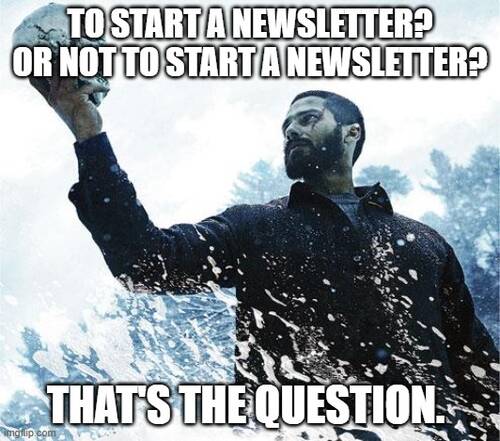
Not everyone needs a newsletter. But if you are a writer building an audience, you need one.

Social media doesn’t cut it. You never know what governments or algorithms will do.  You need a place you control to reach your potential and current customers.

While you might be lucky enough to live in a country where you don’t wake up to your favorite apps being banned, social media is still not the basket to keep all your eggs in. When I first started using Facebook, my friends saw all my posts. Now I celebrate if twenty people see it. Sure, you can make your social media posts as shareable as possible. But you’re still at the mercy of ever-changing algorithms. Not to mention, social media sites want you to pay to be seen. Hence, the amount of advertising options.

Don’t get me wrong. I like social media. In addition to IG, I’m on Facebook, Twitter, LinkedIn, and TikTok. But I have my own self-hosted WordPress blog (which you’re on right now) and a newsletter hosted via Kit (aff. link).

I’m a romcom novelist, a freelance writer, and blogger. If I need to switch newsletter or hosting services one day, I will still have my posts and contacts.

There is only one question to help you decide if you need a newsletter:

  • Are you selling a product or a service? This, of course, includes your books.

If the answer is yes, you need a newsletter. If you’re a blogger or an author, the answer is yes.

It’s easy to feel overwhelmed. There are many alternatives. However, you can get started for free or on the cheap and then upgrade/switch if you need to. You can keep it as basic or complicated as you want.

And what if you don’t want to?

Obviously, it’s your call. But do you really trust all your business to come from websites and apps where you are the product?

No? Great. Go start that newsletter. Even if everyone you know and their 3rd cousin has one.

How to Choose Which Newsletter Service

  • Price
  • Functions
  • Ease of Use
  • Monetization options

There are many options, and you need to take your budget, audience size, and functionality into consideration first.

People swear by Mailchimp and MailerLite. I tried both, and for the life of me I couldn’t figure out how to do certain things. I switched to Kit (formerly Convertkit). Kit (aff.link) offers a free plan if you have fewer than 10,000 subscribers.

I like Substack, but I’m a little offended they still don’t offer newsletter monetization options to Turkey. (Substack gets you paid via Stripe, which isn’t supported in Turkey.)

As in, you can charge for your newsletter if you want. On Substack, you can offer free and paid tiers. The problem? The pricier the tier, the more comprehensive the content. Check your workload, and whether you can use Stripe when you consider this route.

How to Create and Plan Content: Scheduling, Frequency, and The Writing Itself

I’m not going to tell you to be consistent. As someone with ADHD and several health problems, I find that advice annoying. It might not be hard for some people, but I find it almost impossible to stick to a strict, consistent schedule when it comes to posting on my website and sending this newsletter. Does this hurt my business? Probably.

But hear me out: I am on hundreds of newsletters from different niches: travel writing, general freelance writing, novel writing, self-publishing, Norwegian learning, personal development…. I have no clue which person sends a newsletter on which day. I barely recognize if it is a weekly newsletter, a biweekly, or a monthly one.

And it’s not because these people don’t have great content. They do. That’s why I’m semi-willingly drowning in emails.

But I think it’s a bit naïve to think people subscribe to only like 5 newsletters, yours will be one of them, and they will absolutely notice when you don’t send out an issue every month on Wednesday at noon. I mean, come on.

It’s certainly helpful if you can stick to a looser schedule like weekly or monthly. But it doesn’t matter that much if your fans get the newsletter on a *Tuesday or a *Saturday.

*The one caveat here is this: If you are good at analyzing data, then check your open rates. If people tend to open more on a Tuesday, for instance, or at a certain time of day, do send your newsletter at that specific time. Don’t fight the data.

But for those of us who are more overwhelmed, it’s better to have sent your next issue than not have sent it.

Analytics: What to Pay Attention to (Even If Your Brain Doesn’t Work That Way)

In the last two years of high school (in my country), students choose to be divided into these classes: verbal (language and social sciences), language/math, math/science, and foreign language.

While my brain is more verbal and foreign language, I am fonder of basic math and geometry than geography and history. I wanted to study Business Admin, and statistically speaking, I had a better chance of getting into a good college if I chose science/math.

Some of the classes pushed me. Some of them were stimulating and fun. I didn’t fully belong in the math/science class, but I never quite belonged to any of the other classes either.

Which is my long-winded way of saying it’s okay if your brain gives an error message every time you hear advice that includes concepts like split testing.

For the curious, split testing is when you try two different things (like headlines) with your audience. One half gets one, and you see which option works better.

And the overwhelmed writer who doesn’t have a VA (aka me) will think: Right, because I have so much time left after all the writing, editing, pitching, trying to get reviews, marketing my book…

I know.

Like I said, if you can test things, it’s beneficial and you should definitely do some.

If it hurts your brain to even think about more work, you should still absolutely look at these:

  • Who opens your emails and how often?
  • What’s your open rate? (What percentage of your audience opens your emails)
  • What’s your click rate? (What percentage of your audience clicks on your links)

This will give you an idea of what kind of content your audience prefers and how you should mention your books.

But some people will not open no matter what. So, decide on a time limit. Like 6 months. If your emails haven’t been opened in six months, it’s time to get that subscriber off your list.

A Newsletter Resources Rec for Writers

Start with Newsletter Ninja: How to Become an Author Mailing List Expert (aff link). She starts with basics and takes it to complicated, but it covers everything you need to know.

But don’t stop there. You can learn from any and all newsletters you get. Which subject lines drive you in? What makes you cringe? What lengths do you prefer? What is the frequency soft spot?

And when you have subscribers, ask them.

Also check out:

How to Write Newsletter Subject Lines

Newsletter Writing 101: The Dos and Don’ts


Why Should People Subscribe to You?

I’m not challenging you. I’m helping you brainstorm and feel motivated. Especially if you’re prone to overwhelm and impostor syndrome.

You write. You have things to say. Share with the world. Be you. And don’t forget to talk about your work and your why.

How to Market Your Newsletter

Argh, marketing!  The archenemy of many writers. You already hate marketing, and now you have another thing to market?

Unfortunately, yes. You have to talk about your newsletter so that people will know there is a newsletter. Mention it at the back of your books. Your goal is to keep in touch with your readers anyway.

If you’re guest posting, leave a link to your newsletter. Post it on social media. Connect with other authors and promote each other’s newsletters. Google how to market newsletters. Ask ChatGPT.

If you like my writing, you might enjoy hearing from me via email. I talk about blog updates, (writing) life, my books (aff.link), writing tips, and give fun TV/movie/book recs. You can subscribe here. See what I did?

Bottom line:

Running a newsletter is fun. It’s more work, but it’s enjoyable, rewarding work. If you try and hate it, either don’t do it, or outsource if you can afford it.

This is not like drinking enough water every day. Your health won’t be affected if you don’t do this. But you might be missing out on a lot of lovely things like new fans, happy readers, new friends, social interaction, more reviews, and more sales.

Let me know in the comments if you have a newsletter and what you talk about.

Filed Under: Marketing, Writing Tagged With: newsletter tips for authors, newsletter tips for writers, newsletter vs social media for authors, why authors need a newsletter, why writers need a newsletter

How to Survive Being on Podcasts and Cameras as A Writer: 8 Tips

Posted on June 14, 2024 Written by Pinar Tarhan

It’s a truth universally acknowledged that a person listening to their own voice from a recording must cringe. I know I do. While as writers we go through phases of loving and hating our written work, having to talk to people on the record is a whole new challenge.

Some actors never watch their own performances on the screen after filming is done, and I suspect they do this to avoid hearing themselves.

Why Writers Need Podcasts and (Video) Interviews

But podcasts are here to stay. TV and video interviews are the bread and butter of writer publicity and marketing. Unless you are already famous with an established fanbase and an engaged email list of a few thousand, you can only ignore the audio and visual platforms at your own peril.

Every time I hear a marketing expert suggest we get on podcasts to talk about our writing, I find myself nodding enthusiastically. When it comes to pitching myself regularly, though, I fall behind. It is of course a cardinal sin: letting admin and writing and (some) procrastination derail your marketing efforts.

My Podcast/TV Experience

The first time I pitched myself to a podcast was for Lee Huffman’s We Travel There. My non-fiction work includes travel writing as well, so I talked about my hometown Istanbul. It was a lovely experience, and luckily video was off.

I enjoyed giving insider tips, especially about the Asian side where I live and most travel coverage concentrates on the European side of the city. And of course, I got to talk about my books as a bonus.

You might find it strange that a novelist got on a travel podcast, but as I mentioned earlier in the post I write about travel too, it made sense for me. It also makes sense if you are an authority on a place and your book is set there.

(I was also interviewed once on a podcast with camera on, and I was once filmed by a TV crew about mental health. In this article, I’m focusing on writing-related appearances.)

Even though I am used to seeing my own face on camera as I teach online, I still find it weird to see myself on the screen as part of an interview.

To get over this, I once agreed to do a TV interview here in Istanbul. They found me via LinkedIn, and I thought why not? Later, I learned that while they would interview me and broadcast it on their channel once for free, I’d have to pay if I wanted the recording. I passed. I was way too nervous, and it wouldn’t be worth the marketing investment. That said, getting in front of a real live TV crew and being interviewed by a host at a studio was a great experience. I thank them for thinking of me.

My latest appearance happened thanks to two writer friends Jon Meyers and Emily Brooks who started their own podcast: Write Better Together. It was a fun, educational and inspirational experience. You can listen to the interview here. If Spotify isn’t your gem, you can also find them on Apple and Amazon.

So let’s say you were invited to be on a podcast. How do you prepare? I’ve got you covered:

8 Tips to Prepare for a Podcast Interview

  • Listen to previous episodes to get an idea of the format, interviewing style and question types.
  • Know if the camera will be on. You might need to do some tidying up. And if you can, ensure the background includes your books and/or images of your books.
  • Know which platform you will be using.
  • Know what you will talk about and what you will say. But don’t go with a bunch of memorized stuff like a robot. Be flexible. Chances are whatever the topic is, you know what to say. You are an expert. That’s why they are having you on. 🙂
  • Know what you will say about your book. It is your book, and you know it better than anyone. But some reviewing and note-taking might be in order for an earlier book, and for the questions that stump even the veteran authors: “What’s your book about?” or “Why/Who should buy this book?” The problem isn’t that you don’t know the answer. The problem is the need to be interesting, succinct, and fun at the same time.
  • It’s okay to be nervous. Most hosts enjoy making you comfortable and understand writing is your main/preferred medium. If the host has a track of being controversial, argumentative or downright annoying their guests, just say no. But if you enjoy that sort of thing, you can take it on. Just prepare for the shocking stuff if you do.
  • Be flexible. Scheduling conflicts and changes can happen.
  • Don’t freak about potential tech problems. It can happen to anyone, and your hosts will probably help you out or do it another time.


*

While I’m still not an expert, I’m slowly getting more comfortable. As always, I wrote this article not just to remind you but also myself: We need to market our work more consistently. And podcasts are a wonderful way to do it.


*

Have you been on a podcast? A TV/video interview? Do you host a podcast or run a video channel yourself? Please share your experiences and links in the comments. Fellow writers and hosts will appreciate this. I know I will. ?


Filed Under: Author Interviews, Marketing Tagged With: author marketing, being a podast guest, tips for being a podcast guest for writers, writer marketing

How to Write Newsletter Subject Lines

Posted on March 24, 2022 Written by Pinar Tarhan

I don’t have an insanely big email list. I am not an expert on making the most sales through an email list.

But I’m subscribed to many newsletters. And I’m good at empathy, recognizing reader behavior, ignoring, and unsubscribing.

I’m pretty sure no one has unsubscribed from my list because I bombard them with too frequent newsletters, which is the number one reason I hit unsubscribe.

I love reading about newsletters: How to get subscribers, how to make sales, how to turn your readers into fans, how to write subject lines…

But you see, some of the newsletter experts (or at least people we follow because they have exponentially more people on their lists than we do) aren’t as good as creating intriguing subject lines as they think.

Here are some actual newsletter subject lines that made me delete the email with a shrug:

  • “My mission.”

I’m sure it is super meaningful and helpful to others, but the subject line doesn’t help me at all.

  • “Can you join us for this?”

What is “this?”

I have no idea. I know it is about writing/writers/books, but it is too vague. Even John Grisham can’t make me open such vagueness. And Grisham is my favorite author.

I’d like to think if he was signing books all over in Europe in person, he (or more likely his team) would add this to the subject line.

Even if he didn’t, you can bet my country would let me know, so I have no reason to open that newsletter. And this is an author whose books I buy with a spring in my step.

Two more examples of emails I didn’t open:

  • “It’s Here!”
  • “What happened was…”

What is here? As much as I willingly subscribed to the email list, I don’t have the brain space to remember what the previous email was about.

Yes, I don’t remember the subject lines or the project names of John Grisham’s emails either.


Actual Email Subject Lines That Made Me Open

Now that we covered what doesn’t work, let’s focus on what works.

  • “Sell books on Social Media.”

It’s not original or funny. But it touches a pain point and tells me what it is about. I’m there for it!

  • “Book Marketing Strategies to Improve Your Website Performance”

Tell me more!

  • “From social worker to sleeping in Tom Hanks’ bed.”

Ok, this one is super interesting and original. But also, this is from a travel writer I follow. So it is still very much on-topic. Lindy Alexander writes super useful and engaging emails and blog posts if you want to check her out.

  • “Blurbs and Books Readers Crave.”

OK, this is from Bryan Cohen, and I do like his copywriting and webinars. I even hired his company to rewrite my blurb and ad copy, and I was happy with the result. But from an originality/excitement standpoint, it is pretty ordinary. One well-selected verb, and the rest just describes what’s in it for you in simple terms. Great!

  • “Most Used Norwegian Words”

I’m learning Norwegian, and courses are expensive. So I’m trying to get to a certain level so that I can get the most out of courses, and I appreciate free, useful resources. Most used words? Yeah, sign me up! You bet I opened the email and I’m keeping it.

*

There you have it. Email subject line swipe files and power words are great. But at the end of the day, if you are in doubt, get back to the basics.

3 Tips to Get Your Newsletter Emails Opened

  • Don’t be vague.
  • Be concise. Say what you need to in as few words as possible. But if a few don’t get your message across, add some more.
  • Descriptive beats exciting, creative, funny or intriguing.

It’s awesome if you can be concise, descriptive, creative, exciting, and funny all at once of course. But if you have to choose, descriptive has the highest priority.

*

And if you need more tips on how to write newsletters that work, read this: Newsletter Writing 101: The Dos and Don’ts

*

What about you? What makes you open emails?


Related Posts Plugin for WordPress, Blogger...

Filed Under: Marketing Tagged With: bryan cohen, how to write email subject lines, how to write email subject lines that get opened, lindy alexander, newsletter writing tips

  • 1
  • 2
  • Next Page »

Blogroll

  • My Entertainment Blog

My Other Blogs

  • Beauty, Fitness & Style for the Fun-Loving Gal
  • Dating & Relationships in the 21st Century

Categories

  • Author Interviews
  • Author news and coverage
  • Blogging
  • Book Launches and Excerpts
  • Book News and Author Interviews
  • Book Recommendations
  • Book Reviews
  • Career Management for Writers
  • E-Book Reviews
  • Fiction Writing
  • Fictional Writers: Writer Characters in Movies, TV Series and Books
  • Inspiration and Motivation
  • Marketing
  • Marketing Fiction
  • Movie and TV Series Recommendations
  • Novel Reviews
  • Paying Markets-Web and Print
  • Productivity & Time Management
  • Recommended Resources
  • Reviews for Tools and Devices
  • Romance
  • screenwriting
  • Self-publishing
  • Story Conflicts
  • Website & Blog Reviews
  • Writer Tools
  • Writing
  • Writing Tools
  • Writing Updates

Copyright © 2026 · Focus Pro Theme on Genesis Framework · WordPress · Log in

This website uses cookies to improve your experience. We'll assume you're ok with this, but you can opt-out if you wish.Accept Reject Read More
Privacy & Cookies Policy

Privacy Overview

This website uses cookies to improve your experience while you navigate through the website. Out of these, the cookies that are categorized as necessary are stored on your browser as they are essential for the working of basic functionalities of the website. We also use third-party cookies that help us analyze and understand how you use this website. These cookies will be stored in your browser only with your consent. You also have the option to opt-out of these cookies. But opting out of some of these cookies may affect your browsing experience.
Necessary
Always Enabled
Necessary cookies are absolutely essential for the website to function properly. This category only includes cookies that ensures basic functionalities and security features of the website. These cookies do not store any personal information.
Non-necessary
Any cookies that may not be particularly necessary for the website to function and is used specifically to collect user personal data via analytics, ads, other embedded contents are termed as non-necessary cookies. It is mandatory to procure user consent prior to running these cookies on your website.
SAVE & ACCEPT