Addicted to Writing

Manage Your Freelance Writing Career While Writing What You Love

  • About Pinar Tarhan
  • Blog
  • Books
  • Hire Me: Services
  • Contact Me
  • Portfolio
  • Favorite Resources
  • Newsletter

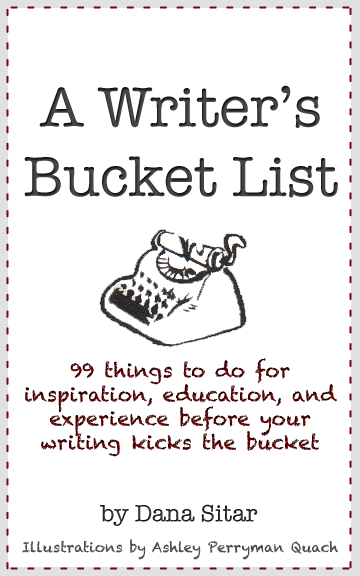
A Writer’s Bucket List by Dana Sitar

Posted on April 23, 2013 Written by Pinar Tarhan

Image via danasitar.com


Whether you call it a to-do list, experimental phase, career-management strategy, a bucket list or just don’t name it at all, we have a lot of stuff we want to do in most areas of our lives. But hey, being writers, the writing-related list is usually the longest, most imaginative and inspiring.

Dana Sitar of DIY Writing (yep, the name tells you a lot,) starts her book by pointing out the fact that when writers decide to be writers, they usually dream about that great American novel. Or the best-selling novel. Or the hit literary novel that makes hit literary novel not seem like an oxymoron.

Now, she was one of the writers who set out to become a big novel writer.

I guess for to-be-writers who are movie fans, it is also common to dream of being a successful Hollywood screenwriter. I was, and am, such a writer.

That’s not to say I didn’t try or enjoy other forms of writing. I loved writing essays in school, even during exams. I tried my hand at playwriting and a short story. In college, I wrote academic articles and a thesis. And to the shock of all my friends, I had chosen the courses specifically because I’d have to write those.

But funnily enough, the thought that I’d love non-fiction articles didn’t occur to me until I started blogging in 2009. I didn’t know I could write a complete novel before I finished my first draft earlier this year. Oh, I’m still writing screenplays.

My own writing journey is the reason why I liked Dana’s book so much. She also found herself trying and loving different forms of the craft- so much so that her novel isn’t still quite finished.

She also shows that you don’t need to limit yourself to one genre or format. You don’t need labels or strict categories. Whatever you like writing, you can do it – be it a hobby or an income stream. And those hobbies and/or income streams don’t have to be in one niche.

Oh, I can relate alright.  I get a kick out of learning, reading and writing about business, advertising, career management, human resources management, psychology, freelancing, writing, blogging, career management, lifestyle design, entertainment and relationships. I love novels and non-fiction books. Oh, how I’d love to see my stories made into film…

So I dived into her fun bucket list – a diverse list of writing and not-so-writing related things any writer should do to find her calling(s), start/manage her career, find more awesome story material, meet other writers, find readers and have a lot more fun in life in general.

The categories are Creative Growth, Inspiration, Career, Education, Building a Network and Life Experience.

I read the whole thing in one sitting, and counted how many of the things I could cross off my list. My number is 46, and they were mostly done before reading Dana’s e-book. My 46 includes meeting other writers online, applying to college, getting paid for my writing, writing stories/articles my family wouldn’t approve, writing a novel, writing a screenplay, entering a contest, learning a second language, drawing, learning an instrument among many others.

But there’s also a lot on the list I’ll be working towards: such as contacting agents and getting my books published, contacting a famous person, working closely with a mentor, winning a contest, doing weird stuff for a year…

There’re a great deal of goal-setting books out there. Same goes for inspiration, career management, networking and writing life in general…However, I don’t think there’s another one that compactly features everything in such a fun and honest manner.

I recommend reading the book, saving it and coming back to it on a regular basis to see what more you have crossed off your list, and what more you’d like to do. It also won’t hurt to add your own ideas. I know I have.


You can read about Dana and her mission in the book and on her website, DIY Writing. A Writer’s Bucket List is her free gift to her subscribers.




Filed Under: Inspiration and Motivation, Writing

Music for the Writing Life: Curing Headaches, Getting Inspired and More

Posted on March 27, 2013 Written by Pinar Tarhan


music and writing
Image via farrahpenn.com.

Music has always been such an integral part of my life. People who are more exposed to music than me are probably musicians. Hell, if I hadn’t been tone-deaf, there’d be no stopping me from hitting the stage with my own band and rocking until the early hours of the day. Not that I’d stop writing. I’d be a writer/musician.

But luckily you don’t need to have talent to enjoy and utilize music to suit your moods. You can even use music to adjust your moods.

How many times have you listened to a sad song in a sad mood because you wanted something you could relate to?

I can also easily find a song to transform my emotions anyway that I like.  For instance, if it is winter, and I need to be writing a sunny beach scene in Hawaii, I take advantage of chirpy and fast songs to help me get there. Sure, imagination works. But why not make the transition smoother, faster and definitely more fun?

Writing along to an upbeat song can help with your mood, as well as your writing speed. As much as I like a good REM song, a Motörhead number (Ace of Spades, to be specific) will make me think and type faster 90% of the time.

That said, I would definitely not be listening to Motörhead, Mötley Crüe or Guns’N’ Roses if I had a headache. Not because the songs are hard or fast, but because the voices of the singers…well, are not the softest. They might blend in nicely with catchy electric guitar solos, but they don’t offer relaxation. Not to me, anyway.

Below are suggestions for songs, singers and bands for causing, avoiding or accelerating certain feelings and moods (as well as helping with writing certain settings):

(Of course keep in mind that I’m primarily a rock fan so that the choices won’t surprise you a lot.)

For:

A hard-rock club scene/ head-banging people at concerts/just writing damn fast: Ace of Spades-Motörhead, Fuel-Metallica, Kickstart My Heart-Motley Crue. Just for starters.

80s-90s/fitness/partying through rock’n’roll/feeling energetic/typing fast: Pretty much all the fast numbers of glam metal/glam rock bands (or the glam rock periods of classic rock/hard rock bands) such as Warrant, Aerosmith, Def Leppard, Whitesnake, Mr. Big.

Romance: Pretty much all slower songs of the bands mentioned above. And Bryan Adams.

Ultimate relaxation, peace and passion without exhaustion: REM (stay clear of songs like Lotus, though unless you prefer electric/computerized sounds over the softness of guitar), The Corrs, any slow Bryan Adams (he has more energizing rock numbers than people give him credit for), most unplugged albums of artists you like, Road Trippin’-Red Hot Chilli Peppers, anything Elvis Presley

For modern times: Matchbox 20 , Goo Goo Dolls

Fast, angry, slow, frustrated, depressed, happy, confused, excited…Whatever feeling you are after, or any combination of these feelings, they can provide the songs for you.

Anger, frustration and rebellion: Metallica, Offspring, Greenday

 One cure-for-all: Bon Jovi

It’s a shame that people are either crazy about ballads like Always or the 2000 hit It’s my life and deem the band a too-popular-to-be-cool pop-rock band when they have so much more to offer. Not counting the first two albums (Bon Jovi, Fahrenheit 4800) that would fit perfectly in the over the top soundtracks of most 80s films, and if you really don’t want to get into the 80s happy-go-lucky parties and big hair periods (though there are some great classics in their 3rd and 4th albums),  just start with Keep the Faith (1992). It’s modern rock before modern rock bands started popping around. The themes are more diverse and lyrics are funnier. It’s a good combination of awesome party fun and soul-searching. The sound is just different, in a very good way.

Then there’s These Days, a dark rock album closer to hard rock than pop rock. Survival, faith, love, sex, betrayal, drugs, depression…You name it. It’s there.

I can go on for a while, with them being my favorite band and all. But they do have the ultimate combination: great vocals, diverse and great lyrics and good music.

Give me a theme or a situation, and I can probably find a song from them. Also given that the singer’s voice improved considerably since the early 90s, there’s no mood they can’t put me in or get me out of. They write stories, not just situations.

Oh, they are also the right choice when you want someone singing that you’ll make your dreams come true. They sing that theme really often and really well.

*


MY FAVORITE HEADACHE-KILLER VOCALS – SONGS-BANDS

(These can kill headaches faster than Advil)…

Any Crowded House song

Blind Faith by Warrant

Bon Jovi (try acoustic or non-pop rock ballads)

Bryan Adams – any slow number

Red Hot Chilli Peppers- Road Trippin’

 *

I have more of course, but these are my basics. Who do you listen to when you write? And why?


Filed Under: Inspiration and Motivation, Writing Tagged With: music and writing, music for writers, music for writing, writing and music, writing music

Finding Article Ideas & Writing About Them: 30 Inspiration Tips for Writers

Posted on January 21, 2013 Written by Pinar Tarhan


Image via 123rf.com.

Writers really need to be a jack of all trades these days since we are expected to be writers, editors, bloggers, platform builders, marketers and so on. We also have to have a million “sellable” ideas and we can’t afford to run out of them. Because all our other skills won’t add up to much if we don’t have any sellable ideas to begin with.

We need them for all types of fiction and non-fiction. We need them for our blogs and other publications. But there are times even the most prolific creators can feel stuck and uninspired or they can get lost  in their search for an angle that hasn’t been done way too often.

The list I gathered offers what I do, and should do more of, to find ideas. While I get quite a few intriguing ideas without even trying (when the magical “what if……? “questions seem to come out of nowhere), most of them come through a lot of effort.

1)      Go through your old posts on your blog.

What have you covered? What else should you cover? Should you update existing posts? Or are there posts that you need to turn into a series to make your advice more thorough and helpful?

*If you don’t have a blog, you might want to read 6 Reasons Why Every Writer Should Blog.

2)      Go through your pitches. Maybe they landed you assignments. Maybe they didn’t. The ones that didn’t might be lying down somewhere forgotten because of the depression mode you got into due to rejection.

Is it possible that you targeted the wrong markets, you just got better at querying in time or you’ve just discovered other markets that could be interested in those ideas?

Recycle, improve upon and use those ideas.

3)      Go through your published articles. You probably know more now than you did then. Do you think there could be another slant hidden there somewhere? Can you use the same research to write other articles around the same topic?

4)      Study the markets you are interested in, focusing on titles, reading the articles, focusing on the slants/angles. There’s a chance you’ll disagree with some points, and develop an article idea on that. For instance, I came up with my Freelance Switch article How Coffee Shops Can Make the Best Substitute Offices after reading a few articles on the site that covered libraries and co-working spaces. Since I have a couple of favorite coffee shops I switch back and forth (in addition to my home office) where I worked productively, I decided to make a post of it.

5)      Study the markets you find interesting, even the ones you think you may not write for. They might inspire you for fiction and slants. You might even think of an idea for them. You never know.

6)      Recycling/revamping your ideas lists. You need to check your list of ideas regularly for updates and editing. You may have written about some of them, you might find inspiration while looking at the others. If you have used all of it, go ahead and delete it. Now you’ve updated yourself about some of the things you’ve already covered.

7)      Watch TV shows and movies without switching off the writer in you. I’m a sucker for an engaging story, and I am running an entertainment blog, so I am tuning off the productivity tips about watching less TV. Of course keep in mind that I hate reality TV, and I quit or fast-forward a show the moment it stops being interesting.

How do they make good posts, you ask? Below are some articles that were inspired by them:

On story analysis:

–          Crying for a Good Story, by PJ Reece  (on Good Will Hunting)

–          Two New Movies That Demonstrate Story Physics by Larry Brooks (on Lincoln and The Sessions.)

On delicious conflicts:

–          Most Enthralling Story Conflicts & Dilemmas: The Ledge – Kill Yourself or Your Loved One Will Be Killed

–          Your Daughter’s a Liar or Your Best Friend’s a Pervert: Most Enthralling Story Conflicts 2 – The Hunt

On inspiration:

–          The CSI Guide to Finding Your Next Killer Idea – A Guide for Bloggers by Pippa

Having fun analyzing fictional writers:

–          Writer Character from 27 Dresses – Getting Involved with Your Source

I have so much fun doing this, I have an entire category dedicated to it.

8)      Talk to professionals in different areas that you are interesting in writing about.

9)      Make a list of your failures. Some of the most popular posts were born through author mistakes.

10)   Make a list of your accomplishments. See what topics you can dig up from there.

11)   Go through the “finding ideas” posts on sites you love, bookmark /print out the ones you find useful (that include tips you don’t already put to use or haven’t tried yet.)

Two good examples would be Where Oh Where Are All the Good Article Ideas? from Writing World and 50 Ways for Writers to Find Article Ideas from Susan Jonhston.

12)   Find a great “writing headlines” source and think in terms of titles, getting  article ideas from them. Try Jon Morrow’s 52 Headline Hacks.

13)   Analyze characters from novels you love. Think about them. Maybe they can tell you something. Lots of fun dating article ideas can be born from them, such as:

How Jane Austen’s Pride and Prejudice and Matthew Macfadyen’s Darcy Ruined Women Forever

14)   Think about the jobs you hated/you loved.

15)   Think about your career progress. I realized that for me, a combination of a part-time teaching job and writing worked wonders. You bet I wrote a story about it: One Freelance Writer’s Surprising Strategy for a Revved-Up Career. It was published on Carol Tice’s Make a Living Writing blog.

16)   Write about songs. Especially if you’re writing about music, the ideas are endless.

17)   Rant.

18)   Find things in common between Blockbusters/best-sellers and your writing topic.

19)   Never turn off your creativity switch. Even if you are just watching a celebrity interview on YouTube.

20)   Collect the best list posts on your chosen subject. Bookmark them, study them. Focus more on the information you haven’t internalized.

21)   Gather your ideas in one place and look through them occasionally. Add, subtract, improve. It’s hard to keep track of them all when they are scattered on post-its, notebooks, word files and so on.

22)   Cover your favorite resources. I do it often here. It helps me restudy the material, gives me something relevant to write about and helps me share valuable information with readers.

Some of my review posts are:

Resources for Writers & Bloggers:Travel Blogger Academy Review

E-book Review: Crafting Unforgettable Characters by K.M. Weiland

Write Great Fiction Dialogue with Gloria Kempton

23)   Cover stuff that inspired you.

Paul Arden’s Whatever You Think, Think The Opposite -The Bedside Book for Creativity, Motivation and Life Management

24)    Write case studies.

25)   Brainstorm niches, and then brainstorm further from those niches. Here’s a great list from All Freelance Writing to get you started: 101 Niches to Write About.

26)   Think in “how (to) ” terms.

It works wonders especially if you back it up with a real life success story.

You might try How I Made 6 Figures as a Freelance Writer in 2011 from Carol Tice of Make a Living Writing.

27) Think about  how not to do something.  Think about what not to do. Or the reasons why you shouldn’t be doing that. And start taking notes.

28)   Gather your favorite resources in a list.

You might want to check out 60 Resources for Freelance Writers by Jennifer Mattern on All Freelance Writing.

29)   Share success stories, and it doesn’t have to about writers.

Like I did with How Mads Mikkelsen and Gerard Butler Can Motivate Writers Like Hell: The Ultimate Gerard Butler and Mads Mikkelsen Guide to Freelance Success.

30)   Find inspiring, fun and useful templates/how-to (e) books and work your way through them. I really like Steph Auteri’s Freelance Awesome: A Starter Kit and Thursday Bram’s New Ideas on Old Topics. They can be acquired through their sites, and they are free.

Filed Under: Inspiration and Motivation Tagged With: good story ideas, how to find article ideas, how to find ideas, inspiration, inspiration for writers, inspiration for writing, story ideas, writing inspiration, writing inspiration tips

How Mads Mikkelsen and Gerard Butler Can Motivate Writers Like Hell: The Ultimate Gerard Butler and Mads Mikkelsen Guide to Freelance Success

Posted on October 31, 2012 Written by Pinar Tarhan

What can two popular actors possibly have to do with us writers, our careers and motivation levels? First let’s take a look at who and where they are:

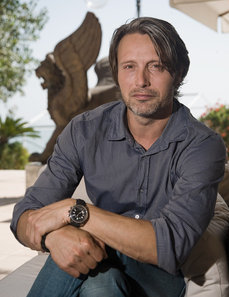
Mads Mikkelsen
Mikkelsen image via zimbio.com

Mads Mikkelsen played the James Bond villain in Casino Royale, won Best Actor at Cannes this year, and  he’ll also be starring as Hannibal Lecter. Yep, the very one played by Anthony Hopkins in Silence of the Lambs. Oh, and did I mention he’s Danish?

Gerard Butler
Gerard Butler image via tvtropes.org

Gerard Butler is probably the one you are more familiar with. After all he’s that actor who shouted “This is Sparta” before kicking a cocky Persian right into the bottom of an endless well in the movie 300. He’s known for his dedication to his parts (that Spartan body was really his!), diversity (the guy played the Phantom in Phantom of the Opera), and ability to tackle accents. Why else directors would cast him as American or Irish instead of hiring equally or more popular American or Irish actors?

But whether you like them or their movies isn’t the point. The point is what they accomplished, how they accomplished it and what you can learn from it.

Writers are prone to depression, lack of motivation, bouts of self-doubt, fear of ruts and writer blocks. They also worry about their age, nationality, talent, the competition, rejection, income…and that’s why I like to look at Mikkelsen and Butler when I experience any of those.

1 ) Nationality:

Mads Mikkelsen is from Denmark. Gerard Butler is Scottish. None of them grew up in L.A. Now, if they can make it to Hollywood, you should definitely not be discouraged about your nationality when it comes to your writing.

While your location or citizenship can prevent you from submitting to some magazines (for instance some Canadian publications only work with Canadian writers, or some contests require you to be a legal resident of the country the publication is based in), there are tons of other contests and markets that don’t really care about where you are from. They just want good work.


2) Age:

Butler was 25 when he decided to really pursue acting, instead of just wanting it.  He was 28 in his first onscreen appearance.

Mikkelsen studied acting, but his first onscreen appearance was in 1996, in a short film. He was 31.

Granted, late 20s and early 30s can seem very young, or young enough, depending on how old you are (or how you look at things), but remember that they didn’t start a writing career-they started an acting career, from other countries and competed against people who had been building industry connections since they were pre-teens, whose family members were in the business and so on.

Your queries and manuscripts don’t give a damn about your age. Neither do your editors.

Even if you are trying to write for a magazine whose target audience is way older or younger than you are, it is still all about getting the tone of the publication, understanding what the editors need and coming up with an attractive idea.

Your age doesn’t matter. Not that this is an excuse to delay your career efforts for decades. Make your move now-just don’t obsess over your birth date.

3) Industry connections

Like I mentioned above, Butler and Mikkelsen weren’t born into Hollywood families. I’m not saying the good actors who knew the right people don’t deserve to be where they are. But let’s face it: all things equal, the guy who knows people will be one step ahead of you. He doesn’t even need to be getting favors-he’ll know how things work, he’ll know who to talk to. More studios will know his name. And there is a big chance he has started before you. More experience, better CV and all that.

Imagine you started your writing career without knowing much, if anything, about writing queries, markets, genres, networking….Most of us did. We had to familiarize with ourselves with the process, jargon and fight against people who thought we were dreamers…

The point is that it can be done, whether you initially know someone or not. But once you get started, you have to start building that network of yours. Gerard’s first connection came from a theater backstage gig he got after deciding not to be a lawyer.

4) Background

Not all dancers win Best Actor at Cannes, nor do they get to play Bond villains. And I’m not sure there are many Danish dancers, if any, that got worldwide critical acclaim for their acting, leading and supporting roles in many different countries (not just Denmark, or the States.)

Butler has a law degree from Glasgow University. He just hated his job the moment he started working as an intern.

This is not to say their careers didn’t benefit from those backgrounds. Mikkelsen always has a certain amount of grace he carries around him, and he is not camera shy when it comes to interviews.

Butler always seems like he is chatting with his best friends and having the time of his life during interviews. And the fact that he knew a bit about persuasion and body language didn’t exactly work against him. And hey, knowing what contracts are about can’t have hurt either. Oh, and one of the reasons he was chosen to play the phantom in The Phantom of the Opera was that he had a rock’n’roll voice? Complements of singing in a rock band.

Whatever your day job is/was, there is always something you can use about it to come up with ideas, build relationships, form an audience, etc. You may want to check out Carol Tice’s “How My Crappy Day Jobs Made Me a High-Earning Freelancer” post on Freelance Switch for tips.

Of course your day job doesn’t have to be crappy to help you. John Grisham is a lawyer, in addition to being one of the most famous bestselling authors, who comes up with brilliant legal thrillers and dramas. Needless to say, he doesn’t ever have to worry about using the correct words, seeming off with his descriptions or doing that much research. He also created his first book, second bestseller, A Time to Kill, based on a real life court case he witnessed. A bestseller that went on to become a movie starring A-List actors.

Not that my success is anywhere near his, but I did get published on Carol Tice’s Make a Living Writing with my article “One Freelance Writer’s Surprising Strategy for a Revved-Up Career”,detailing how my part-time job (one that I still have) helped my writing career in so many ways.  Just thought this example might be a tad more relatable than John’s.

5) Persistence, dedication, hard work

If there is any other job that comes with the risk of rejection at least as much as writing, it has to be acting. It’s audition after audition, trying to persuade the director and/or the casting people or the starring actor that you are the best person for the job. It is not easy to pick up your courage and motivation after hearing no, but you do it anyway because the award awaiting for you will make you so much happier than the rejection made you miserable.

Butler’s director in the movie One More Kiss Vadim Jean was quoted to say that he never knew anyone that worked so hard to make his career happen.

That’s the attitude that got him where he is today: sought-after, successful and easy to work with. You are easy and fun to work with if you really want to be where you are, and put in the work where you are. And editors, as well as other clients, love easy and fun to work with.

P.S. John Grisham could only get A Time to Kill published after he finished and found a publisher for The Firm. A Time to Kill wouldn’t have happened if he hadn’t put himself out there again and fight back with another manuscript.

6) Going from fighting for gigs to gigs being offered to you

Gerard Butler played Attila The Hun in the mini-series Attila in 2001. The producers originally wanted someone more famous. And maybe someone with less of a Scottish accent. But they couldn’t find someone they liked better than Butler, and he showed them he could change his accent. 2001 was way before 300, The Phantom of The Opera or P.S. I love You. Before nobody really knew who he was.

People joke that any Danish director casts Mikkelsen whenever they want to secure box office success or awards or both.

More familiar names are not always the best choice. More established writers may not always provide the better ideas.

Or you can improve your blog, establish yourself in the areas you are writing about and have them come to you with offers. Look at Bamidele Onibalusi (of YoungPrePro)’s post to see how he does it.

7) Room for self-improvement, fun and other important things in your life

Mads Mikkelsen speaks Swedish because he lived in Sweden for a while and they couldn’t understand his Danish so he learned Swedish. He speaks German because a German director wanted him as the German lead. He speaks French and Russian because he played Igor Stravinsky in the French film Coco Chanel & Igor Stravinsky. He is obviously fluent in English, having had roles in American movies and constantly giving interviews. And his favorite method for learning languages? Watching movies.

He is also married and raising 2 kids with his wife.

You were saying you couldn’t find the time for…what?

So you are working hard. It doesn’t mean you can’t take time for hobbies, learning, family and friends. Living a full life will make you happier, more full of ideas and more equipped.

8) Proving talents in more areas than one.

Mikkelsen has done drama, romantic drama, period movie, comedy, action, adventure and fantasy, horror, romantic comedy…

Butler has done musical, action, adventure, thriller, horror, drama, romance, romantic comedy, fantasy…

You don’t have to choose between business writing and article writing. Between fiction and non-fiction. You don’t have to pick topic to write about. Go out there, show your best work and keep trying until you get the gigs that make you happy. I don’t know about you, but variety makes me happy.

9) International success

Well, you all have a pretty good idea what these two actors accomplished so far. Why not set your sights on writing for the most established magazines worldwide, writing a best-selling book or being sought-after by well-paying clients worldwide?

You know what it takes. You know it is all about how much (and well) you work, improve and motivate yourself. And you know it doesn’t mean you are not going to have time for other things. In fact, it is all about benefiting from all areas of your life, even things that initially seem like obstacles or motivation-busters so you need to live a life outside of your office too.

*

So go ahead. Work. Live. Have fun. Make it happen. Gerard Butler and Mads Mikkelsen made it happen, and they are only few examples in a very, very long list. Why shouldn’t you?

And don’t worry, I’m a big fan of practicing what I preach. I’m taking my own advice as I keep pitching to publications, running various blogs, having a busy social life and working on my fiction.


Related Posts Plugin for WordPress, Blogger...

Filed Under: Inspiration and Motivation Tagged With: attila, Bamidele Onibalusi, carol tice, freelance writing, freelance writing success, gerard butler, gerard butler movies, John Grisham, mads mikkelsen, mads mikkelsen movies, make a living writing, writers, youngprepro

  • « Previous Page
  • 1
  • …
  • 9
  • 10
  • 11
  • 12
  • Next Page »

Blogroll

  • My Entertainment Blog

My Other Blogs

  • Beauty, Fitness & Style for the Fun-Loving Gal
  • Dating & Relationships in the 21st Century

Categories

  • Author Interviews
  • Author news and coverage
  • Blogging
  • Book Launches and Excerpts
  • Book News and Author Interviews
  • Book Recommendations
  • Book Reviews
  • Career Management for Writers
  • E-Book Reviews
  • Fiction Writing
  • Fictional Writers: Writer Characters in Movies, TV Series and Books
  • Inspiration and Motivation
  • Marketing
  • Marketing Fiction
  • Movie and TV Series Recommendations
  • Novel Reviews
  • Paying Markets-Web and Print
  • Productivity & Time Management
  • Recommended Resources
  • Reviews for Tools and Devices
  • Romance
  • screenwriting
  • Self-publishing
  • Story Conflicts
  • Website & Blog Reviews
  • Writer Tools
  • Writing
  • Writing Tools
  • Writing Updates

Copyright © 2026 · Focus Pro Theme on Genesis Framework · WordPress · Log in

This website uses cookies to improve your experience. We'll assume you're ok with this, but you can opt-out if you wish.Accept Reject Read More
Privacy & Cookies Policy

Privacy Overview

This website uses cookies to improve your experience while you navigate through the website. Out of these, the cookies that are categorized as necessary are stored on your browser as they are essential for the working of basic functionalities of the website. We also use third-party cookies that help us analyze and understand how you use this website. These cookies will be stored in your browser only with your consent. You also have the option to opt-out of these cookies. But opting out of some of these cookies may affect your browsing experience.
Necessary
Always Enabled
Necessary cookies are absolutely essential for the website to function properly. This category only includes cookies that ensures basic functionalities and security features of the website. These cookies do not store any personal information.
Non-necessary
Any cookies that may not be particularly necessary for the website to function and is used specifically to collect user personal data via analytics, ads, other embedded contents are termed as non-necessary cookies. It is mandatory to procure user consent prior to running these cookies on your website.
SAVE & ACCEPT