Addicted to Writing

Manage Your Freelance Writing Career While Writing What You Love

  • About Pinar Tarhan
  • Blog
  • Books
  • Hire Me: Services
  • Contact Me
  • Portfolio
  • Favorite Resources
  • Newsletter

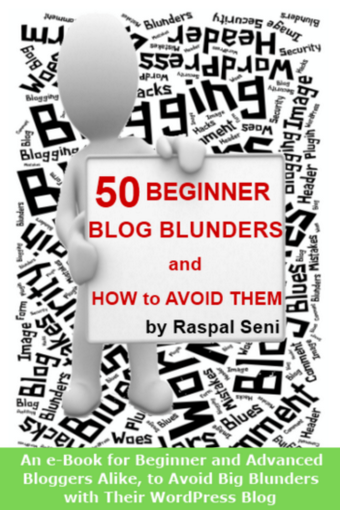
Review for The 50 Beginner Blog Blunders And How To Avoid Them by Raspal Seni

Posted on August 8, 2014 Written by Pinar Tarhan

raspal seni

Raspal Seni is a freelance blogger specializing in WordPress and technical computer stuff that a lot of us dread. You can learn more about him through his blog I Write About Blogging where he helps out beginner bloggers.

The e-book:

Having been blogging for over 4 years, I frankly didn’t think I’d be finding more than one or two blunders on my part. I was wrong. I thank my friend Raspal for making such a thorough guide. This is a review of the highly useful e-book.

There’s a chance you are making at least several mistakes yourself, so let’s go over the contents of the book:

Categories

1. Comment Form Blunders

From moderation to allowing comments at all, this part covers everything you need to check for a more user-friendly blog. You may not agree with everything, or you might have to commit some of them due to the popularity and/or topic of your blog (such as not allowing comments at all).

I enable comments on my blogs, but despite warnings, some threads might get too heated (and not civil!) and you might be better of disabling comments on certain posts.

However I’m a big believer in community, and interacting with your audience through comments, as well as letting them interact with each other, usually does work wonders for your authority and blog engagement levels.

So make sure you aren’t making any unfortunate mistakes when it comes to your comment form.

2. Security Blunders.

You are probably way too past the need to be reminded to make your password tougher to crack, e.g. not using obvious stuff like your age, birth date, your name, your pet’s name…etc. But what about changing the username from admin?

I tried to change my username from admin, and it got so complicated that I had to quit. But with Raspal’s method, it’s no hassle, and your WordPress blog you worked so much for is more secure. Isn’t it fun making hackers’ lives more difficult for a change?

3. WordPress Plugin Blunders.

I love that WordPress comes with so many Plugin options, but this means you need to update them regularly (for security reasons, and for the plugins to work properly with your constantly updated versions of WordPress.)

But there’s more upkeep you need to do, such as getting rid of useless plugins, testing new ones, avoiding certain ones and more. Raspal covers them all in 9 different subsections.

 4.  Image Blunders.

At this point, even the newest bloggers know they need pictures. And many know they need good pictures. The problem is, quality pictures can take up a lot of space, leading to slow uploading of your site. You might also get in trouble if you’re not crediting them properly, or using pictures you aren’t allowed to use.

From formatting to attribution, from keywords to resizing, he goes over everything you need to know and do when it comes to using images on your blog.

This part has 15 subsections.

*

All in all, The 50 Beginner Blog Blunders And How To Avoid Them (affiliate link) is a highly practical e-book you need to have if you still have doubts and complaints when it comes to your blog uploading speed, security, traffic and more. The book will help you tackle a lot of these issues and improve your blog.

You can follow Raspal on Twitter too!


Buy Now

Filed Under: Blogging, Recommended Resources Tagged With: blogging blunders, blogging mistakes, tips for using images for your blog, wordpress comment form tips, wordpress plugin tips, wordpress security tips

Review for Kirsty Stuart’s E-book: How to Start a Travel Blog and Make Money

Posted on May 5, 2014 Written by Pinar Tarhan

Some things in life are just amazing and should be experienced, such as:

–       A rocking stadium concert by an artist you adore (and by that I mean you know pretty much all the songs), where you are ideally close enough to the stage so you don’t just watch things from the big screens.

–       Writing at least one story where you pour out your soul. Whether it’s fiction or non-fiction is irrelevant. And since you are a writer, chances are, there’ll be tens of stroy ideas where can you share bits of your soul. Don’t hold it in;)

–       Dancing to one of your favorite songs without caring about anyone or anything else.

–       Finding your favorite spot/city/country.

And probably the most important one for us writers:

–       Making a living writing about a topic you truly enjoy. And most of us love traveling. We just happen to run out of money or time to do it as often as we’d like.

What if we could make enough money travel writing? Whether it’s from your own travel blog(s), writing for others or a combination of these, you can start your travel writing career. But if you feel stuck, or not quite sure where to start, I’ve just the resource for you.

Travel writing is easy – if you are writing for yourself.

It’s writing with the right voice, for the right audience and with the right structure that’s hard. Finding ideas and the right markets for them can be challenging, just like any other writing market.

Finding unique slants can be even more difficult in this niche. After all, it has existed for a long time, and pretty much everything has been covered. Luckily, no one covers anything like you. It does help, however, when you can take advantage of a savvier writer. It makes the climb to success less daunting, and a lot more fun.

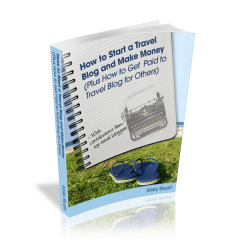
Image via freelancewritersonline.com


One of those savvier writers is the lovely Kirsty Stuart, and the recommended resource is her e-book How to Start a Travel Blog and Make Money. This e-book comes with 69 pages featuring:

  • practical tips and experiences from other expert travel bloggers,
  • Kirsty’s own story,
  • how to start and run your travel blog (including which pages you should have and what information each page should contain),
  • examples of thriving travel blogs,
  • how to find ideas,
  • how to find an audience,
  • how to manage and deploy social media for your travel blog,
  • earning money with information products (including tips on how to market them),
  • earning money with affiliate marketing,
  • sponsored posts and paid trips,
  • advertising on your blog (along with pros and cons),
  • how to pitch to publications and other clients,
  • list of some travel writing markets,
  • earning from blogging for others (as well as additional services you can offer),
  • writing an awesome travel post,
  • finding work when you need to,
  • inspirational quotes,
  • tips to kill your fears and feel encouraged.

Why I loved the book (besides the awesome content, of course):

  • it’s great for anyone who wants to write full-time about a topic they love, not just travel. The tips can be applied to any niche, but it is a lot more specific if you are interested in travel writing and blogging since she provides so many relevant tips, resources and first-hand experiences.
  • the lifestyle mentioned, and how she came to choose travel writing, is easy to identify with: she calls it the struggle to adapt after you’ve been traveling a long time. I call it post-Erasmus depression. (or blues, if you are having an easier time.This shall be one of my future travel posts!)
  • it’s honest.
  • it’s comprehensive. It fills you in about the effort level from the beginning. And you don’t need to be a beginner blogger to take advantage of it.
  • it’s fun. I’m big on fun.
  • it offers places/ways/markets you can find travel blogging work.

Oh, did I mention the price is £2,99 ? You can check out Kirsty’s site Freelance Writers Online for more useful tips on freelance writing. And you can check out one of her own travel posts: Must-See Temples in Chiang Mai.

She was also kind enough to answer my questions on travel writing.

Kirsty on writing about politically “hot” countries:

“I personally write travel articles for companies like Viator and Flight Centre, and while I’m sure they wouldn’t want me to cover up any truths, their business is promoting travel! They want people to travel – it’s in their best interests – so for clients like this I don’t really write about political instability or anything of that nature. They’re not news sites so it’s not really relevant.”

Kirsty on whether or not great stories have an expiration date (because what if you had a breath-taking experience years ago and you are only writing about it now?):

“I don’t think travel stories have an expiration date, no. Those tremendous experiences and stories need to be told! If there are details that I feel could have changed – the cost of a visa at the land border between Thailand and Cambodia springs to mind – then I’ll just say that. Something like, “It cost $20 USD (at the time of writing)” should cover it. If there’s a good story there, don’t let the passage of time prevent you from telling it.”

*

Even though some of the first articles I sold in my freelancing career were travel articles, I had somehow gone into a writer’s block-induced hiatus. But after going over the book for the second time, I made a plan, and made my “returning” travel pitch. It’ll hopefully lead to other ideas and acceptances.

Let me know what you think about traveling, traveling writing and the e-book🙂


Filed Under: Blogging, Recommended Resources Tagged With: freelance writers online, freelance writing, kirsty stuart, make money travel blogging, make money travel writing, travel blogging, travel writing

Updated May, 2021: 7 Awesome Resources For Querying Agents About Your Novel

Posted on April 20, 2014 Written by Pinar Tarhan

Update: This post was written some time ago, so an update is in order. While I still love these resources for querying agents, I decided to go the self-publishing route. I guess a post in favor of self-publishing is in order, so stay tuned to the blog. You can subscribe to the blog here. 

Want to check out how my self-published novels and books look? Check out my Amazon Author page here.

*

My agent search has begun. So while I have several  posts in progress including (but not limited to):

  •  Review for extremely helpful and fun guide by Kirsty Stuart for making money travel blogging,
  •  Review for another terrific resource for bloggers, The Blogger’s Guide to Freelancing by Ali Luke,
  •  A descriptive piece on steampunk,
  •  Getting attached to fictional characters (and how sometimes writers need to kill off key characters).

But it’s only relevant and timely that I update you on my agent search, as well as the resources – yep, there’ll be some affiliate links- I’m using during the dreaded query and synopsis-writing phase:

Submitting and Formatting Your Manuscript by Chuck Sambuchino

Written by freelance writer/editor Chuck Sambuchino, this Writer’s Digest book guides you on the process of writing, formatting and querying both fiction and non-fiction. You’ll find invaluable tips on querying, cover letters, manuscript pages; as well as samples for anything you will need to write.

In addition to novel writing and submitting, the book includes sections for non-fiction, memoirs, graphic novels, screenplays and more.

2014 Guide to Agents

After having spent two hours and having only completed a detailed list for a handful of agents, I wanted to have a readily compiled book at hand with tips on the querying process as well:

2014 Guide to Agents includes contact details, agent interviews and their genre preferences, query letters agents liked, percentage of new writers vs. established writers, contracts and more.

Yes, I couldn’t recommend this book enough. That said, always check the website of the agency in question and combine the information you find in the book and on the site. Agencies tend to update their needs, so make sure you do your homework well.

For instance, while some agencies preference for romance is not mentioned in the book, you might find they’re especially after romance these days. Yeah, I’m speaking from experienceJ

AGENTQUERY. COM

AgentQuery, by their definition, is an online database of literary agents.

Agent Query is more than just a database, however. It includes information on the industry, including genre descriptions, reasons for needing an agent, other resources for writers and more.

QueryTracker

QueryTracker, by their definition, is a free database of agents and publishers. It’s free to register, and you can use it to track your own queries, hence the appropriateness of the name. The site has been repeatedly named as one of the best sites for writers by Writer’s Digest.

Query Shark

Image via Query Shark blog.


Literary Agent Janet Reid runs the essential query critique blog Query Shark where she analyzes real queries on what works and what doesn’t. Read her submission guidelines (and the rich well of previously critiqued queries) before querying yourself. There’s a chance she already corrected your mistakes and evaluated your strengths and weaknesses on somebody else’s query.

Writer’s Digest Posts on Agents

Just keep clicking on the related links you come across while reading these. There’s a ton, and it would take me months to generate a complete list here. I’ve,  however, selected a few to get you started:

SUCCESSFUL QUERIES: AGENT ALYSSA REUBEN AND “HIDDEN CITIES” (MEMOIR / TRAVEL)

LITERARY AGENT INTERVIEW: MELISSA FLASHMAN OF TRIDENT MEDIA GROUP, LLC

AGENT ADVICE: SHIRA HOFFMAN OF MCINTOSH & OTIS, INC.

The Write Life Blog Posts:

This is a very insightful and practical resource on all aspects of writing in general.

But when you are looking for an agent, there are some questions you’d like answered to do a better job, including:

–       What does an agent want to see when they google you?

–       What do they want or hate in a query letter?

–        Is it OK to query multiple agents at the same agency?

–       How many queries without answers should be a warning sign for you to improve that query?


(*Please note that some of these have been excerpted from the 2014 Guide to Literary Agents, the book recommended earlier in this post.)

How Many Literary Agents Should You Query to have the Best Chance of Success?

Querying Literary Agents: Your Top 9 Questions Answered

What Does a Literary Agent Want to See When They Google You?

13 Ways to Convince a Literary Agent to Represent You


Frankly, I was a fan of The Write Life before. But these posts above turned me into an addict.:)


*


Of course it’s a good idea not to only apply these tips, but take notes of the names of agents that offered them as well. They might be amongst the people you’ll be submitting your work to after all.

Agents information are generally featured on the websites of the literary agencies they work for. However they tend to offer even more about what they want through interviews, tweets and blogs.

So learn what you can about each agent’s preferences before you send that query letter.


*

Currently, I’m absorbing and deploying these resources. Please add what you use in the comments.J

And good luck to everyone, whether you need it for inspiration, submission or just selling more.:)


Filed Under: Fiction Writing, Recommended Resources, Writing Tagged With: how to format a manuscript, how to write a query letter, querying agents, tips for finding agents

Write Where the Money Is by Robert Earle Howells: E-Book Review

Posted on September 2, 2013 Written by Pinar Tarhan


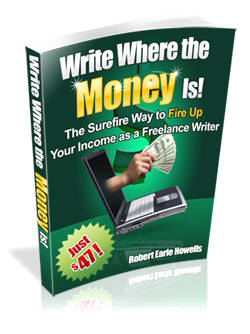
write where the money is e-book
Image via writewherethemoneyis.com.

Write Where the Money is one well-rounded resource that can, and will explain pretty much any question you might have about any stage of writing for a magazine or a website. It was written by veteran writer/blogger Robert Earle Howells.

There are many amazing resources I’ve found about querying, contracts, formatting, writing and such, but I don’t think I have seen all of together, and written so well, in one place.

It’s a must for beginner writers, although it has a lot to teach and/or remind all levels of writers. And even if you’ve been writing and getting published successfully for years, it is still a handy resource to have because it does cover pretty much everything.

It’s a 154-paged PDF document, but it reads as fast as a page-turning work of fiction. Honestly. First time I was reading it, I almost forgot to get off at my bus stop.

But let’s give you more details on why you might need it too.

Below is a breakdown of basically what the book covers, though I interpreted chapter headings to give you a better idea. For the actual chapter names, take a look at the book’s sales page. (Yep, it’s an affiliate link. I stand by the book, and wish I had purchased it much sooner. It’s $47.)

I should mention that all chapters include quotes from other writers, editors and publishers, as well as experiences of Robert, and stuff he used for his own queries. And each chapter ends with a summarized action plan for you.

Here we go:

-How you know if you can write (or know about what to write)

-How to organize your ideas

-Why experience/clips don’t matter as much as good ideas

Now, technically, this is common sense. But it’s easy to get intimidated by our lack of experience in one area even if we have experience in others. So keep in mind that great ideas (and how well you present them) are what matters. And we were all beginners in a niche once.

Just keep brainstorming, and studying publications.

– How/where to get valid experience

He guides you on different strategies to get those first clips.

– What to pay attention to when choosing how to get your clips

– How to write something editors would want (aka how to write well)

– How to study and pitch a publication

– How to understand/interpret writer’s guidelines

There’re some very useful, but not-always mentioned tips on how to read a publication’s guidelines, what to believe and what (not) to take seriously, and what is said vs. what is meant.

– Tips on how to really write a successful query letter

Again, unless you’ve just started writing (congratulations, this is a resource that will get you very far without you having to collect all the information you need about writing, submitting and publishing from a hundred different resources), you are familiar most of the tips. But it’s practical to have a solid checklist.

– What comes after the query, deciphering contract terms, negotiating, rights

The book doesn’t leave you high and dry after sending the query letter. It features insights on how to follow-up, when to give up, how to react to similar ideas published in the same magazine that rejected yours and so on.

Then there’s the breakdown of not just rights, but other terms as well.

– Formatting/submitting

– Working with editors

This part informs you about how to react to edit and rewrite requests professionally; as well as developing long-lasting relationships that will land you assignments without querying (much).

– How much you earn, and how to know an article’s actual worth, what to do when the payment is late

Plenty of magazines do in fact pay a lot better than blogs. Even the publications that pay for both print and online content pay more for the print articles. However, they also happen to expect a lot more in terms of research, experts and interviews.

I’m not saying you shouldn’t do your best when you are writing for the web. You definitely should. However you will see that sometimes an article that pays 3 grand won’t have paid as much as the 50 bucks you got for that 500-word piece for a blog. He explains how.

This section also gives you ideas on how to re-slant your articles and what more you can do with them. Moreover, there’s detailed information service articles vs. feature pieces.

– Defining/finding markets

Different types of publications are explained, along with tips on what to expect from them. Job boards are analyzed. And there’s also information on how to monetize your own blog.

– Qualities you need to become successful: This is divided into two chapters.

And it’s not just about clear writing or being more productive (though they are obviously covered). It pretty much tells you what you need to manage your business, writing and life properly so that you will be a successful writer.

– Wisdom, tips and experiences of fellow writers

This part is great for gaining (and keeping) you faith and confidence.

– Glossary for the writing business terms

– Resource Listing: from markets to associations.

*

All in all, it is a book to keep as a resource as long as you are writing non-fiction. It should be kept where you can refer to as fast as you need, whenever you need it.
Click Here!

Related Posts Plugin for WordPress, Blogger...

Filed Under: Blogging, Recommended Resources, Writing Tagged With: make money from your writing, make money writing, resources for writers, robert earle howells, write where the money is, write where the money is e-book review

  • « Previous Page
  • 1
  • …
  • 4
  • 5
  • 6
  • 7
  • 8
  • …
  • 10
  • Next Page »

Blogroll

  • My Entertainment Blog

My Other Blogs

  • Beauty, Fitness & Style for the Fun-Loving Gal
  • Dating & Relationships in the 21st Century

Categories

  • Author Interviews
  • Author news and coverage
  • Blogging
  • Book Launches and Excerpts
  • Book News and Author Interviews
  • Book Recommendations
  • Book Reviews
  • Career Management for Writers
  • E-Book Reviews
  • Fiction Writing
  • Fictional Writers: Writer Characters in Movies, TV Series and Books
  • Inspiration and Motivation
  • Marketing
  • Marketing Fiction
  • Movie and TV Series Recommendations
  • Novel Reviews
  • Paying Markets-Web and Print
  • Productivity & Time Management
  • Recommended Resources
  • Reviews for Tools and Devices
  • Romance
  • screenwriting
  • Self-publishing
  • Story Conflicts
  • Website & Blog Reviews
  • Writer Tools
  • Writing
  • Writing Tools
  • Writing Updates

Copyright © 2026 · Focus Pro Theme on Genesis Framework · WordPress · Log in

This website uses cookies to improve your experience. We'll assume you're ok with this, but you can opt-out if you wish.Accept Reject Read More
Privacy & Cookies Policy

Privacy Overview

This website uses cookies to improve your experience while you navigate through the website. Out of these, the cookies that are categorized as necessary are stored on your browser as they are essential for the working of basic functionalities of the website. We also use third-party cookies that help us analyze and understand how you use this website. These cookies will be stored in your browser only with your consent. You also have the option to opt-out of these cookies. But opting out of some of these cookies may affect your browsing experience.
Necessary
Always Enabled
Necessary cookies are absolutely essential for the website to function properly. This category only includes cookies that ensures basic functionalities and security features of the website. These cookies do not store any personal information.
Non-necessary
Any cookies that may not be particularly necessary for the website to function and is used specifically to collect user personal data via analytics, ads, other embedded contents are termed as non-necessary cookies. It is mandatory to procure user consent prior to running these cookies on your website.
SAVE & ACCEPT