Addicted to Writing

Manage Your Freelance Writing Career While Writing What You Love

  • About Pinar Tarhan
  • Blog
  • Books
  • Hire Me: Services
  • Contact Me
  • Portfolio
  • Favorite Resources
  • Newsletter

The book or the movie? That’s the question.

Posted on September 7, 2023 Written by Pinar Tarhan

Image by Gerd Altmann from Pixabay.

Note: I use affiliate links in this post. If you buy through them, it’s no extra cost to you, but I make a little money, which goes toward running this blog.  

I have a confession to make. I don’t always prefer the book. Sometimes, the movie adaptation works fine. You know, when I haven’t read the book first.

I don’t plan it that way. I am just as much into watching movies as I am into reading books. I add a movie to my watchlist or just start watching and then find out it’s based on a book. If I’m already excited about the film, I’m not going to wait until I read the book.

So I watch the movie. And if I really like it, I hunt down the book. This makes disappointment less likely since at this point I’ll have read an article or two about how different these two works of art are. And I won’t be disappointed with the casting – I will just imagine the actors as the leads.

You never know. Sometimes, the movie will have changed things for the better and you won’t enjoy the book. Sometimes, the changes will have worked fine for the medium, and both will give you a lot of joy (Looking at you Red, White, and Royal Blue. (aff.link))

On the other hand, I can’t say the same about Cold Mountain (aff. link). It’s a visual feast. I can’t find fault with it. But I couldn’t get through the novel for some reason.

When did I hate a movie adaptation? Runaway Jury.

Hear me out. Had I not read the novel first (aff.link) – which happens to be one of my favorite novels ever – I would have loved that film. The cast and genre alone would have lured me in. But they changed the core of the novel. A fascinating case against the big tobacco became a gun violence thing.

And… look, I get how more visually impressive (and emotionally more touching and more mainstream ) this decision is. The problem?  I loved the plot and the twists and the characters specifically because it was a big tobacco case. And I feel like we have enough great and moving movies about guns. Why couldn’t I have this one? (If you have seen and read Runaway Jury let me know what you think.)

Then there are movie adaptations that are enjoyable enough, if not as memorable as the novels. Two Sophie Kinsella adaptations come to mind: Confessions of a Shopaholic (starring Isla Fisher) and Can You Keep A Secret? (starring Alessandra Daddario). If I had to pick one, I’d pick the novel. But the movies are pleasant experiences and I am glad they exist.

Everyone’s experiences will be different based on taste and expectations. If you hated the adaptation, you’re right. If you loved it, you are right. 🙂

What about you? Which adaptations did you love? Which ones do you hate? Let me know! 🙂
 

Filed Under: Fiction Writing, screenwriting Tagged With: book adaptations, can you keep a secret movie, can you keep a secret sophie kinsella, confessions of a shopaholic, movie adaptations, novel adaptations, runaway jury john grisham, secret dreamworld of a shopaholic

Romantic Comedy Writing Lessons from Netflix’s A Tourist’s Guide to Love

Posted on April 29, 2023 Written by Pinar Tarhan

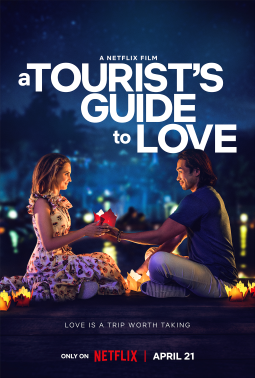
A Tourist’s Guide to Love is a 2023 romcom by Netflix, starring Rachael Leigh Cook and Scott Ly. It’s a fun, sweet and romantic story about a woman who is challenged to get out of her comfort zone first by a break-up and then by a free-spirited tourist guide in Vietnam.

First, let me get this out of the way. This is a happy movie about a non-toxic romantic relationship that starts as a friendship. So, if your favorite romantic movie is The Notebook, you will probably not enjoy this one.

This is not to say the protagonists don’t have problems. They do. But no one dies or gets sick. No one plots to keep people apart, and minor disagreements do not turn into shouting matches or served under the guise of passion:

Plot Summary

After travel executive Amanda (Rachael Leigh Cook)’s 5-year relationship comes to a disappointing end, her best friend/business partner Mona (Missi Pyle) sends her to Vietnam to get over her disappointment and to evaluate a local tour guide company for purchase. Amanda is all ready for a packed visit jammed with activities, but her tour guide Sinh (Scott Ly) has other ideas.

As he encourages her to take a moment and enjoy everything, the instant chemistry and connection between them grow. But unfortunately, their different residences aren’t the only thing standing in their romance: He doesn’t know Amanda is there to buy his uncle’s company. Add the ex who is regretting the break-up, and things get complicated.

*

The movie is like slow travel. It appeals to your senses, presents another culture respectfully, and introduces you to fellow travelers who could be your best friends. And there is a lovely romance brewing which will end happily of course.

*

What can the movie offer you if you write romcom?

  • You can tone down the chaos. Sometimes readers and watchers need and want to relax. You can offer beautiful escapism with a sense of calm.
  • Internal and external conflicts can be introduced and amped up without people acting like jerks to one another.
  • Adults can (and should) experience romance in a healthy, respectful, non-toxic way while still conveying passion and attraction.
  • Cultures can co-exist wonderfully.

Fun cast facts:

  • Mona is played Missi Pyle, who played the love interest of Ross in an episode of Friends. She’s the girl Ross whitened his teeth for. If you know, you know. 🙂
  • The leads are in their 40s (even though they look younger), so you don’t have to give the movie a pass if you’re bored of only seeing 20-somethings find love on the screen.

*

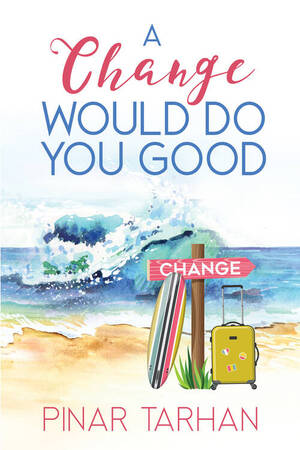
Want more love non-toxic, escapist love stories? You can try my romcom novels Making A Difference (M.A.D.) and A Change Would Do You Good. (Though my chaos levels are higher due to the premise and large cast of the books.;))

Filed Under: Fiction Writing, Romance, Writing Tagged With: A Tourist's Guide to Love, Rachael Leigh Cook, romance writing tips, romantic comedy writing tips, writing romance, writing romcom

Why I Think Men Should Read My Romcoms Too (Why Finding Your Target Audience Is Tricky)

Posted on March 21, 2023 Written by Pinar Tarhan

This post is for two groups:

  • Authors struggling to find and reach their target audience. (PS I am still figuring this out. But I have some useful tips to get started.)
  • Men who love short and entertaining romcoms that don’t devote 40 pages to how hot the male main character is.)

Let me explain.

As authors, we are expected to have our elevator pitch, aka a brief but intriguing description, for all our books ready at all times. Mine is:

  • I write short and fun escapist romcom dramas even men can enjoy. I feature big casts and multiple POVs.

So why “even men?”

There are a lot of romcom fans out there, and not all of them are women. Sure, some men are dragged by their girlfriends to the movie theaters, but many enjoy the experience. And they are probably more comfortable buying movie tickets than being seen reading books with hot men on the cover.

Men reading this post, be honest: How many of you hated watching The Ugly Truth?

Or What Women Want?

Or The Wedding Crashers? (If you did, why???)

Okay, okay. Taste is subjective. But surely you see my point. And if you haven’t seen these movies, please watch them. They are hilarious. And romantic. And so much fun.

Maybe I am weird. Maybe the reason I am not a bestselling author yet is I have strange tastes.

But I’ll name two romcoms or romances I didn’t love with the passion as the rest of the public:

  • Notting Hill.
  • The Notebook (based on a book)

They aren’t bad. They are great in some ways even. They are just not for me.

With Notting Hill, I didn’t like the romantic storyline.

With The Notebook, I am a bit turned off by how incompatible they are. I also don’t like unhappy endings, no matter how much romance and love you pour into them.

Here are some romcoms I adore:

  • Pride and Prejudice (movie and book)
  • Just Like Heaven (The movie. Didn’t read the book.)
  • The Holiday (Yes, I love writer/director Nancy Meyers)
  • While You Were Sleeping
  • Someone Like You
  • 27 Dresses
  • Kate & Leopold
  • Friends with Benefits
  • 10 Things I Hate About You
  • Laws of Attraction
  • Salmon Fishing in the Yemen
  • Can You Keep a Secret? (Great book. Fun movie.)

Some are rated PG, some are PG-13 and some are R.

The majority have biggish casts and interesting subplots. Some have elements of sci-fi or fantasy.

At the end of the day, they have fun premises and end HEA. No one dies. The main characters find The One. The main characters don’t cheat on their loved ones, most people are very attractive, and the characters are flawed but likable and relatable.

I use multiple POVs, because I get bored if we are only in one person’s head. Especially if that one person is only about the girl/boy they like. Remember the Joseph Gordon-Levitt movie 5oo Days of Summer? I like that film as a character study of an obsessed young man who’s clueless about how real love works. And I love watching Gordon-Levitt as an actor. But if you try to sell that film as a realistic romcom, we’ll have words. A romcom is about two people finding mutual love. Not one guy spending an entire film chasing a girl and ignoring what she says or wants.  And guess what, Levitt is on my side.  He believes his character’s the villain if you are desperate to find one.

Back to my romcoms and why men can and do enjoy them:

While my characters meet, fall in love, and stay together, there’s more to their life than each other. They have dreams about their careers, close friends, and hobbies. They listen to each other.

I simply don’t have the book space just to talk about how they look for so many pages on end. They are hot. End of.

But if you don’t like good-looking characters, you won’t like most romcoms. Not just mine.

What about realism?

What realism?

Kidding. But there’s a reason I put the word escapist in my elevator pitch.

Look some of my favorite movies include Braveheart (historically inaccurate), The Crow (dude comes back from the dead), and Speed. I adore Atomic Blonde and John Wick. So…

Of course, my characters live in the real world and they have problems. But it’s not all problems. They have good things going for them too because life is like that. You have ups and downs.

If my character’s boyfriend dies, I’m not going to give her cancer.

If my character’s broke and stuck in a bad job and relationship, you can bet she’s going to have amazing friends who will help her out of this mess.,

Now that we got that out of the way, let’s take a look at some of the things that will help you find and/or reach your target readers:

Choosing a genre-appropriate cover

This is where things get tricky, at least for me.

My audience is more women than men, but it’s not only women.

My books are semi-steamy: My characters have sex. And I tell you this. I just don’t describe it in detail. Unless you only read clean romance, you’ll be fine reading my books.

My books are romcom dramas, especially A Change Would Do You Good, the first book in the A Change Would Do You Good series. The main character’s boyfriend is dead. One of the major characters struggles with agoraphobia. Naturally, I didn’t think a pink cover or a cover with a semi-naked dude would be appropriate or reflective.

You can study covers of well-selling novels in your genre all you’d like, but it doesn’t mean much unless you also look at the plot, style, and themes of those books.

I believe my cover designer did a fantastic job. Remember: big cast, surfer main character, several surfer supporting characters, big moves, and changes. Set in San Diego.

Writing your blurb

I shelled out and hired Best Page Forward to rewrite mine. I like the result. I hate writing summaries, blurbs, and synopses with a passion. If you need it, get help.

Until I could afford it, mine was written by me with feedback from author friends who read in my genre.

Bad reviews (news flash: they do suck.)

It doesn’t matter how much you emphasize what your book includes, you will have people complaining about what it includes.

If you only want to read about a small cast of characters, detailed sex scenes, and one-person POV, don’t read my books. If you hate swearing, don’t read my books. If you love literary books and pages and pages of narration about things unrelated to the plot, don’t read my books.

Why lose time over something you are not into?

Unfortunately, your non-target audience will find you and will leave you 1-2 stars.

I am not going to tell you to develop a thicker skin. I hate it when people do that. It’s easier said than done, and I hate impractical advice.

Sure, if you have 5,000 awesome reviews, even 500 bad reviews won’t hurt. (At least it shouldn’t hurt much.)

But when you just have 5 or 10, or if you have many but a few is all you have on a given Amazon page (because they are scattered around Amazon’s various country-specific pages and Goodreads), you freak out.

So, Authors, what do you do?

  • Continue your search. Tell whoever asks about your book, but also tell them what it isn’t.
  • Trust that the right people will find you, and that remember that you probably have a couple of favorite movies on IMDB rated only 5-6 stars over 10. A high rating means the writer reached their target audience. Not that you’ll necessarily enjoy that book.
  • Write more books so you increase the chance of being discovered.
  • Love your fans. Even if you only have a few.
  • Improve your writing and marketing, but don’t stop being you.
  • Check if you are meeting genre expectations. If you aren’t, notice if this is on purpose or by accident.

Here’s what I mean: An action drama can kill off its protagonist. An action/thriller usually doesn’t. I love Jack Reacher. I read all the books, and watched the movies and the Amazon series.

Love them all. I’d be so pissed if Reacher was killed off. So if you want to write an action thriller with a  super soldier, cop, or spy but want to kill them in the end, you will need to find people who will enjoy this.

If you think you might be betraying genre conventions accidentally, the fix is a little easier. You read the well-selling books in your genre, find the common ground and apply them in a way that will work for your story. If you don’t know what these expectations are, you’ve got some studying to do.

*

Men,

Worry not, a lot of my female MCs are beautiful. And while they might lust after Mr. Darcy and want to be romanced, they tend to love action films, having fun, and rock’n’roll.

Why not read about fun, flawed but decent people trying to make the most of their lives as they find passion and love?

How to apply vague/abstract marketing advice 

It sounds abstract to me when marketing advice asks me to create a reader avatar to represent my target audience. They want to paint a clear picture so I know who I am talking to. Or create different several avatars which include sex, occupation, kids, marital status, age, outlook on life, and maybe even their income bracket.

Come again?

How do you do this when you are just starting out or have a small number of books and a small audience?

Let’s try the exercise for my books. You can try for yours.

You are a man or a woman.

I know that you – my target audience – believe in love. I know that you are a cynical or hopeful romantic. But I don’t know if you are single or married. Whether you have 0 or 5 kids. (Some of my readers are single. Some are happily married. Some have 0 kids. Some have 3.)

I know that you love life, even though it pisses you off sometimes.

I know that you love your friends and non-toxic family members.

I know that you desire or have a job you love.

You have hobbies. You can care much about both deep and superficial stuff.

You like money, but you like your freedom a bit more.

You are probably not too into literary fiction.

You care about the plot.

I don’t know your favorite drink or sport.

I can’t.

You are probably between the ages of 25-45, but this is a guess based on the average age of my characters, and the readers who talk to me.

And you like certain things left to the imagination, you know, like how much tongues are involved in a kissing scene.

This is as specific as my avatar can get. You tell me, where do these people hang out? 🙂 (Because that’s how we sell, right? By being where the readers are.)

How did your avatar exercise go?

*

Summing Up

  • Defining your audience is complicated.
  • People have complicated tastes. I can’t just go to the beach and ask surfers to buy my books.
  • You need to do a lot of research, go through trial and error, and yeah, suffer a bit in the process.
  • In the meantime, don’t ignore potential targets (or books you might enjoy) because of stereotypes.

*

If you enjoyed this post, consider joining my newsletter. I share posts from this blog, updates about and excerpts from my books, and movie/TV/book recs.


Filed Under: Fiction Writing, Marketing Fiction, Self-publishing Tagged With: how to find your ideal readers, how to find your novels target audience, how to write a romcom book, marketing your novel, novel marketing, writing romance

Analyzing “The Identical Twins Switch Places” Trope through Netflix’s Thriller Mini-Series Echoes

Posted on August 22, 2022 Written by Pinar Tarhan

Image via theplasylist.net.

Normally, I hate the trope of twins switching places because this trope tends to have clueless people who never have an idea, and it features twins just wearing each other’s clothes and claiming each other’s names.

Whether it’s a romance or a thriller (two genres I see this trope the most), nothing makes me put down a book faster.

But I’m already paying for Netflix, and this series came with actors I love: Michelle Monaghan, Matt Bomer, Daniel Sunjata, and Jonathan Tucker.

And I was pleasantly surprised. While it has its flaws and not everyone enjoyed it as much as I did (it has a 5.7/10 rating on IMDB), I loved this series.

First, what’s this trope?

It’s two identical twins switching places for certain gain.

It seems more common (in fiction) for female twins to do this, and often there’s some sort of monetary, romantic or survival gain.

And usually, when the switch takes place, one twin is missing or dead.

Why do I hate it?

I find it quite unbelievable that two twins sound, act, dress so similarly. And I find it equally unlikely that no one around them who has been around them for years, if not all their lives, will be so clueless.

Fool one person? Fine.

Fool acquaintances and soulless corporate bosses? Sure.

Fool entire family, close friends, lovers all at once? Are you kidding me?

What makes Echoes different?

First, let me say first that Echoes is engaging, fun and batshit crazy at times.

But the twins take this switching business seriously. And as the seven episodes progress, we get good explanations on how they pull it off.

Echoes Plot (with some spoilers)

The fun thing about Echoes is that there are so many twists, turns and revelations is that I wouldn’t be able to remember all of them if I wanted to.

So while I will use a bunch of spoilers to explain why the trope works, give the series a try if you are intrigued by the premise. There will still be plenty of surprises.

Twins Leni and Gina (Michelle Monaghan) have been switching places since they were kids, and no one ever noticed.

At first, these were isolated instances to get each other out of trouble. But as they kept doing it, with the insistence and influence of Leni, tragedies, accidents, and worse started happening, and it became too late to do anything about it.

Or so they thought.

When LA-based writer Gina hears that Leni is missing, she returns to Mount Echo, the small town where they were raised. Here, Leni is married to Jack (Matt Bomer), and they run the farm together with Leni’s dad (Michael O’Neill).

Gina’s husband Charlie (Daniel Sunjata) is a psychiatrist who is more than understanding about their bond and how they need to be there for each other.

But as Gina grows more frantic to find Leni, she becomes haunted by the secrets they keep.

As we find out, they have been switching consistently as adults, each twin living one year as the other one, and then switching back on their birthdays.

They compare and inspect each new scar and freckle. They fill each other in on what’s happened in each other’s lives, in addition to the electronic diary they keep together.

But this time, Leni seems to have gotten into a lot of trouble. Her horse is found dead, and her husband suspects she is having an affair, and secrets keep popping out at every turn.

Can Gina save the lives they have both carefully constructed and shared…if in fact, this is Gina.

*

The Endless Conflicts and the Delicious Immorality of it All

Stories thrive on interesting conflicts, and Echoes offer plenty.

They are not just lying to friends, parents, and co-workers, which is terrible enough. They are also sleeping with each other’s husbands, and there is a kid who has an aunt who pretends to be her mother on a regular basis!

Pretty insane. There has to be something monumentally wrong with their psychology, right?

Don’t worry. There is.

Leni witnessed a major traumatic event when she was very young, in addition to a mother dying of cancer. Add her controlling, possessive and narcissistic personality (which might or might not have been caused by the trauma), and you can almost understand how unhinged she is. She copes by being a mother/wife/daughter/sister, co-running a dying ranch, and controlling her sister to the extreme.

Gina is sick of Leni’s behavior and influence. She’s been dubbed as the bad one due to choices Leni made, and she has been planning her way out. We sympathize with Gina a lot more, since she comes across more as a victim. Though considering the twins are the same age, height, and are of similar strength – and that Gina has carved a life outside of the town, no matter how much Leni tries to control it – there definitely have been better outs and courses of action than she has planned.

But I love that the writer makes it obvious that these sisters have severe psychological problems. Because no sane/rational/compassionate/ethical/empathetical person would go through it.

How come no one knew/noticed?

It’s explained that their mother could always tell them apart, but she died early. Their dad loved his wife and kids, and it’s safe to assume he never got over his wife’s death. And he mistook the trauma-sufferer for Gina. But he didn’t do anything. Which is of course his bad. As loving as he is, you’ll never forgive the dad for ignoring the trauma once you learn what it is.

Jack and Leni have been together since they were teenagers, and every time Gina wasn’t happy about being left out, Leni made them switch. And since they are really good at the acting, he didn’t really stand a chance as a teenage boy.

Their slightly older sister Claudia had her own trauma, in addition to their mother’s death, she never could see beyond her anger toward Gina, who she blames being paralyzed on.

Gina’s husband…well, he knew. And that was a good call on the writer’s part. While him knowing and going along with it raises a whole bunch of other issues on morality and ethics and his own mental state (in addition to the extra questionable action of having married a former patient), it is a nice touch. He has turned this into his own game/scientific experiment/coping mechanism.

So dive in for a lot of crime, lies, deception, and some more action.

And don’t worry. There are likable characters too. And while Leni and Gina have pulled some despicable stuff, thanks to Michelle Monaghan, you still can’t help but root for Gina.

And I love the character of Dylan James (Jonathan Tucker). I love a “bad boy” who is not a bad boy at all: You know, people see a leather jacket and a motorcycle and they freak out?

How to make twins switching places trope work

Just like when it comes to writing anything else, I’d recommend reading and watching tons of stuff with this trope.

Make a note of what you liked, and you didn’t like.  What would you make differently? Why?

Ask a lot of what-if questions. Give your characters, their motivations, and their answers hell. This will help you shed cliches and plot holes.

I recommend at least one character noticing the switch, and I also recommend the sisters/brothers really work on the pretense. Do they really sound/look/act the same?

One nice touch with Echoes is that Gina and Leni have different accents, and clothing/hairstyles. It helps that they are meticulous with scars and stories too.

Or, the other characters never know their friend/lover/etc. had a twin in the first place, which makes your job easier in most aspects.

If someone you love suddenly acts strangely, your first thought won’t be of an evil twin… unless of course, you are a writer/reader/watcher who has seen/read too much . 🙂

Wouldn’t the husbands know from how they are (in/out of bed)?

Here, one does.

One never had the chance to get to know them independently.

Make sure you have a decent explanation for people not noticing.

**

There you go.

Have you ever written a story featuring this trope? Do you have any favorite movies/TV series/novels with it? What makes them work for you?

Please let me know in the comments.


Related Posts Plugin for WordPress, Blogger...

Filed Under: Fiction Writing Tagged With: echoes mini series cast, echoes mini series review, echoes netflix series, fiction writing, fiction writing tips, identical twins switching places, michelle monaghan, michelle monaghan echoes

  • « Previous Page
  • 1
  • 2
  • 3
  • 4
  • …
  • 16
  • Next Page »

Blogroll

  • My Entertainment Blog

My Other Blogs

  • Beauty, Fitness & Style for the Fun-Loving Gal
  • Dating & Relationships in the 21st Century

Categories

  • Author Interviews
  • Author news and coverage
  • Blogging
  • Book Launches and Excerpts
  • Book News and Author Interviews
  • Book Recommendations
  • Book Reviews
  • Career Management for Writers
  • E-Book Reviews
  • Fiction Writing
  • Fictional Writers: Writer Characters in Movies, TV Series and Books
  • Inspiration and Motivation
  • Marketing
  • Marketing Fiction
  • Movie and TV Series Recommendations
  • Novel Reviews
  • Paying Markets-Web and Print
  • Productivity & Time Management
  • Recommended Resources
  • Reviews for Tools and Devices
  • Romance
  • screenwriting
  • Self-publishing
  • Story Conflicts
  • Website & Blog Reviews
  • Writer Tools
  • Writing
  • Writing Tools
  • Writing Updates

Copyright © 2026 · Focus Pro Theme on Genesis Framework · WordPress · Log in

This website uses cookies to improve your experience. We'll assume you're ok with this, but you can opt-out if you wish.Accept Reject Read More
Privacy & Cookies Policy

Privacy Overview

This website uses cookies to improve your experience while you navigate through the website. Out of these, the cookies that are categorized as necessary are stored on your browser as they are essential for the working of basic functionalities of the website. We also use third-party cookies that help us analyze and understand how you use this website. These cookies will be stored in your browser only with your consent. You also have the option to opt-out of these cookies. But opting out of some of these cookies may affect your browsing experience.
Necessary
Always Enabled
Necessary cookies are absolutely essential for the website to function properly. This category only includes cookies that ensures basic functionalities and security features of the website. These cookies do not store any personal information.
Non-necessary
Any cookies that may not be particularly necessary for the website to function and is used specifically to collect user personal data via analytics, ads, other embedded contents are termed as non-necessary cookies. It is mandatory to procure user consent prior to running these cookies on your website.
SAVE & ACCEPT