Addicted to Writing

Manage Your Freelance Writing Career While Writing What You Love

  • About Pinar Tarhan
  • Blog
  • Books
  • Hire Me: Services
  • Contact Me
  • Portfolio
  • Favorite Resources
  • Newsletter

Balancing Showing and Telling in Writing & Why “Show, Don’t Tell” Can Be Easier in Screenplays than in Novels

Posted on December 10, 2011 Written by Pinar Tarhan

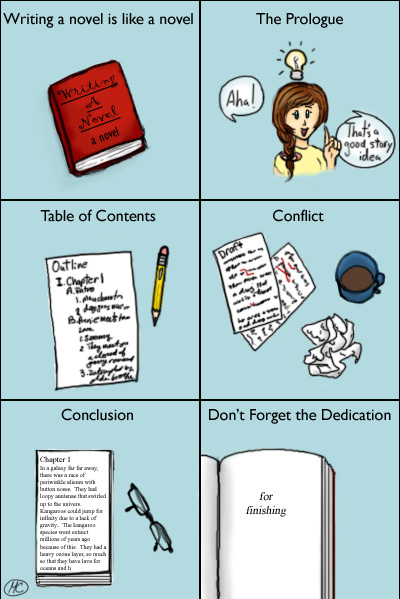
Writing a novel is like a novel
Novel writing is indeed tricky. Image via 1.bp.blogspot.com


“Show, don’t tell” is a great advice. You-as the writer-need to make the readers see, feel, smell, touch…You want them to understand the characters and be immersed in the story without spelling everything out them. You want to them to see that your character is smart by the things he does or says. You don’t just tell them he is so smart. Or you might, but you also prove your point by showing that he is smart.

“But Show, Don’t Tell” is easier said than done, especially when it comes to writing novels. I can’t tell you how many novels I put down because they tried to tell me a million things, while also showing them to me. And ideally, no matter what kind of writing that you do, you have to balance the two.

There are many screenplays that just tell. Remember the movies where characters talk all the time, and never actually move their butts to take action about anything? The movies that bore you to death? Yeah- the screenwriters just told things, and the director went with it.

But with fun screenplays, the writers do a good job of balancing what to tell and show. But of course the screenplays are written for the screen, and everything will be shown by the actors. If they want to show the progress of a romance, they put on a good song and show us what the actors do together instead of giving us dialogue.

And this is exactly what I do when I write a screenplay. Sure, I sweat over lines and details, but sometimes it is more effective to choose the song with the right lyrics and let the reader/viewer get the message. But I can’t take advantage of music when I’m writing the novel. Well, I can- to motivate myself. But I can’t give my audience a soundtrack to go with it (although that would be pretty neat). I need to sweat over the thoughts, setting, and scenes- all the time. There’s no shortcut.  This is a pretty hard thing to do.

Yes, I watch a lot of movies and pay attention to a lot of scenes. I also analyze novels on how much and how they showed and told.  I keep my fingers crossed, and keep working on my first draft where I try to entertain, engage and make readers feel.  But it is a tough road. Wish me luck.

How about you? Do you write fiction? Do you have problems balancing showing and telling? Please let me know in the comments.



Filed Under: Writing Tagged With: how to write a novel, novel writing, novels vs screenplays, show don't tell, writing a novel, writing advice, writing novels, writing screenplays, writing tips

Writing a Romantic Drama (Novel) That Will Appeal to Both Sexes

Posted on November 28, 2011 Written by Pinar Tarhan

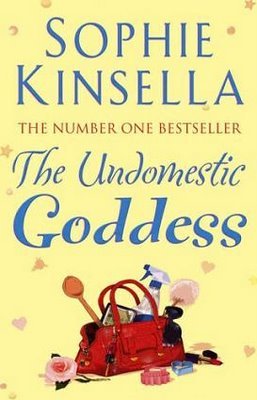
Sophie_Kinsella_Undomestic_Goddess
This is one of my favorite books, by one of my fav authors. But I doubt guys would read it. Image via media34.onsugar.com

Can it be done? I have nothing against chicklit. In fact, if it is written well, I am a huge fan. Hell, I am a romantic, and I am a chick- and a fun chicklit provides great escapism and some good laughs. But I highly doubt guys actually read any. Maybe some are dragged into the movie theaters if the book was adapted, but then the overwhelming pop soundtrack probably annoys the hell out of them, and minus the hilarity of the author, the comedy is  easily lost on them. Well, I know that pop soundtrack definitely destroys the romance for me.

Now, don’t get me wrong. I want to be read by women. They will be the majority of my readers, and I am happy about this. I just don’t want the book totally ignored by guys just because the cover and tagline screams for women only.

OK, let’s get back to the novel. I’ve had this great idea for a romantic drama/comedy. Earlier, I had written about my indecision about the medium and why I’d decided to try writing it as a novel instead of a screenplay.

So, I collected some decent resources about how to write an engaging novel (and how to go about selling it.) And of course being the fan of romantic escapism, I dove into the novels of similar genres and started studying them.

Unfortunately, almost all of them had either been written in first person and in present tense or in third person limited from the girl’s point of view. And therein was my problem: I don’t have one protagonist. I have two. I don’t just want to get into the girl’s head- I also want to get into the guy’s.

And I have some pretty decent subplots which are also highly related to the main plot so I want to get into several heads. Don’t I have lots of books that were told in third person, unlimited? Sure, I do. Unfortunately they are all thrillers!

So what does a girl have to do to write a romantic novel that is not sappy? That isn’t all about the girl?

Yes, I want to be able to flesh out all my characters, and convey what they all actually think-as opposed to just the girl’s interpretation of what they think…I don’t want a pink cover. I love the color pink, it just doesn’t reflect the core.

So guess what I want? I want a novel that is as unisex as the movie Crazy, Stupid, Love. I loved everything about that story, and as much as it had a bromance of a sort, it was just a sweet, hilarious and universal story. And I know how to write one into a screenplay. I don’t have point of view problems there.

The question is, how to write its novel? Well, I’m writing and rewriting scenes from my first draft, and eventually it will all look right. Of course then the actual nightmare of looking for a publisher will start. But hey, let’s worry about one thing at a time, shall we?

What gets in the way of your storytelling?

Filed Under: Writing Tagged With: bromance, chicklit, crazy stupid love, crazy stupid love movie, novel point of view, novel writing, romantic comedy, writing, writing a novel

Why Finding the Perfect Freelance Writing Gig is like Finding The One

Posted on November 7, 2011 Written by Pinar Tarhan


Image via hamiltonwriting.com

I’m not the first writer to compare freelance writing to dating, and I probably won’t be the last. Because when we dream, we don’t like limiting ourselves and it is OK.

In an ideal world, there is this one perfect person for everybody, a soul mate. In my case, it is this perfect guy who will make me happy.

And in an ideal world, there is a perfect writing gig – a writing gig that satisfies you both emotionally and financially. Let’s see why the search for something perfect and search for someone perfect are alike, and the possibilities don’t seem very encouraging.

Here’s what my perfect guy would be like (not in the order of importance)
– Fun-loving, easy-going, exciting AND reliable.
– Able to get along with my friends, and his friends like me too
– Loyal
– Able to communicate easily
– Not possessive at all (non-intrusive, not someone who calls 10 times a day)
– Believes in me.
– Is infatuated with me no matter how long we have been together
– And doesn’t go through a major personality change as years go by.
– Able to support himself financially
– We have things in common
– There is space, and mutual trust.
– We have mutual friends, and we have separate friends groups. (I have a life outside of him)

Am I asking for too much? Am I asking for the impossible? Maybe. But hey, we are talking about ideal and perfect, so this is not the blog post to compromise, or settle.

As for the perfect writing gig: (not in the order of importance)
– Pays well, pay on time and pays via Paypal (reliable)
– It is on a topic that I genuinely love (exciting)
– It is ongoing. (Loyalty)
– The editor is fine with my style, work and personality. (easy- going)
– I feel the same way about the editor ((mutual feelings)
– I am not required to dedicate my life to this job alone. Hey, there is more than one topic I love writing about! I also don’t want to write about the same thing every day. And I definitely don’t want to be required to write about the same subject several times a day. I want a job outside work. (space)
– It doesn’t require me to research for hours all the time. As much as I love learning about stuff that intrigue me, I have my limits. (space, fun)
– The job isn’t dependent on my location or religion. I am very serious about the “free” in freelance. (I have a life outside this gig)
– It can be done from anywhere, and I am not required to go to an office. Skype conference calls are OK. Being dependent on a physical location…not so much. (non-intrusive)
– Refers me to other editors and publications as well. (believes in me)
– Lets me know in advance if things are about to go wrong, expectations or conditions change. (trust, communication).
*
Did I leave anything out? Oh well, from what I can see, both challenges seem equally daunting and difficult. And hilariously similar…


And I haven’t found either. But it doesn’t mean I will stop looking, even if we don’t live in an ideal world. Because I don’t like to settle.
I know that we all occasionally take jobs we are not 100% happy with, or date people we don’t see a future with. And it is OK. We need the fun, experience and the mistakes. But we can’t dedicate our lives to jobs or people that are not right for us, that take more than they give.
Where are you on finding the perfect gig? Or the perfect partner?
And which do you think is a more difficult process?


Filed Under: Writing Tagged With: dating, finding the one, finding the perfect job, finding writing jobs, finging the perfect writing job, freelance writing, writing

What Content Mills Can and Can’t Do For You

Posted on October 18, 2011 Written by Pinar Tarhan

content-farm
Image via axandra.com.


The words “mill” and “farm” possibly didn’t have negative rings to them before they were teamed up with “content”. A content farm/mill is a website whose content is produced by hundreds, possibly even thousands of writers. The farm typically offers low pay, presumably accepts low quality content and doesn’t look good on the writer’s resume. In fact, sometimes writers are suggested they leave the content farm completely out – and if possible, don’t write for the content mills at all.   

But just like anything in life, it isn’t all black and white. There are both advantages and disadvantages to writing for these sites, and it is better to go through them all before making up your mind. Yes, I have been there, and done that. I’ll include my own experiences, as well as links to what other writers had to say about them.

(Note: This article features some blogging related jargon, so if you are not familiar with terms such as link-building, seo and such, you should read the post 8 Essential Blogging Terms for Beginners first.)


Pros

–  It helps you experiment with keywords, traffic and seo optimization. If you want to write for the web, you have to have at least a basic knowledge of SEO. Almost all professional writers are recommended to have a website/or blog so that they can showcase their work. And you can’t promote a blog without knowing how/where to use the keywords, or without knowing what these keywords are. So whether you start a blog before or after using these content sites, they actually help you develop your skills. Mostly they offer stats, and many sites compensate according to how much traffic you bring. So you can test your results both in page views and increased earnings.


–  You meet with writers who might be in the same place as you are: You can start building a community there. These writers read and support your work (by promoting it social media), leave comments and encourage you.


– It provides back-links and provides traffic to your site.  Most content farms allow you t link to your articles on their site, and your own blogs. So you can increase traffic to your site, which in turn can result in more readers and advertising revenue.


While article-marketing is not what it is used to be, link-building is still one of the most important elements of site traffic. The more people link to you, the more you easily your site gets found. But of course quality is always better than quantity, so fewer links from stronger sites (e.g. a well-respected, popular blogs) bring a lot more traffic and credibility than weaker sites (e.g. sites filled with content taken from other sites).

You can always google the content site you want to write for, look for its page rank and how many backlinks it generates.


– It helps build confidence as mostly these farms have low expectations from their writers and you have the chance to see your work on the web almost immediately.


– It provides residual income. While they pay for your coffee rather than your rent, you keep earning money long after you stopped publishing.


Cons

–  Sites might change policy faster than you can say “what the…?”. One minute, Associated Content is providing you with a better $ value for 1000 visits, and the next it has joined Yahoo, only U.S. residents can take advantage of the pervious payment methods. Not to mention, they made tons of money in the process while having paid their writers peanuts. Yes, while Associated Content gave its writers a little bit more than some of its competitors, the money they made angered a lot of writer for the site or not.

Bukisa also changed from an approximately $3.2/1000 visitors to google adsense revenue. The good thing about Bukisa was that you could republish content you published elsewhere.

But guess what? Google hates duplicate content, even if it is your own content that you’re republishing. When I was first experimenting with content sites, I believed that I could edit/republish stuff the way I wanted. Well I did. As a result, google deleted my account, costing me about $120 in earnings. So advertising revenue is as unstable as the policies of the content sites. While getting money for your link-building efforts is fun, it is certainly a major disappointment that it can cost you your earnings.

–  It simply takes too much time. Yes, while you see your article published after a short period oftime, it takes time to come up with a decent article, format it their way, add your visuals and then promote it. Most content mills pay you according to the traffic. Remember you also need to work on your own blog, start applying for freelance writing jobs (if you do want to pay your rent – and finding a well-paying freelance job is also tricky) and pitching article ideas to magazines. You will also keep reading to improve yourself. How much time do you really have to try and maximize your earnings from the content sites?


– Showing only your content site credits on your portfolio might cause publications not to take you seriously. While you might lend some of your initial writing jobs with links to your content mill articles, most publications won’t take you seriously. Some writers suggest getting warmed up with a couple of content mill articles and then abandoning them all together.


– The pay is BAD. You do not actually earn you more than a coffee and a donut (per month). Yes, some articles can hit the jackpot and there are some very lucky writers who made hundreds of dollars  through traffic with a handful of articles. But those articles are very rare, and you’d be better off improving your writing and getting published in magazines that will pay you a reasonable  amount (Unfortunately there are magazines who do pay as low as content farms.)

–  They won’t help you develop a thick skin as you can publish anything as long as you follow the guidelines –which doesn’t prepare for you the rejection or no replies you will be getting throughout your querying. And if you want to make money writing, you will need that thick skin.


What Some Professional Freelance Writers Say

Anne Wayman experimented with Triond, Helium and Associated Content. This is one of her reviews.

How One Writer Grew Her Pay — and Left Demand Studios Behind by Tiffany Jansen, guest post on Carol Tice’s Make a Living Writing

How One Freelance Writer Kicked Content Mills and Earned Big by James Patterson, guest post on Carol Tice’s Make a Living Writing

And Carol Tice herself is vehemently (and rightfully)  against any writing  job that pays $15/article.

What to keep in mind

– Some have a better reputation than the others.

– They are free to change policies as they like.

– If they go out of business, there is a chance your articles will disappear from the web.

– Don’t hang out there forever if you want to make a living out of writing.

– Don’t hang out there forever if you want to improve your writing, and reach a wider, more selective audience.

–  Some content sites seem to be more respected than others such as Suite 101, as Anne Wayman of About Freelance Writing didn’t mind promoting it as an affiliate, and Hope C. Clark of Funds for Writers , and Jenn Mattern of All Freelance Writing  (three valuable writer websites that I follow).


Related Posts Plugin for WordPress, Blogger...

Filed Under: Writing Tagged With: associated content, bukisa, carol tice, content farm, content farms, content mill, content mills, content sites, make a living writing, make money writing, pros and cons for writing for content farms, should you write for content farms?, writer pay, writing, writing for content arms

  • « Previous Page
  • 1
  • …
  • 42
  • 43
  • 44
  • 45
  • 46
  • …
  • 50
  • Next Page »

Blogroll

  • My Entertainment Blog

My Other Blogs

  • Beauty, Fitness & Style for the Fun-Loving Gal
  • Dating & Relationships in the 21st Century

Categories

  • Author Interviews
  • Author news and coverage
  • Blogging
  • Book Launches and Excerpts
  • Book News and Author Interviews
  • Book Recommendations
  • Book Reviews
  • Career Management for Writers
  • E-Book Reviews
  • Fiction Writing
  • Fictional Writers: Writer Characters in Movies, TV Series and Books
  • Inspiration and Motivation
  • Marketing
  • Marketing Fiction
  • Movie and TV Series Recommendations
  • Novel Reviews
  • Paying Markets-Web and Print
  • Productivity & Time Management
  • Recommended Resources
  • Reviews for Tools and Devices
  • Romance
  • screenwriting
  • Self-publishing
  • Story Conflicts
  • Website & Blog Reviews
  • Writer Tools
  • Writing
  • Writing Tools
  • Writing Updates

Copyright © 2026 · Focus Pro Theme on Genesis Framework · WordPress · Log in

This website uses cookies to improve your experience. We'll assume you're ok with this, but you can opt-out if you wish.Accept Reject Read More
Privacy & Cookies Policy

Privacy Overview

This website uses cookies to improve your experience while you navigate through the website. Out of these, the cookies that are categorized as necessary are stored on your browser as they are essential for the working of basic functionalities of the website. We also use third-party cookies that help us analyze and understand how you use this website. These cookies will be stored in your browser only with your consent. You also have the option to opt-out of these cookies. But opting out of some of these cookies may affect your browsing experience.
Necessary
Always Enabled
Necessary cookies are absolutely essential for the website to function properly. This category only includes cookies that ensures basic functionalities and security features of the website. These cookies do not store any personal information.
Non-necessary
Any cookies that may not be particularly necessary for the website to function and is used specifically to collect user personal data via analytics, ads, other embedded contents are termed as non-necessary cookies. It is mandatory to procure user consent prior to running these cookies on your website.
SAVE & ACCEPT