Addicted to Writing

Manage Your Freelance Writing Career While Writing What You Love

  • About Pinar Tarhan
  • Blog
  • Books
  • Hire Me: Services
  • Contact Me
  • Portfolio
  • Favorite Resources
  • Newsletter

10 Blogging Mistakes Even Pros Are Making (And How to Avoid Them)

Posted on May 30, 2019 Written by Pinar Tarhan

Unrealistic aspect of the photo: The desk is NEVER this tidy. 😀

Blogging is fun! Our blogs serve as portfolios, provide entertainment, therapy, make money, and keep us on your toes by motivating us to develop new skills and improve our current ones.

But let’s be honest, blogging is a lot of work. Deciding on your name, hosting, and design is only the beginning.

In addition to crafting regular and awesome content that helps your audience, draws eyeballs, and gets the attention of your potential clients, you have to maintain that blog. Maintenance includes (but isn’t limited to) making sure your plugins are up-to-date, and there aren’t many broken links in your posts (luckily, there is a plugin for that too!), creating an email subscriber magnet (like a free ebook, course, etc.), and sending well-written and beautifully for formatted newsletters to those subscribers.

With so much to do on a regular basis, it is easy to overlook things, no matter how long you have been blogging for.

And please note that I’m aware I make some mistakes as well, like not updating my blog enough or sending my newsletters too far apart.

So here’s a checklist we can all take advantage of.

  1. Not making sure the link opens in a new tab.

I lost count of how many times I’ve run across this. You are reading a blog post. There’s a link. You know it’s worth checking out because this blogger always links to relevant content, either her own or outside resources. But the moment you click, the link doesn’t open in a new tab; it replaces the current page.

It is easy for your readers to remember to hit the back button when you link to another post or article on your own website. But when you direct them to another site, you risk losing them even more. Remember, you want your readers to stay on your site as long as possible. The more they stay, the more they discover.

As a blogger myself, I “know” to hit the back button and resume whatever I was reading before, but I still find it a bit annoying. Don’t make your readers work for it. They are time-crunched as it is.

If you are using WordPress, just click the insert link button. Then you need to click the “edit” link because it doesn’t automatically do it itself.
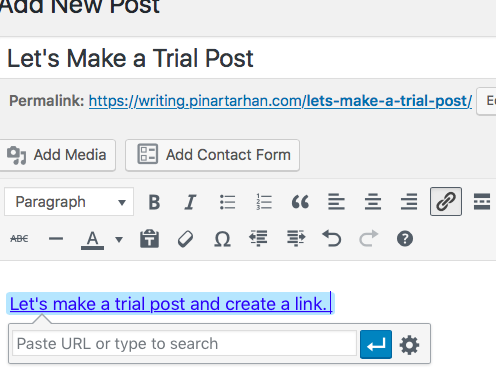
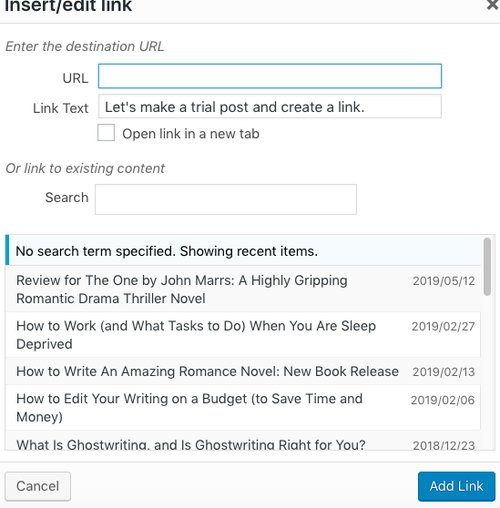
After you add you link, you click “open link in a new tab,” and you are done.

  1. Badly-formatted newsletters

At this point, everyone knows about the importance of email subscribers and email newsletters. There are many resources on how to gain more subscribers and which autoresponder to choose. (I use Convertkit (aff.link.) for this blog.)

However, not enough bloggers pay attention to how they format their newsletters.

I’ve seen it all: tiny fonts, next-to-zero white space, too many emojis in the subject line… Then there’s the trend of long-as-hell newsletters that read like novels. (PS This is not about my short attention span. I read books all the time. Lengthy newsletters? Not so much.)

Yes, I want to hear about your new post and what’s going on in your life. That’s why you have my email. I don’t give it to just anyone. But give my inbox and the million things on my to-do list a chance. Please.

Regardless of how successful, interesting, helpful, or entertaining you are, and no matter how much value you are providing in your newsletters, it’s better to direct us to your website instead of posting your entire articles in the body of your email. If you are going to send your whole article, also provide a link so subscribers can choose where they will read it.

It is okay and expected to switch it up. You can occasionally send longer ones when you have more to share. But if it is always long, exceptions aside, your message will get lost. Attention will be diverted. I save some long newsletter issues from bloggers I really love. Then life gets in the way, and I forget about it. They are deleted when I go into Inbox Zero mood.

If you need to send longer ones, make sure you format really well. Photos are appreciated.

  1. Too-frequent newsletters

Understated representation of our inboxes.

Even if you are John Grisham, I don’t want to hear from you every day. This is saying something as he is my all-time favorite author.

And I definitely don’t want to hear from you multiple times a day.

Sure, there are exceptions.

Maybe you are hosting a webinar, and you want to remind people it’s about to start. This is okay because I subscribed to your webinar. Or maybe, you are offering a huge discount, and it’s the last day.

But apart from that, don’t bother people too much. You are not the only person whose newsletter they subscribed to. There isn’t enough time in the day. If you feel you serve your audience best by sending daily newsletters, give them a choice between daily and weekly.

Of course, the opposite – not sending the newsletter frequently enough- is also a mistake, and it’s one I need to stop making. However, I’ve never unsubscribed from a newsletter because the blogger wasn’t flooding my inbox.

  1. Too-frequent newsletters that sell all the time

We all need to make money. And we work hard on creating great products and services. Even if we don’t sell our own products, we benefit both ourselves and our audiences when we promote the products and services we love and use ourselves.

That said, I don’t want to hear about the same product 50 times in the same week, which happens especially if there is a special discount on a popular product.

People in the same niche promote similar products. It’s only natural. But it also means bloggers in the same niche – aka your readers- are probably following all of these people promoting that one product. That means 10 emails, maybe more, selling the same thing, in the course of one week, if not one day!

So use caution when you decide on the frequency of your email, as well as its contents. Otherwise, the unsubscribe button becomes way too tempting.

  1. Having broken links on your blog or in your newsletter

URLs change. Sites move or go offline. Links that worked a short time ago may not work right now. There are several free WordPress plugins you can use to check all the links at once and fast. Just search for “link checker” in the search box in the plugins section.

Maybe you linked to the wrong thing in your email.

This isn’t the end of the world. You can always send a follow-up email with a quick and cute apology and the right link. But you don’t want to make it a habit, and it’s easily preventable. Just send the draft to yourself first and check if the links work. You can also look at how things look and change formatting if it doesn’t read well.

  1. Not updating their websites frequently

Forgive me, readers, for I have sinned. My previous post was over two weeks ago. The one before that was in February.

I was going through project overwhelm, writing anxiety, existential crises, and health problems. Yes, all of them at the same time.

But apart from reasons out of our control, it’s a disservice to ignore our sites for too long. Your audience will seek guidance elsewhere, and they might forget about you. Posting consistently also helps keep your writing game strong.

  1. Not getting back to their readers about their questions

Not all questions or comments warrant a reply. Stuff you already answered on your website in easily found spots, obvious trolling, job requests that you didn’t advertise for, and mass emails that don’t include a sliver of personalization can and should go answered.

But when your readers fill in your contact form or emails you directly about something you told them they could ask about, you cannot afford to make them wait.

By all means, answer your client and editor emails faster. Send that invoice that is due in a week. Read the lab results your doctor sent you.

However, urgencies aside, you shouldn’t ignore your readers. They are why you have a blog. (And yes, this happens. A lot.)

It doesn’t hurt to occasionally check your spam folder either since unknown addresses can easily fall there.

  1. Not recommending the obvious

 Audiences don’t appreciate being aggressively sold to, but if you are a blogger whose readers also blog, I recommend you have a resources page and tells us the basics. Which hosting company did you choose? Why did you go with that autoresponder? Who designed your website? If you designed it yourself, what is your theme? Which courses and other information products did you buy and got the most use of?

Maybe you can do this by creating a simple “Tools I Recommend” or “Favorite Resources” page. If you use affiliate links for the services you prefer, you will make money in addition to having helped your audience. Isn’t that awesome?

  1. Not giving their clients/readers/fans alternative formats and payment methods for their products

This is a big pet peeve of mine, and I covered it in more detail on this Medium piece: Little Things That Cost Entrepreneurs Money: What Planning Ignores About Selling Products.

Let’s say you created a product. You should consider offering it in multiple formats and with different payment methods.

I understand that the product is valuable and contains your experience and wisdom. However, it’s likely your audience just bought a similar product. And now they can’t afford yours. Not because they aren’t investing in themselves, but because they already did.

You know it best when it comes to pricing. Don’t sell yourself short. And make it easy for yourself to get paid. But don’t ignore your audience’s needs. It’s not that hard to offer a transcript in addition to a video course or offering three credit card installments.

  1. Not placing a search button on your site

I was guilty of this until recently. It is not that I didn’t want to put a search button, my WordPress theme had some quirks I had to figure out.

While some bloggers aren’t a fan of the search function (though I forget their reasoning), I believe it is a wasted opportunity. Why should your audience go through extra effort through Google to see if you have exactly what they are looking for?

Let’s say you want to see if I covered crowdfunding for writers on Addicted to Writing. (I haven’t, though I’m currently working on a story for another pub). Just type the word crowdfunding, and see what comes up.

Similarly, it makes your job easier as a content creator. If you don’t remember how many posts you wrote on the subject, you can use the search option without logging into your admin page.

*

What are some professional blogger oversights did you notice? What mistakes do you catch yourself doing?

 

Filed Under: Blogging Tagged With: blogging, blogging mistakes, blogging tips, email newsletter tips, problogging, wordpress tips

8 Essential Blogging Terms for Beginners

Posted on June 27, 2011 Written by Pinar Tarhan

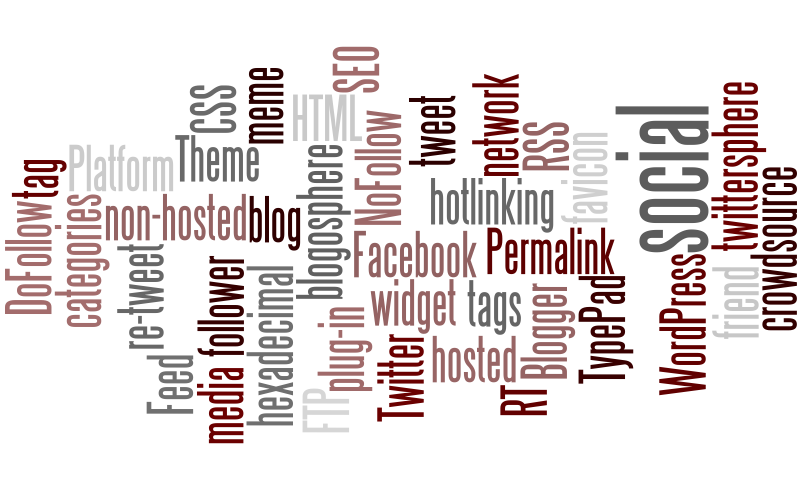
blogging terms image
blogging terms image via bloggingbasics101.com

Here are the definitions to some of the most used terms in the world of blogging. Relax, grab a (healthy) drink and go over some of the most used terms in blogging. And remember, in this glossary, I don’t get technical. Just practical.

Blogging platform: This is basically where you blog. WordPress and Blogger are the most famous ones. I like to use them both.

Blogger is free, and you can monetize it. WordPress has a lot more options, but any monetization comes after you buy your own hosting. So there are pros and cons to both.

For instance, this blog is a self-hosted WordPress blog. My entertainment blog is also on WordPress.

For a Blogger example, you can check my Dating and Relationships in the 21st century.

Webhost: Webhosting basically means that you pay to have your own websites and blogs to be out there. Why should you pay when there are many free platforms? Well, it depends on your intent.

The webhost lets you choose your own domain name. And even though my platform is WordPress, my blog URL doesn’t have WordPress, a benefit of having a self-hosted blog.

Webhosts also allow you to be free with your storage capacities (obviously up to a certain point, but you are much more comfortable with space than you are on the free platform), create an e-mail address (many advertising networks) require you to have a hosted email address and not a free one such as from Yahoo or Gmail).

And there is the fact that WordPress.com (free WordPress platform) doesn’t let you put advertising on your site. If you are in this for making a living for yourself, you need to get a webhost. Mine is Justhost. While it has its ups and downs, I have been using them since late 2009. They are cheap, and the customer service is pretty accessible. I occasionally get the message that I need to upgrade. I handle this by getting rid of the things I don’t use for the site.

But alternatively, you can monetize Blogger with Adsense, Amazon and other advertising opportunities – as long as you are allowed to have a URL on a free platform. It is best to check with the Publisher FAQ’s of the advertising company you want to use.

I heard that Bluehost is pretty good, but I have been too lazy to move. As long as Justhost keeps it up with the customer service and prices, I am happy.

Monetizing: You can put ads, make affiliate deals and sell other people’s stuff, sell your own product and services, make paid reviews…but these all have pros and cons. One of the cons is money is hard to make, especially if you are low on traffic.

Traffic: How many unique visitors do you get? Daily? Monthly?

Guestblogging: Writing for other blogs or other bloggers write for you. Guest-writing for popular blogs will be great for prestige and your popularity. There is a couple of lines for writing your bio, which includes your website link. You’ll also get to interact with people who comment on your piece. Just apply to guest-post and abide their guidelines. Then give it your best shot.

* Carol Tice pays her guestbloggers $50, but of course she selects them carefully.

Link building: How powerful your blog is usually dependent on how many (powerful/quality) sites are linking to you.

One great method is networking with others. Another fun, albeit less effective, way is blog commenting.

Problogging: Blogging about blogging- how to monetize, attract readers, etc…

Some of the problogging blogs I like are Problogger, Blogginglabs, Blogging Teacher (especially if you want to make money writing blog posts) and Carol Tice’s Make a Living Writing (especially if you are a writer who blogs).  I have a lot more, but these four should get you going for starters.

Seo: Seach Engine Optimization. You need to optimize your blog for search engines like Yahoo, Google, etc… so that your blog will be easier to find on the Internet. In order to do that, you need to pick the right keywords.

What are your blog posts about? What keywords are in demand? What words are people typing into search engines? What are they interested in?

You can either search first and prepare a post accordingly or write your post first and make the search and optimize it later.

Frankly, I have read so many blog posts and e-books about SEO that I wouldn’t be able to direct you to one individual source.

**

Let me know if you need/want any other concepts explained. I’ll either explain here on the comments, or will link to a resource I like. Or both:)

Filed Under: Blogging Tagged With: blogger, blogging, blogging 101, blogging definitions, blogging terms, blogging tips, cheap web hosting, problogging, search engine optimization, self-hosted blogs, seo, web hosting, wordpress, wordpress vs. blogger

3 SEO-Related Activities To Do for Your Readers (and Not for Google!)

Posted on May 31, 2011 Written by Pinar Tarhan

seo image
Image via weblopedi.net.

New to SEO? Read from here.

Blogging is a lot of fun, but in order to be able to blog successfully, you need to be able to do more than just write. You need to learn the basics of SEO (search engine optimization), for instance. And SEO is a very tricky concept.

Simply put, we use SEO so that search engines can find our blogs and websites more easily. We also know that people aren’t inclined to go through tens of result pages when they are looking for information. They go through the first page, and maybe the second. After that, your chances of meeting that reader become pretty slim. But it is not always easy to end up on the first couple of pages, especially for keywords that thousands, or millions of people are competing for.

So SEO experts advise you to go after long-tail keywords (phrases that consist of 3 or more words). They recommend targeting keywords that have some competition (so that you know people actually want that information), but not so much that you will get buried under too many other sites).

For instance, what are my chances of ranking very high if I am writing an article on the actor Gerard Butler, called Gerard Butler?  Just today, 1,554 people have searched for him (a result I got by using  free keyword research tools).  So, I have an audience. But how many results does his name generate on a search engine? Guess what: 10.100.000 results! Crazy, right?


Practicing  SEO already? Try reading from here.

But I am not going to not include Gerard Butler in my keywords, just because there is so much competition. And I am not going to give up on a topic I like because the search engines say so. Instead, I will write the article for me and for my readers. Here’s how and why:

Keywords Selection and Tagging

The most popular keyword can also be the most relevant one. For instance, when I am writing about an actor (I have an entertainment website, so I cover actors and movies a lot), I get over a thousand daily searches, if not more.  It is very difficult, if not virtually impossible for me to rank all that high with this main keyword. But I always include it. It is for me and my readers: Most websites (my blog included) have their own search engines. So when you arrive at my blog and type this name, you get all the posts about that actor.

You may have found me through other keywords. Maybe, you didn’t find me through search engines at all. But now that you are on my page, you will find a lot of relevant information. This is to satisfy readers. But also it makes my job easier, because I can track how many different bodies of work I have written on a given topic.

Search engines are your friends, but they are not your only friends. You get your audience from other sources as well, such as Twitter, Facebook, Stumble Upon, blog links on other blogs, blog communities, forums…etc.

– The Headlines:

We have been writers for a long time but we have been readers for even longer. So we have always known the importance of headlines and titles. Readers like the headlines to be exciting and clever. But they also need to give the readers a good idea on what the writing is going to be about.

So I try to include SEO keywords in the title. But sometimes I have an idea for a writing series and just don’t want to give up on creativity completely. One of the headlines I chose for an article series I was writing was more topic-related than SEO rich. Still, it managed to be one of my popular posts. You don’t always have to please Google. And sometimes pleasing yourself also ends up pleasing your readers, which will make Google love you even more in the end.

– The Number of Keywords

There isn’t a certain limit to this but of course the search engines aren’t going to take you seriously if you tag each post with 100 keywords. However, some sites come with limitations or limitation suggestions on how many keywords a post should ideally be tagged with.

Now, in generally, sticking to about 10-15 keywords might be ideal. But imagine writing a list post including 10 names. You will need to tag these names separately, and a lot more.

And exactly because of the reasons stated above (for your keywords and SEO actions), you will also need to add more specific, SEO-friendly and low-competition keywords. I try not to use more than 20 keywords for any given post, but I don’t mind going overboard on my own blogs.

**

So while it is great to stick to some basic guidelines, ignoring them when necessary might end up pleasing you and your readers. It is just a perk that happy readers will end up making you even more popular everywhere, including Google (and other search engines).

Filed Under: Blogging Tagged With: bloggers, blogging, blogging advice, blogging tips, blogs, choosing keywords, gerard butler, information on bloggin, search engine optimization, seo tips, tips for bloggers

Paul Cunningham’s How to Be A Successful Freelance Blogger

Posted on May 21, 2011 Written by Pinar Tarhan

Not only is blogging fun, it is also a wonderful way of sharing your thoughts with the world. And it is a fast way at that. As added bonuses, you get to be your own editor, web designer (if you like), social media manager and so much more. The problem is, after you’ve been blogging for a while, you eventually find yourself wanting to make money from your efforts. Maybe you even started your blog(s) to make money from it in the first place. However making money from blogs can be difficult, and it often takes a lot of time to see those dollars coming in.

You need to apply SEO, optimize your design, network with other bloggers, increase your traffic and authority….The list goes on. A blogger’s (daily) tasks are endless, and it takes a lot of time to find the right monetizing method. As you engage in promoting and networking activities, as well as measuring your efforts, you realize that writing is just a small portion of it. For a writer who just wants to write away, keeping a blog just might seem more trouble than it is worth.

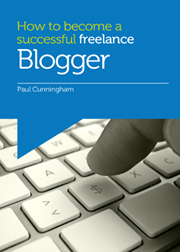
So if you just want to write, rather than to try to find ways to make money with your blog (and trying to keep up with the tasks that come with it), you can also choose to write blog posts for other people. This is where Paul Cunningham’s How to Become A Successful Freelance Blogger e-book comes in.

How to Be A Successful Freelance Blogger- bookcover
image via bloggingteacher.com

In this e-book, Paul talks about every aspect of blogging for others, including:

–           how you decide this is the right path for you,

–          what qualities you need to make it as a freelance blogger,

–           how you can set goals & manage your time,

–          how  to decide on your price/post,

–          how to develop a portfolio to help you land gigs,

–          tips on managing your income,

–          places to look for blogging jobs,

–          ways to find jobs that are not advertised,

–          what to include in contracts,

–          managing your relationship with editors,

–          writing your very first post

and more.


Simply put, How to Become a Successful Freelance Blogger takes your hand from the first moment you decide you want to build a career as a freelance blogger and takes you step by step.

The book consists of 45 pages, ending with a list of useful web resources. While I am not going to say it is the only book you need, it is a pretty comprehensive book that covers the needs of both beginners, and those who feel like they could use some direction and tips while managing their careers.

Paul blogs on bloggingteacher.com, where he gives a lot of useful tips on every aspect of blogging. The site also comes with a page that allows you to submit your idea and post if you want to try guest-posting (a concept Paul also covers in How to Become a Successful Freelance Blogger.

The book is priced at $24. Yes, I have it, and yes – I used affiliate links.

Click here to view more details


Related Posts Plugin for WordPress, Blogger...

Filed Under: E-Book Reviews, Recommended Resources Tagged With: blogging teacher, blogging tips, ebook review, freelance blogging, how to be successful freelance blogger, paul cunningham

Blogroll

  • My Entertainment Blog

My Other Blogs

  • Beauty, Fitness & Style for the Fun-Loving Gal
  • Dating & Relationships in the 21st Century

Categories

  • Author Interviews
  • Author news and coverage
  • Blogging
  • Book Launches and Excerpts
  • Book News and Author Interviews
  • Book Recommendations
  • Book Reviews
  • Career Management for Writers
  • E-Book Reviews
  • Fiction Writing
  • Fictional Writers: Writer Characters in Movies, TV Series and Books
  • Inspiration and Motivation
  • Marketing
  • Marketing Fiction
  • Movie and TV Series Recommendations
  • Novel Reviews
  • Paying Markets-Web and Print
  • Productivity & Time Management
  • Recommended Resources
  • Reviews for Tools and Devices
  • Romance
  • screenwriting
  • Self-publishing
  • Story Conflicts
  • Website & Blog Reviews
  • Writer Tools
  • Writing
  • Writing Tools
  • Writing Updates

Copyright © 2026 ¡ Focus Pro Theme on Genesis Framework ¡ WordPress ¡ Log in

This website uses cookies to improve your experience. We'll assume you're ok with this, but you can opt-out if you wish.Accept Reject Read More
Privacy & Cookies Policy

Privacy Overview

This website uses cookies to improve your experience while you navigate through the website. Out of these, the cookies that are categorized as necessary are stored on your browser as they are essential for the working of basic functionalities of the website. We also use third-party cookies that help us analyze and understand how you use this website. These cookies will be stored in your browser only with your consent. You also have the option to opt-out of these cookies. But opting out of some of these cookies may affect your browsing experience.
Necessary
Always Enabled
Necessary cookies are absolutely essential for the website to function properly. This category only includes cookies that ensures basic functionalities and security features of the website. These cookies do not store any personal information.
Non-necessary
Any cookies that may not be particularly necessary for the website to function and is used specifically to collect user personal data via analytics, ads, other embedded contents are termed as non-necessary cookies. It is mandatory to procure user consent prior to running these cookies on your website.
SAVE & ACCEPT