Addicted to Writing

Manage Your Freelance Writing Career While Writing What You Love

  • About Pinar Tarhan
  • Blog
  • Books
  • Hire Me: Services
  • Contact Me
  • Portfolio
  • Favorite Resources
  • Newsletter

The Light Between Oceans Movie: One Magnificent Conflict After the Other

Posted on October 8, 2018 Written by Pinar Tarhan

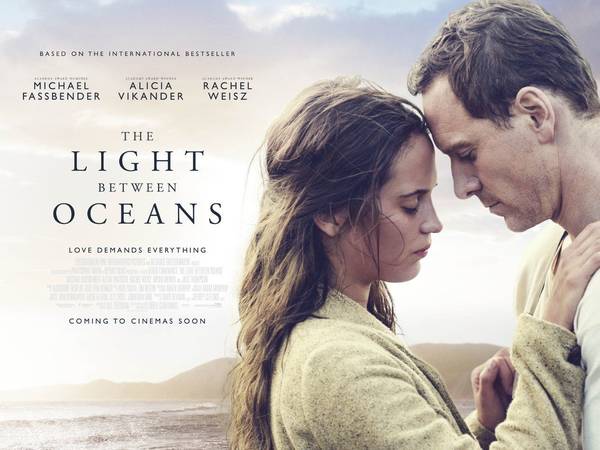
The Light Between Oceans Movie Poster

Based on the bestselling novel (aff. link) of the same name by M. L. Stedman, The Light Between Oceans (aff. link)is a compelling and humane romantic drama where you feel for all three main characters: Tom, Isabel, and Hannah.

Let’s go over the plot before I delve into conflicts in details and provide necessary spoilers. I strongly recommend watching the movie and/or reading the novel before continuing on to read the post.

As I’m a huge fan of Michael Fassbender (X-Men: First Class, Jane Eyre) and Alicia Vikander (Ex Machina, A Royal Affair), I learned about the novel as I watched the trailer, and since Netflix has the movie, I couldn’t resist. I can’t recommend the movie enough; it is just a thoroughly beautiful and emotional experience. Full disclosure: I cried! I now joke that the movie is so effective that even Fassbender and Vikander couldn’t resist falling in love with each other after meeting on set. Yes, they are married now.

If you have seen the movie recently, you might want to skip right to the conflicts part. If you need your memory refreshed, the plot summary will do just that.

The Light Between Oceans Movie Detailed Plot Summary  – with Spoilers

After Tom (Michael Fassbender) survives World War I, he doesn’t want much to do with people. So he happily takes the job as the lighthouse keeper on a small remote island where he will be the only one living. However, his plans of being by himself don’t work out when he meets Isabelle (Alicia Vikander).

They are both quite taken by each other and marry quickly. What follows is a blissfully happy marriage until Isabel suffers from two miscarriages. Isabelle’s depression is only distracted when a boat washes up ashore carrying a dead man and his newborn baby daughter. Isabelle convinces a reluctant Tom, who wants to do the right thing and report the incident, to let them keep it a secret and pass the baby as their own: After all, not even Isabelle’s parents know about her second miscarriage.

As Tom and Isabelle lovingly take care of the baby girl they named Lucy, Tom’s guilt intensifies as he sees a grieving mother/wife – Hannah (Rachel Weisz) at a memorial gravestone during their gathering for Lucy’s christening. When he reads the stone, he knows it’s Lucy’s real mother. Without Isabelle’s knowledge, he sends Hannah an anonymous note that says that her husband is dead, and the baby is alive, well, and loved. Hannah rushes to the police, but they have nothing to go on.

Tom and Isabelle continue to raise their daughter Lucy. When she is about four, Tom and Isabelle go to an event honoring the lighthouse. As “luck” would have it, it was built with the contributions of Hannah’s rich father. The three meet, Hannah barely keeping it together after meeting a healthy girl the same age her daughter would be. Her sister explains her situation to Tom and Isabelle, which makes Isabelle understand who Hannah is and what they have done.

When Tom tries to convince her to give their daughter to her real mother, Isabelle argues it is best not to shake their girl’s life. A guilt-ridden Tom leaves the toy Lucy had with her when she came on the boat, and this starts the chain of even more complicated events: Police arrest Tom, take the baby from Isabel and give her to Hannah. To protect Isabelle, Tom claims it was his idea. Unfortunately, police also want to accuse Tom of the murder of Hannah’s husband, and Isabel is too mad at her husband to back up his innocence. As Isabel lives with her parents and grieves the loss of Lucy, Hannah tries to cope with an impossible Lucy who misses the parents she knew, and Tom has to deal with both losing his beloved wife and child while being in jail.

When Hannah realizes that Lucy won’t adjust, she offers a deal to Isabel: Help Tom get convicted of murder and be sent away to prison for good. Then she will leave Lucy to Isabel for her child’s happiness. But after Isabel reads Tom’s letter, she can’t live with her own guilt any longer. She admits to her own part and reunites with Tom. This time Hannah isn’t that eager for both of them to rot in prison, for Lucy’s sake. And she knows what it is like to lose a child.

After some time Lucy adjusts to her biological mom and maternal grandfather.

Several decades later, Tom is by Isabel’s hospital bed. We don’t know how long they stayed in prison, if at all. We do know they don’t have kids.

Some time after Isabel’s death, a car drives up to their house. A young woman carrying her baby comes out. It’s Lucy, wanting to catch up with them and introduce her baby. They talk, Tom gives her a letter Isabel wrote, and Lucy asks if she can visit. Tom says he’d like that, they hug, and she leaves.

This post is a part of this blog’s Compelling Conflict series where I analyze the main conflicts in movies to help you (and me) write better fiction.

Conflicts:

The power of the film, in addition to the beautiful cinematography, the powerful direction and acting, comes from how much we root for each character, especially Tom.

While we understand Isabel’s action due to the loss and depression she suffers from, we are introduced to Hannah later in the story. And because Isabel never quite does the right thing when she should, and she only comes to Tom’s rescue at the latest minute, my favorite character is Tom. Here’s a guy who has never had anyone until he meets Isabel. And she turns out to be right about him: There is a light inside of him. He is a loving husband and father. He keeps his promises to Isabel from the beginning. Even though he is faced with impossible decisions, he tries to do the right thing.

But maybe that is because I’m not a mother. I’ve never wanted to be a mother. I’ve never been pregnant. I’ve never miscarried. I’ve never had to deal with losing a child, whether before they were born or after raising them for years. My feelings for Isabel are more hypothetical since I can only imagine what she is going through.

I’m also a stickler for doing the moral and ethical thing. I’m not so much against them raising the baby as their own, but Isabel never even allowing herself to think the baby might have a mother. Grandparents. Other family who might love and suffer the loss. Family who might have been barely consoling themselves with the fact that while they lost a child, they at least get to raise their child’s child. As horrible as her loss was, she never stopped to think about the mother, causing the same pain to someone else – the very pain she was trying to avoid.

Of course, by this logic, my second favorite character should be Hannah as she is a very unfortunate, sympathetic character. She loses a great husband she loved very much, for whom she defied her father to marry. She also loses her daughter, and now she has to get her daughter to love her – but she thinks Isabel is her mother.

But because you start the movie loving Isabel and feeling for her due to her losses, by the time you have met Hannah, you were hoping they wouldn’t be found out. So I can’t really choose between the two women as characters.

So let’s look at all this from a fiction-writing point of view:

Conflict 1: If you were desperate to have a child, lost two before they were born, and a baby – with a dad man without any indication she had anyone else – appeared in front of you, would you report the incident or claim the baby as your own?

It seems simple enough. You can try again. You can try to adopt. But as Isabel points out, who would let them? They live isolated on an island where there are no schools, hospitals or other people.

Maybe they could move. Maybe Tom could find another job. Maybe they could adopt then. But Isabel isn’t exactly able to think logically. Her depression clouds her judgment, and her sadness clouds Tom’s.

It may not be what you would have done, but then again, you don’t live in the 1920s where options are limited. Maybe people who want to be parents or are mothers will feel Isabel’s dilemma more.  Even as someone who doesn’t wish to have kids now, I felt her pain. Solid acting, solid writing.

What would you do? Even if you ended up doing the right thing, wouldn’t you at least consider it? Because just as it was possible the baby would have close relatives, if not her mom, that would miss her, it was possible she would end up in an orphanage. Why let the kid go through all that when you could offer her a safe, loving home right here, right now?

I honestly don’t know what I would have done in the exact same situation. Would I have gone with Tom’s instinct? Or would my emotions get the better of me?

I can’t tell for sure, and that’s why it is such a great conflict. It is complicated, emotional, and the right thing may not be as obvious as it seems.

Conflict 2: You are Tom. You love your wife and your kid. You know your wife won’t give up her child. You now know there is a suffering mother out there because of your decisions and actions.  What would you do?

Would you leave the anonymous note? Would you try harder to convince your wife? Would you confess to the woman?

It is hard being Isabel, but it sure ain’t easy being Tom either.

Conflict 3: You are Tom. Would you leave the toy in Hannah’s mailbox?

Remember the toy I mentioned in the plot summary? After Tom puts it in the box, the police put up a notice with a reward. One of Tom and Isabel’s friends recognizes it, and then the police go to their island.

Did Tom know the toy would lead to them directly? Did he want to get caught to save Hannah from more pain? Or was it only subconscious?

Without the toy, they wouldn’t have been caught.

Conflict 4: Would you try to keep your kid away from them if you were Hannah, or would you want more details on why and how they got to keep the baby?

While what Tom and Isabel did was wrong, it isn’t the same as kidnapping a child. The baby came with a dead guy. They should have reported it, but had the baby indeed been an orphan, they would have just given a poor baby a fighting chance at a good, loving life.

It doesn’t condone their actions, but they make for some decent mitigating circumstances.

What Hannah knew was this: Tom made his wife keep the baby. It is his fault. At this point, she doesn’t know Tom isn’t a violent man. She doesn’t know if what he could have done to “force” his wife to do what he wanted. The child was unharmed, healthy, and wanted her “mom,” meaning Isabel. Keeping the baby completely away from her was not the right thing to do. Granted, potentially all mothers would have done the same and probably rightly so.

But the kid was miserable for a long time. And she ran away. Not even to Isabel. So she could have been seriously hurt or worse.

What would you have done if you were Hannah?

Conflict 5: You are Isabel. Would you be mad at your husband for “betraying” you and losing you your child, and potentially your only chance to have a child? Would you blame him and refuse to see him and let him stay in jail for something you MADE him do?

This is a tough one. For Isabel, it is the ultimate betrayal. I’m guessing she would have been less furious if he had an affair or killed someone. Not that Tom would do that, but you get my point.

If he hadn’t sent the note, or at least the toy, no one would have known. He went behind her back, but he had tried to persuade her before and failed.

He was torn between his love and conscience, and he didn’t enjoy hurting either woman.

*

The movie had 5 major, extremely compelling conflicts. What is your favorite

in the film? Who is your favorite character and why? And what do you imagine you’d have done in similar circumstances? Let me know in the comments.


Filed Under: Fiction Writing, Story Conflicts Tagged With: alicia vikander, fiction writing, m. l. stedman, michael fassbender, rachel Weisz, the light between oceans, the light between oceans movie, the light between oceans movie review, the light between oceans story conflicts

Turn-Offs in Novels: Jargon, Foreign Languages and Detailed Description of Very Minor Characters

Posted on March 2, 2014 Written by Pinar Tarhan

I’ve fallen out with a novel I had eagerly bought. I picked it out the ways I always do. I went to one of my favorite bookstores (aka a big store with a decent, varied collection and offering comfy seating and quiet to explore), took 5-10 books whose premise (and genre) I was intrigued by and read a little. I chose the one that appealed to my current reading need: a fun, fast-paced, emotional romance novel. (While I’m also a huge fan of thrillers, I’m working on a romantic/comedy/drama  manuscript myself, it makes more sense to research the market – seeing what sells while getting the escapism I need.)

And it started fine enough. For the first 50/100 pages or so, it was unputdownable. I read it on the bus, on the escalators, before I went to bed… If I wasn’t working (or resting my eyes), I was reading it. Sure, there were some wordy descriptions, a few mentions in a foreign language and some jargon related to the characters’ work. It set the mood. It was sort of relevant. I didn’t mind.

Image via evalblog.com

But then the characters dropped their foreign language randomly in their sentences regularly. Some characters were from that foreign country so it made sense. Regrettably, it wasn’t one of the languages I sort of spoke. No, they went beyond your typical travel phrases or widely-known vocabulary. Then there was the jargon rain. It kept coming and coming.

Now, the book is aimed more at a female audience. The romantic storyline, a typical female character (I’ll get into the “typical” in my next post) and even the job (decoration-related) probably made the majority of female readers happy. But, you see, when it comes to interior design, I’m more like a  guy than a girl . I don’t have an extended furniture vocabulary . Sure, I love shopping and decorating myself, but I don’t want to know the name/root/history of every single thing. So the book slowed down further. I kept giving breaks and then coming back.

The third turn-off was the detailed description of the more minor characters- characters we run into once or twice as the reader. Yes, I could picture them all vividly, but it took me off from the plots and subplots. Now, there are some things the book did very well. The woven storylines, the setting and the dialogue were pretty good. But I started rolling my eyes way too often, and the initial love and enthusiasm disappeared.

The good news is, the book breaks some rules with novel-writing advice. It’s good news, because it proves you can follow your heart, write your novel your own way and get it published. The bad news is, this book isn’t a debut. So the writer had some leeway. First-timers don’t usually have this luxury.

Now, the point is this post isn’t to critique one particular book (hence the absence of the the title and the name of the author), but to spark a discussion about using other languages, jargon, and the amount of details insignificant characters deserve. Basically, this author hasn’t killed her darlings but has given birth to them over and over and over again.

How do you feel about the use of them? How generous are you with these when it comes to your fiction? As for my musings on “typical“ female character, that’ll be in my next post, so please stay tuned. Until then, you can check out the problem with following advice in this post The Problem With Following Advice, and Writing Your Novel Your Way.

Filed Under: Fiction Writing, Writing Tagged With: character descriptions in novels, fiction writing, novel writing, novel writing advice, use of foreign languages in writing, using jargon in writing

HOMELAND’S BRODY: When A Character Suffers Way Too Much

Posted on December 4, 2013 Written by Pinar Tarhan

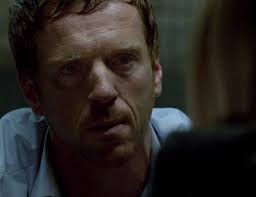
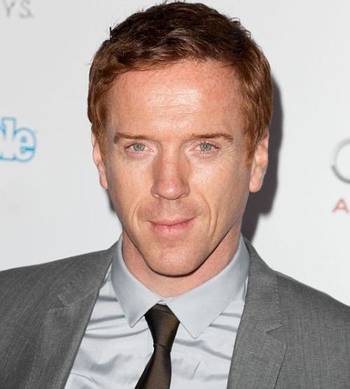
Damian Lewis
Damian Lewis image via metro.co.uk.

As writers, we’re frequently told that our characters need to suffer. They need conflicts, challenges and flaws. They need to risk losing everything, be in danger, maybe even actually lose everything…No one wants to read or watch someone who’s good at everything and has a perfect life. Right?

And that’s solid advice, until you go overboard. I think there comes a point when the writers take a character and make him go through hell (sometimes literally, as in the case of Supernatural) and back way too many times. Sure, it’s a fantasy show where everything is possible and not even death is final. But surely when you take a guy’s mother and have her killed by a demon, have him raised by a monster hunting-obsessed father and brother, have his girlfriend killed by a demon, kill him a couple of times, kill his brother a couple of times, have him live in hell for months, go through excruciatingly painful trials, separate from the girl he loves…

I’m sure he went through more. I just stopped watching. And this is probably the luckier brother…

We watch shows where we are invested in the characters. We root for them, feel for them or at least feel strongly about one way or the other. But sometimes that character becomes a tragic caricature. This is what I call tragedy for tragedy’s sake. It doesn’t feel natural, realistic or welcome.

Many TV shows lose viewers (or viewer’s passions if not entirely their loyalty) because of this. Yes, let’s keep the stakes high, but for goodness’ sake, let’s not go overboard.

So, I want to talk about Brody, Damian Lewis’s character from Homeland. For the first two seasons I was a true addict of the show. I would sit through 4-5 episodes in a row and still want more. Then I would watch them again with a friend or family member who didn’t watch it before just so I could go through that wonderful rollercoaster again and again.

However with the third season, the fast forward button became my best friend as they put Carrie (Claire Danes) through more hospitalizations and forced Brody to be a drug addict. You know where Supernatural has hell and death, Homeland has Carrie hospitalizations and unlucky Brody, and TVD has doppelgangers…

BRODY: TO HAVE HIM SUFFER OR TO HAVE HIM SUFFER A LOT MORE?

If you have never seen Homeland, you might think I’m overreacting. What’s a little drug addiction for a character in the grand scheme of drama, right?

Let me tell (or remind) you what Brody has been though. And then you tell me if he has had enough: (P.S. Major spoilers for Homeland)

–       Brody, as a young marine, left his wife and 2 young kids behind to go to war. He saw combat, and that’s in my book enough ground for trauma and PTSD to last a lifetime.

–       But Brody never had the chance to get home and suffer through his PTSD in peace (yes, I’m being sarcastic.) No. He was captured with his sniper friend/fellow soldier by the enemy. He was tortured in the worst possible ways for 3 years. At one point, they forced him to kill his friend (we later learned that they only made him think this.)

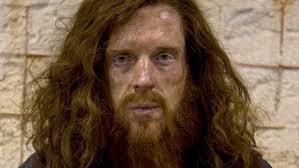
Damian Lewis, Homeland
Damian Lewis, Homeland season 1. Image via abcnews.go.com

–       Later, the terrorist leader took Brody, messed his brain by being kind to him and having him live in his house and tutor his young boy.

–       Brody, away from his family and country, taught English and football to this lovely boy who was blissfully unaware of his father’s crimes. Brody loved this boy like a son. And I guess he was even happy, up until the point where American VP and the head of CIA thought it was OK to bomb an entire school region and kill 83 kids in the name of killing the terrorist leader. He wasn’t there. Instead, his son died in front of Brody. Yeah, I know, like Brody wasn’t traumatized enough.

–       Then 8 years after he was first captured, he was saved by American soldiers. He got back home, where no one was smart enough to give him a psych evaluation. Instead, he was deemed a hero, and was immediately used by the VP for political agenda.

–       Brody tried to adjust to being back, feeling conflicted about becoming a “terrorist” to avenge those kids’ death by killing the VP and a group of other politicians and being a Marine.

–       His wife was screwing his best friend while he was away.

–       He couldn’t have sex with his own wife, even when he didn’t know about the best friend.

–       His sulky teenage daughter was ready to rebel any moment, and his adaptable and nice son didn’t mind seeing the best friend as a second dad.

–       He was stalked and monitored by bipolar CIA agent Carrie, who failing to obtain legal reasons to tail and watch Brody, decided to learn his intentions by getting close to him.

–       There was intense chemistry there, and they did fall for each other. Yep, falling for a CIA agent who was sure he was a terrorist isn’t too complicated.

–       When he learned about Carrie’s initial intentions, he was pissed. And he almost blew up the VP and the politicians as planned, but Carrie stopped him by emotionally getting to his daughter. But the confession video was already obtained by others, and his terrorist/not-dead-sniper friend wanted to kill him for chickening out. Brody talked the terrorist leader into doing things his way. And he got to kill his friend for real this time.

–       He played for the Senate, and he got Carrie committed to hospital- the one person who was right about him all along, and the CIA learned about her condition. He screwed her over big time. Yeah, this guilt didn’t eventually get to him at all.

–       Carrie was eventually proven right after the confession video was found by the CIA and she was recruited again. She got Brody in by having him sort of almost attack her. Then she got very honest, very emotional and got Brody to confess everything. Great episode, awesome confession session which won Emmy for Outstanding Writing. Had never agreed more with an award before. Imagine the catalysis Brody went through. I mean it. It’s one of my favorite TV episodes of all time.

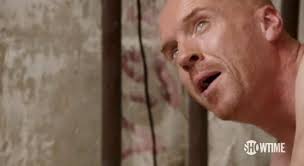
Damian Lewis, Homeland Season 2, Episode Q&A
Brody, Homeland Season 2, Episode Q&A. Image via digitalsky.com.

–       Of course he now became an asset for the CIA. Either he helped them, or he went to prison for life or worse. And his family would find out the vest…

–       So more lying, more internal conflicts, unresolved feelings for Carrie and stress made Brody run, and Carrie got to him again. She got Brody back in more ways than one.

–       The terrorist leader kidnapped Carrie and forced Brody to kill the VP. More lying to friends and family, of course. Brody killed the VP to save Carrie.

–       Unknown to Brody, Quinn (Rupert Friend) was hired to eliminate him once they caught the terrorist. Thankfully he saw sense and told the director to shove it.

–       After the leader was captured, Carrie and Brody discussed if they could ever be together. His past, her illness…but Brody believed they had a shot because, let’s face it, no one could be a better match for the other after everything they went through.

–       And despite a pissed off mentor, Carrie picked Brody over CIA. A second chance given at everything, Brody could finally have some peace, right? Nope. CIA was bombed. Everyone thought it was Brody. It wasn’t.

–       Carrie got him to the border. Great goodbye scene. Maybe they will find each other again after Carrie can prove his innocence?

Surely, Brody can’t go through more terrible ordeals during season 3. Surely, all the pressure, identity crisis, guilt, PTSD, love lost and found and more are enough…

Damian Lewis, Homeland
Brody, Homeland season 3. Image via nydailnews.com

But nope. Brody got shot and almost died. Gangsters who found him made him a drug addict. Somehow he was “saved” by the CIA. After suffering through going cold turkey and emotionally tortured by being kept away from his daughter (who happened to change her name, left school and became a motel maid – and this isn’t half of it!), he got sober.

Then Carrie convinced him to go on a covert mission for redemption (for the almost bombing way back in season 1). He got trained like a marine again.

Oh, he learned that his daughter tried to kill herself after she thought he bombed the CIA (and the confession video) and received a not-so-warm “welcome” from her. There’s the hope that maybe he can fix things with her and be with Carrie, right?

He’s on a dangerous mission. Carrie is pregnant, and he doesn’t know, and it might not be his.

I don’t want him to die after everything they put him through, but at this point, killing him will be the kindest thing they ever did to his character.

Have you had enough of Brody pain? Homeland season 3 isn’t over yet.

*

Now, I made my characters go through some really awful, depressing and/or deadly situations. Just I didn’t do…this much.

*

What do you think? Do you have a limit when it comes to a character’s suffering?

How much “hell” is too much for one character?

Filed Under: Fiction Writing, Writing Tagged With: creating conflict, damian lewis, damian lewis homeland, drama, fiction writing, homeland, too much drama, writing drama

How Important Is A Story’s Ending to You?

Posted on February 23, 2013 Written by Pinar Tarhan

“One thing guaranteed to kill a movie-going experience is an unsatisfying ending. In my opinion, the ending might very well be the single, most important moment of your script… the final taste in the audience’s mouth. For example, if you remove the twist of an ending in ‘The Sixth Sense’, would the movie have gotten such a buzz? I doubt it.”


Script Magazine, E-mail Newsletter


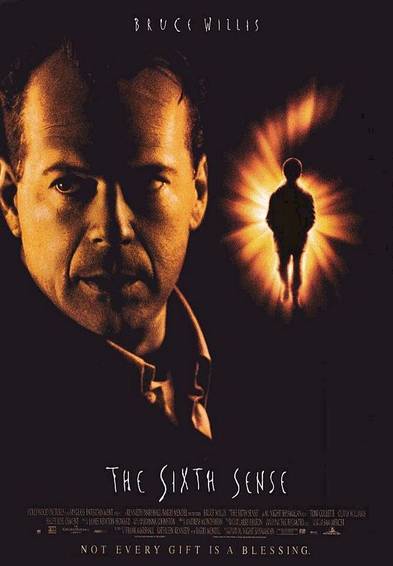
the_sixth_sense
The Sixth Sense movie poster via wikipedia.

How important is the ending of a novel or a movie to you? Are all the works you enjoyed great from the beginning to the end?

Or have there been stories that had you from the first page only to disappoint you with the ending?

What about stories that you found merely mediocre but had to applaud the ending?

Let’s take these three groups of stories:

*The thrilling story with an unexpected, sad ending

I’m a huge John Grisham fan. I love all his legal thrillers, and I’ll consider myself so lucky if I can write such page-turners one day.

But one of favorite my John Grisham books has a bittersweet ending that I didn’t see coming. After all the brilliant things the protagonist pulled, it caught me by surprise that Grisham hadn’t given his hero a romantically happy ending.

While no one would expect cheesy or boring or happily ever after from his genre, the hint that the hero wasn’t let down romantically in the end would be just fine.

Because while he wasn’t the nicest guy on the planet, he was by far the most likeable character in the book, and I was rooting for him. No, a partially sad ending didn’t lessen my admiration for the book. But I couldn’t help wonder why Grisham wanted the hero have an ending like that.

P.S. If you are guessing or wondering which book, just ask me on Facebook.

*The thrilling story with a worthy ending

In the wonderfully exciting world of grey characters, you don’t exactly wish for a happy ending. You do want a satisfactory ending, though your definition of a satisfactory ending changes as the story progresses to reveal the protagonist to be less than a model citizen.

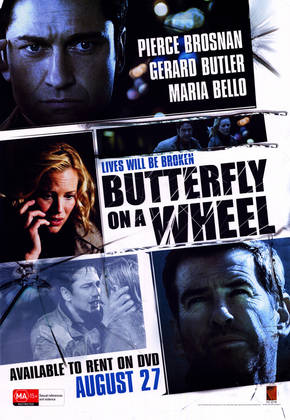
Gerard Butler/Maria Bello/Pierce Brosnan movie Butterfly on a Wheel is such a story for me. The kidnapper (Pierce Brosnan) “kidnaps” the parents (Gerard Butler and Mario Bello) while he has their daughter taken hostage somewhere. They either do whatever he wants, or the little girl dies. But what do you do when his requests turn out to include destroying their life savings, blackmail, career sabotage and murder?

butterfly on a wheel movie poster
Image via moviegoods.com.

It may not have the effect on everyone, but I love a movie where the seemingly sociopathic villain turns out to be a victim of circumstances and the so-called hero is a selfish jerk. Oh, and the ending…whether you see it coming or not, it is so much more than Gerard Butler managing to save his and his family or not.

But my favorite great concept-great story-great ending combination has to be The Life of David Gale with Kevin Spacey.

*The not-so-engaging story with a brilliant ending

(Warning: From this point on, I’ll include major spoilers for the movies The Sixth Sense, The Others & Passengers, so please proceed at your own risk. )

Maybe it was because I saw it on DVD on my friend’s PC, but I just didn’t like The Sixth Sense (1999). It wasn’t thrilling, surprising or interesting. It was a bit spooky at times, but I just didn’t see what the fuss was about…until the end came and I had to applaud the writer/director M. Night Shyamalan for his creativity.

But my love for the ending doesn’t change the fact that as a whole, I wasn’t impressed and I don’t want to see the movie again.

And the brilliant ending gave birth to:

*The once-great-now-disappointing ending

Surprise me once, congrats. Surprise me twice, fine. Pull the same trick for the third time, and lose your audience.

How many movies have you seen that are like Christopher Nolan’s Memento? And by like Memento, I mean movies that tell the story backwards, starting with the end and ending with the first scene. If I have seen similar movies, they certainly haven’t made an impression. Oh, I love Memento, by the way.

Of course another good movie using similar storytelling chronology is possible and welcome. But it just wouldn’t be as remarkable if that story ended (well, in this case, began) like Memento. Would it?


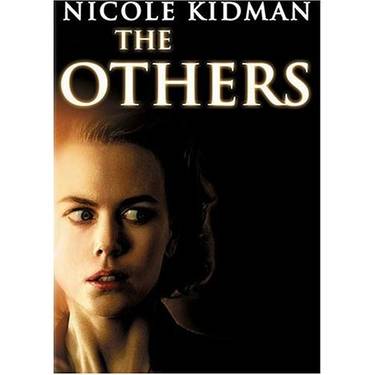
the-others-dvd
Image via beyondhollywood.com.

Now, I actually liked The Others (2001). Maybe it was because I created a suitable atmosphere: I watched it on a big screen TV with a friend at night, with lights off and while there was no one else at home. Any outside sound made us jump, and it didn’t let the slow pace of the movie affect us in a negative way.

When the ending came…Let’s say that it wasn’t a huge letdown, but it didn’t make us appreciate the movie further. Still, with the endings in mind, I prefer The Others. But I’m done with that kind of ending.

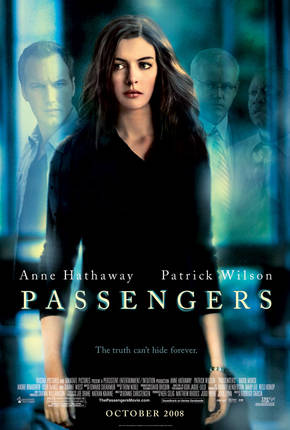
passengers-movie-poster-2008-1020418550
Image via moviepostershop.com


Then came Passengers (2008). Passengers wasn’t a thriller/horror film but a romantic mystery/drama and I enjoyed the psychological aspect of it as it told the story of plane crash survivors who try to deal with the trauma. It wasn’t ground-breaking, but it was good. Fun. Emotional. Until the moment when we learned about what really happened to the survivors. Yep, they were dead all along.

Unsurprisingly, The Sixth Sense has the highest revenue, most critical acclaim and the highest rating by movie-goers. The Others is also highly-regarded and turned in profit. Passengers didn’t make a profit, and isn’t appreciated much.

*

Can a bad, or a recycled ending take away from the experience as a whole? Absolutely. It can even make you wish you hadn’t watched/read that thing.

But can a great ending make up for 100 minutes that failed to engage you? No, not really.

Of course a great story is a story that hooks you from number 1 and never lets you go. A greater story is a story that doesn’t let you go even after it ends.  The ending is one of the most crucial parts of the story. It can break it, but I’d not go as far as to say it can make a story. And the Script article covering endings unsurprisingly covers a movie that is liked from start to finish: Rocky.

What are your favorite endings?

What endings disappointed you the most?

How important is the ending to you?

Related Posts Plugin for WordPress, Blogger...

Filed Under: Fiction Writing Tagged With: fiction writing, how to end your story, how to write a story ending, movie endings, passengers, passengers movie, screenplay endings, story endings, the others, the sixth sense

  • « Previous Page
  • 1
  • 2
  • 3
  • Next Page »

Blogroll

  • My Entertainment Blog

My Other Blogs

  • Beauty, Fitness & Style for the Fun-Loving Gal
  • Dating & Relationships in the 21st Century

Categories

  • Author Interviews
  • Author news and coverage
  • Blogging
  • Book Launches and Excerpts
  • Book News and Author Interviews
  • Book Recommendations
  • Book Reviews
  • Career Management for Writers
  • E-Book Reviews
  • Fiction Writing
  • Fictional Writers: Writer Characters in Movies, TV Series and Books
  • Inspiration and Motivation
  • Marketing
  • Marketing Fiction
  • Movie and TV Series Recommendations
  • Novel Reviews
  • Paying Markets-Web and Print
  • Productivity & Time Management
  • Recommended Resources
  • Reviews for Tools and Devices
  • Romance
  • screenwriting
  • Self-publishing
  • Story Conflicts
  • Website & Blog Reviews
  • Writer Tools
  • Writing
  • Writing Tools
  • Writing Updates

Copyright © 2026 · Focus Pro Theme on Genesis Framework · WordPress · Log in

This website uses cookies to improve your experience. We'll assume you're ok with this, but you can opt-out if you wish.Accept Reject Read More
Privacy & Cookies Policy

Privacy Overview

This website uses cookies to improve your experience while you navigate through the website. Out of these, the cookies that are categorized as necessary are stored on your browser as they are essential for the working of basic functionalities of the website. We also use third-party cookies that help us analyze and understand how you use this website. These cookies will be stored in your browser only with your consent. You also have the option to opt-out of these cookies. But opting out of some of these cookies may affect your browsing experience.
Necessary
Always Enabled
Necessary cookies are absolutely essential for the website to function properly. This category only includes cookies that ensures basic functionalities and security features of the website. These cookies do not store any personal information.
Non-necessary
Any cookies that may not be particularly necessary for the website to function and is used specifically to collect user personal data via analytics, ads, other embedded contents are termed as non-necessary cookies. It is mandatory to procure user consent prior to running these cookies on your website.
SAVE & ACCEPT