Addicted to Writing

Manage Your Freelance Writing Career While Writing What You Love

  • About Pinar Tarhan
  • Blog
  • Books
  • Hire Me: Services
  • Contact Me
  • Portfolio
  • Favorite Resources
  • Newsletter

How to Jolt Back To Writing Non-Fiction From Fiction: 13 Tips

Posted on December 17, 2013 Written by Pinar Tarhan

Image via applecopywriting.com.


Are you fiction writer? A non-fiction writer? Or both?

If you truly love writing, want to make a regular income from it (or you are already making a living writing) and/or can’t wait to share what you have learned and experienced with the rest of the writers out there, chances are, you are both into writing fiction and non-fiction.

Stephen King wrote a book on writing, simply called On Writing: A Memoir of the Craft. Now, that’s the kind of writer I want to learn from. Not because I’m a horror fan, but because I admire his success, productivity and ability to write in diverse genres (Shawshank Redemption, for instance, is based on a story of his) and write in a variety of formats (novels, short stories, non-fiction books…)

Screenwriter John August (Big Fish, Go, Charlie’s Angels, Dark Shadows) runs a website where he shares his tips on screenwriting – one of my favorite go-to resources as an aspiring screenwriter.

Some novelists get to adapt their movies to screen themselves and writing magazines love publishing advice articles from published writers. Stephen Chbosky’s The Perks of Being a Wallflower, anyone?

I love writing fiction and non-fiction, and wrote about why we needed to balance the two here before.

But sometimes, one takes priority over the other, usually because of deadlines and where your productivity is gravitating towards at that moment.

For the last couple of months, even though I did my best not to neglect my blogs, I’ve concentrated polishing my screenplay and a TV pilot for competitions. I read even more about formatting, selling, contests’ reliability. I found great resources on both writing and selling, and I’ll be sharing them here soon.

But it’s safe to say I was lost in a world of fictional characters and story lines, and reading up on how to make them come alive.

Of course my non-fiction ideas didn’t stop flowing. So I noted them down, and after having taken care of 3 competitions with the nearest deadlines, I’m ready to immerse in non-fiction once again.

Getting back to real life is fun, though your mind and writing might take a while to adjust. So below are a few tips to make the transition easier and quicker:

1)   Go through your old ideas. Having worked on different projects might have provided you new insights and angles. Use them. Brainstorm with your just-back-from-fiction mind. You might be surprised.

2)   Keep writing new ideas down. Also make a note of what you have learned about writing/selling fiction. There are a million stories there.

3)   Not getting hit by a new load of ideas? This post is bound to ignite some quality inspiration: Finding Article Ideas & Writing About Them: 30 Inspiration Tips for Writers.

4)   Check the websites/publications you follow, including the ones you have written for or wanted to write for. They might have gone through editorial changes. Their submission guidelines or how they work with freelance writers might have changed. Is this still a place you want to write for? Update your market list accordingly.

5)   If those websites are still up your alley, study the new articles. You need to know what they published recently. You don’t want to waste the editor’s time, or yours, by pitching an idea that was recently covered.

6)   Do a “markets” research. There are probably new writing markets you might want to catch up on. Make notes of the ones that interest you.

7)   Write. It’s like switching between rollerblades and your bike. Both are fun, both are you. They just work a bit differently.

8)   Promote your writing. Remind your readers you’re alive and well. Of course this works better if you’ve kept up a presence in the blogosphere during your fiction marathon.

9)   Read non-fiction: blogs, magazines, books, twitter feeds of the people that inspire you, entertain you and/or piss you off…new and old stuff. Read.

10)   Read some of those awesome e-books you kept for referencing, and some new resources you found. Some of my new favourites came from Sophie Lizard’s  Another 52 Free Resources for Freelance Bloggers post, for instance.

11)   Keep reading fiction, but don’t make it the priority.

12)  Exercise. Seriously. I know how easy it is to get caught up in the wonderfully exciting worlds you have created, but we need to be healthy. And exercising gives you even more ideas.

13)  Eat healthily. Yes, you always need to do this, but if you have gone on a binge to make the deadlines, get a grip on your eating habits before your immune system decides to punish you. I’ll be posting about this too, so stay tuned.

*

Welcome back to the lovely world of non-fiction! If there are any tips you’d to add, comment away…
 

Filed Under: Blogging, Writing Tagged With: finding ideas, inspiration for writers, john august, writing fiction, writing non-fiction

10 Reasons Writers Should Watch TNT’s Perception starring Eric McCormack

Posted on January 29, 2013 Written by Pinar Tarhan

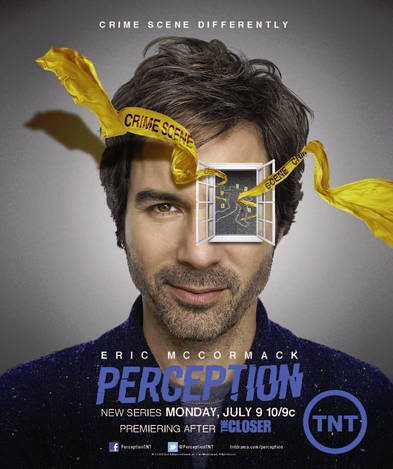
Perception- Eric McCormack

Perception’s Daniel Pierce (Eric McCormack) is a brilliant neuropsychiatrist:

  • He has published 7 books on neuroscience.
  • He is teaching at a prestigious university while helping the FBI solve their most complicated cases.
  • He has finished med school at the top of his class.
  • He can see things and make connections others can’t.
  • Only the most complicated and exciting puzzles can keep his interest.
  • Oh, and, he is managing all this (depending on your perception), despite/with/because of his condition: schizophrenic paranoia.

He mostly manages his condition with carefully set routines, the help of his TA and living aid Max, and through the cases his FBI agent friend/ex-student Kate (Rachael Leigh Cook) brings.

Perception (aff.link) is a wonderfully inspiring show, especially if you are a writer and/or you’re suffering from a health condition, mental or otherwise.

It has great acting, intriguing storylines, a well-written main character and scientific accuracy, being assisted by the leading neuroscientist David Eagleman who’s also a writer (of fiction and non-fiction, his non-fiction having been published on Wired, The New Yorker and others.)

I like breaking the don’t-watch-tv productivity tip. I don’t watch everything, trust me. I try, evaluate and become a regular watcher of shows that are smart, highly entertaining, inspiring and intriguing. It helps if there are characters you can empathize with on one level or the other, or characters whose jobs you wouldn’t mind doing (e.g. Cal Lightman’s job, Lie to Me.)

Perception is such a show, and I recommend writers to at least check it out because:

1)      Perception combines drama/mystery & comic relief really well. As writers, we want to be able to pull this off well, especially in fiction.

2)      The leading character’s self-depreciating sense of humor as a defense mechanism works on a writing level, but it also gives us ideas on how to manage our own conditions and issues.

3)      He writes to keep sane, and well, he is full of ideas all the time so he needs different media to convey them. He lectures, aids FBI and writes books.

4)      He is a writing success despite his condition.

5)      The show presents the very exciting field of neuroscience. I’ve been reading about it since I started watching the show.

6)      There is a fictional role model, as well as a real one (the consulting neuroscientist/writer David Eagleman who was born in 1971!)

perception-eric-mccormack
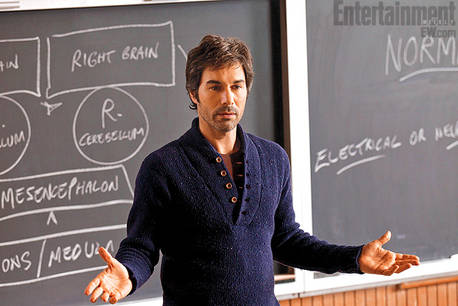
Eric McCormack as Daniel Pierce. Image via ew.com.

7)      It gives you nice little flashback into university years. I only had a couple of inspiring lecturers, so I wouldn’t have minded one like Pierce: always engaging, always relevant.

If you are collecting reasons to go back to college, this might warm you up further to the idea. Just remember, not all campuses are that nice and a lot of the lecturers tend to be boring.

8)      It’s possible to be a writing expert and expert writer at the same time. Writers might lack the professional knowledge and need to interview experts. Experts might lack the writing skills.

Pierce (and Eagleman) possess both. Oh, I should add that Eagleman brainstorms with Perception writers about the possible scenarios too.

9)      It provides therapeutic entertainment. Just listen to the lectures where he covers lying, fears, reality…

10)    And the series has an overall appreciation of individuality and life.


Have you watched it?


P.S. To read more about perception, you can check out its review here.

Filed Under: Fictional Writers: Writer Characters in Movies, TV Series and Books Tagged With: david eagleman, eric mccormack, inspiration for writers, neuropsychiatry, perception, tv shows with writing characters, writer characters, writers, writing, writing inspiration

Finding Article Ideas & Writing About Them: 30 Inspiration Tips for Writers

Posted on January 21, 2013 Written by Pinar Tarhan


Image via 123rf.com.

Writers really need to be a jack of all trades these days since we are expected to be writers, editors, bloggers, platform builders, marketers and so on. We also have to have a million “sellable” ideas and we can’t afford to run out of them. Because all our other skills won’t add up to much if we don’t have any sellable ideas to begin with.

We need them for all types of fiction and non-fiction. We need them for our blogs and other publications. But there are times even the most prolific creators can feel stuck and uninspired or they can get lost  in their search for an angle that hasn’t been done way too often.

The list I gathered offers what I do, and should do more of, to find ideas. While I get quite a few intriguing ideas without even trying (when the magical “what if……? “questions seem to come out of nowhere), most of them come through a lot of effort.

1)      Go through your old posts on your blog.

What have you covered? What else should you cover? Should you update existing posts? Or are there posts that you need to turn into a series to make your advice more thorough and helpful?

*If you don’t have a blog, you might want to read 6 Reasons Why Every Writer Should Blog.

2)      Go through your pitches. Maybe they landed you assignments. Maybe they didn’t. The ones that didn’t might be lying down somewhere forgotten because of the depression mode you got into due to rejection.

Is it possible that you targeted the wrong markets, you just got better at querying in time or you’ve just discovered other markets that could be interested in those ideas?

Recycle, improve upon and use those ideas.

3)      Go through your published articles. You probably know more now than you did then. Do you think there could be another slant hidden there somewhere? Can you use the same research to write other articles around the same topic?

4)      Study the markets you are interested in, focusing on titles, reading the articles, focusing on the slants/angles. There’s a chance you’ll disagree with some points, and develop an article idea on that. For instance, I came up with my Freelance Switch article How Coffee Shops Can Make the Best Substitute Offices after reading a few articles on the site that covered libraries and co-working spaces. Since I have a couple of favorite coffee shops I switch back and forth (in addition to my home office) where I worked productively, I decided to make a post of it.

5)      Study the markets you find interesting, even the ones you think you may not write for. They might inspire you for fiction and slants. You might even think of an idea for them. You never know.

6)      Recycling/revamping your ideas lists. You need to check your list of ideas regularly for updates and editing. You may have written about some of them, you might find inspiration while looking at the others. If you have used all of it, go ahead and delete it. Now you’ve updated yourself about some of the things you’ve already covered.

7)      Watch TV shows and movies without switching off the writer in you. I’m a sucker for an engaging story, and I am running an entertainment blog, so I am tuning off the productivity tips about watching less TV. Of course keep in mind that I hate reality TV, and I quit or fast-forward a show the moment it stops being interesting.

How do they make good posts, you ask? Below are some articles that were inspired by them:

On story analysis:

–          Crying for a Good Story, by PJ Reece  (on Good Will Hunting)

–          Two New Movies That Demonstrate Story Physics by Larry Brooks (on Lincoln and The Sessions.)

On delicious conflicts:

–          Most Enthralling Story Conflicts & Dilemmas: The Ledge – Kill Yourself or Your Loved One Will Be Killed

–          Your Daughter’s a Liar or Your Best Friend’s a Pervert: Most Enthralling Story Conflicts 2 – The Hunt

On inspiration:

–          The CSI Guide to Finding Your Next Killer Idea – A Guide for Bloggers by Pippa

Having fun analyzing fictional writers:

–          Writer Character from 27 Dresses – Getting Involved with Your Source

I have so much fun doing this, I have an entire category dedicated to it.

8)      Talk to professionals in different areas that you are interesting in writing about.

9)      Make a list of your failures. Some of the most popular posts were born through author mistakes.

10)   Make a list of your accomplishments. See what topics you can dig up from there.

11)   Go through the “finding ideas” posts on sites you love, bookmark /print out the ones you find useful (that include tips you don’t already put to use or haven’t tried yet.)

Two good examples would be Where Oh Where Are All the Good Article Ideas? from Writing World and 50 Ways for Writers to Find Article Ideas from Susan Jonhston.

12)   Find a great “writing headlines” source and think in terms of titles, getting  article ideas from them. Try Jon Morrow’s 52 Headline Hacks.

13)   Analyze characters from novels you love. Think about them. Maybe they can tell you something. Lots of fun dating article ideas can be born from them, such as:

How Jane Austen’s Pride and Prejudice and Matthew Macfadyen’s Darcy Ruined Women Forever

14)   Think about the jobs you hated/you loved.

15)   Think about your career progress. I realized that for me, a combination of a part-time teaching job and writing worked wonders. You bet I wrote a story about it: One Freelance Writer’s Surprising Strategy for a Revved-Up Career. It was published on Carol Tice’s Make a Living Writing blog.

16)   Write about songs. Especially if you’re writing about music, the ideas are endless.

17)   Rant.

18)   Find things in common between Blockbusters/best-sellers and your writing topic.

19)   Never turn off your creativity switch. Even if you are just watching a celebrity interview on YouTube.

20)   Collect the best list posts on your chosen subject. Bookmark them, study them. Focus more on the information you haven’t internalized.

21)   Gather your ideas in one place and look through them occasionally. Add, subtract, improve. It’s hard to keep track of them all when they are scattered on post-its, notebooks, word files and so on.

22)   Cover your favorite resources. I do it often here. It helps me restudy the material, gives me something relevant to write about and helps me share valuable information with readers.

Some of my review posts are:

Resources for Writers & Bloggers:Travel Blogger Academy Review

E-book Review: Crafting Unforgettable Characters by K.M. Weiland

Write Great Fiction Dialogue with Gloria Kempton

23)   Cover stuff that inspired you.

Paul Arden’s Whatever You Think, Think The Opposite -The Bedside Book for Creativity, Motivation and Life Management

24)    Write case studies.

25)   Brainstorm niches, and then brainstorm further from those niches. Here’s a great list from All Freelance Writing to get you started: 101 Niches to Write About.

26)   Think in “how (to) ” terms.

It works wonders especially if you back it up with a real life success story.

You might try How I Made 6 Figures as a Freelance Writer in 2011 from Carol Tice of Make a Living Writing.

27) Think about  how not to do something.  Think about what not to do. Or the reasons why you shouldn’t be doing that. And start taking notes.

28)   Gather your favorite resources in a list.

You might want to check out 60 Resources for Freelance Writers by Jennifer Mattern on All Freelance Writing.

29)   Share success stories, and it doesn’t have to about writers.

Like I did with How Mads Mikkelsen and Gerard Butler Can Motivate Writers Like Hell: The Ultimate Gerard Butler and Mads Mikkelsen Guide to Freelance Success.

30)   Find inspiring, fun and useful templates/how-to (e) books and work your way through them. I really like Steph Auteri’s Freelance Awesome: A Starter Kit and Thursday Bram’s New Ideas on Old Topics. They can be acquired through their sites, and they are free.

Filed Under: Inspiration and Motivation Tagged With: good story ideas, how to find article ideas, how to find ideas, inspiration, inspiration for writers, inspiration for writing, story ideas, writing inspiration, writing inspiration tips

Inspiration: Johnny B. Truant’s How To Be Legendary

Posted on November 5, 2012 Written by Pinar Tarhan

Normal? What do you mean normal?

image via rogerogreen.com

“There are two types of people: those who think they are normal, and those who know there’s no such thing.”

I love this quote, and recently I heard it again from Jeff Daniels’ character in the series Newsroom. I couldn’t get into the show, but I’m happy it reminded me of the quote.

I hate the term normal, because it is relative, invented by societies and cultures, and tons of people just kept trying to match up to it, without even questioning it. And the lot that questions it often gives up without trying enough, or believing that they can change anything.

The most common “normal” seems to be having a good job in a respectable corporation, climbing up the ladder while paying off a mortgage, having 2 kids and making a marriage work. Of course as time passes by, people work more and more, see those kids less, expect more from them (since they will face even a harsher competition for the best corporate jobs), have less fun and the vicious cycle continues. They do treat themselves to expensive stuff and some luxury holidays if they can afford it, without ever being able to appreciate it.

Bleak, right? I never wanted a corporate job. I never wanted a full-time job. I never believed marriage or having kids is a must. You want to get married? Fine. You want to have kids? Fine. But there is nothing wrong with doing things the way you want to.

And because I don’t want these things, I have been considered to be different/quirky/strange/eccentric by my friends and most of my family. They always believed that it is a temporary phase, just like I was expected to stop caring about the music that plays in the background. To get a stable job. To have a panicking biological clock because I’m past 25. What the hell?

I don’t fit in, because I have different dreams and plans. I aim to make it big as a writer, and even if I don’t, I’ll keep working as a writer. I’ll continue freelancing, writing those novels and screenplays, traveling and having the time of my life doing these. Of course this can be a lonely road since people around you either think you are crazy, or appreciate your guts and wish they could join you, but they won’t. It’s safer to stick to “normal” and “expected.”

So you do feel the need to read/meet people who feel the same way about things. People who do their own thing, and lead the life they want to lead. Johnny B. Truant is one of them.

On Johnny

I first came across his writing while reading Copyblogger where he guest-posts, but frankly, I could never really relate until I read his “Why Your Blog Is Going Nowhere (and the Truth about Getting Traffic).” on Jon Morrow’s boostblogtraffic.

Now don’t think that it is going to be the same old post. Just because everybody has discovered the draw of the “how-not-to-succeed/what-you-are-doing-wrong” sort of posts, don’t think his going to be similar. For one, he is blunt and uncensored. He also gives a lot of tough love, taking into consideration that it might just not be applying the wrong strategy, but you might also suck as a writer. Ouch.

But he does give advice that will work (if you apply them) whatever your problems might be. Now, I never let a good post go to waste-meaning I don’t just read and forget about it. I check the links, and see if the author is taking his own advice. I also read the posts the links take me to, because I always end up finding valuable resources and ideas for my writing. There’s also the benefit of reading more, which in turn makes you a more informed, varied and prolific writer.

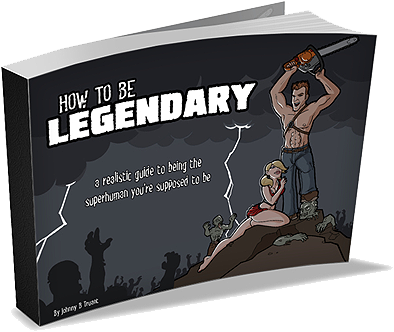
So I did read the blog post he linked to, the one about how he wrote and published a novel on Kindle in 29 days, and the uncensored one (the other one he linked to,) and I decided, again, that he knew what he was talking about, and that I liked how he was talking about it. So I downloaded his free e-book How To Be Legendary.

HOW TO BE LEGENDARY – Review and Quotes

Image via johnnybtruant.com.


His analogies about Matrix got to be the second thing I liked about the series, the first one being Keanu Reeves. I might be alone in this, but I wasn’t remotely into the world where Neo wasn’t a slave to- it was just as bleak and lifeless and full of weird characters as the first one he didn’t feel he belonged to.

But the enslaving world in the analogy is the “normal” life as we are expected to live, and the liberating path is the one we choose for ourselves. It might end up being “normal” but it is important that we chose it willingly, and will be happy that we chose it to the last second we have on earth.

It is honest, fun and in-your-face.

“You’ll get old and then you’ll die, so there’s no point in hedging your biggest bets. It’s truly now or never.”

Not only doesn’t he book reinvent the wheel, but he openly admits to it. He admits his own procrastination and the period where he did things for the wrong reasons, and how he made them right.

You aren’t probably going to get any epiphanies reading the book, but it is a great motivator if you are struggling to put in the work for what you want to do, or presenting that work to the outside world. It will also remind you of how legendary people actually got to be legendary, and that not everyone will put in the work they need to.

So the book is helpful, though not everyone might feel that way. It helps, and will help, only if you are ready to get going. Like I completed this post in the midst of a major cold I’m fighting off. And yeah, it is nice to feel on track instead of feeling depressed over the obstacles/excuses (aka the lack of energy/lack of time/lack of inspiration…)

“The ‘I don’t have time’ excuse is the lamest excuse to ever exist. It makes me angry, because it is so fragrantly bullshit.”

Pay extra attention to what he says about trying to make things perfect. You can find the book here.

Related Posts Plugin for WordPress, Blogger...

Filed Under: E-Book Reviews Tagged With: freelance writing, how to be legendary, inspiration, inspiration for writers, johnny b. truant, jon morrow, motivation for writers

  • 1
  • 2
  • 3
  • Next Page »

Blogroll

  • My Entertainment Blog

My Other Blogs

  • Beauty, Fitness & Style for the Fun-Loving Gal
  • Dating & Relationships in the 21st Century

Categories

  • Author Interviews
  • Author news and coverage
  • Blogging
  • Book Launches and Excerpts
  • Book News and Author Interviews
  • Book Recommendations
  • Book Reviews
  • Career Management for Writers
  • E-Book Reviews
  • Fiction Writing
  • Fictional Writers: Writer Characters in Movies, TV Series and Books
  • Inspiration and Motivation
  • Marketing
  • Marketing Fiction
  • Movie and TV Series Recommendations
  • Novel Reviews
  • Paying Markets-Web and Print
  • Productivity & Time Management
  • Recommended Resources
  • Reviews for Tools and Devices
  • Romance
  • screenwriting
  • Self-publishing
  • Story Conflicts
  • Website & Blog Reviews
  • Writer Tools
  • Writing
  • Writing Tools
  • Writing Updates

Copyright © 2026 · Focus Pro Theme on Genesis Framework · WordPress · Log in

This website uses cookies to improve your experience. We'll assume you're ok with this, but you can opt-out if you wish.Accept Reject Read More
Privacy & Cookies Policy

Privacy Overview

This website uses cookies to improve your experience while you navigate through the website. Out of these, the cookies that are categorized as necessary are stored on your browser as they are essential for the working of basic functionalities of the website. We also use third-party cookies that help us analyze and understand how you use this website. These cookies will be stored in your browser only with your consent. You also have the option to opt-out of these cookies. But opting out of some of these cookies may affect your browsing experience.
Necessary
Always Enabled
Necessary cookies are absolutely essential for the website to function properly. This category only includes cookies that ensures basic functionalities and security features of the website. These cookies do not store any personal information.
Non-necessary
Any cookies that may not be particularly necessary for the website to function and is used specifically to collect user personal data via analytics, ads, other embedded contents are termed as non-necessary cookies. It is mandatory to procure user consent prior to running these cookies on your website.
SAVE & ACCEPT