Addicted to Writing

Manage Your Freelance Writing Career While Writing What You Love

  • About Pinar Tarhan
  • Blog
  • Books
  • Hire Me: Services
  • Contact Me
  • Portfolio
  • Favorite Resources
  • Newsletter

John Wick: How to Write a Refreshing, Kick-Ass Genre Movie by Picking Your Clichés Wisely

Posted on December 28, 2014 Written by Pinar Tarhan

This is John Wick. You wouldn't want to piss him off. Image via teaser-trailer.com.
This is John Wick. You wouldn’t want to piss him off. Image via teaser-trailer.com.

John Wick, Keanu Reeves’ latest movie to hit the theaters is a fun, fast and exciting ride that deserves it’s current IMDB rating of 7.7 (and more). It accomplishes slick action with a budget of 20 mil, and entertains more than a lot of higher budget, CGI-filled action flicks.

And I’d thought it’d be just another ex-hitman-out-for-revenge movie. Sure, it is an ex-hitman-out-for revenge film, but the way it’s handled motive, dialogue, villains and shootouts make it different enough. Briefly put, it’s kept all the necessary clichés to make the protagonist badass enough with a humane side, but it’s eliminated some really too- frequently-used ones.

For instance, instead of a kidnapped/abused/killed family member or romantic partner, this badass seeks revenge because of the murder of his dog and the theft of his car. It could come across as ridiculous and light, but it doesn’t:

You see, our hitman left the world of crime to be with the woman he loved. Cliché, for sure. But let’s face it, we all love a tough male protagonist with a romantic side. He’s fallen hard, and has had a happy relationship until this woman he loved so much dies of a disease. That’s just one.

Why don’t we take a look at how the film manages to set itself apart? Warning: there will be many, many spoilers. Continue at your own risk if you haven’t seen it.

Not a cliché: Beloved wife doesn’t die by the hand of a bad guy.

But she is/was the only live thing he has cared about, and he’s barely buried her when he receives this cutest dog from her a present: she tells him he needs something to love besides his car. He needs not to be alone, he needs to be loved now that she’s not around. So of course he connects with this adorable puppy.

Now imagine a tough-as-they-come, grieving ex-hitman, right at the start of his mourning, being attacked in his home by a stupid, entitled punk (who happens to be the son of Russian mob boss Viggo) Ioef and his friends. The punks kill Wick’s dog, beat the shit out of him (in John’s defense he had no reason to expect a baseball bat from behind in the middle of the night) and steal his car.

Not a cliché: The (stolen) car shop owner is really pissed at Iosef’ s stupidity when he sees the car: he even punches him.

Not a cliché: Viggo calls the owner, and asks why he struck his son, quite calmly. I’d expect an outrage,  a team of thugs to beat the guy to death, or something. But this one is quite reasonable compared to many other mob bosses we’ve seen. And when the guy tells him that what his son did, he gets mad with his own son.

Not a cliché: The mob boss is actually quite smart (again, when compared to others). He hits his son, and explains why he did a very stupid thing. And before sending men after Wick (before Wick can kill the son), he calls Wick and asks if they can forget about the whole thing.

He knows exactly what Wick is capable of, and is reasonably scared: It’s refreshing to see a mob boss being realistic about who he’s dealing with, instead of thinking he can destroy anyone.

Realism: John goes out of ammunition, and we see him reload his weapon, take his enemy’s weapon or just use whatever is available to him. No endless ammo here.

Realism: John does get hurt. He does call a doctor. The doctor gives him pills to keep him going. So it’s not just adrenaline (or maybe the pills provide just adrenaline; I’m just pointing out he does get chemical help).

He gets hurt again toward the end, almost dying.

Realism: John calls a “cleaning crew” to rid his house of the bodies.

Fun: Cop shows up after a noise complaint: John did take care of 10-12 men after either shooting them or killing them other ways. There was massive struggle. But the cop asks if John is back to work, he says he is just that taking care of something. Cop leaves, knowing exactly who John is (and used to be).

Fun: A lot of the other humor comes from the fact the way some shooting scene are shot: like we see the victim dropping dead from a single shot before we see John Wick moving ahead coolly.

Funny/tragicomic/different: Viggo cares more about his own life than his son’s: he gives away his son’s location to Wick when Wick corners him and kills all the bodyguards. Of course being a man of his word, Wick lets Viggo go.

Cliché we love: Wick survives after everything, having avenged his dog and his wife’s memory. Realistic? Well, in this movie’s universe…kind of, yeah. After all, Wick is who you send after the bogeyman. Bogeyman is scared of this dude.

*

So in terms of reinventing the genre, Wick doesn’t do it. But what it serves the genre with refreshing elements, well-done, non-flabby dialogue; a decent, semi-dark sense of humor; the right music and perfect casting.

The writer (Derek Kolstad) has picked his clichés well: whatever clichés exist, they do a great job adding to the film’s pace and atmosphere.

A touch of realism here and there makes the film more fun, and gets us even more glued to the screen. I recommend this movie to anyone who loves the revenge thriller genre, whether you also write action thrillers yourself or not.

And remember folks, all clichés aren’t bad. If you know which ones to pick and how and where to implement them, they don’t ruin your story: they improve it.

Speaking of working clichés, you might also enjoy the post When It’s OK to Use Cliches in Your Writing: Hidden Metaphors – Poison’s Bret Michaels Style.
Filed Under: Fiction Writing, Writing Tagged With: cliches that work, john wick, john wick for writers, john wick keanu reeves, john wick story, keanu reeves, using clichés in writing, when to use clichés in writing

Something’s Gotta Give – Life Is Stranger (and Funnier) Than Fiction & How Much Fiction is Your Fiction?

Posted on August 22, 2014 Written by Pinar Tarhan

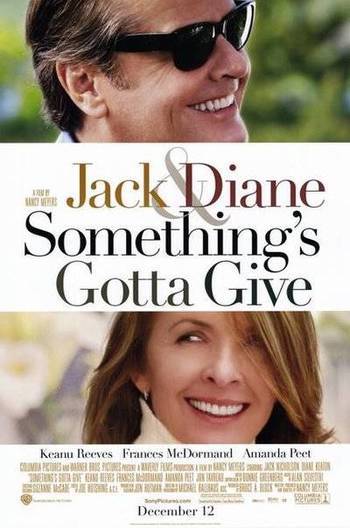
Something's Gotta Give movie  poster
Image via moviepostershop.com.

Something’s Gotta Give is one of my favorite romantic comedies of all time. It’s hilarious, pretty original in a lot of places, feautures one hell of a cast (Jack Nicholson, Diane Keaton, Keanu Reeves, Frances McDormand) and its script is available online for fellow romantic comedy/drama writers. If you are looking for a movie review, or need more (spoilerless) info on the plot, please check out my review post. You can also watch the trailer for a better picture.

This post will concentrate more on the main character Erica, a playwright, and the events that inspire and fuel her latest play (so let there be many spoiers!):

Playwright Whose Real Life Becomes More Interesting Than Fiction:

Erica Barry (Diane Keaoton) is a successful and prolific playwright in her 50s. She’s divorced; her ex-husband is her director – he still directs her plays. She has a 20-something, pretty auctioneer daughter and a sassy, college professor sister (Frances Mc Dormand).

When Erica comes to her house in the Hamptons with her sister to work on her new play, the two women get a huge surprise in the form of 60-something Harry Sanborn (Jack Nicholson) – who happens to a famous businessman/bachelor –who’s dating Erin.

After the initial shock, they decide to stay together in the house, though Harry can’t wait to get out of there. After all, Erica hates his guts. But when he has a heart attack before he can have sex with her daughter, the women rush him to the hospital, and there they meet a young, polite and eye candy of a doctor named Julian (Keanu Reeves). To their shock, he turns out to be a big fan of Erica’ plays and is smitten.

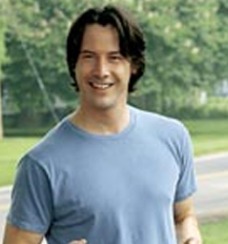
Keanu Reeves, something' gotta give
Yeah, this is Julian. Image via totalfilm


In an ideal world, they would send Harry packing, but he’s neither willing to stay in the hospital, nor is he well enough to go back to the city. So Julian recommends Harry stays closeby, where he can check in on him. So he ends up staying with Erica despite her objections. To make things more frustrating, everybody leaves for the city too, and Erica ends up staying in the same house with Harry, all by herself.

But as she gets to know him, she realizes he’s fun, smart, and quite charming when he wants to be. Despite going on a date with Julian and having a good time, as she and Harry get close, she forgets all about Julian, eventually sleeping with, and falling for Harry.

Harry is shocked by how much he is into Erica, but he isn’t sure if it is all because of his heart attack. After all, he is used to dating much younger women.

When he gets better, he pretty much leaves things undetermined. But when Erica sees Harry on a date with a young woman, she loses it. After dealing with her, Harry has to go to hospital again, which Erica doesn’t know about.

Back in the Hamptons, she gets into a bouts of crying and writing, she finishes her play. She also starts dating Julian (the young doctor) thanks to a chance encounter with her sister Zoe.

Harry seems to be doing OK, on a date with another young woman, when he almost chokes on his food: she’s an actress auditoning for a hilarious part in a play – which is pretty much all about Harry-Erica-Merin-Zoe, just with differently named characters.

When he goes to confront Erica, she seems happy and over him. She tells him the story isn’t exactly the same, until he sees the same scene from the hospital. Aren’t there any differences? There are: in the play, Henry is called Harry. And he dies. And that’s pretty much all Erica changed. She has even used bits of dialogue exchanged between them.

*

Yep, this is a romantic comedy, Harry is the male protagonist so you can guess he will eventually own up to the fact he’s head over heels with Erica and do something grand to win her back.

How Much Fiction Is Your Fiction, Really?

Many writers believe you need to live interesting and exciting lives to be able to write (well). And I mostly agree. Some of my stories were inspired while I was doing writing-worthy stuff in my life, like staying in gorgeous Santa Barbara for a month, or learning about the true potential of Public Relations from a great teacher.

And while I might not have written a certain event in my life, changed a couple of things and labeled it as fiction, I use a lot of real events in my blog posts. After all, what fun would dating blogging be if we couldn’t dis exes (while keeping names private, obviously) publicly?

In all seriousness, though, where do you, or should you draw the line? Where does your story stop being your own? Is it OK to write a play about your life, without notifiying other parties involved?

And while Harry might have deserved some humiliation, did he really deserve to die in a play about him?

Frankly, I think what Erica did to Julian was much worse than what Harry did to her. She went on a date with him, forgot all about their next date after confirming it, didn’t call to apologize, hooked up with Harry after professing her disdain of him, got back with Julian and ditched him for Harry on her birthday (OK, Julian left her saying she still loved Harry, which was the truth, but still…)So if I were Meyers, I would probably have an alternate ending or an additional scene where Julian wrote a play about Erica and killed her at the end.

*

When you use things from your life in your writing, where do you draw the line?

For more writer characters, check out my Writer Characters category.


Related Posts Plugin for WordPress, Blogger...

Filed Under: Fictional Writers: Writer Characters in Movies, TV Series and Books Tagged With: diane keaton, frances mcdormand, jack nicholson, keanu reeves, nancy meyers, somethings gotta give cast, somethings gotta give screenplay, somethings gotta give script, something’s gotta give, something’s gotta give movie somethings gotta give movie, writer characters in films, writers in films

Blogroll

  • My Entertainment Blog

My Other Blogs

  • Beauty, Fitness & Style for the Fun-Loving Gal
  • Dating & Relationships in the 21st Century

Categories

  • Author Interviews
  • Author news and coverage
  • Blogging
  • Book Launches and Excerpts
  • Book News and Author Interviews
  • Book Recommendations
  • Book Reviews
  • Career Management for Writers
  • E-Book Reviews
  • Fiction Writing
  • Fictional Writers: Writer Characters in Movies, TV Series and Books
  • Inspiration and Motivation
  • Marketing
  • Marketing Fiction
  • Movie and TV Series Recommendations
  • Novel Reviews
  • Paying Markets-Web and Print
  • Productivity & Time Management
  • Recommended Resources
  • Reviews for Tools and Devices
  • Romance
  • screenwriting
  • Self-publishing
  • Story Conflicts
  • Website & Blog Reviews
  • Writer Tools
  • Writing
  • Writing Tools
  • Writing Updates

Copyright © 2026 · Focus Pro Theme on Genesis Framework · WordPress · Log in

This website uses cookies to improve your experience. We'll assume you're ok with this, but you can opt-out if you wish.Accept Reject Read More
Privacy & Cookies Policy

Privacy Overview

This website uses cookies to improve your experience while you navigate through the website. Out of these, the cookies that are categorized as necessary are stored on your browser as they are essential for the working of basic functionalities of the website. We also use third-party cookies that help us analyze and understand how you use this website. These cookies will be stored in your browser only with your consent. You also have the option to opt-out of these cookies. But opting out of some of these cookies may affect your browsing experience.
Necessary
Always Enabled
Necessary cookies are absolutely essential for the website to function properly. This category only includes cookies that ensures basic functionalities and security features of the website. These cookies do not store any personal information.
Non-necessary
Any cookies that may not be particularly necessary for the website to function and is used specifically to collect user personal data via analytics, ads, other embedded contents are termed as non-necessary cookies. It is mandatory to procure user consent prior to running these cookies on your website.
SAVE & ACCEPT