Addicted to Writing

Manage Your Freelance Writing Career While Writing What You Love

  • About Pinar Tarhan
  • Blog
  • Books
  • Hire Me: Services
  • Contact Me
  • Portfolio
  • Favorite Resources
  • Newsletter

Review for Niksen: Embracing the Dutch Art of Doing Nothing by Olga Mecking

Posted on January 21, 2021 Written by Pinar Tarhan

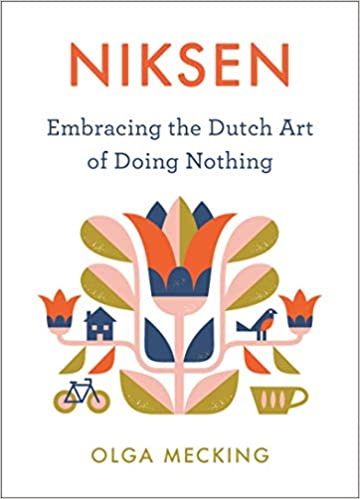
US cover edition for Niksen: Embracing the Dutch Art of Doing Nothing by Olga Mecking.

I’ve just finished reading Olga Mecking’s wonderfully entertaining, educational, and relaxing book Niksen: Embracing the Dutch Art of Doing Nothing (aff. link). Worry not, I’ll explain in my review how this book is all that and why.

But before I get to what the book is about and my review, let me tell you a bit about Olga and the wonderful concept of niksen.

Olga Mecking & Niksen
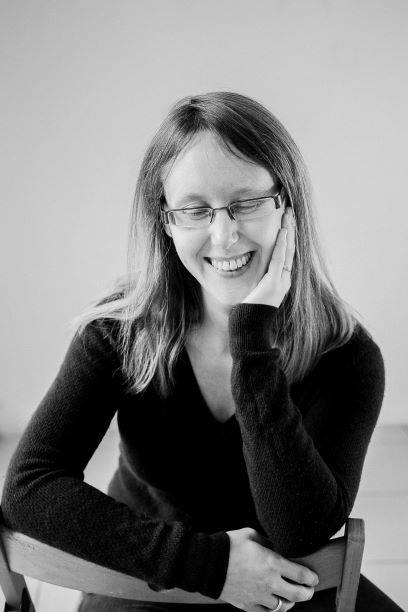
Olga Mecking.

Olga Mecking is a Polish journalist, freelance writer, author, and novelist. She’s been living in The Netherlands for 11 years, and she has experienced the culture firsthand. She first wrote about the concept of Niksen for Woolly magazine, but it was her essay for The New York Times’ Smarter Living section that really kicked things off. For more about how the book came to be and how Olga nikses herself, you can read my interview with her.

Niksen is basically doing nothing for the sake of doing nothing. Yes, it is enjoyable and recharges you. And it is a beautiful way to find inspiration and peace of mind in these hectic times.

The Book: Niksen isn’t your average wellness book
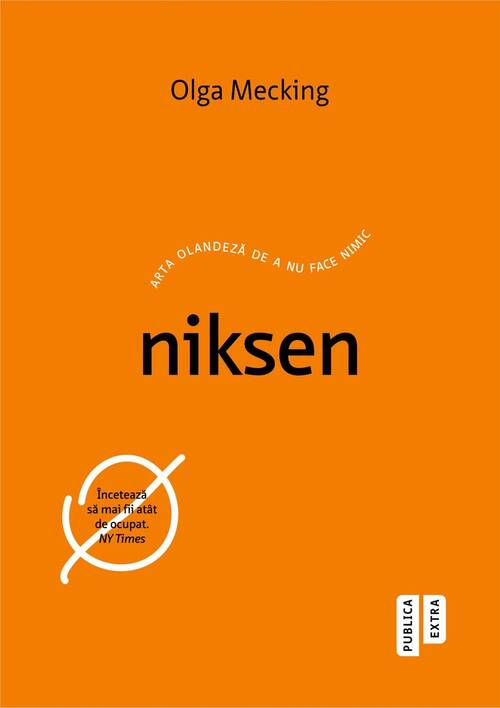
Romanian cover of Niksen. 🙂

For one thing, Olga isn’t fond of wellness trends, especially if they preach their methods work for everyone – when their instructions followed to a t. She finds that these kinds of trends and books cause more stress because they don’t consider your personal circumstances and the culture you live in.

I’m glad Olga takes into account why and when niksen might be good for you, and when you probably shouldn’t attempt or force it.

She talks to many experts in her book, including business psychologists and other authors. One of my favorite experts featured is Gretchen Rubin. Rubin’s book on habits (aff. link) is a life-changer because she views everything through a personality lens, making changing easier and probable.

Back to the book Niksen: Embracing the Dutch Art of Doing Nothing

What the book covers

– What Niksen is,

– Why we should consider practicing it,

– When and how we might implement it into our lives,

– How other cultures have embraced Niksen,

– Potential roadblocks,

– How she experiences it herself,

and more.

Niksen: Embracing the Dutch Art of Doing Nothing is a fast read. And it’s also not.

It’s easy to read this book (aff. link) fast. Olga’s conversational and friendly style can have you devouring it in one cozy setting. But I resisted the urge.

Whenever, there was a cultural, personal, or professional reflection on how much and how we niks, I stopped and thought about my relationship with niksen.

While I am notoriously bad at niksing on a couch, especially if there are electronics or books or notebooks around, I have my own ways. Olga mentions this in the book:

I love going to coffee shops (when there is no pandemic, of course) and working on whatever project there. My favorite shops tend to provide the best atmosphere for niksen: comfortable seating, great (but not-too-loud) music, and a gorgeous view. So, every once in a while, I mentally get lost with my coffee in my hand. It doesn’t take too long before I feel the urge to write something down, but I do it.

I also find it hard to get up in the mornings. Because I don’t usually have to be up by a certain hour, I take my time. I am awake, but I don’t rush. I literally do nothing. My eyes can be open or closed. I just enjoy the moments before another hectic day starts.

As I read the book, I consciously tried to add more niksen to my week.

The benefits appeal to me. I like it when I engage in it. Yet, the concept can sometimes scare me. I was a hyperactive child, and as an anxious/busy adult with a hyperactive mind, I worry I should be doing something. Something worthwhile.

But I am trying to recover from that train of thought. There is a reason a lot of creative ideas (in addition to relaxation) find us in the shower.

I read the book slowly but surely, true to the spirit of niksen.
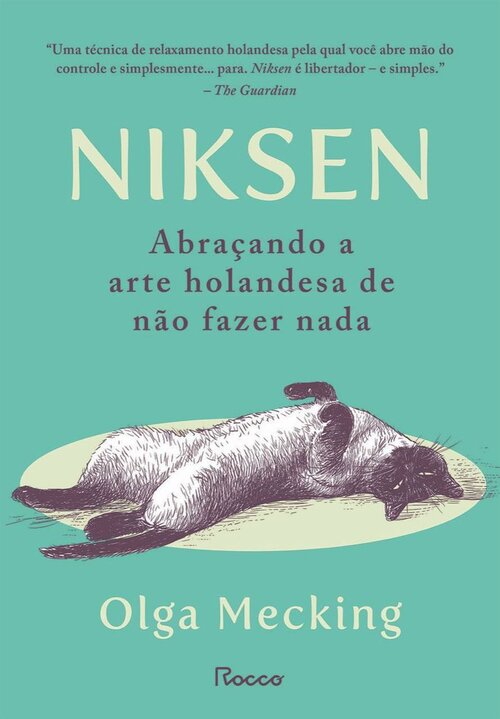
This cover is for Brazil.

Recommended for:

I recommend reading Niksen: Embracing the Dutch Art of Doing Nothing to curious minds, anxious professionals, restless souls, and anyone who thinks they need to slow down a bit.

If you find yourself constantly wishing for more time, especially more time to wind down, you should read this book.

Reading it has a soothing effect. It will also show you that you are not alone.

Another thing I love about this book is that it doesn’t claim to be a be-all-end-all for wellness. In fact, both the writer and the book are highly skeptical of trends and one-size-fits-all advice. Olga even features a section detailing who shouldn’t be niksing and why.

As someone who hates standardized advice, this makes the book even more my cup of tea.

Who shouldn’t read Niksen?

I honestly can’t think of many people. But if you are extremely happy with your life, have time management skills and productivity levels you are proud of, and you couldn’t care less about a concept that is about doing nothing on purpose, then you probably shouldn’t read it.

Rest of the world? Give it a shot.
Filed Under: Book Reviews Tagged With: Embracing the Dutch Art of Doing Nothing, niksen, niksen book review, niksen embracing the art of doing nothing book review, olga mecking, what is niksen

Interview with Olga Mecking on Her Book Niksen: Embracing the Dutch Art of Doing Nothing

Posted on November 17, 2020 Written by Pinar Tarhan

One of the many beautiful covers of Niksen: Embracing the Dutch Art of Doing Nothing. US version.

Thi is my second interview with successful Polish author, freelance writer and journalist Olga Mecking. In my first interview, we talked about how Olga’s accomplished amazing bylines by not sticking to a niche and writing about everything she cares about. You can check out the first one here: How to Follow Your Heart and Writing Dreams In Multiple Niches: Interview with Olga Mecking.

Olga Mecking

Today, we will talk about her book Niksen: Embracing the Dutch Art of Doing Nothing (aff.link), which has already been translated into 15 languages, including French, Dutch, German, Polish, Turkish, Korean and Indonesian.

What’s niksen in your own words? How did you first come upon it? And why did it appeal to you?

I think everyone defines niksen on their own terms, but it means doing nothing without a purpose. So not browsing your phone but staring out of the window. And not doing nothing because it’s good for you, but for the hell of it. Because it can often feel good. I saw an article in a Dutch magazine called Gezond Nu called Niksen is the New Mindfulness. As a language geek, I love how the Dutch had one word for doing nothing —  something which in other languages would require two or more words. So convenient! And even though I am not a fan of wellness trends of any kind, this really spoke to me. Doing nothing can be good for us? How cool is that!

How do you niks yourself? How often? And how does it benefit you?

I usually niks on my couch. It’s pretty comfortable and has pillows and blankets. And sometimes I would read a book and then put it away for a while when I read a sentence that I really like. Or when I begin wondering what will happen next, I put the book away and then my thoughts will start running around in my head and bumping into other thoughts and create new ideas. That’s how I come up with my ideas for articles. I have no idea for how long or how many times I do nothing. It seems to be more of an in-between thing.

Can you tell us about your family life and how Niksen comes into play?

I’m a mother of three, I work from home. My life often feels busy with planning, organizing, setting up and remembering appointments. And also the taking the kids (or myself) to those appointments. For me, niksen plays several roles: it allows me to be creative and come up with new ideas that are usual and interesting. But I also use it as a sort of buffer. For example, I know I can’t fill in my days too much because I’ll be very tired, and I always need some space for when the kids will have problems, etc. And it allows me to rest and get ready for the next challenges (that will inevitably come).

You first wrote about niksen as articles, right? Can you share which one led to the book deal and how the process worked?

Yes, I wrote two articles. The first one was for Woolly Magazine, a fun and quirky wellness magazine, and it did really well. This was a trend piece, called tongue-in-cheekingly (if that’s even a word), “The Dutch Trend that’s Better than Hygge.”

The second one was called “The Case for Doing Nothing,” and was published in the New York Times a few months after the first one. And that was the one that started the whole thing. It had 150.000 shares a few days after it came out.

And it often happens to writers that when an article or essay goes viral, it gets the attention of agents or publishers. This has happened in my case. A Dutch publisher reached out to me and asked if I was interested in writing a book on Niksen, and I was so glad to be given this chance and took it. And I’m glad I did!

Niksen isn’t your first book-length project, but your first traditional publishing deal. Can you share your experiences, and compare and contrast between self-publishing and traditional publishing?

The differences between the finished product with traditional publishing versus self-publishing are not that big. Self-published books have become professionalized, and many writers hire book cover designers and editors to make their book look really good. The same can be said about the amount of work required. But the process is very different: With self-publishing, you have more control over your book, and you can make it look and feel exactly as you want it to look and feel.

Traditional publishing, on the other hand, especially if you have a big publisher, they have a team that does the design, layout, illustrations, etc. They do the cover and everything else! Many publishers will also have a marketing team that would find press opportunities for you. With self-publishing, you do it yourself.

But one is not worse or better than the other. Some people love having full control over their book. And many self-published books do really well, especially in the romance/fantasy/erotica genres. And I’ve met writers who were very creative with their marketing efforts. For me it was stressful to have to do every single element of my book (aff. link), and I was very grateful that I didn’t have to do the formatting with Niksen. They did a really great job with it. And a big plus of having an agent or a traditional publisher is that they often come with a foreign rights department that sells publication and translation rights to other countries. Niksen will appear in 15 languages all over the world! I wouldn’t be able to do it with a self-published book.

What are your future book projects, both fiction and non-fiction? Which publication route do you want to follow?

I’m currently working on a proposal for a parenting book of a slightly different kind. I hope to get a publisher interested in this one. But I’ve been working on a few fiction books too, and those I’ll probably self-publish. I have friends who are doing a combination of both depending on what the book is. I have friends who went indie after securing a book deal with a publisher. I’ve heard of self-published books get picked up by traditional publishers. It’s always good to have options.

How do you balance smaller freelance writing projects with longer, more complicated book writing?

I don’t. I didn’t do much freelance writing while working on Niksen; I just didn’t have the time for it. I had a tight deadline so writing the book was pretty much the only thing I could manage.

I know you aren’t a fan of shelling out advice as different things work for different people. But you are productive (you’ve got the bylines and future projects to prove it!). What are some habits and patterns that work for you? How and when do you produce your best work, do you think?

I think I like working in bursts, as opposed to continuously. As in an article or two here, then nothing for a while. It works for me because my husband supports me (I think it needs to be said), so I can work whenever I have ideas/assignments (these two things are not the same, lol). I like the NaNoWriMo approach for writing books. That is a certain amount of words by a certain amount of days (NaNoWriMo is 50K words in a month, 1666 words a day).  I wrote the first (very terrible, no good) draft of Niksen in 6 weeks. I sat down every day and literally wrote words. I usually don’t plan a structure for my articles but did for Niksen, so I knew what I was going to write that day, and I wrote. And that was a nice feeling to have steady work for a longer stretch of time as opposed to the few days that I spend on my articles.

But no, I don’t write every day, just when I have an assignment. I like having projects that occupy my mind for a while but then end and allow me to focus on something else. I don’t stick to a niche either. I have a wide range of interests and like combining things in unusual ways. An example: becoming a mother is like having culture shock. Or flipping the narrative on a topic. Most people following their spouses abroad are women, but what about the men? And when everyone was writing about not wanting to share pictures of their kids on social media, I did that too. Only my reason was different: not my kids’ privacy, but because I liked my social media accounts to be just mine. Sometimes this approach takes a long time. My NYT essay about being a mother took maybe 2 weeks to write (one of my longest), but it was months before I had all the elements for that story and before it made sense!

But this is also where Niksen comes in. Because my ideas wouldn’t be so unique without it.

 *

What do you think about niksen? Do you do it? Please share your thoughts and experiences in the comments.

Filed Under: Author Interviews Tagged With: interview with olga mecking, niksen, niksen embracing the dutch art of doing nothing, niksen the dutch art of doing noting, olga mecking, olga mecking niksen

How to Follow Your Heart and Writing Dreams In Multiple Niches: Interview with Olga Mecking

Posted on June 8, 2017 Written by Pinar Tarhan

UPDATE: Olga released her book Niksen: Embracing the Dutch Art of Doing Nothing, and I interviewed her again here. We talked about niksen, her thoughts and experiences regarding self-publishing and traditional publishing, her writing process and more. 

I’m a writer, blogger, and screenwriter. As a screenwriter, I’ve mostly written romantic comedies or romantic dramas. But I’ve co-written a fantasy/action/drama TV pilot with my writer friend Liam Kavanagh, and I dream about the day I’ll wake up with the perfect sci-fi, thriller or action feature idea.

As a non-fiction writer, I’ve written about health, beauty, dating, career management, travel, mental health, entertainment, any and all aspects of writing, as well as all aspects of writing and blogging. I run 4 blogs: Pinar Tarhan Entertainment, Beauty, Fitness, and Style for the Fun-Loving Girl, Dating and Relationships in the 21st Century, and this: Addicted to Writing – my writer’s blog and portfolio website.

I couldn’t possibly pick a favorite niche. When it comes to writing services, if you pushed me to pick, I’d say blog writing. When it comes to topics, I could list what I don’t write about. It would take less time.

I’ve always been interested in multiple topics. And while picking a niche or two has certain advantages, not all writers are made for this path. Today, I have such a guest on the blog, my good friend Olga Mecking.


Olga Mecking is a successful international writer with bylines in so many prestigious pubs like Teen Vogue, Yes Magazine, Ozy, City Lab, and The Washington Post. But what makes Olga the perfect person to talk to about writing in multiple niches is that she didn’t get all those impressive bylines in sticking to a niche: She has written about being an expat, mother, traveling, current news, being a polyglot, science, and beyond.

She is Polish and lives in The Netherlands with her German husband and their kids. She speaks 5 languages including English, German, French and Dutch.

Olga Mecking.

Off to Olga:

  • How did you start writing? And how did you start writing professionally?

I started my blog The European Mama after a Dutch woman called the police on me because of my kid’s temper tantrum. By blogging, I taught myself to write, and then after a while my friends were all starting to submit their writing, so I thought, “maybe I could do this too.” Turns out, I can.

  • How do you find and pursue your story ideas?

I always have a million ideas in my head and think stories are everywhere. For example, once we ate something called The Dutch Weed Burger (it’s made of seaweed, not grass!), but I thought with a name like that there had to be a story. And there was! Sometimes, my idea comes from current events, or from stringing two lines of thought together in unexpected ways. Sometimes it’s a place I visit or something I eat. And sometimes, it’s something someone says or does.

  • Why do you prefer writing in multiple niches?

Well, there are topics I stick to, for example, parenting, living abroad, travel, food, etc. But I also like learning new things and acquiring new skills, so I am trying to break into other types of writing (for example, I wrote for Teen Vogue about politics). Also, I get bored easily. If I had to stick to just one thing, I’d stop writing.

  • Do you feel like this has ever worked against you? In what ways has it worked in favor of your career and life in general?

In many ways, it has worked in favor because I can always use my stories to “get into the next level”. So for example, next time I have something about politics, I have my Teen Vogue story to prove I can do it. If I’ve written about food in a certain way (for example, as a feature), I can use that to write features about other topics.

  • What would your advice be to writers who also can’t dream of sticking to one niche?

Just write whatever you feel like writing.

  • Where can we follow you on social media?

Facebook, Twitter and IG.

*

Do you also write in multiple niches? Or do you want to? Let us know in the comments about your adventures and concerns!

Related Posts Plugin for WordPress, Blogger...

Filed Under: Blogging, Career Management for Writers, Inspiration and Motivation Tagged With: blogging, choosing your writing niche, olga mecking, should writers pick a writing niche, writing, writing in several niches

Blogroll

  • My Entertainment Blog

My Other Blogs

  • Beauty, Fitness & Style for the Fun-Loving Gal
  • Dating & Relationships in the 21st Century

Categories

  • Author Interviews
  • Author news and coverage
  • Blogging
  • Book Launches and Excerpts
  • Book News and Author Interviews
  • Book Recommendations
  • Book Reviews
  • Career Management for Writers
  • E-Book Reviews
  • Fiction Writing
  • Fictional Writers: Writer Characters in Movies, TV Series and Books
  • Inspiration and Motivation
  • Marketing
  • Marketing Fiction
  • Movie and TV Series Recommendations
  • Novel Reviews
  • Paying Markets-Web and Print
  • Productivity & Time Management
  • Recommended Resources
  • Reviews for Tools and Devices
  • Romance
  • screenwriting
  • Self-publishing
  • Story Conflicts
  • Website & Blog Reviews
  • Writer Tools
  • Writing
  • Writing Tools
  • Writing Updates

Copyright © 2026 · Focus Pro Theme on Genesis Framework · WordPress · Log in

This website uses cookies to improve your experience. We'll assume you're ok with this, but you can opt-out if you wish.Accept Reject Read More
Privacy & Cookies Policy

Privacy Overview

This website uses cookies to improve your experience while you navigate through the website. Out of these, the cookies that are categorized as necessary are stored on your browser as they are essential for the working of basic functionalities of the website. We also use third-party cookies that help us analyze and understand how you use this website. These cookies will be stored in your browser only with your consent. You also have the option to opt-out of these cookies. But opting out of some of these cookies may affect your browsing experience.
Necessary
Always Enabled
Necessary cookies are absolutely essential for the website to function properly. This category only includes cookies that ensures basic functionalities and security features of the website. These cookies do not store any personal information.
Non-necessary
Any cookies that may not be particularly necessary for the website to function and is used specifically to collect user personal data via analytics, ads, other embedded contents are termed as non-necessary cookies. It is mandatory to procure user consent prior to running these cookies on your website.
SAVE & ACCEPT