
Addicted to Writing

Manage Your Freelance Writing Career While Writing What You Love

  • About Pinar Tarhan
  • Blog
  • Books
  • Hire Me: Services
  • Contact Me
  • Portfolio
  • Favorite Resources
  • Newsletter

How to Work (and What Tasks to Do) When You Are Sleep Deprived

Posted on February 27, 2019 Written by Pinar Tarhan


In an ideal world, one or two things would happen:

  • We wouldn’t be sleep-deprived.
  • We wouldn’t have to work when we were sleep-deprived.

But it isn’t an ideal world, alas both situations occur quite often. If you don’t have anything urgent, it’s best putting off urgent tasks until you are rested. If you do, it might be better to try and take a nap first.

Not possible? Pour some coffee (or tea, your choice) and get to it.

Also, think of activities that make you happy, alert, and energetic. Different activities have different effects on people. Showers wake some people up while making others sleepier. (I’m in the second group.)

  • Blog maintenance. Updating plugins and themes don’t require much attention and energy. Get this sucker off your plate.
  • Marie Kondo-ing your office space. While I like Marie Kondo, I don’t recommend trying to catch the feeling of joy when it comes to organizing important stuff. Instead, go for the thought of useful and/or new information. I don’t want you to end up fileless and freaking about not being able to find important story drafts or reference books!
  • Marie Kondo-ing your desktop files. See the point above about joy.
  • Email checking and cleaning: unsubscribing from people you don’t like. Sometimes, I go on a binge email unsubscribing spree. I might even unsubscribe if I am a huge fan of the person. Because I am a huge fan, I don’t need a daily or weekly reminder to check out their new post or product. I already have. So I remain subscribed to newsletters that share stuff that is not on their website, or newsletters that are so useful that I cannot afford not being updated. And sometimes, I remain subscribed because while I am a fan, I often forget to check out their latest work because I’m only human and I don’t remember to regularly read every blog I enjoy. What makes a newsletter worth subscribing to and remain on their email list? Check out my article Newsletter Writing 101: The Dos and Don’ts.
  • Drafting posts. Funnily enough, you can actually write even if you are tired. It might not be a masterpiece, and you probably shouldn’t be working on the polished version your editor will read. Drooping eyes miss more errors. But if you are in the zone, you are in the zone. If your health allows it, don’t let your energy level trick you into not writing.
  • Noting down ideas. Your brain might be too tired to do certain things, but ideas also don’t give two hoots about how you feel. If they want to arrive, they will. So you better not let them go. You might not remember them later.
  • Free-writing. What better excuse to write without limits and rules? Just let your subconscious take over.
  • Collecting scattered ideas in two places: one digital and one physical – and then backing them up. Be honest with me. How many idea files and notebooks do you have? Even the most organized of us can fall prey to buying too many notebooks or creating too many files to save our ideas. It doesn’t take too much mental effort to copy paste with your mouse or with your hand, so take advantage of these “tired” times to gather your ideas in one place. Then make several copies. You can never be too careful or safe when you are saving and recording your ideas. The idea is to have all the ideas in one place, and copies of the big list. Not 500 different files with different ideas. Think about your scattered notes the next time you think you don’t have something to pitch or write about. You should do the same with the writing markets, while you are at it.
  • Going over your to-do lists and goal sheets. If you’ve been meaning to do something for months, just go ahead and do it. It is okay to change your mind and delete the task if you feel it was unnecessary. But if you neglected something essential, it is time you prioritize it.
  • Responding to emails. Try not to make too many typos, especially if you are corresponding with editors and clients. But let’s face it, most email communication is about you confirming things or following up on them. Do those.
  • Backing-up your work and research. All you need to do is to get them on to Cloud, a hard drive, a USB or emailing them to yourself. Better to be safe than sorry.
  • Social media posting. Afraid people forgot who you are? Start reminding them. Hanging out at social media is a better way to spend your time when you are tired. Just don’t post something embarrassing you can’t take back. Unless embarrassing is your brand. Then by all means, go all for it!
  • Profile updates. You have a new book out? Published on some amazing pubs? Time to polish those clips and social media profiles.
  • Bookmark and reading list cleaning. No need to keep useless stuff around. Read and decide what to discard.
  • Reading stuff that doesn’t hurt your brain. It can be reading for fun – since you are a writer, reading is always a part of your job. I know, we are so lucky! But we’ve all been there. Sometimes we can’t just bare to process overly technical stuff or brand new information. Ignore those and come back when you are feeling alert and capable.
  • Watching things that are necessary for your idea-collecting, craft-building and relaxing. Bonus points if they help with all three. Watching Netflix is a part of my job. So no one pays me just to watch something, but a lot of my ideas and stories have ties to pop culture. So watching movies and series help me grow as a writer, while also fueling my creative juices. So when in doubt and too tired to do anything else, go watch something.

*

There you go, those were my humble suggestions. Let me know how you deal with work when you are sleep-deprived or sick. They often attack together!

Related posts you can check out:

A Love Letter to All Freelancers With a Health Condition

How to Get Back to Work After Vacation (Even If You Are Exhausted)

Sleepy Writer’s Wake-up Ritual: How to Start A Writing Day Well

Benefits of Having a Cold for Freelance Writers

9 Productive Things Writers Can Do When They Have a Cold


Filed Under: Blogging, Productivity & Time Management, Writing Tagged With: how to work when tired, how to work when you are sleep deprived, how to work when you are sleepy, productivity tips, productivity tips for writers

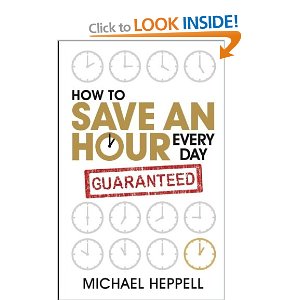
How to Save an Hour Every Day by Michael Heppell: Review

Posted on January 19, 2014 Written by Pinar Tarhan

A Little on Heppell and His Style

Michael Heppell is quickly becoming one of my favorite non-fiction authors. I’ve also read and loved The Edge and How to Be Brilliant.

His language is fun, catchy and he doesn’t waste words. He knows you don’t have all the time in the world, and appreciates that.

Heppell’s books successfully refute any excuse you might have about improving any area of your life by providing real life examples both from his life, and lives of his clients (he’s a personal development expert that works with companies and individuals) and readers. He also gives examples from real life success stories of people we are familiar with. He renders it impossible to say it’s not in your hands. 

How To Save An Hour Every Day


Michael Heppell, how to save an hour everyday
Image via amazon.

How often do you wish every day had more hours? I know I have. Forget 25, I wouldn’t mind 250. But even though we can’t make days longer, we can feel like we have more time by making an hour available for an activity or task of our liking. We can achieve this by managing our time better.

How To Save an Hour Every Day was born out of Heppell’s own need for a good time management resource. However, what was available wasn’t simple, applicable and practical enough. So he delved into his own experiences, tips of his readers and clients, and hence created a book that is fun to read, and possible to apply – regardless of your marital status/lifestyle/job hours….etc.

We can see Heppell’s tips work when we look at his CV, popularity and number of bestsellers. But to get the best idea (and results), I strongly recommend the buying the book, reading it, keeping it as a reference and really applying stuff without trying to cheat.

The book covers:

–       Creating a strong enough why: This chapter explains why you won’t take action unless you feel obligated, and how you can feel obligated.

–       Overcoming procrastination  I don’t need to explain this one. 🙂

–       To Do or Not To Do, that’s the question: This section covers the problem with to-do lists, a very lucrative idea, priotizing and how to create not-to-do lists. I can’t stress the importance of the not-to-do lists enough.

–       Dealing with distractions: Freelancers and office employees might deal with different distractions, but both have a lot of them. Luckily, Heppell comes up with beneficial tips on how to take care of them.

–       Home: This part is about how to optimize the time we spend at home – and how we (should) spend it  with the people at home. This doesn’t just cover quality family time, but also booking holidays, managing your finances, technology, exercise and more. Needless to say, this is one of my favorite chapters, though I love the book as a whole.

–       Work: This is especially awesome for people with full-time jobs – complete with co-workers and bosses. It features tips on making meetings more efficient, optimizing your working hours and job description,  emails and more. Freelancers can of course apply most of the tips about delegation, meetings, people that take too much off your time…and more.

–       Advanced techniques:  There’re some more concentration-requiring techniques, including using your voice to command technology, increasing your reading speed and more.

–       Twenty-five extra ideas: These are the working ideas contributed by Heppell’s clients and readers. Take what applies, adapt and make them your own.

*

I recommend How to Save An Hour Every Day to everyone who wishes they had more time on their hands, but feels frustrated and stuck about the how.

Procrastination and distractions are universal problems, though as freelancers we probably need to deal with them even more regularly as we are our own bosses, and we are the ones responsible for all our working and free time.

You might think you have heard it all before, though I’m pretty sure you didn’t think of all of what’s suggested here, or at least you haven’t tried all the tips that might work. After all, you still have problems or at least desire improvements in this area, right?

Whatever you need more time for, this book gives you ideas to enable you to lead a more fun, productive and satisfactory life. Oh, and you could probably finish the book in an hour, especially if you’re good at speed reading.:)


More Useful Posts on Productivity and Time Management

Procrastination: Friend or Foe?

9 Productive Things Writers Can Do When They Have a Cold

How to Use Our Email Accounts Productively to Avoid Procrastination

 How to Turn Procrastination into Productivity: 7 Fun Tips for Writers

Productivity for Writers: Tips to Increase Your Productivity During Hot Weather


Filed Under: Productivity & Time Management Tagged With: how to save an hour every day, how to save an hour every day review, michael heppell, michael heppell how to save an hour everyday, productivity, productivity tips, time management, time management tips

9 Productive Things Writers Can Do When They Have a Cold
Posted on June 18, 2011 Written by Pinar Tarhan


Yep, that is exactly how I react when I have a cold…:)

Catching a cold can come in any season. You know the symptoms: dizziness, lack of energy, and low fever. I typically get sick during unstable weather, through a combination of the temperature differences between outdoors and indoors, and the differences between indoors with air-conditioning and indoors with no air–conditioning. Combine it with all the open windows and all the others getting sick and voila: you have a writer with a cold, trying not to vaporize and writing despite a headache.

And while I, unfortunately, discovered that there is no way I can be as productive as my usual healthy self, there are still a lot of productive and not-so-exhausting things I can do. Here is how you can work through a cold if you want to or need to:

1) Facebook: Facebook is a great way to catch up with your friends. And since you are sick, it is OK to start replying to your received messages, as opposed to replying when you are totally healthy and supposed to be doing something else.

But it is not all. You can also promote your old & recent articles. If you are well enough to log on to Facebook, you are well enough for some mindless article promotion. And since you are already active there, browse through groups and fan pages, join the ones you like, join some communities. If you already have a bunch of communities you joined before, converse and leave your own relevant links that will bring value to the conversations. Also, leave links in your messages to your good friends. And don’t neglect to copy-paste your article links to your profile.

Worry not. There is no need to overdo anything. 3-4 article links to your Facebook profile/news update within some hours between them is great for exposure and give your friends time to digest and all.

2) Twitter: Yep, you can tweet about your sickness, but while you are at it, why not post some good links? It can be your old or new article links, friends’ articles, or links to stuff you are promoting. If you can turn on your computer and log on to Twitter, you definitely owe this little activity to yourself.

3) Social Media of Your Choice: Are your readers on Pinterest? Dying to get better results on Instagram? Is it time you experimented with TikTok? You don’t have to take photos or videos when you are sick. But you can play around with hashtags and look at other creators’ content for inspiration. And when you get better, you will realize you’ll have gotten rid of some of your promotional chores for a while. At the very least, you will have conducted some market research.

4) Registering and signing up for useful sites: You may have come across links to register for social media sites, sites that pay for your content, e-mail newsletters you find useful, etc… Registering to multiple sites take time. Since you have time now, use it to sign up for useful stuff.

5) Read blogs and articles: If you are well enough to read, take this time to read friends’ and other’s articles and blog posts. If you can comment, please do. If you don’t have the energy, just help spread the word about the article and let the author know you did this.

6) Check and clean-up your e-mail inbox: You may not feel good enough to study newsletters or apply tips that you are getting from them, but you can always clean out spam and other unwanted stuff. The cleaner your email inbox is, the more productive it will be for you to use it when you feel healthy.

7) Organize bookmarks: How many bookmarks do you have? The idea for this article came to me while I was trying to organize an enormous list of bookmarks. Most of the time, we run into a useful resource, we bookmark it so that we can come back to it later. But since this happens with a lot of sites, we barely ever have the time to go back. Sometimes it is even hard to remember we had a list of websites to visit in the first place.

Do yourself a favor by organizing them. Get rid of the ones you don’t need. If you run into some beneficial stuff, remember to stumble them up, and/or write them down on a Word document, so that you will remember them easily.

8) Take advantage of your entertainment. And if you do watch excess amount of movies and TV shows, remember to write about them later. I once devoured 7 episodes of Supernatural on one sick day. I later wrote a lot of articles on them.

If you have done general reviews for that movie/tv show/whatever already, you can come up with comparison articles, collection of best episodes, list posts and many more.

9) Jot down ideas. When you are physically inactive, your mind can go into overdrive. Make use of these ideas: write them down so you can use them later.

**

So above are things I do when I am not feeling well. What are your tips for “sickness productivity”?

Recommended Articles on Productivity & Time Management

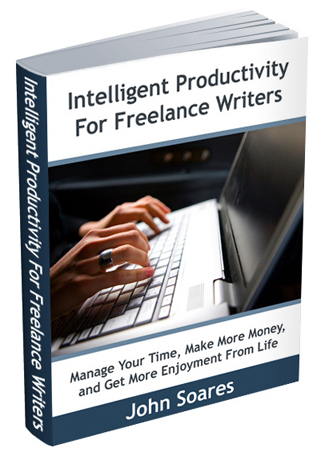
Intelligent Productivity for Freelance Writers by John Soares

How to Use Our Email Accounts Productively to Avoid Procrastination

How to Turn Procrastination into Productivity: 7 Fun Tips for Writers

Filed Under: Productivity & Time Management Tagged With: article promotion, digg, facebook, productivity, productivity tips, productivity tips for writers, stumble upon, twitter, writers, writing, writing tipsproductivity tips

Intelligent Productivity for Freelance Writers by John Soares -UPDATED

Posted on June 8, 2011 Written by Pinar Tarhan


Intelligent Productivity For Freelance-Writers
Image via productivewriters.com


UPDATE: When this post was published, the book was being sold through John Soares’ website. Unfortunately, he has taken it off the market. However he told me that he’ll be back with an even better productivity resource for writers. In the meantime, you can continue getting your dose of productivity tips from his website, Productive Writers.


It took me a whole week to go through the whole book, and I am not yet finished studying. John Soares’ e-book Intelligent Productivity for Freelance Writers consists of very informative 179 pages, and while the language is flowing enough to finish reading at one sitting, I certainly recommend against rushing through the pages.

Because, like all good e-books, this one needs to printed out. and passages need to be highlighted. You should also return to the chapters that are most relevant and helpful to your life. Without knowing the content, it might be very easy to dismiss this one as “another e-book on productivity”. Don’t make that mistake.

Not only the book is full of wonderfully applicable advice for all aspects of your freelance writing life, it also involves some great insights & tips on writing better (such as how to conduct an interview or when, why and how to work with co-authors) and making the most of your marketing as well. However, please keep in mind that this book is essentially a productivity book, so even the tips on interviewing (people) well or marketing your work are primarily focused on productivity and efficiency.

Content Breakdown- Below are some of the subjects featured on the book:

* Conventional and out-of-the box tips for storing data on multiple locations (as well as the reasons and how-to information for these methods),

* Many valid and relevant examples from the writer’s own writing habits and career,

* Ergonomics (that also includes the time you might feel like going into the woods by yourself!),

* Organizing (your files, your notes, your office),

* Effective and efficient research (online & offline),

* Online & offline networking

* When to hire others to work with/for you (and how to calculate the costs, and what to pay attention to during hiring (actually you can also benefit from this part if you are considering to work for/with other freelance writers as well),

* Goal-setting, and sticking to these goals,

* Managing the non-writing aspects of your life,

* Tips for a better memory

* Faster reading

* Healthy living

* Healthy mind


and more…. Oh, and the book is just $17.

**


Intelligent Productivity for Freelance Writers is the ultimate productivity book for freelance writers. It includes everything you need to do to become healthier, happier and richer. It is also feels interactive as each chapter features questions to be answered by you. You simply need to have it if you are interested in  leading a better life in general.


  • Please note that I bought this book after reading Anne Wayman’s review, using her affiliate link. I used my affiliate links for this review.


Related Posts Plugin for WordPress, Blogger...

Filed Under: E-Book Reviews, Recommended Resources Tagged With: intelligent productivity for freelance writers, john soares, productivity for writers, productivity tips

Blogroll

  • My Entertainment Blog

My Other Blogs

  • Beauty, Fitness & Style for the Fun-Loving Gal
  • Dating & Relationships in the 21st Century

Categories

  • Author Interviews
  • Author news and coverage
  • Blogging
  • Book Launches and Excerpts
  • Book News and Author Interviews
  • Book Recommendations
  • Book Reviews
  • Career Management for Writers
  • E-Book Reviews
  • Fiction Writing
  • Fictional Writers: Writer Characters in Movies, TV Series and Books
  • Inspiration and Motivation
  • Marketing
  • Marketing Fiction
  • Movie and TV Series Recommendations
  • Novel Reviews
  • Paying Markets-Web and Print
  • Productivity & Time Management
  • Recommended Resources
  • Reviews for Tools and Devices
  • Romance
  • screenwriting
  • Self-publishing
  • Story Conflicts
  • Website & Blog Reviews
  • Writer Tools
  • Writing
  • Writing Tools
  • Writing Updates

Copyright © 2026 · Focus Pro Theme on Genesis Framework · WordPress · Log in

This website uses cookies to improve your experience. We'll assume you're ok with this, but you can opt-out if you wish.Accept Reject Read More
Privacy & Cookies Policy

Privacy Overview

This website uses cookies to improve your experience while you navigate through the website. Out of these, the cookies that are categorized as necessary are stored on your browser as they are essential for the working of basic functionalities of the website. We also use third-party cookies that help us analyze and understand how you use this website. These cookies will be stored in your browser only with your consent. You also have the option to opt-out of these cookies. But opting out of some of these cookies may affect your browsing experience.
Necessary
Always Enabled
Necessary cookies are absolutely essential for the website to function properly. This category only includes cookies that ensures basic functionalities and security features of the website. These cookies do not store any personal information.
Non-necessary
Any cookies that may not be particularly necessary for the website to function and is used specifically to collect user personal data via analytics, ads, other embedded contents are termed as non-necessary cookies. It is mandatory to procure user consent prior to running these cookies on your website.
SAVE & ACCEPT