Addicted to Writing

Manage Your Freelance Writing Career While Writing What You Love

  • About Pinar Tarhan
  • Blog
  • Books
  • Hire Me: Services
  • Contact Me
  • Portfolio
  • Favorite Resources
  • Newsletter

Why I Like Querying: 7 Reasons Querying Is Good for Writers

Posted on June 7, 2013 Written by Pinar Tarhan

query letter, writing query letters
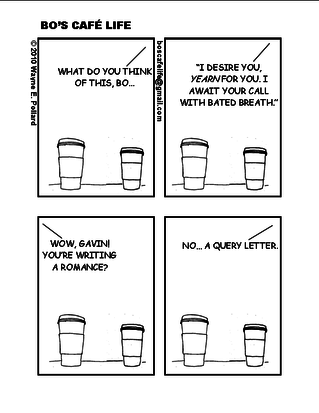
Image via boscafelife.wordpress.com.

Call me crazy, but I’ve grown quite fond of querying. Gone are the days I was terrified of coming up with something the editor would laugh at (not in a good way).

Sure, I still get a bit of an adrenalin rush before I hit send and wait for the reply, but I’ve become a lot more apt and confident at querying.

A lot of writers will advise you to do whatever you can to eliminate the process, and they have a good point: It’s not very practical (or lucrative) to depend on making your entire living out of the yeses you get out of your queries. Because there will be lots of rejections and no responses, especially in the beginning. And they never completely go away. So it makes sense to land ongoing gigs and clients so you’d not go through a feast or famine cycle.

But unless you become a famous writer with a ready and sealed 10-book deal (yes, I’m aware of how “often” that happens), you will need to query, a lot.

You’ll need to query editors, other clients, agents and publishers. So the better you get, the more you’ll write for your favorite publications.

A regular stream of good ideas (accepted through good queries) will help you establish a relationship with an editor – and that editor will tend to send assignments your way, directly or indirectly.

The more yeses you get, the more confident you’ll feel and the more comfortable you’ll feel sending out more queries.

But don’t feel discouraged when you get rejected. Study, practice and improve. And if you still shudder at the thought of writing more queries, below are some wonderful resources that I’ve compiled: 7 Great Query Letter Resources: A List of (E-)Books, Articles and Blog Links.

OK, now that we’ve gotten that sorted out, let’s get to the reasons:

1)   It’s good practice on being concise and interesting. You’ve limited space, and what you say and how you say it are extremely important.

2)   This practice will make you a better writer, and it is what you do. You write. Novels, screenplays, articles, essays, posts, newsletters…

Whatever you write, you want to be read, liked, shared, published, taken action upon.  And you’ll always have limited space and time to get your target audience’s attention.

3)   The more you are read and sold, the more you make. So queries do help you on getting the writing career you’ve always wanted. And yes, you’ll need to query agents and publishers too.

4)   It makes your skin grow thicker –which is one of the essentials of being a healthy, happy and earning freelance writer.

5)   It makes you more confident, especially after you have gotten your first acceptance(s).

6)   It’s fun. The more ideas you sell, the more you want to brainstorm.

7) You do end up earning more, and querying less (if you want.)

So how do you feel about querying?



Filed Under: Writing Tagged With: benefits of querying for writers, query, querying for writers, writing, writing queries, writing query letters

7 Must-Have Characteristics to Make it as a Freelance Writer

Posted on August 28, 2011 Written by Pinar Tarhan

being a freelance writer, characteristics of a freelance writer
Freelance Writer image via ghostwriterdad.com


Writing can be a very lucrative and self-fulfilling career, but it hardly ever starts that way for anyone. You might love writing. You might be good at it. But unfortunately you need a couple of more qualities to start your writing career and accomplish your goals as a writer. Below are the 7 essential characteristics freelance writers need to possess:

Patience

I’m one of the most impatient people you can ever meet. I get bored very easily and I can’t wait for anything or anyone without doing something useful and/or fun on the side. And yet, I chose freelance writing as a career.

Now, I love writing. I am addicted even. So the girl who can’t even stand to wait for a couple of minutes chose a line of work where response times range from weeks to months, editors don’t necessarily write back, and you are required to spend countless hours researching, marketing, networking, writing, re-writing, editing and more re-writing.

Yet, I can handle it. After all, it is about knowing what’s at stake and jumping to it accordingly. It is not a walk in the park most of the time, but it is still worth it for me. How about you?

Persistence

The editors may not receive your e-mails, or they may not feel inclined to respond, even with a standardized rejection reply. Yes, they are incredibly busy but so are you. While they have to read millions of queries and make decisions, you are a one-person company. So if the guidelines say follow-up, follow-up. If there is still no response, follow-up for the second and final time. Just remember not to leave your bedside manners, even if you get nothing in return for a carefully crafted, perfectly relevant query. After all, you need a good reputation. And there is the fact that you probably submitted that query because you liked the publication. So you might want to pitch again.

The idea is to keep it polite and professional. If you think this sucks, please read the first must-have freelance writer characteristic on  this list again.

Thick Skin

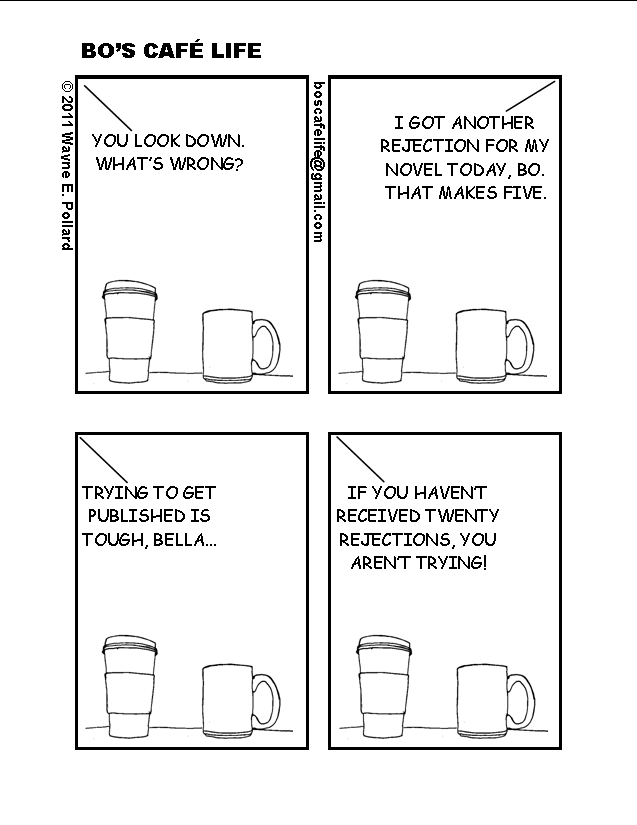
writer rejection cartoon via bo's café life
Courtesy of boscafelife.wordpress.com


You will get rejected. Every writer does, even the ones who turned into international bestsellers. So never take it personally. Make sure you work constantly to improve yourself, and keep submitting your work elsewhere.

P.S. When the going gets tough, just remember John Grisham’s first novel is A Time to Kill. He published The Firm first, because A Time to Kill was rejected everywhere. And after The Firm, everyone was after A Time to Kill, which also became a bestseller.

Passion

And you need to have fun. You need to be capable of fun, even when you want to slap someone or cry. You are writing because you love the craft. There is no reason to keep doing it if you are feeling miserable all the time.

Organization

You don’t need to be obsessive, but you do need to keep track of every idea, bill, manuscript, article and everything else that is related to your writing. You also know what to find and where. There is a great blog for writers that concentrates on the organization side of things. Check out OrganizedWriter.com for tips and resources.

Self-Discipline

You might be the type to start a project at the latest minute possible. I know I am- for the most part. But you need to make sure you keep the deadline and make sure your final draft meets every requirement, and is a good read.

Self-Management

You are your own boss, so you better be an understanding slave driver. Notice the oxymoron there? But it is true. You need to work really hard to make it as a writer. But of course you have the flexibility to choose your hours; as well as where, when and how you work. As long as you put in the necessary work, there is no reason you can’t enjoy the freedom.

*

Intimidated? Don’t be. You just might realize your personality and mind can work in mysterious ways to help you realize your dreams.


Filed Under: Writing Tagged With: a time to kill, a time to kill book, being a freelance writer, characteristics of a freelance writer, freelance writer, John Grisham, john grisham a time to kill, john grisham the firm, query, rejection, the firm, the firm book, writers, writing

10 Things You Need to Do After You Sent That Awesome Query Letter

Posted on July 21, 2011 Written by Pinar Tarhan

waiting for the editor to reply, writing cartoon
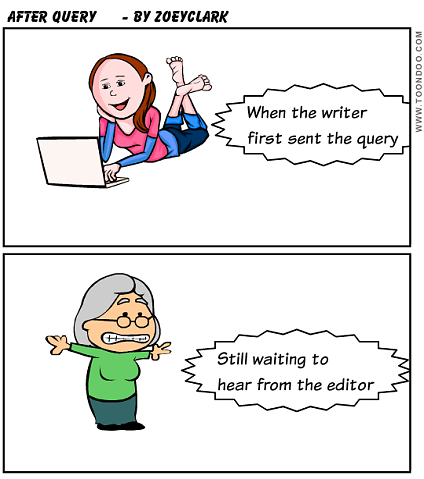
You can't just wait for the editor to reply to your query. If you do, you'll die an unpublished old maid/dude...:) Excuse the cartoon, my first creation ever:)


We all know it’s essential to craft an intriguing, easily readable query letter. That’s how we (hopefully) get the editor’s attention. And if you need to polish your query skills, I suggest reading 7 Great Query Letter Resources: A List of (E-)Books, Articles and Blog Links.

This post is about what happens after having sent that great query letter.

1)      Keep track of your query. I prefer a simple excel sheet. I note when I sent it, when I should follow up (should I not hear from the editor before), what other publications the idea might fit if the query is rejected or doesn’t get a response after the follow-up. I also include a section for brainstorming for other ideas for the same publication. After all, I want to write for this magazine more than once.


2)       Keep researching other markets and their guidelines, and make sure you take notes about the guidelines, payment terms, topics and articles already published on the publication. After all, your querying days are never really over.


3)      Write for, market & optimize your blogs.  If you’ve a writer’s blog, work on it. If you don’t have a writer’s blog already, it’s time to start one. You don’t need to write about writing related topics, but you need to post article samples and links to your published work. The blog will serve as a portfolio, so take full advantage.


Plus, the more you know about blogging, the easier and more fun it will be for you to get blogging jobs, and/or monetize your own blogs.


If you have several blogs, work on them too. They all serve as your portfolios as well, proving your writing skills in those niches.


4)      Keep networking with other writers (and bloggers).


5)      Assuming you heard from the editor before needing to follow up, go ahead and start working on the article – keeping the editor’s notes in mind. Sometimes writing a killer article that will satisfy your editor might be harder than writing the query.


If the editor liked the idea but requests a few tweaks, or another query based on these tweaks,

Do so.


If the editor tells you they liked your style but can’t use that piece, keep querying .


6)      Assuming you didn’t hear from the editors, follow-up on your old queries at the suggested time period.  Many publications offer their response time and when you should follow up if you don’t hear from them in that period. If no specific time is given, follow your gut. If it is a massive magazine, you might want to wait for a couple of months. If it is a website, 2-3 weeks before following up should be fine.


7)      Read about the topics you are writing on. This is great for self-improvement, discovering markets you weren’t aware of, getting to know the markets you know better, finding authors to network and giving you new  article ideas.


8)      Query other publications, and keep track.


9)      When You Get An Answer  or No Answer After the Follow-Up:


  •  If you haven’t heard up from your follow-ups after a couple of weeks, feel free to pitch the idea to other publications. But to be on the safe side, notify the first editor nicely. This is to be on the safe side, and not to burn any potential bridges.


Of course, keep tracking queries and their responses.


  • If you got a no with some suggestions from the editor, keep them in mind. But there’s nothing much you can do after a “no, thanks”. You cross your fingers for the next publication.


10)   Use this list in order and/or mix things up. Add your own points and apply them at a pace that suits you best.


Best of Luck.


Related Posts:

9 Awesome (Free & Paid) Places to Find Market Guidelines

7 Great Query Letter Resources: A List of (E-)Books, Articles and Blog Links

6 Reasons Why Every Writer Should Blog

Related Posts Plugin for WordPress, Blogger...

Filed Under: Writing Tagged With: following up a query, query, sending queries, what writers can do while they wait to hear from the editors, when to follow up on a query, writers, writing

Blogroll

  • My Entertainment Blog

My Other Blogs

  • Beauty, Fitness & Style for the Fun-Loving Gal
  • Dating & Relationships in the 21st Century

Categories

  • Author Interviews
  • Author news and coverage
  • Blogging
  • Book Launches and Excerpts
  • Book News and Author Interviews
  • Book Recommendations
  • Book Reviews
  • Career Management for Writers
  • E-Book Reviews
  • Fiction Writing
  • Fictional Writers: Writer Characters in Movies, TV Series and Books
  • Inspiration and Motivation
  • Marketing
  • Marketing Fiction
  • Movie and TV Series Recommendations
  • Novel Reviews
  • Paying Markets-Web and Print
  • Productivity & Time Management
  • Recommended Resources
  • Reviews for Tools and Devices
  • Romance
  • screenwriting
  • Self-publishing
  • Story Conflicts
  • Website & Blog Reviews
  • Writer Tools
  • Writing
  • Writing Tools
  • Writing Updates

Copyright © 2026 · Focus Pro Theme on Genesis Framework · WordPress · Log in

This website uses cookies to improve your experience. We'll assume you're ok with this, but you can opt-out if you wish.Accept Reject Read More
Privacy & Cookies Policy

Privacy Overview

This website uses cookies to improve your experience while you navigate through the website. Out of these, the cookies that are categorized as necessary are stored on your browser as they are essential for the working of basic functionalities of the website. We also use third-party cookies that help us analyze and understand how you use this website. These cookies will be stored in your browser only with your consent. You also have the option to opt-out of these cookies. But opting out of some of these cookies may affect your browsing experience.
Necessary
Always Enabled
Necessary cookies are absolutely essential for the website to function properly. This category only includes cookies that ensures basic functionalities and security features of the website. These cookies do not store any personal information.
Non-necessary
Any cookies that may not be particularly necessary for the website to function and is used specifically to collect user personal data via analytics, ads, other embedded contents are termed as non-necessary cookies. It is mandatory to procure user consent prior to running these cookies on your website.
SAVE & ACCEPT