Addicted to Writing

Manage Your Freelance Writing Career While Writing What You Love

  • About Pinar Tarhan
  • Blog
  • Books
  • Hire Me: Services
  • Contact Me
  • Portfolio
  • Favorite Resources
  • Newsletter

Romantic Comedy Writing Lessons from Netflix’s A Tourist’s Guide to Love

Posted on April 29, 2023 Written by Pinar Tarhan

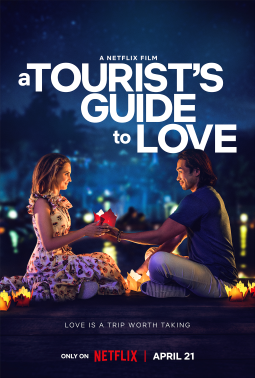
A Tourist’s Guide to Love is a 2023 romcom by Netflix, starring Rachael Leigh Cook and Scott Ly. It’s a fun, sweet and romantic story about a woman who is challenged to get out of her comfort zone first by a break-up and then by a free-spirited tourist guide in Vietnam.

First, let me get this out of the way. This is a happy movie about a non-toxic romantic relationship that starts as a friendship. So, if your favorite romantic movie is The Notebook, you will probably not enjoy this one.

This is not to say the protagonists don’t have problems. They do. But no one dies or gets sick. No one plots to keep people apart, and minor disagreements do not turn into shouting matches or served under the guise of passion:

Plot Summary

After travel executive Amanda (Rachael Leigh Cook)’s 5-year relationship comes to a disappointing end, her best friend/business partner Mona (Missi Pyle) sends her to Vietnam to get over her disappointment and to evaluate a local tour guide company for purchase. Amanda is all ready for a packed visit jammed with activities, but her tour guide Sinh (Scott Ly) has other ideas.

As he encourages her to take a moment and enjoy everything, the instant chemistry and connection between them grow. But unfortunately, their different residences aren’t the only thing standing in their romance: He doesn’t know Amanda is there to buy his uncle’s company. Add the ex who is regretting the break-up, and things get complicated.

*

The movie is like slow travel. It appeals to your senses, presents another culture respectfully, and introduces you to fellow travelers who could be your best friends. And there is a lovely romance brewing which will end happily of course.

*

What can the movie offer you if you write romcom?

  • You can tone down the chaos. Sometimes readers and watchers need and want to relax. You can offer beautiful escapism with a sense of calm.
  • Internal and external conflicts can be introduced and amped up without people acting like jerks to one another.
  • Adults can (and should) experience romance in a healthy, respectful, non-toxic way while still conveying passion and attraction.
  • Cultures can co-exist wonderfully.

Fun cast facts:

  • Mona is played Missi Pyle, who played the love interest of Ross in an episode of Friends. She’s the girl Ross whitened his teeth for. If you know, you know. 🙂
  • The leads are in their 40s (even though they look younger), so you don’t have to give the movie a pass if you’re bored of only seeing 20-somethings find love on the screen.

*

Want more love non-toxic, escapist love stories? You can try my romcom novels Making A Difference (M.A.D.) and A Change Would Do You Good. (Though my chaos levels are higher due to the premise and large cast of the books.;))

Filed Under: Fiction Writing, Romance, Writing Tagged With: A Tourist's Guide to Love, Rachael Leigh Cook, romance writing tips, romantic comedy writing tips, writing romance, writing romcom

9 Best Romance Tropes: This Romance Author’s Favorite Romance Tropes

Posted on February 11, 2022 Written by Pinar Tarhan

Romance is in the air!

February is Creative Romance Month, and the 14th is right around the corner. So, I figured we would tackle some popular romance tropes, which also happen to be my favorites.

You’ll see that I hardly ever love any trope unconditionally. As a life-long romance fan and an experienced romance writer, I’m very particular about what I like.

You can check out the romance tropes that I absolutely don’t find romantic, check out this post: The 6 Most Unromantic Romance Tropes in Romance Fiction (And What to Do with Them)

Let’s see if you agree with my favorites and the reasons.

PS This post contains Amazon affiliate links. If you buy something, I will earn a little at no extra cost to you. Since these are my favorite romances, I stand behind my recommendations. 

PPS: This post will spoil some book, movie, and TV series moments.

1. Forbidden/ star-crossed

When I say forbidden, I don’t mean cheating. And when I say star-crossed, I don’t mean Titanic, or Romeo and Juliet.

I need the danger/stakes to be more than two angsty, hormonal teenagers. And I need the conflict to be something other than rich vs. poor families. I’m over it.

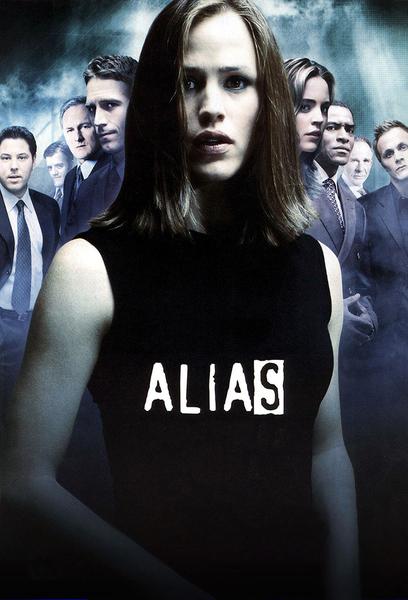
What’s a proper star-crossed romance that I adore? Why, Alias’ Sydney and Vaughn of course. (You can watch the pilot preview here.)

Alias

Alias starring Jennifer Garner, Michael Vartan, Bradley Cooper and Victor Garber.

Alias (2001-2006) is a kick-ass action/drama series created by J.J. Abrams and starring Jennifer Garner and Michael Vartan. It just might be my favorite series of all time. Well, the first three seasons at least.

It also has one of the best TV romances ever.

I’m going to spoil things a bit, so if you’ve always wanted to watch Alias, this is a good time to do it. Please remember to bookmark this post so you can come back. (Bonus: The series features Bradley Cooper in a very important supporting role.)

Special agent Sydney Bristow (Jennifer Garner) works for a secret branch of the CIA. But when they kill her fiancé, she realizes that she was working for the enemy all along, and she co-operates with the actual

CIA to bring them down for good. Her CIA handler is Michael Vaughn (Michael Vartan), and their chemistry (physical and emotional) is palpable from the start.

Sydney is now working as a double-agent, unbeknownst to the bad guys. How do the bad guys trust her after the sh**t they pulled? They don’t. They try to kill her at first. But then she brings them something valuable and says she shouldn’t have told her fiancé about her job.

The only person she can fully trust and talk to is her CIA handler Vaughn because he is the only person in her life who knows everything. And as they grow closer, it pains them to know that if they were ever seen together, if the evil agency connects the dots, they will both be killed.

How’s that for stakes? How’s that for internal and external conflict?

Alias is amazing with espionage and action scenes, but the emotions also run high. I strongly recommend it.

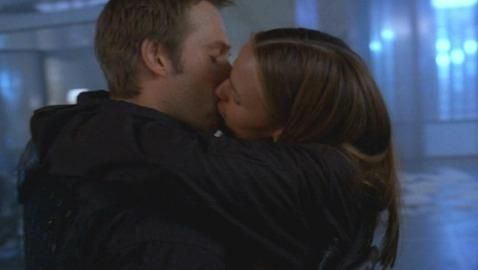
Vaughn and Syndey finally get to kiss for the first time.

And let’s face it, in no other romantic storyline, the man of your dreams will break into the Vatican with you. 🙂

Do hit me up in the comments if this scene made your week back in the day.

2. Forced proximity

This is always a lot of fun. The characters usually can’t stand each other in the beginning, or they just have contradictory goals. But to get what they want/need, they need to stay together, whether be in tight quarters or just hanging around in Europe.

In the movie Chasing Liberty (2004), the first daughter Anna is 18, and she hates that all her moves are monitored and protected.

When she is in Europe with her family, she takes off with attractive stranger Ben (Matthew Goode) who is slightly older than her. Luckily for her father, the attractive stranger is a young CIA operative who promises to keep an eye on her.

Keeping Anna from other men might be easier than staying away from her himself, though…

Chasing Liberty is corny at times. But it has a good heart and offers good fun. Also, like, how do you not melt when Matthew Goode is in a romantic lead?

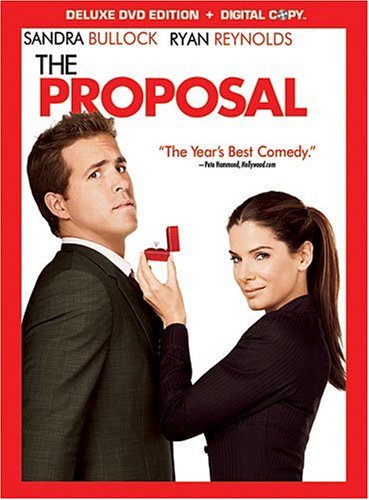
The Proposal, the hit romcom from 2009 starring Sandra Bullock and Ryan Reynolds, has editor Margaret propose to her assistant Andrew because she’s Canadian and her visa is about to expire. If Andrew wants to keep his job… well, you get the stakes.

The problem? They absolutely can’t stand each other, though Andrew’s hate is stronger since she is his demanding, workaholic boss. Things get trickier for the duo when they have to keep up the ruse in Alaska, where they visit Andrew’s family. You get the whole package: having to sleep in the same room, accidentally seeing each other naked, enjoying the fake relationship a bit too much toward the end…

Image via Amazon.com.

The Proposal can also be counted as enemies to lovers, opposites attract, office romance, and fake relationship.

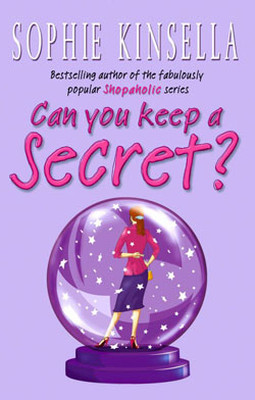
Can You Keep A Secret?

This hilarious, romantic, and sexy romance novel by Sophie Kinsella was also adapted to the big screen in 2019 starring Tyler Hoechlin and Alexandra Daddario.

While theirs is technically an office romance, their meet cute starts on an airplane. Flustered marketing employee Emma finds herself sitting next to handsome stranger Jack. When she thinks the plane is going to crash, she confesses all of her secrets to him: little and big, no matter how embarrassing.

But it’s no biggie, right? They survive and she will never see him again. Except he turns out to be her boss, and he remembers everything. And he will show this with great hilarity.
Emma and Jack’s connection would have never been the same without that plane ride.

3. Neighbors to lovers

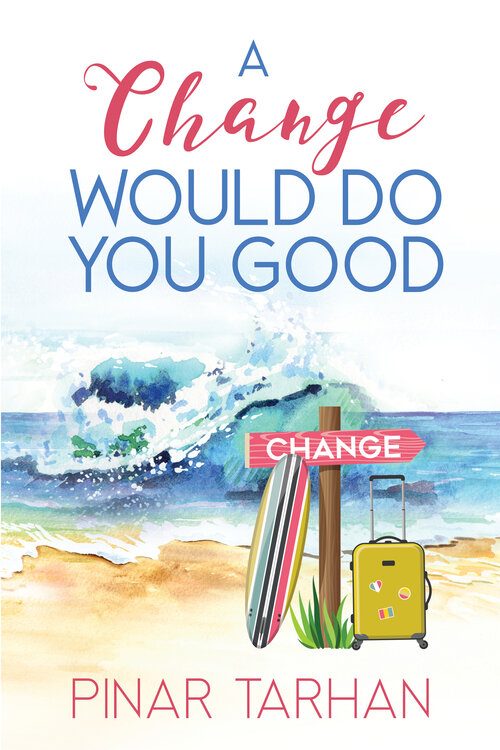
Ah, the one’s very close to my heart since my romcom drama novel A Change Would Do You Good has two neighbors, Kevin and Janie falling in love. Oh yes, there are many other characters and tropes in this fun book full of ocean waves. But it is the main one.

Fashion designer Janie gives her life the ultimate makeover and moves to a new apartment. Her downstairs neighbor is a hunky pro-surfer named Kevin. It could be heaven, but she is still grieving over the death of her boyfriend. Kevin has never been in a long-term relationship. Their outlooks on life seem only as “similar” as night and day.

But then again, sparks don’t ask for their permission before they start flying like crazy.

4. Office romance

As you probably noticed, most romances don’t just have one trope, and this makes things more fun. Technically, the romance in Alias is also an office/workplace romance, as well as a friends-to-lovers story.

My novel Making A Difference (M.A.D.) is the ultimate office romance since all the complications arise once star PR expert Jay Clark hires his former student and intern Zoe Ellis to be his business partner.

5. School Romance

High School – 10 Things I Hate About You (1999)

For some reason, high school romances are aplenty while I couldn’t think of a college romance that left its mark on me other than Remember Me, so that’s what we will go with next.

When it comes to high school romances, I have many favorites. But after I eliminated the ones with sick characters who die at the end, and I excluded ones who aren’t this funny and fun, I am left with the absolute gem called 10 Things I Hate About You.

Stellar cast, witty Shakespeare adaptation, great soundtrack…And goodness wins! What more do you want?

In the film, high school student Bianca is pissed she is not allowed to date until her feminist, grumpy and rebellious sister Kat (Julia Stiles) does. So, she devises a plan to get Kat a date: She enlists the help of Cameron (Joseph Gordon-Levitt) who has a crush on Bianca. Except Bianca wants to date Joey.

Cameron and his new best friend pay Patrick Verona (Heath Ledger), an outsider with a reputation, to take Kat out. But things get super complicated when Patrick genuinely starts to fall for Kat…

College – Remember Me

Image via beyazperde.com

2010’s Remember Me starring Robert Pattinson and Emilie de Ravin is a sad, passionate movie. At first, we dislike Robert’s character Tyler. He asks out fellow college student Ally, out of spite for her cop dad who arrested him. But on their date, Tyler does fall for Ally. They share a deep connection through a traumatic past and their complicated relationships with their fathers. Watch it, but bring the tissues. This one doesn’t have a happy ending.

6. Haters to lovers/opposites attract (*when they complement each other, learn from each other and realize they are not that different.)

This comes with a huge caveat.

I believe that dating someone who is the opposite of you in every way is a recipe for disaster and the furthest thing from passion.

But some of my favorite romances have the haters to lovers/opposites attract tropes in front and center, so what gives?

You see, I believe you should date someone who has some things in common with you. This doesn’t mean you should date someone who is basically you.

It is great if one of you is more calm and relaxed. It’s lovely if one of you is slightly more organized.

Pride and Prejudice

There is a reason Darcy fell for Elizabeth. And it is not because they are exact opposites. It’s because they are complementary.

On the offset, Darcy and Elizabeth think they couldn’t be any different. Darcy is (or seems) cold, distant, unfriendly, unsocial, snobbish. Elizabeth is fun, social, friendly, and warm.

But as Elizabeth happily and tearfully admits to her dad in the end, she and Darcy are in fact so similar.

They can both be prejudiced and proud. They are both passionate and protective about the people they love. They both struggle with when to roll with societal norms and when to say f*** it and do their own thing.

At their core, they are both sensitive, loyal, blunt, and loving. And that is why they are one of literature’s favorite couples of all time.

7. Bad Boy (who isn’t actually a bad boy)

I have to admit I don’t really like bad boys. Bad boys in fiction I have liked generally are misunderstood and/or misjudged underdogs, or men who have been selling themselves short, even to themselves.

Take Johnny (Patrick Swayze) from Dirty Dancing. Sure, he wears leather and dances for a living, which screams bad boy to parents everywhere.

Sure, he sleeps with guests at the hotel he is working at as a dancer and accepts expensive gifts from them…But even this…I don’t judge him. He makes no promises, and the married folk should be doing the loyalty thing. It’s not Johnny’s responsibility.

But when his best friend needs help in a very tricky situation, he is there. And when he needs to step up for the girl he loves, he does.

So, if you want to give me a bad boy, you better give me someone like Johnny.

7. B. Bad Boy (who gets reformed for good in front of my very eyes!)

What Women Want (2000)

So why is a fantasy romcom film about a man hearing women’s thoughts is listed in bad boys?

Because the protagonist is a complete ass. Well, at least in the beginning.
Advertising wonder boy Nick Marshall (Mel Gibson) is a complete ass. He does whatever it takes you to get you into bed and then probably won’t call. He is also insensitive, clueless, and a failure of a single dad.

But then through a wonderful trick of fate, he starts hearing what any woman thinks, and at first, he believes he hit the jackpot. He can bed more women, faster.
But then as he gets to know women (and particularly his work rival Darcy), he starts to genuinely transform into a better person, lover, friend, and father.
And because Nick grows in every possible way right in front of our eyes, we root for him.

8. Friends to lovers – (*if they didn’t know each other for a long time.)

Again, I come to you with a disclaimer.

Friends to Lovers is an interesting one because it can be a pet peeve of mine or a favorite, just depending on the details.

If the characters have known each other since primary school and only notice each other after being absolute besties like 10,15 or 20 years, it’s a big no from me. Then I feel like they just got bored and took the easy way out.

But if they knew each other for a short time before feelings emerged…and/or if they were instantly attracted to each other but couldn’t pursue romance because of legitimate reasons, then I’m all in it for the comedy and romance.

Image via imdb.

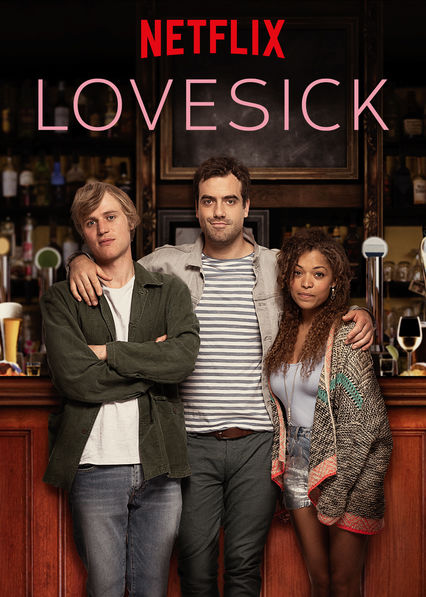
Lovesick (2014, Netflix series) does this really well. First, I should mention Lovesick is a brilliant and hilarious comedy.

But it is also a romantic comedy because protagonist Dylan (Johnny Flynn) is a total romantic at heart.

When he meets his best friend Luke’s close friend Eve, they make friends at first. Eve is crushing on an artist dude and Dylan is with a German date. But when both their romantic interests fail them, they end up sleeping together. Dylan is more than willing to give this a go, but Evie just wants a one-night stand.

When circumstances bring about a friendship, they roll with it. But repressed feelings will come to bite both of them and ruin future relationships.

9. Holiday Romance

The Holiday (2006, starring Kate Winslet, Cameron Diaz, Jude Law, Jack Black)

OK, that is not my subtlest example, but it is one of the best examples of a holiday romance.

Having had extreme bad luck in their relationships, English Iris (Kate Winslet) and American Amanda (Cameron Diaz) – two strangers – exchange their houses for the upcoming Christmas holiday.

Amanda spends Christmas in a lovely cottage, and Iris gets to enjoy Amanda’s beautiful LA house. Of course, no holiday romance is complete without Mr. Right. Amanda falls in love with Iris’ gorgeous brother Graham (Jude Law), and Amanda’s friend Miles (Jack Black) has a lovely friends-to-lovers romance with Iris.

****

Give me the takeaway now!

Yes, this was a long post. And these were only my favorites. There are tons of romance tropes, so listing them with examples takes time.

But there’s really one vital takeaway I want you to take from this post and it’s this:
There are no hard rules that are set in stone.

Mix and match. Experiment to your heart’s fancy.

It definitely helps to know yourself as well as your target audience. But one writer/reader’s favorite can be another’s pet peeve and vice versa.

Hardin from After is the boy of my nightmares: both the book Hardin and the movie Hardin. This is not to say the books aren’t readable. They are super engaging.

But when I read a romance, I should want to be the girl. And I should want the guy.
I don’t want a romantic protagonist to make me say “Just go and never come back.” I shouldn’t want an “unhappy” ending where the heroes of the book don’t get together.

I’m a Darcy girl, you see. Whether it is Mark Darcy or Mr. Darcy, I want my men to be decent. And hot. And the fact that they are decent makes them hotter. You dig?

Ralph Fiennes and Juliette Binoche in Wuthering Heights. Heathcliff was pretty decent until he overheard the conversation.

Wuthering Heights is a great book and a must-see movie…because who can resist Ralph Fiennes when he plays an obsessive lover? But a great movie/book doesn’t a great romance make. Sometimes, they are just highly engaging nightmares and cautionary tales. But some women want their Heathcliff, and we will disagree from here to eternity.

So, write the man/woman you would fall in love with. Write the hero you want to be. And then market it accordingly.

Filed Under: Fiction Writing Tagged With: how to write romance, most romantic romance tropes, romance books, romance movies, romance trope list, romance tropes, romance writing tips

The 6 Most Unromantic Romance Tropes in Romance Fiction (And What to Do with Them)

Posted on May 12, 2021 Written by Pinar Tarhan

This post contains affiliate links. Purchasing through them doesn’t cost you extra, but it does help me keep the blog running (and with more frequent content).

There are many fun and romantic romance tropes.

However, there are also some very unromantic ones. So much so that it makes you wonder what they are doing in romance films, series, or novels.

In this article, I cover some of the worst offenders, why they don’t work, and when they might.

But I believe it is up to the author to use or ditch any trope. This is one romance author’s opinion on what doesn’t work.

I should, however, point out that I’m not the only author/reader/viewer I know who’s bored and frustrated with these tropes.

A little about me:

Why am I talking about romantic tropes?

I’m a romantic.

Hopeless? Depends on who you ask.

But just take a look at some of my favorite films (Braveheart, Pride and Prejudice, Dirty Dancing, The Crow, Strange Days, A Royal Affair), and you will see there are strong and memorable romantic storylines even if the movie isn’t primarily romance.

I’m also the author of two romcom novels and two guides on how to write great romance.

What’s excluded and why

When it comes to listing unromantic tropes, I’m going to leave out the very obviously bad (and criminal) stuff like stalking and abuse. Those things don’t belong in romance, and unless you want to write horror, I suggest staying far from them.

But just because an action is legal, it doesn’t mean it doesn’t make the audience’s blood boil or leave a bad taste in their mouths.

I’m also leaving supernatural romances out because we tend to stretch our values and morals when it comes to other creatures.

We need to, otherwise, we’d never be rooting for Stefan to be happy in The Vampire Diaries or Angel to stay with Buffy.

I’ll be covering movies and series as opposed to novels since they are easier to check out than books. Clips are mostly available on YouTube and/or the film is on your streaming service. What I say applies whether you write novels or screenplays.

And remember, when I’m criticizing a movie or series for using a trope, I’m not saying that film or series is bad. It is just not romantic, and it makes it harder (if not impossible) to cheer for the protagonist(s) performing the act.

Why You Need to Pick Your Romance Tropes Carefully

When we read or watch romance, ideally, we should want to live in that world and be one of the characters.

If your reader or watcher is repeatedly saying “Yikes, I’d never date this person,” or “I’m so glad I didn’t go through this,” something has gone wrong in our choice of tropes and situations.

To make my point, I’ll be spoiling the following series and films to various degrees:

– Grey’s Anatomy

– The Wedding Planner

– The Wedding Singer

– Outlander (the series)

– Revenge (The Kevin Costner/Madeline Stowe movie)

– The English Patient

– Rumor has it (the sort of The Graduate sequel)

– The Graduate

– Addicted to Love (Meg Ryan/Matthew Broderick movie)

– Timeline

– Tristan and Isolde

– In a Savage Land

– After

– While You Were Sleeping

– Strange Days

– Autumn in New York

Note: This is a long, comprehensive article. If you’d like a pdf version, wait until the end. You can enter your email address and get it for free.

Ready? Let’s roll:

Unromantic Romance Trope 1: Leaving someone at the altar/leaving your wedding with someone else/interrupting a wedding

This is one of my biggest pet peeves. Why someone ever considered this was romantic, I’ll never know.

Of course, exceptions apply. If the person getting married was/is being forced and saving them is only possible by preventing a wedding, then by all means.

But when free and safe grown-ups do this, it makes them look selfish, weak, immature, and heartless.

If you’re going to use this trope, you better make sure we have a reason to condone the act. Hating the bride/groom might be a start. But it is usually not enough. Because if they are such jerks, why did our protagonist agree to this?

– Grey’s Anatomy

Image via abc7news.

Grey’s Anatomy might be the romance equivalent of Game of Thrones when it comes to killing off beloved characters, hence making my viewing sporadic.

I was pissed when they killed Denny (Jeffrey Dean Morgan). I put myself through a similar disappointment when they killed off Henry (Scott Foley).

Not to mention I also had to say goodbye to Mark, Lexie, and Derek.

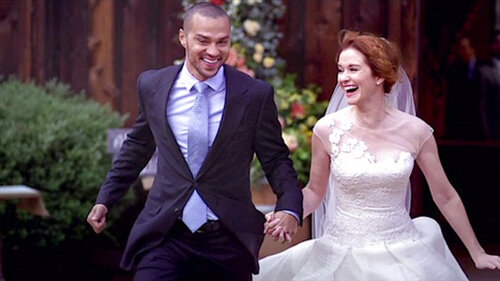
I did lose interest in their relationship the moment Jackson (Jesse Williams) and April (Sarah Drew) ran off from her wedding to Matthew.

Poor, sweet Matthew. His only fault was not being Jackson.

To the writers’ credit, April wasn’t depicted as the most rational character. She was always prone to rash decisions and then regretting them.

But I expect a smart doctor and a nice person to figure out who she loves enough to marry before the wedding. I am definitely not a fan of her running off with one of the wedding guests. I’m also not fond of the wedding guest (Jackson) for not making his grand speech earlier.

– The Wedding Planner

In the film, Matthew McConaughey’s character Steve is engaged, but he falls for a woman he meets by chance (Jennifer Lopez’s Mary). And imagine both their shock when they find out she is his wedding planner.

There are the usual romcom high jinks, and toward the end of the film, Steve realizes his fiancée aren’t right for each other anymore.

To his credit, he has a heart-to-heart with her, and she also changes her mind. So, no victims.

Meanwhile, Mary’s marrying a guy she was avoiding during the film.

What’s funny, is that it’s not Mary who objects to getting married right at the altar. It’s her father, and then his friends. Mary still seems likely to go through with it.

But the next scene cuts to Steve determined to stop the wedding when he sees everyone but Mary outside City Hall. Apparently, the guy stopped it because he knew he wasn’t the one.

So, it all works out.

But…

Three intelligent grown-ups (Mary, Steve, Steve’s fiancée) not registering their feelings up until the last minute doesn’t sit right.

Stopping a wedding wasn’t the only unromantic trope either in this film either. Steve was getting his flirt on with a woman he just met even though he was engaged.

Steve and Mary get their happily ever after, and we let them get away with all their crazy because they are so charming. But The Wedding Planner never makes the list of my favorite romcoms.

Ditching At The Altar Trope Done Right:

Want to watch a ditching someone at the altar trope done right? Watch The Wedding Singer starring Adam Sandler and Drew Barrymore.

The person ditching at the altar is the villain of the story, and not our protagonist. Robbie’s (Adam Sandler) girlfriend ditches him and scars him. But then Robbie falls in love with a great woman (Julia, played by Drew Barrymore) who is nothing like his evil ex.

My favorite line from the movie is below. The film is set in the 80s, and the woman is wearing a Van Halen T-shirt.

“Please get out of my Van Halen T-shirt before you jinx the band and they break up!”

(Not a romantic trope. I just really like Van Halen.)

– While You Were Sleeping

while you were sleeping movie poster
Image via Medium.

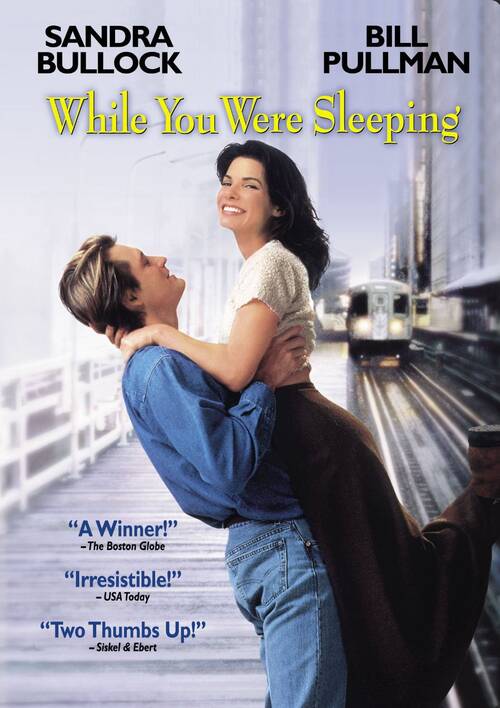
This is one of my favorite romcoms of all time. And the protagonist does ditch someone at the altar. But we forgive her for it because we never really liked the guy, and she had understandable (albeit a little crazy) reasons for lettings things get there.

In the film, Sandra Bullock plays Lucy, a transit token collector who is in love with a commuter she never met (Peter, played by Peter Callagher).

Having lost her father at a young age, she is all alone and yearns for a family.

When Lucy saves Peter’s life after an accident and goes to the hospital, the staff mistakes her for his fiancée. Peter is unconscious, and knowing this is the only way she will get to see him, she keeps up the ruse.

Then his family shows up. When they are delighted to meet Lucy, she can’t bring herself to admit the truth. The family is ecstatic Peter is with someone sweet and caring. So, Lucy has a family now, at least until Peter wakes up. The only problem is Peter’s brother Jack (Bill Pullman), who’s immediately suspicious of her.

But it’s Christmas, the family loves Lucy, and she ends up spending a lot of time with Jack.

They fall in love as they get to know each other. But then Peter wakes up, decides he’s engaged to Lucy after all – after hearing her praises from everyone.

Certain obstacles prevent Lucy from admitting the truth before, but finally, she confesses everything at the altar.

And we forgive her for it because she is apologizing and admitting her love for the entire family – not just to Jack.

Moreover, Peter’s revealed to be shallow and insensitive once again when his actual, already married fiancée and her husband show up.

It is a cute scene with no damage done.

And it’s impossible not to forgive Lucy because having no family is tough. And the film is a lovely depiction of how we develop crushes (usually through shallow means) versus how we fall in love (after getting to know somebody).

After everything she pulled, Lucy was still more likable than Peter.

Unromantic Romance Trope 2: Cheating

We have a worse trope than ditching someone at the altar, and it’s cheating.

It’s worse when the protagonist is cheating on their supposed true love.

– Rumor has it

This is a sort of sequel to The Graduate (which is incidentally famous for its ditching at the altar ending).

Sarah (Jennifer Aniston) finds out her family might be the inspiration for the book, and she might be the child of the first affair story depicted there. (Mrs. Robinson, anyone?)

So, she searches for Beau (Kevin Costner).

I love the concept so far. And the cast is just wonderful: Aniston and Costner are joined by Mark Ruffalo, Mena Suvari and Shirley MacLaine.

The problem is, Sarah is so unlikable and unrelatable. And somewhere in the story, she sleeps with Beau, actively cheating on the guy she is serious with (Mark Ruffalo).

Look, I’m not immune to Kevin Costner’s charms, no matter how old he is. I grew up in the 80s and 90s watching him. #myRobinHood.

The issue here? Her boyfriend (Ruffalo) was super nice. Charming. And her only problem was that she didn’t know what she wanted.

After all that was said and done, if she realized neither guy was for her, I’d have embraced the cheating trope, albeit with some cringe. (There is also the cringe factor that Kevin’s character could have been her biological father, but I digress.)

But what happens in the film?

She realizes she has wanted Ruffalo all along and begs him to take her back…and he does!

Like, why?

The film, if you consider it to be a weird comedy, is fine and interesting enough. Just don’t watch it expecting a satisfying romantic comedy.

– Autumn in New York

Autumn in New York
Image via cinedb.com.tr

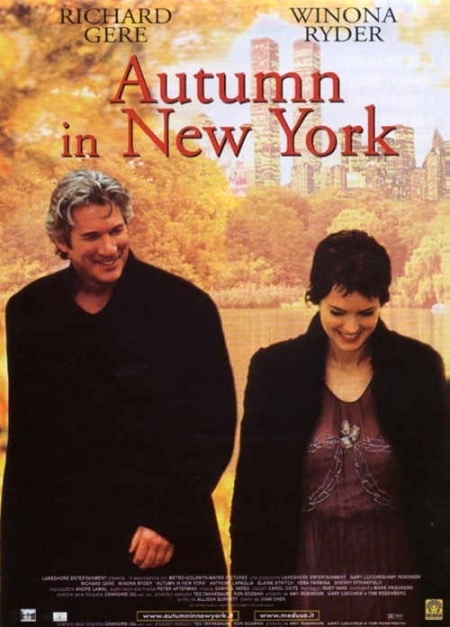
A guy dating someone 20-30 years his junior isn’t off to a best first impression. For us to be sold, he needs to do more than look good and connect with his love interest. He needs to show us he’s worth it.

Because it’s risky, isn’t it?

It might work, but they are unlikely to be in similar places in their lives. But if their bond is strong enough, this might very well be a great romantic story.

And who better to cast as an older lover than the ever-charming Richard Gere? He has successfully played handsome leads across genres for decades.

This character, however, is a douche.

What does he do? Romances a woman half his age, cheats on her when she is sick (and at the party where she is also a guest, no less), only confesses after she insists, and then leaves because…it was not a good idea for them together in the first place?

Why did he do it? Because he was scared.

Oh, please. This guy is my least favorite Gere character ever.

I also don’t like the terminally sick protagonist trope either, which, for some reason, generally tends to be female.

She takes him back, unfortunately.

I didn’t wish this couple a happy ending. I wanted her to find someone else.

Cheating Trope Done Right:

It’s fine if your protagonist is cheated on and then they leave the cheater for a better start.

Cheating in romance also works when cheaters are the victims in one way or the other – which happens when the party being cheated on is evil or does something horrific to lose our sympathy.

– Revenge

Take Revenge.

In Revenge, the romantic situation of the female protagonist (Madeleine Stowe) is the opposite of the Rumor Has It character.

Her husband (Anthony Quinn) is a mobster! He has been cheating on her, and being a mobster, you can imagine he is not a good guy. He’s also way too old for her.

Enter an old war buddy of his. Except this war buddy is about her age. He is gorgeous, played by young Kevin Costner. He’s nice and exciting. OK, he falls for a friend’s wife and has an affair, but not being a mobster, he is still pretty decent by comparison.

They fall in love. You root for them, even though you know they are doomed.

– The English Patient

I love this movie. It simultaneously made me a fan of actors Ralph Fiennes, Kristin Scott Thomas, Juliette Binoche, Willem Dafoe, and writer/director Anthony Minghella.

It’s a visual feast.

And going in, you know you’re going to see something tragic because it’s the story of a severe burn victim telling his love story to a nurse, and the background is Word War II.

But the romance? The romance up until the end is not one that I liked or approved.

A married woman (Scott Thomas) falls under the charm of a guy (Fiennes). And her husband is her childhood friend who she has been with together for a long time.

Yikes.

We can’t even complain he is old or bad-looking. He’s played by Colin Firth, for crying out loud! (Not that it’d justify it, but we were grasping for straws here). And there is nothing seemingly bad or wrong with him either.

The guy she falls for? Yes, he is sexy and a bit mysterious. But he is also obsessive, and if it wasn’t for Ralph Fiennes giving a hypnotizing performance (he was nominated for Oscar), I’d have been repulsed by his actions altogether. Not a fan of the wife, either.

It seems more like good sex, and there’s nothing romantic about that when two people are cheating.

But then something happens in the film, and suddenly, I’m declaring this an epic love story and crying. What the hell?

Well, the husband tries to commit double murder/suicide, succeeding in killing himself and severely wounding his wife. She then declares her love, and the lover risks his life and betrays his country to save her.

Not the romantic story I’d write, but I ended up rooting for two characters I didn’t like at all.

But this is a romantic war drama movie. It’s harder to pull such stunts in a romcom.

If you are going to make your protagonist a cheater, you’ll risk losing/disappointing readers.

– Unfaithful

Unfaithful is not a romantic movie. At all.

It’s classified as one (in addition to drama and thriller) because the female protagonist (Diane Lane) cheats on her husband (the male protagonist) by having a steamy affair with a stranger (Oliver Martinez).

But then her husband (Richard Gere) finds out. He chooses to confront the guy, kills him by accident, and in the end, they can’t decide whether to flee or let him go to prison.

It works because it’s unsettling, and it was the goal.

You don’t want to be her. Or the lover. Or the husband.

Without the drama and the thriller elements, the movie would fail. (Also, obviously, props to casting, directing, and acting.)

Is it still memorable after I saw it at the theatres in 2002?

Yes.

Do I still hate the wife and the lover characters after all these years? Also, yes.

If you wanted me to recommend an uncomfortable drama about an affair, I’d recommend this. If you wanted me to recommend a romance, this film wouldn’t cross my mind.

It’s good. It’s just not romantic at all.

Unromantic Romance Trope 3: Not taking no for an answer/constant denial

You know how it goes. One side doesn’t feel the same way, so they keep saying no.

The other party keeps pursuing. And there starts an unhealthy, unromantic relationship.

Or sometimes, one party doesn’t reciprocate. They say and show this repeatedly. But our protagonist refuses to listen.

– 500 Days of Summer

Image via reface.me.

500 Days of Summer, anyone?

For Summer, it was a fun fling.

For him, it was everything.

Summer (Zooey Deschanel) was always honest about what it was. But hey, it didn’t serve his interests (Joseph Gordon-Levitt), so he avoided facing this.

500 Days of Summer is a very good, enjoyable film – as long as you treat it as a what-not-to-do guide for relationships.

As a romance? No, thank you.

I prefer my romances mutual, and I prefer protagonists who understand what no means. (And Gordon-Levitt is with me on this interpretation, if you were wondering.)

Unromantic Romance Trope 4: Obsession with an ex/using another person to make your ex jealous and then falling in love with the new person

– Forgetting Sarah Marshall

I really like this movie. It’s hilarious. I think it was always aiming to be funnier than it is romantic, and despite being uncomfortable in a lot of places, it’s highly entertaining.

But when it comes to the romance, it really isn’t how most people would want to meet their loved ones.

Peter (Jason Segel) is devastated after being dumped by his long-time actress girlfriend (Kristen Bell), and he goes on a Hawaiian vacation to get over her. But this dude even picked this place because she talked about it, and of course, he runs into her and the guy she dumped him for, an over-the-top British singer (Russel Brand).

He ends up staying at the hotel, in the room right next to theirs and developing a friendship with the beautiful receptionist Rachel (Mila Kunis).

So far so good.

Could it happen to you or me? Maybe.

But I should hope that we would be more rational and choose a destination spot that wouldn’t remind us of the person that hurt us, or even get depressed/obsessed over a person who wasn’t happy with us. Or, you know, we wouldn’t spend so much time with them on our vacation, which we took to get over them in the first place.

He goes on to try to make Sarah jealous, Sarah does the same and…You get the picture.

Do we still kind of like Peter and want him to be happy in the end? Yeah.

Do we fantasize about a guy like Peter? No.

– Addicted to Love

Forgetting Sarah Marshall pales in comparison to what our protagonists get up to in Addicted to Love.

Maggie (Meg Ryan) wants revenge from her ex.

Sam (Matthew Broderick) wants his ex back.

Sam and Maggie’s exes are together, so Sam and Maggie team up. They move to an apartment in the building across from the lovers and strategize to break them up. (And the stuff they do… I’m sure it’s not legal for the most part.)

And as you might guess, they fall in love and stay together in the end.

Just think about the spying that went on.

Yikes.

A very healthy relationship between two healthy people. Not!

Again, the movie is fun.

But just imagine how creepy the situation is.

*

In all honesty, there is not much you can do with this trope that will make your protagonist(t) look good, except….

Obsession Over An Ex Trope Done Right:

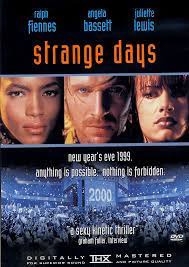
– Strange Days

Image via JoBlo.com.

Strange Days is a brilliant action, crime, drama with a sci-fi element. It’s one of my all-time favorite films, and even at 7.2 on IMDB, I believe it’s underrated.

So yes, Strange Days is not a romance film.

But it does have one of the most memorable (and forgivable) portrayals of ex obsession. And like in romance films, our male protagonist here gets over his obsession, realizes true love was staring at his face all along and opts for a healthy relationship.

What gives?

For one thing, this is a dark film. There is a serial killer lurking around. He is so twisted he is making the victims watch themselves while being killed, getting off on their fear. What’s worse is that they are watching the experience through a device put on their brain. So, they’re feeling everything twice.

Then there’s horrendous police brutality.

So, a guy not over his ex only barely creeps you out.

What’s more is that her ex hasn’t moved on to better, greener pastures. She’s dating a bad guy. Our protagonist Lenny (Ralph Fiennes) watches their experiences in his brain and asks her (Juliette Lewis) to take him back.

Lenny would be despicable in a romcom. Here, we really just feel bad for him.

But after managing to uncover corrupt cops and defeating the serial killer, it dawns on Lenny that he doesn’t want his ex anymore. He wants his best friend (Angela Bassett), a strong, beautiful kick-ass woman who’s been by his side and saved his ass many times. Luckily for him, his feelings are mutual.

And after a lot of darkness, we get one awesome, passionate happy ending.

You might think she is too good for Lenny, but Lenny has a past we are proud of. Our protagonists are well-developed and likable.

Most Unromantic Romance Trope 5: Bets

Ah, bets.

Fewer things get our betting protagonists’ panties in a twist than being found out.

Usually, they have either bet they would be able to bed the other protagonist or make them fall in love with them.

They succeed, of course.

But then there is a huge falling out when our wronged protagonist finds the truth. And for maximum effect, they usually discover this from another party, making our “better” look and feel even worse.

The problem with this trope is obvious: Mature, empathetic, emotionally intelligent people don’t make bets that will hurt other people.

Whether they are betting over sex or romance, it gives us a good reason to want to kick the betting protagonist’s ass.

And with romance to work, generally speaking, you should want to be one of the protagonists.

There are few women who don’t want to be Elizabeth from Pride and Prejudice. Because, well, Darcy.

When a male reader read my romcom novel Making A Difference (M.A.D.), he said “Who wouldn’t want a Zoe in their lives?” And I took it to be high praise. (Similarly, women wanted Jay, Zoe’s soulmate.)

I’m not saying bets shouldn’t exist.

It’s human nature to be competitive and to be (falsely) confident of their abilities and knowledge. But be careful with the intentions behind the bet and the stakes.

Toying with someone’s heart is a d*** move, and is more likely to leave us furious than swooning.

– After

After, adapted from the novel of the same name, is probably the most famous recent example of the betting trope.

When she goes to college, Tessa (Josephine Langford) falls for mysterious Hardin (Hero Fiennes Tiffin) and they have a rocky/steamy romance.

Except toward the end, Tessa finds out bad boy Hardin initially only approached her after betting he could make her fall in love with him at a Truth or Dare game. What’s worse, she learns it from his obnoxious ex and gets to watch the footage too.

Ouch.

“Oh, but he fell in love with her for real.”

Oh, I’m supposed to care for the douche’s feelings now?

“But he didn’t know her!”

Worst excuse ever.

So, it’s okay only to treat people you don’t know like crap?

Of course, they will get back together after a massive apology.

Look, they already had enough differences and traumas in their lives without this bet thing.

I just don’t root for the guy.

 Betting Trope Done Right:

– How to Lose A Guy in 10 Days

Image via tvline.

How to Lose a Guy in 10 Days gets a pass because both protagonists engage in a questionable pursuit while having somewhat understandable motivations.

Andie (Kate Hudson) wants to save her friend from having her private life being written about by a stranger, and Ben (Matthew McConaughey) wants a creative challenge. His boss/competition won’t even give him a chance unless he can prove he can get a woman to love him.

Not saying they are noble. Just…understandable.

And it is easier to forgive one side if the other side is guilty of the same thing, and they both learn from their mistakes.

Unromantic Romance Trope 6: Deciding for someone else (especially since it is done to add extra tragedy and loss, and can make it feel inorganic)

You know how it goes. One side decides to do something dangerous and/or selfless, and they decide for the other person.

– In A Savage Land

I actually love In A Savage Land. Fewer things make me happier than seeing Rufus Sewell in a romantic lead as the good guy.

Two married anthropologists go to Papua New Guinea for research. Conflicts and tensions arise, and these are compounded when the wife (Maya Stange) falls for pearl merchant Mick (Rufus Sewell).

The film is classified on IMDB as adventure drama, and rightly so. The romance is important to the plot, but it’s not the main thing. It takes a long while for it to be consummated, and afterward, it’s extremely short-lived due to the breaking war and Mick’s decision to stay behind and fight.

As they are being evacuated, Mick doesn’t get on the boat and watches Evelyn leave.

While what he did was noble in a way, it was also uncool. She was completely blindsided. She never got a choice. She never got to say goodbye.

Luckily, the movie still goes for a happy ending and ends up being one of my favorite romances. But this trope pisses me off every time I watch the film.

– Sweet November

Sweet November is a romantic drama starring Charlize Theron and Keanu Reeves, a remake of the 1968 movie of the same name.

It’s a beautiful drama with a fresh concept (the monthly guy love rescue), but I hate it as a romance.

Girl has cancer. Girl keeps cancer a secret from boy. Boy finds out. Girl leaves the boy because she only wants to be remembered as beautiful and healthy.

Come again?

The whole goodbye scene at the end really frustrates me because the guy never gets a say. And the logic behind it has always puzzled me.

He knows she is sick. And he has seen her really sick!

I’m not saying she doesn’t get the last say. Being sick is tough. But deciding for a loved one after like a minute of conversation? And if he wants to be there, let him, damn it!

OK, I’m calm. But if my boyfriend did this to me, I’d be super pissed.

And this is why, when I want to watch Keanu Reeves get romantic, I watch The Lake House. And if I rewatch Sweet November, I stop before the sickness reveal.

– Tristan and Isolde

I don’t know the original story, and it’s been told and retold since the 12th century. So, we’re going with the movie.

I love Tristan and Isolde despite using this trope, but I am biased because this movie has one of the most fantastic casts, including Rufus Sewell, Mark Strong, and Henry Cavill!

And the “other” guy is practically nicer and better than the romantic lead, so that makes a nice change to the star-crossed lovers trope.

Tristan (James Franco) and Isolde (Sophia Myles) are from two enemy countries (England and Ireland). Isolde is royalty bound to marry some guy her dad picked. Tristan is a wounded soldier from the other country’s royalty.

She helps him heal, but she hides her identity. And when he leaves, she refuses to go with him. (The movie would have been a fun and short romance if she just got on the boat.)

Then Tristan visits her country again, plays in a tournament and “wins” her as a bride to his uncle (Rufus Sewell), the leader of his country.

Then when they find out who she is, he doesn’t back down.

Because both Isolde and Tristan chose badly for each other, we have a tragedy.

The person I feel for the most is Tristan’s uncle. He thinks he is marrying a lovely woman. He’s also decent, loving, loyal and attractive. (See, this also uses the cheating trope in an unromantic way).

When Tristan and Isolde can’t fight their feelings and have an affair, I feel for the uncle. At least both lovers are depressed and guilty as hell, but the uncle didn’t deserve any of this. (Not to mention, he raised Tristan like his own son after his parents died.)

And none of this would have happened if Tristan and Isolde hadn’t made two horrible choices for the other person.

It’s still a good romance, but I’d rather I didn’t have to like “the other guy” so much.

Unromantic Romance Trope Honorable Mention: Staying in your lover’s time, especially if it is centuries ago.

On the surface, this gesture is incredibly romantic. I was touched when I first saw this in films and series.

But when I thought about what the protagonists gave up and the dangers they faced, I thought they made horrible mistakes.

Yes, they were (mostly) happy and they did this for people who deserved it.

But….

I’m going to be blunt here.

As romantic as I am, if you said actual Mr. Darcy was waiting for me and all I had to do was travel to and stay in the 18th century, I’d laugh in your face.

I’m not giving up my safety, right to vote, modern medicine, or indoor plumbing for anyone. (Or movies. Or rock music. Or flying to places!) You get the gist.

The best/most I can do is the 80s. If I have to, I could leave cell phones and the Internet. But I was alive in the 80s. While it’s tough, it’s doable.

And I’m not the only Outlander/Jamie fan to feel this way either.

Image via imdb.

So, while I cheered when Claire stayed for Jamie in the series Outlander and Andre stayed behind for Lady Claire in Timeline, it’s one of those only-cool-in-movies things.

Giving up certain rights and privileges isn’t romantic. It’s a nightmare.

*

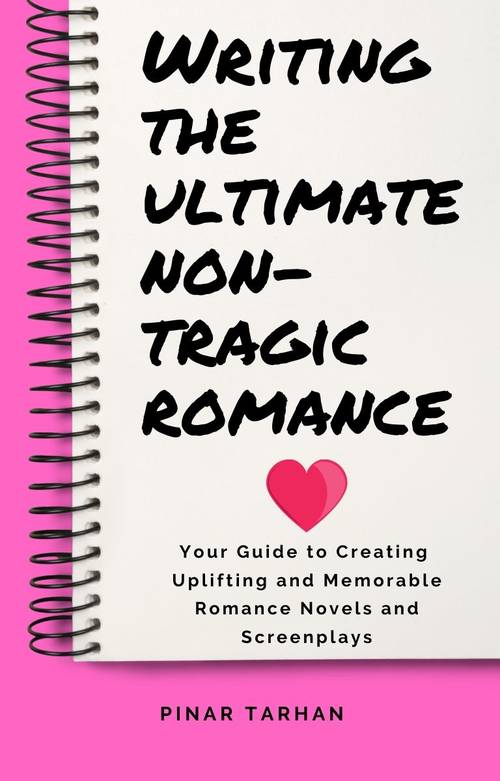
Like my take on writing romance? Check out my guides How to Write an Amazing Romance, or Writing the Ultimate Non-Tragic Romance.

*

There you go. These are some of the most unromantic tropes in romantic fiction.

What tropes do you consider not to be romantic and you wish romance fiction didn’t involve them?


Get your free PDF of Unromantic Romance Tropes!


Send me the guide

We respect your privacy. Unsubscribe at anytime.
Built with ConvertKit

Filed Under: Fiction Writing, Writing Tagged With: how not to write romance, how to write romance, romance tropes, romance writing tips

How to Write a Memorable and Non-Tragic Romance (And a Free Book Chapter!)

Posted on August 10, 2020 Written by Pinar Tarhan

Jonas and Martha Dark
You haven’t seen star-crossed until you have seen Jonas and Martha from Dark. Image via FilmLoverss.

Have you seen the TV series Dark? Dark is a highly fascinating and addictive German mystery series that revolves around time travel and whether it is all a big repetitive loop.

Obviously, it is so much more than that, but there are so many brilliantly woven storylines and interacting complex characters that saying any more could result in a spoiler.

Give it a shot.

So what does have Dark have to do with romance? In addition to having some intense and shocking romantic storylines itself, the “loops” and how certain things repeat themselves reminded me of how a lot of people write romance stories, especially tragic romances.

Loops can be understood, loved, appreciated or expected with science-fiction. (Not that Dark is predictable.) But with romance?

Now, being predictable and repetitive aren’t bad in and among themselves.

As a huge fan of romantic comedy, I am quite fond of happy endings, original meet cutes, and the “two strangers have to spend time together in the most unexpected/unorthodox ways” situations.

You almost always know where certain things are going, and you welcome it.

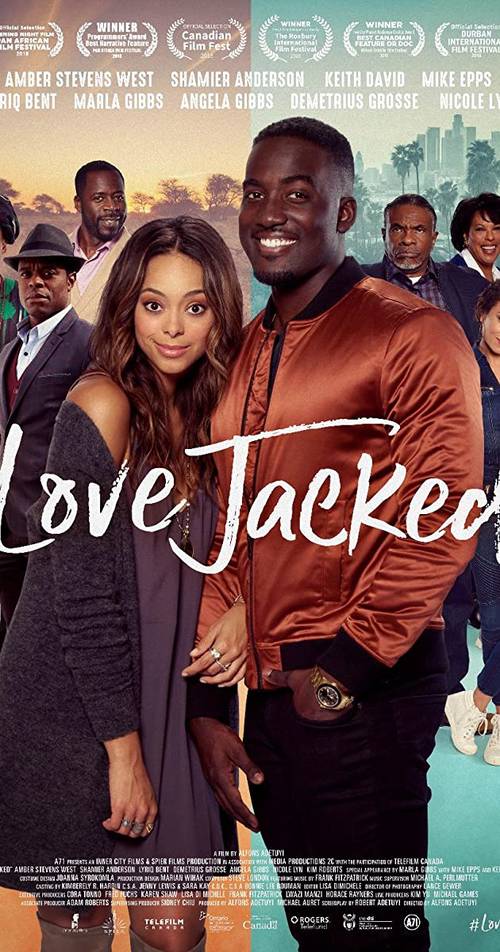
Love Jacked image via Imdb.com

In the adorable 2018 romcom Love Jacked, Maya falls in love with a South African man and gets engaged. But when he cheats on her, she has to pretend pool hustler Malcolm is her fiancé to save face from her critical father. But now Canadian Malcolm has to pretend he is South African and sell it to the African culture obsessed uncle of the family…

Yes, we all know what will happen to Malcolm and Maya. Imagine how disappointed we would be if the movie ended like,

“Thanks for your help. See you never.”

“Yeah, sure thing. Best of luck in your life.”

Yikes.

Or, you know, if Maya learned she had a tumor and six months to live.

Exactly.

We love romcoms because they tend to be funny, uplifting, hopeful, and romantic. And there is a lot the writer can play with while bringing freshness as the characters grow more attracted to each other.

You can do the same with romantic dramas, while of course the comedy will be gone or diminished.

But sometimes, the writer seems more interested in making the audience cry or making their story more memorable by making it tragic that the story no longer feels authentic. The journey of the characters and the conflicts they face feel forced.

Or they just seem like you saw it a million times before, and not in a way that you enjoy.

Familiarity is a good thing as long as it is welcome.

Let’s combine certain elements and you tell me if you are bored yet.

Boy and girl meet. Fireworks. But one of them is reluctant to start something because – drumroll! – they have cancer. Eventually, the sick character will get over their fears. These two will be together until death tears them apart. But, oh, the surviving one will have grown and will carry the memories.

Do you want to read or watch this story?

Probably not. Not unless I create two very compelling characters, come up with highly unlikely but exciting scenarios for their dates and encounters and their reactions, and whip up witty dialogue.

Then, if I’m making a film, cast two of your favorite actors. Shoot gorgeous cinematography. Get a skilled director. Invest in an amazing soundtrack.

And… cross my fingers.

Because how many times have you seen this story?

Look, I get it. Cancer is real. It is a horrible disease. It is hard to run into anyone who hasn’t experienced it, either themselves or through a loved one. My grandfather died of cancer.

So, I know.

But just because something is common in real life, it doesn’t have to dominate your writing – especially if it isn’t a way for you to deal with your own condition or the condition of someone you love.

If you or a loved one suffered from it, then by all means, write whatever you need to feel better. Get it out of your system. Put it out there, and help others who have gone through similar experiences.

But that is not the story I’m helping you with right now.

Right now, with this post and my book Writing The Ultimate Non-Tragic Romance, I’m targeting writers and readers who prioritize entertainment and escapism over depressing realism.

I love a happy story, and a happy ending, don’t you?

I love falling in love with the romance in front of me and living vicariously through these characters.

And I love helping my readers do the same.

Make your audience smile. Make them laugh. Make them fall in love, and celebrate the happy ending on the page or on the screen.

Art doesn’t always have to imitate life. And even life itself isn’t always depressing or disappointing.

Sometimes, life is just amazing!

So I took a bunch of my favorite romantic movies, analyzed what worked and why, and I created a guidebook on how to create a happy romantic story people will remember.

I wrote about films instead of books because it will be easier for you to remember the film’s plot points if you have already seen it (and get a refresher through the trailer) or just take 90 minutes to watch it.

And while I recommend you to read as well as watch romances, a lot of the romantic movies I picked are based on books. So you can do both. And you can see that the story has appealed to people on different media.

Can you ever not create a sick character in a happy romance, or at least a happy-ending romance?

You can.

Instead of killing off the character, you can write about the journey of their recovery or a happy-for-now ending. I included such examples in the book.

You can also research and find lesser-known (but still real) diseases and inform people of something they might not have otherwise heard about and do some good public service while you are at it.

At this point, I’m honestly pleasantly surprised when a character is sick, and it is not cancer or Alzheimer’s.

You can also not kill your characters for a nice change, even if it is a drama.

If you want to make your audience cry, you can still do it without killing people. Life is full of ups and downs.

So what does Writing the Ultimate Non-Tragic Romance cover? Including but not limited to:

  • My favorite romantic comedies (well, some of them. It is only one book) and what makes them work/memorable,
  • My favorite romantic dramas with happy endings (ditto) and what makes them work/memorable,
  • Mixing other genres with your romance – genres like mystery, horror, action, adventure, sc-fi, or fantasy,
  • Turkish romantic comedies and dramas (because I’m Turkish, and it is fun to go outside of Hollywood sometimes),
  • Exceptions – when unhappy endings and dead characters work, aka when your audience will forgive you for them,
  • Romance book suggestions (because you still have to read!)
  • Overused tropes,
  • Realism vs. escapism: Just how realistic do you need to be? And if some of the most common complaints about fictional characters are justified,
  • Real life ethics vs. fictional story worlds: What characters can or should get away that we wouldn’t condone in real life,
  • Help with writer’s block and overwhelm,
  • What you should do in addition to writing.

*

The book is 2.99, but you can read it for free if you are a Kindle Unlimited member. I’m currently working on creating different formats.

Want a free chapter? Subscribe below to read Chapter 4: Romantic Dramas with Happy Endings.

Related Posts Plugin for WordPress, Blogger...

Filed Under: Fiction Writing, Recommended Resources, Writing Tagged With: dark tv series, how to write a happy romance, how to write romance, love jacked, romance writing tips, writing romance

  • 1
  • 2
  • Next Page »

Blogroll

  • My Entertainment Blog

My Other Blogs

  • Beauty, Fitness & Style for the Fun-Loving Gal
  • Dating & Relationships in the 21st Century

Categories

  • Author Interviews
  • Author news and coverage
  • Blogging
  • Book Launches and Excerpts
  • Book News and Author Interviews
  • Book Recommendations
  • Book Reviews
  • Career Management for Writers
  • E-Book Reviews
  • Fiction Writing
  • Fictional Writers: Writer Characters in Movies, TV Series and Books
  • Inspiration and Motivation
  • Marketing
  • Marketing Fiction
  • Movie and TV Series Recommendations
  • Novel Reviews
  • Paying Markets-Web and Print
  • Productivity & Time Management
  • Recommended Resources
  • Reviews for Tools and Devices
  • Romance
  • screenwriting
  • Self-publishing
  • Story Conflicts
  • Website & Blog Reviews
  • Writer Tools
  • Writing
  • Writing Tools
  • Writing Updates

Copyright © 2026 · Focus Pro Theme on Genesis Framework · WordPress · Log in

This website uses cookies to improve your experience. We'll assume you're ok with this, but you can opt-out if you wish.Accept Reject Read More
Privacy & Cookies Policy

Privacy Overview

This website uses cookies to improve your experience while you navigate through the website. Out of these, the cookies that are categorized as necessary are stored on your browser as they are essential for the working of basic functionalities of the website. We also use third-party cookies that help us analyze and understand how you use this website. These cookies will be stored in your browser only with your consent. You also have the option to opt-out of these cookies. But opting out of some of these cookies may affect your browsing experience.
Necessary
Always Enabled
Necessary cookies are absolutely essential for the website to function properly. This category only includes cookies that ensures basic functionalities and security features of the website. These cookies do not store any personal information.
Non-necessary
Any cookies that may not be particularly necessary for the website to function and is used specifically to collect user personal data via analytics, ads, other embedded contents are termed as non-necessary cookies. It is mandatory to procure user consent prior to running these cookies on your website.
SAVE & ACCEPT