Addicted to Writing

Manage Your Freelance Writing Career While Writing What You Love

  • About Pinar Tarhan
  • Blog
  • Books
  • Hire Me: Services
  • Contact Me
  • Portfolio
  • Favorite Resources
  • Newsletter

Screenwriting Problems Tackled: When No One Likes Your Main Character

Posted on February 12, 2015 Written by Pinar Tarhan

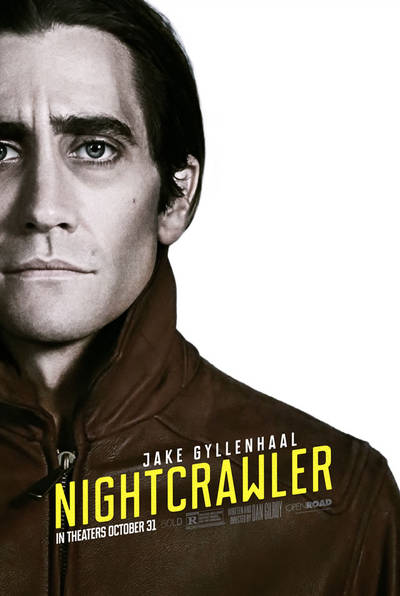
nightcrawler-poster
Did someone say an unlikable protagonist? Image via ropeofsilicon.com.

I’ve previously posted The 7 Challenges of Writing a Screenplay, and I’m proud to say I’ve tackled a lot of them successfully in my rewrites. Length is no longer a problem, and having gotten rid of a lot of exposition, my screenplay is a lot leaner.

Right now, I’m facing another problem: I have two protagonists, and one of them is deemed unlikable by half the people (professionals and friends) who read my screenplay. The good news is, some of the “dislikers” are happy with how interesting the events and pacing are, and have told me they don’t have to like a character to enjoy a story or movie.

Why can one main character be unlikable?

My character comes off as too selfish, and that makes it hard for the audience to root for him. He also doesn’t lose everything despite everything he does.

Except, he is not the only main character. His problems and behavior are central to the story, yes, but it’s a script with two protagonists: these two characters start the story as best friends, but extreme circumstances force them to be each other’s antagonist.

And the second protagonist couldn’t be more likeable. He’s strong, passionate, flawed, loyal to a fault… Yet no one seems to notice.

Yes, there are changes I can make to make the unlikeable guy more likable, but most positive changes would change the heart of the story, and I can’t allow that. Because you see, this is the story I want to tell.

When you understand that character, and he is not unlikable to you

And it’s hard for me to see the character as completely selfish, because history (meaning his back story) has proven him to be pretty selfless, or close to it, in the past. He is just having a major crisis, with a pretty debilitating problem, and is acting irrationally. This in turn suggests another problem: plausibility. Like most screenplays, mine requires a decent amount of suspension of disbelief. Not because the events couldn’t/wouldn’t happen, but they are a bit on the extreme side. But if they weren’t, the story I wanted to tell wouldn’t exist.

That’s not to say I don’t respect my readers’ feedback. I do. My last coverage evoked some great questions, and I’d love to discuss it with the reader. I just need to adjust my budget first for further consultation.

On the other hand,  one professional reader not only liked this “unlikable” dude, but named him his favorite.

And I’ve just finished watching two webinars from Writer’s Store where industry experts (including  Script Mag’s Jeanne Veillette Bowerman) emphasized that you can root for a character if he’s interesting enough, even if he’s evil. One given example was Hannibal Lecter. (In her webinar Creating Dynamic Characters.)

Now, I’m in no way claiming my character is that interesting (completely different genres for one. For two, my character won’t be portrayed by Anthony Hopkins:D) But in a way, my “selfish protagonist”, is the antagonist of the story in several ways.

If audiences can root for Hannibal or the killer in Se7en, they can tolerate my selfish character. Next to them, he comes off like a newborn kitten for crying out loud!

Good news: There Are Many Successful Movies with Unlikeable Protagonists

Let’s mention some recent successful movies with borderline horrible, obnoxious main characters. Please note I might spoil the movies a little.

Gone Girl: I seriously can’t decide whose character I detest more. Ben Affleck’s or Rosamund Pike’s? And it’s not like supporting characters are sweet either. Engaging movie (for the most part), great second act but come on! I’ve never spent so much time during a movie wanting to punch all the characters. I wouldn’t want them as my neighbors, friends, distant acquaintances…The cops in the film included.

Side Effects: Sure, Jude Law’s character becomes more and more likable as the story progresses, but what about Rooney Mara’s? And I definitely lost a little respect for Law’s character when he got back with his wife, no questions asked. After the way she treated him? Come on! I don’t need a long fight scene, but just give me a sign of difficulty for crying out loud!

Nightcrawler: Different and compelling movie, sure. But Louis Bloom has to be one of the most obnoxious protagonists ever written. Louis Litt from the TV series Suits is a selfless angel compared to Bloom. Seriously!

And we are never given a back story on why he is such a sociopathic prick. Actually Nightcrawler steps on and chews out so much renowned screenwriting advice, it will get its own post. (or at least another post.) The point is, the only thing I liked about that character was that it was played by Jake Gyllenhaal. I didn’t root for him. I didn’t respect his cunning. I think the fact that he’s so unlikable, and still gets what he wants (despite not being as slick and smart as he believes) is what makes the movie fun to watch.

What does this mean for you and your story?

I haven’t sold this story (with the selfish protagonist) yet. I may never be able to sell it. Maybe it’ll be optioned and/or bought and never made. Maybe I will have to wait until I have the resources to make it myself. Like all the screenplays out there, the possibilities are just too many to count.

The point is, I’m not giving up on it. It has its strengths, and it has its weaknesses, and I’m doing my best to eliminate the weak parts. I’ll do my best to sell it afterwards. But I believe in it, and I’m not giving up on it. I’m also determined to improve it without changing the core.

You might need to adapt too, but you also need to keep believing in yourself. I watched this wonderfully helpful webinar by Marilyn Horowitz (How to Sell Your Screenplay in 30 Days Using New Media through Writer’s Store) where she reminds you that you need to be your biggest fan. You need to be professional, yes, but you also need to believe. It has to be the kind of story you would pay to see. If you wouldn’t, why write it?

Write the kind of movie you’ll want to see. Be as objective as you can. Improve it as much as you can. Then start pitching and querying.

And good luck!



Filed Under: Fiction Writing, screenwriting Tagged With: challenges of writing a screenplay, Jeanne Veillette Bowerman, marilyn horowitz, nightcrawler, screenplay writing, screenwriting, script writing, writing a screenplay

The 7 Challenges of Writing a Screenplay

Posted on June 26, 2013 Written by Pinar Tarhan

frustrated-writer
Image via susanarscott.com.

Nope, I am not going to talk about the challenges of trying to sell one. Not here. Because I’m not at that stage yet. Although considering the plausibility of my script events has been keeping me awake a bit (Plausibility is included in the list below)…

This post isn’t about finding that brilliant idea either. Yeah, your journey starts with that idea. But it is merely the beginning. Funnily enough, I didn’t use to know that. The naive, pre-writing career me used to think that the most frustrating part of being a writer was finding a great story concept. An idea worth pursuing, characters worth living with…

And while it is indeed a challenge to come up with a story that you won’t mind sharing your life with, the road after you have found your inspiration is not exactly smooth either.

Below are the current 7 challenges I’m facing:

1)   Writing dialouge. Writing compelling, flowing, natural dialogue. Most of the time my characters have interactions in my head. When this just happens, I don’t intervene. I just write down whatever they say.

But keeping the dialogue engaging for 100+ pages is not exactly effortless. And it’s important to write a story that will hook you. But will it also hook the agents or studios or contest judges?

2)   Finding the right title is one of the most difficult aspects of any kind of writing. But I find it harder when it comes to naming fiction.

And let’s face it, a lot of movie titles suck. If all fails, they go and name it after the characte(r), and it can work like magic if characters (and the names) are interesting and colorful.

Tango & Cash, to me, works as a title because the movie has enough conflicts and humor from the main characters’ differences and interactions. But I’ll admit that when I first heard it I thought it’d be about dogs. It’s not. It’s a cop action/comedy with Stallone and Russell from 1989. Tango and Cash are our characters’ surnames. Oh, the creativity…

3)   Plausibility. Especially if you are adding some crime elements. I didn’t think I’d have to deal with this one until I started writing mysteries and thrillers. After all, grounding a drama/romance/comedy in reality isn’t that difficult.

But unfortunately one of my main characters in the romantic drama I’m working on has to go and do something extreme. And I need to be able to justify how he pulls it off.

Of course, in theory, I could change what he is “pulling off”. However, if I did that, the impact would lessen, the stakes would get lower and a lot in the story wouldn’t make sense.

If I get to sell this story, in one form or the other, I’ll tell you what inspired me to write it. And the inspiration alone needs me to write that extreme and make it worth.

On the other hand, some of the stuff we watch doesn’t make much sense. We love them despite the ridiculousness. If any fans of  The Following are reading this, they will probably relate very easily.

I love, love that show. I can’t wait for season two. But even though it is set in our reality, you’ll see some of the most illogical, incompetent, amusing law enforcement behavior ever portrayed.

Yet despite those flaws, or maybe because of them (the behavior results in the villains winning over and over), the show is damn fun and addictive. But of course that show’s script comes with Kevin Williamson’s (Scream series, Dawson’s Creek, I Know What You Did Last Summer…) name and Kevin Bacon and James Purefoy are starring. My story doesn’t have such priveleges. Or any creepy yet charismatic villains (James Purefoy) going around slashing people…

But the existence of The Following does give me hope in the possibility of selling the implausible in the name of some delicious drama and conflicts.

4)   The scene order. Do you go linear or non-linear? Do you write it in form linear with the occasional flashback? Do you do a crazy linear where it starts with the end and ends with the beginning? (Memento is a terrific example.)

Perhaps you just write different timelines for different characters and then have them interact, while the audience has to watch the drama like a detective solving a puzzle. 21 Grams, anyone?

The possibilities are endless. And eventually the director can play/mess with the order so that he will have his version.

But our goal is for our script to get to a director in the first place. It is crucial to write a winning version to get read and liked.

For the most part, I prefer a well-written linear story. I like to surprise and move and entertain in order, though I do have a weakness for some relevant flashbacks.

Some of my favorite linear films:

–Braveheart

-The Man without a Face

-A Perfect World

–Equilibrium (has flashbacks)

–A Royal Affair (through letters, the narrator takes us back in time and tells the story in order.)

-The Crow (has flashbacks- the character has returned from the dead)

The list goes on.

5)   The ending. The ending matters. Big time. It might even matter more than it should. There are movies with a huge fan base, mostly related to the ending. The Sixth Sense, anyone?

The perfect ending makes you happy that you spent time watching the film.  It shouldn’t be too happy if a happy ending would betray the story.

But make it too depressing, at the end of a depressing movie, you could question the writer’s motive. Was he trying to create tragedy for tragedy’s sake?

Then there’s the matter of being obvious. Ideally you shouldn’t see it coming from scene one, especially if it is a thriller/mystery. If it is a drama/comedy/action, it is more or less doomed in the predictability department.

Of course you can go with the modern romantic comedy trend and base the entire premise on the guy not getting the girl (or vice versa.) You might please a lot of cynics and romcom-haters this way, but a part of your audience will feel cheated. Just like you shouldn’t kill Bryan Mills at the end of a Taken movie (and of course he doesn’t die!), I think the main girl and boy should end up together – given it is really love and they aren’t hideous human beings. (Yeah, I’m talking about personality.)

And one other pet peeve…Ambiguity. A little open ending can be inspiring. But too much ambiguity can get in the way of closure.

No one said finding the right ending is easy.

6)   Rewriting. You might decide to submit a previously written manuscript, thinking all you need to do is edit and format. But then you realize the whole thing will need to be rewritten because (fortunately) you are a better writer now, and you know at least a bit more about writing and selling. Of course realizing you have 2 weeks for all the rewriting, editing and formatting is one of the many “delights” of screenwriting.

7)   Length. After you’ve poured your heart’s work onto the page, it might be troubling to realize that you are a couple dozen pages short. Or over.

This is one of my current problems. I do need to cut it much shorter (about 100 pages). But I find that shortening is easier than coming up with events that aren’t there. And since I’m doing a major rewrite anyway…

*

Right now rewriting (to match a deadline) and plausibility are my most troubling problems. After all a title can be changed. Directors can change the plans to suit their vision and for the most part, adding or subtracting a few scenes comes naturally when I’m going over the manuscript anyway.

To see how “valid” these challenges are, I recommend reading Breaking &  Entering: Great Writing – A Love Story on Script Mag, a useful industry resource.

Now, it’s time to head to work and work on the screenplay for this writer. Wish me luck, and please feel free to share all your joys and frustrations about screenwriting or any kind of fiction writing.

Related Posts Plugin for WordPress, Blogger...

Filed Under: Fiction Writing, Writing Tagged With: challenges of writing a screenplay, screenplay writing, screenwriting, script writing, writing a screenplay

Blogroll

  • My Entertainment Blog

My Other Blogs

  • Beauty, Fitness & Style for the Fun-Loving Gal
  • Dating & Relationships in the 21st Century

Categories

  • Author Interviews
  • Author news and coverage
  • Blogging
  • Book Launches and Excerpts
  • Book News and Author Interviews
  • Book Recommendations
  • Book Reviews
  • Career Management for Writers
  • E-Book Reviews
  • Fiction Writing
  • Fictional Writers: Writer Characters in Movies, TV Series and Books
  • Inspiration and Motivation
  • Marketing
  • Marketing Fiction
  • Movie and TV Series Recommendations
  • Novel Reviews
  • Paying Markets-Web and Print
  • Productivity & Time Management
  • Recommended Resources
  • Reviews for Tools and Devices
  • Romance
  • screenwriting
  • Self-publishing
  • Story Conflicts
  • Website & Blog Reviews
  • Writer Tools
  • Writing
  • Writing Tools
  • Writing Updates

Copyright © 2026 · Focus Pro Theme on Genesis Framework · WordPress · Log in

This website uses cookies to improve your experience. We'll assume you're ok with this, but you can opt-out if you wish.Accept Reject Read More
Privacy & Cookies Policy

Privacy Overview

This website uses cookies to improve your experience while you navigate through the website. Out of these, the cookies that are categorized as necessary are stored on your browser as they are essential for the working of basic functionalities of the website. We also use third-party cookies that help us analyze and understand how you use this website. These cookies will be stored in your browser only with your consent. You also have the option to opt-out of these cookies. But opting out of some of these cookies may affect your browsing experience.
Necessary
Always Enabled
Necessary cookies are absolutely essential for the website to function properly. This category only includes cookies that ensures basic functionalities and security features of the website. These cookies do not store any personal information.
Non-necessary
Any cookies that may not be particularly necessary for the website to function and is used specifically to collect user personal data via analytics, ads, other embedded contents are termed as non-necessary cookies. It is mandatory to procure user consent prior to running these cookies on your website.
SAVE & ACCEPT