Addicted to Writing

Manage Your Freelance Writing Career While Writing What You Love

  • About Pinar Tarhan
  • Blog
  • Books
  • Hire Me: Services
  • Contact Me
  • Portfolio
  • Favorite Resources
  • Newsletter

Complicated Conflicts, (Un)Acceptable Character Reactions and What This Means For Your Screenplay

Posted on June 20, 2015 Written by Pinar Tarhan

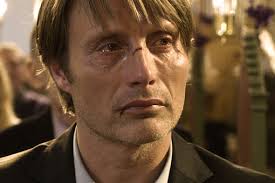
The Hunt, Mads Mikkelsen
Mads Mikkelsen’s character in The Hunt. His so-called friendly countrymen did that to him. Image via cynic critics.com.

I love interesting conflicts and dilemmas. So much so, I often pick my favorite movie conflicts and analyze them on this blog:

  • The Ledge: Kill Yourself or Your Loved One Will Be Killed
  • The Hunt: Your Daughter’s a Liar or Your Best Friend’s a Pervert
  • Return to Paradise: Spend 6 Years in a Hellish Prison or Your Best Friend Hangs
  • Equilibrium: Live Numb or Die Feeling (Die Being Yourself)

Look at these conflicts!

You either have to commit suicide, or someone will murder the person you love.

You will either live with the guilt of your friend’s death, or you’ll “live” 6 years in prison. Right. And that is if you trust the authorities who gave such an option in the first place.

You either suppress every single emotion and live, or fight for the right to feel and die trying. Ouch…

The Hunt, though, is probably the most heart-breaking one of them all. Either your young daughter was molested by your best friend or she’s lying and you’re screwing up his life for…nothing. Holy Crap!

It is a great, albeit expectedly depressing movie. This 2012 Danish film is still on the top 250 list on IMDB, and I’m shocked it didn’t get the Oscar for best foreign film. (Mads Mikkelsen’s luck, always the nominee movie, never the bride winner).

LET THERE BE SPOILERS FOR THE HUNT and RETURN TO PARADISE

So what would you do if you were the father? What would you do if you are the friend? Because guess what? She’s lying, and he is innocent.

The whole town turns on him for nothing. They don’t even bring in an actual child psychologist. And this almost drives our protagonist insane. I don’t get that when it’s revealed that he’s innocent, he stays in that small town where some people still don’t believe him.

What the f…?

Seriously. Look, I get that he grew up there. His teenage son is there. But are your friends still your friends after they believed the worst about you? And it’s not like he lives in a third world country. There are many more towns and countries he can go to, find work and make money, while minimizing the homesickness. Yes, he has a son, who could in a few years join his dad wherever.

But that is me. I grew up in a big city. I don’t feel homesick much. I don’t mind living abroad. I tried hard to put myself in his shoes. I still don’t agree with what he decided. I wouldn’t look twice at those people.

And the ending doesn’t quite indicate he made the right choice if you are honest about last scene.

However, while the ending might not be the most believable (to me at least), it creates the biggest impact. The director Thomas Vinterberg is also the co-writer, so that presents an advantage. He could shoot the movie the way he wanted.

What does this mean about your screenplay’s conflicts and characters’ reactions?

In my drama feature, I have a story conflict that’s hard to sell. In other words, one of the main character’s actions is extreme, though in line with what he’s going through, and what he has experienced.

And not only are some readers having trouble with the conflict (despite enjoying the premise), they are not particularly fond of how a certain character handles the conflict, which puzzles me.

Because if I were that character, I’d do exactly that.

When I ask people around me what they would in that situation, they choose my character’s way.

So how come some readers aren’t into it?

Well, for one, our personalities and outlooks on life determine a certain percentage of how we react to movies (and screenplays). Remember, a couple of years after seeing The Hunt, I’m still singing the “I would so get out of there!” tune.

Whenever a character takes a cheating spouse back, I’m disappointed until that movie/story ends. Cheaters don’t deserve a second chance in my book, unless the situation is extreme, like the person being cheated on is a complete psychopath or something. You can enjoy my fun cheating-condoning posts on my movie blog.

Some found Death Sentence unrealistic. I tend to love revenge flicks. I cheer for parents who go down the extreme route. Even well-educated, seemingly mild-mannered ones. Because:

  1.  Don’t be afraid, I approve of regular folk taking justice into their own hands only in revenge movies
  2.  I can relate to the pain that will result in losing a loved one. Of course they will go crazy and do drastic things. So while the level of Bacon’s character’s success might not necessarily be the realistic aspect of his movie, his losing it over the not-so-certain outcome of the trial makes sense to me. Yes, Braveheart and The Crow are among my favorite movies. How did you know? 🙂

Anyway…

The point is, we react, judge and interpret differently. I find my character’s action, and the other’s reaction completely in line with their personalities, life experiences.

Would I react the same way if I were in the same situation? Yes. But would I be in the same situation? Not likely. For one, I’m not a musician, and my crow-like voice wouldn’t earn me any fans. So I have my characters, my obsession with the rock music world and my imagination to guide me.

So, we again come back to listening to your gut.

But am I to blame a little? Of course I am. Chances are, I couldn’t reflect the extremity & uniqueness of the situation, as well as I should have.

It feels like mission impossible to balance exposition, good dialog, enough (but not too much) backstory while capturing and holding everyone’s attention in a freaking drama. No matter how engaging I try to make it, it’s still a drama, albeit a glamorous and larger-than-life one at that.

So what do you do?

You work on your craft and draft until the story, the story you know is the right one to tell, shines and eliminates (or minimizes) doubts and let everyone enjoy the ride.

I immensely enjoy the stakes in Return to Paradise. I can honestly say I wouldn’t trust the authorities and go back to save my friend, love or no love. But then again, I wouldn’t do drugs so I wouldn’t be in that situation. That doesn’t stop me from rooting for these characters.

You hear stories about screenwriters who can only sell their 11th script. Then you hear the ones about the first/second or third script they wrote being sold. Who wants to bet there were like 30 drafts of that sold script before it got the greenlight?

Happy rewriting!
Filed Under: screenwriting Tagged With: equilibrium movie, mads mikkelsen, screenplay writing, screenwriting challenges, story conflicts, the hunt movie, the ledge movie

Man of Steel’s Writer Character Lois Lane and Her Compelling Conflicts: Protecting Your Subject, Falling for Your “Subject” and More

Posted on June 20, 2013 Written by Pinar Tarhan

Thanks to Man of Steel’s story, this is both a “Compelling Movie Conflicts” and a “Writer Characters in Movies” post.

The 2013 Superman reboot Man of Steel is a pleasant addition to the superhero movies with its brilliant cast (Kevin Costner, Russell Crowe, Diane Lane, Michael Shannon, Amy Adams, Henry Cavill), a satisfactory (back)story and some great effects that unfortunately didn’t exist in the time of Christopher Reeve (Superman from 1978).

However one of the things that made me like this Superman movie a lot more than all the other Superman movies (and this coming from a Reeve & Donner fan) and many other comic book adaptations is that there are several compelling “writer” conficts that are relatable.

Now, you can read the plot and movie review here. But I’ll provide strictly Louis Lane-related plot points (and conflicts) below:

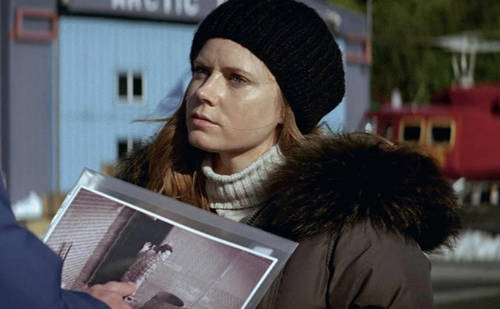
Lois Lane (Amy Adams) is an award-winning journalist sent to a military base in Canada to observe the weird craft (ruled out as a submarine) found. There she follows one of the new workers (Clark Kent, played by Henry Cavill) there as he finds the answers to his origins. He gets to save Lois’ life and then disappears, working to improve his abilities.

But when Lois’s boss refuses to publish her story (that doesn’t sound plausible), she leaks the story other channels, and then looks for Clark herself. Up to now, including the story, he’s a mystery man whose identity and background are unknown.

When she finds him (or he lets her find him), and Clark explains her the reason for his hiding the truth, she decides to keep his secret. But then Zod, the killer of Clark’s biological father,  sends a threatening message: Either humans give Clark to him, or he destroys them all.

Lois is arrested by the FBI, but she isn’t exactly willing to talk. Clark doesn’t trust Zod, but he agrees to turn himself in for the safety (and freedom) of Lois.

Then Lois and Clark find themselves on the spacecraft of Zod. He tries to persuade Clark to join their plans of recreating Krypton on earth, but Clark doesn’t want anyone to be killed. On the craft, Lois gets to “meet” Clark’s father, and learns some critical strategical information.

From then on, Lois becomes an integral part of the team determined to stop Zod from destroying everything.

The Famous Writer Character: Lois Lane 

amy-adams-lois-lane-man-of-steel
Amy Adams as Lois Lane, searching for Clark. Image via flicksandbits.com.

Lois in Man of Steel is the ideal journalist. She goes to whereever her leads (and curiousity) take her, no matter how dangerous things might be. She then writes about her experiences without holding back, and gets frustrated at her boss for not giving her the green-light, even though her story sounds, quite improbable. And when she can’t make herself heard through the publication she works for, she gives her story to a guy who is famous for writing stuff like that- even though this could cost her her job.


But when she learns why Clark has been hiding who he really is, she keeps his secret- even if it eventually leads to her arrest. When Zod asks her to come on board with them, she willingly leaves; and this has nothing to do with the story.


Of course the more Clark and Lois know each other as a person, they more connected they feel. So we have a mutually protective, risk-taking and loyal relationship combined with a lot of attraction.


And as much as things got very complicated and dangerous, all ended well for both characters. But things could have gone really wrong for Lois, had she been a real person and her “subject” not a superhero.


She could have lost her job, the guy she wrote about would probably be less sweet and understanding about her story, and none of them would probably survive such dangerous situations.


But it makes for a fun and appealing story. The romance is delightful because it includes friendship, chemistry, understanding, loyalty and bravery. Lois proves to be more into her story than her career (and her life), which is really admirable (though this would probably send her parents to an early grave.) And she has the courage to step up when the world needs her.


Of course Man of Steel isn’t just for writers. But with all the Loises I have seen on both TV and big screen, Amy Adams’ is the coolest and most likeable. She is also a lot more than a damsel in distress.


*


How far would you go for your story? For your subject (love)?

And did your stories ever bring you real life romance?

Filed Under: Fictional Writers: Writer Characters in Movies, TV Series and Books, Story Conflicts Tagged With: amy adamds as lois lane, amy adams as lois lane in man of steel, creating compelling story conflicts, lois lane man of steel, lois lane superman, story conflicts, writer characters in movies

Equilibrium: Live Numb or Die Feeling (Die Being Yourself): Most Enthralling Story Conflicts 6

Posted on June 3, 2013 Written by Pinar Tarhan

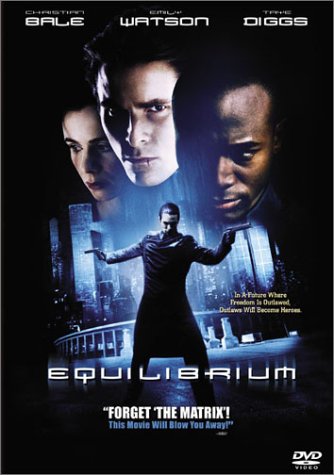
 equilibrum, christian bale

Equilibrium is a universally compelling action drama that takes place in a post- WW3 universe where all wars and crimes have been eliminated, as well as all “evil” feelings of rage, violence, greed and such.


Oh, yes, there’s  a catch. A gigantic one:


Along with the negative feelings and impuses that have been eradicated are also love, passion, friendliness and such. Nobody feels anything, complements of the government-supplied, obligatory doses of a drug.


What about stimulators, you might ask. Like music. Paintings. Personal taste. All forbidden. Nothing is custom, or individualistic. Nothing is colorful, or creative.


Everyone’s only an obedient, faded clone of themselves.


Oh, of course there’d be no point in watching the movie if it was all grey.


There are rebels, of course. People who refuse to take the drug are fighting against the totalitarian regime- with whatever means they can find.


Guess what the punishment is? Death by being burned. Or death on site during combat. They are seen as enemies of peace.


But the rebels have to fight, because what else is there? In a world where everything is soulless and grey, where there is no individuality, they prefer to go down fighting and feeling, as opposed to living without feeling. And who can blame them?


Now, until here, I painted the spoiler-free picture of the story.  You can move on to my Equilibrium review for more on the movie . From now on, spoilers will flow –as we’ll analyze some of the most touching and relatable conflicts ever.


Now, don’t get me wrong. I have shared a lot of relatable and powerful story conflicts on this blog.


But with a lot of them, it is easy (and logical) to assume that you wouldn’t end up like that.


For instance, unless you are a tycoon, I don’t foresee you in the danger Tom Mullen was in Ransom.


We don’t live in the 18th century, so there goes A Royal Affair.


Assuming you didn’t marry a religious nut out of gratitude and then cheat on him with your next door neighbor, you don’t need to worry about being in the shoes of the characters in The Ledge.


You get my point.


But how about having ever lived in a country where the rules and regulations stifled you? The government wanting to be too involved in your private life –e.g. abortion rights? How about having been ruled by someone who wanted to empose his/her religious beliefs onto the public?


Now how much do you relate?


Granted, Equilibrium is an extreme scenario – but how extreme or fictional, apart from John Preston’s fighting skills – depends on where you live(d).


So with that in mind, let’ get back to the story, with spoilers:


John Preston (skillfully played by Christian Bale) is a priest- meaning he leads the armed forces against the rebels. He has an unique level of empathy, but he uses it to guess the hiding places and manevours of the rebels, not to understand them. He is extremely loyal, proud of his job and he is excellent at it.


One “disappointing” incident in his life has been his wife who, to his surprise, turned out to be “guilty of feeling” and was sentenced to death. As he raises his two children, this incident is the only “alarm” his life has raised and is the under “scrutiny” of the ruler.


The “second” incident makes him question everything more: His partner (Sean Bean) a great officer with a stellar record turns out to be “faking” the “not feeling.”  This adds to the “scrutiny”.


However this brings up memories of his wife; and add some strange behavior from his son and some missing of the dosage; and things get very complicated as John starts to feel – overwhelmingly.

Christian Bale in Equilibrium.
Christian Bale’s Preston trying to decide whether to take the drug or not. Image via tumblr.

Everything bottled up and subdued comes out.


Now, he daily has to go through the conflict his partner went through:


Do you kill fellow “feelers” to keep up the role, protecting yourself and your family? Do you do your job?


or


Do you deny your impulses because it is too hard to bear?


Because in all honesty, there’s no way he can quit his job without giving himself away.


Of course after he can’t give up on feeling once he realizes what he is missing, John starts sucking at his job. And after a while, it is only fair that he joins the movement himself – especially he also has to lose another person he cares about.


So he fights.


It is a big, difficult fight but he wins in the end.


The glory feels wonderful. Things will no longer be the same, in all senses of the word.


Of course the movie is so much more. A lot of it has to do with the cast, especially Christian Bale who does a superior job of reflecting his characters’ both internal and external conflicts. You feel for him, understand him and want him to win with all your heart.


The war was fought for the right to feel, as well as the right to be whoever you want to be.


We often have to struggle in our lives when it comes to the right of being who we are. Sometimes it is against (or within) our family, friends, school, society, bosses, country….How much we win can depend on the level of authority we are fighting for.


Sometimes it is small, sometimes it is big. But we fight everyday. For some, the battle is tougher and on a much bigger scale. The key is never to give up.


So what do you think of the conflict(s) of this movie?


Can you empathize?

Filed Under: Story Conflicts Tagged With: creating compelling story conflicts for writers, creating story conflicts, equilibrium, equilibrium christian bale movie, how to create a compelling story conflict, how to create a story conflict, story conflicts, writing fiction

Spend 6 Years in a Hellish Prison or Your Best Friend Hangs:Return to Paradise-Most Enthralling Story Conflicts 4

Posted on February 16, 2013 Written by Pinar Tarhan

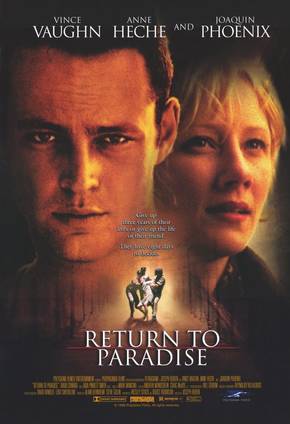
return-to-paradise-movie-poster-1998-1020232526
Return to Paradise starring Vince Vaughn, Anne Heche and Joaquin Phoenix. Image via moviepostershop.com

Would you agree to spend 3 to 6 years in a Malaysian prison to save your friend’s life, who has been serving his sentence there? He will be hanged if you don’t.

You want to say yes. You should say yes. It’s partially your fault that he’s there. But here’s another problem: He’s losing his sanity. He is horribly treated.

But if he’s that far gone, the same thing could happen to you. Is it worth it?

Don’t write me off as inhumane, or insensitive. I’m merely being honest while conveying the opinions of the friends who are in this dilemma.

Return to Paradise Story:

MAJOR CONFLICT 1: Sacrifice 3-6 years of your life to save your friend’s

3 friends, Sheriff (Vince Vaughn), Lewis (Joaquin Phoenix) and Tony (David Conrad) vacation in Malaysia and have a great time, not without the help of some weed. Later Tony and Sheriff return home while Lewis stays for a bit longer.

A couple of years later, Sheriff and Tony are contacted by Beth (Anne Heche), Lewis’ lawyer, and given some tragic news: Lewis has been locked up in prison there, having been caught with enough weed to be considered drug trafficking. He was sentenced to be hanged; having to serve the sentence for all three of them. There’s, however, a deal on the table:

If Beth can return to Malaysia with Lewis or Sheriff, her client will live, and eventually gain his freedom. The other will serve 6 years in the same prison.

If Beth returns with both of them, each will serve 3 years and will have saved their friends’ life.

And while they want to do the noble thing, leaving a semi-comfortable life for a bleak future they know is already destroying Lewis – a future they might very well not survive keeps them question their decision, sense of morality and friendship.

Granted, the first conflict is what attracted me to watch Return to Paradise. I stayed to see how the dilemma would pan out. I also liked being conflicted within myself, asking myself what I would do. Sure, you can try to dismiss the idea by rightly thinking you’d smart enough not to smoke weed in a foreign country where it is illegal and the punishment is severe.

But what if you did? Or you didn’t do anything illegal, but your friend got wrongly convicted. What if the deal remained the same? What would you do then? Still, it’s your sanity, your life at stake. But then again…could you live with yourself if you let your friend be killed?

Supporting Conflict: Can you leave your life, future and fiancée behind?

Now it is unfair to think that just because Sheriff is single and drives a limo for a living with no further career aspirations, it should be easier for him to do the right thing.

But on the other hand, you have Tony’s fiancée (Vera Farmiga), who has no fault or whatsoever to be in this situation. She doesn’t want her fiancé to leave, his life or her. And while she often comes off bitchy, you can hardly blame her. She hasn’t even met Lewis. It’s easier for her to be selfish.

But then again, what makes her future marriage more valuable than Lewis’ life? What makes Tony’s life more valuable than Lewis’? In hindsight, getting over your guy should be relatively easier than not preventing a person’s death.

MAJOR Conflict 2: Getting involved with one of the guys she has to get to prison

If there is anything that could make the situation even more complicated, and the first conflict even stronger, is falling for Sheriff. And unfortunately (or fortunately, depending on your point of view,) Sheriff falls for her too.

Doing the right thing seems even more important. He wants to prove to others that he’s a bigger person than they believe. He wants her to believe that he is not some shallow, aimless guy. He also needs to believe, for himself, that saving his friend is more important than him going through his life without a purpose.

*

From this point on, I’ll be showering you with spoilers, so you might want to see the movie first. I’ve seen it a couple of times, and its power on me doesn’t subside.

Major Conflict 3:  Beth’s relationship with Lewis

Seeing Lewis’, and the prison’s conditions are enough to cause Tony to have second thoughts. But the turning point comes when Beth lets it slip that Lewis is not just her client. He’s her younger brother.

Both Tony and Sheriff set out to leave, but Sheriff decides to stay.

Complicated Ending:

Beth is relieved that Sheriff stayed, but is shocked when the Malaysian court breaks the deal due to the story a hungry reporter published-Lewis is to be hanged, and the sentence of Sheriff is to be decided.

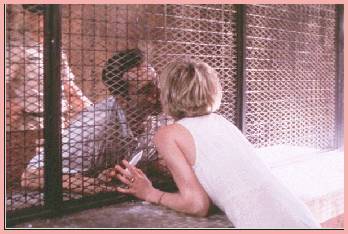
Return to Paradise- Anne Heche Vince Vaughn kiss
Vince Vaughn and Anne Heche in one of the final scenes. Image via dreamagic.com.

Now Beth has to fight for Sheriff, who stayed for her. Because of her. They stay together, but we don’t see whether she was ever able to gain his freedom…

*

Return to Paradise (aff. link) isn’t without its flaws. It could have taken a bit longer to develop the relationship between Sheriff and Beth.

But overall, it is one of my favorite stories to portray morality, friendship, love, guilt and the struggle to do the right thing (no matter how difficult that might be.)

It also contains highly powerful conflicts that keep you questioning your own capacity to do what’s right and your tendency to do what won’t make you suffer.

Would you go back to save your friend? Could you really trust a government to hold to their end without any written agreement? Hell, could you trust them with a written agreement? Would you risk it in the name of friendship and love?

I’d like to think that I’d, but things are never as simple as deciding your hypothetical fate in front of a movie.

PS This post contains affiliate links.


Related Posts Plugin for WordPress, Blogger...

Filed Under: Story Conflicts Tagged With: creating powerful story conflicts, return to paradise, return to paradise movie, story conflicts, story writing, vince vaughn return to paradise

  • 1
  • 2
  • Next Page »

Blogroll

  • My Entertainment Blog

My Other Blogs

  • Beauty, Fitness & Style for the Fun-Loving Gal
  • Dating & Relationships in the 21st Century

Categories

  • Author Interviews
  • Author news and coverage
  • Blogging
  • Book Launches and Excerpts
  • Book News and Author Interviews
  • Book Recommendations
  • Book Reviews
  • Career Management for Writers
  • E-Book Reviews
  • Fiction Writing
  • Fictional Writers: Writer Characters in Movies, TV Series and Books
  • Inspiration and Motivation
  • Marketing
  • Marketing Fiction
  • Movie and TV Series Recommendations
  • Novel Reviews
  • Paying Markets-Web and Print
  • Productivity & Time Management
  • Recommended Resources
  • Reviews for Tools and Devices
  • Romance
  • screenwriting
  • Self-publishing
  • Story Conflicts
  • Website & Blog Reviews
  • Writer Tools
  • Writing
  • Writing Tools
  • Writing Updates

Copyright © 2026 · Focus Pro Theme on Genesis Framework · WordPress · Log in

This website uses cookies to improve your experience. We'll assume you're ok with this, but you can opt-out if you wish.Accept Reject Read More
Privacy & Cookies Policy

Privacy Overview

This website uses cookies to improve your experience while you navigate through the website. Out of these, the cookies that are categorized as necessary are stored on your browser as they are essential for the working of basic functionalities of the website. We also use third-party cookies that help us analyze and understand how you use this website. These cookies will be stored in your browser only with your consent. You also have the option to opt-out of these cookies. But opting out of some of these cookies may affect your browsing experience.
Necessary
Always Enabled
Necessary cookies are absolutely essential for the website to function properly. This category only includes cookies that ensures basic functionalities and security features of the website. These cookies do not store any personal information.
Non-necessary
Any cookies that may not be particularly necessary for the website to function and is used specifically to collect user personal data via analytics, ads, other embedded contents are termed as non-necessary cookies. It is mandatory to procure user consent prior to running these cookies on your website.
SAVE & ACCEPT