Addicted to Writing

Manage Your Freelance Writing Career While Writing What You Love

  • About Pinar Tarhan
  • Blog
  • Books
  • Hire Me: Services
  • Contact Me
  • Portfolio
  • Favorite Resources
  • Newsletter

Ransom – You Just Killed Your Son or You Just Saved Him: Most Enthralling Story Conflicts 3

Posted on November 27, 2012 Written by Pinar Tarhan

This is the 3rd article in the Most Enthralling Story Conflicts and Dilemmas series where I cover the story conflicts that I wish I’d come up with. The first two are:

1) Most Enthralling Story Conflicts & Dilemmas: The Ledge – Kill Yourself or Your Loved One Will Be Killed

2) Your Daughter’s a Liar or Your Best Friend’s a Pervert: Most Enthralling Story Conflicts 2 – The Hunt

Part 3 is features the conflict from the 1996 Ron Howard movie Ransom starring Mel Gibson. Please note that there might be some spoilers.
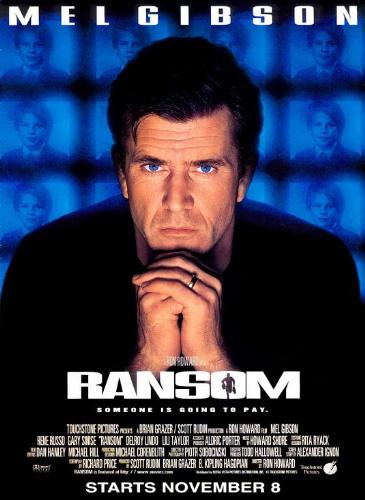
Ransom 1996 movie poster-Mel Gibson
Image via mylot.com.

The Situation:

Businessman Tom Mullen (Mel Gibson)’s son is kidnapped and is asked to pay $2,000,000. He does, but something goes wrong and he’s asked for $4,000,000. Tom realizes that the kidnappers had no intention of delivering the boy in the first place, so he comes with a brilliant yet risky plan:

He gets on the news with the money but declares that he’ll pay it to whoever brings the kidnappers. His wife goes ballistic, so do the kidnappers.

Why This Conflict Is Different:

This is one of my favorite stories, and story dilemmas because unlike most conflicts, this is created by the protagonist.

In The Ledge, the girl’s husband presents the protagonist with an impossible situation.

In Jagten (The Hunt), it all starts when a little girl lies.

Now here are the two ways things can go for Tom:

1)      He was right. This will help him get his son back.

2)      He was wrong. He just caused his son’s death.

He’s led to believe, for a moment, that it is the latter, resulting in a very powerful performance moment for Mel Gibson. But then he gets what he aimed for: The kidnappers start fighting between themselves. And their leader (Gary Sinise) decides to deliver the boy, and get the money as the hero.

Of course things don’t turn out the way he plans, but you should see the movie for the climax.

*

Ransom is based on an idea from a TV show from 1954, which was later developed into a movie 1955, though I don’t know if the 1955 father offered the money as a bounty.

Ransom is a film that shows the way you tell your story is just as important as your idea. Offering the money to those who deliver the kidnappers on live TV is a pretty good twist. Then you have great actors (Mel Gibson, Rene Russo, Gary Sinise, Lili Taylor, Live Schreiber, Delroy Lindo) to portray mostly grey characters, and they were directed by Ron Howard. But Howard and the actors wouldn’t have had that much to work with without the story (by Cyril Hume, Richard Maibaum, Richard Price, Alexander Ignon).

The “twist” is supported by new information about the characters, character development, relationship between the protagonist and his family, relationships between the kidnappers, the fact that the leader (Gary Sinise) is actually a cop…

What makes Ransom enthralling is not just the little twist, but how the characters handle the situation before, during and after that.

But the conflict raises the bar really high, and the main character dies an emotional death (just like P.J. Reece’s story structure advices that he should) during the wait. Did he save him? Did he kill him? And he is alone, with no one to support his decision.

I recommend the movie as an exciting way to spend 2 hours. But I also recommend it from a storytelling perspective.

*

What would you do if you were Tom Mullen?

PS This post contains affiliate links.
Filed Under: Story Conflicts Tagged With: compelling story conflicts, jagten, mel gibson, mel gibson ransom, Ransom, ransom 1996 movie, rene russo, ron howard, story conflict, story conflicts, story elements, story writing, storytelling, the hunt

PJ Reece’s Story Structure To Die For – An Awesome Free Resource on Writing Fiction

Posted on October 1, 2012 Written by Pinar Tarhan


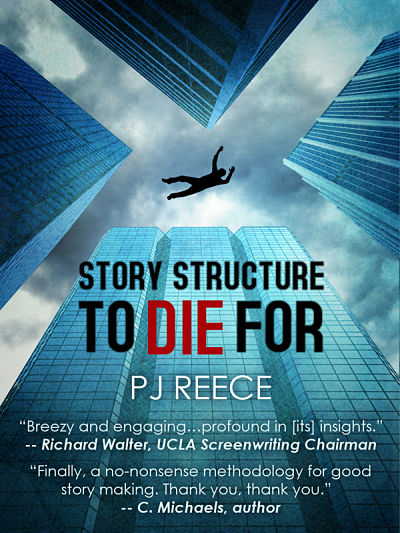
story structure to die for- pj reece
Image via pjreece.ca


There are many stories that I wish I had written- stories whose characters, structures and pretty much anything- I wish I would have come up with. I’m definitely in love/awe with those stories. Some of them are:

Pretty much any John Grisham legal thriller, but especially:

–          The Runaway Jury- the book, not the movie

–          The Brethren

–          The Partner – remind me why The Partner and The Brethren haven’t been adapted to screen yet?

By Christopher Nolan (and Jonathan Nolan)

–          Memento (nope, not The Prestige.)

–          The Dark Knight Rises (not the first two)

By Kurt Wimmer:

– Equilibrium

– Law Abiding Citizen

By Randal Wallace

–          Braveheart. (duh!)

By Nancy Meyers

–          What Women Want

By James Cameron

–          Strange Days


The list goes on. But the point is:

Those stories are perfect to me in their genres. Yes, the books mentioned are best-sellers, and the movies are either critical/cult hits or box office hits or both. They made me laugh, think, cry, get glued to the screen/book, hold my breath or made me do a various combinations of these.

So these movies make you want to wish you could sit down with those authors and pick their brains. Interviews don’t always help. For instance Joseoph Gordon-Levitt and Gary Oldman are marveling at what a great story-teller Nolan is. OK-I’m admiring too but how the hell does he and his brother (who created one of my favorite shows, Person of Interest, too by the way) write those things?

Of course some of these writers do also come up with stories that don’t impress (me) so I don’t die of jealousy. Apparently, Kurt Wimmer did Double Trouble (action comedy about muscular twins who….you don’t really care about.) And James Cameron did Titanic and Avatar. (who does that after Strange Days???You might enjoy those movies, but if you watch Strange Days, you might appreciate why a fan of that story might expect different things from Cameron.))

But back to the stories we love.

No matter how many times I dissect writing manuals and those movies, I still find a hard time delving into the secret ingredients-how the hell they managed to put one and done together. Sure, Randall Wallace had history to guide him- but with Braveheart, he outdid himself. If you have seen Pearl Harbor, you might wonder how the writer of Braveheart could write that (nope, I don’t like Pearl Harbor. Could’ve appreciated that one in 1930. Not in 2001. )So I’d definitely not die for the story structure of a love triangle between soldier presumed dead, his girlfriend and his best friend.

Was I ranting? Good. That was the point. A story (structure/idea) to die for is something most writers go after, and not many accomplish. So it was a relief to have run into PJ Reece’s Story Structure To Die For in which he rants, gives great examples of stories that worked, what didn’t work from his own stories and he does rant about what other how-to writers left out of the equation.

And you know you can relate to Reece when he dedicates her book to Jack Lemmon and Eva Marie Saint (it will make sense once you read it) and that he gives Moonstruck as an example for a great story structure. For one, even though I like the movie, even though it has an Oscar and all that, it is a guilty pleasure for me. Oh the stereotypes and the soap opera acting and the emotional outbursts of Nic Cage…But guilty pleasure or not, it WORKS and that’s what matters! (and it is nice of him to pick a movie we have mostly seen and remember- I probably would have had a heart attack and never gone back to the book, had he been giving examples from Lars Von Trier.) He has some other solid and useful (yet fun) examples as well.

There is also the way he structures this non-fiction- you automatically assess your characters and writing to see how you measure up to talking about-he needn’t give checklists and bullet points. You instinctively visualize, analyze and evaluate.

PJ Reece makes his points well. He also reminds you of the ultimate screenwriter fantasy- the Oscar. Whether we’ll ever get nominated and win is another issue. But he does help you see how to get unstuck from ruts, insufficient conflicts and unnecessary writer panic born from unsatisfactory story flow. He also makes you want to re-watch Rocky and Good Will Hunting- for educational purposes.

: )

Read the book. It’s also a fine example of how to write an engaging and fun e-book on non-fiction matters. You can download it from here. Looks like I have another writer blog to hang out at.


Related Posts Plugin for WordPress, Blogger...

Filed Under: Writing Tagged With: Christopher Nolan and Jonathan Nolan, equilibrium movie, fiction writing, john grisham novels, john grisham the brethren, john grisham the partner, jonathan nolan, kurt wimmer, moonstruck, person of interest, pj reece, story structure 2 die 4, story structure to die for, story writing tips, storytelling, strange days, strange days movie, tips for writing good fiction, writing fiction

Blogroll

  • My Entertainment Blog

My Other Blogs

  • Beauty, Fitness & Style for the Fun-Loving Gal
  • Dating & Relationships in the 21st Century

Categories

  • Author Interviews
  • Author news and coverage
  • Blogging
  • Book Launches and Excerpts
  • Book News and Author Interviews
  • Book Recommendations
  • Book Reviews
  • Career Management for Writers
  • E-Book Reviews
  • Fiction Writing
  • Fictional Writers: Writer Characters in Movies, TV Series and Books
  • Inspiration and Motivation
  • Marketing
  • Marketing Fiction
  • Movie and TV Series Recommendations
  • Novel Reviews
  • Paying Markets-Web and Print
  • Productivity & Time Management
  • Recommended Resources
  • Reviews for Tools and Devices
  • Romance
  • screenwriting
  • Self-publishing
  • Story Conflicts
  • Website & Blog Reviews
  • Writer Tools
  • Writing
  • Writing Tools
  • Writing Updates

Copyright © 2026 · Focus Pro Theme on Genesis Framework · WordPress · Log in

This website uses cookies to improve your experience. We'll assume you're ok with this, but you can opt-out if you wish.Accept Reject Read More
Privacy & Cookies Policy

Privacy Overview

This website uses cookies to improve your experience while you navigate through the website. Out of these, the cookies that are categorized as necessary are stored on your browser as they are essential for the working of basic functionalities of the website. We also use third-party cookies that help us analyze and understand how you use this website. These cookies will be stored in your browser only with your consent. You also have the option to opt-out of these cookies. But opting out of some of these cookies may affect your browsing experience.
Necessary
Always Enabled
Necessary cookies are absolutely essential for the website to function properly. This category only includes cookies that ensures basic functionalities and security features of the website. These cookies do not store any personal information.
Non-necessary
Any cookies that may not be particularly necessary for the website to function and is used specifically to collect user personal data via analytics, ads, other embedded contents are termed as non-necessary cookies. It is mandatory to procure user consent prior to running these cookies on your website.
SAVE & ACCEPT