Addicted to Writing

Manage Your Freelance Writing Career While Writing What You Love

  • About Pinar Tarhan
  • Blog
  • Books
  • Hire Me: Services
  • Contact Me
  • Portfolio
  • Favorite Resources
  • Newsletter

What Content Mills Can and Can’t Do For You

Posted on October 18, 2011 Written by Pinar Tarhan

content-farm
Image via axandra.com.


The words “mill” and “farm” possibly didn’t have negative rings to them before they were teamed up with “content”. A content farm/mill is a website whose content is produced by hundreds, possibly even thousands of writers. The farm typically offers low pay, presumably accepts low quality content and doesn’t look good on the writer’s resume. In fact, sometimes writers are suggested they leave the content farm completely out – and if possible, don’t write for the content mills at all.   

But just like anything in life, it isn’t all black and white. There are both advantages and disadvantages to writing for these sites, and it is better to go through them all before making up your mind. Yes, I have been there, and done that. I’ll include my own experiences, as well as links to what other writers had to say about them.

(Note: This article features some blogging related jargon, so if you are not familiar with terms such as link-building, seo and such, you should read the post 8 Essential Blogging Terms for Beginners first.)


Pros

–  It helps you experiment with keywords, traffic and seo optimization. If you want to write for the web, you have to have at least a basic knowledge of SEO. Almost all professional writers are recommended to have a website/or blog so that they can showcase their work. And you can’t promote a blog without knowing how/where to use the keywords, or without knowing what these keywords are. So whether you start a blog before or after using these content sites, they actually help you develop your skills. Mostly they offer stats, and many sites compensate according to how much traffic you bring. So you can test your results both in page views and increased earnings.


–  You meet with writers who might be in the same place as you are: You can start building a community there. These writers read and support your work (by promoting it social media), leave comments and encourage you.


– It provides back-links and provides traffic to your site.  Most content farms allow you t link to your articles on their site, and your own blogs. So you can increase traffic to your site, which in turn can result in more readers and advertising revenue.


While article-marketing is not what it is used to be, link-building is still one of the most important elements of site traffic. The more people link to you, the more you easily your site gets found. But of course quality is always better than quantity, so fewer links from stronger sites (e.g. a well-respected, popular blogs) bring a lot more traffic and credibility than weaker sites (e.g. sites filled with content taken from other sites).

You can always google the content site you want to write for, look for its page rank and how many backlinks it generates.


– It helps build confidence as mostly these farms have low expectations from their writers and you have the chance to see your work on the web almost immediately.


– It provides residual income. While they pay for your coffee rather than your rent, you keep earning money long after you stopped publishing.


Cons

–  Sites might change policy faster than you can say “what the…?”. One minute, Associated Content is providing you with a better $ value for 1000 visits, and the next it has joined Yahoo, only U.S. residents can take advantage of the pervious payment methods. Not to mention, they made tons of money in the process while having paid their writers peanuts. Yes, while Associated Content gave its writers a little bit more than some of its competitors, the money they made angered a lot of writer for the site or not.

Bukisa also changed from an approximately $3.2/1000 visitors to google adsense revenue. The good thing about Bukisa was that you could republish content you published elsewhere.

But guess what? Google hates duplicate content, even if it is your own content that you’re republishing. When I was first experimenting with content sites, I believed that I could edit/republish stuff the way I wanted. Well I did. As a result, google deleted my account, costing me about $120 in earnings. So advertising revenue is as unstable as the policies of the content sites. While getting money for your link-building efforts is fun, it is certainly a major disappointment that it can cost you your earnings.

–  It simply takes too much time. Yes, while you see your article published after a short period oftime, it takes time to come up with a decent article, format it their way, add your visuals and then promote it. Most content mills pay you according to the traffic. Remember you also need to work on your own blog, start applying for freelance writing jobs (if you do want to pay your rent – and finding a well-paying freelance job is also tricky) and pitching article ideas to magazines. You will also keep reading to improve yourself. How much time do you really have to try and maximize your earnings from the content sites?


– Showing only your content site credits on your portfolio might cause publications not to take you seriously. While you might lend some of your initial writing jobs with links to your content mill articles, most publications won’t take you seriously. Some writers suggest getting warmed up with a couple of content mill articles and then abandoning them all together.


– The pay is BAD. You do not actually earn you more than a coffee and a donut (per month). Yes, some articles can hit the jackpot and there are some very lucky writers who made hundreds of dollars  through traffic with a handful of articles. But those articles are very rare, and you’d be better off improving your writing and getting published in magazines that will pay you a reasonable  amount (Unfortunately there are magazines who do pay as low as content farms.)

–  They won’t help you develop a thick skin as you can publish anything as long as you follow the guidelines –which doesn’t prepare for you the rejection or no replies you will be getting throughout your querying. And if you want to make money writing, you will need that thick skin.


What Some Professional Freelance Writers Say

Anne Wayman experimented with Triond, Helium and Associated Content. This is one of her reviews.

How One Writer Grew Her Pay — and Left Demand Studios Behind by Tiffany Jansen, guest post on Carol Tice’s Make a Living Writing

How One Freelance Writer Kicked Content Mills and Earned Big by James Patterson, guest post on Carol Tice’s Make a Living Writing

And Carol Tice herself is vehemently (and rightfully)  against any writing  job that pays $15/article.

What to keep in mind

– Some have a better reputation than the others.

– They are free to change policies as they like.

– If they go out of business, there is a chance your articles will disappear from the web.

– Don’t hang out there forever if you want to make a living out of writing.

– Don’t hang out there forever if you want to improve your writing, and reach a wider, more selective audience.

–  Some content sites seem to be more respected than others such as Suite 101, as Anne Wayman of About Freelance Writing didn’t mind promoting it as an affiliate, and Hope C. Clark of Funds for Writers , and Jenn Mattern of All Freelance Writing  (three valuable writer websites that I follow).

 

Filed Under: Writing Tagged With: associated content, bukisa, carol tice, content farm, content farms, content mill, content mills, content sites, make a living writing, make money writing, pros and cons for writing for content farms, should you write for content farms?, writer pay, writing, writing for content arms

How Taking the CELTA Helped My Writing (and Why I Was Missing For Over A Month)

Posted on October 12, 2011 Written by Pinar Tarhan

I try to post on this blog at least three times in a month, so I was pretty disappointed with myself when I realized my previous post was published on the 10th of September. But in between getting published on the travel blog Europe  a la Carte, freelance website Freelance Switch and applying for CELTA, I was pretty sure I would get to publish a fun and useful post before the end of September. But then something happened: I was accepted to the CELTA course.


Image via google.

What the hell is CELTA?

CELTA is the Cambridge Certificate in English Language Teaching to Adults (whose mother tongue is not English). I took the one month intensive course from the 12th of September to the 7th of October- and I barely had any time to do anything else during that period. Trust me- I could hardly squeeze in the time to send my invoice to my publishers, so you can correctly assume that I didn’t have time to read/write/research anything that wasn’t related to teaching English. I didn’t have a social life, I barely slept and I spent half the time wondering why I signed up for the course in the first place.


Now, I love English. And I love teaching it. And while I had been giving freelance lessons and teaching English part-time for a while, I wasn’t officially educated and/or certified to be an English teacher. So when my part-time job gave me a month’s break, I jumped at the opportunity. After all, teaching English is a great way to make money doing something you love (and supporting your writing career- especially if you are not already a bestselling novelist or an on-demand writer who frequently sells $2000-articles to popular magazines) and keep your knowledge about the language intact.


Why I couldn’t write for over a month

When I signed up, they did warn me about how much time CELTA would take, and how intense it would be. But no one really warned me that I’d not have a life, I’d be depressed and frustrated half the time. CELTA demands %100 attendance, carefully crafted assignments, 6 hours of experienced teacher observation and 6 hours of assessed teaching practice.


And the teaching part is not the scary part. The scary part was to plan immaculate lesson plans, analyze  your upcoming lessons and how you presented these to your tutors. It was also the teaching where you were observed by your tutor, who noted down every negative thing about your teaching (and yes, they also tell you the good stuff but by the time that comes up, you’ve freaked out that they totally hated it). And even if you have taught before, CELTA does have a whole set of different expectations.


Obviously there were some really fun times. I highly enjoyed the sessions where we were the students and our tutors showed us how we would teach to our students by modeling their methods through us.  I made some really cool friends and learned a lot both from them and my teachers. But I am not going to lie to you; it was a bloody difficult time.


What It CAN DO for your teaching career & CV

It pretty much enables you to work in any country you wish, to demand higher rates and to apply for better jobs in general.


 How CELTA Helps A Writer

–          It makes you truly analyze the language, so it will really help with your editing. And it will make you question your knowledge of English, whether you taught before or not. Whether you are a native speaker or not. Some assignments might make you feel like Joey from Friends (while he was trying to speak French), even if English has forever been your strong point.


–          It helps you develop a thicker skin. Were you upset when editor rejected you or ignored you? Try getting live feedback from a tutor who tells you all the negative stuff. Granted, you are given credit for the positive stuff as well- but the negative takes a lot more time, and can be difficult to digest if you thought you had done a good job one hour ago.


But then again, CELTA isn’t just about training people to become good teachers. It is about training people to be good English teachers according to CELTA standards. Which is pretty much the same thing when your writing doesn’t get picked up by an editor because it wasn’t exactly up to their standards. It doesn’t necessarily mean your writing is bad. It just isn’t made for that publication.


True, you don’t usually get a customized analysis from the editor as you’d get from your CELTA teacher, but it does wonders in helping you develop that thick skin.


-It makes you a better planner. When I first started planning my lesson plans according to their format, it took me more than 5 hours. My last lesson plan took me less than an hour. It also gives you a good idea what can be done in just 40 minutes. I’ll try a similar planning method for my writing & blogging related tasks. Who doesn’t want to improve her planning and time management skills?


-It does push your limits of productivity and hard work, as well as efficiency. As it turns out, I can work a lot more in a day than I thought I could.


-It provides you with new article/story topics and increases the number of people you know.


Should you try to get CELTA?

–          CELTA isn’t recommended if:

  • You can’t truly commit yourself to a heavy schedule,
  • You don’t want to at least have a part-time English teaching career,
  • You don’t want to improve your ESL (English as a second language) teaching skills


–          It is however, strongly recommended if you are a writer who also teaches ESL. Yeah, it’ll give you hell (and tons of tough love), but the pros will massively outnumber the cons- as long as you pass the course.


Filed Under: Writing Tagged With: advantages of taking celta, cambridge celta, celta, celta certificate, freelance writing, teaching esl, what is celta, writing

Writing What You Know/Live: The Movie Daydream Nation, and its Writer Character

Posted on September 10, 2011 Written by Pinar Tarhan

The Movie

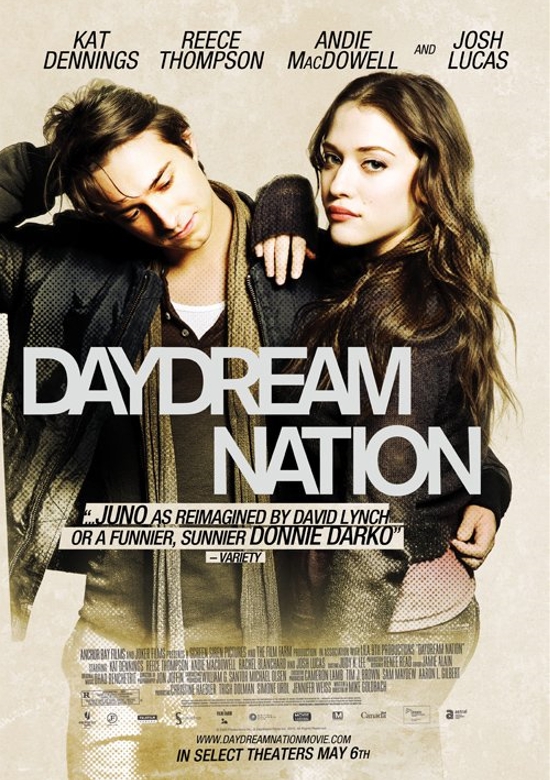
daydream-nation-movie-poster
Daydream Nation starring Kat Dennings, Reece Thompson, Josh Lucas & Andie MacDowell


Daydream Nation is a drama from 2010. It is a little fun, a little depressing and a tad annoying. It is also heart-warming in a weird sorof way. While it is not a must-see movie in any way, it is also not a waste of time for those who like its actors (Kat Dennings, Josh Lucas, Reece Thompson, Andie MacDowell) or writers who, like me, enjoy seeing movies with writer characters. You can read more about the movie on my movie blog. But here, let’s get to our writer character:


The Writer Character

josh-lucas-daydream-nation
Josh Lucas as Barry. Photo from the movie Daydream Nation. Image via daemonstv.com

Barry Anderson (Josh Lucas) is the English teacher of a depressing industrial town’s high school.  There isn’t much excitement going on in his life, and it is hardly a surprise when he jumps at the opportunity to fool around with his new student Caroline (Kat Dennings). While any teacher sleeping with his under-aged student is sure to ring loser bells, you can hardly blame Barry. He lives in a town where everyone seems to be going through a drug addiction, some level of depression or both.

Barry is happy in this relationship, and informs Caroline that she has inspired his writing and he is working on his novel. He even has an agent.


The Writer’s Story

Then one day Caroline gets to read his book, and it is just too much like a memoir. Unfortunately, Barry’s past has been even more pathetic than his present, and Caroline doesn’t like how she is represented in his novel. She decides to break things off, but when you are your boyfriend’s only muse & hobby, it can get tricky to get rid of him.


The issue here is that Barry didn’t even attempt to add a slice of fiction to his characters. Along with Caroline, we learn that his return to town as a teacher was an obligatory move when he failed in the city, both professionally and romantically. We learn that this 30-something guy is not really all that wiser or more mature than his druggie students. We finally see how much of a loser he really is, and that he makes no effort to change things.

Writers always debate whether you should write what you know or not. It actually depends on one thing: You! I always believe in writing what you love, because writing something you don’t care about is bound to be a disaster. So it doesn’t matter if you know the subject, because you can always educate yourself along the way. You just need to be passionate about what you are writing.

But usually, what you know (or you come to know through research) works best when combined with the depths of your imagination.

Barry doesn’t have much of one, and “what he knows” isn’t what he loves. It is what he despises. You could argue that a memoir, how depressing it might be, can serve as a therapy for the writer, at the very least.  Unfortunately, Barry ends with 0 self-development, minus a girlfriend.


The Writer behind “The Writer”

All in all, as depressing and weird Daydream Nation is as a story, it is more entertaining and interesting than Barry’s “fiction”. I just hope that it wasn’t a memoir of the writer/director Michael Goldbach , as the movie also features a serial killer on the loose…

*

Me, The Writer

I once read that readers want sexy, engaging characters through journeys that entice them. And I agree. There was nothing enticing or engaging about Barry’s loser story.  If he detested living it himself, what are the odds of anyone enjoying it?

I am in the midst of writing a novel that is a mixture of what I know. And I’ll confess that there is a part of me in some characters. But what happens to my characters in the novel didn’t happen to me. And for me, that is the exciting part!

You, The Writer

How about you? What do you think about writing what you know/live? How do you feel about writing stories based (solely) on your experiences? Please let me know in the comments!

Filed Under: Fictional Writers: Writer Characters in Movies, TV Series and Books Tagged With: daydream nation, daydream nation movie, fictional writers, josh lucas, kat denning, movies about writers, movies with writer characters, writing, writing what you know

7 Must-Have Characteristics to Make it as a Freelance Writer

Posted on August 28, 2011 Written by Pinar Tarhan

being a freelance writer, characteristics of a freelance writer
Freelance Writer image via ghostwriterdad.com


Writing can be a very lucrative and self-fulfilling career, but it hardly ever starts that way for anyone. You might love writing. You might be good at it. But unfortunately you need a couple of more qualities to start your writing career and accomplish your goals as a writer. Below are the 7 essential characteristics freelance writers need to possess:

Patience

I’m one of the most impatient people you can ever meet. I get bored very easily and I can’t wait for anything or anyone without doing something useful and/or fun on the side. And yet, I chose freelance writing as a career.

Now, I love writing. I am addicted even. So the girl who can’t even stand to wait for a couple of minutes chose a line of work where response times range from weeks to months, editors don’t necessarily write back, and you are required to spend countless hours researching, marketing, networking, writing, re-writing, editing and more re-writing.

Yet, I can handle it. After all, it is about knowing what’s at stake and jumping to it accordingly. It is not a walk in the park most of the time, but it is still worth it for me. How about you?

Persistence

The editors may not receive your e-mails, or they may not feel inclined to respond, even with a standardized rejection reply. Yes, they are incredibly busy but so are you. While they have to read millions of queries and make decisions, you are a one-person company. So if the guidelines say follow-up, follow-up. If there is still no response, follow-up for the second and final time. Just remember not to leave your bedside manners, even if you get nothing in return for a carefully crafted, perfectly relevant query. After all, you need a good reputation. And there is the fact that you probably submitted that query because you liked the publication. So you might want to pitch again.

The idea is to keep it polite and professional. If you think this sucks, please read the first must-have freelance writer characteristic on  this list again.

Thick Skin

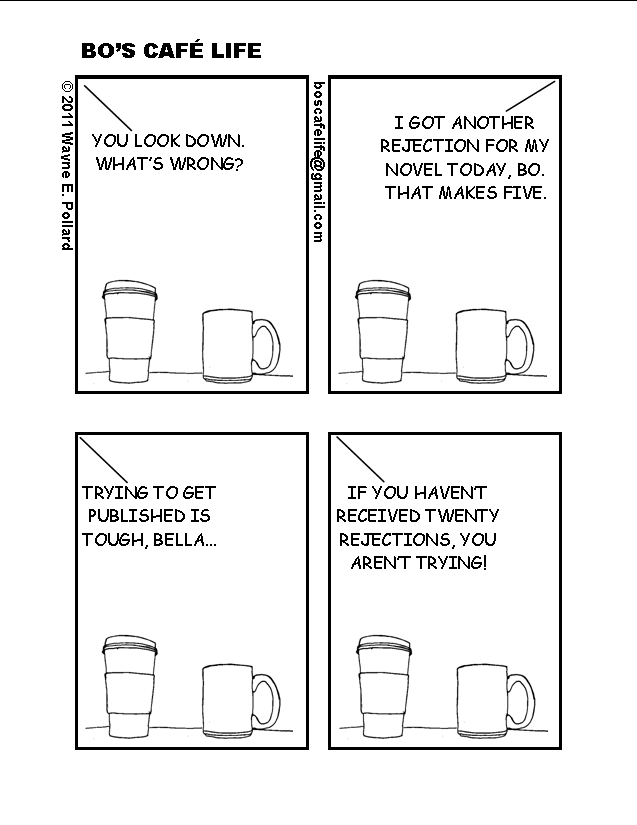
writer rejection cartoon via bo's café life
Courtesy of boscafelife.wordpress.com


You will get rejected. Every writer does, even the ones who turned into international bestsellers. So never take it personally. Make sure you work constantly to improve yourself, and keep submitting your work elsewhere.

P.S. When the going gets tough, just remember John Grisham’s first novel is A Time to Kill. He published The Firm first, because A Time to Kill was rejected everywhere. And after The Firm, everyone was after A Time to Kill, which also became a bestseller.

Passion

And you need to have fun. You need to be capable of fun, even when you want to slap someone or cry. You are writing because you love the craft. There is no reason to keep doing it if you are feeling miserable all the time.

Organization

You don’t need to be obsessive, but you do need to keep track of every idea, bill, manuscript, article and everything else that is related to your writing. You also know what to find and where. There is a great blog for writers that concentrates on the organization side of things. Check out OrganizedWriter.com for tips and resources.

Self-Discipline

You might be the type to start a project at the latest minute possible. I know I am- for the most part. But you need to make sure you keep the deadline and make sure your final draft meets every requirement, and is a good read.

Self-Management

You are your own boss, so you better be an understanding slave driver. Notice the oxymoron there? But it is true. You need to work really hard to make it as a writer. But of course you have the flexibility to choose your hours; as well as where, when and how you work. As long as you put in the necessary work, there is no reason you can’t enjoy the freedom.

*

Intimidated? Don’t be. You just might realize your personality and mind can work in mysterious ways to help you realize your dreams.


Related Posts Plugin for WordPress, Blogger...

Filed Under: Writing Tagged With: a time to kill, a time to kill book, being a freelance writer, characteristics of a freelance writer, freelance writer, John Grisham, john grisham a time to kill, john grisham the firm, query, rejection, the firm, the firm book, writers, writing

  • « Previous Page
  • 1
  • …
  • 12
  • 13
  • 14
  • 15
  • 16
  • …
  • 18
  • Next Page »

Blogroll

  • My Entertainment Blog

My Other Blogs

  • Beauty, Fitness & Style for the Fun-Loving Gal
  • Dating & Relationships in the 21st Century

Categories

  • Author Interviews
  • Author news and coverage
  • Blogging
  • Book Launches and Excerpts
  • Book News and Author Interviews
  • Book Recommendations
  • Book Reviews
  • Career Management for Writers
  • E-Book Reviews
  • Fiction Writing
  • Fictional Writers: Writer Characters in Movies, TV Series and Books
  • Inspiration and Motivation
  • Marketing
  • Marketing Fiction
  • Movie and TV Series Recommendations
  • Novel Reviews
  • Paying Markets-Web and Print
  • Productivity & Time Management
  • Recommended Resources
  • Reviews for Tools and Devices
  • Romance
  • screenwriting
  • Self-publishing
  • Story Conflicts
  • Website & Blog Reviews
  • Writer Tools
  • Writing
  • Writing Tools
  • Writing Updates

Copyright © 2026 · Focus Pro Theme on Genesis Framework · WordPress · Log in

This website uses cookies to improve your experience. We'll assume you're ok with this, but you can opt-out if you wish.Accept Reject Read More
Privacy & Cookies Policy

Privacy Overview

This website uses cookies to improve your experience while you navigate through the website. Out of these, the cookies that are categorized as necessary are stored on your browser as they are essential for the working of basic functionalities of the website. We also use third-party cookies that help us analyze and understand how you use this website. These cookies will be stored in your browser only with your consent. You also have the option to opt-out of these cookies. But opting out of some of these cookies may affect your browsing experience.
Necessary
Always Enabled
Necessary cookies are absolutely essential for the website to function properly. This category only includes cookies that ensures basic functionalities and security features of the website. These cookies do not store any personal information.
Non-necessary
Any cookies that may not be particularly necessary for the website to function and is used specifically to collect user personal data via analytics, ads, other embedded contents are termed as non-necessary cookies. It is mandatory to procure user consent prior to running these cookies on your website.
SAVE & ACCEPT