Addicted to Writing

Manage Your Freelance Writing Career While Writing What You Love

  • About Pinar Tarhan
  • Blog
  • Books
  • Hire Me: Services
  • Contact Me
  • Portfolio
  • Favorite Resources
  • Newsletter

The Problem With Following Advice, and Writing Your Novel Your Way

Posted on February 1, 2014 Written by Pinar Tarhan

novel writing
Image via bang2write.com

How good are you at following advice? For me, there is no single answer to this question. It depends on where the said advice comes from (reliability), and whether or not it can match my personality traits and some very rooted habits. Meaning I won’t (and can’t) fool myself into thinking I can take the “get up early” tip of some writers, because before 9 o’clock, I’m cranky, useless, sleepy and yes, unproductive. So instead of having a staring contest with the blank sheets or screen, I get up a little later and get the most out of my awake self.

For instance, I adore John Grisham’s legal thrillers and dramas, but the fact that he got up two hours before work (as in before he headed to the law firm) while working on his first novel makes me think he is an (awesome) alien.

I’m sure you can relate. Maybe not to my sleeping habits, but to how I analyze and decide to internalize or chuck tips from successful people. I can work with “be organized”, because that’s sane advice. I might not be able to keep the tidiest house, but I will clean up the mess before I start working.

Where’s this coming from? I’ve been reading about agents and publishing since I started working on my novel, and while some of the tips make me say “Of course!”, some make me scratch my head and get a bit pessimistic. The latest collection of tips that inspired this post can be read here.

(Some of the tips I couldn’t agree more with are about “dream” starts, verbose paragraphs, laundry lists… Please refer to this post for these to make sense )

The good news is, following some viable advice, combined with a good story and hard work, can get you published. Bad news is, it might kill diversity.

I’m working on a romantic/drama comedy which will probably appeal more to women than man on the basis of its genre. Let’s assume I get published (I haven’t started pitching yet,) and a reader picked it up. Here’s what he/she won’t see:

–       A main female character picking all her physical flaws and insecurities apart in several different places.

I read this sensible tip that says no one wants to read about physically perfect characters. They’re boring and/or hard to relate to. I agree.

But when I mentioned the “beauty” of my characters in this story, I referred to how other people perceived them. For instance one character is confident, playful, free-spirited and cute. She has no problem flirting with men, and this is observed by her friends. Maybe she has crooked teeth, or eyes that are too small for her face or she doesn’t like her nose much. Who cares? Her insecurities are irrelevant to her storyline, so I don’t mention them.

Or let’s take my leading male character. He’s described as handsome in a manly and outdoorsy way. He’s also smart, nice and extremely altruistic. So even before my female lead meets him, she is very intrigued. And because she finds his personality sexy too, she is drawn to him. While their chemistry dominates the scene, I don’t talk about if he is too tall or she’s too short or they’re going through a bad hair day. They might not be everybody’s type. They are certainly not perfect, whether physically or personally. No one is. But as far as their looks are concerned, they are perfect according to each other.

–       First person present tense narrative from this main female character.

I love romance and comedy, and I read a lot of fiction with a female leading character, told from her perspective and in present simple. I like this type of narrative. It’s fun, captivating and quite addictive. But the problem is, as I identify with this 20-something, physically-not-perfect but-can-be- quite-alluring-with-the-right-style character who has some problems at work and her romantic life, I keep wondering what the other characters are like. I get how the lead sees them, but I never get to see what they truly think. You can show and not tell as much as you want, but you are still showing one character’s point of view.

I wanted to study from published and well-received romance novels so I could get an idea of how to tell a romantic drama/comedy using past tense, and with an omniscient narrative. I failed to find such books…There are many thrillers and dramas like this, but romantic comedies? Not really. (If you can think of some, please recommend away!)

So I fumbled through my first novel. I tried to use what worked for me as a reader, and what didn’t. I left out what bored me. I tried to produce the type of story that I’d like to read.

I’m not saying it reinvents the wheel. It doesn’t. I’m not saying it’s not unpredictable, or as catchy as the first-person narratives I’m a big fan of.

But this is the story I wanted to tell. I’m open to critiques, rewrites and notes on it. But since there are numerous authors who have been doing this so well for so long, maybe I can find an agent that will take a shot with me, because it’s a bit different.

I realize that some of the advice I don’t apply might work against me. But for the sake of this story being its own (and mine), I have to reject certain tips, and cross fingers that I made the right call.

*

As always, I welcome all your tips, experiences and opinions.


Recommended Posts on Fiction Writing

Challenges of Writing Your Novel (After Your First Draft) & Resources to Help You Survive and Thrive

Novel Writing Challenges Get Crazier: From 30 Days to 3 Days!

How to Jolt Back To Writing Non-Fiction From Fiction: 13 Tips
 

Filed Under: Fiction Writing Tagged With: novel writing, novel writing advice, writing a novel, writing advice, writing fiction

Challenges of Writing Your Novel (After Your First Draft) & Resources to Help You Survive and Thrive

Posted on August 17, 2013 Written by Pinar Tarhan

red_editing_pen
Image via urbanmusewriter.com.


I know this blog has taken a turn towards fiction, but I promise you it’s not absolute or permanent. I’ve always written fiction, and I’ve become addicted to non-fiction as of late 2009 (aka when I discovered blogging).

However it is hard to find a balance between the two, and with many contest deadlines being in spring, summer or early fall, I’ve been cheating on my non-fiction a bit. That, and I’m still waiting for my text-to-speech software, which endured a long adventure on the way to me, which soon you will read about.

Completing your first draft is no easy task. You need to fight blocks, doubt, urges to edit and give up. But while it is an essential step on the way to getting published, it is still way down on the ladder – with so many more steps left to climb up.

My first draft for my first novel (attempt) was finished some months ago. Now it’s being re-read and edited. I’ll soon be submitting it to two contests and later to agents and publishers.

–       Editing:  It goes without saying. You need to pay attention to punctuation, grammar, story flow (are the events in the right order?, do the scenes follow each other smoothly?, etc), fact-checking, research to you left to be added later.

My favorite editing resource is Sigrid Mcdonalds’ Be Your Own Editor.

–       Formatting: You need to correctly format your manuscript including anything from spacing to font size. There’s a lot of software (both free and paid) for novel writing on the web. But while I adore my scriptwriting software (Final Draft), I couldn’t find one I prefer over Word when it comes to writing novels. Old-fashioned Word-lovers like me shall not worry, though, because formatting with it is not that complicated. I use a lot of Writer’s Digest books as resources, and I own Formatting and Submitting Your Manuscript by Chuck Sambuchino.

–       Writing your synopsis: Well, this is a form of torture. Yes, it is a necessary evil. I can’t argue with that. But I doubt there are many authors who claim to love writing this one-page (or two) summary of their manuscript where you have to give all the main points without the freedom of space. Oh boy.

Burdened with this obligatory task, I dug into the Internet, and I  found Jane Friedman’s article and list quite useful: Back to Basics: Writing a Novel Synopsis. I also recommend: Movie Synopsis Examples on Writer’s Digest. 

thinking writer
Image via nancydimauro.blogspot.com

–       Prologue or no prologue:  My story starts in the present with some necessary flashbacks (yes, I’m adamant they’re necessary). However I have two scenes involving the male protagonist that take place before the flashbacks’ (these flashbacks belong to the same year) date. They aren’t description-heavy scenes, but rather dialogue-based bits that tell us plenty of information about the main character. So yes, I wrote a prologue.

Obviously if judges/agents/publishers like what they see but insist on I give it up, I’ll. My story is my child, but I’m not above cutting her hair so that she’ll get accepted to a prestigious school. I’m just saying.

–       Chapters: How long and compelling are your chapters? True, there is no obligatory maximum or minimum length, and every story is different. But you might want to check if the events are separated optimally.

–       Flashbacks: Do you have flashbacks? And do they add to or take away from the flow of your story?

In my case, I have no story without the flashbacks. They strengthen (and give the reason for) the main conflict. They make you care about the characters more. They also provide motives. So, for this particular story, I say “Yay!” for them.

I’m all for applying tips from industry veterans, and most writers aren’t crazy about flashbacks. But don’t forget there’s always room for breaking some rules.

–       Frustration: Whether it’s loneliness, writer’s (or editor’s) block or just general frustration that makes you want to connect with people who go through similar ordeals, I suggest you have  writer friends online and offline. I happen to know more writers online, and this Facebook group is awesome when it comes to support, response rate and being fun.

–       Collecting agents’, publishers’ and contests databases: Where will you try to sell your book?

It’s important to construct your database so that you can get right into action as soon as you’re finished editing, formatting and polishing. You might (and probably will) get rejected in the process, but not sending out work (to the right markets) prevents acceptance too.

Where to Find Free Market Listings by Jane Friedman is a good start.

–       Preparing for, and accepting rejection: Since it happened to a lot of the writers you admire, it’s safe to assume it might happen to you to. The secret to success is knowing how to deal with it. Below are several articles to guide you through the unpleasant, but usually unavoidable, event of rejection:

How to Manage the Evil Three: Rejection, Depression & Procrastination

How to Handle Rejection (and When It Might Be A Good Thing)


 *

One of the benefits of writing a blog for writers is that I get to share my to-do list and advice in a fun way. I enjoy helping out other writers, and frankly, blogging is more fun than a boring to-do list written on a piece of paper to be forgotten later…


Filed Under: Fiction Writing, Writing Tagged With: dealing with rejection, editing fiction, formatting a manuscript, formatting a novel, how to format and submit your manuscript, novel editing resources, novel writing challenges, novel writing resources, writing a novel, writing fiction

Novel Writing Challenges Get Crazier: From 30 Days to 3 Days!

Posted on March 3, 2012 Written by Pinar Tarhan

writer-computer-book-coffee
Image via institutechildrenslit.net.

How fast can you churn out a decent novel? 3 years? 3 months?

While I was hunting for a good resource on writing a good page-turner that would satisfy me and land me an agent (and later hopefully a publisher), I thought Writer’s Digest’s 90 Days to Your Novel was reasonable enough.

The book tells you everything you need to know from the beginning to outlining to writing dialogue.  And while I didn’t finish my book in 90 days (it is on me though – I also love to maintain a part-time career in teaching, as well as a career in non-fiction), I learned a lot from that book.

Then of course if you are ready to dedicate a really good portion of your available time, I do believe that even the NaNoWriMo (National Novel Writing Month) is not a far-fetched concept, especially if you do have a certain grasp of your main events and characters before starting. A novel- at least a reasonable first draft- can probably be written in 30 days. And a goal of 30 days, whether you officially join other writers in a contest or just set it for yourself, is a great and productivity-fueling idea.

But while I was reading an article on the Funds for Writers newsletter and saw the term 3-Day novelist, I thought it was a typo. A novel? In 3 days? Right…But then I read on to find out how the writer had used fundraising for her book and her proposed budget was $120….So I hit google.

Sure enough there it was: 3-Day Novel Contest. OK, to be fair, the novel is going to be about 100 pages but 3-Days? Seriously?

But short(ish) or not, I don’t honestly see myself sitting through one weekend and being able to finish a novel. But it is a challenge like I have never seen before. And if you win, your prize is getting published. But there is an entrance fee, and you must be ready for a true marathon.

*

  • Have you ever joined the NaNoWriMo? Or the 3-Day Novel Contest?
  • Did you assign yourself a certain amount of time to finish your novel and stick to it?
  • What do you think is the most probable amount of time for producing a satisfactory novel, or its favorite cousin: the holy first draft?

I would love to learn about your experiences and insights.

Filed Under: Writing Tagged With: 3 day novel contest, how much does it take to write a novel, nanowrimo, national novel writing month, novel writing, write a novel in 90 days, writing a novel

Too Much Telling Can Slow Down Page -Turners: Inspired by Jasper Kent’s Twelve

Posted on February 19, 2012 Written by Pinar Tarhan

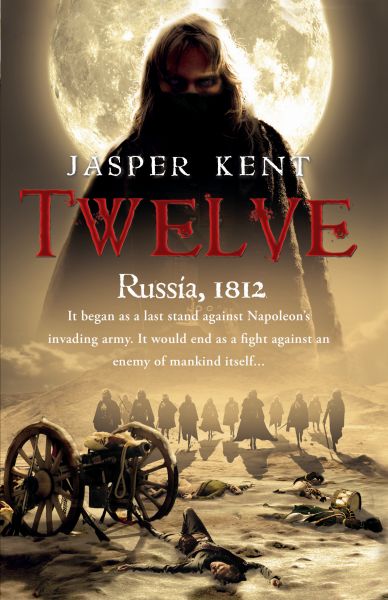
Twelve, Jasper Kent
Cover of Twelve by Jasper Kent.

Some of my favorite stories have been a blend of true event and the writer’s imagination. In 2011, I had a blast watching X-Men: First Class where the story put mutants right in the middle of the Cuban Missile Crisis. And Jasper Kent’s Twelve had even a catchier premise: Napoleon vs. Russia aided by vampires disguised as mercenaries, I knew I had to read that novel.

I started reading Twelve (right in the bookstore queue actually) and the prologue drew me further in. It started with a folktale that was creepy and delicious enough for me to continue reading on my way home.

Right after the prologue, though, the narrator turned into first person, but that seemed OK. The narrator, also our protagonist, was an experienced Russian soldier who was a part of an elite group whose members could survive in the battle field or as spies.

These Russians were desperate. Napoleon had marched further way further than Russians ever thought possible, an experienced soldier offers enlisting the help of these mercenaries’, who work as a group, stay loyal to who hire them and they get results by whatever means necessary. And they don’t cost anything, since they live off whatever they find around.

At first the rest of the group is reluctant but desperate times call for desperate measures, and the group arrives. They get the job done, even though they follow their own methods. Things naturally go awry when our narrator realizes that the reason each of these mercenaries can kill so many man at a time is that they are vampires!

So far, so good. The premise is cool, and it is the kind of story I wish I could have come up with. Those are my favorites- the ones that make me wish I had created. But there is one problem with the book, and it is a big one: there is simply too much narration.

At some points the narrator goes on and on and on and on….to the point that I wonder whether the author read some of those how to write a novel books, saw that you are advised to balance narration with dialogue and action and is rebelling against the advice, proving a bestseller can happen with too much narration as well.

I am not saying there is not dialogue. The dialogue is good, and there is plenty of action. After all, there is a war going on and yet our protagonist has noticed that his strongest allies are the enemies of humankind in general.

But the protagonist ALWAYS lets us know exactly what he thinks. Of everything and everyone. That just puts roadblocks to an otherwise enjoyable route. And after you pass one roadblock and just start to speed up, you run into the others.

This much narration doesn’t work in your favor, especially if the narrator fast becomes one of your least favorite characters.  He is self-righteous, he views all things in black and white, he believes in killing for war, and yet he is outraged when a vampire gets to kill a French soldier. So torture is OK, losing vital organs to war is OK, suffering terrible deaths by the hands of a man is OK, but being killed by a vampire? God forbid!

But it is not just his attitude or ramblings that go on for ages. It is also how the writer describes locations and people and interactions in so much detail again and again and again. Are you bored with my repetitions already? Good. Now you know how I feel.

I love the story. I love the villains. The guy who brought in the villains is also very interesting. Yet it feels like work reading through all of the words to get to the more exciting bits.

I feel like the novel could miss a hundred pages, and end up a superior book that doesn’t stall. A great story is drowned and dragged through narration.

I can’t tell you not to read the book as it is too good a premise. I’m, however, saying I’m a little disappointed, because I had expected to finish the book in two days. Several weeks went by, and I had to give a break. After all there are only so many descriptions of Moscow or the guys’ feelings for his mistress I could take.

So if you are one of the writers who love dialogue but have more trouble with narration, or if you are a reader who doesn’t like when an author is a less then concise, this may not be the book for you.

But for some a little-delayed entertainment, it is good. But I was so excited after the prologue, I was sure I’d buy this book’s sequel, 13 Years Later.  Now I’m not so sure. Especially since I know the protagonist will be the same.

Related Posts Plugin for WordPress, Blogger...

Filed Under: Writing Tagged With: how not to write a novel, how to write a novel, jasper kent, jasper kent twelve, jasper kent twelve review, narration, narration in novels, writing a novel

  • 1
  • 2
  • Next Page »

Blogroll

  • My Entertainment Blog

My Other Blogs

  • Beauty, Fitness & Style for the Fun-Loving Gal
  • Dating & Relationships in the 21st Century

Categories

  • Author Interviews
  • Author news and coverage
  • Blogging
  • Book Launches and Excerpts
  • Book News and Author Interviews
  • Book Recommendations
  • Book Reviews
  • Career Management for Writers
  • E-Book Reviews
  • Fiction Writing
  • Fictional Writers: Writer Characters in Movies, TV Series and Books
  • Inspiration and Motivation
  • Marketing
  • Marketing Fiction
  • Movie and TV Series Recommendations
  • Novel Reviews
  • Paying Markets-Web and Print
  • Productivity & Time Management
  • Recommended Resources
  • Reviews for Tools and Devices
  • Romance
  • screenwriting
  • Self-publishing
  • Story Conflicts
  • Website & Blog Reviews
  • Writer Tools
  • Writing
  • Writing Tools
  • Writing Updates

Copyright © 2026 · Focus Pro Theme on Genesis Framework · WordPress · Log in

This website uses cookies to improve your experience. We'll assume you're ok with this, but you can opt-out if you wish.Accept Reject Read More
Privacy & Cookies Policy

Privacy Overview

This website uses cookies to improve your experience while you navigate through the website. Out of these, the cookies that are categorized as necessary are stored on your browser as they are essential for the working of basic functionalities of the website. We also use third-party cookies that help us analyze and understand how you use this website. These cookies will be stored in your browser only with your consent. You also have the option to opt-out of these cookies. But opting out of some of these cookies may affect your browsing experience.
Necessary
Always Enabled
Necessary cookies are absolutely essential for the website to function properly. This category only includes cookies that ensures basic functionalities and security features of the website. These cookies do not store any personal information.
Non-necessary
Any cookies that may not be particularly necessary for the website to function and is used specifically to collect user personal data via analytics, ads, other embedded contents are termed as non-necessary cookies. It is mandatory to procure user consent prior to running these cookies on your website.
SAVE & ACCEPT