Addicted to Writing

Manage Your Freelance Writing Career While Writing What You Love

  • About Pinar Tarhan
  • Blog
  • Books
  • Hire Me: Services
  • Contact Me
  • Portfolio
  • Favorite Resources
  • Newsletter

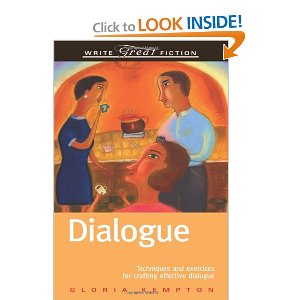
Write Great Fiction Dialogue with Gloria Kempton

Posted on January 31, 2012 Written by Pinar Tarhan

Write Great Fiction Dialogue-Gloria Kempton
Image via amazon


This Writer’s Relationship with Dialogue

I love writing dialogue. In fact, I love it so much that I only started writing a novel this year, at the age of 27 (I’ve been writing since I was 9). So despite being in love with writing, it never occurred to me to try writing a novel because I had thought that only people who could (and would) write pages of narrative got published.

It was a misguided belief, but I blame it all on my dad’s library, which was full of international bestsellers that reeked of unbearably long and detailed narratives. Of course as I grew up, I discovered a lot of bestselling writers who found the perfect narrative/dialogue ratio, as well writers whose narrative flowed so well it read like juicy dialogue.

But despite finding writers whose books I could read hundreds of pages from in one sitting, I still doubted myself. Because I like dialogue so much, I preferred writing plays over stories, and screenplays over novels.

And yet the dream of being published, seeing my book printed and on the shelves, stayed with me. And with the inspiration I got from authors like Sophie Kinsella and Shari Low, I decided to just go for it.

I love the works of Kinsella and Low because they create fun characters, interesting plots, and hilariously authentic romantic comedies. OK, call it modern romance, chicklit, escapism….whatever. I love reading those kinds of stories, as well as creating them.

But I still had my doubts. Because unlike what Kinsella usually does, my heroine is not the heart of the story. And I didn’t want a first person story written in present tense. Because the story belongs to my male protagonist as much as the female. And despite having a lot in common, they have distinctly different personalities. They are also established professionals. So I have to adjust my tone every time I switch point of view. And guess what? I am writing with multiple viewpoints.

Why I Bought Writing Great Fiction

I needed some serious help. I didn’t want my characters to sound the same. I didn’t want any boring or unauthentic lines coming out of my characters’ mouths. I also didn’t want my story to look like it is all dialogue. I also had questions about formatting…Then I stumbled upon Gloria Kempton’s Write Great Fiction – Dialogue on Writer’s Digest’s shop.

I’ve been studying the book for a couple of months, and applying its tips on my book. I´ll be going whenever I get stuck, and I’ll also use it for editing and improving my manuscript.  And here is why this is one of the best resources:

What It Offers:

  • Lots of dialogue samples from a large variety of published and successful books
  • What to pay attention when you are writing dialogue (including its relationship with narrative and action)
  • What not to do
  • Lot of tips and exercises
  • Formatting your dialogue
  • How to know if your dialogue is working
  • How not to get carried away with fancy words and useless adverbs
  • Knowing your characters’ personality type, and writing accordingly
  • And a lot more.

The Book’s Language

One of my pet peeves is people who don’t practice what they preaches. But luckily Kempton isn’t one of them, as her tone throughout the whole book is while authorative, it is also fun, conversational and personal.

You know you can trust her advice (not just because her book was published by Writer’s Digest), but also it is clear that she has used her own advice and it works. How else would it be enjoyable to study a non-fiction book without wanting to put it away?
Filed Under: E-Book Reviews Tagged With: dialogue writing exercises, Gloria Kempton, how to write dialogue, how to write fiction, how to write good dialogue, write a novel, write fiction, write great fiction, writers digest books, writing a novel, writing dialogue, writing dialogue first novel, writing fiction

Balancing Showing and Telling in Writing & Why “Show, Don’t Tell” Can Be Easier in Screenplays than in Novels

Posted on December 10, 2011 Written by Pinar Tarhan

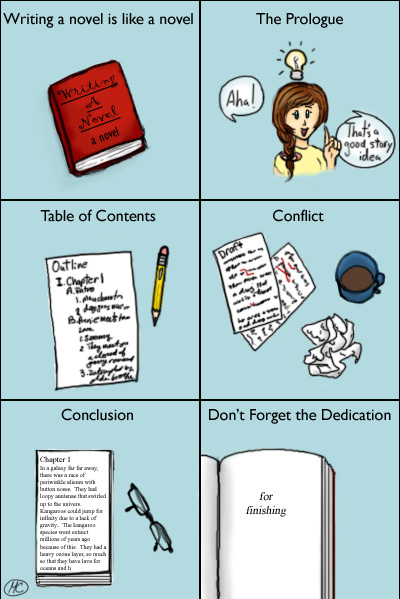
Writing a novel is like a novel
Novel writing is indeed tricky. Image via 1.bp.blogspot.com


“Show, don’t tell” is a great advice. You-as the writer-need to make the readers see, feel, smell, touch…You want them to understand the characters and be immersed in the story without spelling everything out them. You want to them to see that your character is smart by the things he does or says. You don’t just tell them he is so smart. Or you might, but you also prove your point by showing that he is smart.

“But Show, Don’t Tell” is easier said than done, especially when it comes to writing novels. I can’t tell you how many novels I put down because they tried to tell me a million things, while also showing them to me. And ideally, no matter what kind of writing that you do, you have to balance the two.

There are many screenplays that just tell. Remember the movies where characters talk all the time, and never actually move their butts to take action about anything? The movies that bore you to death? Yeah- the screenwriters just told things, and the director went with it.

But with fun screenplays, the writers do a good job of balancing what to tell and show. But of course the screenplays are written for the screen, and everything will be shown by the actors. If they want to show the progress of a romance, they put on a good song and show us what the actors do together instead of giving us dialogue.

And this is exactly what I do when I write a screenplay. Sure, I sweat over lines and details, but sometimes it is more effective to choose the song with the right lyrics and let the reader/viewer get the message. But I can’t take advantage of music when I’m writing the novel. Well, I can- to motivate myself. But I can’t give my audience a soundtrack to go with it (although that would be pretty neat). I need to sweat over the thoughts, setting, and scenes- all the time. There’s no shortcut.  This is a pretty hard thing to do.

Yes, I watch a lot of movies and pay attention to a lot of scenes. I also analyze novels on how much and how they showed and told.  I keep my fingers crossed, and keep working on my first draft where I try to entertain, engage and make readers feel.  But it is a tough road. Wish me luck.

How about you? Do you write fiction? Do you have problems balancing showing and telling? Please let me know in the comments.


Filed Under: Writing Tagged With: how to write a novel, novel writing, novels vs screenplays, show don't tell, writing a novel, writing advice, writing novels, writing screenplays, writing tips

Writing a Romantic Drama (Novel) That Will Appeal to Both Sexes

Posted on November 28, 2011 Written by Pinar Tarhan

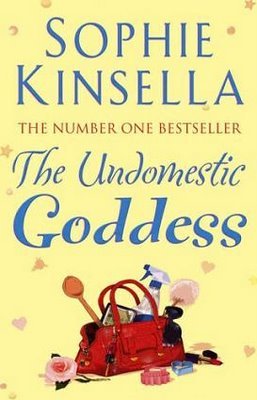
Sophie_Kinsella_Undomestic_Goddess
This is one of my favorite books, by one of my fav authors. But I doubt guys would read it. Image via media34.onsugar.com

Can it be done? I have nothing against chicklit. In fact, if it is written well, I am a huge fan. Hell, I am a romantic, and I am a chick- and a fun chicklit provides great escapism and some good laughs. But I highly doubt guys actually read any. Maybe some are dragged into the movie theaters if the book was adapted, but then the overwhelming pop soundtrack probably annoys the hell out of them, and minus the hilarity of the author, the comedy is  easily lost on them. Well, I know that pop soundtrack definitely destroys the romance for me.

Now, don’t get me wrong. I want to be read by women. They will be the majority of my readers, and I am happy about this. I just don’t want the book totally ignored by guys just because the cover and tagline screams for women only.

OK, let’s get back to the novel. I’ve had this great idea for a romantic drama/comedy. Earlier, I had written about my indecision about the medium and why I’d decided to try writing it as a novel instead of a screenplay.

So, I collected some decent resources about how to write an engaging novel (and how to go about selling it.) And of course being the fan of romantic escapism, I dove into the novels of similar genres and started studying them.

Unfortunately, almost all of them had either been written in first person and in present tense or in third person limited from the girl’s point of view. And therein was my problem: I don’t have one protagonist. I have two. I don’t just want to get into the girl’s head- I also want to get into the guy’s.

And I have some pretty decent subplots which are also highly related to the main plot so I want to get into several heads. Don’t I have lots of books that were told in third person, unlimited? Sure, I do. Unfortunately they are all thrillers!

So what does a girl have to do to write a romantic novel that is not sappy? That isn’t all about the girl?

Yes, I want to be able to flesh out all my characters, and convey what they all actually think-as opposed to just the girl’s interpretation of what they think…I don’t want a pink cover. I love the color pink, it just doesn’t reflect the core.

So guess what I want? I want a novel that is as unisex as the movie Crazy, Stupid, Love. I loved everything about that story, and as much as it had a bromance of a sort, it was just a sweet, hilarious and universal story. And I know how to write one into a screenplay. I don’t have point of view problems there.

The question is, how to write its novel? Well, I’m writing and rewriting scenes from my first draft, and eventually it will all look right. Of course then the actual nightmare of looking for a publisher will start. But hey, let’s worry about one thing at a time, shall we?

What gets in the way of your storytelling?

Filed Under: Writing Tagged With: bromance, chicklit, crazy stupid love, crazy stupid love movie, novel point of view, novel writing, romantic comedy, writing, writing a novel

Challenges of Writing A Novel & Some Great Resources for Tackling Them

Posted on July 11, 2011 Written by Pinar Tarhan

writing a novel
Image via originalbliss.typepad.com


I used to think that there were two challenges about writing a novel: 1) finding a great story, and 2) trying to get that great story published.

While I still believe these are the biggest challenges a writer faces, I realized there are 4 more challenges that came along my way:


1) Novel or Screenplay?

You love reading novels. You love watching movies. And you love creating dialogue-heavy stories. So how do you decide whether your story works best as a novel or a screenplay?


As a writer with no connections to Hollywood, I realized that I had a better chance of finding a publisher that might be interested in my novel. Now, please notice that I said easier, and not easy.


Getting a novel published seems to be relatively easier than getting a screenplay to Hollywood. I had a sneaking suspicion this might be the case and this is the article that helped me make up my mind: The Novel vs. the Screenplay: a Tough Love Guide for Talented Writers.


2) POV : Point of View


So you decided you’d rather write a novel. You have your characters, and you have your story. But from which point of view are you going to tell everything?


I really struggled with this decision. I tried different ones through several chapters, and then saw what worked best. I also looked at my favorite books in the same genre to see what other authors did.


Remember your options:

Third Person Limited

Third Person Multiple (or Author Omniscient)

First Person

Second Person


Articles That Helped Me With POV

Whose Point of View?

Picking the Perfect POV

Good reasons for multiple POV

Point of View, Parts 1 & 2


3) Order of Scenes

Which chapter will you start with? How do you order your scene?

I think that with all the other decisions regarding your novel, you have to decide what works best for you. I rewrote, reordered and rewrote again. And, I did eventually go back to my first order. It provided the best flow.


4) Quantity of Dialogue

Since I was originally planning to write a screenplay, my chapters are filled with dialogue. I am not saying it is all dialogue, but my characters talk a lot. And because I decided to go with Third Person Omniscient, I think the amount of dialogue works for the story.


**


But of course I have to remind you that I am only in the writing stage. I haven’t finished the story, and haven’t sent queries to any literary agents. Right now, my only concern is to put my story on paper. There might be many changes along the way. And of course we don’t know if agents/ publishers are going to be interested yet.


However you should keep in mind that you need to have a story to be able to get a rejection or approval.  So come on! If you have a story to tell, start writing it. Then you can deal with formatting and querying.


Related Posts Plugin for WordPress, Blogger...

Filed Under: Writing Tagged With: challenges of writing a novel, deciding on your novels pov, different types of pov, novel or screenplay, point of view, pov, writing a novel

  • « Previous Page
  • 1
  • 2

Blogroll

  • My Entertainment Blog

My Other Blogs

  • Beauty, Fitness & Style for the Fun-Loving Gal
  • Dating & Relationships in the 21st Century

Categories

  • Author Interviews
  • Author news and coverage
  • Blogging
  • Book Launches and Excerpts
  • Book News and Author Interviews
  • Book Recommendations
  • Book Reviews
  • Career Management for Writers
  • E-Book Reviews
  • Fiction Writing
  • Fictional Writers: Writer Characters in Movies, TV Series and Books
  • Inspiration and Motivation
  • Marketing
  • Marketing Fiction
  • Movie and TV Series Recommendations
  • Novel Reviews
  • Paying Markets-Web and Print
  • Productivity & Time Management
  • Recommended Resources
  • Reviews for Tools and Devices
  • Romance
  • screenwriting
  • Self-publishing
  • Story Conflicts
  • Website & Blog Reviews
  • Writer Tools
  • Writing
  • Writing Tools
  • Writing Updates

Copyright © 2026 · Focus Pro Theme on Genesis Framework · WordPress · Log in

This website uses cookies to improve your experience. We'll assume you're ok with this, but you can opt-out if you wish.Accept Reject Read More
Privacy & Cookies Policy

Privacy Overview

This website uses cookies to improve your experience while you navigate through the website. Out of these, the cookies that are categorized as necessary are stored on your browser as they are essential for the working of basic functionalities of the website. We also use third-party cookies that help us analyze and understand how you use this website. These cookies will be stored in your browser only with your consent. You also have the option to opt-out of these cookies. But opting out of some of these cookies may affect your browsing experience.
Necessary
Always Enabled
Necessary cookies are absolutely essential for the website to function properly. This category only includes cookies that ensures basic functionalities and security features of the website. These cookies do not store any personal information.
Non-necessary
Any cookies that may not be particularly necessary for the website to function and is used specifically to collect user personal data via analytics, ads, other embedded contents are termed as non-necessary cookies. It is mandatory to procure user consent prior to running these cookies on your website.
SAVE & ACCEPT