Addicted to Writing

Manage Your Freelance Writing Career While Writing What You Love

  • About Pinar Tarhan
  • Blog
  • Books
  • Hire Me: Services
  • Contact Me
  • Portfolio
  • Favorite Resources
  • Newsletter

How to Jolt Back To Writing Non-Fiction From Fiction: 13 Tips

Posted on December 17, 2013 Written by Pinar Tarhan

Image via applecopywriting.com.


Are you fiction writer? A non-fiction writer? Or both?

If you truly love writing, want to make a regular income from it (or you are already making a living writing) and/or can’t wait to share what you have learned and experienced with the rest of the writers out there, chances are, you are both into writing fiction and non-fiction.

Stephen King wrote a book on writing, simply called On Writing: A Memoir of the Craft. Now, that’s the kind of writer I want to learn from. Not because I’m a horror fan, but because I admire his success, productivity and ability to write in diverse genres (Shawshank Redemption, for instance, is based on a story of his) and write in a variety of formats (novels, short stories, non-fiction books…)

Screenwriter John August (Big Fish, Go, Charlie’s Angels, Dark Shadows) runs a website where he shares his tips on screenwriting – one of my favorite go-to resources as an aspiring screenwriter.

Some novelists get to adapt their movies to screen themselves and writing magazines love publishing advice articles from published writers. Stephen Chbosky’s The Perks of Being a Wallflower, anyone?

I love writing fiction and non-fiction, and wrote about why we needed to balance the two here before.

But sometimes, one takes priority over the other, usually because of deadlines and where your productivity is gravitating towards at that moment.

For the last couple of months, even though I did my best not to neglect my blogs, I’ve concentrated polishing my screenplay and a TV pilot for competitions. I read even more about formatting, selling, contests’ reliability. I found great resources on both writing and selling, and I’ll be sharing them here soon.

But it’s safe to say I was lost in a world of fictional characters and story lines, and reading up on how to make them come alive.

Of course my non-fiction ideas didn’t stop flowing. So I noted them down, and after having taken care of 3 competitions with the nearest deadlines, I’m ready to immerse in non-fiction once again.

Getting back to real life is fun, though your mind and writing might take a while to adjust. So below are a few tips to make the transition easier and quicker:

1)   Go through your old ideas. Having worked on different projects might have provided you new insights and angles. Use them. Brainstorm with your just-back-from-fiction mind. You might be surprised.

2)   Keep writing new ideas down. Also make a note of what you have learned about writing/selling fiction. There are a million stories there.

3)   Not getting hit by a new load of ideas? This post is bound to ignite some quality inspiration: Finding Article Ideas & Writing About Them: 30 Inspiration Tips for Writers.

4)   Check the websites/publications you follow, including the ones you have written for or wanted to write for. They might have gone through editorial changes. Their submission guidelines or how they work with freelance writers might have changed. Is this still a place you want to write for? Update your market list accordingly.

5)   If those websites are still up your alley, study the new articles. You need to know what they published recently. You don’t want to waste the editor’s time, or yours, by pitching an idea that was recently covered.

6)   Do a “markets” research. There are probably new writing markets you might want to catch up on. Make notes of the ones that interest you.

7)   Write. It’s like switching between rollerblades and your bike. Both are fun, both are you. They just work a bit differently.

8)   Promote your writing. Remind your readers you’re alive and well. Of course this works better if you’ve kept up a presence in the blogosphere during your fiction marathon.

9)   Read non-fiction: blogs, magazines, books, twitter feeds of the people that inspire you, entertain you and/or piss you off…new and old stuff. Read.

10)   Read some of those awesome e-books you kept for referencing, and some new resources you found. Some of my new favourites came from Sophie Lizard’s  Another 52 Free Resources for Freelance Bloggers post, for instance.

11)   Keep reading fiction, but don’t make it the priority.

12)  Exercise. Seriously. I know how easy it is to get caught up in the wonderfully exciting worlds you have created, but we need to be healthy. And exercising gives you even more ideas.

13)  Eat healthily. Yes, you always need to do this, but if you have gone on a binge to make the deadlines, get a grip on your eating habits before your immune system decides to punish you. I’ll be posting about this too, so stay tuned.

*

Welcome back to the lovely world of non-fiction! If there are any tips you’d to add, comment away…

 

Filed Under: Blogging, Writing Tagged With: finding ideas, inspiration for writers, john august, writing fiction, writing non-fiction

Challenges of Writing Your Novel (After Your First Draft) & Resources to Help You Survive and Thrive

Posted on August 17, 2013 Written by Pinar Tarhan

red_editing_pen
Image via urbanmusewriter.com.


I know this blog has taken a turn towards fiction, but I promise you it’s not absolute or permanent. I’ve always written fiction, and I’ve become addicted to non-fiction as of late 2009 (aka when I discovered blogging).

However it is hard to find a balance between the two, and with many contest deadlines being in spring, summer or early fall, I’ve been cheating on my non-fiction a bit. That, and I’m still waiting for my text-to-speech software, which endured a long adventure on the way to me, which soon you will read about.

Completing your first draft is no easy task. You need to fight blocks, doubt, urges to edit and give up. But while it is an essential step on the way to getting published, it is still way down on the ladder – with so many more steps left to climb up.

My first draft for my first novel (attempt) was finished some months ago. Now it’s being re-read and edited. I’ll soon be submitting it to two contests and later to agents and publishers.

–       Editing:  It goes without saying. You need to pay attention to punctuation, grammar, story flow (are the events in the right order?, do the scenes follow each other smoothly?, etc), fact-checking, research to you left to be added later.

My favorite editing resource is Sigrid Mcdonalds’ Be Your Own Editor.

–       Formatting: You need to correctly format your manuscript including anything from spacing to font size. There’s a lot of software (both free and paid) for novel writing on the web. But while I adore my scriptwriting software (Final Draft), I couldn’t find one I prefer over Word when it comes to writing novels. Old-fashioned Word-lovers like me shall not worry, though, because formatting with it is not that complicated. I use a lot of Writer’s Digest books as resources, and I own Formatting and Submitting Your Manuscript by Chuck Sambuchino.

–       Writing your synopsis: Well, this is a form of torture. Yes, it is a necessary evil. I can’t argue with that. But I doubt there are many authors who claim to love writing this one-page (or two) summary of their manuscript where you have to give all the main points without the freedom of space. Oh boy.

Burdened with this obligatory task, I dug into the Internet, and I  found Jane Friedman’s article and list quite useful: Back to Basics: Writing a Novel Synopsis. I also recommend: Movie Synopsis Examples on Writer’s Digest. 

thinking writer
Image via nancydimauro.blogspot.com

–       Prologue or no prologue:  My story starts in the present with some necessary flashbacks (yes, I’m adamant they’re necessary). However I have two scenes involving the male protagonist that take place before the flashbacks’ (these flashbacks belong to the same year) date. They aren’t description-heavy scenes, but rather dialogue-based bits that tell us plenty of information about the main character. So yes, I wrote a prologue.

Obviously if judges/agents/publishers like what they see but insist on I give it up, I’ll. My story is my child, but I’m not above cutting her hair so that she’ll get accepted to a prestigious school. I’m just saying.

–       Chapters: How long and compelling are your chapters? True, there is no obligatory maximum or minimum length, and every story is different. But you might want to check if the events are separated optimally.

–       Flashbacks: Do you have flashbacks? And do they add to or take away from the flow of your story?

In my case, I have no story without the flashbacks. They strengthen (and give the reason for) the main conflict. They make you care about the characters more. They also provide motives. So, for this particular story, I say “Yay!” for them.

I’m all for applying tips from industry veterans, and most writers aren’t crazy about flashbacks. But don’t forget there’s always room for breaking some rules.

–       Frustration: Whether it’s loneliness, writer’s (or editor’s) block or just general frustration that makes you want to connect with people who go through similar ordeals, I suggest you have  writer friends online and offline. I happen to know more writers online, and this Facebook group is awesome when it comes to support, response rate and being fun.

–       Collecting agents’, publishers’ and contests databases: Where will you try to sell your book?

It’s important to construct your database so that you can get right into action as soon as you’re finished editing, formatting and polishing. You might (and probably will) get rejected in the process, but not sending out work (to the right markets) prevents acceptance too.

Where to Find Free Market Listings by Jane Friedman is a good start.

–       Preparing for, and accepting rejection: Since it happened to a lot of the writers you admire, it’s safe to assume it might happen to you to. The secret to success is knowing how to deal with it. Below are several articles to guide you through the unpleasant, but usually unavoidable, event of rejection:

How to Manage the Evil Three: Rejection, Depression & Procrastination

How to Handle Rejection (and When It Might Be A Good Thing)


 *

One of the benefits of writing a blog for writers is that I get to share my to-do list and advice in a fun way. I enjoy helping out other writers, and frankly, blogging is more fun than a boring to-do list written on a piece of paper to be forgotten later…


Filed Under: Fiction Writing, Writing Tagged With: dealing with rejection, editing fiction, formatting a manuscript, formatting a novel, how to format and submit your manuscript, novel editing resources, novel writing challenges, novel writing resources, writing a novel, writing fiction

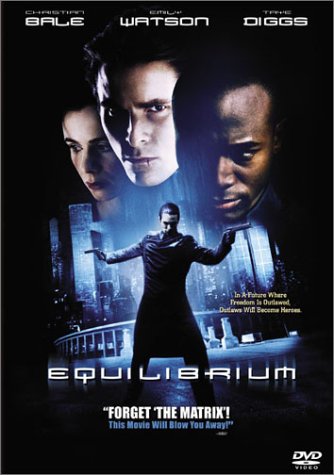
Equilibrium: Live Numb or Die Feeling (Die Being Yourself): Most Enthralling Story Conflicts 6

Posted on June 3, 2013 Written by Pinar Tarhan

 equilibrum, christian bale

Equilibrium is a universally compelling action drama that takes place in a post- WW3 universe where all wars and crimes have been eliminated, as well as all “evil” feelings of rage, violence, greed and such.


Oh, yes, there’s  a catch. A gigantic one:


Along with the negative feelings and impuses that have been eradicated are also love, passion, friendliness and such. Nobody feels anything, complements of the government-supplied, obligatory doses of a drug.


What about stimulators, you might ask. Like music. Paintings. Personal taste. All forbidden. Nothing is custom, or individualistic. Nothing is colorful, or creative.


Everyone’s only an obedient, faded clone of themselves.


Oh, of course there’d be no point in watching the movie if it was all grey.


There are rebels, of course. People who refuse to take the drug are fighting against the totalitarian regime- with whatever means they can find.


Guess what the punishment is? Death by being burned. Or death on site during combat. They are seen as enemies of peace.


But the rebels have to fight, because what else is there? In a world where everything is soulless and grey, where there is no individuality, they prefer to go down fighting and feeling, as opposed to living without feeling. And who can blame them?


Now, until here, I painted the spoiler-free picture of the story.  You can move on to my Equilibrium review for more on the movie . From now on, spoilers will flow –as we’ll analyze some of the most touching and relatable conflicts ever.


Now, don’t get me wrong. I have shared a lot of relatable and powerful story conflicts on this blog.


But with a lot of them, it is easy (and logical) to assume that you wouldn’t end up like that.


For instance, unless you are a tycoon, I don’t foresee you in the danger Tom Mullen was in Ransom.


We don’t live in the 18th century, so there goes A Royal Affair.


Assuming you didn’t marry a religious nut out of gratitude and then cheat on him with your next door neighbor, you don’t need to worry about being in the shoes of the characters in The Ledge.


You get my point.


But how about having ever lived in a country where the rules and regulations stifled you? The government wanting to be too involved in your private life –e.g. abortion rights? How about having been ruled by someone who wanted to empose his/her religious beliefs onto the public?


Now how much do you relate?


Granted, Equilibrium is an extreme scenario – but how extreme or fictional, apart from John Preston’s fighting skills – depends on where you live(d).


So with that in mind, let’ get back to the story, with spoilers:


John Preston (skillfully played by Christian Bale) is a priest- meaning he leads the armed forces against the rebels. He has an unique level of empathy, but he uses it to guess the hiding places and manevours of the rebels, not to understand them. He is extremely loyal, proud of his job and he is excellent at it.


One “disappointing” incident in his life has been his wife who, to his surprise, turned out to be “guilty of feeling” and was sentenced to death. As he raises his two children, this incident is the only “alarm” his life has raised and is the under “scrutiny” of the ruler.


The “second” incident makes him question everything more: His partner (Sean Bean) a great officer with a stellar record turns out to be “faking” the “not feeling.”  This adds to the “scrutiny”.


However this brings up memories of his wife; and add some strange behavior from his son and some missing of the dosage; and things get very complicated as John starts to feel – overwhelmingly.

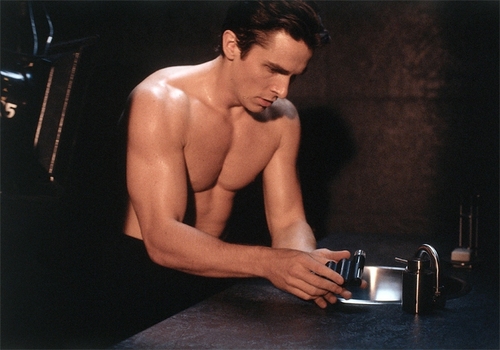
Christian Bale in Equilibrium.
Christian Bale’s Preston trying to decide whether to take the drug or not. Image via tumblr.

Everything bottled up and subdued comes out.


Now, he daily has to go through the conflict his partner went through:


Do you kill fellow “feelers” to keep up the role, protecting yourself and your family? Do you do your job?


or


Do you deny your impulses because it is too hard to bear?


Because in all honesty, there’s no way he can quit his job without giving himself away.


Of course after he can’t give up on feeling once he realizes what he is missing, John starts sucking at his job. And after a while, it is only fair that he joins the movement himself – especially he also has to lose another person he cares about.


So he fights.


It is a big, difficult fight but he wins in the end.


The glory feels wonderful. Things will no longer be the same, in all senses of the word.


Of course the movie is so much more. A lot of it has to do with the cast, especially Christian Bale who does a superior job of reflecting his characters’ both internal and external conflicts. You feel for him, understand him and want him to win with all your heart.


The war was fought for the right to feel, as well as the right to be whoever you want to be.


We often have to struggle in our lives when it comes to the right of being who we are. Sometimes it is against (or within) our family, friends, school, society, bosses, country….How much we win can depend on the level of authority we are fighting for.


Sometimes it is small, sometimes it is big. But we fight everyday. For some, the battle is tougher and on a much bigger scale. The key is never to give up.


So what do you think of the conflict(s) of this movie?


Can you empathize?

Filed Under: Story Conflicts Tagged With: creating compelling story conflicts for writers, creating story conflicts, equilibrium, equilibrium christian bale movie, how to create a compelling story conflict, how to create a story conflict, story conflicts, writing fiction

PJ Reece’s Story Structure To Die For – An Awesome Free Resource on Writing Fiction

Posted on October 1, 2012 Written by Pinar Tarhan


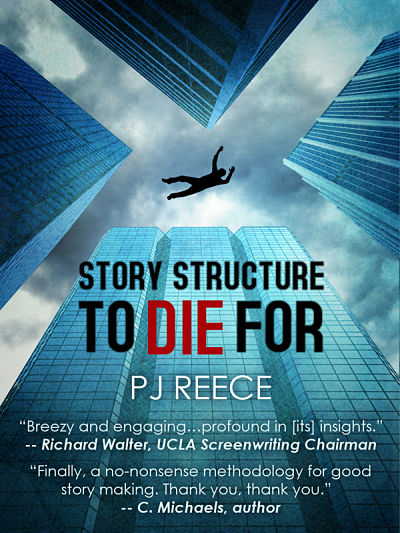
story structure to die for- pj reece
Image via pjreece.ca


There are many stories that I wish I had written- stories whose characters, structures and pretty much anything- I wish I would have come up with. I’m definitely in love/awe with those stories. Some of them are:

Pretty much any John Grisham legal thriller, but especially:

–          The Runaway Jury- the book, not the movie

–          The Brethren

–          The Partner – remind me why The Partner and The Brethren haven’t been adapted to screen yet?

By Christopher Nolan (and Jonathan Nolan)

–          Memento (nope, not The Prestige.)

–          The Dark Knight Rises (not the first two)

By Kurt Wimmer:

– Equilibrium

– Law Abiding Citizen

By Randal Wallace

–          Braveheart. (duh!)

By Nancy Meyers

–          What Women Want

By James Cameron

–          Strange Days


The list goes on. But the point is:

Those stories are perfect to me in their genres. Yes, the books mentioned are best-sellers, and the movies are either critical/cult hits or box office hits or both. They made me laugh, think, cry, get glued to the screen/book, hold my breath or made me do a various combinations of these.

So these movies make you want to wish you could sit down with those authors and pick their brains. Interviews don’t always help. For instance Joseoph Gordon-Levitt and Gary Oldman are marveling at what a great story-teller Nolan is. OK-I’m admiring too but how the hell does he and his brother (who created one of my favorite shows, Person of Interest, too by the way) write those things?

Of course some of these writers do also come up with stories that don’t impress (me) so I don’t die of jealousy. Apparently, Kurt Wimmer did Double Trouble (action comedy about muscular twins who….you don’t really care about.) And James Cameron did Titanic and Avatar. (who does that after Strange Days???You might enjoy those movies, but if you watch Strange Days, you might appreciate why a fan of that story might expect different things from Cameron.))

But back to the stories we love.

No matter how many times I dissect writing manuals and those movies, I still find a hard time delving into the secret ingredients-how the hell they managed to put one and done together. Sure, Randall Wallace had history to guide him- but with Braveheart, he outdid himself. If you have seen Pearl Harbor, you might wonder how the writer of Braveheart could write that (nope, I don’t like Pearl Harbor. Could’ve appreciated that one in 1930. Not in 2001. )So I’d definitely not die for the story structure of a love triangle between soldier presumed dead, his girlfriend and his best friend.

Was I ranting? Good. That was the point. A story (structure/idea) to die for is something most writers go after, and not many accomplish. So it was a relief to have run into PJ Reece’s Story Structure To Die For in which he rants, gives great examples of stories that worked, what didn’t work from his own stories and he does rant about what other how-to writers left out of the equation.

And you know you can relate to Reece when he dedicates her book to Jack Lemmon and Eva Marie Saint (it will make sense once you read it) and that he gives Moonstruck as an example for a great story structure. For one, even though I like the movie, even though it has an Oscar and all that, it is a guilty pleasure for me. Oh the stereotypes and the soap opera acting and the emotional outbursts of Nic Cage…But guilty pleasure or not, it WORKS and that’s what matters! (and it is nice of him to pick a movie we have mostly seen and remember- I probably would have had a heart attack and never gone back to the book, had he been giving examples from Lars Von Trier.) He has some other solid and useful (yet fun) examples as well.

There is also the way he structures this non-fiction- you automatically assess your characters and writing to see how you measure up to talking about-he needn’t give checklists and bullet points. You instinctively visualize, analyze and evaluate.

PJ Reece makes his points well. He also reminds you of the ultimate screenwriter fantasy- the Oscar. Whether we’ll ever get nominated and win is another issue. But he does help you see how to get unstuck from ruts, insufficient conflicts and unnecessary writer panic born from unsatisfactory story flow. He also makes you want to re-watch Rocky and Good Will Hunting- for educational purposes.

: )

Read the book. It’s also a fine example of how to write an engaging and fun e-book on non-fiction matters. You can download it from here. Looks like I have another writer blog to hang out at.


Related Posts Plugin for WordPress, Blogger...

Filed Under: Writing Tagged With: Christopher Nolan and Jonathan Nolan, equilibrium movie, fiction writing, john grisham novels, john grisham the brethren, john grisham the partner, jonathan nolan, kurt wimmer, moonstruck, person of interest, pj reece, story structure 2 die 4, story structure to die for, story writing tips, storytelling, strange days, strange days movie, tips for writing good fiction, writing fiction

  • « Previous Page
  • 1
  • 2
  • 3
  • 4
  • Next Page »

Blogroll

  • My Entertainment Blog

My Other Blogs

  • Beauty, Fitness & Style for the Fun-Loving Gal
  • Dating & Relationships in the 21st Century

Categories

  • Author Interviews
  • Author news and coverage
  • Blogging
  • Book Launches and Excerpts
  • Book News and Author Interviews
  • Book Recommendations
  • Book Reviews
  • Career Management for Writers
  • E-Book Reviews
  • Fiction Writing
  • Fictional Writers: Writer Characters in Movies, TV Series and Books
  • Inspiration and Motivation
  • Marketing
  • Marketing Fiction
  • Movie and TV Series Recommendations
  • Novel Reviews
  • Paying Markets-Web and Print
  • Productivity & Time Management
  • Recommended Resources
  • Reviews for Tools and Devices
  • Romance
  • screenwriting
  • Self-publishing
  • Story Conflicts
  • Website & Blog Reviews
  • Writer Tools
  • Writing
  • Writing Tools
  • Writing Updates

Copyright © 2026 · Focus Pro Theme on Genesis Framework · WordPress · Log in

This website uses cookies to improve your experience. We'll assume you're ok with this, but you can opt-out if you wish.Accept Reject Read More
Privacy & Cookies Policy

Privacy Overview

This website uses cookies to improve your experience while you navigate through the website. Out of these, the cookies that are categorized as necessary are stored on your browser as they are essential for the working of basic functionalities of the website. We also use third-party cookies that help us analyze and understand how you use this website. These cookies will be stored in your browser only with your consent. You also have the option to opt-out of these cookies. But opting out of some of these cookies may affect your browsing experience.
Necessary
Always Enabled
Necessary cookies are absolutely essential for the website to function properly. This category only includes cookies that ensures basic functionalities and security features of the website. These cookies do not store any personal information.
Non-necessary
Any cookies that may not be particularly necessary for the website to function and is used specifically to collect user personal data via analytics, ads, other embedded contents are termed as non-necessary cookies. It is mandatory to procure user consent prior to running these cookies on your website.
SAVE & ACCEPT