Addicted to Writing

Manage Your Freelance Writing Career While Writing What You Love

  • About Pinar Tarhan
  • Blog
  • Books
  • Hire Me: Services
  • Contact Me
  • Portfolio
  • Favorite Resources
  • Newsletter

Interview with Author and Coach Tiki Paige

Posted on May 6, 2023 Written by Pinar Tarhan

You know I love interviewing lovely authors on this blog, and today my guest is Tiki Paige. She’s had quite the life, and she continues to have great adventures both in and outside of her books.

Enjoy!
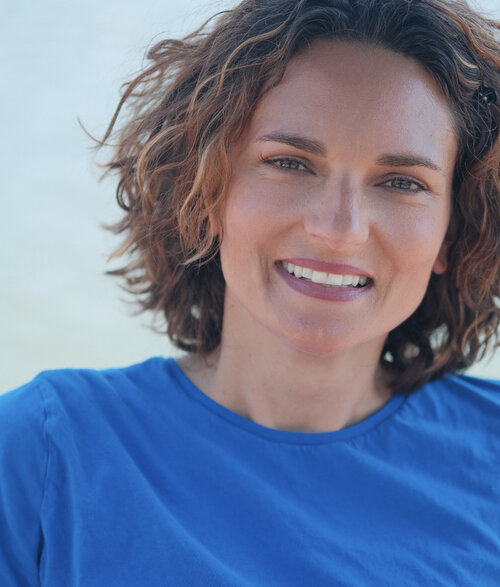
  • Where are you from and where do you live?

I’m a true international soul that belongs everywhere and nowhere. I’ve traveled the world when I was younger and I still continue to explore this wonderful planet that I’m so proud to call my home. I was born in Africa, I grew up in Europe, lived and worked in Asia and found love in America. I currently live in Dubai and I’m immensely grateful to have had the chance to live on four continents.

  • When did you start writing and when did you first know you wanted to be a writer?

I started writing when I was eight years old, after I became very fond of pencils and notebooks. My grandma taught me how to write cursive and I was always impressed with her patience and perseverance. She was a talented storyteller and a wonderful teacher. I started writing through doodling and drawing comics and later on began turning short stories into mini novels as I used to call them. Wherever I go, I carry a notebook and a pencil case full of various pens and pencils, because I’m always jotting down my thoughts, enthralled by the world that I see around me.

  • What do you write?

I write contemporary romance and non-fiction. My non-fiction books are writing guides and journals as well as travel and personal development books. In my romance novels, you’ll always find gorgeous heroes and strong, independent heroines.

  • Let’s talk about your latest book. Can you tell us about Let’s Just Call It Love? What’s it about? What inspired it? 
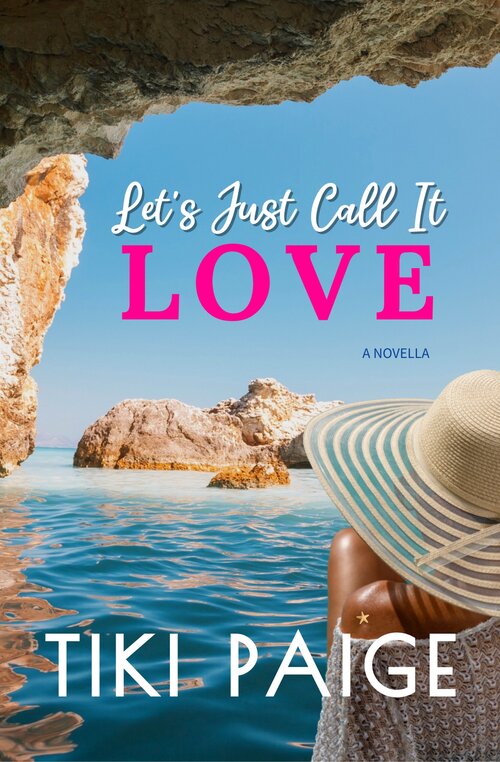
Let’s Just Call It Love is a contemporary romance novella. Our heroine, Tessa, who is a quality control executive and a writer/blogger for the airline magazine is on her way to Iceland but soon learns that her flight plans change. Here’s the blurb:

Getting stuck on the same flight as her ex-fiancé is not part of Tessa Reynold’s plan. She was on her way to Snowland, and now she’s headed for Dubai. Her mind is a mess and she must not do anything stupid. Only, her hormones dictate otherwise.

Enter Jack Smitt, a successful entrepreneur who offers her a lifetime’s worth of adventure in just a few short days.

Stuck between her past and a tempting present, Tessa must decide: allow herself a weekend of extraordinary enjoyment in a world of romance and excitement she’s never seen before or simply hide under the covers of her tiny hotel bed, and weep over her failed relationship with the jerk who shattered her heart in pieces.

Since I’ve been a long-time resident of Dubai, I’ve had the chance to explore every corner of this part of the world. My favorite places are found in nature and there are many wadis (valleys or channels that are filled with clean water in the rainy season) that took my breath away the first time I visited them. The inspiration for the story is actually set in Oman, a famous wadi many people know about but only a few explore because of the cave that I described in the book. UAE and Oman are fantastic places to visit to quench your thirst for adventure.

  • Can you tell us about your coaching?

I’m a certified holistic life coach and I spent over five years working with women, helping them find peace and harmony in their lives and accomplish goals that were once only written on paper. I was a very active blogger and a workshop facilitator. I enjoyed working as a life coach but somewhere along the way I realized that while I was doing a fulfilling work and helping others, I forgot to listen to myself in the process. I’ve always known I wanted to be a writer and that I would turn my writing into a full-time, thriving career. But with a busy coaching schedule, my writing was only reserved for blogging and magazine articles. And this wasn’t enough. I needed to express myself deeply, I needed to go back to the world of fiction and that’s when I decided to stop life coaching. I now coach writers who want to become authors.

  • You also host a fantastic podcast, which I’m honored to have been a guest on. How did you decide to start? What’s your favorite thing about hosting/having your own podcast?

Wow! Thank you so much! Yes, my podcast, Simply Romance, just launched a few days ago, on my birthday! I’m so excited. And it was a great pleasure to have you as a guest. Thank you!

I’m a devoted podcast listener and I’ve always wanted to be a host. I spent half a decade traveling the world and interviewing people for their dream job. So, I said to myself, if not now, when? And I am so happy that I did it. I can’t wait to bring so many amazing writers like you on the show and help all the beautiful souls out there who may just be starting out on their writing journey.

  • Do you have tips for authors who want to start their own podcasts?

Write down what you want. Research. Research. Research. Make a plan and stick with it. If you see it’s not going the way you wanted, tweak it. Ask for help. Don’t wait and don’t stop. You’ll learn along the way.

  • Do you have tips for writers who struggle with finding ideas or getting unstuck during certain scenes, etc.

Absolutely. One of my favorite hacks that I learned during a writers’ retreat is to take any book you like and simply start copying the sentences. You take a pen in your hand and open a notebook and simply start writing. I know it sounds like a daunting task but it won’t take you more than ten minutes to realize that you no longer need to copy someone else’s sentences but start writing your own. It’s as simple as that and it works every time!

  • And then there’s editing and marketing. Do you have a specific process and/or tips you’d like to share with authors?

I love editing . . . other people’s work. I love writing my stories but editing thousands of times before sending it to my editor is daunting and time-consuming. This is the part I do not enjoy but I never half-ass anything so I keep working until it’s done. Also, reading your story starting from the end always makes sense. It helps you find mistakes you otherwise never would have seen if you started from Chapter 1 as we all usually do.

  • Who are your favorite authors? And why?

I grew up reading Japanese, European, and American literature. There are so many authors whose work I fell in love with, to name a few: Dante Alighieri, Jane Austen, Herman Hesse, Jules Verne, Leo Tolstoy, Sei Shonagon, Ernest Hemingway, Yasunari Kawabata, Daphne du Maurier, Oscar Wilde, Françoise Sagan.

In my teenage years, I became very fond of Barbara Taylor Bradford’s books after I got To Be the Best for my birthday. I also liked reading Sandra Brown, Julie Garwood, Jude Deveraux, and Linda Howard.

I read about 30 personal growth books a year. On my website, I have a whole page dedicated to personal development books. The list keeps growing and I know there are many I haven’t yet mentioned.

  • Where can we find your books and writing?

My books are available worldwide but the best place to find them is on Amazon. You can also visit my website tikipaige.com to find out more about my books and my writing journey.

  • Can you share some non-writing related facts about yourself?  

I love tap dancing and will forever be infatuated with the sound these shoes make. My favorite time of day is early morning and I love cloudy, rainy days. This is when I’m most productive. I also love sunshine and the sea and Dubai is so generous with sun and sand activities. I love kayaking and simply spending a few hours out at the sea, just drifting, jotting down moments I experience during that time and breathing in the world around me. When I’m not listening to podcasts while driving, you’ll find me listening to music in many different languages from all over the world. I’m a big Mother Earth and animal advocate. I’ve lived through hardship and devastation and I know how precious life is. I’m so grateful to have such a wonderful family and amazing friends in my life.

  • Where can we find you online?

Come say hi on Instagram @tikipaigewriter or visit tikipaige.com

  • Any parting words?

Keep writing and keep working on your dreams. Hang around people who’ve done it and who know what they’re talking about. If someone tells you that becoming a successful and thriving author is impossible, thank them, turn around, and continue walking your own path. If you keep working and keep writing, you’ll learn that your success is inevitable. Someday, you’re going to be someone’s favorite author.



Filed Under: Author Interviews, Writing Tagged With: author interview, interview with author tiki paige, tiki paige, writing tips

How to Decide Which Writing Advice to Follow (and Which Writing Books & Courses to Buy)

Posted on September 9, 2020 Written by Pinar Tarhan

  • Please note that this post might contain affiliate links.

There is a lot of writing advice out there. Some are free, some paid. And they all take time to study and implement.

For the sake of clarity, by writing, I mean both fiction and non-fiction. And the term writing advice includes both the craft and the business (marketing, administration, selling, etc.) side of things.

You can speed up the learning process by buying books and courses, but it still takes time to study and implement the advice from your purchases.

Luckily, this article will help you answer the questions:

“How can I decide which writing books and courses to buy?”

“Which writing courses should I take?”

To decide which writer’s advice (and educational products) can work best and most for you, you need to look at four things.

– The Writer’s Professional Experience

You probably wouldn’t benefit from a writer’s points on self-publishing if she never self-published.

Likewise, you can’t likely learn much from a writer about magazine writing if he never wrote for magazines.

But you don’t need the advice-giver to be a six-figure writer if your immediate (and viable) goal is to make your first sale.

You get the idea.

Before taking them up on their offers and tips, ask:

“Has this writer accomplished/tried/experienced what they are talking about?”

If they have, you might listen to them.

Why “might” and not “should?”

There are two other factors you need to consider before jumping in.

Sometimes, their experience is enough. Especially if the author is generously giving away this information for free.

But often, their success alone won’t tell you enough on whether their writing advice is applicable for you.

Let me explain this in the next section.

– The Writer’s Personal life

“But, Pinar, how the hell is a writer’s personal life relevant?” you might ask.

Take productivity tips.

A lot of successful writers talk about how they get up 2-3 hours before work (or everyone else in the house get up) and write.

This is a valid (and sometimes the only useful) strategy if you are married with kids, for instance. Also, it probably helps if you are a morning person.

Because waking up 2-3 earlier than anyone else usually amounts to waking up at 5 am or before.

John Grisham did this when he was writing his first book, A Time to Kill. He worked as a lawyer, so before work was the best (if not the only) time to work on his novel.

But I won’t take this advice despite Grisham being immensely successful and my favorite author. There are three reasons:

  • I don’t have a full-time office job. Writing is my full-time job/career.
  • I am not a morning person. (This is more about personality, but still.)
  • I am single.

There is no sound reason for me to get up so early. In fact, doing so would negatively impact my productivity and the quality of my work.

Because I don’t have kids, I can find quiet whenever I want.

The only time I am up at 5 and doing something is when I have an early flight. And that early flight was booked because I didn’t have a choice. Early flights are usually cheaper, and you get more daytime when you don’t have a long vacation ahead.

I did it enough times now that I can function enough to get a cup of coffee before my flight and just get to my destination. That’s it.

Don’t expect me to write anything – not even a shitty first draft.

But if you can function in the morning, this is good advice.

If you have kids and this is the only time you can carve for your writing, this is invaluable wisdom.

You should be able to adjust the advice to make it work for you.

So yes, a writer’s personal life matters in this sense.

Another example is health issues. Yes, being single and without children helps my productivity. But you know what hinders it? Health problems.

I have many, and I wrote about it in detail in the post A Love Letter to All Freelancers with a Health Condition.

I read this excellent book on becoming a six-figure author by Tom Corson-Knowles, Secrets of the Six-Figure Author. But not all of his advice is applicable.

For instance, there’s a section he calls work-life balance a load of crap (to paraphrase), and I agree! He talks about how some days might be just work and some just family and how that’s fine.

But he also talks about this guy who achieved amazing success by working like 16-hour days for 5 years. And no matter how much I love my work, that isn’t a feasible thing to do for me.

I think that’s advice for ultra-healthy people who don’t suffer from sleep issues. If you are one of those rare souls who sleep for four hours and wake up totally refreshed, you could try pulling one of those days to see how it fits.

But I can’t fall asleep as soon as my head hits the pillow. I wake up during the night, and sometimes it takes a while to get back to my dreams. And even 8 hours isn’t enough for me, because my sleep is difficult and fractured.

I also have to eat and take some breaks during the day. I have never pulled, and I suspect I’ll never will pull, a 16-hour workday, and I’m fine with that. (I strongly doubt people can get a lot of quality output from such days, especially if done regularly.)

But I’m no Tim Ferriss, either. He is one of my favorite bloggers and non-fiction authors. I loved his The Four-Hour Work Week.

However, I read it to make my writing business more efficient. Not to actually only work for four hours a week! Because I love my work. If I can keep going, I will. It is fun!

(For perspective on the balance of things, I do take time off. And there are days I don’t really work, so don’t worry. 🙂

Another advice I can’t yet take from Corson-Knowles’ book is to “get an A-team for my book.”

Now, this is brilliant advice, and it’s backed by many other successful authors as well.

Since no one is skilled at everything, you can’t produce an amazing book and rock your marketing and manage your administration efficiently all on your own.

But hiring the right people to work with you on your publishing journey is expensive.

Formatting can cost money. You definitely need to hire a cover designer if you’re not a graphic design whiz yourself. You might need to hire an editor. You might need a proofreader. You might need a web designer. You might need a virtual assistant.

You get where I am going this.

If you don’t already have money saved up or have a constant influx of cash coming from your other work, this is not feasible for a writer/self-publisher who is just starting out.

It’s good to keep in mind for the near future.

But for now, if you can’t delegate, you’ll be wise to prioritize. I recommend hiring a cover designer. You might choose to hire someone to edit if editing isn’t your strong suit while you are good at design.

So details about your life and the details of the advice-giver’s life matters.

One final example:

When you don’t have an email list of thousands of subscribers, the first marketing advice you need to implement isn’t marketing to your list. It’s to try and grow that list.

On the flip side, if someone on a shoe-string budget and a small/no email list became a bestseller, you might want to listen to their strategies first when you are starting out without an excessive budget.

– The Writer’s Personality & Taste

a. Personality

I love reading about habits so I can improve my life. So far, my top 3 are: (I haven’t included the books’ subtitles for the sake of brevity.)

  • The Power of Habit by Charles Duhigg
  • Atomic Habits by James Clear
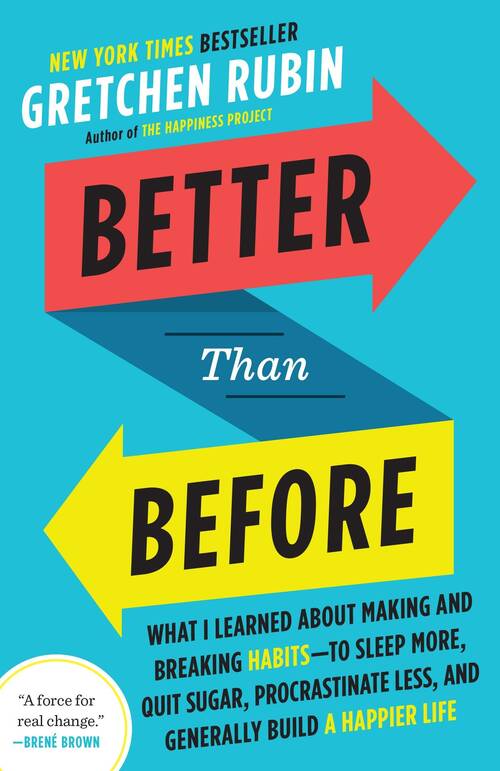
  • Better than Before by Gretchen Rubin

Gretchen Rubin’s book’s my absolute favorite among the three, however.

Because when talking about how to change/improve/ditch your habits, she writes through the lens of 4 distinct personality types. These are Obliger, Upholder, Questioner, Rebel. (She calls them tendencies, and has written a book on them as well.)

According to the book Better than Before, a Questioner meets inner expectations, not outer ones.

A rebel resists both inner and outer expectations. They live for freedom, and they want to make their own choices.

I’m a Rebel with Questioner tendencies. This mean you need to tell me the why of things. I also tend to question rules and routines set by other people, and sometimes even myself.

So keeping my personality type in mind, consider the ubiquitous writing advice of “get an accountability partner.”

Remember, I resist outer expectations. And I tend to resist inner ones too.

What are the odds my productivity will hit the roof when I get an accountability buddy?

I don’t care that you see my progress or not. I don’t really care that I told you I would write 1000 words that day, but I couldn’t for some reason. I care that I didn’t write efficiently, not that I told you about it.

I work best (and I am at my happiness) when I keep my promises to myself.

On the other hand, let’s take Obliger and Upholder.

Upholder meets both inner and outer expectations. Obliger meets outer expectations but resists inner ones. If you are an Obliger, an accountability partner might work wonders in helping you achieve your writing goals!

And this is why you need to keep your personality in mind when you are thinking about which advice to follow and why.

This will also enlighten you about why certain tips didn’t work for you.

Your success depends on it.

b. Taste.

For a while, I didn’t think I could write a novel. My father’s library mostly consisted of literary authors in love with their own voice and narrative abilities. You know the kind with many awards and regarded as national treasures who describe a tree for 10 pages… just because?

Luckily, I later discovered genre fiction in middle school. I found that I am a plot person. Someone who loves to read/write stuff where authors don’t shove down irrelevant details down my throat.

Same goes with travel writing. I thought I could never write a travel piece because many of the travel pieces I stumbled upon read like pages from literary novels. Full of sensory details woven in a way I don’t like to read, because I don’t see/notice those things.

I will notice and comment on how gorgeous a flower is. I’m not going to write a love poem for it.

You get the idea.

This doesn’t mean that kind of writing is bad. It just means it’s not my style. It’s not who I am.

And just like your personality and taste play a big part in what kind of writing path you forge, it should also dictate who you should learn from.

I mean the relevant stuff, of course.

Just because I’m a glam metal fan doesn’t mean I can’t learn from a writer who is into classical music. 🙂 But it does mean I probably won’t be listening to classical music to get in the mood when I write.

Charles Duhigg’s The Power of Habit provides a great background on the science and research of habits in a fun way. It also features true stories of people who changed their habits for the better.

James Clear’s Atomic Habits is ground-breaking as it shows how tiny changes in behavior lead to significant results in the long run. He also has an inspiring blog and email newsletter.

But if you’ve always wanted to change, read book after book and still failed to see tips that work for you, I recommend starting with Gretchen Rubin’s.

And remember, if you learn how to improve yourself in one area based on who you are, you can do it in all areas.

Your future writer self will thank you for it.

-The Time(liness) of the Advice 

Watch out for when the writer gave the advice.

Some tips are evergreen. It doesn’t matter if the writer said it today, 5 years ago, 10 years ago, or all the way back in 1892.

For instance:

“To become a good writer, you need to read.”

This has been and will always be true.

or

“Keep something that you can save your ideas in/with at all times.”

It doesn’t matter if it’s a pen and paper or your smartphone. But you don’t want to lose precious ideas.

On the other hand, when we are talking about trends and what works now, it’s wise to check if the same tips are still working.

*

There you go. Four areas to watch out for when you are taking writing advice and investing in educational material.

How do you decide on which writing advice to follow?


Filed Under: Career Management for Writers, Writing Tagged With: better than before gretchen rubin, how to know which writing advice to follow, writing advice, writing tips

Practical Advice About Show and Tell In Writing: One Isn’t Always Evil

Posted on October 31, 2019 Written by Pinar Tarhan

Read up on improving your writing, and you will hit more advice about show vs. tell than cars during rush hour in a big city. So why am I writing about it too?

Because I’ve got something different to say. Brace yourselves. Are you ready? Telling isn’t always bad. Showing isn’t always good.

Still breathing? Still with me? Do you want to come at me with pitchforks, or at least erasers or the delete button?

Hold your horses for a second. And see if you still disagree at the end.

It doesn’t matter if I’m reading fiction or non-fiction. Whether I’m reading an article or a novel, too many people have taken the “Show, Don’t tell” advice to heart.

And the result isn’t as magical and engaging as a lot of writing experts promise.

Why?

Imagine you’re reading a writer who shows and never tells. Not if she can help it. Vivid imagery formed in the reader’s head is better than directly coming out and saying it, right? So let me “show” you, and you tell me when your eyes are starting to droop, and you are stifling more yawns than you care to:

  • Drops were flowing from every pore on Vivian’s skin after her run.
  • The storm shook the wind so violently that most branches didn’t make it.
  • The way Dawson towered over me made me feel like I was looking up at a giant from a fairy tale.
  • The Yankee fans were buying drinks all around, talking over each other and laughing like they hadn’t for a while.
  • I felt like my body was on fire. I stripped down to a tank top and shorts, but I still wanted to throw myself into an ice bath.

I give up. I can’t take it anymore. But you get the idea. Of course, doing the opposite repeatedly is also awful:

  • Vivian sweated way too much.
  • The storm damaged many trees.
  • Dawson was so much taller than me.
  • Yankees won the game, and the fans are happy.
  • It was just really hot.

The idea is to mix and match so that the readers aren’t bored. You don’t want them to be taken away from the story and reminded that they are not really a part of it, that they are just reading.

It’s also important to know when to use which. Here’s a sample I used in my How to Write an Amazing Romance Novel book, which features writing a lot of practical writing advice that can be used for most genres:

  • Older generations considered this to be the mid-life. He was neither a young man nor a middle-aged guy. He wasn’t exactly starting out, but “middle” didn’t ring true as to where he was. People needed to invent a world for him. Mature seemed so finite. Immature days were behind him. Wrinkles had started to play peek-a-boo on his face…
  • He was 35.

I personally prefer the second one, but each to their own. When to pick which also depends on where you are in the story, and where the character is in that given moment. The first one is appropriate if he is feeling a bit lost on the day of his birthday. It is certainly a mistake if he is being chased down the street by a serial killer. Whether you show, tell or do both, your most important mission is not to lose your reader’s attention. They need to remain curious. They need to want to keep the pages turning. Sometimes, falling in love with our words is just as easy as hating them. Try to think like a reader when you edit.

*

How about you? How do you balance show and tell in your writing?


Filed Under: Writing Tagged With: show and tell in writing, show vs tell, writing advice, writing tips

6 Cliché Writing (Career) Tips To Benefit From

Posted on March 6, 2013 Written by Pinar Tarhan

You might remember from my When It’s OK to Use Cliches in Your Writing: Hidden Metaphors – Poison’s Bret Michaels Style post that I am all for clichés that work. That post will be followed up with more working clichés (especially in fiction). But this article is dedicated to classic writing tips.

There are more than 6 of course, but today I’m tackling these 6 popular ones.

–          Write about what you know

Not everything you know might be fun or lucrative to write about, but I bet some of your vast knowledge is fun, lucrative or both.

Writing about movies, TV shows and music is incredibly entertaining for me. In addition to running an entertaining blog, I got my first assignments on these subjects too.

Then there is the fact that your internal entertainment trivia database can help in finding many fun references and making your points come across in a more remarkable way. Copyblogger does it. Carol Tice does it. It works, and it comes and flows naturally.

It also fits my category Fictional Writers where I cover writers from movies and TV shows. You might want to start with my latest in that category: The Following: When Both The Protagonist and Antagonist Are Writers.

Other areas where I wrote what I knew and sold articles include traveling, business, freelancing, writing and social media.

–          You don’t have to be an expert to write about a topic.

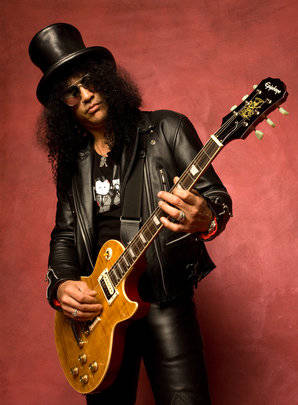
slash-gunsnroses
OK, I’d not have minded having his talent. But what are you gonna do…Slash image via fanpop.com.

You just have to know better than the audience you are targeting. Just like you don’t have to play the guitar like Slash to be able to teach a beginner, you don’t need to be light years ahead from the readers of the market you are targeting.

If this weren’t so, our publishing possibilities and writing income would shrink considerably.

That being said, I wouldn’t mind being an expert writer who could write a bestselling book on my expertise area. There is a reason so many books written by professionals turn out to be great reads. Nope, not all of them are ghost written.

–          Write what you don’t know.

Time comes when the alternative gets so popular that it feels weird to call it alternative.  Raise your hand if you think Radiohead no longer belongs to the alternative rock bands category.

Just like its counterpart, this is a practical and lucrative tip. Especially if these new areas you’re discovering have anything to do with finance and technology.

You know how to research. You can educate yourself about new areas and end up finding a lot of “what you know” and hopefully “what you love” in the process. My new obsession ares are microexpressions in psychology and neuropsychiatry.

–          Write about what you love

I quit my full-time job because a)it wasn’t related to writing b)I hated it.

Now, while I am absolutely addicted to writing, I have no interest in writing about things that I don’t care about, or at least find interesting.

This blog is based on this idea. Writing only about what you love (granted it also depends on which areas you love) might take a longer time when bringing home the big bucks. So you have been warned.

But I found the perfect balance by supporting my writing income with part time teaching. Teaching helps me with being more social (as opposed to the solitariness of writing) and prevents me from taking jobs that don’t excite me. Win-win. Oh, and it also worked as an article idea.

–          Make yourself familiar with the publication

In other words, research the publication like mad. While it won’t guarantee being published, it is one of your strongest weapons to increase the odds in your favor. Team it up with a great idea, an exciting query and you are good to go.

–          Everyone gets rejected.

You’ll get rejected. It sucks, but after a little practice (and some published articles/stories), you’ll learn to shake it off (in a shorter time).

Sure, there might be a writer out there who never gets rejected. But then it is possibly a writer who is not really working. At least not for others.

Even if you’ve eliminated the query process and ensured that clients come and find you, there is a chance not all your ideas won’t knock your clients’ socks off. Statistically speaking.

So yes. I know you heard it before. It’s not personal, and it can be due to a variety of reasons. It is however almost never about your writing skills. It might be about the idea, or how you structured that particular article.

If there is constructive feedback, take it, thank for it, revise and re-slant for another. Yes, there are other reasons but usually the fix is the same: get to the source of the problem (if it is writing skills, that can be improved too), take care of it and don’t let the idea go to waste.

Most ideas can be salvaged through brainstorming, improving and recycling.

*

So what cliché writing tips work for you? Do you have any favorites?

Related Posts Plugin for WordPress, Blogger...

Filed Under: Writing Tagged With: cliche writing tips, market research, rejection, tips for writers, write what you know, write what you love, writing tips

  • 1
  • 2
  • 3
  • 4
  • Next Page »

Blogroll

  • My Entertainment Blog

My Other Blogs

  • Beauty, Fitness & Style for the Fun-Loving Gal
  • Dating & Relationships in the 21st Century

Categories

  • Author Interviews
  • Author news and coverage
  • Blogging
  • Book Launches and Excerpts
  • Book News and Author Interviews
  • Book Recommendations
  • Book Reviews
  • Career Management for Writers
  • E-Book Reviews
  • Fiction Writing
  • Fictional Writers: Writer Characters in Movies, TV Series and Books
  • Inspiration and Motivation
  • Marketing
  • Marketing Fiction
  • Movie and TV Series Recommendations
  • Novel Reviews
  • Paying Markets-Web and Print
  • Productivity & Time Management
  • Recommended Resources
  • Reviews for Tools and Devices
  • Romance
  • screenwriting
  • Self-publishing
  • Story Conflicts
  • Website & Blog Reviews
  • Writer Tools
  • Writing
  • Writing Tools
  • Writing Updates

Copyright © 2026 · Focus Pro Theme on Genesis Framework · WordPress · Log in

This website uses cookies to improve your experience. We'll assume you're ok with this, but you can opt-out if you wish.Accept Reject Read More
Privacy & Cookies Policy

Privacy Overview

This website uses cookies to improve your experience while you navigate through the website. Out of these, the cookies that are categorized as necessary are stored on your browser as they are essential for the working of basic functionalities of the website. We also use third-party cookies that help us analyze and understand how you use this website. These cookies will be stored in your browser only with your consent. You also have the option to opt-out of these cookies. But opting out of some of these cookies may affect your browsing experience.
Necessary
Always Enabled
Necessary cookies are absolutely essential for the website to function properly. This category only includes cookies that ensures basic functionalities and security features of the website. These cookies do not store any personal information.
Non-necessary
Any cookies that may not be particularly necessary for the website to function and is used specifically to collect user personal data via analytics, ads, other embedded contents are termed as non-necessary cookies. It is mandatory to procure user consent prior to running these cookies on your website.
SAVE & ACCEPT