Addicted to Writing

Manage Your Freelance Writing Career While Writing What You Love

  • About Pinar Tarhan
  • Blog
  • Books
  • Hire Me: Services
  • Contact Me
  • Portfolio
  • Favorite Resources
  • Newsletter

Balancing Showing and Telling in Writing & Why “Show, Don’t Tell” Can Be Easier in Screenplays than in Novels

Posted on December 10, 2011 Written by Pinar Tarhan

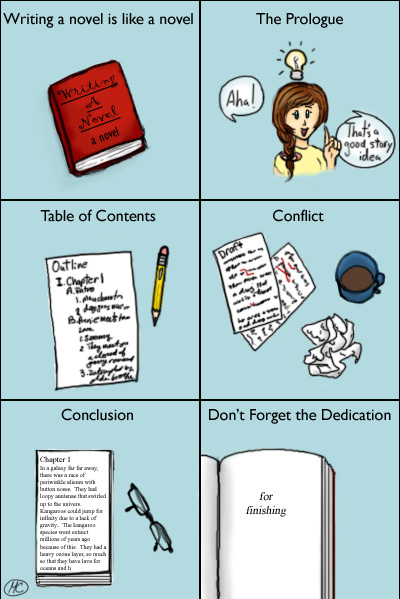
Writing a novel is like a novel
Novel writing is indeed tricky. Image via 1.bp.blogspot.com


“Show, don’t tell” is a great advice. You-as the writer-need to make the readers see, feel, smell, touch…You want them to understand the characters and be immersed in the story without spelling everything out them. You want to them to see that your character is smart by the things he does or says. You don’t just tell them he is so smart. Or you might, but you also prove your point by showing that he is smart.

“But Show, Don’t Tell” is easier said than done, especially when it comes to writing novels. I can’t tell you how many novels I put down because they tried to tell me a million things, while also showing them to me. And ideally, no matter what kind of writing that you do, you have to balance the two.

There are many screenplays that just tell. Remember the movies where characters talk all the time, and never actually move their butts to take action about anything? The movies that bore you to death? Yeah- the screenwriters just told things, and the director went with it.

But with fun screenplays, the writers do a good job of balancing what to tell and show. But of course the screenplays are written for the screen, and everything will be shown by the actors. If they want to show the progress of a romance, they put on a good song and show us what the actors do together instead of giving us dialogue.

And this is exactly what I do when I write a screenplay. Sure, I sweat over lines and details, but sometimes it is more effective to choose the song with the right lyrics and let the reader/viewer get the message. But I can’t take advantage of music when I’m writing the novel. Well, I can- to motivate myself. But I can’t give my audience a soundtrack to go with it (although that would be pretty neat). I need to sweat over the thoughts, setting, and scenes- all the time. There’s no shortcut.  This is a pretty hard thing to do.

Yes, I watch a lot of movies and pay attention to a lot of scenes. I also analyze novels on how much and how they showed and told.  I keep my fingers crossed, and keep working on my first draft where I try to entertain, engage and make readers feel.  But it is a tough road. Wish me luck.

How about you? Do you write fiction? Do you have problems balancing showing and telling? Please let me know in the comments.


Filed Under: Writing Tagged With: how to write a novel, novel writing, novels vs screenplays, show don't tell, writing a novel, writing advice, writing novels, writing screenplays, writing tips

Matthew Stibbe’s 30 Days to Better Business Writing

Posted on June 13, 2011 Written by Pinar Tarhan

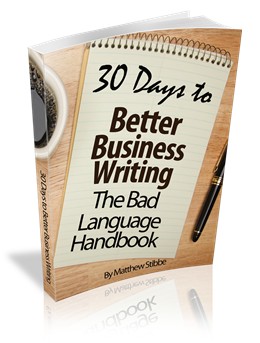
image via badlanguage.net

I decided that additional bookmarking efforts (in the way of writing a blog post about it) will help me keep the resource in mind, say thank you to the writer and help inform you at the same time. So here’s killing a couple of birds with one stone: Review for Badlanguage.net’s 30 Days to Better Business Writing (free) e-book:

A quality free e-book simply rocks, both for the writer and the reader. It rocks for the writer because it is a great promotional tool. It helps him brand himself as a helpful authority. It helps the reader to gain knowledge without having to pay for it. Writing better is an important step to making more money as a writer/blogger and Matthew Stibbe’s e-book does help you do exactly that.


Don’t freak out or be bored by the “Business Writing” part of the title. It provides great tips that you can use in all types of non-fiction writing. Hell, you can even apply some of it to fiction.


The book consists of 116 PDF pages and 30 chapters, all offering concise tips in an engaging style. Each chapter begins with a related and interesting quote. It moves on to inform you and ends with an applicable exercise.


I printed out the book. I am reading and going through it all, although not necessarily in Matthew’s written order.

For instance, I am not interviewing anyone yet, and I am not required to prepare presentations. So I am concentrating more on the chapters about writing well and in style, picking the right words and structure and that kind of stuff. And don’t worry, he mentions blogging too.


So print it out and attack with markers and post-its. And read all the chapters, even though you’ll be needing some more than the others. It will be great to keep it handy for future reference.

He also features links to book reviews on his blogs as well as free resources.


Strongly recommended. And you can’t beat free.

You can follow Matthew on Twitter too.

Filed Under: E-Book Reviews, Recommended Resources Tagged With: 30 days to better business writing, badlanguage.net, business writing, ebook reviews, free e-book, matthew stibbe, on writing, online writing, writing better, writing tips

7 Great Query Letter Resources: A List of (E-)Books, Articles and Blog Links

Posted on May 25, 2011 Written by Pinar Tarhan

  • Make a Living Writing – Carol Tice’s Blog


Carol Tice has posted one of her assignment winning queries.


The pros: You get to see how to craft a compelling query. And you get to see how you can pitch multipe ideas professionally in a single page query letter.


The con: Many magazines look down on multiple pitches, especially if you are not a yet established author, or you don’t have a relationship with that editor. Still, you can study and learn a lot from Carol’s sample.


Plus, she has a whole section of posts that feature “the tag” query letters. These posts might not be directly on query letters, but they do include valuable information on your relationships with editors.


  • Query Letter Clinic – (Mini) E-Book


Writer’s Market is an online resource for writers where they can find info about magazine. In order to be able to access these markets, you need to be a member- which requires a fee. I am a member, so Query Letter Clinic was already on my dashboard. However I don’t remember if this e-book is available to non-members. You need to check.


  • The Writer’s Digest Guide to Query Letters – E-book, Paperback
  •  


Writer’s Digest Guide to Query Letters has over 200 pages of information: it starts with the basics of a query, then gives you the specific elements of different query letters, such as: querying to an agent about your novel, non-fiction book, querying about your articles to magazines. It tells you how and when to follow up, where to look for the necessary information and understanding writer’s guidelines, managing your relationships with editors, and agents and so much more. Yes, it is a lot of information to digest, but it is worth it. It is a must-have query source for any writer.


  • Aboutfreelancewriting.com – Anne Wayman


Anne Wayman has posted a good sample of a magazine query on her blog. She also explains which information is included where, and why. The rest of her blog is also full of useful and applicable tips for freelance writing and blogging.


  • Writer’s Digest.com – the website


You don’t need to be Writer’s Digest magazine subscriber to access the vast  content on their website. While having the magazine is also helpful, you can always read the articles on the web for free.  I bookmarked 2 query letter articles I liked. While these articles were mostly written with the novel writer querying the agent/publisher in mind, you can easily adapt, and use the information for magazine article queries.


These articles are:

Basics of a Solid 3-Paragraph Query


10 Query Letter No-Nos


  • 12 New Things Writers Must Do Today to Make Money – E-book

Wooden Horse Publishing’s Meg Weaver’s e-book Twelve New Things Writers Must Do Today to Make Money is not solely about query letters, but it teaches you more about understanding the magazine (understanding its target audience and slant, and voice) than any other book around. And trust me,  I devoured more than my share of e-books and books, both free and unpaid, on the subject of magazine writing. And since you understand that particular magazine perfectly, your chances of writing a terrific query letter becomes much higher. But she doesn’t just leave you with the understanding of magazines. She teaches you how to create queries from scratch as well. Oh, she also goes on to give you information about what extras will go to the article (such as decks and photographs), how to arrange them and so on. At $14.95, it is really worth it.


*By the way, the link for this e-book is NOT an affiliate link.


  • Power Queries – E-book


Filbertpublishing’s Beth Erickson has written a 20-page e-book on query letters called “Power Queries”, and it is a free gift to the website’s e-mail subscribers.

Here, Erickson talks about the many ways you can start your query letter, gives examples and explains the reasons why those examples might be attention-worthy. Seeing examples, and not just sentences about how-to-write-queries, makes it much easier for the writer to get the grasp.

She also gives you tips on what not to do as well, when it comes to voice, language and style. And don’t worry- she doesn’t stop with how to start a great query letter. She goes on to give tips on how to draft the rest of your query. Yes, these are powerful 20 pages!

Filed Under: Recommended Resources, Writing Tagged With: anne wayman, carol tice, how to write a great query letter, how to write a query letter, query letters, query writing tips, writing tips

What Editors Can Learn from the Movie Up In The Air

Posted on March 30, 2011 Written by Pinar Tarhan

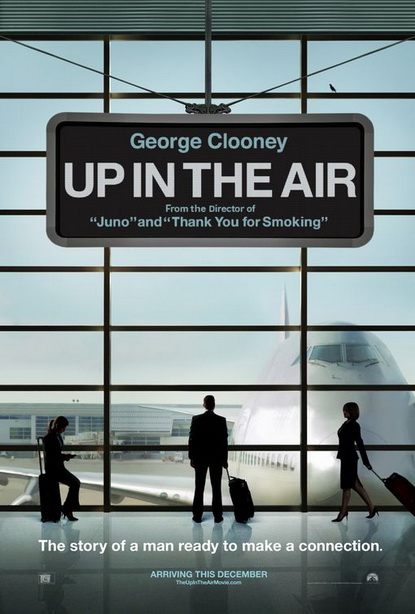
Up in the Air movie poster - starring George Clooney
Up in the Air movie poster - starring George Clooney.

Editors are busy people. We get it. They receive a gazillion submissions and manuscripts, most of which aren’t even relevant. We do feel their pain. But then again, for every writer who is too lazy to study the writer’s guidelines, there are many writers who put tremendous effort into researching the magazine, dissecting the guidelines and perfecting that query letter. And there is the endless waiting on the writer’s part, when the writer’s going crazy with all the questions in his head:

 -Did they even see the query or did it just get lost in the mail box?

– If they did read the query, did I not get an answer because my e-mail account failed me or because they forgot to reply? Or was it because they just didn’t want to spend time sending out a rejection e-mail?

Did any of these sound familiar? After spending all that time on a query, and spending even more time waiting for the publication’s response time to pass, we are left wondering in the uncertainty of it all. Now, I don’t care how busy the editors are. I want that reply, whether it is positive or negative, right after the response time is over.

This is where the connection (that I made) with the movie Up in the Air comes in. Up in the Air is a romantic comedy/drama starring George Clooney. It is a very bittersweet & entertaining movie and you can read a detailed review (without spoilers) on my entertainment blog. But if you haven’t seen the movie, all you need to know is that George Clooney’s character fires people for a living. If a corporation wants to do the layoffs through an outsider, they get him to do the dirty work. Yes, it is not a pleasant career. And it is not a great moment to hear that you were fired. But it is better to know, as soon as possible, so that you can move on.

With writers, the problem for the most of the time, is that we have to wait weeks, or months to hear we were “hired” or not. Since editors are so busy, wouldn’t it be so find a person who would tell the writers that they simply weren’t right for the job. Writers need to know when they aren’t going to be assigned an article, so that they can pitch the idea to other magazines. Plus, telling someone they are not hired is not as depressing as telling them they are fired.

We need to know. One way or another. So if editors are too busy to reject us, why not let someone else do it? Might be wishful thinking, but I think this idea would actually do both sides a big, fat time-saving favor. What do you think?

Related Posts Plugin for WordPress, Blogger...

Filed Under: Writing Tagged With: applying to writing jobs, editors, freelance writing, george clooney, george clooney up in the air, movie up in the air, tips for writers, up in the air, up in the air movie, waiting to hear from editors, writers, writing, writing tips

  • « Previous Page
  • 1
  • 2
  • 3
  • 4
  • Next Page »

Blogroll

  • My Entertainment Blog

My Other Blogs

  • Beauty, Fitness & Style for the Fun-Loving Gal
  • Dating & Relationships in the 21st Century

Categories

  • Author Interviews
  • Author news and coverage
  • Blogging
  • Book Launches and Excerpts
  • Book News and Author Interviews
  • Book Recommendations
  • Book Reviews
  • Career Management for Writers
  • E-Book Reviews
  • Fiction Writing
  • Fictional Writers: Writer Characters in Movies, TV Series and Books
  • Inspiration and Motivation
  • Marketing
  • Marketing Fiction
  • Movie and TV Series Recommendations
  • Novel Reviews
  • Paying Markets-Web and Print
  • Productivity & Time Management
  • Recommended Resources
  • Reviews for Tools and Devices
  • Romance
  • screenwriting
  • Self-publishing
  • Story Conflicts
  • Website & Blog Reviews
  • Writer Tools
  • Writing
  • Writing Tools
  • Writing Updates

Copyright © 2026 · Focus Pro Theme on Genesis Framework · WordPress · Log in

This website uses cookies to improve your experience. We'll assume you're ok with this, but you can opt-out if you wish.Accept Reject Read More
Privacy & Cookies Policy

Privacy Overview

This website uses cookies to improve your experience while you navigate through the website. Out of these, the cookies that are categorized as necessary are stored on your browser as they are essential for the working of basic functionalities of the website. We also use third-party cookies that help us analyze and understand how you use this website. These cookies will be stored in your browser only with your consent. You also have the option to opt-out of these cookies. But opting out of some of these cookies may affect your browsing experience.
Necessary
Always Enabled
Necessary cookies are absolutely essential for the website to function properly. This category only includes cookies that ensures basic functionalities and security features of the website. These cookies do not store any personal information.
Non-necessary
Any cookies that may not be particularly necessary for the website to function and is used specifically to collect user personal data via analytics, ads, other embedded contents are termed as non-necessary cookies. It is mandatory to procure user consent prior to running these cookies on your website.
SAVE & ACCEPT