Addicted to Writing

Manage Your Freelance Writing Career While Writing What You Love

  • About Pinar Tarhan
  • Blog
  • Books
  • Hire Me: Services
  • Contact Me
  • Portfolio
  • Favorite Resources
  • Newsletter

The Tools I Use for Writing, Editing and Formatting My Novels

Posted on November 2, 2022 Written by Pinar Tarhan

As an author, I’m always interested in which tools fellow authors use to craft their manuscripts.

Writing a novel typically takes a long time. And even if some writers are faster than others, there’s so much effort put in that it makes sense to choose tools that make life easier.

So here are mine.

Writing

– Laptop. 

My laptop is a Lenovo IdeaPad S540. I had a couple of issues at first, Like a battery dying more quickly than it should or a fan that shouldn’t have gone awry when it was practically new. But after they were fixed, I am super used to my 14” baby. It’s also light.

I carry it everywhere, and it’s also my television, so I do use my laptop more than most.

The one before this was a Macbook Air. While things were fantastic at first, it became a hassle once I started having issues.

Getting it repaired after the warranty expires takes a long time, the people at the store can’t agree on what’s wrong, and it is expensive.

Unless I can own two laptops at the same time, I probably won’t buy an Apple computer. But price and repair issues aside, the device was super-fast and light. And I miss some of the free apps that were only available in the Apple store.

Side note: I’ve been typing on a computer since I was 10 (which was in the mid-90s), and I’ve never even touched a typewriter. I can’t comment on it.
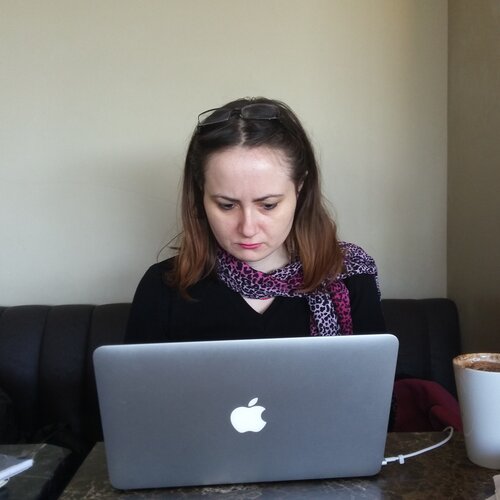
Actual image of me writing. My former laptop, RIP.

– A fun notebook and a mechanical pencil

I’m guessing you’ve guessed my age from the previous point.

While I don’t write the entire story in a notebook (I used to, before I only had a PC and not a laptop), I outline the entire thing before I start typing. I also note down good dialogue and interesting ideas as they come to me.

I always have a physical notebook with me, whether I’m carrying my laptop or not that day.

I sometimes take notes on my phone if I have to, but because the screen and keypad are so small, I won’t type large chunks of stuff if I can help it.

– Microsoft Word.

I’m too used to it at this point. I just type everything here.

– Trello.

I use it for visual outlining. It works wonders. I have a free account.

– Spotify/Jango/YouTube

A writer needs her music. I have free accounts.

– Dictionary.com/ Thesaurus

Nothing makes you question your language abilities and knowledge more than writing a novel.

Is that really how that thing is spelled?

Does this word mean what you think it means?

And then there’s the need to find the right word. The best word. An online dictionary and thesaurus definitely come in handy.

– Email/Google Drive/Dropbox/ Flash Drive/ External Hard DISC

I save my work obsessively. I push the save button a million times, even though it is saved automatically.

I email my work to myself at various intervals and keep them stored online and offline.

After it is finished, I also print it out and save a physical copy as well.

– Social media, for keeping friends updated, and not losing my sanity in isolation.

Social media is important for marketing, but it is also a nice way of keeping social and sane when you are at a desk for hours on end.

Obviously, don’t let it distract you so much that you can’t focus. I stay away from anything negative, though.

Editing and Formatting 

It’s a universally acknowledged fact that a writer’s work really starts after her drafts are done.

You have to do several different types of editing so that the story is not only grammatically correct without typos and the language flows, but also the story makes the most sense and provides the most emotion and entertainment.

If you can afford to hire a professional editor, by all means, please do so.

But if you can’t afford one and you have faith in your editing and proofing skills, here’s what will help you the most:

–  Grammarly (free version)

I love Grammarly to check for accuracy and mistakes but beware. You also have to recheck everything Grammarly suggests.

It’s not human, and there are a few wrong and unnecessary suggestions along the way.

I used to own the premium version, and I have a review on the blog. But it is expensive, and I have managed fine with the free version.

– Reedsy

Reedsy formats the book for you for free, and it’s easy to use.

–  Printer /Copy place

Seeing the book in print is different than seeing it on the screen and helps you catch the mistakes you otherwise wouldn’t have noticed.

That said, this can cost a bit, so if you don’t want to do it, you can try other tricks such as making the font bigger, making it in another color, turning it into a pdf, or making the computer read it out loud for you.

You can also read it out loud yourself. Some people also read it backward, but my brain doesn’t work that way.

If you can share your work with others in the form of beta readers/ARC readers, and they don’t mind sharing the mistakes they find with you, even better.

Another set of eyes is always preferable because after staring at something so many things, you start seeing what you think is there, and not necessarily what there is.

For more on editing, you can read this post: How to Edit Your Writing on a Budget (to Save Time and Money).
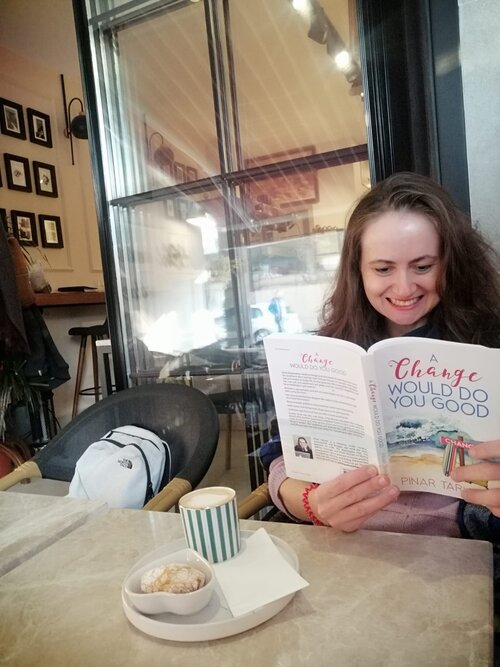
It’s all fun and games when your novel is finished and published. Just kidding. Then you have to market your butt off. But at least you have something nice and shiny to show for your efforts. 🙂 Want to check out the book in the pic? It’s here. I’m currently proofing its sequel.

End note:

Please don’t forget to register your novel with the copyright office.

*

How about you? Which tools do you prefer when you are writing, editing, and formatting your novel?

 

Filed Under: Writer Tools, Writing, Writing Tools Tagged With: editing tools formatting tools for writers, free editing tools for novel writers, free editing tools for novel writing, free formatting tools for novel writing, free writing tools for authors, writing tools, writing tools for writers

Analyzing “The Identical Twins Switch Places” Trope through Netflix’s Thriller Mini-Series Echoes

Posted on August 22, 2022 Written by Pinar Tarhan

Image via theplasylist.net.

Normally, I hate the trope of twins switching places because this trope tends to have clueless people who never have an idea, and it features twins just wearing each other’s clothes and claiming each other’s names.

Whether it’s a romance or a thriller (two genres I see this trope the most), nothing makes me put down a book faster.

But I’m already paying for Netflix, and this series came with actors I love: Michelle Monaghan, Matt Bomer, Daniel Sunjata, and Jonathan Tucker.

And I was pleasantly surprised. While it has its flaws and not everyone enjoyed it as much as I did (it has a 5.7/10 rating on IMDB), I loved this series.

First, what’s this trope?

It’s two identical twins switching places for certain gain.

It seems more common (in fiction) for female twins to do this, and often there’s some sort of monetary, romantic or survival gain.

And usually, when the switch takes place, one twin is missing or dead.

Why do I hate it?

I find it quite unbelievable that two twins sound, act, dress so similarly. And I find it equally unlikely that no one around them who has been around them for years, if not all their lives, will be so clueless.

Fool one person? Fine.

Fool acquaintances and soulless corporate bosses? Sure.

Fool entire family, close friends, lovers all at once? Are you kidding me?

What makes Echoes different?

First, let me say first that Echoes is engaging, fun and batshit crazy at times.

But the twins take this switching business seriously. And as the seven episodes progress, we get good explanations on how they pull it off.

Echoes Plot (with some spoilers)

The fun thing about Echoes is that there are so many twists, turns and revelations is that I wouldn’t be able to remember all of them if I wanted to.

So while I will use a bunch of spoilers to explain why the trope works, give the series a try if you are intrigued by the premise. There will still be plenty of surprises.

Twins Leni and Gina (Michelle Monaghan) have been switching places since they were kids, and no one ever noticed.

At first, these were isolated instances to get each other out of trouble. But as they kept doing it, with the insistence and influence of Leni, tragedies, accidents, and worse started happening, and it became too late to do anything about it.

Or so they thought.

When LA-based writer Gina hears that Leni is missing, she returns to Mount Echo, the small town where they were raised. Here, Leni is married to Jack (Matt Bomer), and they run the farm together with Leni’s dad (Michael O’Neill).

Gina’s husband Charlie (Daniel Sunjata) is a psychiatrist who is more than understanding about their bond and how they need to be there for each other.

But as Gina grows more frantic to find Leni, she becomes haunted by the secrets they keep.

As we find out, they have been switching consistently as adults, each twin living one year as the other one, and then switching back on their birthdays.

They compare and inspect each new scar and freckle. They fill each other in on what’s happened in each other’s lives, in addition to the electronic diary they keep together.

But this time, Leni seems to have gotten into a lot of trouble. Her horse is found dead, and her husband suspects she is having an affair, and secrets keep popping out at every turn.

Can Gina save the lives they have both carefully constructed and shared…if in fact, this is Gina.

*

The Endless Conflicts and the Delicious Immorality of it All

Stories thrive on interesting conflicts, and Echoes offer plenty.

They are not just lying to friends, parents, and co-workers, which is terrible enough. They are also sleeping with each other’s husbands, and there is a kid who has an aunt who pretends to be her mother on a regular basis!

Pretty insane. There has to be something monumentally wrong with their psychology, right?

Don’t worry. There is.

Leni witnessed a major traumatic event when she was very young, in addition to a mother dying of cancer. Add her controlling, possessive and narcissistic personality (which might or might not have been caused by the trauma), and you can almost understand how unhinged she is. She copes by being a mother/wife/daughter/sister, co-running a dying ranch, and controlling her sister to the extreme.

Gina is sick of Leni’s behavior and influence. She’s been dubbed as the bad one due to choices Leni made, and she has been planning her way out. We sympathize with Gina a lot more, since she comes across more as a victim. Though considering the twins are the same age, height, and are of similar strength – and that Gina has carved a life outside of the town, no matter how much Leni tries to control it – there definitely have been better outs and courses of action than she has planned.

But I love that the writer makes it obvious that these sisters have severe psychological problems. Because no sane/rational/compassionate/ethical/empathetical person would go through it.

How come no one knew/noticed?

It’s explained that their mother could always tell them apart, but she died early. Their dad loved his wife and kids, and it’s safe to assume he never got over his wife’s death. And he mistook the trauma-sufferer for Gina. But he didn’t do anything. Which is of course his bad. As loving as he is, you’ll never forgive the dad for ignoring the trauma once you learn what it is.

Jack and Leni have been together since they were teenagers, and every time Gina wasn’t happy about being left out, Leni made them switch. And since they are really good at the acting, he didn’t really stand a chance as a teenage boy.

Their slightly older sister Claudia had her own trauma, in addition to their mother’s death, she never could see beyond her anger toward Gina, who she blames being paralyzed on.

Gina’s husband…well, he knew. And that was a good call on the writer’s part. While him knowing and going along with it raises a whole bunch of other issues on morality and ethics and his own mental state (in addition to the extra questionable action of having married a former patient), it is a nice touch. He has turned this into his own game/scientific experiment/coping mechanism.

So dive in for a lot of crime, lies, deception, and some more action.

And don’t worry. There are likable characters too. And while Leni and Gina have pulled some despicable stuff, thanks to Michelle Monaghan, you still can’t help but root for Gina.

And I love the character of Dylan James (Jonathan Tucker). I love a “bad boy” who is not a bad boy at all: You know, people see a leather jacket and a motorcycle and they freak out?

How to make twins switching places trope work

Just like when it comes to writing anything else, I’d recommend reading and watching tons of stuff with this trope.

Make a note of what you liked, and you didn’t like.  What would you make differently? Why?

Ask a lot of what-if questions. Give your characters, their motivations, and their answers hell. This will help you shed cliches and plot holes.

I recommend at least one character noticing the switch, and I also recommend the sisters/brothers really work on the pretense. Do they really sound/look/act the same?

One nice touch with Echoes is that Gina and Leni have different accents, and clothing/hairstyles. It helps that they are meticulous with scars and stories too.

Or, the other characters never know their friend/lover/etc. had a twin in the first place, which makes your job easier in most aspects.

If someone you love suddenly acts strangely, your first thought won’t be of an evil twin… unless of course, you are a writer/reader/watcher who has seen/read too much . 🙂

Wouldn’t the husbands know from how they are (in/out of bed)?

Here, one does.

One never had the chance to get to know them independently.

Make sure you have a decent explanation for people not noticing.

**

There you go.

Have you ever written a story featuring this trope? Do you have any favorite movies/TV series/novels with it? What makes them work for you?

Please let me know in the comments.


Filed Under: Fiction Writing Tagged With: echoes mini series cast, echoes mini series review, echoes netflix series, fiction writing, fiction writing tips, identical twins switching places, michelle monaghan, michelle monaghan echoes

How to Plot & Outline Your Novel Before You Write It

Posted on June 26, 2022 Written by Pinar Tarhan

What’s a plot? And what’s an outline?

Let’s get the definitions out of the way.

Honestly, I keep mixing these up forever, and researching what’s the difference between plot and outline didn’t make me see things much clearer.

But the way I see it, the plot is everything that happens in your story, including the subplots. And I outline to decide and see the order of what happens in the plot.

You can’t have a story without a clear, decent plot.

And the more of you you put in that plot the better so that we get fresh perspectives on things we have seen before.

What’s a plotter, and what’s a pantser?

There are writers who know what will happen in their novel before they start writing said novel (plotters), and there are writers who liked to be surprised as they go along (pantsers).

Then there are those in between.

I’m a plotter, so I’m a big fan of knowing what the hell will happen, to who, and why.

Now, sometimes, I don’t know all of the how. Like I might know a character will meet a romantic interest, and why meeting that interest is crucial to the main plot/theme. But if it is not a part of the main storyline, I might start typing before knowing everything.

But I start writing my novel with at least 70% of the outline/events planned. Some things can change. Some scenes might get edited, expanded or cut, or just plain reordered to make the flow and logic better.

You might argue several valid reasons for not plotting, but nominating your creative spirit, unorganized nature, or just chaotic existence, won’t get me to let you off the hook.

I have all of those things. I’m so messy, my workspace (and living space, if we are being honest) looks like people fought a battle in there.

Yes, I try to clean and organize when I can, but don’t have the lack of skill to make that orderliness last.

As for the inside of my head? It is worse.

My browser always has several different tabs open, and my brain is no different.

However, I love to plot, and I love to outline.

I love knowing (mostly) what will happen before I get down to write the novel.

This prevents quite a few things:

– Writer’s block

– Desperation

– Saggy middles

– Plot holes

– Deux ex machina

– Inconsistent characters

-And many other problems.

It simply makes writing easier.


How to Outline/Plot Your Novel (Like I Do)

Obviously, there is more than one way to plot your novel. Now, outlining and plotting aren’t exactly the same thing, but I’ll use them interchangeably here.

Because at the end: We’ll have the entire story order. We will know what happens, when and why, and even some of the most important things the characters say.

I’m not talking about writing the exact dialogue. Dialog is something that is up for editing till the last minute the way I see it.

But if your character says “I love you” in a romance novel, obviously that is integral to the story. You need to know where that goes.

It’s nearly impossible to have a romance without a big fight, or at least one giant-ass obstacle to keep your couple apart. You need to know what the fight is about and why, and you need to know where that fight goes.

That said…

You can change everything as you write.

You have an active, creative brain and a wild imagination.

You might have a better idea 3 hours, days, weeks, or months later.

But you might also not.

Your most important mission as a writer, should you choose to accept it, is to finish your first draft.

You can’t have a first draft written fast (or at least at a reasonable speed and not in several years!) if you don’t know what the hell goes on in your story.

What works for me might not work for you.

But generally, some things will work for a lot of people. So read what I do, take what suits you, and leave what doesn’t.

Maybe read a couple of other outlining methods as well. Experiment, see what works, and continue accordingly.

And if it works for you as a whole, all the merrier.

Let’s plot!

So for the purpose of this post, I assume you already have the basic concept of the story, at least the most important characters (the protagonist, antagonist/villain (depending on the genre), some essential supporting cast, and a general idea of what happens. You are also crystal clear on your genre (and subgenres, if applicable).

If you don’t, work those out yet. Before you try to do anything else.

You can write them down, or you can just remember them. The basic stuff tends to stay with me. You might have decided your tense and your POV at this point, or you might have not. You can decide after the plotting if you like.

Plotting Your Romance Novel

Let’s say you are writing a romance novel. You can answer these questions verbally or you can write the answers down. Do what works best for you:

So, you have two people falling in love.

  • Have they met before the starting point in the story? If not, how do they meet? Do you already know, or do you need to brainstorm?

In my first novel, Making A Difference (M.A.D.),  Zoe and Jay met five years before my novel’s first scene, and they have a secret.

  • How much do you know about your characters? And how much do you need to know?

Some writers know down to the name of their protagonist’s childhood pet even though the dude is 45 when we first meet him as a reader.

I’m not that kind of a writer.

But I do know:

  1. What makes my character tick?
  2. What turns them on?
  3. What turns them off?
  4. What is their general relationship with their parents like? Does their upbringing affect how they behave now? (It generally does.)
  5. What’s their personality like?
  6. What do they like/dislike? Do they have strong whys for things? Are they aware of their whys?
  7. What are their flaws? Are they aware of these flaws, and do they even see them as flaws?
  8. What does this character do for a living?
  • How do they react in certain situations? (You might not include this in the book, but knowing how a character would treat a waiter, a kid or an elderly person would tell you so much.)
  • Is your character likable, or do we need to *save a cat at some point? (*Refers to the coin termed by the late screenwriter Blake Snyder. It means we show the character doing something nice for another being so that we see their good side.)
  • Is your character consistent? Inconsistency might very well be a character trait, but you will need to establish this.

Bottom line: You don’t need to know every single thing about your character, just the ones that matter to the story.

If you are writing a murder thriller, and your protagonist’s private life is not even mentioned, you don’t need to know if this guy remembers anniversaries.

Obviously, there is no harm in knowing. But don’t use it as an excuse to procrastinate.

Relevancy is your friend. And it helps with keeping procrastination at bay.

You need answers for all your main and supporting characters.

Since this is a romance story, find out:

  • What makes them attract each other?
  • When/how do they know they have feelings?
  • How do they express/hide these feelings? Why?
  • In what ways are they compatible? In what ways are they not? (the character traits and likes/dislikes you decided on will tell you all you need to know here)
  • What are the tropes you are using? The tropes will tell you a lot about what kind of scenes/events/dialogue you will be writing.

Are they enemies to lovers? Friends to lovers? Is there close proximity? (If there is close proximity, how/why will that occur?)

You can mix-match tropes and/or give them twists.

When I first thought of my main character Janie in the romcom drama novel A Change Would Do You Good, I knew she was going to fall in love with her neighbor. She had lost her boyfriend eight months ago, and she would make some drastic changes to her life to get over this, including moving to a new city and getting a job at another company.

In romance, sometimes the guy the protagonist falls in love with after a loss is an awesome, supportive, understanding, empathetic guy who doesn’t mind waiting.

He doesn’t mind being the shoulder to cry on while they wait. (They mind, internally, which is quite human.) They are not pretending to be friends; they are genuine friends. The fact that they want more doesn’t take away from the fact that they want to see this person happy – whether it is with them or not.

You know, like the dreamy Jack from Virgin River. I do love Jack and the series.

But what if I make my guy insensitive, unempathetic, and so-not-down with being friends?

Now the road from neighbors to lovers will be super bumpy. And when they get together, it will be worth the wait.

Now obviously, my main male character isn’t a full-on jerk. Otherwise, why would we root for him?

For all the sex he has had with different women, he has never once cheated on someone for instance. That is an admirable quality.

He has never promised what he won’t deliver or pretended to be someone he is not. Also, admirable.

Obviously, he is hot.

He’s just lived a certain way, and now he has met a woman who is just as stubborn in her

ways. Her life experiences are completely different, and this will present a challenge he has never faced before.

So there is a bit of “opposites attract” trope going on, until they realize they are not opposites after all. This is not exactly a spoiler and since I tell just as much in the book’s blurb.

It is fun to watch a guy who goes from not used to being vulnerable to falling in love for the first time and dealing with that.

  • Will it be happily-ever-after (HEA)?

Depends on your subgenre, but a lot of romance readers want happily ever after. Some might settle for happy-for-now. And be very careful to set the tone in your story when you are writing a sad ending.

For a great happy-for-now ending, I recommend the 2010 movie Forget Me Not.

  • How will they get to the HEA? What will push them apart? Are we talking people? Situations?

Are the obstacles internal or external?

– How active are your protagonists in trying to accomplish their goals?

*

So, you have basically the skeleton of a romance. Let’s say it’s a male/female romance.

Plotting the romance of Joe and Eve

Let’s call our protagonists in this hypothetical romance novel Joe and Eve.

They meet after your novel starts. They sort of like each other. But there are forces that keep them apart. Maybe Joe’s ex is back in his life. Maybe Eve has a marvelous job offer waiting for her on another continent.

  • How close will Joe and his ex get? Will Eve get the job? How will you keep them connected despite the conflicts?
  • Will you make Joe’s ex likable? How?

Because if she is too unlikeable, it makes Joe look bad. We might even question Eve’s taste in men. If you make her too likable, your audience might be rooting against Eve. So, you need to make more decisions.

Note: But you will need to decide what is likable enough. You can’t write for everyone, and eventually, you will need to be confident about your decisions on where to take the story. Because some things are just not universal.

  • How will Joe and Eve fight? When, how, and how often will they fight?

They don’t have to be fighting all the time. One of my favorite romcom movies is Music & Lyrics starring Drew Barrymore and Hugh Grant. As a movie couple, they are not like Allie and Noah from The Notebook at all! There is not much fighting, and I love it.

  • When is the first kiss?

Or does it happen all the way at the end of the book? Will that make you happy? Would that make your readers happy? (Is this a clean romance?)

Also, you have options. Just because your couple shares one big kiss at the end of your novel, it doesn’t mean your romance has to be clean. Maybe there is a lot of swearing and partying. Maybe they are doing stuff with other people.

  • Will the couple have sex at some point? How much will you describe it? You can decide on the length of sex scenes and steam level much later. But knowing this will help you build/keep/resolve tension much better.

I call my romances semi-steamy. They are far too steamy to be considered clean, but next to certain steamy books, they are super clean.

Basically, my characters have sex, but I don’t get into too much detail about it. But you do see the foreplay. But I make sure you know they have sex.

There is also a lot of making out and clothes have a habit of coming off. So like I said, semi-steamy.

  • What happens if they have sex? How do they handle it? What do they do the morning after?
  • Is one of your protagonists more mature and/or sensitive than the other? (Which leads to conflicts.)

Are they both putting in the effort? Generally speaking, we want people at similar emotional levels, and we want equal efforts. If Joe is conquering a new civilization just to show his love but Eve’s forgetting even his birthday…this might not be a match to root for after all.

  • Are your characters realistic? Very few people are purely angelic or evil, so choose your flaws and damage well.
  • Have you brought your own voice and style?
  • Where /when/how does the (happy) ending take place?
  • Do you have enough conflicts in the way?

Pay attention to the conflicts. Enough is the keyword here. Make it too easy, readers lose interest. Make the conflicts unbelievable, uninteresting, or too many/much, readers will lose interest.

For instance, if your characters can’t communicate openly with each other for the whole book, you’d better present solid reasons for the lack of communication skills.

You don’t want a reader to go “OK, none of this would have happened if these two idiots had a meaningful conversation in the first place.”

You don’t want stupid characters.

Yes, it is hard to tell someone how much they mean to you. But if it is painfully obvious they feel the same way, you’d tell them unless…

Unless maybe they are your underling, and it has severe consequences and you love your job? Maybe you are both adults but the age difference is giving you pause? Maybe there are cultural differences that freak you out?

Maybe you are so painfully shy and/or you’re so emotionally invested that you can’t be sure you’re reading the other person right?

Maybe they are giving you mixed signals? (You do need to make sure you have a good reason for the mixed signals, though. You don’t want a protagonist coming off a manipulative jerk.)

  • Are there significant others?

In this case, be careful where you take the story. Will there be cheating? Cheating characters are hard to forgive or root for in most romance subgenres.

So generally speaking, not should Eve and Joe not cheat on each other, but they shouldn’t cheat on other people with each other.

*

Caveat:

What I say covers a lot of romance novels, but not erotic romance and dark romance. They play by different rules.

But while cheating and just being with each other might not be of concern in a subgenre, you still need to answer most of the questions I presented in this long post.

*

What now?

I gave you a lot to think about, didn’t I? There are obviously many more things you can explore, but knowing the answers to these questions will give you a solid start.

You might be saying… Damn, Pinar! If I knew the answers to all the questions, most of my work would be set for me.

Yeah, that’s the idea. So that writing your first draft (and your following drafts for that matter) becomes more fun and less torturous.

If you don’t know the answers to all or most of these questions, please bookmark this post and come back when you do.

Are you with me?

Good.

Now that we know the answers, we write them down. With as much detail as we need. This will depend on the person, story and even genre.

Now imagine the when and where for each scene. At least, decide on the most fundamental scenes.

Do they meet in a café shop? When? How? Where? Why?

Do they take each other’s numbers? How? Why? Why not?

When do they meet again? Is it planned? When/how/where/why?

You do this for every scene/story part you decided.

If you only know that they are two strangers who meet in a coffee shop only to find out later that they are neighbors or co-workers, write this down.

So you move on where they see each other later:

Second meeting: Office, early morning, funny.

Third meeting: Huge misunderstanding, first fight

Fourth meeting: Christmas party, first apology, first friendly conversation since meeting.

(If you know how these conversations roughly go), add it in. If you thought of a clever liner, or know how the dialogue should go, take notes.)

Even if you are writing a romcom, you think of something hilarious, write that. You can even just write “funny thing happens”, and find out what that thing is much later.

If all you think of are cliches at the moment, choose that cliché as a placeholder and change it later.

Do this until the end.

Type the end.


Ordering the Events: Outlining

You can use an online program, flashcards, normal notebooks, Word,…whatever works.

I tend to write on paper first. If I need to see everything in one place, I also use flashcards.

Pieces of paper also work. Just cut stuff off. You don’t need fancy stationery all the time.

I use a physical notebook, Word, and the free version of Trello.

Trello is a super friendly online software. It’s a super user-friendly list-making application. There are even color codes if you need them.

Organize, rearrange, and edit as needed.

Add more scenes. Cut some. Add more.

Get in a groove.

It’s okay to start typing your story’s first draft even if you only know about 30%. You can know %95. It might change much or it might change little. It might stay about the same.

The idea is to give you a strong, confident start with a basic map. The map can be as advanced and detailed as you want it.

What if you found that plotting and outlining aren’t for you?

And if you found that outlining/plotting doesn’t work for you at all.

No hard feelings. You just discovered something really important about your own working/writing style. This will help with your productivity.

I personally like to start typing when I know at least a few things by heart.

I’m currently working on two novels. Both are romcom dramas. One is a sequel to my second novel A Change Would Do You Good. The other is standalone.

With the standalone, I know about 70% of the story. All the characters, major events, some crucial dialogue, and most of the scenes are there. So I started typing my first draft.

With the sequel, which is called A Change Would Do You Better, I knew about 60% of the story. I started that too. Now, I’ve got to write two more scenes and expand on the descriptions before I finish the first draft.

But when I was writing my debut novel Making A Difference (M.A.D.), I knew about 97% of the story. I was venturing into a new format (from screenplay writing to novel writing), so I needed my roadmap to be more comprehensive.

What to do if you’re overwhelmed

If this feels confusing and overwhelming….

Pick a novel or movie you like.

The only condition? It has to be as similar in tone as you can manage to the novel you are planning to write. And it has to be in the same genre.

Great.

Answer all these questions in this post according to that book or movie.

To internalize the process, you can do it a couple of times with different movies and books.

You will see things will become almost automatic.

May plotting muses be with you.

Parting Thoughts 

Doing research is fine. Getting lost in information overload is not.

Pick a couple of articles that you feel are the most helpful. Eliminate the ones you feel aren’t right for you. And get to work. You can combine tips and tricks to create your own method.

There’s really only one rule: You need to start writing at one point. And the sooner the better.


Filed Under: Fiction Writing, Writing Tagged With: how to outline a novel, how to plot a novel, how to write a romance novel, why you should be a plotter, why you should outline your novel, writing with an outline

7 Annoying and Repeating Story Tropes & Go-tos

Posted on June 9, 2022 Written by Pinar Tarhan

Some tropes, scenes, and character reactions are so prevalent in TV series, movies, and novels that they transcend genres.

They are everywhere, and I’m not sure anyone likes them or needs them.

These are not complete deal-breakers. If the thing you are watching or reading is satisfactory in other ways, you can let this go. But it’s tiresome to see them over and over again.

Read on and see if you agree.

– Characters who say “Speak English” to the tech geek; The Geek that babbles on forever

I first met my babbling geek in Marshall in the JJ Abrams hit Alias. That is my favorite show of all time (at least when we speak of the first 3 seasons), and I love that show with all my heart.

And because Marshall is my first babbling geek, I was fine watching him.

You know how the scene goes. Usually appearing in stories with sci-fi elements or action genres with spies using tons of gadgets, there is this brilliant geek. He/she is super nice and friendly. He talks more than you and your best friends combined, and he gives way too many details and uses so much jargon that he’s often told to speak English and/or cut it short.

For once, I want to see a well-adjusted, jargon-free geek who is not that excited about the gadgets. Like, where is this person? Please recommend me the fiction with this kind of geek.

Iron Man sort of side-steps this because he is also a handsome rich playboy, but he and Bruce Banner are in heaven together in Avengers: two handsome geeks geeking away and potentially boring the hell out of Thor, Captain America, and other non-techy folk.

Actually, more than the geek geeking out, my problem is the character who tells them to speak English.

We get it. You are cool. You don’t have time. You don’t care about the process. Maybe use another line next time.

– Feeling something intense? The Character throws up.

Has your character got anxiety? Stress? Disgust?

Have they drunk too much?

Or maybe you just want to make the audience laugh.

Great, but please don’t make your character shit their pants for comedy.

And please don’t make your character throw up for every time something major happens.

Seen dead bodies? Had a major traumatic moment? Got seasick? Got too drunk? Food poisoning?

I mean granted, I’ll give you food poisoning and too much alcohol, but you don’t have to show the contents of the stomach to me. The sound is enough.

I have gastritis. I have felt sick in the stomach too many times, and I’ve been hospitalized due to food poisoning. I have a sensitive stomach, folks.

Now, I am not that sensitive an audience.

I’ll watch murder mysteries and serial killer thrillers for breakfast, but please, stop making your characters throw up.

And if they have to, can you please just give the sound and avoid the visuals spilling out?

In case my advice has you feeling blocked, here are some other things that happen to your body when you are anxious/afraid/disgusted/hungover:

– lack of appetite/ too much appetite

– migraine/headache

– lack of sleep/insomnia/sleep full of nightmares and unintended breaks

– depression

– anger

-withdrawal from the world

– frequent colds (because your immune system gets weaker)

– breaking out in pimples/hives/cold sores

The human body does more than throw up as an intense reaction, is all I’m saying.

Also, how is everyone super fine after throwing up? But that’s another thing entirely.

– Tough guy/gal who strips off the IV and checks out of the hospital before the doctor drops by.

Ah yes. Who needs doctors and meds when (checks her notes) you were admitted to a hospital after a major trauma/accident/attack/fall?

The next scene usually is the character falling down/fainting or going about his/her way as if nothing happened two minutes ago, and is tougher and stronger than ever. In a Mission Impossible movie, I will allow it because we accept the masks. What is a little hospital escape?

But if you are putting this character behavior in the story, give me a person who at least acknowledges this is stupid. Or maybe tell us doing this is the only option:

Maybe they can’t afford the treatment, or maybe someone is coming to the hospital to murder them. Then by all means. Escape to survive.

But don’t do it just to make your character look though. If they have full medical insurance, supporting family nearby and they are fairly intelligent folk, this move makes them look horrible. Not cool, brave or tough.

– Character says “Hello?” to a potential intruder/murderer/creep/psycho

Ah, yes. The inexplicable urge of thriller movie/TV characters to greet their murderers. How quaint.

Come on! Why would you anyone do this? The answer from the other person is never going to be. “Oh, I’m here to kidnap you. I’m answering so that you definitely know where I am and you can get a better chance to run.”

Eye roll.

There are a billion things an anxious/scared/suspicious character can do and say if they suspect someone is where they shouldn’t be.

Sending greetings isn’t one of them.

And while there are necessary cliches in all genres, shouting hello to villains doesn’t qualify as such.

– Character 1 has a secret and wants to spill it. Character 2 doesn’t let them speak on numerous occasions. Character 2  gets pissed when they find out and say “Why didn’t you tell me?”

Another huge pet peeve of mine.

Characters with secrets are good story fodder. They cause wonderfully complicated conflicts. They threaten happy endings.

What’s not great, however, is the handling of the secret this way.

Here’s the situation as you read in the potentially too long subheading:

Character 1 has a secret. They want to come clean. But for some reason, character 2 doesn’t let them. Either they are too worried or too happy or too horny.

Character 1 is stopped a few times. And then when they finally get the chance to fess up or the secret comes out another way, character 2 is upset. “Why didn’t you tell me?”

Maybe because you never let them?

The revelation of a secret will always create conflict, but maybe we can handle it without the character 2 getting in the way of it too many times?

Because often, character 2 gets also upset the secret has been kept from them for too long when they’ve actively contributed to the length of the time the secret has been kept.

Not a huge deal, but maybe don’t make the secret-learner annoying.

– The character who never learns. Never. Ever. Ever.

One of my favorite crime thriller dramas now has fans fast-forwarding scenes with the female protagonist because she is a gold-medalist at never learning.

Now, if this was real life, her consequences would probably be not that big. We all make mistakes and we keep making them, especially the small ones. Because let’s be honest,  it is hard to change.

It’s hard to go against our own nature. And in the grand scheme of things, you can forgive yourself because how much does it really affect you when you constantly give in to something like bedtime revenge procrastination?

Here’s what’s happens during my revenge bedtime procrastination:

– I look at cute animals and funny memes.

– I receive the news from funny people like Trevor Noah so I’m informed but not depressed.

– I rewatch favorite scenes from films and TV series. And while they entertain me, they also make me a better writer.

– My dreams are super vivid and entertaining, with a more or less logical plot.

So yeah, my quality of sleep is affected a bit, but in the grand scheme of things, I am fine. Because, and I can’t stress this enough, I don’t live in a horror movie or a thriller.

Back to this crime drama/thriller character that I referred to: She has been driving us crazy because she constantly puts herself in mortal danger, risks her career and those she loves, screws up relationships and then gets super sad and upset.

Then all you can do is mentally do the disappointed sports fan meme.

It’s hard to root for, like, and emphasize with a character when everything is her fault and she damn well knows it.

This is one of the reasons I might not return to the show for its second season, even though I was one of its biggest fans for a while.

This is one example, but I can bet you can think of many characters like this. They create their own hell. They are not irrational or stupid once or twice. They are like this all the time.

How many characters, books, shows, and movies have you given up on because of this kind of character?

It’s one big annoying loop. Don’t do this to your characters, or your audience.

When the stakes are everything, let them learn. Let them get a little smarter.

Yes, characters shouldn’t be perfect. But their flaws should know some bounds.

– The character is smart only because everyone else is stupid, naïve, or both.

Smart characters are awesome. They are always up to something interesting. They fascinate, inform and entertain. But before you write your smart character, check if they are really smart.

Because sometimes a character’s “clever” ideas and plans are only working because other people are just too naïve or stupid. Then this just alienates the audience.

Of course, there are exceptions. But if your story is set in a cutthroat world, the people at the top didn’t get there by being idiots. Maybe one was super lucky or privileged, but it can’t be all the characters. And let’s face it, even if you are lucky and/or privileged, staying at the top takes effort and brains.

Twists are wonderful. So are evil villains.

But it really is more fun if the smart character is truly smart, and is not getting away with murder because everyone else doesn’t have a working brain cell between them.

**

So far, these are the tropes that I see often that make the stories fail or live up to their standards. Or at the very least, they give out a Deja Vu vibe so strong that the viewer & reader starts fantasizing what would happen if they got a penny every time they saw the same thing…

Do you agree with these? What are the most annoying and repetitive tropes and other things for you?

Related Posts Plugin for WordPress, Blogger...

Filed Under: Fiction Writing, Writing Tagged With: annoying fiction tropes, fiction cliches, fiction writing tips, repeated tropes and things in fiction

  • « Previous Page
  • 1
  • …
  • 6
  • 7
  • 8
  • 9
  • 10
  • …
  • 76
  • Next Page »

Blogroll

  • My Entertainment Blog

My Other Blogs

  • Beauty, Fitness & Style for the Fun-Loving Gal
  • Dating & Relationships in the 21st Century

Categories

  • Author Interviews
  • Author news and coverage
  • Blogging
  • Book Launches and Excerpts
  • Book News and Author Interviews
  • Book Recommendations
  • Book Reviews
  • Career Management for Writers
  • E-Book Reviews
  • Fiction Writing
  • Fictional Writers: Writer Characters in Movies, TV Series and Books
  • Inspiration and Motivation
  • Marketing
  • Marketing Fiction
  • Movie and TV Series Recommendations
  • Novel Reviews
  • Paying Markets-Web and Print
  • Productivity & Time Management
  • Recommended Resources
  • Reviews for Tools and Devices
  • Romance
  • screenwriting
  • Self-publishing
  • Story Conflicts
  • Website & Blog Reviews
  • Writer Tools
  • Writing
  • Writing Tools
  • Writing Updates

Copyright © 2026 · Focus Pro Theme on Genesis Framework · WordPress · Log in

This website uses cookies to improve your experience. We'll assume you're ok with this, but you can opt-out if you wish.Accept Reject Read More
Privacy & Cookies Policy

Privacy Overview

This website uses cookies to improve your experience while you navigate through the website. Out of these, the cookies that are categorized as necessary are stored on your browser as they are essential for the working of basic functionalities of the website. We also use third-party cookies that help us analyze and understand how you use this website. These cookies will be stored in your browser only with your consent. You also have the option to opt-out of these cookies. But opting out of some of these cookies may affect your browsing experience.
Necessary
Always Enabled
Necessary cookies are absolutely essential for the website to function properly. This category only includes cookies that ensures basic functionalities and security features of the website. These cookies do not store any personal information.
Non-necessary
Any cookies that may not be particularly necessary for the website to function and is used specifically to collect user personal data via analytics, ads, other embedded contents are termed as non-necessary cookies. It is mandatory to procure user consent prior to running these cookies on your website.
SAVE & ACCEPT