Addicted to Writing

Manage Your Freelance Writing Career While Writing What You Love

  • About Pinar Tarhan
  • Blog
  • Books
  • Hire Me: Services
  • Contact Me
  • Portfolio
  • Favorite Resources
  • Newsletter

11 Reasons I Love to Write

Posted on November 15, 2021 Written by Pinar Tarhan

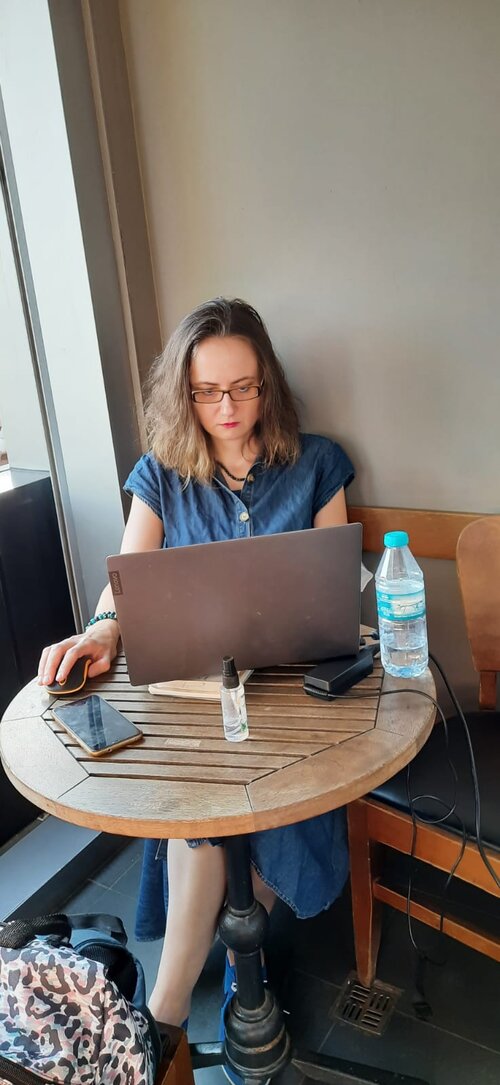
Look at me loving to write. 🙂


Whether you’re a writer or you want to be one, you should know the answer to these questions:

  1. Would I still write if I didn’t make any money from it?
  2. Would I still write this particular story even if no one would read/buy/like it?

Now, writers do make money. It just can be a long and arduous road to get there, depending on the path you chose.

And there are generally readers for pretty much anything – it is just a matter of how many readers there potentially are for that particular story, and knowing how to reach them.

So, if you can make money and have readers, why ask the two questions in the first place?

Because as fun and rewarding writing for a living is, it is also challenging, frustrating, infuriating, difficult, and sometimes, downright complicated.

Whether you write, fiction, non-fiction, or both, the above statement holds.

So, the two questions come in handy. The first one tells you if you have what it takes, and the second tells you how much you love a story.

It’s perfectly okay to answer no to either or both.

In fact, if you are not emotionally attached to your story ideas (question 2), you might have an easier time building an audience or selling to editors. Because if one doesn’t sell, you move on. The downside of not being attached to a story idea is that you might give up too soon. You might not always recognize what works, and you might be pulling your hair out in the middle of your novel when things have started to sag.

If you love a story idea, you will pull through writer’s block, the initial phases where no one knows your name and feel like you’re writing into the void. And you will end up selling stories close to your heart, maybe years after their conception.

If you are only in it for the money, more power to you. But honestly, there are easier, less frustrating ways to earn a living.

I wish we all became Dan Browns and Sophie Kinsellas overnight. But no one becomes a Dan Brown or Sophie Kinsella overnight, including Brown and Kinsella themselves.

Why being a writer is can be so maddening is another story for another post.

You’ve probably guessed it: My answer to both questions is a resounding yes.

I absolutely love to write. I can and do other jobs in addition to writing, whether it is for fun, money, or both. But I could never stop writing, and writing could never be anything but my first and biggest love.

Today is I Love to Write Day. And in its honor, I compiled the 11 reasons I Love to Write.

  1. Entertainment: for myself

I love to have fun. I know everybody does, to some extent. But I try to maximize the fun I’ll have in every situation whenever I can.

Partly because I couldn’t always have as much fun as I wanted as a kid. (And later as an adult…well, in addition to the usual challenges, we’ve been going through a pandemic!)

OK, back to my childhood…

I was an only child who had some bad luck when it came to friends. I was also what we call an apartment kid. I lived in a building, and not in a detached house. We lived in the city, and not in the suburbs. Don’t even get me started on the lack of parks when I was growing up. And let’s not even think about how lousy the education system was/is.

Just imagine: I had to take private tutoring on the weekends as a kid in fourth and fifth grades so I could get into a decent, public but revered middle/high school so I could have a good future with good options. Yes, I was middle class, and we could afford it.

But it is still horrifying to let go of being a kid to study. And yes, it is worse if you can’t afford the courses. (The system did rear its ugly head during and after high school, during and after uni too. I’m still suffering from chronic health and mental health issues as a result, which regularly decreases the quality of my life.)

Add some hyperactivity and restlessness and getting easily bored…

But I had one thing: Imagination. A wild, also hyperactive imagination.

I often liked escaping through my thoughts if I had to sit somewhere for long or tolerate something I didn’t like.

And when I realize I could make stuff up, I felt like a genius. I had “cured” boredom, and I could even handle most of my problems through it.

Everything became more fun.

  1. Entertaining others

Being able to entertain yourself so you are never bored is a great talent, but it is even more rewarding when you can also entertain others.

I think I was around 15 or 16 when I discovered this. I had spent an amazing month in the summer in Santa Barbara, and all the sun/surf/sand inspired my novel, A Change Would Do You Good.

But when I first created it, it was a TV series.

When my friends heard I was writing this fun episodic show set in Cali and starring quirky characters, they wanted to read.

So, I printed each episode out and handed the pages over.

Sometimes, I even lent them my cassette tapes if the story mentioned a specific song. (Yes, I’m this old.)

It was such a fantastic experience to have them talk about my characters, critique the events, list their favorites and least favorites.

This experience also taught me a valuable lesson in writing: People’s tastes vary so much – even among people who are enjoying the same thing. One friend’s favorite character was another’s least favorite, for instance.

  1. Escapism: to escape and to help escape

I’m huge on escapism, as reason 1 probably already made clear.

Living in the moment, depending on where you are and who you are with, can be overrated.

In high school, I was a good student, but I didn’t really care for any of the subjects other than English.

And since I could get good grades just by reviewing lesson materials, I could often be found writing down the events and dialogues of my stories if the subject matter didn’t interest me or I couldn’t stand the teacher. (Yes, I’m an outliner/plotter. Not a strict one, but I do know what will happen in the story before I type.)

And while I think more fondly of some high school moments now than I did at the time, I was still so bored so often that I was a very productive writer.

I imagined what-if scenarios, what I would do in those scenarios, what activities I would want to do and which stuff I’d hate to try…Where would I live when I had a lot of money? What would I wear when I won the Oscar for Best Screenplay?

You know, regular teenage stuff…:)

When I write, realism isn’t nearly as important as escapism and entertainment. I’m not saying research and facts aren’t important, they absolutely are.

But if I want to write about a young glam metal (think Motley Crue, KISS, Def Leppard) band that made it in the present (and I have), I’m not going to care this genre reached its peak in the 80s and 90s.

Writing is fantasy fulfillment, and why not create the type of world you’d want to live in?

This is the reason I don’t write dystopias. I love a fun action comedy and a great thriller. And if/when I have those ideas, I write them as well.

But my most beloved genre is romcom (or romcom drama) because it makes it easier and more fun to escape with.

  1. Romance

This has strong ties to escapism and entertainment. Comedy makes you laugh, drama keeps you grounded (and let’s face it, the right kind and amount of conflict keeps things exciting), and romance gives you passionate bliss.

If you’re a romantic who knows exactly what she wants (and what she definitely doesn’t want), sometimes writing your own stories is the best way to go.

Life is a bit harder when you are a romantic. A couple of experiences is usually enough to get you out of the hopeless and optimistic labels, but you still keep your ideals. You just know your turn-ons and turn-offs, and I’m not talking just about the sexual stuff.

It gets even harder when you also love to have fun. Because people tend to equate fun with casual flings and one-night stands, and the concept of being a romantic with wanting a ring on your finger.

You’re left in the middle wanting excitement and affection, honesty and laughter, consistency and thrill – all at once.

Your friends might chew your ear off about their expectations, beliefs and experiences, mostly deeming you either a dreamer or a pessimist who hates romance. Or funnily enough both, just by different people.

I confuse people because I adore rock music and dislike poetry. I like looking at flowers but I’m neutral about buying or receiving them. I might buy cute candles but I never light them. My favorite movies range from Braveheart to Speed, The Crow to Strange Days, Pride and Prejudice to Bruce Almighty.

I don’t read comics but I’ll happily watch the movies. I don’t generally do video games, except if you have Guitar Hero or Tekken. Then you might have to fight me to for a turn. The most thing romantic you can do is to be there for me when I need you. You really don’t need to stand outside my window with a boombox.

This is NOT bid to say “Oh, look how different am I.” It IS a bid to demonstrate we are all different, and we are both joined and separated by the kind of stories we enjoy.

I market my books by saying I write romcoms even guys can enjoy. (I have asked guys: They confirmed.)

Which basically means: I create good-looking characters but those good looks aren’t dedicated 10 pages.

My characters have other purposes in life than finding love. And after finding love, they actually make an effort to keep it.

The romance is strong and vibrant, but these characters have other people in their life that matter a whole lot: friends, family, co-workers, neighbors. They have dreams and hobbies. Their relationships aren’t toxic or co-dependent.

I write the kind of characters I’d fall for, the kind of romances I wouldn’t mind being in.

I don’t kill off my protagonists. I don’t give them terminal illnesses. And they don’t cheat on each other.

They know themselves. And if they don’t know what they want to do in life, they aren’t above asking for or accepting help to figure stuff out.

And most importantly, I provide happy endings.

  1. Living countless, limitless lives

This list isn’t in an order of importance. All of these reasons are significant to me.

I love to write fiction because I don’t get to live one life; I live countless lives.

Because when I write, I am all my characters. I might have more in common with some than others, but so far, I’ve been a rocker, pro surfer, fashion designer, cop, marketing professional, thriller author, PR genius, actor, model,  therapist, journalist, student, teacher, race car driver and more.

Surfing is glorious! At least, that’s how I imagine it to be. I’m longing to learn it one day. But I can practically feel the waves.

I’ve skydived, spoken different languages, danced, sung to thousands of people in a stadium, won surfing competitions, made the world a better place, driven a Jaguar, strutted on the catwalk, and a lot more.

As you can imagine, I’ve done and been only a fraction of these things in real life.

This is an absolute blessing, and I wouldn’t change this for the world.

Oh, don’t get me wrong. You can give me the world. But even if I had it, I would still write.

  1. Learning – about different cultures, jobs, personalities.

In this fast and dizzying chaos that we call life, it’s hard to take time to sit down and learn about all the things you are wondering about.

You need to make money, exercise, see friends, make time for family, go on that date, cook, run errands, sleep, travel, spend some time on your hobbies, make healthy changes, see doctors about your problems…

Help!

Right?

Except, when you are a writer, learning is a legitimate, paid activity. It is an essential part of your job.

What’s that pretty, quaint town in France called?

What’s the distance between San Diego and Stanford?

Does this happen like this in real life, or do I take the liberty of creative license for a more entertaining story?

What’s the name of this dance move?

Can someone with this job afford this apartment?

And a whole lot more…

And then there is the non-fiction part too.

You get paid to learn what you want to learn. And that’s priceless.

  1. Having a place to apply/share/teach what I’ve learned and studied

I did learn, and then I get to share it.

You can write what you know. You can find out about what you want to write.

Either way, you get to share it all with others.

  1. Therapy

Good therapy and the advancement of psychology/psychiatry are life-savers.

Having a good understanding of the human mind, and especially your own, is a life-saver. It enhances compassion and empathy. It increased the quality of your life. It helps you deal with trauma and slay your demons. It improves your physical health.

I go to therapy in real life, and honestly, I wish I had started earlier.

I do my best to destigmatize mental health issues, and I underline the importance of recognizing the need to talk to a competent, professional who passes your vibe check. (Your personalities and the therapist’s approach need to be a match.)

So, in practically every story, I take a character or two to therapy.

I also write essays that cover mental health.

Going to actual therapy is great. But honestly, for me, the best therapy is the combination of my therapist and my writing.

The relief, the fun, and the understanding you receive from others is something else.

And when a reader reaches out to you and says, “Thank you! I’ve been through this exact same thing.”

That’s the best feeling.

  1. Money/living/career

Would I write if I wasn’t being paid? Yes.

Do I love the fact that I’m being paid? Also yes.

Writing is a skill. It’s a craft. It’s hard work. Sometimes, it’s even blood and tears.

It takes patience. It can cause issues with loved ones. It can create health problems.

Yes, it can help with health problems. But with all the amount of sitting, wrist action, the unpleasantness of rejection and hair-pulling, it also messes with your health.

So, it is only fair that we get paid.

People need therapy. Escapism. Entertainment. Being informed. Love. Big dreams. Different worlds…

I firmly believe that while money can’t buy happiness on its own, it definitely helps with buying what makes you happy.

  1. The possibilities.

There’s a lot that being able to write can bring.

I’ve been invited to conferences (all expenses paid) and got to see different parts of the world. I’ve been reached out to by a reader in Britain and read by someone in Spain.

I got into programs to study things I’m interested in. It helped me express myself, get to know amazing people, work with awesome editors, and a whole lot more.

  1. Sharing my love of a particular story/for characters with an audience

Would I write if no one liked, read, or saw my work? Yes.

I love living my head, but I also love pouring those words and characters and stories out on the screen and the paper.

I love being read by people I know and don’t know.

Have you ever enthusiastically discussed a favorite, book, movie or TV series with a fellow fan? It’s so much fun! You also feel seen and understood. You don’t feel alone or like you are weird. You laugh and cry together.

Now take that feeling, and multiply that by a billion.

That’s how awesome it feels when someone enjoys your work and you’re talking about the events/characters/message/lines of your stories.

Priceless. Life-changing. Like a million dollars.

Never had a million dollars, but I’m assuming it’d be a life-changer.


*

Different writers have different reasons. Experienced writer, journalist, and published author Olga Mecking writes because:

“Writing allows me to organize my thoughts and tell people about things I find interesting or important. Also, I get to talk to really smart people about what interests them and then I get to tell it to more people.

I always wanted to be a translator, and for a person who speaks many languages it makes sense, except it didn’t happen. But writing is similar, but now I translate whole concepts, not words.

I also like learning new stuff and writing is a very wide area ranging from fiction to copywriting so there is a lot to learn.”

*

Your reasons why you love to write might be similar or different. But in the end, we all love it!

Happy “I love to write” day to all!

Why do you love to write?

 

Filed Under: Inspiration and Motivation Tagged With: reasons I love to write, why we write, why writers write, writing

6 Things Readers Can Do for Indie Authors (aka Self-Published Authors)

Posted on November 13, 2021 Written by Pinar Tarhan

Happy Indie Author Day!

Indie author and self-published author are basically the same things, except a quick search online tells me indie author means someone who writes and publishes their books for a living, while a self-published author can write just for family and friends.

I don’t mind either term, but I prefer self-published.

Since I’ve had to do a lot myself, I liked the word self in there.

And even though you hire people for some of the crucial tasks like editing and cover design, you still have to come up with the money yourself.

With the definition of the concept out of the way, I’ll explain why my non-self-publishing audience should care. (I’m sure my fellow self-published authors will be nodding along the way.)

Self-publishing is becoming the go-to-choice of increasingly more authors, including previously traditionally published ones. Some authors choose to enjoy both worlds while quite a few stick to one team.

Self-publishing has a lot of attractive pros, both for the reader and the author:

  • There are no barriers to entry.

This doesn’t mean self-published authors can and should ignore quality. On the contrary, they have to constantly up their game so they can keep up with all the books being published, by traditional authors and other fellow self-published authors.

What no barriers means, instead, is that writers can get their words out there more quickly as opposed to chasing after agents and publishers for years on end.

  • They can be as slow or as fast as they like.

Self-published authors aren’t bound by the same length expectations of traditional publishers or certain agents.

They can write shorter books, publish more frequently, and in doing so, unite readers with awesome story worlds faster.

  • They can price at will.

Exceptions aside, self-published authors look at other self-published authors and reader expectations for pricing their books.

Most indie e-books books change from free (as in the writer is giving away this book) to $4.99. (At least this is so in the romance genre.)

Traditionally published books are usually more expensive.

  • It’s easier to build a direct relationship with the author.

While there are self-published authors making all sorts of bank and bestsellers list, many don’t have thousands of raving fans yet.

Obviously don’t get your stalk on, but you’ll have an easier time reaching the author.

Authors remember reviews that go into detail about favorite characters and non-spoiling accounts of what the reader enjoyed the most.

You might end up voting on the cover of the writer’s next book, helping name a character, deciding on a certain twist or other important story detail.

Traditionally published authors might get a vote on their cover themselves, but the publisher won’t be likely asking for your opinions.

*

So there you go. These are 4 great reasons to read more indie authors, if I say so myself. And yes, I read a lot of self-published authors. I walk the walk. 😉

Now that you know the why, if you want to help your favorite self-published authors reach a bigger audience (because a bigger audience means a better chance of making a living which consequently means, you guessed it, more great books), there are 6 things you can do.

6 Things Readers Can Do for Self-Published Authors

  1. Read the book.

OK, I know you are saying no shit, Sherlock. But hear me out.

Reading the book might be the most obvious thing, but it’s certainly not the easiest.

Reading takes time. I can’t read as much as I want to, and I read like crazy.

Taking the time to read someone’s work in its entirety is the single best thing you can do for them.

How can you read the book?

Well, you can buy it, yes.

Or you can borrow it if the book and you are both on Kindle Unlimited.

But you can also offer to beta read or read a review copy.

Beta-reading is when you help an author improve their drafts. You might or might not get to read the final version.

Authors always need more reviews (which I will get into in a bit.) So, before they launch, they will post on their social media and write in their newsletters, asking for early readers (so that they can read and review the book).

How do you receive those newsletters? You subscribe to their email lists. How do you subscribe? Well, they will be promoting it left and right.

Want to get on mine? Here’s the link: https://writing.pinartarhan.com/newsletter/ Subscribing to author newsletters has other benefits, which I’ll get to shortly.

  1. Buy the book.

This again?

Well, yes.

If you can afford it and think the author is worth it, you should buy the book even if you received a free copy.

This is how online bookstores come to decide the author is worth reading so their algorithms recommend their books to more people.

More purchases lead to more purchases.

  1. Review the book.

Review the book. If you hate Amazon, review it on Kobo. Or Goodreads. Review it on your blog or social media.

But review it.

If the book is on Amazon, though, the writer will especially appreciate the reviews there.

Amazon has a bunch of strict rules about who can review what. And not everyone who reads the book leaves a review.

Then there is the regional stuff. I have reviews scattered around Amazon. Italy, The Netherlands, UK…Which is great, but when someone goes on Amazon.com, they will see fewer reviews in total because reviews are not all in the same place.

No/few reviews stops or slows down sales. More reviews keep the book more relevant. Amazon shows it to more people. More sales.

Whether the book has 1 review, 10 reviews, or 50 reviews, that author needs your review. But the book with fewer reviews needs reviews more than the others.

And please don’t be daunted by the word review either. No one wants a book report.

But a writer needs a bit more than “I loved it/I liked it/It was okay.” You can mention parts you enjoyed, characters you identified with, being impressed with the quality of twists (without spoilers), talk about how well-written the sex scenes were…

Anything about the book/writer’s writing style is fair game as long as you don’t give away spoilers. (And if you didn’t enjoy the book, keep it constructive and decent.)

And if you want to do the writer a real solid, give them permission to use your name and review as a whole in their marketing of the book.

  1. Spread the word about the book, online and offline.

Writers need readers. And word of mouth can spread like wildfire. But someone needs to light the spark.

If you enjoyed the book, tell people. Tell them in person. Tell them online.

Post about the book on social media and/or website if you have it.

If you are following the writer on social media, like/retweet/upvote/share/etc. their posts. This will help increase their visibility.

  1. Talk about this book and other books with the writer

Whether the writer is your friend or someone who is just really good at engaging with (potential) readers online, writers love to discuss their stories.

For a lot of writers, their books are their babies. You can talk about what you liked. You can talk about what you didn’t like (but be gentle.) You can discuss suggestions and expectations.

This will inspire and motivate the writer. This might prevent them from banging their head on their desks when they are lost.

When readers talk to me about their favorite events, characters, expectations, surprises and ask questions, it’s one of my favorite things in the world.

  1. Subscribe to their newsletter.

Email newsletters are the direct communication link between the author and the reader.

Authors share their news, latest blog posts, upcoming projects, *free stuff, answer reader questions, and more in their emails.

The free stuff is exclusive to the email list and can be anything from sample free chapters to deleted scenes, bonus chapters to character interviews, fun trivia to entire new stories/books.

You can also ask questions, send requests and reviews to the writer.

*

Happy Indie Author Day!

If you are a reader, thanks for supporting us.

If you are an indie author, may all the right fans find you.

Filed Under: Self-publishing, Writing Tagged With: indie author day, indie authors, reader reviews, self-published authors, self-publishing

9 Reasons Friends, Family, and Other People Aren’t Buying Your Books, and What to Do About It

Posted on October 31, 2021 Written by Pinar Tarhan

Most writers, due to their creative nature and a career path requiring them to dream up stuff, don’t have the most realistic goals. And yes, I’m among those writers.

I’d really love one of these bad boys.

I wrote my Oscar speech (for Best Original Screenplay, thank you very much) and visualized the whole thing. I was in middle school. I even know what kind of dress I’m wearing and what my hair will look like for crying out loud.

And while I pivoted more toward writing novels in recent years, most of those novels started off as screenplays, and the Hollywood dream is strong within me.

But a dream doesn’t have to involve a designer gown, gorgeous hair, and a lovely statue to be unrealistic.

Raise your hand if you thought most of your list on FB, Twitter, and Instagram would rush to buy your books when you launched. (Yes, my hand is up.)

But they didn’t.

Sure, some of us are lucky to have awesome family members who will shout out about our books from rooftops. I’ve got such family and friends. (But not every friend bought it, obviously.)

Some friends are amazing supporters. They will buy, read, promote and review. And they do it happily and proudly.

Many other friends are fellow writers and you’ve sworn a blood oath (or you know, a promise) to have each other’s backs through thick and thin. Because people who get writers the most are other writers. Being equally (slightly) crazy and weird and fantasy-loving and all…

But…that huge list of thousands of followers/friends…they didn’t buy.

Why?

I mean, if your friends wrote a book, you’d surely buy it and promote it to the best of your ability…

Except, not really, because you can’t buy every book your friends wrote because they are also writers and they write many books.

                                If I shelved a portion of the books written by my friends…


So…even you failed yourself about your own expectations of other people.

By the way, I’m making a confession, not putting on blame.

I’ve been there. I’m that writer with tons of writer friends who can’t keep up with the speed they are all writing.

I’m helping out in other ways when I can’t buy or read just yet, but that’s another blog post.

So now that we’ve established friends and family and other people you’ve expected to buy can’t and won’t all buy, let’s go over why.

Then we’ll talk about what to do about it.

Why Friends, Family, and Others Aren’t Buying Your Books

There are several different reasons, and we’ll go over them each. Then I will continue with what you can do about it.

– They actually don’t know you’ve got books out.

Not everyone is on social media.

Not everyone is on the same social media channel.

Or you are not following each other on social media. Following family can be very awkward, indeed.

Even if you are following each other on the same channels, you are a slave to that social network’s ever-changing algorithms and rules.

Most social networks are leaning more and more toward paid advertising so your organic (aka free) reach is plummeting every day.

Maybe 200 of your friends would have seen that launch announcement or news about your discount 5 years ago. Now you are lucky if that status update of yours reaches 20.

As for readers who are strangers to you, this is indeed the biggest problem. They don’t know you exist.

What to do about it:

Either pay for boosted posts via ads or let it go. Ads aren’t the worst idea if you know what you are doing and have money to throw away.

But chances are, they won’t buy it even if they (friends/family/strangers) knew because they’re not your target audience, aka fans of your genre/sub-genre, the tropes you are using, and your writing style.

If you know FB ads or can afford to learn/test/delegate, advertising is a way to reach strangers who are target readers.

Obviously, effective marketing methods such as doing email marketing and Amazon ads well and having many positive reviews will also do a better job of reaching new readers.

Most effective marketing techniques for authors are beyond the scope of this post but I’ll name some authors I follow that are doing it well. These people offer a lot of amazing free and paid resources.

–  Alessandra Torre. Her website is great, and you should definitely catch her webinars on Goodreads.

– Dave Chesson. Chesson runs the Kindlepreneur blog. I also own his keyword tool Publisher rocket.

– Lizzie Chantree (affiliate link to Lizzie’s networking book. You can read my review for the book here.)

– Nick Stephenson: I own Stephenson’s Your First 10K Readers course. I also subscribe to his email and read whatever he posts about marketing. This is a free guide on writing, publishing, and marketing your book.

– Mark Dawson. I’m an email subscriber.

– Ian Chandler. He runs Self-Publishing School. I’m an email subscriber and I watch webinars.

– David Gaughran. I have several of his books and I think his wonderful Starting from Zero course is free.

– Joanna Penn: I subscribe to her blog The Creative Penn, and I own several of her books.

– Sandra Beckwith. She runs the Build Your Bookbuzz blog and has great advice on marketing. Period.

– Penny Sansevieri: She runs Author Marketing Experts blog, and I read several of her books on marketing. (affiliate link)

– Derek Doepker. I watch whenever he is on webinars and I own his course on getting more reviews. (Not an affiliate link. If you scroll down this page, you can see the description of the review training I did.)

*

– They don’t know how to buy it.

Buying stuff online can be tricky or at least annoying and time-consuming. You might need to walk them through it.

What to about it:

Sending a direct link to your book’s purchase page is a good idea.

– They don’t want to buy it where you are selling it.

Maybe your book is only available on Amazon, and your readers don’t shop there.

What to do:

You can choose to go for wide distribution. The advantage is, your book will be available on more platforms. The disadvantage is you can’t put your book on Kindle Unlimited if you go wide. You will be paid for the books purchased via Amazon, but you will be giving up getting paid via pages read. This is a decision you need to make for yourself.

(Every time you put your book on KU, it is there for three months. So this is never an absolute decision. You can experiment, compare profits between wide vs. Amazon only and then make an informed decision.)

Currently, I prefer being on KU as an author, and I prefer reading authors who are on KU as well.

 – They can’t buy where you are selling it.

This mostly goes for Kindle Unlimited Authors like myself. KU is not available in all countries.

Per Amazon.com: “Kindle Unlimited is currently available only to US customers on Amazon.com. Customers in the UK, Germany, France, Italy, Spain, India, China, Japan, Brazil, Mexico, Canada, and Australia can sign-up for Kindle Unlimited in their local Amazon marketplace…”

Maybe they don’t use KU, or they don’t reside in a country that offers KU.

KU readers pay a monthly membership and this gives them a certain number of books to keep in their library. If they want other books, they can return one and borrow another. So they can read as much as they want for a fixed monthly fee, which is amazing for voracious readers.

What to do:

They can of course always opt for buying your book as opposed to renting it via KU. But then you need to give them the correct link of Amazon for their country of residence. Their shipping addresses are recorded, and with another country’s link, the book will show up with this message: “Not available for purchase in your own country.”

And sometimes, they just won’t be able to purchase via Amazon.

Now, if you’re not on any other platform, you’ve got to let this go. Or, if you decide to publish wide later, you can send them links of your other options when you do.

– The book doesn’t exist in the format they prefer.

Some people prefer audiobooks or paperbacks. This is a choice that costs money, so …

What to do:

If you are on a tight budget, these readers can be let go for now and you can cater to them when you can afford it. Because producing other formats usually costs money.

– They are not in your target audience

Remember how I defined target audience earlier?

If someone only reads horror or political thrillers, they won’t likely enjoy any type of romance, regardless of how well they are written or how much they personally like you.

Maybe they aren’t big readers. If someone only picks the occasional mass paperback recommended by millions of people, they might not read your book. They read once in a while, and you don’t come that heavily advertised yet.

Even just because someone likes your genre, doesn’t mean they like your sub-genres or tropes.

I’m big on thrillers, but I’m super weirded out by ones where therapists are bad guys who prey on their patients.

I read romance like I drink water, but there are so many tropes and endings that I don’t like I wrote a book about it. The book is called How to Write the Ultimate Non-Tragic Romance (aff. link). You can guess how much I hate tragedies.

If your protagonist has a terminal illness, I’m out of there. I had my quota filled a long time ago. Even if your writing flows and you are uber-talented.

You get the idea.

What to do:

You stop talking about your books to these people or at least stop expecting to buy them. Go after your actual target readers instead.

– They are way behind their to-read list

They can be avid readers and among your target audience, but this poses another problem. They already have a million books to read.

What to do:

Be patient. Take a number and get behind in line.

Speaking from experience. I’m so behind my to-read list, I can’t even. And I keep adding more books every day.

– They don’t have the time

Life is too short. Days are even shorter.

Work, kids, friends, family, romance, surviving a pandemic, errands, housework, health issues, transportation, and traffic…

Argh…Even writing this down makes me want to pull my hair out, and I don’t even have kids or pets. (I do have health problems, which does in fact cut my quality time short.)

Whether they are avid readers or not, quality time for reading is often interrupted by life.

What to do:

Leave it. Let go. Move on.

Unless they tell you they want reminders, you need to cut your losses. It sucks, but what are you going to do…

But if they ask, you can always tell them a short blurb in person. Hell, if they ask, tell them the entire plot.

Some people love spoilers and knowing they will like the story might make them more inclined to take a chance.

But don’t dump an entire story on unwilling people, no matter the urge. (I always have the urge to talk about my books. They are my babies. You’re not alone!)

– They can’t afford it right now

Books are expensive. Especially paperbacks and hardcovers. They are even more expensive if the book is from another country, and lousy exchange rates get into play.

What to do:

If people are genuinely only staying away due to prices, you can send them a notification when your books are on sale or ask them if they want a free copy.

Sometimes, all you really want (and/or need) is more eyes on the book.

Don’t pressure anyone, though.


*

There you go. These are the main reasons why despite having thousands of friends, fans, and other followers on social media, you didn’t sell thousands of copies.

Chances are when you first started to write, you didn’t know just how much you needed to market – whether you’re self-published or traditionally published.

But it is okay. It takes a while to come to terms with it. And even when you accept it is on you to work consistently to get the word out about your work, there are times when you just want to give up.

You don’t, of course.

You adapt. You learn, and you implement.

May great marketing skills be with you, and may more friends, family, fans, and strangers rush to buy your books and gush about them everywhere.


Filed Under: Writing Tagged With: book marketing, book marketing for writers, how to increase book sales, how to sell more books, why your books aren't selling

3 Things to Avoid When Writing a Thriller (According to an Avid Thriller Fan)

Posted on October 21, 2021 Written by Pinar Tarhan

Image by Pete Linforth from Pixabay.

I’m not a bestselling thriller author, so why write this article?

Because for anyone writing a solid thriller, there is a chance I’m in your target audience as a thriller reader and watcher.

Legal, medical, psychological, horror, action, romantic…I’m all for these thriller subgenres and more.

I consume quite a bit of it, and when I’m finally confident in my idea and story, I’ll also write thrillers. (But I am slightly more in love with writing romance, so those next books will get written first.)

I find thrillers a very tricky genre to write as the audience usually has very high expectations, has already seen many variations of your characters, conflicts, and main concept. They are sick of seeing certain twists, tropes, and character and event types.

For instance, I am not fond of amnesia, whether I come across it in a thriller, romance, or romantic thriller.

So, while you’re obviously free to write the story you want to write, it will help you to keep in mind audience expectations, and what will possibly disappoint them. And I’m by no means the only thriller fan who doesn’t want to see the tropes I’ll mention below.

This list is short and unexhaustive. But avoiding these three (or finding satisfying ways to justify them) will improve your story and please your readers.

Ready? Let’s get ready to thrill and be thrilled.

  • Stupid protagonists that make it really hard to root for their survival

This is truly the bane of my existence as a fan of the genre.

Look, I get it. It’s your job as a thriller writer to put your protagonists in increasingly dangerous situations. And we are only human. Fueled by stress, adrenalin and fear, we are likely to make some irrational decisions.

But, and this is a crucial but, there is humanly stupid/afraid… then there is intolerable idiot.

I’ll give you an example.

Let’s say you are in the wilderness and you run into a huge, angry bear. What do you do?

I’m by no means claiming that I can survive that with my body and integrity intact. I’d probably die from a heart attack. Or throw up and freeze. Angry bears are scary as hell!

But I can tell you what I most definitely wouldn’t do. I wouldn’t antagonize the bear on purpose or attempt to fight it with my bare hands.

Heard a noise when alone in the house? Why would you call out hello? Are you freaking kidding me? You stay quiet, check around with a potential weapon like a baseball bat or something heavy and call for help on your phone.

Or better yet, hide and call the cops. Don’t say hello. This is not a cute stranger at a coffee shop. This is a potential intruder. And in case you are saying it might be a friend, write better friends. You know, those who aren’t likely to drop in announced in the middle of the night, making all sorts of weird and loud noises.

But this is not the only dumb thing most thriller main characters do, is it?

They hide their spare key under a mattress. I mean, regardless of the genre, unless the movie takes place in the safest town of a country like Norway, or you created a utopia where crime doesn’t exist, don’t make your characters put a key where it will be easily found.

And if you do make them put a spare key for anyone to find, for the love of all you hold dear, please don’t make them act angry, surprised, or scared when someone unwelcome comes in.

And the award for the dumbest action, though, goes to characters who aren’t particularly big, strong, or fast. They don’t know martial arts. They don’t know how to shoot a gun. They can’t parkour. They can’t lift grown men. They don’t have any sleuthing or policing skills.

And yet, when they are suspicious, they don’t call the cops. Or hire a PI. Or even talk to a bunch of friends and take them along. Taking your friends into dangerous places is still stupid, but way smarter than going alone and unprepared.

These characters go into buildings that are about to crumble. Buildings so dangerous that you don’t need a ghost or a serial killer to put you in danger. And then they die or get seriously injured. And what do you think the audience feels when this happens? How do you feel when this happens?

Don’t make your characters act stupid.

If you do, make sure you compensate for this in another way.

Maybe your character is depressed and isn’t afraid to die. Maybe he/she is a daredevil and the adrenalin rush makes up for all the threats according to them.

Maybe they are so desperate that there is a bigger chance to survive whatever/whoever is after them that they enter into a dark alley without so much as a car key.

Then yes, you might get a pass. But be aware you’d be walking a thin line.

And if thrillers have shown us anything, if the protagonist is a therapist, the worse we need to expect. And this brings us to mistake #2:

– Incompetent/unethical/irrational/evil therapist characters

Many thrillers love a therapist who is (un)intentionally bad at their job for some reason. Cough, Intersection, cough.

In Final Analysis (1992), Richard Gere’s therapist sleeps with Kim Basinger, who happens to be his patient’s sister. Look, we all get how hot Basinger is, but you gotta keep it in your pants for the sake of your profession.

Of course, this will lead him down a very dangerous path. Are we surprised or scared about anything that happens to him? Not really. And I love Richard Gere.

The 90s are filled with movies from different genres where there is a prominent therapist character who sleeps with a patient. Unethical, bad, and irrational all in one.

Lots of dangerous things happen to this therapist, and you’re like, yeah, whatever man. Let the psycho get him/her. Or let them be fired or whatever.

It’s hard enough to convince people about the validity of therapy and the existence of good therapists without pop culture shoving more fictional bad therapists down our throats.

If you are writing a therapist, it might be a good idea to not make them sleep with patients or patient relatives.

If a therapist has a therapist, this is a good sign. It means they walk the walk. Would you trust a doctor who didn’t go to a doctor when they were sick?

You get bonus points for making your therapist deal with emotionally taxing situations in ways they’d recommend their patients.

Not making your therapist live an isolated life or having them lead a co-dependent and/or toxic relationship would also be a nice change.

I’m not saying all therapists are good at their jobs or taking their own advice. But we have seen enough incompetent and/or bad therapists who make terrible life choices during the entire story.

– Stupid villains

Stupid villains underestimate their enemies and loved ones.

They are impulsive and are bad at making critical decisions.

They have horrible timing.

They forget to check things and take precautions.

They overestimate themselves.

They surround themselves with people who can catch them.

***

Your characters don’t need to be super intelligent. But a little common sense goes a long way when they are planning things or reacting to things.

What about you? What thriller writing choices drive you up the wall as a writer or reader of the genre?


Related Posts Plugin for WordPress, Blogger...

Filed Under: Fiction Writing, Writing Tagged With: how not to write thrillers, how to write thrillers, thriller writing, thriller writing mistakes, thriller writing tips

  • « Previous Page
  • 1
  • …
  • 10
  • 11
  • 12
  • 13
  • 14
  • …
  • 77
  • Next Page »

Blogroll

  • My Entertainment Blog

My Other Blogs

  • Beauty, Fitness & Style for the Fun-Loving Gal
  • Dating & Relationships in the 21st Century

Categories

  • Author Interviews
  • Author news and coverage
  • Blogging
  • Book Launches and Excerpts
  • Book News and Author Interviews
  • Book Recommendations
  • Book Reviews
  • Career Management for Writers
  • E-Book Reviews
  • Fiction Writing
  • Fictional Writers: Writer Characters in Movies, TV Series and Books
  • Inspiration and Motivation
  • Marketing
  • Marketing Fiction
  • Movie and TV Series Recommendations
  • Novel Reviews
  • Paying Markets-Web and Print
  • Productivity & Time Management
  • Recommended Resources
  • Reviews for Tools and Devices
  • Romance
  • screenwriting
  • Self-publishing
  • Story Conflicts
  • Website & Blog Reviews
  • Writer Tools
  • Writing
  • Writing Tools
  • Writing Updates

Copyright © 2026 · Focus Pro Theme on Genesis Framework · WordPress · Log in

This website uses cookies to improve your experience. We'll assume you're ok with this, but you can opt-out if you wish.Accept Reject Read More
Privacy & Cookies Policy

Privacy Overview

This website uses cookies to improve your experience while you navigate through the website. Out of these, the cookies that are categorized as necessary are stored on your browser as they are essential for the working of basic functionalities of the website. We also use third-party cookies that help us analyze and understand how you use this website. These cookies will be stored in your browser only with your consent. You also have the option to opt-out of these cookies. But opting out of some of these cookies may affect your browsing experience.
Necessary
Always Enabled
Necessary cookies are absolutely essential for the website to function properly. This category only includes cookies that ensures basic functionalities and security features of the website. These cookies do not store any personal information.
Non-necessary
Any cookies that may not be particularly necessary for the website to function and is used specifically to collect user personal data via analytics, ads, other embedded contents are termed as non-necessary cookies. It is mandatory to procure user consent prior to running these cookies on your website.
SAVE & ACCEPT