Addicted to Writing

Manage Your Freelance Writing Career While Writing What You Love

  • About Pinar Tarhan
  • Blog
  • Books
  • Hire Me: Services
  • Contact Me
  • Portfolio
  • Favorite Resources
  • Newsletter

Review: Alexis Grant’s How to Take a Career Break to Travel

Posted on August 28, 2014 Written by Pinar Tarhan

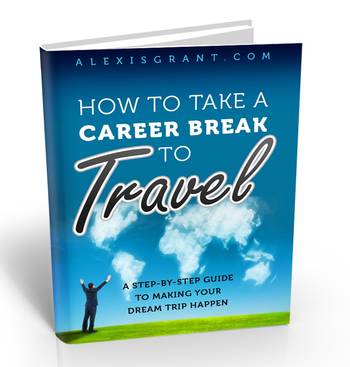
how to take a career break to travel e-book
Image via alexisgrant.com.


Alexis Grant, in her own words, is an entrepreneurial writer and digital strategist with a focus on careers. She is also a writer who has practiced what she preaches – she took her travel break in 2008.

Alexis Grant’s guide is perfect for anyone who’s planning s career break to travel, but it just makes sense for those of us that are rational romantics and risk-takers. What do I mean by rational romantic?

You know who you are. You’d consider sleeping with a stranger, but you wouldn’t do it without birth control (preferably on both sides). You’d quit your job if you hate it, but after you have some savings and a sanctuary plan (like living with parents if need be) beforehand.

I’m one of those people. I take some risks with my heart, and peace of mind, every day; I’m a freelance writer who also writes fiction and is trying to get into Hollywood. There are enough uncertainties in my life to spin anyone’s head.

But I wouldn’t be the friend to offer going skydiving just because or try the foreign cuisine if I don’t know what it is in the dish that I’m eating. And I wouldn’t take a career break without having a plan.

That said, in several ways, it is easier for a freelance writer, especially an established one, to just go ahead and do it. We are our own bosses, our clients can be reached via email from most parts of the world, and we are a bit more used to the unknown.

Yet, even for a freelancer, it’s much easier to go about our free-spirited ways in our own country where we’re used to the customs, body language, health care system (despite how unsatisfactory it might be) and so on. It’s however a whole other escapade to take a career break to travel or to move to an entirely different place.

This is why I jumped at Alexis e-book: it seemed to offer exactly what I needed, and it didn’t disappoint. Here’s a breakdown of contents:

–       Part 1 starts by reminding you why you absolutely need to do this, and the differences between “scheming and planning,”

–       Part 2 destroys your 4 biggest, albeit most logical, excuses like your family obligations, not having a fat enough bank account, your job and your house.

–       Part 3 is called Planning Mode and helps you discover your options like traveling while blogging, earning from your blogging efforts, as well as other ways to make money during your traveling. It also guides you through your trip planning (like picking destinations according to your budget).

–       Part 4 deals with logistics: your potential expenses and a comprehensive to-do list including visas, luggage, footwear, your financial plan and a lot more. Just print out the whole book while you are at it. You’ll want to make notes.

–       Part 5 preps you for when you get back.

*

All in all, How to Take a Career Break to Travel (aff. link) is a 94-page comprehensive and practical guide that starts with smart encouragement, and guides you through all stages of preparation for before, during and after. I recommend reading the book and keeping it as a reference even if you are planning to move to a certain location. The price is $29.

Want to read more about travel breaks? You can check out her posts here.

*

– Do you own this book? Let me know in the comments how it has helped you.

– Are you planning a career break? Have you already taken yours? Please share your experiences in the comments as well.

Click here to view more details

Filed Under: Book Reviews, E-Book Reviews, Recommended Resources Tagged With: alexis grant, alexis grant how to take a career break to travel ebook review, how to take a career break to travel, how to take a career break to travel review, taking a career break, taking a career break to travel

Something’s Gotta Give – Life Is Stranger (and Funnier) Than Fiction & How Much Fiction is Your Fiction?

Posted on August 22, 2014 Written by Pinar Tarhan

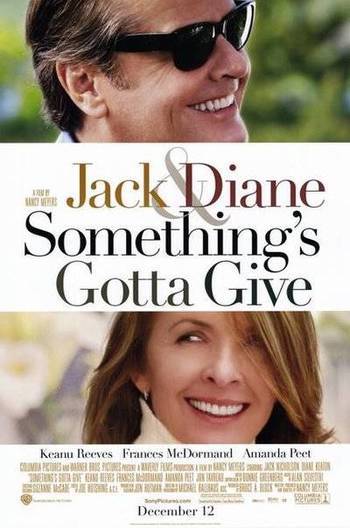
Something's Gotta Give movie  poster
Image via moviepostershop.com.

Something’s Gotta Give is one of my favorite romantic comedies of all time. It’s hilarious, pretty original in a lot of places, feautures one hell of a cast (Jack Nicholson, Diane Keaton, Keanu Reeves, Frances McDormand) and its script is available online for fellow romantic comedy/drama writers. If you are looking for a movie review, or need more (spoilerless) info on the plot, please check out my review post. You can also watch the trailer for a better picture.

This post will concentrate more on the main character Erica, a playwright, and the events that inspire and fuel her latest play (so let there be many spoiers!):

Playwright Whose Real Life Becomes More Interesting Than Fiction:

Erica Barry (Diane Keaoton) is a successful and prolific playwright in her 50s. She’s divorced; her ex-husband is her director – he still directs her plays. She has a 20-something, pretty auctioneer daughter and a sassy, college professor sister (Frances Mc Dormand).

When Erica comes to her house in the Hamptons with her sister to work on her new play, the two women get a huge surprise in the form of 60-something Harry Sanborn (Jack Nicholson) – who happens to a famous businessman/bachelor –who’s dating Erin.

After the initial shock, they decide to stay together in the house, though Harry can’t wait to get out of there. After all, Erica hates his guts. But when he has a heart attack before he can have sex with her daughter, the women rush him to the hospital, and there they meet a young, polite and eye candy of a doctor named Julian (Keanu Reeves). To their shock, he turns out to be a big fan of Erica’ plays and is smitten.

Keanu Reeves, something' gotta give
Yeah, this is Julian. Image via totalfilm


In an ideal world, they would send Harry packing, but he’s neither willing to stay in the hospital, nor is he well enough to go back to the city. So Julian recommends Harry stays closeby, where he can check in on him. So he ends up staying with Erica despite her objections. To make things more frustrating, everybody leaves for the city too, and Erica ends up staying in the same house with Harry, all by herself.

But as she gets to know him, she realizes he’s fun, smart, and quite charming when he wants to be. Despite going on a date with Julian and having a good time, as she and Harry get close, she forgets all about Julian, eventually sleeping with, and falling for Harry.

Harry is shocked by how much he is into Erica, but he isn’t sure if it is all because of his heart attack. After all, he is used to dating much younger women.

When he gets better, he pretty much leaves things undetermined. But when Erica sees Harry on a date with a young woman, she loses it. After dealing with her, Harry has to go to hospital again, which Erica doesn’t know about.

Back in the Hamptons, she gets into a bouts of crying and writing, she finishes her play. She also starts dating Julian (the young doctor) thanks to a chance encounter with her sister Zoe.

Harry seems to be doing OK, on a date with another young woman, when he almost chokes on his food: she’s an actress auditoning for a hilarious part in a play – which is pretty much all about Harry-Erica-Merin-Zoe, just with differently named characters.

When he goes to confront Erica, she seems happy and over him. She tells him the story isn’t exactly the same, until he sees the same scene from the hospital. Aren’t there any differences? There are: in the play, Henry is called Harry. And he dies. And that’s pretty much all Erica changed. She has even used bits of dialogue exchanged between them.

*

Yep, this is a romantic comedy, Harry is the male protagonist so you can guess he will eventually own up to the fact he’s head over heels with Erica and do something grand to win her back.

How Much Fiction Is Your Fiction, Really?

Many writers believe you need to live interesting and exciting lives to be able to write (well). And I mostly agree. Some of my stories were inspired while I was doing writing-worthy stuff in my life, like staying in gorgeous Santa Barbara for a month, or learning about the true potential of Public Relations from a great teacher.

And while I might not have written a certain event in my life, changed a couple of things and labeled it as fiction, I use a lot of real events in my blog posts. After all, what fun would dating blogging be if we couldn’t dis exes (while keeping names private, obviously) publicly?

In all seriousness, though, where do you, or should you draw the line? Where does your story stop being your own? Is it OK to write a play about your life, without notifiying other parties involved?

And while Harry might have deserved some humiliation, did he really deserve to die in a play about him?

Frankly, I think what Erica did to Julian was much worse than what Harry did to her. She went on a date with him, forgot all about their next date after confirming it, didn’t call to apologize, hooked up with Harry after professing her disdain of him, got back with Julian and ditched him for Harry on her birthday (OK, Julian left her saying she still loved Harry, which was the truth, but still…)So if I were Meyers, I would probably have an alternate ending or an additional scene where Julian wrote a play about Erica and killed her at the end.

*

When you use things from your life in your writing, where do you draw the line?

For more writer characters, check out my Writer Characters category.


Filed Under: Fictional Writers: Writer Characters in Movies, TV Series and Books Tagged With: diane keaton, frances mcdormand, jack nicholson, keanu reeves, nancy meyers, somethings gotta give cast, somethings gotta give screenplay, somethings gotta give script, something’s gotta give, something’s gotta give movie somethings gotta give movie, writer characters in films, writers in films

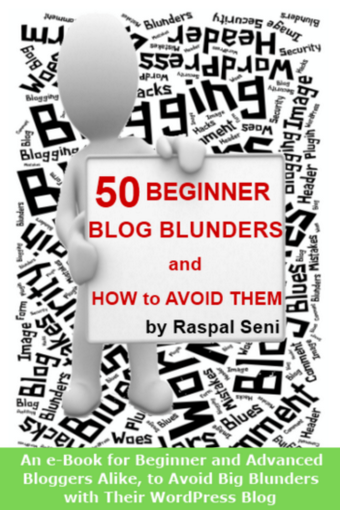
Review for The 50 Beginner Blog Blunders And How To Avoid Them by Raspal Seni

Posted on August 8, 2014 Written by Pinar Tarhan

raspal seni

Raspal Seni is a freelance blogger specializing in WordPress and technical computer stuff that a lot of us dread. You can learn more about him through his blog I Write About Blogging where he helps out beginner bloggers.

The e-book:

Having been blogging for over 4 years, I frankly didn’t think I’d be finding more than one or two blunders on my part. I was wrong. I thank my friend Raspal for making such a thorough guide. This is a review of the highly useful e-book.

There’s a chance you are making at least several mistakes yourself, so let’s go over the contents of the book:

Categories

1. Comment Form Blunders

From moderation to allowing comments at all, this part covers everything you need to check for a more user-friendly blog. You may not agree with everything, or you might have to commit some of them due to the popularity and/or topic of your blog (such as not allowing comments at all).

I enable comments on my blogs, but despite warnings, some threads might get too heated (and not civil!) and you might be better of disabling comments on certain posts.

However I’m a big believer in community, and interacting with your audience through comments, as well as letting them interact with each other, usually does work wonders for your authority and blog engagement levels.

So make sure you aren’t making any unfortunate mistakes when it comes to your comment form.

2. Security Blunders.

You are probably way too past the need to be reminded to make your password tougher to crack, e.g. not using obvious stuff like your age, birth date, your name, your pet’s name…etc. But what about changing the username from admin?

I tried to change my username from admin, and it got so complicated that I had to quit. But with Raspal’s method, it’s no hassle, and your WordPress blog you worked so much for is more secure. Isn’t it fun making hackers’ lives more difficult for a change?

3. WordPress Plugin Blunders.

I love that WordPress comes with so many Plugin options, but this means you need to update them regularly (for security reasons, and for the plugins to work properly with your constantly updated versions of WordPress.)

But there’s more upkeep you need to do, such as getting rid of useless plugins, testing new ones, avoiding certain ones and more. Raspal covers them all in 9 different subsections.

 4.  Image Blunders.

At this point, even the newest bloggers know they need pictures. And many know they need good pictures. The problem is, quality pictures can take up a lot of space, leading to slow uploading of your site. You might also get in trouble if you’re not crediting them properly, or using pictures you aren’t allowed to use.

From formatting to attribution, from keywords to resizing, he goes over everything you need to know and do when it comes to using images on your blog.

This part has 15 subsections.

*

All in all, The 50 Beginner Blog Blunders And How To Avoid Them (affiliate link) is a highly practical e-book you need to have if you still have doubts and complaints when it comes to your blog uploading speed, security, traffic and more. The book will help you tackle a lot of these issues and improve your blog.

You can follow Raspal on Twitter too!


Buy Now

Filed Under: Blogging, Recommended Resources Tagged With: blogging blunders, blogging mistakes, tips for using images for your blog, wordpress comment form tips, wordpress plugin tips, wordpress security tips

Searching for The Ideal Script Coverage/Consulting for Your Screenplay

Posted on July 5, 2014 Written by Pinar Tarhan


script coverage
Image via 3rentertainment.com

I’m guessing you aren’t already an established screenwriter with industry connections. Maybe you don’t even live in L.A.

I’m also assuming you wrote and edited that screenplay. Maybe you pitched, and nobody bit. Maybe you entered some contests, and your results didn’t earn you the industry attention you were hoping for.

You also don’t have (m)any screenwriter friends who can offer you solid advice. Or maybe you do, but their style and taste are far too different for you to take advantage of this.

You want professional opinion of someone who knows what they’re talking about, but you can’t decide where to begin.

You aren’t alone. I want detailed feedback on my screenplays, but there are many options out there. Offers and prices vary greatly.

So while there are far more services than I can cover in a single blog post, I’m sharing the ones I’m considering using myself.

Now, ideally, you’d want the most honest, detailed, relevant yet encouraing feedback from someone who you could afford.

None of the links in this article are affiliate links. This article exists to make your (and my) quest on finding the ideal coverage service a little easier.

What’s screenplay coverage/consulting exactly, anyway?

Very, very roughly, it’s an evaluation of your script’s strengths and weaknesses. However the length, depth and contents depend from service provider to service provider.

Of course more details and pages usually mean more money. Some even offer marketing packages. Some offer their industry position   (pass/recommend/consider), etc.

Now that we’ve covered that, let’s start with the Blacklist.

The Blacklist

I plan to write a separate entry detailing Blacklist and my experience on it.

But for this article, what you need to know is that Blacklist is a popular screenplay hosting-evaluation site where you can host a single script for 25 dollars a month.

You fill in your logline, keywords, genre and a lot of other information, such as your agent (if you have one), how many episodes you are planning (if it’s a TV show, etc…)

Now, you want your screenplay to be highly visible, and for that it needs a high average score of 8 or upwards after being evaluated by at least two of their readers.

Evaluations cost 50 bucks a screenplay, and they are a page-long descriptions of your strengths and weaknesses, budget (low/high/medium) and a logline written by the reader, and some tips on what to improve .

Those lucky souls who get 8 (over a scale of 10) or above are promoted within the site, and a lot of Blackist favorites have been made into movies. You should remember that 8 needs to be the average of all areas, and you’re graded on the plot, premise, characters…..

The problem is, it is pretty difficult to score that high. Even if your story is strong, this is a highly subjective matter. And getting one or two bad scores shouldn’t put you down.

However with two low/average scores and a couple of months of no/little traffic (more on this on the upcoming post), it might be time to spend money elsewhere and take your project(s) down.

Mind you, this isn’t me being pessimistic. The site’s own guidelines suggest this.

Of course there’s a chance that even if your screenplay hasn’t scored high, the keywords you used to describe your projects can help you get found by industry professionals.

I might try Blacklist again for another project of mine, but for the time being I’m adhering to their advice and will suspend my account for the current ones.

Bluecat Screenplay Contest and Screenplay Consulting

I gave some details about this contest in my previous post The Elusive Craft of Writing Better Screenplay Dialogue & Useful Resources to Improve Yours.

The contest sends your written feedback in a month, and after that you are allowed to resubmit (only once) before a certain deadline, should you choose to make the changes requested. So if you’ve entered earlier, $55 will give you a contest entry, and about a page of written analysis. After that you can resubmit for an extra $40 (or more, depending on when you submitted).

I’ve recently received my feedback, and I’m quite happy about it. Sure, there are elements that made me panic a little. For instance, I was told my characters were prone to saying exactly how they felt (as opposed to hiding it, expressing through actions, or saying the opposite…)

And the thing is, I edited very harshly before submitting it to this competition. The script was at its shortest version, and I had cut a total 7 pages of dialogue and description, following Gordy Hoffman’s (and other respected experts’ advice on dialogue).

That said, this was the first review where I felt the reader and I are on the same page when it comes to what the story is about, why my protagonist is acting in a certain way, and who he is, and how the characters are interacting the way they are interacting.

And I’ve gotten so used to killing darlings (do Stephen King’s ears ring every time writers use this phrase of his?), I’m sure I can kill some more on my next editing spree.

The great thing about the Bluecat site is that there’s lots of great tips on all aspects of screenplay writing. The only cost is your time (and attention, obviously).

You can also choose to join workshops or get script consultation by the Gordy Hoffman (Bluecat Founder and Contest Judge). The downside is, if your script has been evaluated by him, it can’t enter the competiton, which is only fair.

Doug Davidson (Four Star Feedback)

Doug is a freelance writer, screenwriter and Nicholls fellow.

He’s affordable, friendly, and open to questions. He also offers a fixed price/service, so you won’t scratch your head for long. He has posted a sample review on his webpage, and I do like his approach and tone.

His rate is $100, and you get several pages of feedback on what works and what doesn’t.

Happy Writers Stage 32 

My screenplay got to be a quarterfinalist in the Happy Writers at the last competition (before they merged with stage32).

I also love the network of Stage32 (which is also where I met Doug Davidson).

The great thing about Stage32HappyWriters is that it’s free to join. You can connect with other writers and entertainment professionals, learn from your peers as well as more experienced veterans. Helpful posts are frequently published, and there are lots of informative discussions going on.

There are also labs you can attend for a fee.

The good thing about Stage32HappyWriters’ coverage service is that you have several alternatives to choose from. The readers’ credits have been listed, and you can choose a reader whose work you already admire.

Sellingyourscreenplay.com

Ashley Scott Meyers is a working screenwriter with IMDB credits to his name, and he runs a very helpful site loaded with screenwriting tips, including writing better, networking and how to sell your screenplay.

In addition to his free e-mail course (5 emails, an email per week upon signing up) on how to sell your screenplay, the site also features a screenwriting library where you can download actual scripts of movies for free, though mostly they aren’t the shooting scripts. Still, it’s a great resource.

Sellingyourscreenplay.com also offers a premium membership where you can join classes.

As for coverage services, you can choose one of the industry specialists (whose resume highlights are listed) on the page to evaluate your script.

Page Awards

Page Awards organizes a yearly TV script/movie screenplay contest. You can choose to get professional feedback before submitting your screenplay to the contest, or you can do it without entering the contest.

They have several packages to choose from. What I like about their packages is that you can even choose to get a marketing package where they write your synopsis, query letter and logline.

They also have a very nifty newsletter that offers tips, links to resources and several calls for the types of screenplays studios/executives/producers are currently looking for.

Page Awards also lists the accomplishments of their previous winners, and that alone usually fires you up, and want to enter.

I entered one feature screenplay and one TV pilot (drama, one-hour) this year. They are a couple of weeks away from announcing their quarter finalists, so please keep your fingers crossed for me.

Scriptapalooza

Scriptapalooza is respected competition for both TV pilots and screenplays. Like many competitions, you can get your judge’s feedback for an additional fee. You can also just enter the competition, or skip the competition all together and order a consultancy service.

David Trottier

David Trottier is the writer of Screenwriter’s Bible, and also called Dr. Format. His website Keep Writing comes with great articles.

He also offers query evaluation, courses and workshops.

His script consultation comes in different packages ( 14 Point analysis, one sheet or synopsis, first 10 pages…..), and the prices vary greatly.

Specscout

Specscout has a fixed service rate for feature film screenplays (you can’t yet get analysis for TV shows yet.)

Their coverage costs $197, but the price includes the detailed evaluations of 3 professional reader. And should you score a 70 over 100 and higher, you can list your script on the site for free, and forever.

You can also see what scripts have sold, and by whom.

Sample evaluations, along with their scores in every area, can be viewed on the site.

*

Important End Note: 

Remember your favorite movies. Remember your friends’ favorite movies. There have likely been arguments on what’s better, and why. One friend might find your adored “masterpiece” mediocre, and you can question your friends’ sanity/logic/taste for loving the movies they do.

Remember the different kinds of movies that have become box office hits and/or award favorites.

Even if you get a very pessimistic review, or get pessimistic after what you read, you should remember the objectivity of it all.

One person’s genius is another person’s what-the-hell.

So keep writing. Keep editing. Keep studying and pitching.

And please share your results and experiences in the comments if you have tried any of these consulting services.

Related Posts Plugin for WordPress, Blogger...

Filed Under: Fiction Writing, Writing Tagged With: dave trottier, doug davidson, finding the perfect script coverage service, page awards, script consulting, script coverage, spec scout, stage32, the blacklist

  • « Previous Page
  • 1
  • …
  • 42
  • 43
  • 44
  • 45
  • 46
  • …
  • 77
  • Next Page »

Blogroll

  • My Entertainment Blog

My Other Blogs

  • Beauty, Fitness & Style for the Fun-Loving Gal
  • Dating & Relationships in the 21st Century

Categories

  • Author Interviews
  • Author news and coverage
  • Blogging
  • Book Launches and Excerpts
  • Book News and Author Interviews
  • Book Recommendations
  • Book Reviews
  • Career Management for Writers
  • E-Book Reviews
  • Fiction Writing
  • Fictional Writers: Writer Characters in Movies, TV Series and Books
  • Inspiration and Motivation
  • Marketing
  • Marketing Fiction
  • Movie and TV Series Recommendations
  • Novel Reviews
  • Paying Markets-Web and Print
  • Productivity & Time Management
  • Recommended Resources
  • Reviews for Tools and Devices
  • Romance
  • screenwriting
  • Self-publishing
  • Story Conflicts
  • Website & Blog Reviews
  • Writer Tools
  • Writing
  • Writing Tools
  • Writing Updates

Copyright © 2026 · Focus Pro Theme on Genesis Framework · WordPress · Log in

This website uses cookies to improve your experience. We'll assume you're ok with this, but you can opt-out if you wish.Accept Reject Read More
Privacy & Cookies Policy

Privacy Overview

This website uses cookies to improve your experience while you navigate through the website. Out of these, the cookies that are categorized as necessary are stored on your browser as they are essential for the working of basic functionalities of the website. We also use third-party cookies that help us analyze and understand how you use this website. These cookies will be stored in your browser only with your consent. You also have the option to opt-out of these cookies. But opting out of some of these cookies may affect your browsing experience.
Necessary
Always Enabled
Necessary cookies are absolutely essential for the website to function properly. This category only includes cookies that ensures basic functionalities and security features of the website. These cookies do not store any personal information.
Non-necessary
Any cookies that may not be particularly necessary for the website to function and is used specifically to collect user personal data via analytics, ads, other embedded contents are termed as non-necessary cookies. It is mandatory to procure user consent prior to running these cookies on your website.
SAVE & ACCEPT