Addicted to Writing

Manage Your Freelance Writing Career While Writing What You Love

  • About Pinar Tarhan
  • Blog
  • Books
  • Hire Me: Services
  • Contact Me
  • Portfolio
  • Favorite Resources
  • Newsletter

How to Save an Hour Every Day by Michael Heppell: Review

Posted on January 19, 2014 Written by Pinar Tarhan

A Little on Heppell and His Style

Michael Heppell is quickly becoming one of my favorite non-fiction authors. I’ve also read and loved The Edge and How to Be Brilliant.

His language is fun, catchy and he doesn’t waste words. He knows you don’t have all the time in the world, and appreciates that.

Heppell’s books successfully refute any excuse you might have about improving any area of your life by providing real life examples both from his life, and lives of his clients (he’s a personal development expert that works with companies and individuals) and readers. He also gives examples from real life success stories of people we are familiar with. He renders it impossible to say it’s not in your hands. 

How To Save An Hour Every Day
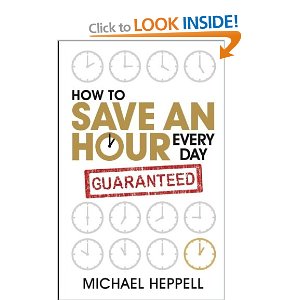
 

Michael Heppell, how to save an hour everyday
Image via amazon.

How often do you wish every day had more hours? I know I have. Forget 25, I wouldn’t mind 250. But even though we can’t make days longer, we can feel like we have more time by making an hour available for an activity or task of our liking. We can achieve this by managing our time better.

How To Save an Hour Every Day was born out of Heppell’s own need for a good time management resource. However, what was available wasn’t simple, applicable and practical enough. So he delved into his own experiences, tips of his readers and clients, and hence created a book that is fun to read, and possible to apply – regardless of your marital status/lifestyle/job hours….etc.

We can see Heppell’s tips work when we look at his CV, popularity and number of bestsellers. But to get the best idea (and results), I strongly recommend the buying the book, reading it, keeping it as a reference and really applying stuff without trying to cheat.

The book covers:

–       Creating a strong enough why: This chapter explains why you won’t take action unless you feel obligated, and how you can feel obligated.

–       Overcoming procrastination  I don’t need to explain this one. 🙂

–       To Do or Not To Do, that’s the question: This section covers the problem with to-do lists, a very lucrative idea, priotizing and how to create not-to-do lists. I can’t stress the importance of the not-to-do lists enough.

–       Dealing with distractions: Freelancers and office employees might deal with different distractions, but both have a lot of them. Luckily, Heppell comes up with beneficial tips on how to take care of them.

–       Home: This part is about how to optimize the time we spend at home – and how we (should) spend it  with the people at home. This doesn’t just cover quality family time, but also booking holidays, managing your finances, technology, exercise and more. Needless to say, this is one of my favorite chapters, though I love the book as a whole.

–       Work: This is especially awesome for people with full-time jobs – complete with co-workers and bosses. It features tips on making meetings more efficient, optimizing your working hours and job description,  emails and more. Freelancers can of course apply most of the tips about delegation, meetings, people that take too much off your time…and more.

–       Advanced techniques:  There’re some more concentration-requiring techniques, including using your voice to command technology, increasing your reading speed and more.

–       Twenty-five extra ideas: These are the working ideas contributed by Heppell’s clients and readers. Take what applies, adapt and make them your own.

*

I recommend How to Save An Hour Every Day to everyone who wishes they had more time on their hands, but feels frustrated and stuck about the how.

Procrastination and distractions are universal problems, though as freelancers we probably need to deal with them even more regularly as we are our own bosses, and we are the ones responsible for all our working and free time.

You might think you have heard it all before, though I’m pretty sure you didn’t think of all of what’s suggested here, or at least you haven’t tried all the tips that might work. After all, you still have problems or at least desire improvements in this area, right?

Whatever you need more time for, this book gives you ideas to enable you to lead a more fun, productive and satisfactory life. Oh, and you could probably finish the book in an hour, especially if you’re good at speed reading.:)


More Useful Posts on Productivity and Time Management

Procrastination: Friend or Foe?

9 Productive Things Writers Can Do When They Have a Cold

How to Use Our Email Accounts Productively to Avoid Procrastination

 How to Turn Procrastination into Productivity: 7 Fun Tips for Writers

Productivity for Writers: Tips to Increase Your Productivity During Hot Weather


Filed Under: Productivity & Time Management Tagged With: how to save an hour every day, how to save an hour every day review, michael heppell, michael heppell how to save an hour everyday, productivity, productivity tips, time management, time management tips

So I Wrote My First Short Story (That Wasn’t Required for an English Class)

Posted on December 26, 2013 Written by Pinar Tarhan

short story
Image via brunswick.k12.me.us/

And lived to tell the tale. You might find it weird that I had the need to write about it, but hey, first times can to be special.

And while I have created many blog posts, and a lot of longer fiction (several scripts and a novel), I hadn’t written a short story that wasn’t for a school project. Stories tend to come to me in longer forms and plots. That said, I’ve gotten into reading short stories and discovered some interesting gems.

As for this one, I had this scene in my mind for some time. I didn’t know whether it would be a part of a longer story, but I realized it stood perfectly well on its own. It’s a bit tragicomic, dark, honest and blunt. It’s also definitely not literary fiction, though I’m not sure where it’d fit in genre fiction. Do short (short) stories even have genres?

Anyway, the story is less than 1500 words, and therefore was appropriate for the Writer’s Digest’s now closed Short Short Story Contest.

For me, plots, characters and dialogue carry a lot of value. And I hope I was able to reflect this on this particular story. There is a clear beginning and end, a specific problem that turns out to be a tad ironic and a somewhat relatable character that did something very irrational.

I’m really fond of the story, and since contests are typically long shots, I’ll be researching for other contests and potential markets until the results come out.

Wish me luck.

May inspiration and luck be with you when it comes to your stories, and their publication:)

So have you written short stories?

Filed Under: Fiction Writing, Writing Tagged With: my first short story, short stories, short story, writing short stories

Literary Fiction vs. Genre Fiction: What Do You Write?

Posted on December 22, 2013 Written by Pinar Tarhan


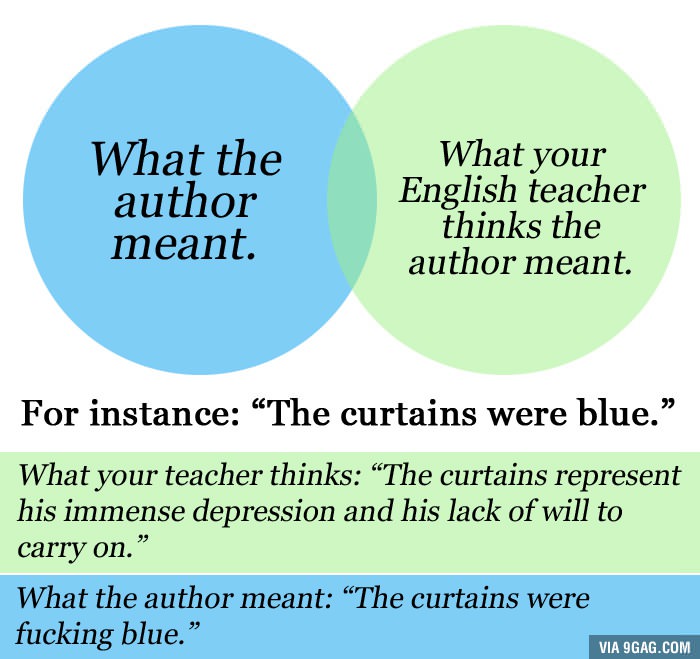
A friend of mine posted this. It was just too relevant...Although I suspect the author here writes genre fiction:)
A friend of mine posted this. It was just too relevant…Although I suspect the author here writes genre fiction:)

I can unashamedly, in fact proudly, announce that I write genre fiction. I love reading it, and I sure as hell love creating it.

It shouldn’t shock anyone since I’m also a big fan of blogging. I prefer sincerity, fun and wild imaginations over…well… literary.

I’m not saying English classes in high school where we got to dissect every piece of story and poetry we came across in our so-thick-that-it-probably-hurt-our-posture-to-carry-them-around literary books didn’t fill me with some great knowledge and perspective. It did.

Some were really good, though I suspect the authors I enjoyed and/or was in awe of probably fell more into genre fiction than literary fiction (more on the distinction that’s not always so clear).

But years of obligatory analyses also prevented me from studying literature any further in college. A lot of my friends were surprised. I was one of the best English students in class: impulsively enthusiastic, hard-working and with  meaningful stuff to contribute. What they didn’t always recognize is that while I’m a fan of the language and storytelling, I just don’t like when authors care more about their words than story, character, pace and feeling.

Maybe it’s a higher calling. Maybe it’s a talent you are born with, or you can practice and learn as you try. I wouldn’t know. I simply don’t have it in me.

When you say literary fiction,  I instinctively think about authors who can describe a tree for 10 pages and be loved for it. This might be narrow-minded on my part, but here’s the problem: I love life. And life is finite. Any story that makes me regret every second I spend on it, and makes seconds feel like hours, is just not worth the pain.

That said, some people can successfully combine genre fiction with literary fiction. So if Jane Austen is one of those authors, maybe there’s hope for me to enjoy more literary fiction. I’m saying, if, because the lines are blurry, and her work is so much fun.

Genre Fiction vs. Literary Fiction

What prompted this post was a short story contest’s instructions. One of their few rules was that they didn’t accept genre fiction of any kind, and it got me wondering on how the hell one could/would write a story without a genre. Let’s blame it on my movie (almost all genres except too gory horror) and genre fiction  (particularly legal/crime thrillers and/or romantic comedies) reading addictions. Since I wasn’t sure I could define literary fiction accurately, I dug up. Here’s some useful and to-the-point stuff I found:

According to wikipedia: “Literary fiction is a term principally used for certain fictional works that are claimed to hold literary merit.

Despite the fact that all genres have works that are well written, those works are generally not considered literary fiction. To be considered literary, a work usually must be “critically acclaimed” and “serious”. In practice, works of literary fiction often are “complex, literate, multilayered novels that wrestle with universal dilemmas”.

Brandi Reissenweber says: “A genre is a category of literature, such as mystery, suspense, science fiction or horror. Each genre has its own conventions. Romance, for example, focuses on romantic love between two people and often ends positively. Generally, genre fiction tends to place value on entertainment and, as a result, it tends to be more popular with mass audiences.

Literary fiction, on the other hand, is a bit trickier to define. In general, it emphasizes meaning over entertainment. Literary fiction also aspires toward art. Of course, that abstract of “art” is where things get most tricky. What is art? In fiction it can be defined as interesting and deep manifestations of the elements of craft: dimensional characters, a pleasing arc of tension, evocative language and thematic purpose.”

And Leigh Galbreath writes:  “Genre fiction is built on structure. Literary fiction isn’t.”

*

So while writing literary “insert genre fiction sub-category here” is possible, it is tough, and I wouldn’t even know where to begin.

If you have authors you love that combine the two without sacrificing fun and relatability, please suggest away in the comments. I’d love to discover them.

And what about you? Which one do you like reading? Which one do you like writing? Or do you read/write both?


Filed Under: Fiction Writing Tagged With: genre fiction, genre fiction definition, genre fiction vs. literary fiction, literary fiction, literary fiction definition

How to Jolt Back To Writing Non-Fiction From Fiction: 13 Tips

Posted on December 17, 2013 Written by Pinar Tarhan

Image via applecopywriting.com.


Are you fiction writer? A non-fiction writer? Or both?

If you truly love writing, want to make a regular income from it (or you are already making a living writing) and/or can’t wait to share what you have learned and experienced with the rest of the writers out there, chances are, you are both into writing fiction and non-fiction.

Stephen King wrote a book on writing, simply called On Writing: A Memoir of the Craft. Now, that’s the kind of writer I want to learn from. Not because I’m a horror fan, but because I admire his success, productivity and ability to write in diverse genres (Shawshank Redemption, for instance, is based on a story of his) and write in a variety of formats (novels, short stories, non-fiction books…)

Screenwriter John August (Big Fish, Go, Charlie’s Angels, Dark Shadows) runs a website where he shares his tips on screenwriting – one of my favorite go-to resources as an aspiring screenwriter.

Some novelists get to adapt their movies to screen themselves and writing magazines love publishing advice articles from published writers. Stephen Chbosky’s The Perks of Being a Wallflower, anyone?

I love writing fiction and non-fiction, and wrote about why we needed to balance the two here before.

But sometimes, one takes priority over the other, usually because of deadlines and where your productivity is gravitating towards at that moment.

For the last couple of months, even though I did my best not to neglect my blogs, I’ve concentrated polishing my screenplay and a TV pilot for competitions. I read even more about formatting, selling, contests’ reliability. I found great resources on both writing and selling, and I’ll be sharing them here soon.

But it’s safe to say I was lost in a world of fictional characters and story lines, and reading up on how to make them come alive.

Of course my non-fiction ideas didn’t stop flowing. So I noted them down, and after having taken care of 3 competitions with the nearest deadlines, I’m ready to immerse in non-fiction once again.

Getting back to real life is fun, though your mind and writing might take a while to adjust. So below are a few tips to make the transition easier and quicker:

1)   Go through your old ideas. Having worked on different projects might have provided you new insights and angles. Use them. Brainstorm with your just-back-from-fiction mind. You might be surprised.

2)   Keep writing new ideas down. Also make a note of what you have learned about writing/selling fiction. There are a million stories there.

3)   Not getting hit by a new load of ideas? This post is bound to ignite some quality inspiration: Finding Article Ideas & Writing About Them: 30 Inspiration Tips for Writers.

4)   Check the websites/publications you follow, including the ones you have written for or wanted to write for. They might have gone through editorial changes. Their submission guidelines or how they work with freelance writers might have changed. Is this still a place you want to write for? Update your market list accordingly.

5)   If those websites are still up your alley, study the new articles. You need to know what they published recently. You don’t want to waste the editor’s time, or yours, by pitching an idea that was recently covered.

6)   Do a “markets” research. There are probably new writing markets you might want to catch up on. Make notes of the ones that interest you.

7)   Write. It’s like switching between rollerblades and your bike. Both are fun, both are you. They just work a bit differently.

8)   Promote your writing. Remind your readers you’re alive and well. Of course this works better if you’ve kept up a presence in the blogosphere during your fiction marathon.

9)   Read non-fiction: blogs, magazines, books, twitter feeds of the people that inspire you, entertain you and/or piss you off…new and old stuff. Read.

10)   Read some of those awesome e-books you kept for referencing, and some new resources you found. Some of my new favourites came from Sophie Lizard’s  Another 52 Free Resources for Freelance Bloggers post, for instance.

11)   Keep reading fiction, but don’t make it the priority.

12)  Exercise. Seriously. I know how easy it is to get caught up in the wonderfully exciting worlds you have created, but we need to be healthy. And exercising gives you even more ideas.

13)  Eat healthily. Yes, you always need to do this, but if you have gone on a binge to make the deadlines, get a grip on your eating habits before your immune system decides to punish you. I’ll be posting about this too, so stay tuned.

*

Welcome back to the lovely world of non-fiction! If there are any tips you’d to add, comment away…


Related Posts Plugin for WordPress, Blogger...

Filed Under: Blogging, Writing Tagged With: finding ideas, inspiration for writers, john august, writing fiction, writing non-fiction

  • « Previous Page
  • 1
  • …
  • 45
  • 46
  • 47
  • 48
  • 49
  • …
  • 77
  • Next Page »

Blogroll

  • My Entertainment Blog

My Other Blogs

  • Beauty, Fitness & Style for the Fun-Loving Gal
  • Dating & Relationships in the 21st Century

Categories

  • Author Interviews
  • Author news and coverage
  • Blogging
  • Book Launches and Excerpts
  • Book News and Author Interviews
  • Book Recommendations
  • Book Reviews
  • Career Management for Writers
  • E-Book Reviews
  • Fiction Writing
  • Fictional Writers: Writer Characters in Movies, TV Series and Books
  • Inspiration and Motivation
  • Marketing
  • Marketing Fiction
  • Movie and TV Series Recommendations
  • Novel Reviews
  • Paying Markets-Web and Print
  • Productivity & Time Management
  • Recommended Resources
  • Reviews for Tools and Devices
  • Romance
  • screenwriting
  • Self-publishing
  • Story Conflicts
  • Website & Blog Reviews
  • Writer Tools
  • Writing
  • Writing Tools
  • Writing Updates

Copyright © 2026 · Focus Pro Theme on Genesis Framework · WordPress · Log in

This website uses cookies to improve your experience. We'll assume you're ok with this, but you can opt-out if you wish.Accept Reject Read More
Privacy & Cookies Policy

Privacy Overview

This website uses cookies to improve your experience while you navigate through the website. Out of these, the cookies that are categorized as necessary are stored on your browser as they are essential for the working of basic functionalities of the website. We also use third-party cookies that help us analyze and understand how you use this website. These cookies will be stored in your browser only with your consent. You also have the option to opt-out of these cookies. But opting out of some of these cookies may affect your browsing experience.
Necessary
Always Enabled
Necessary cookies are absolutely essential for the website to function properly. This category only includes cookies that ensures basic functionalities and security features of the website. These cookies do not store any personal information.
Non-necessary
Any cookies that may not be particularly necessary for the website to function and is used specifically to collect user personal data via analytics, ads, other embedded contents are termed as non-necessary cookies. It is mandatory to procure user consent prior to running these cookies on your website.
SAVE & ACCEPT