Addicted to Writing

Manage Your Freelance Writing Career While Writing What You Love

  • About Pinar Tarhan
  • Blog
  • Books
  • Hire Me: Services
  • Contact Me
  • Portfolio
  • Favorite Resources
  • Newsletter

Man of Steel’s Writer Character Lois Lane and Her Compelling Conflicts: Protecting Your Subject, Falling for Your “Subject” and More

Posted on June 20, 2013 Written by Pinar Tarhan

Thanks to Man of Steel’s story, this is both a “Compelling Movie Conflicts” and a “Writer Characters in Movies” post.

The 2013 Superman reboot Man of Steel is a pleasant addition to the superhero movies with its brilliant cast (Kevin Costner, Russell Crowe, Diane Lane, Michael Shannon, Amy Adams, Henry Cavill), a satisfactory (back)story and some great effects that unfortunately didn’t exist in the time of Christopher Reeve (Superman from 1978).

However one of the things that made me like this Superman movie a lot more than all the other Superman movies (and this coming from a Reeve & Donner fan) and many other comic book adaptations is that there are several compelling “writer” conficts that are relatable.

Now, you can read the plot and movie review here. But I’ll provide strictly Louis Lane-related plot points (and conflicts) below:

Lois Lane (Amy Adams) is an award-winning journalist sent to a military base in Canada to observe the weird craft (ruled out as a submarine) found. There she follows one of the new workers (Clark Kent, played by Henry Cavill) there as he finds the answers to his origins. He gets to save Lois’ life and then disappears, working to improve his abilities.

But when Lois’s boss refuses to publish her story (that doesn’t sound plausible), she leaks the story other channels, and then looks for Clark herself. Up to now, including the story, he’s a mystery man whose identity and background are unknown.

When she finds him (or he lets her find him), and Clark explains her the reason for his hiding the truth, she decides to keep his secret. But then Zod, the killer of Clark’s biological father,  sends a threatening message: Either humans give Clark to him, or he destroys them all.

Lois is arrested by the FBI, but she isn’t exactly willing to talk. Clark doesn’t trust Zod, but he agrees to turn himself in for the safety (and freedom) of Lois.

Then Lois and Clark find themselves on the spacecraft of Zod. He tries to persuade Clark to join their plans of recreating Krypton on earth, but Clark doesn’t want anyone to be killed. On the craft, Lois gets to “meet” Clark’s father, and learns some critical strategical information.

From then on, Lois becomes an integral part of the team determined to stop Zod from destroying everything.

The Famous Writer Character: Lois Lane 
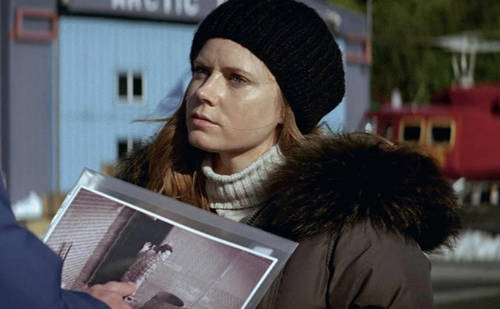
amy-adams-lois-lane-man-of-steel
Amy Adams as Lois Lane, searching for Clark. Image via flicksandbits.com.

Lois in Man of Steel is the ideal journalist. She goes to whereever her leads (and curiousity) take her, no matter how dangerous things might be. She then writes about her experiences without holding back, and gets frustrated at her boss for not giving her the green-light, even though her story sounds, quite improbable. And when she can’t make herself heard through the publication she works for, she gives her story to a guy who is famous for writing stuff like that- even though this could cost her her job.


But when she learns why Clark has been hiding who he really is, she keeps his secret- even if it eventually leads to her arrest. When Zod asks her to come on board with them, she willingly leaves; and this has nothing to do with the story.


Of course the more Clark and Lois know each other as a person, they more connected they feel. So we have a mutually protective, risk-taking and loyal relationship combined with a lot of attraction.


And as much as things got very complicated and dangerous, all ended well for both characters. But things could have gone really wrong for Lois, had she been a real person and her “subject” not a superhero.


She could have lost her job, the guy she wrote about would probably be less sweet and understanding about her story, and none of them would probably survive such dangerous situations.


But it makes for a fun and appealing story. The romance is delightful because it includes friendship, chemistry, understanding, loyalty and bravery. Lois proves to be more into her story than her career (and her life), which is really admirable (though this would probably send her parents to an early grave.) And she has the courage to step up when the world needs her.


Of course Man of Steel isn’t just for writers. But with all the Loises I have seen on both TV and big screen, Amy Adams’ is the coolest and most likeable. She is also a lot more than a damsel in distress.


*


How far would you go for your story? For your subject (love)?

And did your stories ever bring you real life romance?
Filed Under: Fictional Writers: Writer Characters in Movies, TV Series and Books, Story Conflicts Tagged With: amy adamds as lois lane, amy adams as lois lane in man of steel, creating compelling story conflicts, lois lane man of steel, lois lane superman, story conflicts, writer characters in movies

Equilibrium: Live Numb or Die Feeling (Die Being Yourself): Most Enthralling Story Conflicts 6

Posted on June 3, 2013 Written by Pinar Tarhan

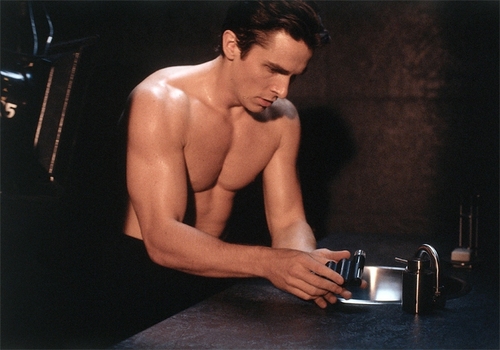
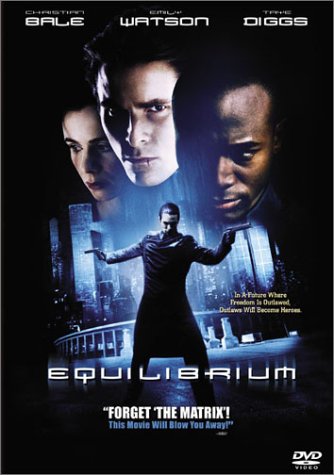
 equilibrum, christian bale

Equilibrium is a universally compelling action drama that takes place in a post- WW3 universe where all wars and crimes have been eliminated, as well as all “evil” feelings of rage, violence, greed and such.


Oh, yes, there’s  a catch. A gigantic one:


Along with the negative feelings and impuses that have been eradicated are also love, passion, friendliness and such. Nobody feels anything, complements of the government-supplied, obligatory doses of a drug.


What about stimulators, you might ask. Like music. Paintings. Personal taste. All forbidden. Nothing is custom, or individualistic. Nothing is colorful, or creative.


Everyone’s only an obedient, faded clone of themselves.


Oh, of course there’d be no point in watching the movie if it was all grey.


There are rebels, of course. People who refuse to take the drug are fighting against the totalitarian regime- with whatever means they can find.


Guess what the punishment is? Death by being burned. Or death on site during combat. They are seen as enemies of peace.


But the rebels have to fight, because what else is there? In a world where everything is soulless and grey, where there is no individuality, they prefer to go down fighting and feeling, as opposed to living without feeling. And who can blame them?


Now, until here, I painted the spoiler-free picture of the story.  You can move on to my Equilibrium review for more on the movie . From now on, spoilers will flow –as we’ll analyze some of the most touching and relatable conflicts ever.


Now, don’t get me wrong. I have shared a lot of relatable and powerful story conflicts on this blog.


But with a lot of them, it is easy (and logical) to assume that you wouldn’t end up like that.


For instance, unless you are a tycoon, I don’t foresee you in the danger Tom Mullen was in Ransom.


We don’t live in the 18th century, so there goes A Royal Affair.


Assuming you didn’t marry a religious nut out of gratitude and then cheat on him with your next door neighbor, you don’t need to worry about being in the shoes of the characters in The Ledge.


You get my point.


But how about having ever lived in a country where the rules and regulations stifled you? The government wanting to be too involved in your private life –e.g. abortion rights? How about having been ruled by someone who wanted to empose his/her religious beliefs onto the public?


Now how much do you relate?


Granted, Equilibrium is an extreme scenario – but how extreme or fictional, apart from John Preston’s fighting skills – depends on where you live(d).


So with that in mind, let’ get back to the story, with spoilers:


John Preston (skillfully played by Christian Bale) is a priest- meaning he leads the armed forces against the rebels. He has an unique level of empathy, but he uses it to guess the hiding places and manevours of the rebels, not to understand them. He is extremely loyal, proud of his job and he is excellent at it.


One “disappointing” incident in his life has been his wife who, to his surprise, turned out to be “guilty of feeling” and was sentenced to death. As he raises his two children, this incident is the only “alarm” his life has raised and is the under “scrutiny” of the ruler.


The “second” incident makes him question everything more: His partner (Sean Bean) a great officer with a stellar record turns out to be “faking” the “not feeling.”  This adds to the “scrutiny”.


However this brings up memories of his wife; and add some strange behavior from his son and some missing of the dosage; and things get very complicated as John starts to feel – overwhelmingly.

Christian Bale in Equilibrium.
Christian Bale’s Preston trying to decide whether to take the drug or not. Image via tumblr.

Everything bottled up and subdued comes out.


Now, he daily has to go through the conflict his partner went through:


Do you kill fellow “feelers” to keep up the role, protecting yourself and your family? Do you do your job?


or


Do you deny your impulses because it is too hard to bear?


Because in all honesty, there’s no way he can quit his job without giving himself away.


Of course after he can’t give up on feeling once he realizes what he is missing, John starts sucking at his job. And after a while, it is only fair that he joins the movement himself – especially he also has to lose another person he cares about.


So he fights.


It is a big, difficult fight but he wins in the end.


The glory feels wonderful. Things will no longer be the same, in all senses of the word.


Of course the movie is so much more. A lot of it has to do with the cast, especially Christian Bale who does a superior job of reflecting his characters’ both internal and external conflicts. You feel for him, understand him and want him to win with all your heart.


The war was fought for the right to feel, as well as the right to be whoever you want to be.


We often have to struggle in our lives when it comes to the right of being who we are. Sometimes it is against (or within) our family, friends, school, society, bosses, country….How much we win can depend on the level of authority we are fighting for.


Sometimes it is small, sometimes it is big. But we fight everyday. For some, the battle is tougher and on a much bigger scale. The key is never to give up.


So what do you think of the conflict(s) of this movie?


Can you empathize?

Filed Under: Story Conflicts Tagged With: creating compelling story conflicts for writers, creating story conflicts, equilibrium, equilibrium christian bale movie, how to create a compelling story conflict, how to create a story conflict, story conflicts, writing fiction

Your Love Sleeps With Another Guy or You Lose Your Baby: A Royal Affair-Most Enthralling Story Conflicts 5

Posted on May 16, 2013 Written by Pinar Tarhan


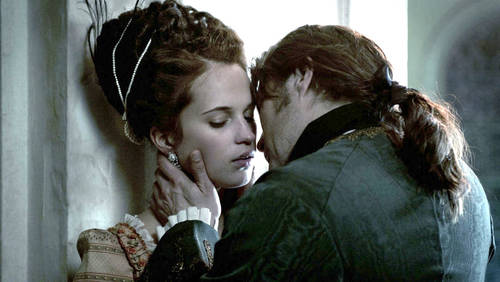
a_royal_affair_mads mikkelsen
Mads Mikkelsen (the doctor) and Alicia Vikander (the queen).

Picture this: You are madly in love. It’s mutual. Together, you’re not only having fun – you’re realizing your dreams and you’re making the world a better place.

Then she gets pregnant.

Well, normally it’s great news. And his first reaction is a genuine smile. She’s really upset. Then reality sets in: She’s the QUEEN. Her husband, who she is NOT sleeping with, is the KING. And it is the 18th century.

What do you do? Run away together?

As a romantic, that’d be my vote. Even for the 18th century. It’s not like he can’t take care of them. He’s a doctor (Mads Mikkelsen).

But how does one exactly run away from servants, army, the nosiest step mother-in-law, and all the conservative council members who hate their humane ideas?

So she does the inevitable. She hates it. He hates it. But she does it.

And at least the baby is born, and she is healthy.

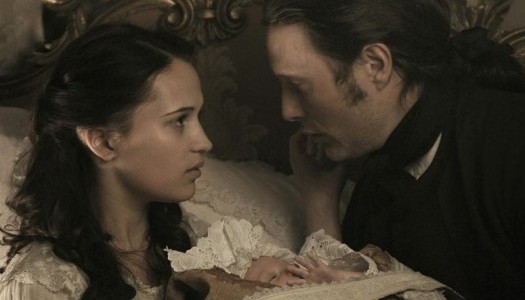
A Royal Affair- Mads Mikkelsen and Alicia Vikander.
Pretty much the last happy moment in the film…


But then what?

Yes, eventually they get caught.

*** (I’ve not given anything that hasn’t been shown in the trailer yet, but read on at your own peril. I’ll give away the ending.)


But the tragicomic thing? They don’t get in that much trouble because of the baby.  The others just use the baby to make sure the unstable king is persuaded to get rid of the doctor and the queen.

People are so obsessed with power and money. Then there’re the hilariously misinterpreted religious beliefs (“let’s not give the king’s son a vaccination- he’s royal so he’s immune by God’s doing”)…

They could have made it, but eventually, it comes down to friends selling out friends for money or to save their own butts.

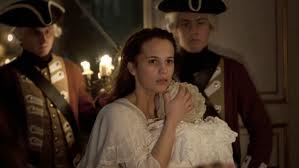
Alicia Vikander, A Royal Affair

The story doesn’t have a happy ending. The queen is sent to exile, the good doctor to execution.

The funny thing? The whole affair is the king’s fault. Yes, I’m serious. For one, he treats her absolutely horribly. He sleeps around with hookers, calls her a boring cow, sends away her best friend/maid…. Oh, and he is generally mental.

The doctor is brought in to restore some sanity and common sense in the king, and it starts to work. But then the king does something mad again. He tells the doctor to make the queen fun.

Seriously.

Sure. Go ahead. Tell your hot, older, wiser, sane, free-spirited and forward-thinking doctor to spend time with the young, beautiful, neglected, free-spirited queen.

I told you it was the king’s fault.

I wish they had taken the risk, and run away. They just didn’t envision the good they did coming back to bite them in the a**.

But all is not lost. Thankfully, her children (the first one is from a horrible one and only night with the king) receive her letters when they grow up, persuade their dad and make sure they grow up in a better country.

Oh, yes, the king was upset his friend was executed. He had no idea that was going to happen. Yes, he was crazy.

*

So, how is that for a story conflict?

Of course the conflicts start before this.  And they keep coming after. But it is one of the most frustrating, heart-breaking and challenging conflicts I have seen. And it is based on a true story.

From a writer’s, and movie-lover’s perspective, the whole story/movie is gold.

From a romantic’s perspective, it is a nightmare until the affair. The relationship between the doctor and queen, even before the affair, is amazing. It’s a nightmare again when she becomes pregnant.

Yes, the movie is absolutely recommended. I’m still disappointed it didn’t get the Oscar for Best Foreign Film this year.

*

What would you do in a situation like that?


Don’t forget – 1700s, it is an affair, you are the queen or the doctor.  There are no easy ways out.


If it were your story, how would it end?


Filed Under: Story Conflicts, Writing

How Important Is A Story’s Ending to You?

Posted on February 23, 2013 Written by Pinar Tarhan

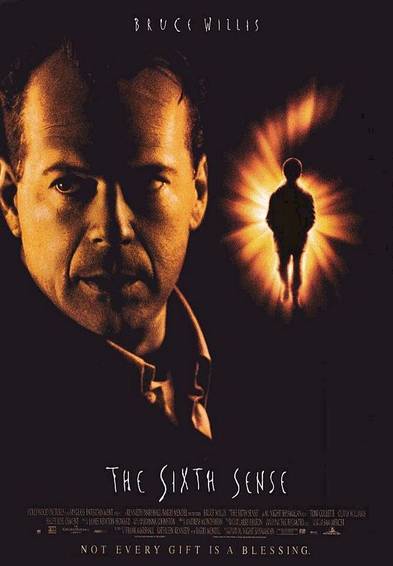
“One thing guaranteed to kill a movie-going experience is an unsatisfying ending. In my opinion, the ending might very well be the single, most important moment of your script… the final taste in the audience’s mouth. For example, if you remove the twist of an ending in ‘The Sixth Sense’, would the movie have gotten such a buzz? I doubt it.”


Script Magazine, E-mail Newsletter


the_sixth_sense
The Sixth Sense movie poster via wikipedia.

How important is the ending of a novel or a movie to you? Are all the works you enjoyed great from the beginning to the end?

Or have there been stories that had you from the first page only to disappoint you with the ending?

What about stories that you found merely mediocre but had to applaud the ending?

Let’s take these three groups of stories:

*The thrilling story with an unexpected, sad ending

I’m a huge John Grisham fan. I love all his legal thrillers, and I’ll consider myself so lucky if I can write such page-turners one day.

But one of favorite my John Grisham books has a bittersweet ending that I didn’t see coming. After all the brilliant things the protagonist pulled, it caught me by surprise that Grisham hadn’t given his hero a romantically happy ending.

While no one would expect cheesy or boring or happily ever after from his genre, the hint that the hero wasn’t let down romantically in the end would be just fine.

Because while he wasn’t the nicest guy on the planet, he was by far the most likeable character in the book, and I was rooting for him. No, a partially sad ending didn’t lessen my admiration for the book. But I couldn’t help wonder why Grisham wanted the hero have an ending like that.

P.S. If you are guessing or wondering which book, just ask me on Facebook.

*The thrilling story with a worthy ending

In the wonderfully exciting world of grey characters, you don’t exactly wish for a happy ending. You do want a satisfactory ending, though your definition of a satisfactory ending changes as the story progresses to reveal the protagonist to be less than a model citizen.

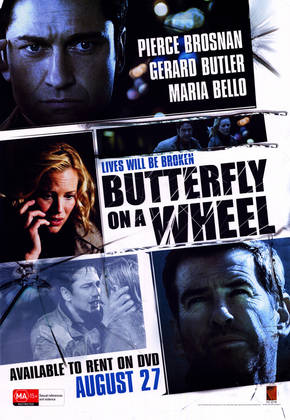
Gerard Butler/Maria Bello/Pierce Brosnan movie Butterfly on a Wheel is such a story for me. The kidnapper (Pierce Brosnan) “kidnaps” the parents (Gerard Butler and Mario Bello) while he has their daughter taken hostage somewhere. They either do whatever he wants, or the little girl dies. But what do you do when his requests turn out to include destroying their life savings, blackmail, career sabotage and murder?

butterfly on a wheel movie poster
Image via moviegoods.com.

It may not have the effect on everyone, but I love a movie where the seemingly sociopathic villain turns out to be a victim of circumstances and the so-called hero is a selfish jerk. Oh, and the ending…whether you see it coming or not, it is so much more than Gerard Butler managing to save his and his family or not.

But my favorite great concept-great story-great ending combination has to be The Life of David Gale with Kevin Spacey.

*The not-so-engaging story with a brilliant ending

(Warning: From this point on, I’ll include major spoilers for the movies The Sixth Sense, The Others & Passengers, so please proceed at your own risk. )

Maybe it was because I saw it on DVD on my friend’s PC, but I just didn’t like The Sixth Sense (1999). It wasn’t thrilling, surprising or interesting. It was a bit spooky at times, but I just didn’t see what the fuss was about…until the end came and I had to applaud the writer/director M. Night Shyamalan for his creativity.

But my love for the ending doesn’t change the fact that as a whole, I wasn’t impressed and I don’t want to see the movie again.

And the brilliant ending gave birth to:

*The once-great-now-disappointing ending

Surprise me once, congrats. Surprise me twice, fine. Pull the same trick for the third time, and lose your audience.

How many movies have you seen that are like Christopher Nolan’s Memento? And by like Memento, I mean movies that tell the story backwards, starting with the end and ending with the first scene. If I have seen similar movies, they certainly haven’t made an impression. Oh, I love Memento, by the way.

Of course another good movie using similar storytelling chronology is possible and welcome. But it just wouldn’t be as remarkable if that story ended (well, in this case, began) like Memento. Would it?


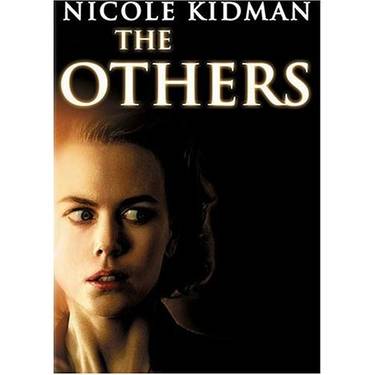
the-others-dvd
Image via beyondhollywood.com.

Now, I actually liked The Others (2001). Maybe it was because I created a suitable atmosphere: I watched it on a big screen TV with a friend at night, with lights off and while there was no one else at home. Any outside sound made us jump, and it didn’t let the slow pace of the movie affect us in a negative way.

When the ending came…Let’s say that it wasn’t a huge letdown, but it didn’t make us appreciate the movie further. Still, with the endings in mind, I prefer The Others. But I’m done with that kind of ending.

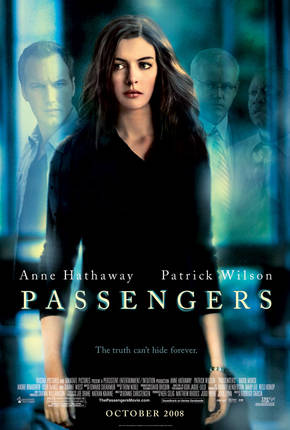
passengers-movie-poster-2008-1020418550
Image via moviepostershop.com


Then came Passengers (2008). Passengers wasn’t a thriller/horror film but a romantic mystery/drama and I enjoyed the psychological aspect of it as it told the story of plane crash survivors who try to deal with the trauma. It wasn’t ground-breaking, but it was good. Fun. Emotional. Until the moment when we learned about what really happened to the survivors. Yep, they were dead all along.

Unsurprisingly, The Sixth Sense has the highest revenue, most critical acclaim and the highest rating by movie-goers. The Others is also highly-regarded and turned in profit. Passengers didn’t make a profit, and isn’t appreciated much.

*

Can a bad, or a recycled ending take away from the experience as a whole? Absolutely. It can even make you wish you hadn’t watched/read that thing.

But can a great ending make up for 100 minutes that failed to engage you? No, not really.

Of course a great story is a story that hooks you from number 1 and never lets you go. A greater story is a story that doesn’t let you go even after it ends.  The ending is one of the most crucial parts of the story. It can break it, but I’d not go as far as to say it can make a story. And the Script article covering endings unsurprisingly covers a movie that is liked from start to finish: Rocky.

What are your favorite endings?

What endings disappointed you the most?

How important is the ending to you?

Related Posts Plugin for WordPress, Blogger...

Filed Under: Fiction Writing Tagged With: fiction writing, how to end your story, how to write a story ending, movie endings, passengers, passengers movie, screenplay endings, story endings, the others, the sixth sense

  • « Previous Page
  • 1
  • …
  • 12
  • 13
  • 14
  • 15
  • 16
  • Next Page »

Blogroll

  • My Entertainment Blog

My Other Blogs

  • Beauty, Fitness & Style for the Fun-Loving Gal
  • Dating & Relationships in the 21st Century

Categories

  • Author Interviews
  • Author news and coverage
  • Blogging
  • Book Launches and Excerpts
  • Book News and Author Interviews
  • Book Recommendations
  • Book Reviews
  • Career Management for Writers
  • E-Book Reviews
  • Fiction Writing
  • Fictional Writers: Writer Characters in Movies, TV Series and Books
  • Inspiration and Motivation
  • Marketing
  • Marketing Fiction
  • Movie and TV Series Recommendations
  • Novel Reviews
  • Paying Markets-Web and Print
  • Productivity & Time Management
  • Recommended Resources
  • Reviews for Tools and Devices
  • Romance
  • screenwriting
  • Self-publishing
  • Story Conflicts
  • Website & Blog Reviews
  • Writer Tools
  • Writing
  • Writing Tools
  • Writing Updates

Copyright © 2026 · Focus Pro Theme on Genesis Framework · WordPress · Log in

This website uses cookies to improve your experience. We'll assume you're ok with this, but you can opt-out if you wish.Accept Reject Read More
Privacy & Cookies Policy

Privacy Overview

This website uses cookies to improve your experience while you navigate through the website. Out of these, the cookies that are categorized as necessary are stored on your browser as they are essential for the working of basic functionalities of the website. We also use third-party cookies that help us analyze and understand how you use this website. These cookies will be stored in your browser only with your consent. You also have the option to opt-out of these cookies. But opting out of some of these cookies may affect your browsing experience.
Necessary
Always Enabled
Necessary cookies are absolutely essential for the website to function properly. This category only includes cookies that ensures basic functionalities and security features of the website. These cookies do not store any personal information.
Non-necessary
Any cookies that may not be particularly necessary for the website to function and is used specifically to collect user personal data via analytics, ads, other embedded contents are termed as non-necessary cookies. It is mandatory to procure user consent prior to running these cookies on your website.
SAVE & ACCEPT