Addicted to Writing

Manage Your Freelance Writing Career While Writing What You Love

  • About Pinar Tarhan
  • Blog
  • Books
  • Hire Me: Services
  • Contact Me
  • Portfolio
  • Favorite Resources
  • Newsletter

How Important Is A Story’s Ending to You?

Posted on February 23, 2013 Written by Pinar Tarhan

“One thing guaranteed to kill a movie-going experience is an unsatisfying ending. In my opinion, the ending might very well be the single, most important moment of your script… the final taste in the audience’s mouth. For example, if you remove the twist of an ending in ‘The Sixth Sense’, would the movie have gotten such a buzz? I doubt it.”


Script Magazine, E-mail Newsletter
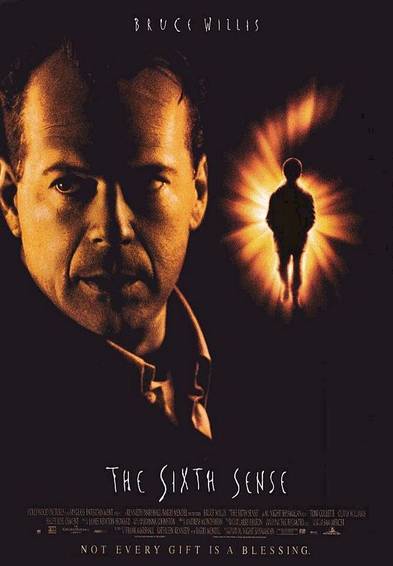
 

the_sixth_sense
The Sixth Sense movie poster via wikipedia.

How important is the ending of a novel or a movie to you? Are all the works you enjoyed great from the beginning to the end?

Or have there been stories that had you from the first page only to disappoint you with the ending?

What about stories that you found merely mediocre but had to applaud the ending?

Let’s take these three groups of stories:

*The thrilling story with an unexpected, sad ending

I’m a huge John Grisham fan. I love all his legal thrillers, and I’ll consider myself so lucky if I can write such page-turners one day.

But one of favorite my John Grisham books has a bittersweet ending that I didn’t see coming. After all the brilliant things the protagonist pulled, it caught me by surprise that Grisham hadn’t given his hero a romantically happy ending.

While no one would expect cheesy or boring or happily ever after from his genre, the hint that the hero wasn’t let down romantically in the end would be just fine.

Because while he wasn’t the nicest guy on the planet, he was by far the most likeable character in the book, and I was rooting for him. No, a partially sad ending didn’t lessen my admiration for the book. But I couldn’t help wonder why Grisham wanted the hero have an ending like that.

P.S. If you are guessing or wondering which book, just ask me on Facebook.

*The thrilling story with a worthy ending

In the wonderfully exciting world of grey characters, you don’t exactly wish for a happy ending. You do want a satisfactory ending, though your definition of a satisfactory ending changes as the story progresses to reveal the protagonist to be less than a model citizen.

Gerard Butler/Maria Bello/Pierce Brosnan movie Butterfly on a Wheel is such a story for me. The kidnapper (Pierce Brosnan) “kidnaps” the parents (Gerard Butler and Mario Bello) while he has their daughter taken hostage somewhere. They either do whatever he wants, or the little girl dies. But what do you do when his requests turn out to include destroying their life savings, blackmail, career sabotage and murder?
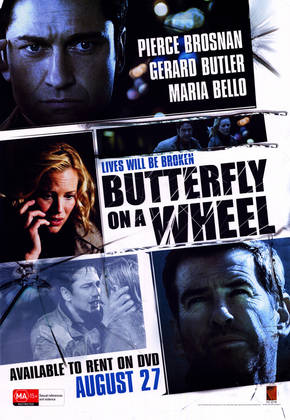
butterfly on a wheel movie poster
Image via moviegoods.com.

It may not have the effect on everyone, but I love a movie where the seemingly sociopathic villain turns out to be a victim of circumstances and the so-called hero is a selfish jerk. Oh, and the ending…whether you see it coming or not, it is so much more than Gerard Butler managing to save his and his family or not.

But my favorite great concept-great story-great ending combination has to be The Life of David Gale with Kevin Spacey.

*The not-so-engaging story with a brilliant ending

(Warning: From this point on, I’ll include major spoilers for the movies The Sixth Sense, The Others & Passengers, so please proceed at your own risk. )

Maybe it was because I saw it on DVD on my friend’s PC, but I just didn’t like The Sixth Sense (1999). It wasn’t thrilling, surprising or interesting. It was a bit spooky at times, but I just didn’t see what the fuss was about…until the end came and I had to applaud the writer/director M. Night Shyamalan for his creativity.

But my love for the ending doesn’t change the fact that as a whole, I wasn’t impressed and I don’t want to see the movie again.

And the brilliant ending gave birth to:

*The once-great-now-disappointing ending

Surprise me once, congrats. Surprise me twice, fine. Pull the same trick for the third time, and lose your audience.

How many movies have you seen that are like Christopher Nolan’s Memento? And by like Memento, I mean movies that tell the story backwards, starting with the end and ending with the first scene. If I have seen similar movies, they certainly haven’t made an impression. Oh, I love Memento, by the way.

Of course another good movie using similar storytelling chronology is possible and welcome. But it just wouldn’t be as remarkable if that story ended (well, in this case, began) like Memento. Would it?
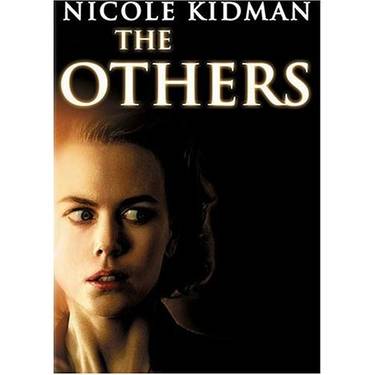
 

the-others-dvd
Image via beyondhollywood.com.

Now, I actually liked The Others (2001). Maybe it was because I created a suitable atmosphere: I watched it on a big screen TV with a friend at night, with lights off and while there was no one else at home. Any outside sound made us jump, and it didn’t let the slow pace of the movie affect us in a negative way.

When the ending came…Let’s say that it wasn’t a huge letdown, but it didn’t make us appreciate the movie further. Still, with the endings in mind, I prefer The Others. But I’m done with that kind of ending.
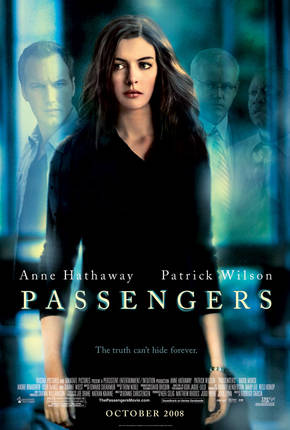
passengers-movie-poster-2008-1020418550
Image via moviepostershop.com


Then came Passengers (2008). Passengers wasn’t a thriller/horror film but a romantic mystery/drama and I enjoyed the psychological aspect of it as it told the story of plane crash survivors who try to deal with the trauma. It wasn’t ground-breaking, but it was good. Fun. Emotional. Until the moment when we learned about what really happened to the survivors. Yep, they were dead all along.

Unsurprisingly, The Sixth Sense has the highest revenue, most critical acclaim and the highest rating by movie-goers. The Others is also highly-regarded and turned in profit. Passengers didn’t make a profit, and isn’t appreciated much.

*

Can a bad, or a recycled ending take away from the experience as a whole? Absolutely. It can even make you wish you hadn’t watched/read that thing.

But can a great ending make up for 100 minutes that failed to engage you? No, not really.

Of course a great story is a story that hooks you from number 1 and never lets you go. A greater story is a story that doesn’t let you go even after it ends.  The ending is one of the most crucial parts of the story. It can break it, but I’d not go as far as to say it can make a story. And the Script article covering endings unsurprisingly covers a movie that is liked from start to finish: Rocky.

What are your favorite endings?

What endings disappointed you the most?

How important is the ending to you?
Filed Under: Fiction Writing Tagged With: fiction writing, how to end your story, how to write a story ending, movie endings, passengers, passengers movie, screenplay endings, story endings, the others, the sixth sense

Spend 6 Years in a Hellish Prison or Your Best Friend Hangs:Return to Paradise-Most Enthralling Story Conflicts 4

Posted on February 16, 2013 Written by Pinar Tarhan

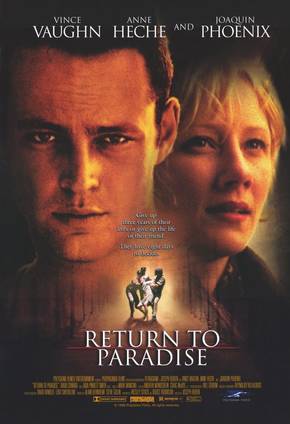
return-to-paradise-movie-poster-1998-1020232526
Return to Paradise starring Vince Vaughn, Anne Heche and Joaquin Phoenix. Image via moviepostershop.com

Would you agree to spend 3 to 6 years in a Malaysian prison to save your friend’s life, who has been serving his sentence there? He will be hanged if you don’t.

You want to say yes. You should say yes. It’s partially your fault that he’s there. But here’s another problem: He’s losing his sanity. He is horribly treated.

But if he’s that far gone, the same thing could happen to you. Is it worth it?

Don’t write me off as inhumane, or insensitive. I’m merely being honest while conveying the opinions of the friends who are in this dilemma.

Return to Paradise Story:

MAJOR CONFLICT 1: Sacrifice 3-6 years of your life to save your friend’s

3 friends, Sheriff (Vince Vaughn), Lewis (Joaquin Phoenix) and Tony (David Conrad) vacation in Malaysia and have a great time, not without the help of some weed. Later Tony and Sheriff return home while Lewis stays for a bit longer.

A couple of years later, Sheriff and Tony are contacted by Beth (Anne Heche), Lewis’ lawyer, and given some tragic news: Lewis has been locked up in prison there, having been caught with enough weed to be considered drug trafficking. He was sentenced to be hanged; having to serve the sentence for all three of them. There’s, however, a deal on the table:

If Beth can return to Malaysia with Lewis or Sheriff, her client will live, and eventually gain his freedom. The other will serve 6 years in the same prison.

If Beth returns with both of them, each will serve 3 years and will have saved their friends’ life.

And while they want to do the noble thing, leaving a semi-comfortable life for a bleak future they know is already destroying Lewis – a future they might very well not survive keeps them question their decision, sense of morality and friendship.

Granted, the first conflict is what attracted me to watch Return to Paradise. I stayed to see how the dilemma would pan out. I also liked being conflicted within myself, asking myself what I would do. Sure, you can try to dismiss the idea by rightly thinking you’d smart enough not to smoke weed in a foreign country where it is illegal and the punishment is severe.

But what if you did? Or you didn’t do anything illegal, but your friend got wrongly convicted. What if the deal remained the same? What would you do then? Still, it’s your sanity, your life at stake. But then again…could you live with yourself if you let your friend be killed?

Supporting Conflict: Can you leave your life, future and fiancée behind?

Now it is unfair to think that just because Sheriff is single and drives a limo for a living with no further career aspirations, it should be easier for him to do the right thing.

But on the other hand, you have Tony’s fiancée (Vera Farmiga), who has no fault or whatsoever to be in this situation. She doesn’t want her fiancé to leave, his life or her. And while she often comes off bitchy, you can hardly blame her. She hasn’t even met Lewis. It’s easier for her to be selfish.

But then again, what makes her future marriage more valuable than Lewis’ life? What makes Tony’s life more valuable than Lewis’? In hindsight, getting over your guy should be relatively easier than not preventing a person’s death.

MAJOR Conflict 2: Getting involved with one of the guys she has to get to prison

If there is anything that could make the situation even more complicated, and the first conflict even stronger, is falling for Sheriff. And unfortunately (or fortunately, depending on your point of view,) Sheriff falls for her too.

Doing the right thing seems even more important. He wants to prove to others that he’s a bigger person than they believe. He wants her to believe that he is not some shallow, aimless guy. He also needs to believe, for himself, that saving his friend is more important than him going through his life without a purpose.

*

From this point on, I’ll be showering you with spoilers, so you might want to see the movie first. I’ve seen it a couple of times, and its power on me doesn’t subside.

Major Conflict 3:  Beth’s relationship with Lewis

Seeing Lewis’, and the prison’s conditions are enough to cause Tony to have second thoughts. But the turning point comes when Beth lets it slip that Lewis is not just her client. He’s her younger brother.

Both Tony and Sheriff set out to leave, but Sheriff decides to stay.

Complicated Ending:

Beth is relieved that Sheriff stayed, but is shocked when the Malaysian court breaks the deal due to the story a hungry reporter published-Lewis is to be hanged, and the sentence of Sheriff is to be decided.

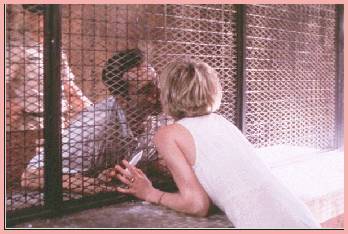
Return to Paradise- Anne Heche Vince Vaughn kiss
Vince Vaughn and Anne Heche in one of the final scenes. Image via dreamagic.com.

Now Beth has to fight for Sheriff, who stayed for her. Because of her. They stay together, but we don’t see whether she was ever able to gain his freedom…

*

Return to Paradise (aff. link) isn’t without its flaws. It could have taken a bit longer to develop the relationship between Sheriff and Beth.

But overall, it is one of my favorite stories to portray morality, friendship, love, guilt and the struggle to do the right thing (no matter how difficult that might be.)

It also contains highly powerful conflicts that keep you questioning your own capacity to do what’s right and your tendency to do what won’t make you suffer.

Would you go back to save your friend? Could you really trust a government to hold to their end without any written agreement? Hell, could you trust them with a written agreement? Would you risk it in the name of friendship and love?

I’d like to think that I’d, but things are never as simple as deciding your hypothetical fate in front of a movie.

PS This post contains affiliate links.


Filed Under: Story Conflicts Tagged With: creating powerful story conflicts, return to paradise, return to paradise movie, story conflicts, story writing, vince vaughn return to paradise

A Writer’s Dream: Mary Bryant – More Story Conflicts Than You Can Handle

Posted on December 27, 2012 Written by Pinar Tarhan


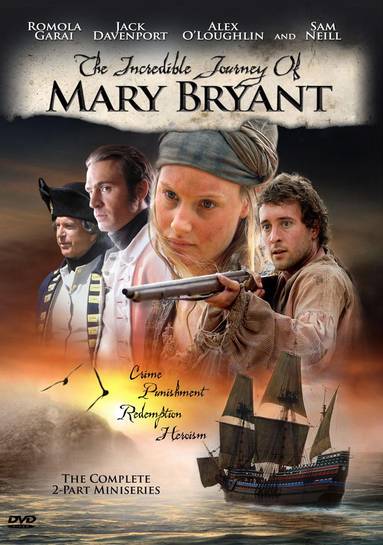
The Incredible Journey of Mary Bryant starring Alex O' Loughlin, Romola Garai and Jack Davenport.
The Incredible Journey of Mary Bryant starring Alex O’ Loughlin, Romola Garai and Jack Davenport. Image via edbaran.com

A challenging conflict is in the heart of the story. We feel lucky when a big, potentially devastating, infuriating, seemingly impossible-to-get-out-of-conflicts is the reply to our most helpful question: “what if…” It is up to us to challenge the protagonist(s), excite readers/viewers and have their eyes glued to the medium of their choice. For instance:

“What if your little daughter accuses your best friend of sexual abuse? What if she is right? But what if he is innocent?”Read more about the conflict from the movie award-winning (Best Actor, Cannes) The Hunt.

Before I move on to Mary Bryant, Please note that I give a more detailed description of the plot and include great scenes and quotes in my Mary Bryant review on my movies blog. It is also a less spoiled version of the story. Here, I’ll list from the less spoiling conflicts to the most spoiling ones. So you might not want to analyze Mary Bryant’s conflicts with me if you haven’t seen the show.

Also remember that while it is based on a true story, some conflicts may be writer Peter Berry’s additions. But fictional or real, I was amazed by every single one.

*

TV mini-series (The Incredible Journey of) Mary Bryant is based on the real life of the English convict Mary Broad (who became Mary Bryant through marriage) who was sent to Australia  (in the 18th century) as a part of her sentence to work as a laborer as the English soldiers saw fit.

Now, in theory, King George is being generous. Instead of hanging criminals, he is sending them off to a far away land where they’ll work and redeem themselves. In truth, their “redemption” starts with a 9-month boat trip where they are treated like animals. There’s no distinction of treatment when it comes to the crime. It didn’t matter you were stealing to not to starve (like Mary), or smuggling some booze along your fish (like Will). You were treated the same with rapists and mass murderers. In the soldiers’ eyes the women are a distraction for the men, and they are seen as whores anyway.

Now, Mary (played by Romola Garai) might be poor, but she is smart, determined and dedicated. And unfortunately, she is pregnant. She thinks that maybe, if Lieutenant Clarke, likes her, her life will be easier. After all, he seems nicer, more humane and well…let’s face it…getting on the good side of a handsome soldier (compliments of the English actor Jack Davenport) seems a lot better than traveling in a cage, starving and gagging. And she has a baby to think of.

She unintentionally gets her chance when she almost drowns and fellow prisoner Will (played by Alex O’Loughlin) saves her life. But it is Clarke that carries her up and gives her a place to rest. He knows that she only stole for staying alive, and believes she’s truly redeemable. Oh and he’s smitten by her beauty. It goes well for a while. He’s not attacking her, she is clean and full and getting lessons. And she shares her food with her friend.

Problems start when he notices she is pregnant and she turns from potential lady material to “whore” in his eyes. Now, Clarke doesn’t immediately punish her. But he does push her away with initial disgust, and goes as far as to have her friend whipped because she openly disobeyed him.

Conflict 1: Your Principles/Values vs. Comfort/Chance for a Better Life

Door Number 1: Explain the situation to the guy. Maybe you were raped. Maybe a guy promised you marriage, you were young and foolish and it was hardly your fault. Maybe you thought you married him but he turned out to be a conman. Whatever. Lie or truth, pregnancy can happen for a lot of reasons, and it can be explained to a guy who, when calm, seems to believe you. Now, remember, this is Mary’s situation in the 18th century, as a convict, on a boat. Not yours.

Door Number 2: You leave his quarters immediately. He is a self-righteous jerk who’s only slightly better than the rest of the soldiers, and he is a part of the system. Almost all women on the ship are whore in his eyes, and he had her friend whipped so badly, that it is a miracle she made it in those horrible conditions.

Mary chooses number 2. She might be a thief, and on the search for a better life for her baby, but she’s loyal to her friend, and her humanity. And she sees the lieutenant for who he is- and this creates the grounds for the other conflicts about to come.

*

After she goes back, she treats Will better, and realizes that he is just a nice guy who probably didn’t really hurt anyone.

After they arrive, the rules are established by the Governor travelling with them. Men are to stay away from the tents. Not that Will listens. But Mary isn’t about to act like a hormonal teen. She has a baby, and things are complicated enough. But she likes Will, and soldiers will probably be more understanding if they are serious.

Will gets on board, and together they land a fishing deal from the Governor. Will has the skill, and they get to be paid a portion of the catch. And married couples can build houses and live there as opposed to tents, so they get married it. They are crazy about each other anyway.

It turns out to be the right call for many reasons, to the resentment of Clarke. They make friends with others, start a family, have another kid and live in not-so-horrible conditions, given that they were prisoners about to be hanged.

But their happiness is short-lived. England isn’t that happy with the colony results, and food is in short supply. Clarke announces that Will won’t have his share of the fish from now on. With 2 kids to feed and people dying out of hunger and fatigue and diseases, Mary decides that they have to escape. They have the people they can trust, but they need the bigger boat of the soldiers. Problem? They need to store food, which they need to steal from storage whose key doesn’t leave Clarke’s side.

Conflict 2: Your family’s survival vs. Sleeping with a Man You Despise 

(while being married to guy you love.)

Door Number 1: You take your children and go to Clarke. You ask for his help. Your children are starving, and you realized that Will wasn’t great husband material after all. Clarke is more than happy that you saw sense. That you chose him.

Of course this is a ploy to keep him distracted, and while you fake emotions, you can’t fake the sex. And your husband knows. And he has to agree. He can’t risk his kids dying of hunger, can he?

Naturally Will’s situation is a great conflict too. He can’t stop his wife, even though he wants to. He doesn’t want to agree, but he has to. Knowing his wife is sleeping with another guy, a guy that he despises is extremely hard. But watching his children die….that’d be much harder.

Door Number 2: She doesn’t go to Clarke. They all die, sooner or later. Along with their children, knowing they haven’t done everything they could.

It’s horrible, but it is a no-brainer. Will and Mary choose option 1.

*

Since all the door number 2s in the conflicts will also cause death, I’ll just provide the conflict and the characters’ choices from now on.

Conflict 3: Risking Escape vs. Involving Dangerous Men You Don’t Trust

The last thing Will and Mary need is to have 2 men on the board they despise, but they don’t have a choice. They’ll be exposed or hurt. They came too far to give up. So they include the men. Who don’t like the idea of having a woman on board. Who believe women are there to have sex with. Who don’t like the idea of kids on board. Luckily for Mary and Will, they need Will to sail and Will isn’t going anywhere without his family.

Conflict 4: Leaving a Loyal Friend Behind vs. Getting Everyone Else Killed

When the soldiers catch up with them on land close to the colony, and Sam can’t catch up with the rest, they have to risk capture or death. Now some want to go back. Will can’t openly leave him behind. Even Martin (one of the men they don’t trust) doesn’t want to leave him behind. Not that Marry wants to, but again, she puts her family’s survival above all, and she leads the boat away.

*

Things seem easier to deal with once they reach their destination. 2 men short, but alive. They convince the Dutch about them being English people who lost their boats and crew, and they start leading a luxury life – a temporary one that will last until the Dutch can arrange a boat to take them home.

Everyone except Will is happy. He is unhappy about all the lying, and he is angry about everyone’s fascination with Mary. It even gets to the point that he suggests Mary stays here and lead a better life but Mary isn’t about to let him give up on them in a depressed state. They love each other, and she is with him by choice.

Conflict 5: Sacrificing Your Life vs. Giving Your Wife and Kids a Chance at Escape

This is not even a choice for a guy who loves his family, and Will isn’t about to let them killed after everything they have been through. When the English find them and their identities are exposed, Will sees that Mary and the kids are trapped. Instead of escaping, he grabs the attention of Clarke, giving them a chance at escape. He gets caught, and gets killed (though his last move was to plunge at Clarke with knives).

Unfortunately, the guys catch Mary and the kids anyway.  Back on their second 9-month boat trip, things are worse. Mary has lost Will, the kids die out of a disease they caught.

Conflict 6: Fighting with Your Last Breath vs. Giving Up

Back at home, waiting for the trial that’ll decide to hang them, Mary is despondent. The remaining 2 are hanging on to the hope that the society’s support might save them, if Mary made a heartfelt speech at court. Except, Mary has given up. Depressed and feeling guilty over losing her family…the reason she did everything for…

But at court, she says that she is not a hero. And she doesn’t mind being hanged. She lost everything. But she does defend her fellow mates- who better or worse- followed her decisions. Took the risks. Survived up to this point. And her speech, gets them off.

She wins against Clarke. And England. They part to resume their lives, though Mary is the one who has lost the most.

*

I might have skipped some, but these 6 are very compelling conflicts spread over several hours. The fact that most were real conflicts experienced in real lives make them all the more effective. They break your heart, and make you angry. But in the end you find yourself admiring Mary (and Will). You were rooting for them anyway, but as the stakes go higher and their choices get more difficult, the more engaged you get.

The protagonists go through hell again and again, making it impossible for the viewer to stop watching.

And as far as what I’d do if I were in Mary’s shoes…I think one of Will’s lines sums it up perfectly:

Will: I could never leave that boy behind. Not more than I could sleep with Ralph Clarke. But we got this far because you could. They all know it but none of them could say it.

*

Want more conflicts? Try:

Most Enthralling Story Conflicts & Dilemmas: The Ledge – Kill Yourself or Your Loved One Will Be Killed

Your Daughter’s a Liar or Your Best Friend’s a Pervert: Most Enthralling Story Conflicts 2 – The Hunt

Ransom – You Just Killed Your Son or You Just Saved Him: Most Enthralling Story Conflicts 3

This post contains affiliate links.

Filed Under: Story Conflicts Tagged With: compelling story conflicts, creating conflicts, creating story conflicts, examples of good story conflicts, mary bryant, story conflict, story writing, the incredible journey of mary bryant

Ransom – You Just Killed Your Son or You Just Saved Him: Most Enthralling Story Conflicts 3

Posted on November 27, 2012 Written by Pinar Tarhan

This is the 3rd article in the Most Enthralling Story Conflicts and Dilemmas series where I cover the story conflicts that I wish I’d come up with. The first two are:

1) Most Enthralling Story Conflicts & Dilemmas: The Ledge – Kill Yourself or Your Loved One Will Be Killed

2) Your Daughter’s a Liar or Your Best Friend’s a Pervert: Most Enthralling Story Conflicts 2 – The Hunt

Part 3 is features the conflict from the 1996 Ron Howard movie Ransom starring Mel Gibson. Please note that there might be some spoilers.

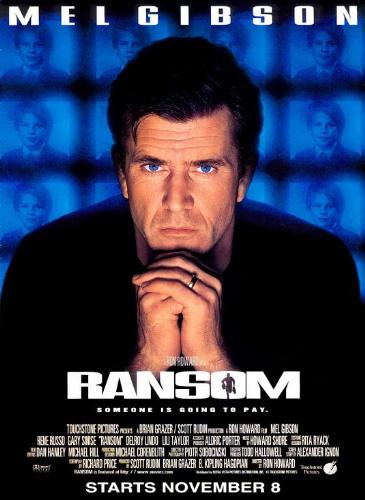
Ransom 1996 movie poster-Mel Gibson
Image via mylot.com.

The Situation:

Businessman Tom Mullen (Mel Gibson)’s son is kidnapped and is asked to pay $2,000,000. He does, but something goes wrong and he’s asked for $4,000,000. Tom realizes that the kidnappers had no intention of delivering the boy in the first place, so he comes with a brilliant yet risky plan:

He gets on the news with the money but declares that he’ll pay it to whoever brings the kidnappers. His wife goes ballistic, so do the kidnappers.

Why This Conflict Is Different:

This is one of my favorite stories, and story dilemmas because unlike most conflicts, this is created by the protagonist.

In The Ledge, the girl’s husband presents the protagonist with an impossible situation.

In Jagten (The Hunt), it all starts when a little girl lies.

Now here are the two ways things can go for Tom:

1)      He was right. This will help him get his son back.

2)      He was wrong. He just caused his son’s death.

He’s led to believe, for a moment, that it is the latter, resulting in a very powerful performance moment for Mel Gibson. But then he gets what he aimed for: The kidnappers start fighting between themselves. And their leader (Gary Sinise) decides to deliver the boy, and get the money as the hero.

Of course things don’t turn out the way he plans, but you should see the movie for the climax.

*

Ransom is based on an idea from a TV show from 1954, which was later developed into a movie 1955, though I don’t know if the 1955 father offered the money as a bounty.

Ransom is a film that shows the way you tell your story is just as important as your idea. Offering the money to those who deliver the kidnappers on live TV is a pretty good twist. Then you have great actors (Mel Gibson, Rene Russo, Gary Sinise, Lili Taylor, Live Schreiber, Delroy Lindo) to portray mostly grey characters, and they were directed by Ron Howard. But Howard and the actors wouldn’t have had that much to work with without the story (by Cyril Hume, Richard Maibaum, Richard Price, Alexander Ignon).

The “twist” is supported by new information about the characters, character development, relationship between the protagonist and his family, relationships between the kidnappers, the fact that the leader (Gary Sinise) is actually a cop…

What makes Ransom enthralling is not just the little twist, but how the characters handle the situation before, during and after that.

But the conflict raises the bar really high, and the main character dies an emotional death (just like P.J. Reece’s story structure advices that he should) during the wait. Did he save him? Did he kill him? And he is alone, with no one to support his decision.

I recommend the movie as an exciting way to spend 2 hours. But I also recommend it from a storytelling perspective.

*

What would you do if you were Tom Mullen?

PS This post contains affiliate links.

Related Posts Plugin for WordPress, Blogger...

Filed Under: Story Conflicts Tagged With: compelling story conflicts, jagten, mel gibson, mel gibson ransom, Ransom, ransom 1996 movie, rene russo, ron howard, story conflict, story conflicts, story elements, story writing, storytelling, the hunt

  • « Previous Page
  • 1
  • …
  • 13
  • 14
  • 15
  • 16
  • Next Page »

Blogroll

  • My Entertainment Blog

My Other Blogs

  • Beauty, Fitness & Style for the Fun-Loving Gal
  • Dating & Relationships in the 21st Century

Categories

  • Author Interviews
  • Author news and coverage
  • Blogging
  • Book Launches and Excerpts
  • Book News and Author Interviews
  • Book Recommendations
  • Book Reviews
  • Career Management for Writers
  • E-Book Reviews
  • Fiction Writing
  • Fictional Writers: Writer Characters in Movies, TV Series and Books
  • Inspiration and Motivation
  • Marketing
  • Marketing Fiction
  • Movie and TV Series Recommendations
  • Novel Reviews
  • Paying Markets-Web and Print
  • Productivity & Time Management
  • Recommended Resources
  • Reviews for Tools and Devices
  • Romance
  • screenwriting
  • Self-publishing
  • Story Conflicts
  • Website & Blog Reviews
  • Writer Tools
  • Writing
  • Writing Tools
  • Writing Updates

Copyright © 2026 · Focus Pro Theme on Genesis Framework · WordPress · Log in

This website uses cookies to improve your experience. We'll assume you're ok with this, but you can opt-out if you wish.Accept Reject Read More
Privacy & Cookies Policy

Privacy Overview

This website uses cookies to improve your experience while you navigate through the website. Out of these, the cookies that are categorized as necessary are stored on your browser as they are essential for the working of basic functionalities of the website. We also use third-party cookies that help us analyze and understand how you use this website. These cookies will be stored in your browser only with your consent. You also have the option to opt-out of these cookies. But opting out of some of these cookies may affect your browsing experience.
Necessary
Always Enabled
Necessary cookies are absolutely essential for the website to function properly. This category only includes cookies that ensures basic functionalities and security features of the website. These cookies do not store any personal information.
Non-necessary
Any cookies that may not be particularly necessary for the website to function and is used specifically to collect user personal data via analytics, ads, other embedded contents are termed as non-necessary cookies. It is mandatory to procure user consent prior to running these cookies on your website.
SAVE & ACCEPT