Addicted to Writing

Manage Your Freelance Writing Career While Writing What You Love

  • About Pinar Tarhan
  • Blog
  • Books
  • Hire Me: Services
  • Contact Me
  • Portfolio
  • Favorite Resources
  • Newsletter

HOMELAND’S BRODY: When A Character Suffers Way Too Much

Posted on December 4, 2013 Written by Pinar Tarhan

Damian Lewis
Damian Lewis image via metro.co.uk.

As writers, we’re frequently told that our characters need to suffer. They need conflicts, challenges and flaws. They need to risk losing everything, be in danger, maybe even actually lose everything…No one wants to read or watch someone who’s good at everything and has a perfect life. Right?

And that’s solid advice, until you go overboard. I think there comes a point when the writers take a character and make him go through hell (sometimes literally, as in the case of Supernatural) and back way too many times. Sure, it’s a fantasy show where everything is possible and not even death is final. But surely when you take a guy’s mother and have her killed by a demon, have him raised by a monster hunting-obsessed father and brother, have his girlfriend killed by a demon, kill him a couple of times, kill his brother a couple of times, have him live in hell for months, go through excruciatingly painful trials, separate from the girl he loves…

I’m sure he went through more. I just stopped watching. And this is probably the luckier brother…

We watch shows where we are invested in the characters. We root for them, feel for them or at least feel strongly about one way or the other. But sometimes that character becomes a tragic caricature. This is what I call tragedy for tragedy’s sake. It doesn’t feel natural, realistic or welcome.

Many TV shows lose viewers (or viewer’s passions if not entirely their loyalty) because of this. Yes, let’s keep the stakes high, but for goodness’ sake, let’s not go overboard.

So, I want to talk about Brody, Damian Lewis’s character from Homeland. For the first two seasons I was a true addict of the show. I would sit through 4-5 episodes in a row and still want more. Then I would watch them again with a friend or family member who didn’t watch it before just so I could go through that wonderful rollercoaster again and again.

However with the third season, the fast forward button became my best friend as they put Carrie (Claire Danes) through more hospitalizations and forced Brody to be a drug addict. You know where Supernatural has hell and death, Homeland has Carrie hospitalizations and unlucky Brody, and TVD has doppelgangers…

BRODY: TO HAVE HIM SUFFER OR TO HAVE HIM SUFFER A LOT MORE?

If you have never seen Homeland, you might think I’m overreacting. What’s a little drug addiction for a character in the grand scheme of drama, right?

Let me tell (or remind) you what Brody has been though. And then you tell me if he has had enough: (P.S. Major spoilers for Homeland)

–       Brody, as a young marine, left his wife and 2 young kids behind to go to war. He saw combat, and that’s in my book enough ground for trauma and PTSD to last a lifetime.

–       But Brody never had the chance to get home and suffer through his PTSD in peace (yes, I’m being sarcastic.) No. He was captured with his sniper friend/fellow soldier by the enemy. He was tortured in the worst possible ways for 3 years. At one point, they forced him to kill his friend (we later learned that they only made him think this.)

Damian Lewis, Homeland
Damian Lewis, Homeland season 1. Image via abcnews.go.com

–       Later, the terrorist leader took Brody, messed his brain by being kind to him and having him live in his house and tutor his young boy.

–       Brody, away from his family and country, taught English and football to this lovely boy who was blissfully unaware of his father’s crimes. Brody loved this boy like a son. And I guess he was even happy, up until the point where American VP and the head of CIA thought it was OK to bomb an entire school region and kill 83 kids in the name of killing the terrorist leader. He wasn’t there. Instead, his son died in front of Brody. Yeah, I know, like Brody wasn’t traumatized enough.

–       Then 8 years after he was first captured, he was saved by American soldiers. He got back home, where no one was smart enough to give him a psych evaluation. Instead, he was deemed a hero, and was immediately used by the VP for political agenda.

–       Brody tried to adjust to being back, feeling conflicted about becoming a “terrorist” to avenge those kids’ death by killing the VP and a group of other politicians and being a Marine.

–       His wife was screwing his best friend while he was away.

–       He couldn’t have sex with his own wife, even when he didn’t know about the best friend.

–       His sulky teenage daughter was ready to rebel any moment, and his adaptable and nice son didn’t mind seeing the best friend as a second dad.

–       He was stalked and monitored by bipolar CIA agent Carrie, who failing to obtain legal reasons to tail and watch Brody, decided to learn his intentions by getting close to him.

–       There was intense chemistry there, and they did fall for each other. Yep, falling for a CIA agent who was sure he was a terrorist isn’t too complicated.

–       When he learned about Carrie’s initial intentions, he was pissed. And he almost blew up the VP and the politicians as planned, but Carrie stopped him by emotionally getting to his daughter. But the confession video was already obtained by others, and his terrorist/not-dead-sniper friend wanted to kill him for chickening out. Brody talked the terrorist leader into doing things his way. And he got to kill his friend for real this time.

–       He played for the Senate, and he got Carrie committed to hospital- the one person who was right about him all along, and the CIA learned about her condition. He screwed her over big time. Yeah, this guilt didn’t eventually get to him at all.

–       Carrie was eventually proven right after the confession video was found by the CIA and she was recruited again. She got Brody in by having him sort of almost attack her. Then she got very honest, very emotional and got Brody to confess everything. Great episode, awesome confession session which won Emmy for Outstanding Writing. Had never agreed more with an award before. Imagine the catalysis Brody went through. I mean it. It’s one of my favorite TV episodes of all time.

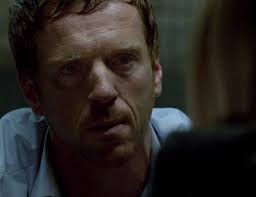
Damian Lewis, Homeland Season 2, Episode Q&A
Brody, Homeland Season 2, Episode Q&A. Image via digitalsky.com.

–       Of course he now became an asset for the CIA. Either he helped them, or he went to prison for life or worse. And his family would find out the vest…

–       So more lying, more internal conflicts, unresolved feelings for Carrie and stress made Brody run, and Carrie got to him again. She got Brody back in more ways than one.

–       The terrorist leader kidnapped Carrie and forced Brody to kill the VP. More lying to friends and family, of course. Brody killed the VP to save Carrie.

–       Unknown to Brody, Quinn (Rupert Friend) was hired to eliminate him once they caught the terrorist. Thankfully he saw sense and told the director to shove it.

–       After the leader was captured, Carrie and Brody discussed if they could ever be together. His past, her illness…but Brody believed they had a shot because, let’s face it, no one could be a better match for the other after everything they went through.

–       And despite a pissed off mentor, Carrie picked Brody over CIA. A second chance given at everything, Brody could finally have some peace, right? Nope. CIA was bombed. Everyone thought it was Brody. It wasn’t.

–       Carrie got him to the border. Great goodbye scene. Maybe they will find each other again after Carrie can prove his innocence?

Surely, Brody can’t go through more terrible ordeals during season 3. Surely, all the pressure, identity crisis, guilt, PTSD, love lost and found and more are enough…

Damian Lewis, Homeland
Brody, Homeland season 3. Image via nydailnews.com

But nope. Brody got shot and almost died. Gangsters who found him made him a drug addict. Somehow he was “saved” by the CIA. After suffering through going cold turkey and emotionally tortured by being kept away from his daughter (who happened to change her name, left school and became a motel maid – and this isn’t half of it!), he got sober.

Then Carrie convinced him to go on a covert mission for redemption (for the almost bombing way back in season 1). He got trained like a marine again.

Oh, he learned that his daughter tried to kill herself after she thought he bombed the CIA (and the confession video) and received a not-so-warm “welcome” from her. There’s the hope that maybe he can fix things with her and be with Carrie, right?

He’s on a dangerous mission. Carrie is pregnant, and he doesn’t know, and it might not be his.

I don’t want him to die after everything they put him through, but at this point, killing him will be the kindest thing they ever did to his character.

Have you had enough of Brody pain? Homeland season 3 isn’t over yet.

*

Now, I made my characters go through some really awful, depressing and/or deadly situations. Just I didn’t do…this much.

*

What do you think? Do you have a limit when it comes to a character’s suffering?

How much “hell” is too much for one character?

Filed Under: Fiction Writing, Writing Tagged With: creating conflict, damian lewis, damian lewis homeland, drama, fiction writing, homeland, too much drama, writing drama

The Number One Tip for Querying and Pitching: Being Personal & Specific

Posted on November 27, 2013 Written by Pinar Tarhan


Image via mayracuevas.com

If you don’t have time for the whole post, don’t let me keep you. You probably already do this. It’s one of the most important steps of querying: Being personal and specific in your customized pitch – as in sending a well-targeted, well-tailored query to the right person and not bulk-querying haphazardly.

By now, this tip should be saying like vampires have fangs. Common knowledge. It’s not. It is, for some reason, blissfully ignored by a number of bloggers and writers. How do I know it? From the impossibly generic guest post pitches I’ve been receiving since I launched my blogs.

I don’t generally accept guest posts for my sites. I don’t advertise for guest posts. Because I can’t pay writers at the moment, and I don’t think it’s fair to ask, especially when I distinctly prefer to write for sites that pay.

That said, if a writer was completely OK with this fact, didn’t need the money and had something he couldn’t wait to share with my audience, something that was right up this blog’s alley, I wouldn’t necessarily turn him down.

But even though there are no pages or posts here (or any other of my blogs) that ask for guest posts, I frequently get pitched by e-mail and I can’t believe there are so many bloggers/writers out there who don’t seem to have read any tip on pitching someone, ever. Apparently, they have read all the titleson the benefits of guest posting, however.

I’m saying “titles” because they haven’t gone through the entirety of any solid article on guest posting (or querying) either. Because almost all of them underscore similar things. Some of the shared tips are: Address to the right person, make sure you read the publication and show this in your pitch.

I tend to get several generic pitches a month for the different blogs that I run. Some pitchers haven’t even tried: as in they don’t even have my blog’s name, my name or even the blog’s URL in the pitch. I still read them anyway because I want to give them the benefit of a bad subject line. I also like providing myself with material for future posts.

Some spice up the generic up , and add my blog’s URL in the subject line. Not the worst move but it screams “bulk” and that’s never good. The glaringly important issue here: My blog URLS and my blogs aren’t the same. It might not be the smartest SEO move on my part but trust me, there was some strategy involved in it. Anyway, the pitcher was too lazy to write (or even possibly check out) the blog’s name. Ouch. Seriously.

One blogger, the most recent pitch that prompted this post, has taken bulk-pitching to a whole new level. The subject line doesn’t mention anything about me or my blogs. The greeting doesn’t include my name. The post doesn’t have the name of the blog the writer wants to write for. I know which one through an educated guess because she has at least mentioned the topic.

She has, however, proposed a relevant topic with a suitable title, using a decent language.

I haven’t returned the e-mail. I don’t think that will hurt the blogger’s feelings much since she probably has sent the email to a couple hundred other bloggers as well. Besides, I don’t want to mess up with the statistics. When the pitch is generic, you will most likely get no response.

Here’s the thing to keep in mind. Editors, some of them are also writers, are busy people. Many are busy to the point they can’t even respond to the to-the-point, personalized and timely pitches if it’s not what they need at the moment.

It’s kind of funny. You’d think that it’d be common sense to check out the name of the person you are querying. And my name isn’t a secret. It’s even in the e-mail I use for writing-related correspondence.  It’s also on the About section. Even on blogs where I have occasionally accepted guest posts (from writers who pitched well and for blogs I unfortunately can’t always produce content regularly for), my name is on the 98% of the posts.

I’m not going to say that all publications make it easy. They don’t. They post almost encrypted guidelines or don’t post at all. Editors’ names might need some minor detective work like calling the publication or asking other writers.  Some publications ask you to contact for questions but often don’t return with the information you requested. But when it’s right out there, and you don’t use it, it’s on you.

Grammar and spelling are important. A creative subject line can work, so is crafting a concise message. But it all starts with at least trying to hide the fact that it’s a bulk offering. There might be several publications that cover similar topics with similar angles, but it’s up to the writer to make each pitch sound personal.

The upside of these e-mails, in addition to inspiring post ideas (and/or case studies), they help you get in the shoes of the editor/publisher, and show you why you have to work diligently on your pitches. Not that we didn’t know before, but boy is their job difficult…:)

Filed Under: Blogging, Writing Tagged With: most important tip for querying, pitching tips for writers, querying, querying tips, querying tips for bloggers, querying tips for writers

Essential Copyright Basics for (Fiction) Writers: 4 Things You Need to Know

Posted on November 16, 2013 Written by Pinar Tarhan

copyright
Courtesy of Stuart Miles, via FreeDigitalPhotos.net.


I mentioned in my previous post that I was cheating on non-fiction with fiction. And when I say I got a bit immersed in my fiction, it wasn’t just writing. A lot of time goes into research, including checking the plausibility of story events, looking into the credibility of competitions, exercising logline writing skills and more.

One of the first areas you need to be savvy about to is copyright basics and I’m happy to share my findings. If you are already familiar with these, great. If not, let’s go through the points together:


–       Your created work is automatically copyrighted and it’s yours. And in theory, even the date of document on your computer can prove your ownership, should you ever have to go to court. That said, this gives me (and many other writers, I can assume) as much peace of mind as pushing the save button repeatedly on the word processor during writing. 

In addition to abusing the save button, I tend to email myself copies of my updated stories as frequently as possible, keep copies on USB drives and print them out. I don’t mind the extra “work” as it helps me sleep better at night.

So copyrighting your baby for 20 or 35 bucks doesn’t seem too big a price to pay. However I do recommend copyrighting the finished work.


–       Most recommended registry options are WGA and US Copyright Office. Writers Guild of America allows you to register fully developed concepts and treatments and such, in addition to manuscripts and screenplays. It’s very easy, doable online and it costs 20 bucks. It protects copyrights for 5 years, and than it’s up to you to renew it (as well as to remember when the copyright registration expires.)


–       US Copyright Office protects it for your lifetime, plus several more decades so it makes more sense to shed the extra bucks. I registered my synopsis for a story with the WGA, but I’ll probably register the full script with the US Copyright Office.


–       As long as your country has signed a copyright treaty with the US, your copyright is protected internationally once you register with WGA or US Copyright office. If you are planning to publish internationally, or in the States, registering here makes a lot of sense.


  –    It’s not OK to put your registration number or a copyright mark or  anything like that on your manuscripts when you are submitting to agents, publishers and editors. It comes off as amateurish and they don’t appreciate it. They’ll have enough areas to critique you. Don’t make sure you make a negative impression from the get-go.


*

So this is it.  I hope it was helpful. If you have any questions, fire away in the comments. And happy writing!

P.S. The title says “fiction” because I happened to be writing fiction at the time, but obviously same tips apply for non-fiction writers when it comes to their manuscripts.


Filed Under: Fiction Writing, Writing Tagged With: copyright basics, copyright basics for fiction writers, copyright basics for writers, copyright tips for writers

Cheating on Non-Fiction with Fiction, Going AWOL on the Blog & Writers Being Sued by Celebrities

Posted on November 11, 2013 Written by Pinar Tarhan

Forgive me, readers for I’ve sinned. And it’s not my first time. I haven’t posted in a long time. I got a bit lost in competition deadlines and the frustrating efforts to write compelling loglines and synopses and researching what kinds of real life celebrity-related information can/can’t be used in fiction. I’ll get to it in a bit. Again, I apologize for my absence and I’ll try not to be a repeat offender.

Writers Being Sued by Celebrities: Scarlett Johansson Sues French Writer

scarlett johansson
Scarlett Johansson image via movies. yahoo.com.

How long can you go during a day without mentioning a famous person’s name? Or something they were involved in? Without referring to a favorite song or a musician?

It’s only natural conversational flow to mention the name of someone popular that you admire/dislike/respect. So it’s again natural when you mention celebrity names in your stories, given that it’s relevant.

It makes the jokes funnier, too. Some of my favorite lines from TV shows include references or topics about famous works.

Love this line form Friends, from TV show Friends:

Joey: Why do you call him Gandalf?

Ross: Gandalf, the Wizard.

(Joey stares at him blankly)

Ross: Hello, didn’t you read Lord of the Rings in high school?

Joey: No, I had sex in high school.  (Season 4, Episode 9)

*

Omit all the celebrity mentions from the sitcom Will and Grace, and you’ll likely remain with 4 seasons instead of 8. Hell, some celebrities are so comfortable in their own skin, they play a funnier, more exaggerated versions of themselves in films and series. The Kevin Bacon episode of Will and Grace is one of my favorites:

Will: I loved you in Footloose.

Kevin Bacon: You saw that?   (Season 5, Episode 2)

*

With Supernatural, I wouldn’t know where to start. Their banter often includes rockers and sometimes actors. Surely if Mel Gibson can handle the “He’s possessed. Think about it,” joke, it’s no big deal?

I mean no one is suing Ricky Gervais for his Golden Globes jokes, right? Or wait- maybe they don’t want to risk it because Gervais might be richer than the plaintiff?

I have book examples too, but hey I’m scared of mentioning them here. What if those actors want to pull a Scarlett Johansson and sue the authors?

In case you haven’t heard, French author Gregoire Delacourt got sued by Johansson because he described his character as looking like Scarlett. Scarlett is pissed because he didn’t ask her permission first. Oh, I’m sorry, I didn’t know there was a celebrity phone line where I could reach any celebrity of my choice and ask whether or not I could use their name in a certain fictional context.

Freaked out, I did a lot of research and found out it basically comes down to your luck, and the personality of the celebrity whose name you dropped. I’d think comparing a character’s beauty to a living person would get you a basket of muffins, if anything. Definitely not a lawsuit. You live, you learn.

So I decided to try my chance with Gerard Butler. I tweeted him, asking if he would be OK if I were to mention his name in my novel. I even managed to squeeze in my greetings and the context in 140 characters. He hasn’t gotten back to me. Yes, I really tweeted Butler. And no, I wasn’t expecting a tweet back. With all the attention from fans and his busy life, where on earth would he find the time to read my tweet and tweet me back? But from what I saw in his overall reaction to his fans and his attitude in interviews, he is a sweet guy who probably wouldn’t try to take me to court if my book got published.

How did I mention him? A famous, gorgeous actress (fictional) is assumed to have dated a lot of hot men, including Gerard Butler.

*

It’s not fair or logical to expect actors to lead their lives according to our expectations. We can protest all we want, but in the end, if we tried to protest every actor/celebrity for every behavior we don’t approve of, we’d be left with only a handful of actors and movies.

That said, it’s hard not to be taken aback when a celebrity goes and does something like this. And frankly, I can live without Johansson’s movies. And she doesn’t need me as a fan.

Worry not on my behalf. I never have and never will mention her in any of my stories. But I do have a movie blog where I – drum roll- review movies. Will she try to sue bloggers too? Should I take those posts down? Or as long as it is not a book, and it is real life, we’re fine?

So my dear readers and fellow writers, think twice before writing about a celebrity in your stories. And if you do have a way you use to reach celebrities to ask for their permission, do share.:)


Related Posts Plugin for WordPress, Blogger...

Filed Under: Fiction Writing, Writing Tagged With: gerard butler, scarlett johansson, scarlett johansson sues french writer, using celebrity names in fiction

  • « Previous Page
  • 1
  • …
  • 29
  • 30
  • 31
  • 32
  • 33
  • …
  • 50
  • Next Page »

Blogroll

  • My Entertainment Blog

My Other Blogs

  • Beauty, Fitness & Style for the Fun-Loving Gal
  • Dating & Relationships in the 21st Century

Categories

  • Author Interviews
  • Author news and coverage
  • Blogging
  • Book Launches and Excerpts
  • Book News and Author Interviews
  • Book Recommendations
  • Book Reviews
  • Career Management for Writers
  • E-Book Reviews
  • Fiction Writing
  • Fictional Writers: Writer Characters in Movies, TV Series and Books
  • Inspiration and Motivation
  • Marketing
  • Marketing Fiction
  • Movie and TV Series Recommendations
  • Novel Reviews
  • Paying Markets-Web and Print
  • Productivity & Time Management
  • Recommended Resources
  • Reviews for Tools and Devices
  • Romance
  • screenwriting
  • Self-publishing
  • Story Conflicts
  • Website & Blog Reviews
  • Writer Tools
  • Writing
  • Writing Tools
  • Writing Updates

Copyright © 2026 · Focus Pro Theme on Genesis Framework · WordPress · Log in

This website uses cookies to improve your experience. We'll assume you're ok with this, but you can opt-out if you wish.Accept Reject Read More
Privacy & Cookies Policy

Privacy Overview

This website uses cookies to improve your experience while you navigate through the website. Out of these, the cookies that are categorized as necessary are stored on your browser as they are essential for the working of basic functionalities of the website. We also use third-party cookies that help us analyze and understand how you use this website. These cookies will be stored in your browser only with your consent. You also have the option to opt-out of these cookies. But opting out of some of these cookies may affect your browsing experience.
Necessary
Always Enabled
Necessary cookies are absolutely essential for the website to function properly. This category only includes cookies that ensures basic functionalities and security features of the website. These cookies do not store any personal information.
Non-necessary
Any cookies that may not be particularly necessary for the website to function and is used specifically to collect user personal data via analytics, ads, other embedded contents are termed as non-necessary cookies. It is mandatory to procure user consent prior to running these cookies on your website.
SAVE & ACCEPT