Addicted to Writing

Manage Your Freelance Writing Career While Writing What You Love

  • About Pinar Tarhan
  • Blog
  • Books
  • Hire Me: Services
  • Contact Me
  • Portfolio
  • Favorite Resources
  • Newsletter

Your Daughter’s a Liar or Your Best Friend’s a Pervert: Most Enthralling Story Conflicts 2 – The Hunt

Posted on November 16, 2012 Written by Pinar Tarhan


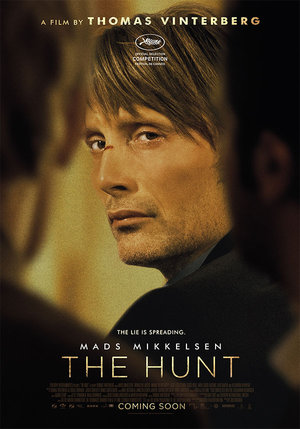
The Hunt-Jagten-Mads Mikkelsen
Mads Mikkselsen stars as Lucas, a role that won him the Best Actor award at Cannes this year. Image via phdacademy.org.


Since there is no story without a conflict, I started an article series on my favorite conflicts. The more you can raise the stakes, the more you can involve and intrigue your audience. So I’m not going to involve simple situations where the decision won’t scar anyone horribly, whether literally or physically (or both.)

The first article covered The Ledge’s story, a movie where the protagonist was forced to choose between his own life and his lover’s.

The second one is about the premise of a Danish movie I’m dying to see. Jagten (The Hunt) presents one of the most difficult choices one needs to make- and the wrong one will destroy the other party.

Conflict: Your little daughter told her female teacher that she was abused by her male teacher (the protagonist). The teacher, Lucas (Mads Mikkelsen), is your best friend. The girl never lied before. Lucas is one of the nicest guys you know.

Door Number 1: Your daughter is telling the truth, and your best friend is a pervert. You can’t believe you have loved and trusted him for so long. You can’t wait to make him pay.

Door Number 2: Your very young daughter told a very disturbing lie, and started the destruction of Lucas’s life and career. He may not recover from this.

While we won’t know for sure that Lucas is innocent until we see the movie, the trailer sure suggests it. It also tells us which door the guy chooses: he chooses to believe his daughter and things get very complicated and dangerous after that.

As far as conflicts go, this just might be the mother of all. In the end, only one person is innocent, and you are going to have to live with yourself afterwards. Of course the person that will get hurt the most is the person you chose not to believe.

I don’t know where writer/director Thomas Vinterberg got the inspiration from, but it is one hell of a conflict.

* Just because you’ve known your friend for decades may not mean he is not keeping things from you.

* But just because you think your daughter doesn’t lie, it doesn’t mean she doesn’t. Sometimes kids can go to disturbing lengths for the most trivial reasons.

What would you do? Who would you trust?

How do you feel about this conflict as a writer?


PS. I’d love comments, but please don’t give any spoilers if you have seen The Hunt.
PPS. This post contains affiliate links.
 

Filed Under: Story Conflicts Tagged With: compelling story conflicts, jagten, mads mikkelsen, mads mikkelsen the hunt, story conflict, story writing, the hunt, the hunt 2012 movie, writing a story, writing stories

Most Enthralling Story Conflicts & Dilemmas: The Ledge – Kill Yourself or Your Loved One Will Be Killed

Posted on November 11, 2012 Written by Pinar Tarhan

As writers, “what if?” is our best friend when it comes to hunting down an exciting idea. We have to be excited first, and then we can begin writing a story that will excite others. The “what if” is born from, or is supported by, a mother conflict-a conflict that will grab you, and won’t let you go until you finish the story.

The bigger at stake, the bigger the excitement. And if the story is well-told, your level of empathy grabs you further into the depths of the story, and if you are honest, you know that the character isn’t facing an easy task.

This article series will cover my favorite story conflicts, from movies, series and books. Their conflicts are the reasons I decided to watch/read these stories.

Conflict : The Ledge

charlie-hunnam-as-gavin-in-the-ledge-2011
Gavin is standing on the ledge. Image via filmloverss.com.

Door Number 1: You kill yourself. 

Door Number 2: They kill the person you love.

Two of the most common gut reactions are:

1)      Yeah, I’d sacrifice myself.

2)      I’d find a way of saving myself and my loved one.

But it is not that easy. This is the conflict from the movie The Ledge starring Charlie Hunnam, Liv Tyler and Patrick Wilson.

Charlie Hunnam’s Gavin is standing on the ledge of a building, with every intention of jumping at noon. He doesn’t have a choice. It’s either him, or the girl dies.

Gavin is an atheist who has pretty much lost his faith in anything after his daughter died. Nothing pisses him off like the over-zealous religious mumblings of a fanatic (Patrick Wilson), who as luck would have had it, has just moved in next door with his wife Shana (Liv Tyler). What could be more fun than seducing this nut’s wife?

But of course she is not a fanatic, she has had her own valid reasons for marrying him, and she is doing her best to make a life for herself despite her past and his extreme beliefs. Gratitude keeps her married.

Gavin starts spending time with her-as her employer and friend-and let’s say he gets involved despite his most rational intentions.

She starts falling for him, and love overpowers gratitude. Husband finds out, captures her, and gives Gavin the two doors. But Gavin is facing this conflict twofold:

He was the driver at the accident that killed his daughter. He never really recovered from either the loss, or the guilt. Now, obviously he blames himself for the danger Shana is in- she wouldn’t have gotten involved with him if he hadn’t been so intent on getting her attention and attraction. He couldn’t save his daughter, but maybe he can save Shana. Of course there is the possibility the husband won’t keep his word and kill her anyway, but would he take the risk?

Of course there are other conflicts in the film too.

There are Shana’s: Gratitude vs. Love. Religion vs. Passion.

There’s the husband’s: Rage vs. Control + Forgiveness.

There’s the cop’s dealing with Gavin: His love for his wife and children vs. The Truth

Dealing with his own personal pain vs. Focusing fully on Gavin

*

It’s full of great conflicts and dilemmas, but needless to say, it is the main one that glues you to the trailer and the movie. It’s still possible to say you’d do things one way or the other, but if you do pay attention to the characters, backgrounds and states of mind carefully, you’d see that there is no easy way out.

Written (and also directed by): Matthew Chapman.

My advice is watch it like a writer. Look at the story, the conflicts, the characters. Try to imagine the “what if” moment for Matthew Chapman. Try to imagine what you would do if you were Gavin.

And please share some of your favorite story conflicts.

PS This post contains affiliate links.


Filed Under: Story Conflicts Tagged With: charlie hunnam, charlie hunnam the ledge, creating conflict, creating story conflicts, matthew chapman, story conflict examples, story conflicts, successful story conflicts, the ledge, the ledge 2011 movie, the ledge cast, the ledge movie, writers, writing

PJ Reece’s Story Structure To Die For – An Awesome Free Resource on Writing Fiction

Posted on October 1, 2012 Written by Pinar Tarhan


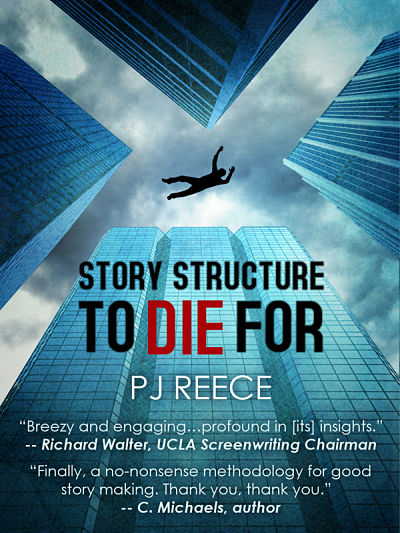
story structure to die for- pj reece
Image via pjreece.ca


There are many stories that I wish I had written- stories whose characters, structures and pretty much anything- I wish I would have come up with. I’m definitely in love/awe with those stories. Some of them are:

Pretty much any John Grisham legal thriller, but especially:

–          The Runaway Jury- the book, not the movie

–          The Brethren

–          The Partner – remind me why The Partner and The Brethren haven’t been adapted to screen yet?

By Christopher Nolan (and Jonathan Nolan)

–          Memento (nope, not The Prestige.)

–          The Dark Knight Rises (not the first two)

By Kurt Wimmer:

– Equilibrium

– Law Abiding Citizen

By Randal Wallace

–          Braveheart. (duh!)

By Nancy Meyers

–          What Women Want

By James Cameron

–          Strange Days


The list goes on. But the point is:

Those stories are perfect to me in their genres. Yes, the books mentioned are best-sellers, and the movies are either critical/cult hits or box office hits or both. They made me laugh, think, cry, get glued to the screen/book, hold my breath or made me do a various combinations of these.

So these movies make you want to wish you could sit down with those authors and pick their brains. Interviews don’t always help. For instance Joseoph Gordon-Levitt and Gary Oldman are marveling at what a great story-teller Nolan is. OK-I’m admiring too but how the hell does he and his brother (who created one of my favorite shows, Person of Interest, too by the way) write those things?

Of course some of these writers do also come up with stories that don’t impress (me) so I don’t die of jealousy. Apparently, Kurt Wimmer did Double Trouble (action comedy about muscular twins who….you don’t really care about.) And James Cameron did Titanic and Avatar. (who does that after Strange Days???You might enjoy those movies, but if you watch Strange Days, you might appreciate why a fan of that story might expect different things from Cameron.))

But back to the stories we love.

No matter how many times I dissect writing manuals and those movies, I still find a hard time delving into the secret ingredients-how the hell they managed to put one and done together. Sure, Randall Wallace had history to guide him- but with Braveheart, he outdid himself. If you have seen Pearl Harbor, you might wonder how the writer of Braveheart could write that (nope, I don’t like Pearl Harbor. Could’ve appreciated that one in 1930. Not in 2001. )So I’d definitely not die for the story structure of a love triangle between soldier presumed dead, his girlfriend and his best friend.

Was I ranting? Good. That was the point. A story (structure/idea) to die for is something most writers go after, and not many accomplish. So it was a relief to have run into PJ Reece’s Story Structure To Die For in which he rants, gives great examples of stories that worked, what didn’t work from his own stories and he does rant about what other how-to writers left out of the equation.

And you know you can relate to Reece when he dedicates her book to Jack Lemmon and Eva Marie Saint (it will make sense once you read it) and that he gives Moonstruck as an example for a great story structure. For one, even though I like the movie, even though it has an Oscar and all that, it is a guilty pleasure for me. Oh the stereotypes and the soap opera acting and the emotional outbursts of Nic Cage…But guilty pleasure or not, it WORKS and that’s what matters! (and it is nice of him to pick a movie we have mostly seen and remember- I probably would have had a heart attack and never gone back to the book, had he been giving examples from Lars Von Trier.) He has some other solid and useful (yet fun) examples as well.

There is also the way he structures this non-fiction- you automatically assess your characters and writing to see how you measure up to talking about-he needn’t give checklists and bullet points. You instinctively visualize, analyze and evaluate.

PJ Reece makes his points well. He also reminds you of the ultimate screenwriter fantasy- the Oscar. Whether we’ll ever get nominated and win is another issue. But he does help you see how to get unstuck from ruts, insufficient conflicts and unnecessary writer panic born from unsatisfactory story flow. He also makes you want to re-watch Rocky and Good Will Hunting- for educational purposes.

: )

Read the book. It’s also a fine example of how to write an engaging and fun e-book on non-fiction matters. You can download it from here. Looks like I have another writer blog to hang out at.


Filed Under: Writing Tagged With: Christopher Nolan and Jonathan Nolan, equilibrium movie, fiction writing, john grisham novels, john grisham the brethren, john grisham the partner, jonathan nolan, kurt wimmer, moonstruck, person of interest, pj reece, story structure 2 die 4, story structure to die for, story writing tips, storytelling, strange days, strange days movie, tips for writing good fiction, writing fiction

So I Didn’t Win That Writing Competition. So What?

Posted on August 20, 2012 Written by Pinar Tarhan


scriptpipeline movie idea contest
Image via scriptpipeline movie idea contest.


Obviously I wanted to win. It would have been terrific if I had. But I didn’t win my first competition. Should I just go to a bar and drown my sorrows? I think not. Here’s why:

I entered Script Pipeline’s Great Movie Idea contest this July and I didn’t win. I felt a little upset, but just a little. 5 minutes later I bounced back, having come up with this article idea, as well as having noted down the next competition deadline.

Let’s face it, there’s not much to feel sad about. While the chances of winning a screenplay (idea contest) is probably higher than winning the lottery, it is still not a very easy thing to do. Even after having come up with the best idea you could and having written the best treatment you could, as well as having followed the guidelines, you are at the mercy of the taste of the judges. And while there are some story elements and storytelling ways writers/editors agree on, there is still that bit that leaves it to luck: the taste of the judges.

I am not saying my idea would definitely result in a blockbuster, but directed in a certain way and marketed the right way, it wasn’t without potential. But I know that there were probably ideas that were more appealing, marketable or simply mind-blowing. I also know that having submitted an idea that was in the romantic comedy genre (although it was/is different from the typical ones.) might not have been that impressive.

Even I, writer and fan of romantic dramas/comedies, happen to prefer compelling thrillers, good action with great humor –  and wish I could have come up with legal thrillers in John Grisham style, or sci-fi action pieces like Equilibrium, The Island or Gattaca. I l also would have loved to come up with something like The Man from the Earth (a sci-fi/drama genius with the lowest budget, really good acting and awesome idea), Law Abiding Citizen (an edgy action/thriller) or obviously, Braveheart (the wonderful epic combination of history and fiction, drama and romance, action –with the touch of great one-liners and the rare but effective comic relief.) You get the idea.

And while I was content with my treatment, it was my first (that was submitted) and no doubt could be massively improved.

I still love my idea. I will be pursuing agents and contest, while getting better at explaining my ideas, finding loglines and writing treatments.

So I still have a long way to go. But I also need to find an agent/company/director/judges…etc. that have similar tastes to mine. To give examples from successful novelists, Grisham was rejected. So was J.K.Rowling. The list goes on forever, although those two are my favorite examples. To give examples from screenwriters, Allan Loeb (Just Go With It, Wall Street Money Never Sleeps…) got rejected for about 3 years. Maybe not all of his stories ended up as movie wonders, I was entertained by many of them. And did I mention he has been constantly selling since 2007?

So I didn’t win. It is not the end of the world. In fact, it is the start of a brand new one. So many things to work on, so much research to do, so little time. And I will be writing. And improving. And submitting…


Related Posts Plugin for WordPress, Blogger...

Filed Under: Writing Tagged With: screenwriting, screenwriting competitions, screenwriting contests, script pipeline, script pipeline great movie idea contest, writing competitions, writing contests

  • « Previous Page
  • 1
  • …
  • 37
  • 38
  • 39
  • 40
  • 41
  • …
  • 50
  • Next Page »

Blogroll

  • My Entertainment Blog

My Other Blogs

  • Beauty, Fitness & Style for the Fun-Loving Gal
  • Dating & Relationships in the 21st Century

Categories

  • Author Interviews
  • Author news and coverage
  • Blogging
  • Book Launches and Excerpts
  • Book News and Author Interviews
  • Book Recommendations
  • Book Reviews
  • Career Management for Writers
  • E-Book Reviews
  • Fiction Writing
  • Fictional Writers: Writer Characters in Movies, TV Series and Books
  • Inspiration and Motivation
  • Marketing
  • Marketing Fiction
  • Movie and TV Series Recommendations
  • Novel Reviews
  • Paying Markets-Web and Print
  • Productivity & Time Management
  • Recommended Resources
  • Reviews for Tools and Devices
  • Romance
  • screenwriting
  • Self-publishing
  • Story Conflicts
  • Website & Blog Reviews
  • Writer Tools
  • Writing
  • Writing Tools
  • Writing Updates

Copyright © 2026 · Focus Pro Theme on Genesis Framework · WordPress · Log in

This website uses cookies to improve your experience. We'll assume you're ok with this, but you can opt-out if you wish.Accept Reject Read More
Privacy & Cookies Policy

Privacy Overview

This website uses cookies to improve your experience while you navigate through the website. Out of these, the cookies that are categorized as necessary are stored on your browser as they are essential for the working of basic functionalities of the website. We also use third-party cookies that help us analyze and understand how you use this website. These cookies will be stored in your browser only with your consent. You also have the option to opt-out of these cookies. But opting out of some of these cookies may affect your browsing experience.
Necessary
Always Enabled
Necessary cookies are absolutely essential for the website to function properly. This category only includes cookies that ensures basic functionalities and security features of the website. These cookies do not store any personal information.
Non-necessary
Any cookies that may not be particularly necessary for the website to function and is used specifically to collect user personal data via analytics, ads, other embedded contents are termed as non-necessary cookies. It is mandatory to procure user consent prior to running these cookies on your website.
SAVE & ACCEPT