Addicted to Writing

Manage Your Freelance Writing Career While Writing What You Love

  • About Pinar Tarhan
  • Blog
  • Books
  • Hire Me: Services
  • Contact Me
  • Portfolio
  • Favorite Resources
  • Newsletter

How to Work (and What Tasks to Do) When You Are Sleep Deprived

Posted on February 27, 2019 Written by Pinar Tarhan


In an ideal world, one or two things would happen:

  • We wouldn’t be sleep-deprived.
  • We wouldn’t have to work when we were sleep-deprived.

But it isn’t an ideal world, alas both situations occur quite often. If you don’t have anything urgent, it’s best putting off urgent tasks until you are rested. If you do, it might be better to try and take a nap first.

Not possible? Pour some coffee (or tea, your choice) and get to it.

Also, think of activities that make you happy, alert, and energetic. Different activities have different effects on people. Showers wake some people up while making others sleepier. (I’m in the second group.)

  • Blog maintenance. Updating plugins and themes don’t require much attention and energy. Get this sucker off your plate.
  • Marie Kondo-ing your office space. While I like Marie Kondo, I don’t recommend trying to catch the feeling of joy when it comes to organizing important stuff. Instead, go for the thought of useful and/or new information. I don’t want you to end up fileless and freaking about not being able to find important story drafts or reference books!
  • Marie Kondo-ing your desktop files. See the point above about joy.
  • Email checking and cleaning: unsubscribing from people you don’t like. Sometimes, I go on a binge email unsubscribing spree. I might even unsubscribe if I am a huge fan of the person. Because I am a huge fan, I don’t need a daily or weekly reminder to check out their new post or product. I already have. So I remain subscribed to newsletters that share stuff that is not on their website, or newsletters that are so useful that I cannot afford not being updated. And sometimes, I remain subscribed because while I am a fan, I often forget to check out their latest work because I’m only human and I don’t remember to regularly read every blog I enjoy. What makes a newsletter worth subscribing to and remain on their email list? Check out my article Newsletter Writing 101: The Dos and Don’ts.
  • Drafting posts. Funnily enough, you can actually write even if you are tired. It might not be a masterpiece, and you probably shouldn’t be working on the polished version your editor will read. Drooping eyes miss more errors. But if you are in the zone, you are in the zone. If your health allows it, don’t let your energy level trick you into not writing.
  • Noting down ideas. Your brain might be too tired to do certain things, but ideas also don’t give two hoots about how you feel. If they want to arrive, they will. So you better not let them go. You might not remember them later.
  • Free-writing. What better excuse to write without limits and rules? Just let your subconscious take over.
  • Collecting scattered ideas in two places: one digital and one physical – and then backing them up. Be honest with me. How many idea files and notebooks do you have? Even the most organized of us can fall prey to buying too many notebooks or creating too many files to save our ideas. It doesn’t take too much mental effort to copy paste with your mouse or with your hand, so take advantage of these “tired” times to gather your ideas in one place. Then make several copies. You can never be too careful or safe when you are saving and recording your ideas. The idea is to have all the ideas in one place, and copies of the big list. Not 500 different files with different ideas. Think about your scattered notes the next time you think you don’t have something to pitch or write about. You should do the same with the writing markets, while you are at it.
  • Going over your to-do lists and goal sheets. If you’ve been meaning to do something for months, just go ahead and do it. It is okay to change your mind and delete the task if you feel it was unnecessary. But if you neglected something essential, it is time you prioritize it.
  • Responding to emails. Try not to make too many typos, especially if you are corresponding with editors and clients. But let’s face it, most email communication is about you confirming things or following up on them. Do those.
  • Backing-up your work and research. All you need to do is to get them on to Cloud, a hard drive, a USB or emailing them to yourself. Better to be safe than sorry.
  • Social media posting. Afraid people forgot who you are? Start reminding them. Hanging out at social media is a better way to spend your time when you are tired. Just don’t post something embarrassing you can’t take back. Unless embarrassing is your brand. Then by all means, go all for it!
  • Profile updates. You have a new book out? Published on some amazing pubs? Time to polish those clips and social media profiles.
  • Bookmark and reading list cleaning. No need to keep useless stuff around. Read and decide what to discard.
  • Reading stuff that doesn’t hurt your brain. It can be reading for fun – since you are a writer, reading is always a part of your job. I know, we are so lucky! But we’ve all been there. Sometimes we can’t just bare to process overly technical stuff or brand new information. Ignore those and come back when you are feeling alert and capable.
  • Watching things that are necessary for your idea-collecting, craft-building and relaxing. Bonus points if they help with all three. Watching Netflix is a part of my job. So no one pays me just to watch something, but a lot of my ideas and stories have ties to pop culture. So watching movies and series help me grow as a writer, while also fueling my creative juices. So when in doubt and too tired to do anything else, go watch something.

*

There you go, those were my humble suggestions. Let me know how you deal with work when you are sleep-deprived or sick. They often attack together!

Related posts you can check out:

A Love Letter to All Freelancers With a Health Condition

How to Get Back to Work After Vacation (Even If You Are Exhausted)

Sleepy Writer’s Wake-up Ritual: How to Start A Writing Day Well

Benefits of Having a Cold for Freelance Writers

9 Productive Things Writers Can Do When They Have a Cold


Filed Under: Blogging, Productivity & Time Management, Writing Tagged With: how to work when tired, how to work when you are sleep deprived, how to work when you are sleepy, productivity tips, productivity tips for writers

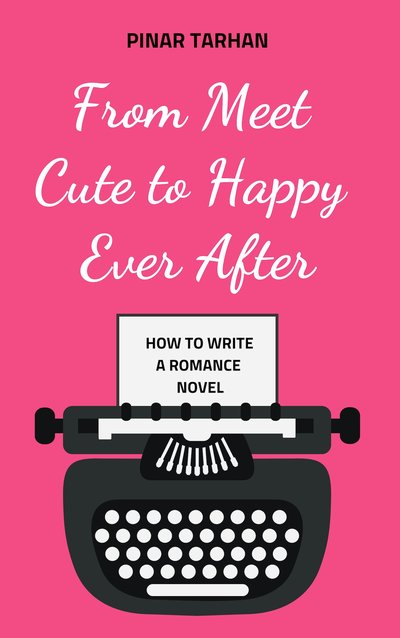
How to Write An Amazing Romance Novel: New Book Release

Posted on February 13, 2019 Written by Pinar Tarhan

Romance has always been one of my favorite genres in writing. My screenplays include romantic main or subplots, and last year, I released my romance novel Making A Difference (M.A.D.) on Amazon!

After asking romance writing friends (and friends who want to write romance novels) what they would want to find in such a resource book, as well as what I wish I had as a resource before I wrote my own novel, I created an e-book that I hope you will find practical, informative, and entertaining.

The book takes you from the basics of marketing (because it is never too early to start!) to how to find and refine your idea, from testing the idea to making various vital decisions about your story to finishing (and polishing) your novel. It also offers introductory insight into the world of editing and publishing.

I analyzed my own novel in detail to help you start your journey inspired and clear-headed, but I also included several examples from other successful writers on how they found their ideas.

Additionally, I included resources that you might need in all areas covered in the book. You can buy How to Write an Amazing Romance Novel on Amazon.

Happy writing, fellow romantics!

Below is the table of contents to see what awaits you:

How to Write An Amazing Romance Novel TOC

Intro: Why I Write Romance           

  1. On Marketing and Platform
  1. Finding the Idea: 6 Ways to Find and Develop Your Romance Idea
  1. How to Check if Your Idea is Viable (through characters, flaws, and conflict)
  1. Writer Fear to Address: What if I can’t write a novel-length story?
  1. Decisions, decisions…: Audience, POVs, diverse characters, sex and beyond

– Writing for the market or writing for yourself?

– Naming your book: the title

– The main audience divide: Adult or YA?

– Sub-genres: Sub-genres available to you

– POVs

– Characters

– Sex and swearing

– Writing diverse characters

– Word count

– Writing a series

– Writing supernatural characters

– Writing about what you don’t know

– What about that pen name?

– Clichés and cheese level

– Themes and messages

– Three main types of endings

  1. Outlining
  1. Tools You Might Need
  1. Actually Writing: Sitting Down to Write

– Beginning: When to start your story

– Opening lines

– How do you know if your writing is any good?

– Active vs. passive

– Adverbs

– A word on the verb “say”

– Writing dialogue

– Show vs. tell

– What if you hate what you write?

– Should you mention how hot your characters are?

  1. Saving Your Work
  1. Writer’s Block and Motivation
  1. Taking a Look at the Finished Product: How do you know if your writing is any good?
  1. Editing: An Introduction
  1. 3 Possible Paths to Publication: Indie, Traditional or Hybrid
  1. Favorite Romances and Romance Writers

Conclusion

About the Author 

Useful Resources

 *

Filed Under: Inspiration and Motivation, Recommended Resources, Writing Tagged With: how to write a romance novel, how to write romance, romance writing tips, writing a romance novel, writing romance

How to Edit Your Writing on a Budget (to Save Time and Money)

Posted on February 6, 2019 Written by Pinar Tarhan

Writing is a huge part of the job description for most creative people, especially writers and bloggers. We create anything from short social media updates to blog posts, from long-form articles to ebooks and novels.

Whatever you are writing, it needs editing. It is easy to overlook mistakes when typing, and it’s much more productive to get that first draft down without the burden of looking for errors.

And while editing shorter pieces is less complicated, what’s a writer got to do when she has to edit pages upon pages?

It makes sense to hire a professional when you are creating longer content such as a book, but you can’t always afford one. And it doesn’t always save time to be edited by someone else.

You have to go through sample edits to see if the editor is right for your project. Then you will need time for them to complete the project, and the faster you need it done, the higher the editor is likely to charge. Afterward, you will need to go over the suggested edits, make the changes, and will probably send it over to the editor for one last look – and this is assuming all goes well. Finally, you’ll need to do the last round of corrections, or accept or reject the changes offered.

So when you are short of time and cash, you will need to edit yourself. The good news is, as long as you have a strong grasp of the language and the format you are writing in, it’s no insurmountable task.

Here are 7 practical methods to guide you through the process:

  1. Turn on your spell check after your draft is finished.

While your word processor’s built-in spellchecker won’t catch all the mistakes, it will make for a good start.

  1. Use a professional grammar tool.

I use Grammarly Premium (aff. link), and I love it. While I’m totally bored of seeing their advertisements everywhere, they deserve revenue. It costs about $20/month, and it is worth it if you write a lot. You can read my detailed review here.

Now, Grammarly is not human, and it’s not perfect. It doesn’t understand certain nuances or that you broke specific rules for better flow. Still, it catches mistakes your spellchecker doesn’t, and it also analyzes things like repetition, wordiness, and plagiarism. The pro version doesn’t just make suggestions but also tells you why those changes are required.

You will still need to go over every suggestion carefully and probably agree with about half, but it is one investment that pays for itself over and over.

If you are working on a project that has many pages, I recommend dividing it into parts and not trying to correct everything at once.

  1. Transform your file into a PDF document

When the format of the file you are looking at changes, it is almost like getting a fresh set of eyes. You can notice mistakes you haven’t caught before.

  1. Print out your document, and pick a pen.

Staring at your computer screen will work only for so long. Your eyes and brain will tire at some point. So print everything out. If you don’t own a printer, have it printed out at a nearby copy shop.

Take the printed pages, and mark your mistakes with a pen.

  1. Ask for a friend to read

If you are a writer, chances are you have other writer friends who also have excellent language skills. Editing someone else’s work is actually easier because you are more objective, and you don’t have the words memorized in your head. Sometimes it is inevitable to read a word or a sentence not as is but how you meant to write it.

However, because editing takes a lot of effort, you should be able to offer your friend something in return. Maybe you can take them out to a fancy dinner somewhere. Or perhaps you can edit something of theirs that is about the same length.

And be gracious and thank your friend.

  1. Hire someone who is looking to build a portfolio and is willing to work at a reduced rate.

Everyone wants to charge a fair amount for their work that commensurates with their skills. However, an editor can be highly skilled and professional, yet lack the portfolio samples to command higher rates. This method can give you the chance to work with a professional without breaking the bank. You should still ask for a sample edit before agreeing on anything, and you’ll probably be requested to provide a testimonial for them after the work is done. A small price to pay to get professional services at a discounted rate.

You can inquire about it in related Facebook groups.

  1. Use a service, app or function that reads things out loud for you.

It always helps to hear what you write. It gives you a different perspective, and it can even make the writing tighter and more engaging. I use the free version of Natural Readers.com, a website that reads documents out loud. My Mac also has a similar function.

      8. Use a reference book. 

I own and refer to Be Your Own Editor (aff.link) by Sigrid MacDonald when I need to go over the steps.

*

Frankly, I use seven of the eight methods listed (except hiring a professional editor) to get the best result.

I published a novel, and a friend who is exceptionally skilled at catching mistakes did it for free. To thank her, I read stuff of hers whenever she needs me to, and I thanked her in my acknowledgments section of my novel. But to avoid giving her an error-laden nightmare, I edited the book myself meticulously using the other five methods.

The bigger your project, the more methods you will need to use to ensure a professional work with as few mistakes as possible. A rogue comma here and a redundant space there won’t turn off readers or make them think any less of you.

You’ve most likely caught some mistakes even in bestselling novels published by big publishing houses and edited by some of the best editors in the business. Your goal is to make it as close to perfect as humanly possible.

And worst-case scenario, if there are corrections to be made and you’ve self-published, you can revise and rerelease your work.

So don’t worry if you can’t hire an A-list editor right now. Pay attention, use a printer and the Internet, and forgo 20 bucks a month. You’ve got this.


Filed Under: Recommended Resources, Writing Tagged With: be your own editor, editing tips, editing tips for writers, Grammarly, how to be your own editor, how to edit your own writing

What Is Ghostwriting, and Is Ghostwriting Right for You?

Posted on December 23, 2018 Written by Pinar Tarhan

I’m sure you know what ghostwriting means, but let’s kick off with a definition just the same:

What’s Ghostwriting?

Ghostwriting is writing for someone else, with their name, and in their voice.

If we unpack that definition, you can be writing anything: articles, blog posts, novels, non-fiction books, etc.

You won’t get a byline; it is going to be published with your client’s name. And because it has to look like they wrote it, you have to sound like them.

Is it ethical?

Yes. Not everyone who has a great idea or story to tell can write or has the time to write. So it is only natural that they want to hire writers to create this content for them.

How can I get clients if there are no bylines, hence no portfolio?

Chances are, your clients who hire you to ghostwrite for them don’t want the fact that they didn’t write their own content known. So you may not be able to display exactly what you created on your portfolio. That said, you get to negotiate the terms of ghostwriting agreement with your clients.

What I do is to quote a higher rate than I’d if I were writing it under my own name and ask if I can use their name as a referral. Whether you get to show this client’s name on your website, or just mention them when you are emailing another client is up to you and your client.

How’s the writing process different?

To me, it means more research. Most writers have been writing for a long time. Maybe they just started getting paid for it or making a name for themselves, but many of them have started creating a long time.

This means that a writer already has a voice. When you are writing for a publication under your name, you still have to do some research so that your style matches theirs. But you don’t disappear completely into the background.

However, when you are ghostwriting, you have to sound exactly like another human being. This might involve talking to them on the phone, or capturing their choice words while reading other things they have written.

And because it takes more time to learn to write like someone else, it is only natural you’ll quote higher fees for your work.

How can you get your first ghostwriting work?

I emailed successful bloggers I knew and had been following for a while. I should note that they also knew who I was. Through social media and their blogs, we had already built a rapport.

And with one blogger, I had already written for her several times under my name. So they knew I was reliable, and they knew I could write. 

Is ghostwriting right for me?

Only you can answer that. It certainly has its pros and cons. For me, the biggest drawback is the lack of bylines.

And while I ghostwrote articles and blog posts, I haven’t yet penned a longer piece of content. It will be a lot more time and energy-consuming to sound like someone else for longer.

But the fact that you can demand higher rates is certainly a plus.

At the end of the day, this is a question only you can answer.

Can you recommend any resources on ghostwriting?

I can definitely get you started:

How to Be a Successful Ghostwriter by Kelly James-Enger (article on Writer’s Digest)

How I Ghostwrite Other Authors’ Books by Joe Bunting(article on The Write Practice)

Make Money as a Ghostwriter by  Sally Miller and Cruz Santana (e-book)

*This post contains affiliate links to products I already own and love. 

Related Posts Plugin for WordPress, Blogger...

Filed Under: Writing Tagged With: ghostwriting

  • « Previous Page
  • 1
  • …
  • 20
  • 21
  • 22
  • 23
  • 24
  • …
  • 76
  • Next Page »

Blogroll

  • My Entertainment Blog

My Other Blogs

  • Beauty, Fitness & Style for the Fun-Loving Gal
  • Dating & Relationships in the 21st Century

Categories

  • Author Interviews
  • Author news and coverage
  • Blogging
  • Book Launches and Excerpts
  • Book News and Author Interviews
  • Book Recommendations
  • Book Reviews
  • Career Management for Writers
  • E-Book Reviews
  • Fiction Writing
  • Fictional Writers: Writer Characters in Movies, TV Series and Books
  • Inspiration and Motivation
  • Marketing
  • Marketing Fiction
  • Movie and TV Series Recommendations
  • Novel Reviews
  • Paying Markets-Web and Print
  • Productivity & Time Management
  • Recommended Resources
  • Reviews for Tools and Devices
  • Romance
  • screenwriting
  • Self-publishing
  • Story Conflicts
  • Website & Blog Reviews
  • Writer Tools
  • Writing
  • Writing Tools
  • Writing Updates

Copyright © 2026 · Focus Pro Theme on Genesis Framework · WordPress · Log in

This website uses cookies to improve your experience. We'll assume you're ok with this, but you can opt-out if you wish.Accept Reject Read More
Privacy & Cookies Policy

Privacy Overview

This website uses cookies to improve your experience while you navigate through the website. Out of these, the cookies that are categorized as necessary are stored on your browser as they are essential for the working of basic functionalities of the website. We also use third-party cookies that help us analyze and understand how you use this website. These cookies will be stored in your browser only with your consent. You also have the option to opt-out of these cookies. But opting out of some of these cookies may affect your browsing experience.
Necessary
Always Enabled
Necessary cookies are absolutely essential for the website to function properly. This category only includes cookies that ensures basic functionalities and security features of the website. These cookies do not store any personal information.
Non-necessary
Any cookies that may not be particularly necessary for the website to function and is used specifically to collect user personal data via analytics, ads, other embedded contents are termed as non-necessary cookies. It is mandatory to procure user consent prior to running these cookies on your website.
SAVE & ACCEPT