
Addicted to Writing

Manage Your Freelance Writing Career While Writing What You Love

  • About Pinar Tarhan
  • Blog
  • Books
  • Hire Me: Services
  • Contact Me
  • Portfolio
  • Favorite Resources
  • Newsletter

Newsletter Writing 101: The Dos and Don’ts

Posted on November 8, 2018 Written by Pinar Tarhan

Brace yourselves, a long post is coming.

Fear not, though, this is all useful stuff. Ready? Superb!

Raise your hand if your inbox is crammed to the brim with newsletters you haven’t had time to open yet. You have every intention of checking them out. After all, you are fans of the writers, bloggers, and entrepreneurs who put them out.

You know most of them offer invaluable advice. Some are genuinely funny to boot. The problem? There isn’t enough time. So you hit delete if you are feeling pressed for time, or you’ve lost your will to work (or do anything) after you have seen your inbox always has hundreds of unread messages, and this is not even your work email. Your friends don’t email you. This is all newsletters. Aargh!!!

Right. What was that thing on the top of your to-do list?

“Write newsletter. Send it to email subscribers.”

Oops! How do you stand out, get read, and keep the subscribers when you yourself can’t keep up with the newsletters you wanted to receive?

Don’t despair. It is less art and science, but more empathy and trial/error. Oh, and our dear friend common sense.

I’m assuming you already have decided on an autoresponder, but if you haven’t, I recommend ConvertKit. (Yes, this is an affiliate link.)

I use ConvertKit for this blog. It is fairly easy to use and costs $29/month for 0-1000 subscribers.

Now to the essential dos and don’ts:

Don’t write an epic!

While you might occasionally need to write a very long newsletter issue, you shouldn’t do it every single time. It is not just about attention spans; people have work to do.

Do think twice before promoting a product.

Before sending a glowing recommendation on this amazing bundle/course/book/webinar/whatever, ask yourself this question: How hot is this product?

I’m not asking you if you trust the product. I believe you do. Otherwise, you’d not be encouraging your audience to check it out.

But I can’t tell you how many times I’m recommended the same product. The first person to send the newsletter is the luckiest. I get curious, check out what is all about, and if it is of interest, I subscribe/purchase/etc. The second person gets a nod from me, but I delete the email quickly. Boredom is slowly kicking in. Because I know I’m about to get more emails promoting the same thing.

The third person? It’s already annoying. So if you have gotten the recommendation email from another blogger, maybe don’t send it to your subscribers. Send something else instead.

Look, I get it. It is your income we are talking about. You are thinking about potential purchases. Or you are thinking about how impressed your affiliate partner will be when you send many new potential customers and fans their way.

Never forget, however, that your most important relationship is the one with your own subscribers. You don’t want to annoy them.

Think about your timing. If it has been recommended it to you, if you aren’t one of the first people the creator notified about it, people have already gotten the promotional email.

Do occasionally do a Seth Godin.

seth godin
Seth Godin. Image via entrepreneur.com

If you have something meaningful to say and you can say it in a few words, do it. It is all the rage nowadays to send long, long text. Change it up when it comes to length. Your subscribers will thank you for it.

Marketing master Seth Godin excels at the short stuff. Okay, admittedly he is great at longer stuff too, but you get the point.

Don’t send them too often.

I unsubscribe from a lot of newsletters because I can’t keep up with the sender’s frequent messages.

It is commendable that you want to educate and entertain your audience frequently. You might be thinking “I’m not even promoting anything! This is just valuable information!”

Great, but we all have Google. What I mean is, as much as we might be dying to become experts on any given topic, we don’t want to stay married to our inboxes. I strive to save as many excellent newsletter issues as I can, but occasionally I’ll just say, “Sod it!” and start deleting everything to get to Inbox 0.

And gasp!, I might even unsubscribe. The good news is, if you are so productive that you’re flooding my inbox daily, I already know your name. I will even occasionally remember to check out your blog. The bad news is, you’ve still lost a subscriber.

Don’t be that person.

Do offer your subscribers options.

Some sayings are cliché because they are true: You can’t please everyone. Even people who enjoy your blog enjoy it for different posts and reasons. So it’s wise to check in with your subscribers every once in a while and asks them what kind of news, topics, and frequency they are interested in. It is more work on your part, but I assure you, it is worth it.

Don’t send them too infrequently.

I have to admit this is one of the sins I commit. I tend to send a newsletter once a month or less. This bullet point is a reminder to both me and you to remind your audience of your existence more often.

Once a week or at least once in two weeks is fine – unless your audience notified you otherwise.

Do write an engaging subject line.

We all know subject lines matter at this point. However, writing a captivating one is easier said than done. If you don’t want to spend too much time obsessing over this (and you shouldn’t), at least try to capture the essence of what it is about.

Don’t be a drama queen with your subject lines or the content itself.

This point might seem like it contradicts with the previous one, but it doesn’t.

When we study marketing, we are encouraged to be personal. To determine an urgent need/want of our target audience and to capture their ever-fleeting attention. But when you overdo it, you can end up losing people.

What do I mean by not using too much drama?

I literally just deleted this email from a publication I like and subscribe to without opening it. The subject line said: “You Will Wonder How You Ever Lived Without These Tips and Tricks.”

No, I won’t. I don’t think you have found the holy grail of tips and tricks (and congrats on not even telling me what they are about, by the way!), and there is much doubt on my part that a subject line like that can deliver on its promise.

While I advise being specific, you might hurt your chances if you are too specific, or if you appear condescending.

For instance, let’s say you are launching a product or service that promises to help your audience increase their income level from a certain point. That’s awesome!

But how do you frame that certain point without pissing off the audience that is at or below that income level and find that interval not disappointing or low at all?

Saying “Want to make …. $ more a month?” can yield better results than “Ever grow tired of making just …. $?”

It doesn’t matter if you deliver on your promise and every client you worked with succeeded through your advice. You don’t want to make your readers feel less than.

Don’t use emojis.

This might be me giving away my age, but we are all adults here. Do emojis really belong in the newsletter? Let me know if it is my own personal pet peeve.

I’m in my 30s, and I have seen the times when emojis didn’t exist. Of course, I might be wrong, but I’m willing to bet I’m not the only annoyed by this.

It is okay – even recommended – to use images and a fun, friendly language in your newsletters. Even emojis, depending on your personal style and subject matter. But use caution when dropping emojis in subject lines.

Do balance the promotional with the informative.

We all have something to promote, even if we aren’t selling anything. Otherwise, we wouldn’t need a newsletter.

You might just want to be heard. You are still promoting your ideas. And that is fine.

Writing is meant to be read and shared. Ideas are meant to be spread and talked about.

And it is more than okay – expected even – for you to be selling something. You need to make a living. And what better way to make money than by helping others achieve something?

So your readers are ready for – and mostly fine with – emails that want to sell them something. Still, you don’t want to do that with every email, or even every two emails.

Balance them. It is best if even your promotional stuff is filled with freebies, helpful links (that go to free-to-read articles and resources), and a ton of practical information.

Do pay attention to your formatting.

Technology pisses off even the more experienced or patient of us. Formatting can get awry even though you didn’t do anything wrong or different. The best thing you can do is to preview the email you are planning on sending, and then send it to only yourself to check how it looks before everyone on your list receives it.

That said, the same format might look different on Hotmail vs. Gmail vs. Yahoo, so there is only so much you can do.

Still, for peace of mind, I recommend previewing and sending it to yourself.  And if a subscriber alerts you to an issue, you can take a look then.

Do include images and links when you can.

I touched upon this in a previous bullet point, but it deserves its own. It’s tempting to send someone all text. Some readers might even prefer it that way. But most people are not happy without much white space to wake them up. You don’t want an active subscriber, someone who bothered to open your message, to get lost in all the writing.

So spice it up. Make it visually appealing. Links and images mean you have gone the extra mile. Your readers will appreciate it.

Do lure them in, but deliver in the whole post as well.

I talked about enthralling your audience with a subject line that will attract their attention. Now, your newsletter has to deliver. Don’t just work on getting opened; work on being read fully.

Do send them freebies and promotional codes.

Have you created a freebie resource yourself? Did someone you admire craft one? Let your audience know. Is the hosting company you are using offering a discount? Is your autoresponder running a sale? They should know.

If people need that service, they will take you up on it. The one thing you need to do is let the audience know if you are getting paid for the recommendation. 

Do share your favorite resources.

What are you reading? What courses are you taking? What blogs are forever bookmarked on your computer? Share these with your readers.

If links are applicable, use them so you will save your readers time. They appreciate people who make their life easier.

Do disclose affiliate relationships.

This is worth repeating. If you are getting paid, just noting “aff. link” next to the whatever you are linking to will suffice.

Do choose a reliable autoresponder.

There are free options out there. You can also opt for a different autoresponder later down the line and migrate your existing subscribers. Just read the features of the service you are interested in.

  • How much does it cost?
  • Do they offer a free trial?
  • Do they allow affiliate links in emails?

and so on.

Do a bit of reading. I’ve used TinyLetter (free) before for this blog. I later converted to (pun intended!) ConvertKit (aff. link), and for my travel blog, I’m currently experimenting with MailerLite (which is free for 1000 subscribers) on my travel blog.

Do brainstorm ideas with friends and colleagues.

Don’t know what to put in your newsletters? Brainstorm with writer friends. Also take a look at what your fellow writers are putting in theirs.

For instance, my good friend Olga Mecking invented a sort of national newsletter writing month where she is sending her subscribers a newsletter every day for November.

Yes, I told you not to flood people’s inboxes, but this is a special, themed occasion inspired by NaNoWriMo, and will only last a month. And people know what they are in for when they sign up.

*

Now that you’ve armed yourself with information on how to rock your newsletter, get to work on applying these babies.
Filed Under: Blogging, Marketing, Writing Tagged With: how to write a newsletter, how to write an effective newsletter, newsletter writing tips, newsletters, writing a newsletter

The Light Between Oceans Movie: One Magnificent Conflict After the Other

Posted on October 8, 2018 Written by Pinar Tarhan

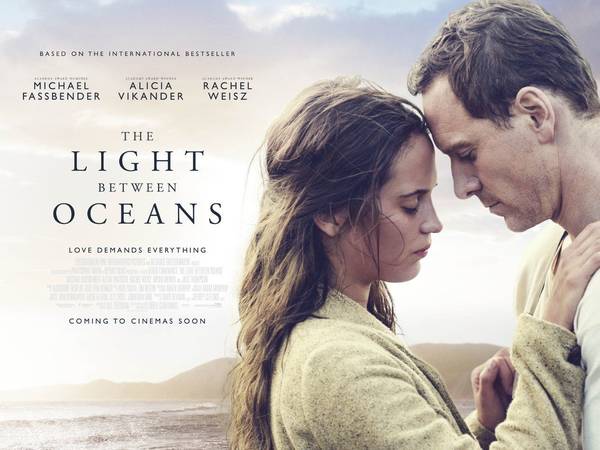
The Light Between Oceans Movie Poster

Based on the bestselling novel (aff. link) of the same name by M. L. Stedman, The Light Between Oceans (aff. link)is a compelling and humane romantic drama where you feel for all three main characters: Tom, Isabel, and Hannah.

Let’s go over the plot before I delve into conflicts in details and provide necessary spoilers. I strongly recommend watching the movie and/or reading the novel before continuing on to read the post.

As I’m a huge fan of Michael Fassbender (X-Men: First Class, Jane Eyre) and Alicia Vikander (Ex Machina, A Royal Affair), I learned about the novel as I watched the trailer, and since Netflix has the movie, I couldn’t resist. I can’t recommend the movie enough; it is just a thoroughly beautiful and emotional experience. Full disclosure: I cried! I now joke that the movie is so effective that even Fassbender and Vikander couldn’t resist falling in love with each other after meeting on set. Yes, they are married now.

If you have seen the movie recently, you might want to skip right to the conflicts part. If you need your memory refreshed, the plot summary will do just that.

The Light Between Oceans Movie Detailed Plot Summary  – with Spoilers

After Tom (Michael Fassbender) survives World War I, he doesn’t want much to do with people. So he happily takes the job as the lighthouse keeper on a small remote island where he will be the only one living. However, his plans of being by himself don’t work out when he meets Isabelle (Alicia Vikander).

They are both quite taken by each other and marry quickly. What follows is a blissfully happy marriage until Isabel suffers from two miscarriages. Isabelle’s depression is only distracted when a boat washes up ashore carrying a dead man and his newborn baby daughter. Isabelle convinces a reluctant Tom, who wants to do the right thing and report the incident, to let them keep it a secret and pass the baby as their own: After all, not even Isabelle’s parents know about her second miscarriage.

As Tom and Isabelle lovingly take care of the baby girl they named Lucy, Tom’s guilt intensifies as he sees a grieving mother/wife – Hannah (Rachel Weisz) at a memorial gravestone during their gathering for Lucy’s christening. When he reads the stone, he knows it’s Lucy’s real mother. Without Isabelle’s knowledge, he sends Hannah an anonymous note that says that her husband is dead, and the baby is alive, well, and loved. Hannah rushes to the police, but they have nothing to go on.

Tom and Isabelle continue to raise their daughter Lucy. When she is about four, Tom and Isabelle go to an event honoring the lighthouse. As “luck” would have it, it was built with the contributions of Hannah’s rich father. The three meet, Hannah barely keeping it together after meeting a healthy girl the same age her daughter would be. Her sister explains her situation to Tom and Isabelle, which makes Isabelle understand who Hannah is and what they have done.

When Tom tries to convince her to give their daughter to her real mother, Isabelle argues it is best not to shake their girl’s life. A guilt-ridden Tom leaves the toy Lucy had with her when she came on the boat, and this starts the chain of even more complicated events: Police arrest Tom, take the baby from Isabel and give her to Hannah. To protect Isabelle, Tom claims it was his idea. Unfortunately, police also want to accuse Tom of the murder of Hannah’s husband, and Isabel is too mad at her husband to back up his innocence. As Isabel lives with her parents and grieves the loss of Lucy, Hannah tries to cope with an impossible Lucy who misses the parents she knew, and Tom has to deal with both losing his beloved wife and child while being in jail.

When Hannah realizes that Lucy won’t adjust, she offers a deal to Isabel: Help Tom get convicted of murder and be sent away to prison for good. Then she will leave Lucy to Isabel for her child’s happiness. But after Isabel reads Tom’s letter, she can’t live with her own guilt any longer. She admits to her own part and reunites with Tom. This time Hannah isn’t that eager for both of them to rot in prison, for Lucy’s sake. And she knows what it is like to lose a child.

After some time Lucy adjusts to her biological mom and maternal grandfather.

Several decades later, Tom is by Isabel’s hospital bed. We don’t know how long they stayed in prison, if at all. We do know they don’t have kids.

Some time after Isabel’s death, a car drives up to their house. A young woman carrying her baby comes out. It’s Lucy, wanting to catch up with them and introduce her baby. They talk, Tom gives her a letter Isabel wrote, and Lucy asks if she can visit. Tom says he’d like that, they hug, and she leaves.

This post is a part of this blog’s Compelling Conflict series where I analyze the main conflicts in movies to help you (and me) write better fiction.

Conflicts:

The power of the film, in addition to the beautiful cinematography, the powerful direction and acting, comes from how much we root for each character, especially Tom.

While we understand Isabel’s action due to the loss and depression she suffers from, we are introduced to Hannah later in the story. And because Isabel never quite does the right thing when she should, and she only comes to Tom’s rescue at the latest minute, my favorite character is Tom. Here’s a guy who has never had anyone until he meets Isabel. And she turns out to be right about him: There is a light inside of him. He is a loving husband and father. He keeps his promises to Isabel from the beginning. Even though he is faced with impossible decisions, he tries to do the right thing.

But maybe that is because I’m not a mother. I’ve never wanted to be a mother. I’ve never been pregnant. I’ve never miscarried. I’ve never had to deal with losing a child, whether before they were born or after raising them for years. My feelings for Isabel are more hypothetical since I can only imagine what she is going through.

I’m also a stickler for doing the moral and ethical thing. I’m not so much against them raising the baby as their own, but Isabel never even allowing herself to think the baby might have a mother. Grandparents. Other family who might love and suffer the loss. Family who might have been barely consoling themselves with the fact that while they lost a child, they at least get to raise their child’s child. As horrible as her loss was, she never stopped to think about the mother, causing the same pain to someone else – the very pain she was trying to avoid.

Of course, by this logic, my second favorite character should be Hannah as she is a very unfortunate, sympathetic character. She loses a great husband she loved very much, for whom she defied her father to marry. She also loses her daughter, and now she has to get her daughter to love her – but she thinks Isabel is her mother.

But because you start the movie loving Isabel and feeling for her due to her losses, by the time you have met Hannah, you were hoping they wouldn’t be found out. So I can’t really choose between the two women as characters.

So let’s look at all this from a fiction-writing point of view:

Conflict 1: If you were desperate to have a child, lost two before they were born, and a baby – with a dad man without any indication she had anyone else – appeared in front of you, would you report the incident or claim the baby as your own?

It seems simple enough. You can try again. You can try to adopt. But as Isabel points out, who would let them? They live isolated on an island where there are no schools, hospitals or other people.

Maybe they could move. Maybe Tom could find another job. Maybe they could adopt then. But Isabel isn’t exactly able to think logically. Her depression clouds her judgment, and her sadness clouds Tom’s.

It may not be what you would have done, but then again, you don’t live in the 1920s where options are limited. Maybe people who want to be parents or are mothers will feel Isabel’s dilemma more.  Even as someone who doesn’t wish to have kids now, I felt her pain. Solid acting, solid writing.

What would you do? Even if you ended up doing the right thing, wouldn’t you at least consider it? Because just as it was possible the baby would have close relatives, if not her mom, that would miss her, it was possible she would end up in an orphanage. Why let the kid go through all that when you could offer her a safe, loving home right here, right now?

I honestly don’t know what I would have done in the exact same situation. Would I have gone with Tom’s instinct? Or would my emotions get the better of me?

I can’t tell for sure, and that’s why it is such a great conflict. It is complicated, emotional, and the right thing may not be as obvious as it seems.

Conflict 2: You are Tom. You love your wife and your kid. You know your wife won’t give up her child. You now know there is a suffering mother out there because of your decisions and actions.  What would you do?

Would you leave the anonymous note? Would you try harder to convince your wife? Would you confess to the woman?

It is hard being Isabel, but it sure ain’t easy being Tom either.

Conflict 3: You are Tom. Would you leave the toy in Hannah’s mailbox?

Remember the toy I mentioned in the plot summary? After Tom puts it in the box, the police put up a notice with a reward. One of Tom and Isabel’s friends recognizes it, and then the police go to their island.

Did Tom know the toy would lead to them directly? Did he want to get caught to save Hannah from more pain? Or was it only subconscious?

Without the toy, they wouldn’t have been caught.

Conflict 4: Would you try to keep your kid away from them if you were Hannah, or would you want more details on why and how they got to keep the baby?

While what Tom and Isabel did was wrong, it isn’t the same as kidnapping a child. The baby came with a dead guy. They should have reported it, but had the baby indeed been an orphan, they would have just given a poor baby a fighting chance at a good, loving life.

It doesn’t condone their actions, but they make for some decent mitigating circumstances.

What Hannah knew was this: Tom made his wife keep the baby. It is his fault. At this point, she doesn’t know Tom isn’t a violent man. She doesn’t know if what he could have done to “force” his wife to do what he wanted. The child was unharmed, healthy, and wanted her “mom,” meaning Isabel. Keeping the baby completely away from her was not the right thing to do. Granted, potentially all mothers would have done the same and probably rightly so.

But the kid was miserable for a long time. And she ran away. Not even to Isabel. So she could have been seriously hurt or worse.

What would you have done if you were Hannah?

Conflict 5: You are Isabel. Would you be mad at your husband for “betraying” you and losing you your child, and potentially your only chance to have a child? Would you blame him and refuse to see him and let him stay in jail for something you MADE him do?

This is a tough one. For Isabel, it is the ultimate betrayal. I’m guessing she would have been less furious if he had an affair or killed someone. Not that Tom would do that, but you get my point.

If he hadn’t sent the note, or at least the toy, no one would have known. He went behind her back, but he had tried to persuade her before and failed.

He was torn between his love and conscience, and he didn’t enjoy hurting either woman.

*

The movie had 5 major, extremely compelling conflicts. What is your favorite

in the film? Who is your favorite character and why? And what do you imagine you’d have done in similar circumstances? Let me know in the comments.


Filed Under: Fiction Writing, Story Conflicts Tagged With: alicia vikander, fiction writing, m. l. stedman, michael fassbender, rachel Weisz, the light between oceans, the light between oceans movie, the light between oceans movie review, the light between oceans story conflicts

Writing The Ultimate Historical Romantic Drama: Guernsey Literary & Potato Peel Society Film Review & Writing Lessons

Posted on September 28, 2018 Written by Pinar Tarhan

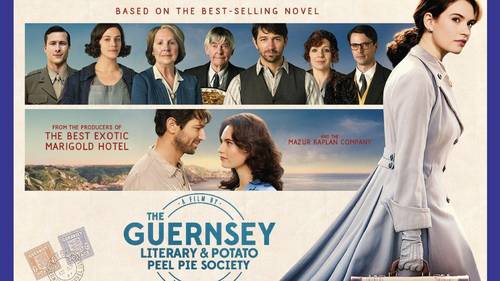
The Guernsey Literary and Potato Peel Society
Image via Evensi.

Juliet Ashton (Lily James) is a young writer slowly recovering from the emotional trauma of World War II with the help of her career, her best friend/publisher Sydney (Matthew Goode), and her handsome officer boyfriend Mark (Glen Powell).

Farmer Dawsey (Michiel Huisman) runs a book club called Guernsey Literary & Potato Peel Society (aff. link) with his neighbors, which they had to start to get out of trouble during the German occupation of the island.

When Juliet receives a letter from Dawsey asking where he can find a copy of one of her books, the two start corresponding and bond over their mutual love of reading. Juliet is excited about the book club, and she decides to write an article about them.

Much to Sydney’s objections (due to her publicity tour), Juliet hops on a boat to meet the bunch. While she is at first greeted with enthusiasm, one of the members turns hostile when she expresses intent for writing the article.

The more she gets to know the members, the more she bonds with them. And after she learns about the fate of one of the members, she sets out to find out what exactly happened to her and where she is with some help from Mark. Her growing feelings for Dawsey will further complicate and enrich her situation…

*

Thoughts on the film

Based on the novel (aff. link) by Mary Ann Schaffer and Annie Barrows, Guernsey Literary and Potato Peel Society is the ultimate delightful historical romantic drama. Filled with rich, relatable, and likable characters; realistic and humane conflicts; and a sweet love story with a gorgeous geographical background, it is a film to be enjoyed again and again.

It is also not without comedy. The casting is also perfect, and one of my favorite characters is Isola (Katherine Parkinson – The IT Crowd, Humans–aff.link)- the friendly, warm and romantic bestie Juliet makes in Guernsey. She is the friend we all wish we had.

*

Writing Lessons and Inspiration from the film Guernsey Literary & Potato Peel Society

  • When writing a story that is close to your heart, you need it to finish it, even if it is just for yourself. You need the closure and the therapy.
  • When you get the bug for a story, follow that bug.
  • Sometimes the story you set out to write won’t be the one you end up writing, and that is okay. Sometimes you will need to follow the story wherever it leads you.
  • You either need to live an exciting life or know interesting people with different life stories and varying personalities. Preferably both.
  • Your first book might not sell very much and that is okay.
  • It is important to have people in your corner who believe in you, your writing and who will stand by you during all stages of your career. But it does help if one of those people is your best friend and/or your publisher.
  • It is okay to listen to your heart when it comes to what story you are writing, but it definitely helps you have resources when you are writing that story.
  • Writing a story when everything is fresh in your memory helps you write faster and with more raw emotion. (You can always edit later.)
  • Book clubs rock.
  • Traveling inspires all writers, so is following your heart and going off your plans.
  • Love, romantic or otherwise, inspires us immensely.


*

What are your takeaways from this lovely film?


Filed Under: Fictional Writers: Writer Characters in Movies, TV Series and Books, Inspiration and Motivation Tagged With: glen powell, Guernsey Literary & Potato Peel Society, Guernsey Literary and Potato Peel Society, guernsey literary and potato peel society film, katherine parkinson, lily james, Mary Ann Schaffer Annie Barrows, michiel huisman, motivation for writers, movies with writer characters, writer characters, writing fiction, writing inspiration

Should You Get a Day Job Until You Make a Full-Time Living from Your Writing?

Posted on August 30, 2018 Written by Pinar Tarhan

Every once in a while, I will catch a TV series or a movie where I’ll envy the full-time jobs and careers of the characters: The offices, perks, comradery, co-workers, the regular salary, insurance, potential for office romance no matter how tricky… And I’ll be a bit sad remembering that it is probably not going to happen for me, and that is my choice.

Then I’ll also read a semi-joking tweet or sometimes even an entire essay on the harsh realities of the gig economy and will feel like crying.

Because no matter how you look at it, making a living with your writing is hard work. Making a decent, regular, and stable income with your writing is much harder.

If you are just starting out, you might be thinking “You get to work in your PJs and vacation whenever the hell you want. How are you even complaining about the hard work?”

I’m not complaining about that. Working hard is not the problem.

We love writing. Otherwise, no one in their right mind would choose to become a writer. But just because we love writing, it doesn’t mean we love writing about anything and everything. It doesn’t mean we will be good at the other parts of the job such as editing, pitching, and marketing.

Being a freelance writer often comes with a challenge: Either you take on jobs writing about subjects you don’t care about so that you will have the occasional freedom to write about the things you do love, or you write about the things you do love and have the occasional freedom to buy the things you need and want.

So we find ways to diversify our income. We take full-time, part-time or freelance jobs that might or might not be writing-related. We write books, launch blogs, create courses, learn affiliate marketing, coach, consult, and study whenever we can to improve ourselves further.

While I love the freedom of being my own boss, I struggle with all the “jobs” I have to perform to keep my dream career going. I write, edit, pitch, market, read, research, answer calls and emails, and find story ideas.

Finding story ideas often means I have to socialize, which can be hard to find the time for with so many balls I’m juggling. And I shall not spend too much money on my social life because I have to save for my future – namely retirement and a damn good insurance because life is unpredictable.

And because we are busy writing and doing all the time, we risk burning out –which makes vacations crucial to our survival. Which brings us back to money.

Not to mention, when you get sick, the whole company shuts down. Because YOU ARE THE COMPANY.

So should you get a day job while you start earning a good income from your writing? It depends.

It depends on your goals, needs, responsibilities, and health.

  • Are you an extrovert who thrives more when she regularly comes into contact with people?
  • Do you need a stable paycheck for certain expenses?
  • Are you responsible for looking after people other than yourself?
  • Are you more comfortable and creative with a safety net?

Then you might consider supporting yourself with non-freelance work.

Now, there are many freelance writers who earn a lot of money from their work every month. To get there, you need to be more strategic when it comes to identifying your prospective clients and niches. You need to pitch regularly and according to a plan. You need to market yourself where your prospective clients are.

Yes, it can be done.

But if you are more into working for yourself, calling the shots and writing about things that excite you, things get a bit more complicated. It can still be done. It will, however, likely cause more frustration and anxiety in the process.

I’m sorry to say there is no one-size-fits-all sort of answer to this complex situation. You know you better than anyone. It is up to you to weigh the pros and cons.

As for me, a part-time job at an office where the culture appeals to my personality sounds like an amazing idea. Unfortunately, I haven’t yet seen such an office in real life. Yet.

Let’s discuss how you make a living writing in the comments.


Related Posts Plugin for WordPress, Blogger...

Filed Under: Career Management for Writers Tagged With: freelance writing, freelancing, make a living writing, make money writing, writers, writing life

  • « Previous Page
  • 1
  • …
  • 21
  • 22
  • 23
  • 24
  • 25
  • …
  • 76
  • Next Page »

Blogroll

  • My Entertainment Blog

My Other Blogs

  • Beauty, Fitness & Style for the Fun-Loving Gal
  • Dating & Relationships in the 21st Century

Categories

  • Author Interviews
  • Author news and coverage
  • Blogging
  • Book Launches and Excerpts
  • Book News and Author Interviews
  • Book Recommendations
  • Book Reviews
  • Career Management for Writers
  • E-Book Reviews
  • Fiction Writing
  • Fictional Writers: Writer Characters in Movies, TV Series and Books
  • Inspiration and Motivation
  • Marketing
  • Marketing Fiction
  • Movie and TV Series Recommendations
  • Novel Reviews
  • Paying Markets-Web and Print
  • Productivity & Time Management
  • Recommended Resources
  • Reviews for Tools and Devices
  • Romance
  • screenwriting
  • Self-publishing
  • Story Conflicts
  • Website & Blog Reviews
  • Writer Tools
  • Writing
  • Writing Tools
  • Writing Updates

Copyright © 2026 · Focus Pro Theme on Genesis Framework · WordPress · Log in

This website uses cookies to improve your experience. We'll assume you're ok with this, but you can opt-out if you wish.Accept Reject Read More
Privacy & Cookies Policy

Privacy Overview

This website uses cookies to improve your experience while you navigate through the website. Out of these, the cookies that are categorized as necessary are stored on your browser as they are essential for the working of basic functionalities of the website. We also use third-party cookies that help us analyze and understand how you use this website. These cookies will be stored in your browser only with your consent. You also have the option to opt-out of these cookies. But opting out of some of these cookies may affect your browsing experience.
Necessary
Always Enabled
Necessary cookies are absolutely essential for the website to function properly. This category only includes cookies that ensures basic functionalities and security features of the website. These cookies do not store any personal information.
Non-necessary
Any cookies that may not be particularly necessary for the website to function and is used specifically to collect user personal data via analytics, ads, other embedded contents are termed as non-necessary cookies. It is mandatory to procure user consent prior to running these cookies on your website.
SAVE & ACCEPT