Addicted to Writing

Manage Your Freelance Writing Career While Writing What You Love

  • About Pinar Tarhan
  • Blog
  • Books
  • Hire Me: Services
  • Contact Me
  • Portfolio
  • Favorite Resources
  • Newsletter

Too Much Telling Can Slow Down Page -Turners: Inspired by Jasper Kent’s Twelve

Posted on February 19, 2012 Written by Pinar Tarhan

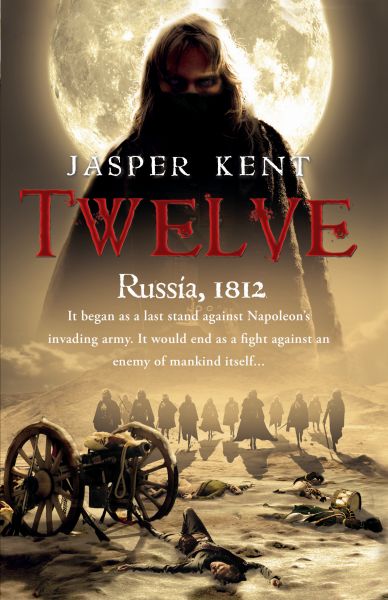
Twelve, Jasper Kent
Cover of Twelve by Jasper Kent.

Some of my favorite stories have been a blend of true event and the writer’s imagination. In 2011, I had a blast watching X-Men: First Class where the story put mutants right in the middle of the Cuban Missile Crisis. And Jasper Kent’s Twelve had even a catchier premise: Napoleon vs. Russia aided by vampires disguised as mercenaries, I knew I had to read that novel.

I started reading Twelve (right in the bookstore queue actually) and the prologue drew me further in. It started with a folktale that was creepy and delicious enough for me to continue reading on my way home.

Right after the prologue, though, the narrator turned into first person, but that seemed OK. The narrator, also our protagonist, was an experienced Russian soldier who was a part of an elite group whose members could survive in the battle field or as spies.

These Russians were desperate. Napoleon had marched further way further than Russians ever thought possible, an experienced soldier offers enlisting the help of these mercenaries’, who work as a group, stay loyal to who hire them and they get results by whatever means necessary. And they don’t cost anything, since they live off whatever they find around.

At first the rest of the group is reluctant but desperate times call for desperate measures, and the group arrives. They get the job done, even though they follow their own methods. Things naturally go awry when our narrator realizes that the reason each of these mercenaries can kill so many man at a time is that they are vampires!

So far, so good. The premise is cool, and it is the kind of story I wish I could have come up with. Those are my favorites- the ones that make me wish I had created. But there is one problem with the book, and it is a big one: there is simply too much narration.

At some points the narrator goes on and on and on and on….to the point that I wonder whether the author read some of those how to write a novel books, saw that you are advised to balance narration with dialogue and action and is rebelling against the advice, proving a bestseller can happen with too much narration as well.

I am not saying there is not dialogue. The dialogue is good, and there is plenty of action. After all, there is a war going on and yet our protagonist has noticed that his strongest allies are the enemies of humankind in general.

But the protagonist ALWAYS lets us know exactly what he thinks. Of everything and everyone. That just puts roadblocks to an otherwise enjoyable route. And after you pass one roadblock and just start to speed up, you run into the others.

This much narration doesn’t work in your favor, especially if the narrator fast becomes one of your least favorite characters.  He is self-righteous, he views all things in black and white, he believes in killing for war, and yet he is outraged when a vampire gets to kill a French soldier. So torture is OK, losing vital organs to war is OK, suffering terrible deaths by the hands of a man is OK, but being killed by a vampire? God forbid!

But it is not just his attitude or ramblings that go on for ages. It is also how the writer describes locations and people and interactions in so much detail again and again and again. Are you bored with my repetitions already? Good. Now you know how I feel.

I love the story. I love the villains. The guy who brought in the villains is also very interesting. Yet it feels like work reading through all of the words to get to the more exciting bits.

I feel like the novel could miss a hundred pages, and end up a superior book that doesn’t stall. A great story is drowned and dragged through narration.

I can’t tell you not to read the book as it is too good a premise. I’m, however, saying I’m a little disappointed, because I had expected to finish the book in two days. Several weeks went by, and I had to give a break. After all there are only so many descriptions of Moscow or the guys’ feelings for his mistress I could take.

So if you are one of the writers who love dialogue but have more trouble with narration, or if you are a reader who doesn’t like when an author is a less then concise, this may not be the book for you.

But for some a little-delayed entertainment, it is good. But I was so excited after the prologue, I was sure I’d buy this book’s sequel, 13 Years Later.  Now I’m not so sure. Especially since I know the protagonist will be the same.

Filed Under: Writing Tagged With: how not to write a novel, how to write a novel, jasper kent, jasper kent twelve, jasper kent twelve review, narration, narration in novels, writing a novel

This Writer’s Solution for Writing What She Wants: My Guest Post on Carol Tice’s Make a Living Writing

Posted on February 8, 2012 Written by Pinar Tarhan

writing what you love

You know I took October off from writing because I was taking the CELTA course, and then I returned to writing with a vengeance. I’m 19.000 words into my first novel, I’ve been a regular contributor at Europe A LA Carte travel blog, redesigned and revitalized my blogs. Oh, yes, and  I’m really excited to announce that I have a guest post published on Carol Tice’s Make a Living Writing Blog.

Unless you’ve been living under a rock as freelance writer, Carol’s is one of the most popular blogs for writers and it is among my favorites (as One Freelance Writer’s Surprising Strategy for a Revved-Up Career,  as well as being one of the favorites of WritetoDone and Copyblogger.)

I’m having a blast with my writing right now. I no longer have to worry about applying to gigs I’m not passionate about because I have to pay the bills. I no longer have to choose between fiction and non-fiction. I also no longer suffer from the lonely writer blues. So what the hell changed?

Keeping a full time a job gave me depression. Not getting a regular paycheck affected my writing, motivation and productivity badly. So instead I found the perfect solution: I took a job in a field that really excited me, paid me enough without taking too much of my time  and filled in all the missing pieces. I explain it all on One Freelance Writer’s Surprising Strategy for a Revved-Up Career.

Looking forward to your comments!


Image via baneofyourresistance.wordpress.com

Filed Under: Writing Tagged With: carol tice, freelance writing, guest posting, make a living writing, managing your writing career, wite what you love, writing

How to Make Your Editor Happy with Linda Formichelli’s Editors Unleashed – UPDATED

Posted on February 3, 2012 Written by Pinar Tarhan

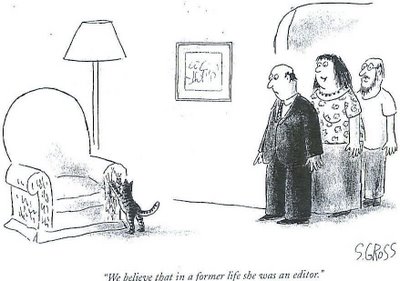
cartoon about editors

Image via 4.bp.blogspot.com

The Holly Query

Your relationship with an editor usually starts with the query letter. She might like it and decide to assign you to the topic, or she might just decide that it is horrible and send it to the bin. Given their importance, writing queries can be scary.

Writing queries used to freak me out. I can’t say I am now in love with the process of querying, but at least they don’t scare or overwhelm me anymore. I realized that the hardest part of writing a good query, at least to me, is finding that awesome angle that will fit the magazine readers’ needs and wants correctly while managing to describe this angle in a compelling way in your query. Of course even if you think you got it right, there is the possibility that topic was recently snatched by another writer, and you were a little late.

The Query Is Only the Beginning

But let’s assume that you do know how to send the right kind of query, and let’s assume that you got the job. Congratulations, you’ve got one foot in the door. But now that you started a relationship, you need to work on maintaining a good one by delivering quality work on time, written, styled and formatted according to the parameters you discussed with the editor. And after you come through, sending a second query to that editor will be easier. The editor himself can even call you and ask if you want another assignment.

So you need to do your homework well, send the impeccable query, and listen to the editor.

So far, so obvious, right?  I mean did you really need to be told to check your grammar or not attempt a query before knowing your way around the magazine, and its writer’s guidelines?

What Not To Do With and After The Query- Editors Unleashed

But  apparently some writers do, otherwise Linda Formichelli’s Editors Unleashed would not have needed to cover so much ground with the editor pet peeves.

In this entertaining and informative e-book, she has talked to several editors about how some writers infuriate them during and after query.

But the beauty of this book isn’t that they only share writer “horror” stories, but also the good stories where the writer got and completed the assignment with grace and continued to work with the editor.

There are lots of resources on how to write successful queries, and Linda Formichelli’s free packet of 10 query letters that got her assignments is one of them. It can be obtained by subscribing to her free newsletter.  Formichelli is a successful freelance writer and the co-author of the bestselling book The Renegade Writer. She blogs on The Renegade Writer.

Editors Unleashed used to cost $6.95, but now it is the second free gift for subscribing to  The Renegade Writer. This ultra-useful book  covers query dos and donts as well as what attitude editors expect from writer once the query lands them the job.

Reading this book will help you:

1)      To  get noticed by the editor and land that assignment

2)      To build and maintain a good, on-going relationship with the editor

3)      To build and maintain as a professional, reliable and easy-going writer

4)      To laugh. Seriously, some writer behavior will make you laugh.

*

Some Editor Pet Peeves- Inspired by Editors Unleashed

–          Queries with grammar mistakes and/or typos

–          Queries  that show that the writer has no idea about the magazine’s target audience

–          Queries that are far too long or far too short

–          Queries that are vague

–          Generic queries that could be sent to any magazine and yet would appeal to none

–           Queries that have the magazine’s and/or the editor’s name wrong

….

I’m sure there are more, but you get the point. While some of these are very obvious and takes a little effort on the writer’s part to get rid of them, getting the idea just right can be very tricky. To craft a query that is interesting, engaging and with a slant that hasn’t been done before is a challenge writers face all the time. But by paying attention to the tips in the book, we can transform a frustrating challenge into an activity that comes naturally to us. and getting more and better assignments as a result.


Editors, are your experiences with writers?

Writers, how are you managing the querying process I’d love to read your experiences, both positive and negative.

 Recommended Reading:

7 Great Query Letter Resources: A List of (E-)Books, Articles and Blog Links

  10 Things You Need to Do After You Sent That Awesome Query Letter

Filed Under: E-Book Reviews, Recommended Resources Tagged With: editors, editors unleashed, how to handle a writing assignment, how to work with editors, how to write a query, linda formichelli, query writing, query writing resources, query writing tips, the renegade writer, writer-editor relationships, writers, writers and editors, writing

Write Great Fiction Dialogue with Gloria Kempton

Posted on January 31, 2012 Written by Pinar Tarhan

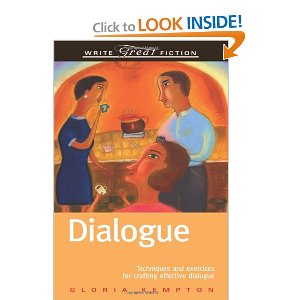
Write Great Fiction Dialogue-Gloria Kempton
Image via amazon


This Writer’s Relationship with Dialogue

I love writing dialogue. In fact, I love it so much that I only started writing a novel this year, at the age of 27 (I’ve been writing since I was 9). So despite being in love with writing, it never occurred to me to try writing a novel because I had thought that only people who could (and would) write pages of narrative got published.

It was a misguided belief, but I blame it all on my dad’s library, which was full of international bestsellers that reeked of unbearably long and detailed narratives. Of course as I grew up, I discovered a lot of bestselling writers who found the perfect narrative/dialogue ratio, as well writers whose narrative flowed so well it read like juicy dialogue.

But despite finding writers whose books I could read hundreds of pages from in one sitting, I still doubted myself. Because I like dialogue so much, I preferred writing plays over stories, and screenplays over novels.

And yet the dream of being published, seeing my book printed and on the shelves, stayed with me. And with the inspiration I got from authors like Sophie Kinsella and Shari Low, I decided to just go for it.

I love the works of Kinsella and Low because they create fun characters, interesting plots, and hilariously authentic romantic comedies. OK, call it modern romance, chicklit, escapism….whatever. I love reading those kinds of stories, as well as creating them.

But I still had my doubts. Because unlike what Kinsella usually does, my heroine is not the heart of the story. And I didn’t want a first person story written in present tense. Because the story belongs to my male protagonist as much as the female. And despite having a lot in common, they have distinctly different personalities. They are also established professionals. So I have to adjust my tone every time I switch point of view. And guess what? I am writing with multiple viewpoints.

Why I Bought Writing Great Fiction

I needed some serious help. I didn’t want my characters to sound the same. I didn’t want any boring or unauthentic lines coming out of my characters’ mouths. I also didn’t want my story to look like it is all dialogue. I also had questions about formatting…Then I stumbled upon Gloria Kempton’s Write Great Fiction – Dialogue on Writer’s Digest’s shop.

I’ve been studying the book for a couple of months, and applying its tips on my book. I´ll be going whenever I get stuck, and I’ll also use it for editing and improving my manuscript.  And here is why this is one of the best resources:

What It Offers:

  • Lots of dialogue samples from a large variety of published and successful books
  • What to pay attention when you are writing dialogue (including its relationship with narrative and action)
  • What not to do
  • Lot of tips and exercises
  • Formatting your dialogue
  • How to know if your dialogue is working
  • How not to get carried away with fancy words and useless adverbs
  • Knowing your characters’ personality type, and writing accordingly
  • And a lot more.

The Book’s Language

One of my pet peeves is people who don’t practice what they preaches. But luckily Kempton isn’t one of them, as her tone throughout the whole book is while authorative, it is also fun, conversational and personal.

You know you can trust her advice (not just because her book was published by Writer’s Digest), but also it is clear that she has used her own advice and it works. How else would it be enjoyable to study a non-fiction book without wanting to put it away?

Related Posts Plugin for WordPress, Blogger...

Filed Under: E-Book Reviews Tagged With: dialogue writing exercises, Gloria Kempton, how to write dialogue, how to write fiction, how to write good dialogue, write a novel, write fiction, write great fiction, writers digest books, writing a novel, writing dialogue, writing dialogue first novel, writing fiction

  • « Previous Page
  • 1
  • …
  • 62
  • 63
  • 64
  • 65
  • 66
  • …
  • 77
  • Next Page »

Blogroll

  • My Entertainment Blog

My Other Blogs

  • Beauty, Fitness & Style for the Fun-Loving Gal
  • Dating & Relationships in the 21st Century

Categories

  • Author Interviews
  • Author news and coverage
  • Blogging
  • Book Launches and Excerpts
  • Book News and Author Interviews
  • Book Recommendations
  • Book Reviews
  • Career Management for Writers
  • E-Book Reviews
  • Fiction Writing
  • Fictional Writers: Writer Characters in Movies, TV Series and Books
  • Inspiration and Motivation
  • Marketing
  • Marketing Fiction
  • Movie and TV Series Recommendations
  • Novel Reviews
  • Paying Markets-Web and Print
  • Productivity & Time Management
  • Recommended Resources
  • Reviews for Tools and Devices
  • Romance
  • screenwriting
  • Self-publishing
  • Story Conflicts
  • Website & Blog Reviews
  • Writer Tools
  • Writing
  • Writing Tools
  • Writing Updates

Copyright © 2026 · Focus Pro Theme on Genesis Framework · WordPress · Log in

This website uses cookies to improve your experience. We'll assume you're ok with this, but you can opt-out if you wish.Accept Reject Read More
Privacy & Cookies Policy

Privacy Overview

This website uses cookies to improve your experience while you navigate through the website. Out of these, the cookies that are categorized as necessary are stored on your browser as they are essential for the working of basic functionalities of the website. We also use third-party cookies that help us analyze and understand how you use this website. These cookies will be stored in your browser only with your consent. You also have the option to opt-out of these cookies. But opting out of some of these cookies may affect your browsing experience.
Necessary
Always Enabled
Necessary cookies are absolutely essential for the website to function properly. This category only includes cookies that ensures basic functionalities and security features of the website. These cookies do not store any personal information.
Non-necessary
Any cookies that may not be particularly necessary for the website to function and is used specifically to collect user personal data via analytics, ads, other embedded contents are termed as non-necessary cookies. It is mandatory to procure user consent prior to running these cookies on your website.
SAVE & ACCEPT