Addicted to Writing

Manage Your Freelance Writing Career While Writing What You Love

  • About Pinar Tarhan
  • Blog
  • Books
  • Hire Me: Services
  • Contact Me
  • Portfolio
  • Favorite Resources
  • Newsletter

Mixing Sci-Fi with Drama: On Writing Mixed Genres, Unlikely Couples and the Film Another Earth

Posted on October 24, 2015 Written by Pinar Tarhan

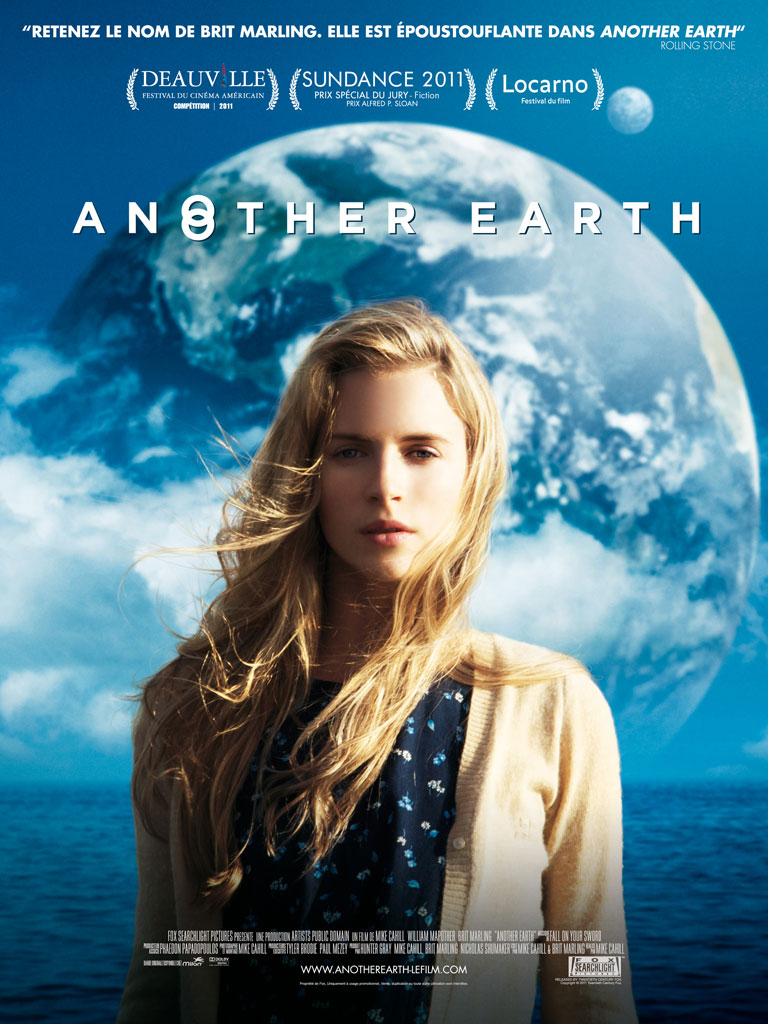
Another Earth starring Brit Marling and William Mapother
Another Earth starring Brit Marling and William Mapother. Image via lecahierducritik.blogspot.com.

I love a complicated love story. I also like watching stories where the problems aren’t what we have heard about a thousand times before. (If you tell it well, and with actors I love, I have a special place in my heart for stories we have heard before. Just avoid my pet peeves, and I’ll love your efforts for it.)

Yes, it’s difficult writing something new, or newish. Notice I didn’t mention the word original. While I think we definitely have more than 12 or so variations of stories in total, I also believe it’s like mission impossible to create something original. You can probably train to be an  Agent Ethan Hunt in the real world and survive before creating something unique.

Back to problematic couples. I read somewhere that if you are writing a love story where the guy is firefighter, the girl better be an arsonist. That’s a bit extreme, and it’d probably be better suited for an R-rated 90s thriller, but we don’t have to take it literally.

Some of my favorite TV and movie couples do have backgrounds or presents that make them star-crossed (or arsonist vs. firefighter):

  • Vampire and Vampire Slayer (Buffy The Vampire Slayer)
  • Werewolf and Vampire (The Vampire Diaries)
  • Seemingly Crazy Cabbie – Lawyer (Conspiracy Theory)
  • Married Princess vs. Her Husband’s Best Friend/Royalty Doctor (A Royal Affair)

I also love couples who are actually perfect for one another but can’t notice this for some reason, but that’s another post.

And sometimes, one plotline that would seem cheesy, overdramatic or plain unbelivable becomes one of the most touching and interesting romantic stories told because the drama and romance are balanced with sci-fi elements, and it’s more about surviving guilt and tragedy than romantic bliss.

One such story is the 2011’s Another Earth, written by Brit Marling and Mike Cahill. Directed by Mike Cahill, Another Earth gives us a pretty unlikely scenario both in its romantic and sci-fi plots:

Just as another Earth appears, 17-year-old Rhoda (Brit Marling) celebrates her acceptance at MIT. On her way back home, drunk and fascinated by this second earth, she loses control of her vehicle and crashes into the car of John Burroughs (William Mapother), killing his pregnant wife and 5-year-old son, and putting him in a coma.

She’s out after four years in prison. She’s still fascinated by this second earth, but this time for different reasons. Contact is made, and it’s discovered that the inhabitants are us – our parallel selves. Space travel is planned, and Rhonda tries her luck by submitting an essay.

As expected, she finds it hard to readjust to the world and deal with the guilt. She takes a cleaning job to be away from people. She also researches the accident, and finds out John, who used to be a respected composer and professor, is awake.

She goes to his house to apologize but ends up telling him that the company she works for offers free cleaning trials.

Rhoda keeps coming, and they slowly connect. They become pretty much the only person the other feels good around again.

As the second earth becomes closer and competition results approach, we are left one of the most interesting humane conflicts.

So do you tell the guy you’ve just started a relationship with that you’re the one who killed his family? Do you just leave him in this world to discover your other self in another earth?

*

There’re many questions the movie brings to mind, and we will get to that in a bit.

But let’s talk about how sci-fi takes the romance to another level, and the romance saves you from delving too much into the sci-fi ,which as a fan of the movie, I loved.

When I wrote about the movie on Facebook, one of my friends suggested it sounded like a lifetime movie – if not for the sci-fi. And on the surface, it might sound like that. But it is not. And to give more details, I will give spoilers. You’ve been warned. (It’s not to late to save the post, watch the movie and come back.)

They don’t move on with each other, not entirely. He still has a big whole left in his heart. Granted, he could move on a little with her, had she not told him the truth. However, she can’t let him ask her to stay without telling him what she has done.

And the end couldn’t have felt more right or bittersweet: she gives him her ticket after discovering that the two earths have a four-year time difference. He can go instead of her, and with luck, his family will still be alive.

The last scene is even better. She’s visited by her Earth 2 self. She seems more put together. Better dressed. Like how she would have looked if she didn’t have an accident and went to college instead of prison.

Of course how she ended up on Earth 1 is up to each viewer’s interpretation.

I’d like to think she got some closure by knowing she didn’t crash, or at least didn’t kill people.

I’d like to think John got his closure by seeing his family is fine and all right.

The cynics believe John might challenge and try to replace the second John.

I’d like to think they will somehow have the technology and he’ll come back. Otherwise it’ll be a weird two of the different-but-the-same dad situation.

What Another Earth Makes Us Ask

Is it enough or not that she got only 4 years?

It was an accident, but she was drunk. She was distracted. Frankly, as a judge, I would have been more furious that she was smart enough to be accepted by MIT and stupid enough not to have called a cab/parent. (Yes, there wouldn’t be a movie otherwise, but the amount of sentencing is fair debating ground.)

And I don’t think she thought it was enough either. She was understandably a mess, deliberately injured herself, and she wanted an alienated presence.

She kind of lived like she was still in prison most of the time.

Should she have gone to apologize?

Would you want an apology in a situation like that? Would that help anyone? Reliving the unthinkable? Would it help her move on or make her feel even worse after making him relive things?

Hell, he could have killed her right then, and she’d probably not fought.

Should she have told him who she was?

Which is more selfless- letting him live a happier lie or make him not only face the tragedy again with vengeance?

How would you feel if you’d started a relationship with the person who accidentally killed your family?

As opinionated as I’m about most things, part of me wanted him not to know. He was just starting to live a little again.

Of course the right thing would be to either tell him the truth right away or not contact him at all. Because let’s face it, if he wanted a confrontation, he’d have made it happen. (We learn in the movie how he prevented it, and how he didn’t know her identity.)

But probably more prominently:

Would you like to meet the other you? What would you say?

I’m still thinking. I’d love to hear your thoughts in the comments.

*

So there you go. A very humane and engaging story that mixes romance and sci-fi. I recommend it, though a bit of suspension of disbelief is required as with most movies.

And if you have other favorite unlikely onscreen couples, please share in the comments.


Filed Under: Fiction Writing, screenwriting, Story Conflicts Tagged With: another earth, another earth movie, brit marling, mike cahill, sci-fi and romance, william mapother, writing mixed genres

The Leftovers: On Writing Mysteries You Might Not Explain

Posted on September 23, 2015 Written by Pinar Tarhan

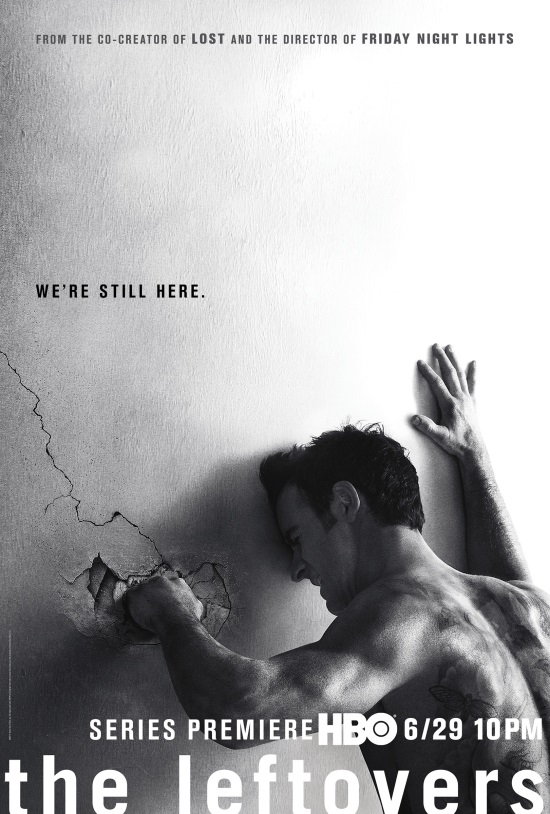
the leftovers poster
Image: HBO. Depressed yet by the poster?

I’m hooked on The Leftovers, and boy, did I not see this coming! When I first saw the trailer, I thought it was interesting, yet TOO depressing. Then I ran out of shows to watch and decided to give it a shot. I’m glad I did.

OK, so it has scenes once in a while that I’m not in love with or characters whose behaviors I find unrealistic. But I stick around because the acting, soundtrack, how everything is tied together, and most scenes are just plain incredible.

And man, can Justin Theroux act! (This is my first Justin T. experience. I was pretty familiar with Amy Brenneman, Liv Tyler and Christopher Eccleston from before). Also, love Carrie Coon’s storyline and acting.

But this isn’t a review for a show that I’ve grown addicted to. It’s about the mystery behind the premise and mystery-writing in general.

So let’s talk about the premise of The Leftovers for a bit:

%2 of the world’s population disappears one day. No one knows what happened or why. The Leftovers deals with the reactions of the inhabitants of one New York town, and mainly police chief Kevin (Justin Theroux) and his family.

Kevin has at best a strained relationship with his teenage daughter Jill who goes to weird parties with her best friend Aimee. He also has a sleeping problem, drinking problem, a former police chief dad in the psychiatric hospital, an estranged young adult adopted son and a wife in a strange cult-like group protesting the attempt to move on from the disappearance.

The church has emptied, a strange man is going around shooting dogs, his cop friends and mayor are questioning Kevin’s sanity. Kevin deeply misses his wife whose “cult” doesn’t have room for even speaking.

The Leftovers is definitely more about the aftermath of the event than the event itself. Still, I’d like to know.

Not everyone feels the same.

When I visit the message boards, some people speculate about the reason behind the reasons. The usuals come to mind: God, aliens, alternative timeline, time travel… Some argue it doesn’t matter because the show is about the aftermath.

I disagree. I think it matters. At least to me.

Have you ever written something, mystery or something else, without knowing the reason behind it? While we might not necessarily know what our characters have for breakfast or whether or not they have a middle name, we know why they do what they do. If we didn’t, we wouldn’t be able to craft the entrie story.

But just because we know, it doesn’t mean we all share it with the audience. Personally, I’m all for sharing. Because as a viewer, I love knowing.

Sometimes it’s not necessary. When you are watching an episode of Castle, you don’t care that much about the killer’s reasons or psychology. You are just more into the banter between the characters. It’s a lot of fun. Hell, during the first seasons I didn’t need a comedy show to make me laugh or smile that much.

Yet I find the Canadian cop show Motive inherently more interesting than not just Castle, but pretty much any other cop drama/mystery show I’ve watched. It might deliver that much humor, but it’s fine. It shows you who did it from the first scene. The cops don’t know the murderer. You do. But you’re as clueless as the cops as to the motive, and you figure it out together. You get to know the killer. And more often than not, you understand. You might not approve or forgive, but you understand. Mysteries are unturned. Reasons are shown. I’m one happy viewer. I wish I’d created Motive every time I watch an episode.

The Leftovers isn’t a crime drama. It’s a mystery drama with the potential for fantasy elements. But we can’t exactly let of the disappearance because every single episode shows us the effects. I frankly want to know.

Now, the storytelling and acting are so fine that I’ll hang around even though it’s never explained. I’d just be more content if it was.

*

What about you? How do you feel about mysteries left unturned? Please share your feelings as a viewer and/or a writer in the comments.


Filed Under: Fiction Writing Tagged With: the leftovers, the leftovers cast, the leftovers mystery, the leftovers tv series, the leftovers writing, writing mystery

A Brainstorming Activity That’ll Help You Sell Your Screenplay: Make Your Protagonists More Active

Posted on August 30, 2015 Written by Pinar Tarhan

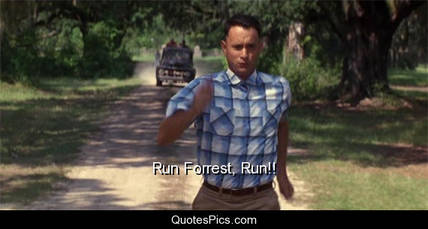
OK, you don't literally have to make them more active, though, depending on the genre, you might have to. :D
OK, you don’t literally have to make them more active, though, depending on the genre, you might have to. 😀

It’s a rational idea, isn’t it? Make your protagonists active, and the audience will be more engaged.

Generally, it’s not a problem for me. My characters tend to be lively, ambitious and passionate. Even the ones who aren’t ambitious about their career, they’re big on their right to party, live and love freely and to the fullest.

But some characters aren’t that easy. What if there are mental or physical blocks? What if they are in a place in their lives where they lack the energy or the will to live more ferociously? What if it’s more natural for them to just react?

I hear you.

I was recently (rightfully) challenged by several readers to make my protagonist more active. And even though she did a lot of major things, most of those happened off screen, making her seem passive.

So I rose to the challenge and realized there are many scenes where I can shake things up, without going against the heart of the story.

Making my severely depressed character more active (from another story) is, however, more difficult because he already does something huge that affects everyone, but I’m brainstorming ways to increase his activeness.

As much as I resisted this after I first read the notes, when I imagined him pursuing things, I was more hooked by the story as well.

So while you don’t literally have to make your protagonist run toward things (or escape from things by running), it makes sense to show them as taking charge.

What can you do to make your protagonists more active?

Don’t worry, though. If you have already created a Bryan Mills-type character (Taken) who starts getting active even during his conversation with his about-to-be-kidnapped daughter, you just might be okay.


Filed Under: Fiction Writing, screenwriting Tagged With: screenwriting, screenwriting tips, sell your screenplay, writing better protagonists

How (Not) to Critique Another Writer’s (Fiction) Work As a Writer

Posted on August 21, 2015 Written by Pinar Tarhan

cool-cartoon-9173506

I have a writer’s group. It’s not my group per se, but when a fellow blogger started a meetup group I couldn’t resist. It’s not strictly a critique group, though. It’s more a safe and fun place to talk about all things writing.

I’ve been to two meetings and have made some good friends and potential future collaborators.

At our previous meeting, they decided I might as well share the first couple of pages of a feature screenplay. I was psyched because there were a few points I’d like different opinions on. So I gave my elevator pitch and talked about my first 2 scenes, but I couldn’t get any further than that.

A fellow screenwriter didn’t like (or more like didn’t approve of) the transition between two scenes. He was adamant it had to be more obvious than what I had presented. I was adamant the transition was obvious enough.

We didn’t argue, mind you. It was a friendly, polite yet stubborn discussion. It looked like I wasn’t receptive to the feedback. And I wasn’t. Here’ why:

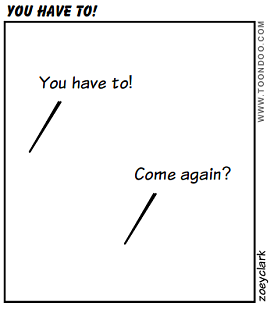
He kept saying “You have to….”.

I didn’t have to do anything. I’d thought about his suggestion before, and I had decided against it. I still was partially considering a similar approach, but I kept saying no.

I really couldn’t see the value of his advice objectively, because when you start any of your feedback sentences with “you have to”, chances are you won’t persuade anyone, unless you’re a studio executive holding my contract, and what you’re suggesting is highly radical and unacceptable.

So in the spirit of giving and receiving feedback more effectively, here are a few sincere pointers from this writer:

  • Keep in mind it’s *all subjective. (More details are below.)
  • Don’t start your suggestions with “you have to”, no matter.

* There are few things in writing that’s set in stone. For instance, whether it’s a novel or a screenplay, there’s certain formatting rules you need to abide by. So if your writer friend or mentee has the formatting wrong, by all means, tell him what he has to do. But any artistic choice that has nothing to do with formatting or expected length (don’t turn over a screenplay that is 300 pages) is just that: a choice.

  • Keep it friendly and polite, and even if you hate it.

“That sucks” is not constructive, and not the slightest bit creative. Where’s the writer in you?

*

I’m not saying you have to lie or sugarcoat. But if you’re giving feedback, I’m guessing you care. So why not try to make it work?

So try these instead:

“These parts don’t work for me because….”

“I don’t like these because ………….”

You can even say you hate it, but many scripts have their redeemable/positive points, so pair the hate with the positive.

I’m not saying you can’t ever be brutal, but honestly, unless you’re given permission to be so (and possibly even then), it won’t really have the effect you’re aiming for.

This advice isn’t about being nice or cute. It’s about making sure you don’t waste your time, breath and effort.

What do you think? Is it just me, or do you also not welcome advice with open arms that start with “you have to….”?

Related Posts Plugin for WordPress, Blogger...

Filed Under: Fiction Writing, Writing Tagged With: give feedback on writing, giving feedback, writing, writing critique

  • « Previous Page
  • 1
  • …
  • 5
  • 6
  • 7
  • 8
  • 9
  • …
  • 16
  • Next Page »

Blogroll

  • My Entertainment Blog

My Other Blogs

  • Beauty, Fitness & Style for the Fun-Loving Gal
  • Dating & Relationships in the 21st Century

Categories

  • Author Interviews
  • Author news and coverage
  • Blogging
  • Book Launches and Excerpts
  • Book News and Author Interviews
  • Book Recommendations
  • Book Reviews
  • Career Management for Writers
  • E-Book Reviews
  • Fiction Writing
  • Fictional Writers: Writer Characters in Movies, TV Series and Books
  • Inspiration and Motivation
  • Marketing
  • Marketing Fiction
  • Movie and TV Series Recommendations
  • Novel Reviews
  • Paying Markets-Web and Print
  • Productivity & Time Management
  • Recommended Resources
  • Reviews for Tools and Devices
  • Romance
  • screenwriting
  • Self-publishing
  • Story Conflicts
  • Website & Blog Reviews
  • Writer Tools
  • Writing
  • Writing Tools
  • Writing Updates

Copyright © 2026 · Focus Pro Theme on Genesis Framework · WordPress · Log in

This website uses cookies to improve your experience. We'll assume you're ok with this, but you can opt-out if you wish.Accept Reject Read More
Privacy & Cookies Policy

Privacy Overview

This website uses cookies to improve your experience while you navigate through the website. Out of these, the cookies that are categorized as necessary are stored on your browser as they are essential for the working of basic functionalities of the website. We also use third-party cookies that help us analyze and understand how you use this website. These cookies will be stored in your browser only with your consent. You also have the option to opt-out of these cookies. But opting out of some of these cookies may affect your browsing experience.
Necessary
Always Enabled
Necessary cookies are absolutely essential for the website to function properly. This category only includes cookies that ensures basic functionalities and security features of the website. These cookies do not store any personal information.
Non-necessary
Any cookies that may not be particularly necessary for the website to function and is used specifically to collect user personal data via analytics, ads, other embedded contents are termed as non-necessary cookies. It is mandatory to procure user consent prior to running these cookies on your website.
SAVE & ACCEPT