Addicted to Writing

Manage Your Freelance Writing Career While Writing What You Love

  • About Pinar Tarhan
  • Blog
  • Books
  • Hire Me: Services
  • Contact Me
  • Portfolio
  • Favorite Resources
  • Newsletter

Novel Cover Reveal and Blurb: A Change Would Do You Good

Posted on December 21, 2020 Written by Pinar Tarhan

My second novel launch is on the way!

In this post, I’ll reveal the cover and the blurb. Soon, I’ll be back with another post featuring the first chapter.

The novel is called A Change Would Do You Good, and it’s a romcom drama set in California. The first couple of scenes take place in LA, and then the protagonist moves to San Diego.

Enjoy!
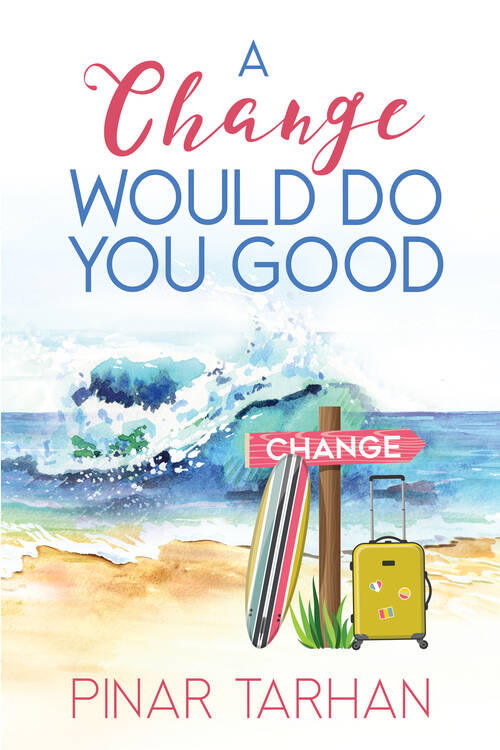


A Change Would Do You Good Novel Blurb

Janie desperately needs a change, and she needs it yesterday.

Ever since her boyfriend died and her best friends moved to Canada, she’s been lost and unable to enjoy life.
So she gives her life a complete makeover. Her new job and apartment are great, but her colorful neighbors will be a challenge to get used to.
Michelle is agoraphobic, and her car crash-happy son Ian is obsessed with curing his mom.
Part-time model/fashion designer Ben seems to be competing for the worst boyfriend award.
Ben’s miserable girlfriend Linda hates her career and relationship.
Goth metal chick Ashley loves drugs, guns, and weird parties.
Lackluster cops Sam and Tom are after a more exciting life.
Luckily Janie has also met Greg, a handsome therapist she instantly bonds with. And her downstairs neighbor Kevin is a pro-surfer with the looks of a Norse god.
With all the antics and chaos going on, only one thing is certain. Her neighbors will provide her with more distraction and change than she was ever ready for, including an epic romance.
***
Stay tuned for the first chapter! 🙂

Filed Under: Writing Tagged With: a change would do you good, book launch, romance novel

How to Decide Which Writing Advice to Follow (and Which Writing Books & Courses to Buy)

Posted on September 9, 2020 Written by Pinar Tarhan

  • Please note that this post might contain affiliate links.

There is a lot of writing advice out there. Some are free, some paid. And they all take time to study and implement.

For the sake of clarity, by writing, I mean both fiction and non-fiction. And the term writing advice includes both the craft and the business (marketing, administration, selling, etc.) side of things.

You can speed up the learning process by buying books and courses, but it still takes time to study and implement the advice from your purchases.

Luckily, this article will help you answer the questions:

“How can I decide which writing books and courses to buy?”

“Which writing courses should I take?”

To decide which writer’s advice (and educational products) can work best and most for you, you need to look at four things.

– The Writer’s Professional Experience

You probably wouldn’t benefit from a writer’s points on self-publishing if she never self-published.

Likewise, you can’t likely learn much from a writer about magazine writing if he never wrote for magazines.

But you don’t need the advice-giver to be a six-figure writer if your immediate (and viable) goal is to make your first sale.

You get the idea.

Before taking them up on their offers and tips, ask:

“Has this writer accomplished/tried/experienced what they are talking about?”

If they have, you might listen to them.

Why “might” and not “should?”

There are two other factors you need to consider before jumping in.

Sometimes, their experience is enough. Especially if the author is generously giving away this information for free.

But often, their success alone won’t tell you enough on whether their writing advice is applicable for you.

Let me explain this in the next section.

– The Writer’s Personal life

“But, Pinar, how the hell is a writer’s personal life relevant?” you might ask.

Take productivity tips.

A lot of successful writers talk about how they get up 2-3 hours before work (or everyone else in the house get up) and write.

This is a valid (and sometimes the only useful) strategy if you are married with kids, for instance. Also, it probably helps if you are a morning person.

Because waking up 2-3 earlier than anyone else usually amounts to waking up at 5 am or before.

John Grisham did this when he was writing his first book, A Time to Kill. He worked as a lawyer, so before work was the best (if not the only) time to work on his novel.

But I won’t take this advice despite Grisham being immensely successful and my favorite author. There are three reasons:

  • I don’t have a full-time office job. Writing is my full-time job/career.
  • I am not a morning person. (This is more about personality, but still.)
  • I am single.

There is no sound reason for me to get up so early. In fact, doing so would negatively impact my productivity and the quality of my work.

Because I don’t have kids, I can find quiet whenever I want.

The only time I am up at 5 and doing something is when I have an early flight. And that early flight was booked because I didn’t have a choice. Early flights are usually cheaper, and you get more daytime when you don’t have a long vacation ahead.

I did it enough times now that I can function enough to get a cup of coffee before my flight and just get to my destination. That’s it.

Don’t expect me to write anything – not even a shitty first draft.

But if you can function in the morning, this is good advice.

If you have kids and this is the only time you can carve for your writing, this is invaluable wisdom.

You should be able to adjust the advice to make it work for you.

So yes, a writer’s personal life matters in this sense.

Another example is health issues. Yes, being single and without children helps my productivity. But you know what hinders it? Health problems.

I have many, and I wrote about it in detail in the post A Love Letter to All Freelancers with a Health Condition.

I read this excellent book on becoming a six-figure author by Tom Corson-Knowles, Secrets of the Six-Figure Author. But not all of his advice is applicable.

For instance, there’s a section he calls work-life balance a load of crap (to paraphrase), and I agree! He talks about how some days might be just work and some just family and how that’s fine.

But he also talks about this guy who achieved amazing success by working like 16-hour days for 5 years. And no matter how much I love my work, that isn’t a feasible thing to do for me.

I think that’s advice for ultra-healthy people who don’t suffer from sleep issues. If you are one of those rare souls who sleep for four hours and wake up totally refreshed, you could try pulling one of those days to see how it fits.

But I can’t fall asleep as soon as my head hits the pillow. I wake up during the night, and sometimes it takes a while to get back to my dreams. And even 8 hours isn’t enough for me, because my sleep is difficult and fractured.

I also have to eat and take some breaks during the day. I have never pulled, and I suspect I’ll never will pull, a 16-hour workday, and I’m fine with that. (I strongly doubt people can get a lot of quality output from such days, especially if done regularly.)

But I’m no Tim Ferriss, either. He is one of my favorite bloggers and non-fiction authors. I loved his The Four-Hour Work Week.

However, I read it to make my writing business more efficient. Not to actually only work for four hours a week! Because I love my work. If I can keep going, I will. It is fun!

(For perspective on the balance of things, I do take time off. And there are days I don’t really work, so don’t worry. 🙂

Another advice I can’t yet take from Corson-Knowles’ book is to “get an A-team for my book.”

Now, this is brilliant advice, and it’s backed by many other successful authors as well.

Since no one is skilled at everything, you can’t produce an amazing book and rock your marketing and manage your administration efficiently all on your own.

But hiring the right people to work with you on your publishing journey is expensive.

Formatting can cost money. You definitely need to hire a cover designer if you’re not a graphic design whiz yourself. You might need to hire an editor. You might need a proofreader. You might need a web designer. You might need a virtual assistant.

You get where I am going this.

If you don’t already have money saved up or have a constant influx of cash coming from your other work, this is not feasible for a writer/self-publisher who is just starting out.

It’s good to keep in mind for the near future.

But for now, if you can’t delegate, you’ll be wise to prioritize. I recommend hiring a cover designer. You might choose to hire someone to edit if editing isn’t your strong suit while you are good at design.

So details about your life and the details of the advice-giver’s life matters.

One final example:

When you don’t have an email list of thousands of subscribers, the first marketing advice you need to implement isn’t marketing to your list. It’s to try and grow that list.

On the flip side, if someone on a shoe-string budget and a small/no email list became a bestseller, you might want to listen to their strategies first when you are starting out without an excessive budget.

– The Writer’s Personality & Taste

a. Personality

I love reading about habits so I can improve my life. So far, my top 3 are: (I haven’t included the books’ subtitles for the sake of brevity.)

  • The Power of Habit by Charles Duhigg
  • Atomic Habits by James Clear
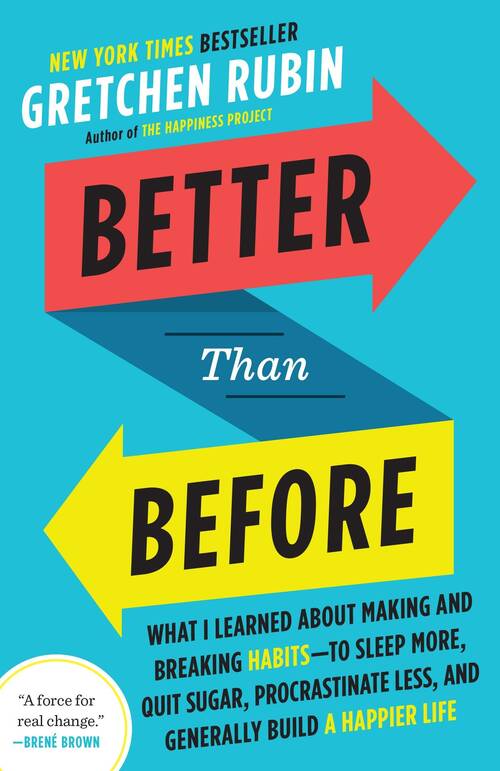
  • Better than Before by Gretchen Rubin

Gretchen Rubin’s book’s my absolute favorite among the three, however.

Because when talking about how to change/improve/ditch your habits, she writes through the lens of 4 distinct personality types. These are Obliger, Upholder, Questioner, Rebel. (She calls them tendencies, and has written a book on them as well.)

According to the book Better than Before, a Questioner meets inner expectations, not outer ones.

A rebel resists both inner and outer expectations. They live for freedom, and they want to make their own choices.

I’m a Rebel with Questioner tendencies. This mean you need to tell me the why of things. I also tend to question rules and routines set by other people, and sometimes even myself.

So keeping my personality type in mind, consider the ubiquitous writing advice of “get an accountability partner.”

Remember, I resist outer expectations. And I tend to resist inner ones too.

What are the odds my productivity will hit the roof when I get an accountability buddy?

I don’t care that you see my progress or not. I don’t really care that I told you I would write 1000 words that day, but I couldn’t for some reason. I care that I didn’t write efficiently, not that I told you about it.

I work best (and I am at my happiness) when I keep my promises to myself.

On the other hand, let’s take Obliger and Upholder.

Upholder meets both inner and outer expectations. Obliger meets outer expectations but resists inner ones. If you are an Obliger, an accountability partner might work wonders in helping you achieve your writing goals!

And this is why you need to keep your personality in mind when you are thinking about which advice to follow and why.

This will also enlighten you about why certain tips didn’t work for you.

Your success depends on it.

b. Taste.

For a while, I didn’t think I could write a novel. My father’s library mostly consisted of literary authors in love with their own voice and narrative abilities. You know the kind with many awards and regarded as national treasures who describe a tree for 10 pages… just because?

Luckily, I later discovered genre fiction in middle school. I found that I am a plot person. Someone who loves to read/write stuff where authors don’t shove down irrelevant details down my throat.

Same goes with travel writing. I thought I could never write a travel piece because many of the travel pieces I stumbled upon read like pages from literary novels. Full of sensory details woven in a way I don’t like to read, because I don’t see/notice those things.

I will notice and comment on how gorgeous a flower is. I’m not going to write a love poem for it.

You get the idea.

This doesn’t mean that kind of writing is bad. It just means it’s not my style. It’s not who I am.

And just like your personality and taste play a big part in what kind of writing path you forge, it should also dictate who you should learn from.

I mean the relevant stuff, of course.

Just because I’m a glam metal fan doesn’t mean I can’t learn from a writer who is into classical music. 🙂 But it does mean I probably won’t be listening to classical music to get in the mood when I write.

Charles Duhigg’s The Power of Habit provides a great background on the science and research of habits in a fun way. It also features true stories of people who changed their habits for the better.

James Clear’s Atomic Habits is ground-breaking as it shows how tiny changes in behavior lead to significant results in the long run. He also has an inspiring blog and email newsletter.

But if you’ve always wanted to change, read book after book and still failed to see tips that work for you, I recommend starting with Gretchen Rubin’s.

And remember, if you learn how to improve yourself in one area based on who you are, you can do it in all areas.

Your future writer self will thank you for it.

-The Time(liness) of the Advice 

Watch out for when the writer gave the advice.

Some tips are evergreen. It doesn’t matter if the writer said it today, 5 years ago, 10 years ago, or all the way back in 1892.

For instance:

“To become a good writer, you need to read.”

This has been and will always be true.

or

“Keep something that you can save your ideas in/with at all times.”

It doesn’t matter if it’s a pen and paper or your smartphone. But you don’t want to lose precious ideas.

On the other hand, when we are talking about trends and what works now, it’s wise to check if the same tips are still working.

*

There you go. Four areas to watch out for when you are taking writing advice and investing in educational material.

How do you decide on which writing advice to follow?


Filed Under: Career Management for Writers, Writing Tagged With: better than before gretchen rubin, how to know which writing advice to follow, writing advice, writing tips

How to Write a Memorable and Non-Tragic Romance (And a Free Book Chapter!)

Posted on August 10, 2020 Written by Pinar Tarhan

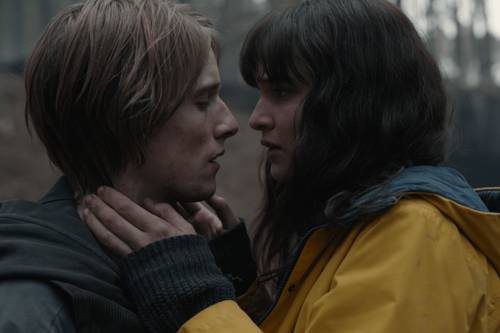
Jonas and Martha Dark
You haven’t seen star-crossed until you have seen Jonas and Martha from Dark. Image via FilmLoverss.

Have you seen the TV series Dark? Dark is a highly fascinating and addictive German mystery series that revolves around time travel and whether it is all a big repetitive loop.

Obviously, it is so much more than that, but there are so many brilliantly woven storylines and interacting complex characters that saying any more could result in a spoiler.

Give it a shot.

So what does have Dark have to do with romance? In addition to having some intense and shocking romantic storylines itself, the “loops” and how certain things repeat themselves reminded me of how a lot of people write romance stories, especially tragic romances.

Loops can be understood, loved, appreciated or expected with science-fiction. (Not that Dark is predictable.) But with romance?

Now, being predictable and repetitive aren’t bad in and among themselves.

As a huge fan of romantic comedy, I am quite fond of happy endings, original meet cutes, and the “two strangers have to spend time together in the most unexpected/unorthodox ways” situations.

You almost always know where certain things are going, and you welcome it.

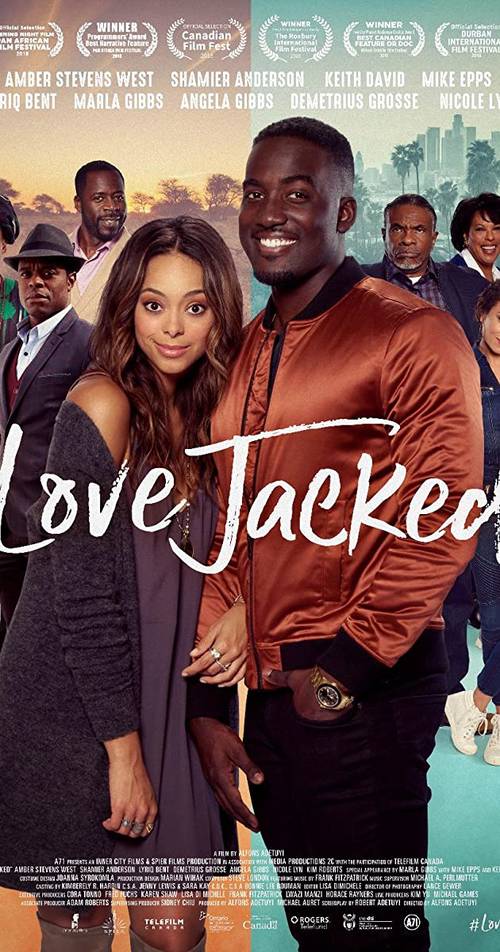
Love Jacked image via Imdb.com

In the adorable 2018 romcom Love Jacked, Maya falls in love with a South African man and gets engaged. But when he cheats on her, she has to pretend pool hustler Malcolm is her fiancé to save face from her critical father. But now Canadian Malcolm has to pretend he is South African and sell it to the African culture obsessed uncle of the family…

Yes, we all know what will happen to Malcolm and Maya. Imagine how disappointed we would be if the movie ended like,

“Thanks for your help. See you never.”

“Yeah, sure thing. Best of luck in your life.”

Yikes.

Or, you know, if Maya learned she had a tumor and six months to live.

Exactly.

We love romcoms because they tend to be funny, uplifting, hopeful, and romantic. And there is a lot the writer can play with while bringing freshness as the characters grow more attracted to each other.

You can do the same with romantic dramas, while of course the comedy will be gone or diminished.

But sometimes, the writer seems more interested in making the audience cry or making their story more memorable by making it tragic that the story no longer feels authentic. The journey of the characters and the conflicts they face feel forced.

Or they just seem like you saw it a million times before, and not in a way that you enjoy.

Familiarity is a good thing as long as it is welcome.

Let’s combine certain elements and you tell me if you are bored yet.

Boy and girl meet. Fireworks. But one of them is reluctant to start something because – drumroll! – they have cancer. Eventually, the sick character will get over their fears. These two will be together until death tears them apart. But, oh, the surviving one will have grown and will carry the memories.

Do you want to read or watch this story?

Probably not. Not unless I create two very compelling characters, come up with highly unlikely but exciting scenarios for their dates and encounters and their reactions, and whip up witty dialogue.

Then, if I’m making a film, cast two of your favorite actors. Shoot gorgeous cinematography. Get a skilled director. Invest in an amazing soundtrack.

And… cross my fingers.

Because how many times have you seen this story?

Look, I get it. Cancer is real. It is a horrible disease. It is hard to run into anyone who hasn’t experienced it, either themselves or through a loved one. My grandfather died of cancer.

So, I know.

But just because something is common in real life, it doesn’t have to dominate your writing – especially if it isn’t a way for you to deal with your own condition or the condition of someone you love.

If you or a loved one suffered from it, then by all means, write whatever you need to feel better. Get it out of your system. Put it out there, and help others who have gone through similar experiences.

But that is not the story I’m helping you with right now.

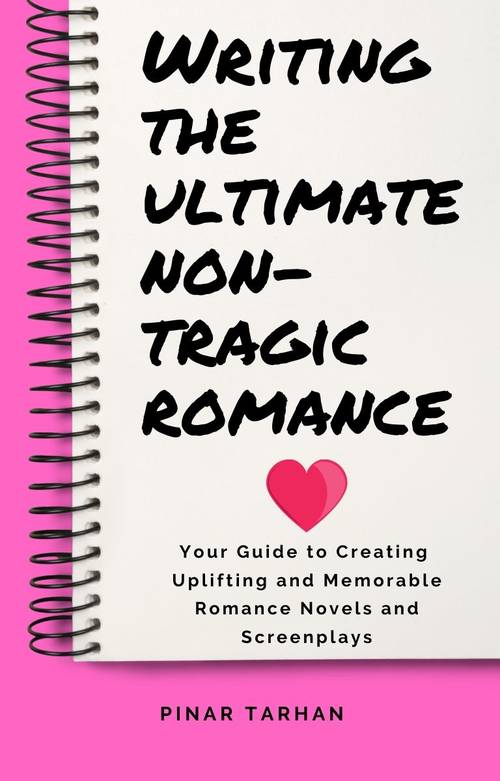
Right now, with this post and my book Writing The Ultimate Non-Tragic Romance, I’m targeting writers and readers who prioritize entertainment and escapism over depressing realism.

I love a happy story, and a happy ending, don’t you?

I love falling in love with the romance in front of me and living vicariously through these characters.

And I love helping my readers do the same.

Make your audience smile. Make them laugh. Make them fall in love, and celebrate the happy ending on the page or on the screen.

Art doesn’t always have to imitate life. And even life itself isn’t always depressing or disappointing.

Sometimes, life is just amazing!

So I took a bunch of my favorite romantic movies, analyzed what worked and why, and I created a guidebook on how to create a happy romantic story people will remember.

I wrote about films instead of books because it will be easier for you to remember the film’s plot points if you have already seen it (and get a refresher through the trailer) or just take 90 minutes to watch it.

And while I recommend you to read as well as watch romances, a lot of the romantic movies I picked are based on books. So you can do both. And you can see that the story has appealed to people on different media.

Can you ever not create a sick character in a happy romance, or at least a happy-ending romance?

You can.

Instead of killing off the character, you can write about the journey of their recovery or a happy-for-now ending. I included such examples in the book.

You can also research and find lesser-known (but still real) diseases and inform people of something they might not have otherwise heard about and do some good public service while you are at it.

At this point, I’m honestly pleasantly surprised when a character is sick, and it is not cancer or Alzheimer’s.

You can also not kill your characters for a nice change, even if it is a drama.

If you want to make your audience cry, you can still do it without killing people. Life is full of ups and downs.

So what does Writing the Ultimate Non-Tragic Romance cover? Including but not limited to:

  • My favorite romantic comedies (well, some of them. It is only one book) and what makes them work/memorable,
  • My favorite romantic dramas with happy endings (ditto) and what makes them work/memorable,
  • Mixing other genres with your romance – genres like mystery, horror, action, adventure, sc-fi, or fantasy,
  • Turkish romantic comedies and dramas (because I’m Turkish, and it is fun to go outside of Hollywood sometimes),
  • Exceptions – when unhappy endings and dead characters work, aka when your audience will forgive you for them,
  • Romance book suggestions (because you still have to read!)
  • Overused tropes,
  • Realism vs. escapism: Just how realistic do you need to be? And if some of the most common complaints about fictional characters are justified,
  • Real life ethics vs. fictional story worlds: What characters can or should get away that we wouldn’t condone in real life,
  • Help with writer’s block and overwhelm,
  • What you should do in addition to writing.

*

The book is 2.99, but you can read it for free if you are a Kindle Unlimited member. I’m currently working on creating different formats.

Want a free chapter? Subscribe below to read Chapter 4: Romantic Dramas with Happy Endings.

Filed Under: Fiction Writing, Recommended Resources, Writing Tagged With: dark tv series, how to write a happy romance, how to write romance, love jacked, romance writing tips, writing romance

How to Give and Receive Negative Feedback As A Writer

Posted on June 29, 2020 Written by Pinar Tarhan

Ah, negative feedback. The bane of every writer’s existence.

You put your heart, soul mind, sweat, and blood to a piece or worse, a manuscript, and someone truly hates it.

As much as writers have learned to receive rejections from editors and publications with grace, it still affects us emotionally and sometimes, even physically.

After getting a really negative feedback from a friend on one of my novels, I became physically sick.

Now, I’m not being dramatic. And there were obviously other factors contributing to it: We are all emotionally fragile since 2020 has screwed us big time. There is a lot of pent-up anxiety in all of us.

How can there not be?

The things we usually do to relieve our stress, depression, anxiety, frustration, or boredom are no longer really available to us.

Walking about just to be walking about is nowhere on my top 10 favorite things-to-do list, but since most things are off the table, what’s got a writer to do?

And even walking is not the same, is it? You have to wear a mask, be careful not to touch your face, avoid anyone who is not wearing a mask, and wonder if or when the world will ever get back to normal.

Add this global, everyday anxiety and uncertainty to the general anxiety and uncertainties of being a writer, and you’ve got an explosive mix.

The negative feedback was just the tipping point.

But I digress.

There is a reason writers rejoice in the rejection stories of famous, accomplished writers. Not because we enjoy other people’s misery, but because it is a relief to know that rejection and awful feedback happen to the best writers out there.

So, how do you give a negative review or feedback?

Look, it is okay to feel or think absolutely anything about a writer’s work.

It is okay to hate everything about it.

It is okay not to finish the book if you can’t stand it, even if you are friends with the author.

But even if you are a fan of tough love or you mean well, you can still do more harm than good.

Here’s how to go about it.

Start with this:

“I didn’t really connect with the story/characters/plot/dialogue (etc.)” Or “This just didn’t appeal to me.”

Now, this gives the writer a good idea about your opinion.

Before giving a long list of what sucks or doesn’t work, give the writer a chance to brace themselves.

If they want to hear more, they will ask.

And if they ask, continue. But let them take the lead.

If they ask you to stop, please stop.

Here’s a thing to remember about your feedback: It is subjective.

Even if you think you are really helping the author in the long run. Even if you think your suggestions will improve them.

Don’t believe me about subjectivity?

Think about all the critically and/or commercially successful books that you hate.

I’ll wait.

There are many, aren’t there?

  • Why did your English teacher force those awful books on you?

Because enough people considered them classics.

  • Why on earth did they write a sequel to that novel?

Because there was demand. Because enough people enjoyed the first.

  • How could that writer with that horrendous story and stupid characters make so much money?

Because the characters are stupid, according to you. The fans didn’t think the story was horrendous, obviously.

So, take a deep breath, and think about how much of your own preferences affect how you see the story.

For instance, if you don’t find the romantic lead attractive due to some qualities, are you sure no one else will?

The writer sure thought he was attractive. The first readers agreed. (We do give the same book to more than one person, you know.)

Think about how much you care about rules and whether this writer just broke too many of your favorites

Some writers and readers think prologues shouldn’t exist. This doesn’t mean no prologue can be good and necessary for the story.

Some people are adamant flashbacks are lazy. Still, some flashbacks are vital to the story.

Some people love first-person POV stories. Others? Not so much.

Only two things are a given:

  • The story should be well-edited for the use of language,
  • The story should make sense in the world that it takes place in, there aren’t that many rules.

Being different or unconventional doesn’t automatically make it bad.

When you say a character doesn’t sound like their gender, are you sure you know how literally everyone speaks? Or are you stereotyping people according to your preferences and experiences?

When you suggest a writer studies craft, you might offend them to their core.

Because while statistically it is possible there are writers who don’t study craft, I can assure you, a lot of us do. Obsessively.

In fact, we often have to remind ourselves to stop reading books about writing and practice actual writing.

And when you are giving feedback, you should keep the writer’s intention in mind.

What do they hope to achieve?

If they want to entertain, and you were bored, that is obviously bad. But it doesn’t mean other people weren’t and won’t be entertained.

But you might be looking for literary skills and ambition in a writer who simply wants to give people a fun, imaginative place to escape.

Intention also matters.

How can writers receive such negative feedback?

They can thank the reader for their time and effort. And they can take what they find useful and discard the rest.

Not all feedback is constructive or helpful.

I wrote about evaluating your own feedback for Bang2write: 5 Ways To Evaluate Your Feedback.

In the article, I mainly talk about reacting to screenplay feedback and evaluations, but the same lessons can be applied to novel feedback.

If you don’t want to read the article now, here’s what to consider in a gist:

  • Does the feedback-giver enjoy the genre and style you write in?
  • Does one person say this? Or do a lot of people agree independently from each other?
  • What does your gut say?

I wrote the book Writing the Ultimate Non-Tragic Romance. In the book, I go over a lot of movies, and I talk about why certain elements didn’t work for me.

And when I do, I emphasize the following:

a) It is my opinion,

b) I decide on the elements according to the factors I established early in the book,

c) And me not liking a movie or something about a movie doesn’t automatically make it bad.

There are movies that have been commercially and critically successful where I just didn’t have a good time during.

This is about me. My preferences and what I look for.

It’s okay to feel shitty after a negative review.

Every time you get scathing or just plain negative feedback, just take a deep breath. I know you will feel awful because your story is your baby.

And somebody either told you they are ugly and/or you shouldn’t have had them. Or you should have just done everything differently.

Don’t attack the feedback giver. Keep your cool – at least on the outside. Thank them.

Then take what’s useful, and ditch the rest.

If necessary, write about it to feel better and help others. (Writing can be meta, I know.)

Before you leave, I want you to consider these:

  • My favorite movie is Braveheart. I just love it. A TA in college referred to it as just “two guys running toward each other.”

Take that in for a sec. This is a movie that made a profit. It is the favorite or one of the favorites of a lot of people. And it has 5 Oscars.

Who is right here?

Both of us!

And that is the point.

He has the right to hate the movie just as I have the right to love it.

So, the next time you get disappointing feedback, do whatever you need to feel better.

Just don’t bite the head off the feedback-giver.

However, it is okay to ask them to politely stop if you can’t handle it, or you just disagree after having thought about it.

And then move on.

Don’t let it stop you from writing. Don’t let it stop you from sharing your work with others.

And if my movie example didn’t cut it:

  • Remember that agents and publishers collectively rejected John Grisham’s first novel, A Time to Kill (aff.link). Then they loved the second one he pitched, The Firm (aff.link).

Does A Time to Kill sound familiar? It is also a movie starring Matthew McConaughey, Sandra Bullock, and Samuel L. Jackson. It is a bestseller whose movie adaptation is rated at 7.5 on IMDB.

Same author. Same story. Different timing.

All we can do is hope we improve with each story, and that the next reader has more fun.

Good luck! You’ve got this!

Oh, and if you think your feedback has more value because you are a writer, you might also want to read How (Not) to Critique Another Writer’s (Fiction) Work As a Writer.


Related Posts Plugin for WordPress, Blogger...

Filed Under: Writing Tagged With: giving negative feedback, giving negative feedback to creative work, how to give negative feedback to a writer, how to react to negative feedback as a writer, how to react to negative reviews

  • « Previous Page
  • 1
  • …
  • 9
  • 10
  • 11
  • 12
  • 13
  • …
  • 50
  • Next Page »

Blogroll

  • My Entertainment Blog

My Other Blogs

  • Beauty, Fitness & Style for the Fun-Loving Gal
  • Dating & Relationships in the 21st Century

Categories

  • Author Interviews
  • Author news and coverage
  • Blogging
  • Book Launches and Excerpts
  • Book News and Author Interviews
  • Book Recommendations
  • Book Reviews
  • Career Management for Writers
  • E-Book Reviews
  • Fiction Writing
  • Fictional Writers: Writer Characters in Movies, TV Series and Books
  • Inspiration and Motivation
  • Marketing
  • Marketing Fiction
  • Movie and TV Series Recommendations
  • Novel Reviews
  • Paying Markets-Web and Print
  • Productivity & Time Management
  • Recommended Resources
  • Reviews for Tools and Devices
  • Romance
  • screenwriting
  • Self-publishing
  • Story Conflicts
  • Website & Blog Reviews
  • Writer Tools
  • Writing
  • Writing Tools
  • Writing Updates

Copyright © 2026 · Focus Pro Theme on Genesis Framework · WordPress · Log in

This website uses cookies to improve your experience. We'll assume you're ok with this, but you can opt-out if you wish.Accept Reject Read More
Privacy & Cookies Policy

Privacy Overview

This website uses cookies to improve your experience while you navigate through the website. Out of these, the cookies that are categorized as necessary are stored on your browser as they are essential for the working of basic functionalities of the website. We also use third-party cookies that help us analyze and understand how you use this website. These cookies will be stored in your browser only with your consent. You also have the option to opt-out of these cookies. But opting out of some of these cookies may affect your browsing experience.
Necessary
Always Enabled
Necessary cookies are absolutely essential for the website to function properly. This category only includes cookies that ensures basic functionalities and security features of the website. These cookies do not store any personal information.
Non-necessary
Any cookies that may not be particularly necessary for the website to function and is used specifically to collect user personal data via analytics, ads, other embedded contents are termed as non-necessary cookies. It is mandatory to procure user consent prior to running these cookies on your website.
SAVE & ACCEPT