Addicted to Writing

Manage Your Freelance Writing Career While Writing What You Love

  • About Pinar Tarhan
  • Blog
  • Books
  • Hire Me: Services
  • Contact Me
  • Portfolio
  • Favorite Resources
  • Newsletter

How to Give and Receive Negative Feedback As A Writer

Posted on June 29, 2020 Written by Pinar Tarhan

Ah, negative feedback. The bane of every writer’s existence.

You put your heart, soul mind, sweat, and blood to a piece or worse, a manuscript, and someone truly hates it.

As much as writers have learned to receive rejections from editors and publications with grace, it still affects us emotionally and sometimes, even physically.

After getting a really negative feedback from a friend on one of my novels, I became physically sick.

Now, I’m not being dramatic. And there were obviously other factors contributing to it: We are all emotionally fragile since 2020 has screwed us big time. There is a lot of pent-up anxiety in all of us.

How can there not be?

The things we usually do to relieve our stress, depression, anxiety, frustration, or boredom are no longer really available to us.

Walking about just to be walking about is nowhere on my top 10 favorite things-to-do list, but since most things are off the table, what’s got a writer to do?

And even walking is not the same, is it? You have to wear a mask, be careful not to touch your face, avoid anyone who is not wearing a mask, and wonder if or when the world will ever get back to normal.

Add this global, everyday anxiety and uncertainty to the general anxiety and uncertainties of being a writer, and you’ve got an explosive mix.

The negative feedback was just the tipping point.

But I digress.

There is a reason writers rejoice in the rejection stories of famous, accomplished writers. Not because we enjoy other people’s misery, but because it is a relief to know that rejection and awful feedback happen to the best writers out there.

So, how do you give a negative review or feedback?

Look, it is okay to feel or think absolutely anything about a writer’s work.

It is okay to hate everything about it.

It is okay not to finish the book if you can’t stand it, even if you are friends with the author.

But even if you are a fan of tough love or you mean well, you can still do more harm than good.

Here’s how to go about it.

Start with this:

“I didn’t really connect with the story/characters/plot/dialogue (etc.)” Or “This just didn’t appeal to me.”

Now, this gives the writer a good idea about your opinion.

Before giving a long list of what sucks or doesn’t work, give the writer a chance to brace themselves.

If they want to hear more, they will ask.

And if they ask, continue. But let them take the lead.

If they ask you to stop, please stop.

Here’s a thing to remember about your feedback: It is subjective.

Even if you think you are really helping the author in the long run. Even if you think your suggestions will improve them.

Don’t believe me about subjectivity?

Think about all the critically and/or commercially successful books that you hate.

I’ll wait.

There are many, aren’t there?

  • Why did your English teacher force those awful books on you?

Because enough people considered them classics.

  • Why on earth did they write a sequel to that novel?

Because there was demand. Because enough people enjoyed the first.

  • How could that writer with that horrendous story and stupid characters make so much money?

Because the characters are stupid, according to you. The fans didn’t think the story was horrendous, obviously.

So, take a deep breath, and think about how much of your own preferences affect how you see the story.

For instance, if you don’t find the romantic lead attractive due to some qualities, are you sure no one else will?

The writer sure thought he was attractive. The first readers agreed. (We do give the same book to more than one person, you know.)

Think about how much you care about rules and whether this writer just broke too many of your favorites

Some writers and readers think prologues shouldn’t exist. This doesn’t mean no prologue can be good and necessary for the story.

Some people are adamant flashbacks are lazy. Still, some flashbacks are vital to the story.

Some people love first-person POV stories. Others? Not so much.

Only two things are a given:

  • The story should be well-edited for the use of language,
  • The story should make sense in the world that it takes place in, there aren’t that many rules.

Being different or unconventional doesn’t automatically make it bad.

When you say a character doesn’t sound like their gender, are you sure you know how literally everyone speaks? Or are you stereotyping people according to your preferences and experiences?

When you suggest a writer studies craft, you might offend them to their core.

Because while statistically it is possible there are writers who don’t study craft, I can assure you, a lot of us do. Obsessively.

In fact, we often have to remind ourselves to stop reading books about writing and practice actual writing.

And when you are giving feedback, you should keep the writer’s intention in mind.

What do they hope to achieve?

If they want to entertain, and you were bored, that is obviously bad. But it doesn’t mean other people weren’t and won’t be entertained.

But you might be looking for literary skills and ambition in a writer who simply wants to give people a fun, imaginative place to escape.

Intention also matters.

How can writers receive such negative feedback?

They can thank the reader for their time and effort. And they can take what they find useful and discard the rest.

Not all feedback is constructive or helpful.

I wrote about evaluating your own feedback for Bang2write: 5 Ways To Evaluate Your Feedback.

In the article, I mainly talk about reacting to screenplay feedback and evaluations, but the same lessons can be applied to novel feedback.

If you don’t want to read the article now, here’s what to consider in a gist:

  • Does the feedback-giver enjoy the genre and style you write in?
  • Does one person say this? Or do a lot of people agree independently from each other?
  • What does your gut say?

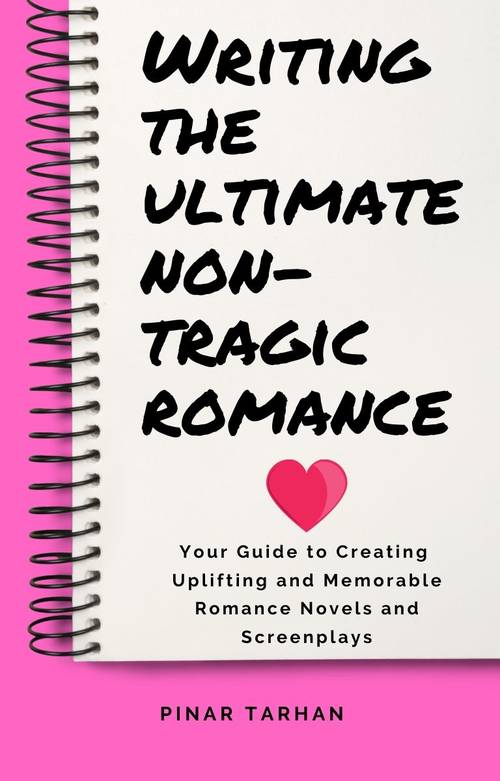
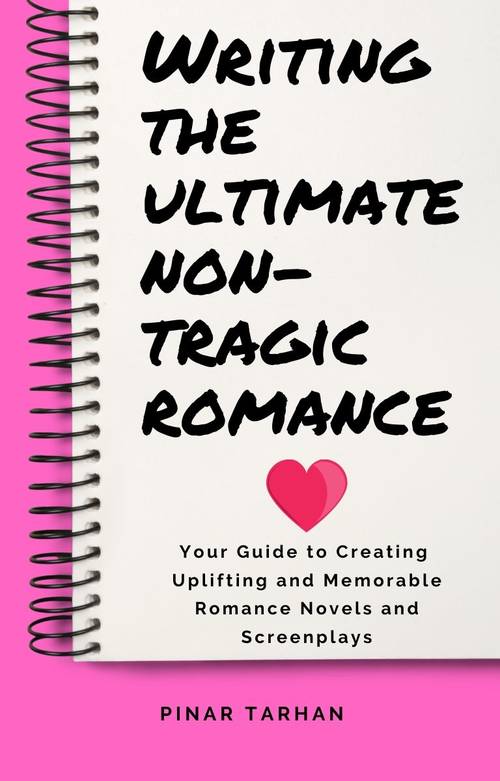
I wrote the book Writing the Ultimate Non-Tragic Romance. In the book, I go over a lot of movies, and I talk about why certain elements didn’t work for me.

And when I do, I emphasize the following:

a) It is my opinion,

b) I decide on the elements according to the factors I established early in the book,

c) And me not liking a movie or something about a movie doesn’t automatically make it bad.

There are movies that have been commercially and critically successful where I just didn’t have a good time during.

This is about me. My preferences and what I look for.

It’s okay to feel shitty after a negative review.

Every time you get scathing or just plain negative feedback, just take a deep breath. I know you will feel awful because your story is your baby.

And somebody either told you they are ugly and/or you shouldn’t have had them. Or you should have just done everything differently.

Don’t attack the feedback giver. Keep your cool – at least on the outside. Thank them.

Then take what’s useful, and ditch the rest.

If necessary, write about it to feel better and help others. (Writing can be meta, I know.)

Before you leave, I want you to consider these:

  • My favorite movie is Braveheart. I just love it. A TA in college referred to it as just “two guys running toward each other.”

Take that in for a sec. This is a movie that made a profit. It is the favorite or one of the favorites of a lot of people. And it has 5 Oscars.

Who is right here?

Both of us!

And that is the point.

He has the right to hate the movie just as I have the right to love it.

So, the next time you get disappointing feedback, do whatever you need to feel better.

Just don’t bite the head off the feedback-giver.

However, it is okay to ask them to politely stop if you can’t handle it, or you just disagree after having thought about it.

And then move on.

Don’t let it stop you from writing. Don’t let it stop you from sharing your work with others.

And if my movie example didn’t cut it:

  • Remember that agents and publishers collectively rejected John Grisham’s first novel, A Time to Kill (aff.link). Then they loved the second one he pitched, The Firm (aff.link).

Does A Time to Kill sound familiar? It is also a movie starring Matthew McConaughey, Sandra Bullock, and Samuel L. Jackson. It is a bestseller whose movie adaptation is rated at 7.5 on IMDB.

Same author. Same story. Different timing.

All we can do is hope we improve with each story, and that the next reader has more fun.

Good luck! You’ve got this!

Oh, and if you think your feedback has more value because you are a writer, you might also want to read How (Not) to Critique Another Writer’s (Fiction) Work As a Writer.


Filed Under: Writing Tagged With: giving negative feedback, giving negative feedback to creative work, how to give negative feedback to a writer, how to react to negative feedback as a writer, how to react to negative reviews

Book Launch: How to Write the Ultimate Non-Tragic Romance

Posted on June 18, 2020 Written by Pinar Tarhan

I wrote another book!

Currently available in only e-book form, you can have my latest book How to Write the Ultimate Non-Tragic Romance for free. It’ll be free on Amazon Kindle from tomorrow till 24th (it’s over on the 24th!)

You can also reach out to me for the next five days and get the pdf for free as well.

What’s the book about?

The book is all about creating an amazing romance with a happy ending.

So basically, say goodbye to tragic diseases and other situations that end in death.

I’ve made a couple of exceptions for when even the happy-ending, happy-story-loving folk like me will forgive you for an “unhappy” ending and dead characters.

The book talks about many romantic comedy and romantic drama movies, as well as including other genres in your romance.

The reason I go over movies in the book is simple: You’ve either watched them or heard about them. Several are already on Netflix and other streaming services of your choice. Some are available in full on YouTube.

And even if you saw them a while ago, you can hop on to the movie’s IMDB page for a refresher or YouTube for the trailer.

For romance writers and romance writing enthusiasts, it’ll be much faster than reading a book from scratch and then analyzing the elements.

That said, if you want to write great romance novels, you need to read romance novels.

I’ve included a short list of some of my favorites in the book. I’ve also mentioned which of the movies are based on novels, so you know the book came first. Even if you watched the movie, it’d be a smart move to read the book as well.

And if you need help with finding an idea, deciding on your publishing path, getting started on an author platform and such, you can read my book “How to Write an Amazing Romance Novel.”

Here’s what Writing The Ultimate Non-Tragic Romance covers chapter by chapter:

Why You Might Want to Write a Non-Tragic Love Story

My Favorite Romcoms

Writing a Romcom or a Romantic Drama Where Romance Isn’t the Priority

Romantic Dramas with Happy Endings

Going Outside of Hollywood: Turkish Romcoms & Romantic Dramas

Exceptions: When Your Audience Will Forgive You for Killing Your Characters (even if they ultimately prefer happier stories)

Writing a Happy-for-Now Ending

When to Give Audiences What to Expect and When to Surprise Them

How to Start When You Feel Blocked, Overwhelmed or Clueless

The Most Important Thing You Should Do (Other Than Writing)

Overused Tropes

Realism vs. Escapism

A Word on Real Life Ethics/Values vs. Fictional Storylines

Screenwriters I Recommend Becoming Familiar With

Romcom Novel & Author Suggestions

A Note on Diverse Writers and Characters

Key Takeaways

*

While my book on writing an amazing romance novel covers all romance writing efforts, this book focuses on creating a healthy, happy romance with a satisfactory, pleasant ending.

More on the Author

When you come across a reference book, it is only natural to wonder who the author is and why she knows what she is talking about.

  • I’m a romantic. I watch romantic comedies and dramas at such a speed that Hollywood can hardly keep up with me. And I frequently go outside of Hollywood to find more.
  • I’m an experienced writer. I’ve been creating fictional stories for a long time. My screenplays have placed in contests, and I specialize in romance.
  • I’m a romance novelist. My first novel Making A Difference (M.A.D.), a contemporary romantic comedy set in New York, is available on Amazon. I’m currently working on my second novel, a romcom drama set in California. I also have other romantic novels and screenplays in different stages of progress.

*

Want the pdf for Writing the Ultimate Non-Tragic Romance for free? You can reach out to me via the comments on this post or my Twitter to ask for the pdf until the 24th of June.

Happy reading!

Filed Under: Fiction Writing, Writing Tagged With: how to write a happy romance, how to write a romance novel, how to write romance

Writing Fiction During A Pandemic: Should Your Story’s World Include The Current Reality?

Posted on March 26, 2020 Written by Pinar Tarhan

Writing during a pandemic
This awesome image is by Stefan Keller on Pixabay.

I have a short and relevant one for you today.

I saw (virtually, of course) a lot of writers discussing whether their current works in progress set in the present should include the realities of today.

And everyone will have their answer according to their taste, current mental state, themes in the story, storylines as well as what they want to accomplish with their work.

For me, the answer is a big whopping no. Not only am not including anything c-word related in my current novel, but I also don’t plan to change what I write afterward. Unless it is a dystopian feature or sci-fi where the story would benefit from my real-world experience.

Here’s why:

I write to entertain. I write to escape. I write to make people laugh, to put a smile on their faces, give them hope and make sure they have faith in themselves, their lives, and the world.

It doesn’t mean my stories don’t or won’t include harrowing conflicts.

In fact, the current novel I’m editing has plenty of real-world issues. It’s a romantic comedy drama featuring ensemble characters. Among other things, it has:

  • Loss of a loved one and grief
  • A severe anxiety disorder
  • Drug use
  • Prejudice
  • Feeling lost and hopeless in one’s career
  • Professional screw-ups
  • Blaming others for your mistakes
  • Failing romantic relationships.
  • Dysfunctional family relationships

Of course, because it is a romantic comedy, it also has:

  • Happy endings
  • Getting through loss and grief
  • Recovery
  • Making positive changes in one’s life
  • Realistic self-evaluation and changing for the better
  • Laughter, fun, partying
  • New and strong friendships
  • Reconnecting with old friends
  • Enjoying life to the fullest
  • Exciting romances

Now, I’d say it is fairly well-balanced. But despite being set in the real world, albeit a pre-pandemic one, notice what it doesn’t have:

  • Cancer
  • Alzheimer’s
  • Abusive partners
  • Sexism
  • Racism
  • Serial killers
  • Heart disease
  • Poverty
  • …..


The list goes and on. My point? No one novel is going to reflect the world as is – whether you are talking about good or bad. It’s impossible.

It would be a depressing, mundane, and mostly boring  20-part series where each novel is 7000 pages long.

*

That said, I’d like to underline once again that there is no one correct, absolute, universally valid answer to this question.

You have to make the right call for yourself, readers, and your story.

How am I going to write an R-rated romantic comedy with sex scenes featuring smart characters if my story is set during a pandemic? And as for writing about a post-pandemic world, we haven’t seen the end of this yet.

It would also beat my purpose of escaping and helping the readers escape with me.

While a lot of people are binging movies like Contagion, Outbreak, 28 Days Later, and Train to Busan, I’m avoiding those kinds of movies like the plague – despite having enjoyed Contagion and Outbreak being one of my 90s’ favorites. These are literally the last films I want to see right now.

The other day, I went in the completely opposite direction and watched A Thousand Words starring Eddie Murphy.

I laughed my ass off!

While some of its messages regarding family and relationships are on the nose, it is hilarious enough to make up for it.

And while the character shares none of our problems like not being able to touch people or going outside, I’d argue he has a worse problem:

He has 1000 words left to say or write. Once he says the 1000th, he will die!

Imagine that! Can you think of a worse fate for a writer? Especially if it is a writer who also loves to talk, like myself?

Since that movie is set in the literary world due to the protagonist’s profession, expect a review from me for this blog’s Writing Characters in Movies section soon.

Until then, read and watch what makes you happy.

And if watching outbreak movies make you feel better, keep at it!

What about you? How’s the current situation affected your fiction?


Filed Under: Fiction Writing Tagged With: fiction writing, fiction writing tips, writing fiction, writing fiction during a pandemic

Writer Characters in Movies: The Decoy Bride and Writing About Places You’ve Never Been

Posted on March 8, 2020 Written by Pinar Tarhan

The Decoy Bride
The Decoy Bride. As Chandler would say “Oh my God! Two beautiful women love me, and my diamond shoes are too tight!” 🙂

I’ve recently watched The Decoy Bride (aff. link), a gem of a romcom from 2011. Maybe the Scottish countryside got to me. Maybe it was David Tennant and Kelly MacDonald’s collective charms, but I enjoyed every single moment of this film.

And since the male protagonist of the film, James, is an author, it fits my writing characters in film and TV series perfectly. Katie is also a writer in her own right. And as a bonus, the film is a good romcom example for writers and lovers of the genre, like myself.

So without further ado:

The Decoy Bride: Plot Summary (with Some Spoilers)

James (David Tennant) can’t wait to marry his beautiful and extremely famous fiancée Lara (Alice Eve). Unfortunately, the paparazzi (especially relentless Marco) are hot on their tail, and Lara will be damned if she lets her important day be photographed. So, she picks the perfect spot: remote and scarcely populated Scottish island Hegg, described to great detail in James’s book – Lara’s favorite. Never mind the fact that this is the first time James ever set foot on the place. (Complements of Google!)

But when Lara sees the diligent paparazzo Marco even there, she disappears on her wedding day. Unbeknownst to James, her agent Steve (Michael Urie) and his assistant (Sally Philips) enlist the help of unlucky-in-love Katie (Kelly Macdonald) to play decoy. James freaks out when he finds out the ruse and that he and Katie have accidentally actually gotten married.

Moreover, Steve locks them in the castle where the wedding was to take place, but soon restless James, and sick-of-his-attitude Katie find a way to escape. Once they both drop the attitude, though, they realize they have more in common then they initially thought. And their chemistry is off the charts. Can James find Lara before he falls in head over heels with Katie?

The Decoy Bride: Writing Characters (with Spoilers)

This film is a double treat in terms of writing characters as Katie worked as the writer of a pants catalog in the city and writes guide books of the island. There’s quite a bit of talk about how residents of the place view James’ book (hint: 4 out of 10 stars!) and one resident even uses it as toilet paper! Paparazzo Marco even reads it as he waits for Lara to appear, and is baffled when the couple of the novel don’t seem to be kissing any time soon. And Katie comments how the romance seems unbelievable.

When Katie opens up about how her fiance cheated on her, she says she was apparently one song and not an album. As James finds out where Lara is and they are about to part, Katie says. “One chapter. Not a book, right?” sadly. James kisses her on the forehead before leaving.

We don’t see exactly what happens after Lara and James meet the priest. We are shortly led to believe it might not be the happy ending we hoped. Luckily, it doesn’t last, though they do keep us wondering for a bit more.

And then we learn that James has written a second book (much more appreciated by the Hegg folk) and dedicated to his wife. Katie thinks it is dedicated to Lara and doesn’t even read the book. Apparently, this book is much better and only has one chapter.

As Katie is leaving the island by ferry, James arrives with a backpack and clears up the misunderstanding. His wife means Katie. And the dedication reads, sometimes a chapter can be a book. (Aww! I’m melting.) Kiss.

The End.

A note on writing about places you’ve never been:

Frankly, I am a fan of this concept. Write what you know is a misused, misinterpreted and often misguided writing advice. If we could only write about what we knew, we’d seriously worry about Stephen King’s mental state, wouldn’t we? Or thriller writers who are fascinated by serial killers?

Outlander (aff.link) is awesome, Diana Gabaldon wrote the first book without ever being there. I’m also pretty sure she never time-traveled.

You can write about anything and anywhere as long as you do your research. Maybe James could have done a better job by seeking people from the island and interviewing them, but in his defense, the island folk didn’t seem that easily accessible online to me. Maybe Katie would help if he could have found her?

So the lesson here is if you can imagine it and research it, you can write it.

Important note: Please don’t write an entire book with one chapter. 🙂 Leave it as what it is: a great line in a fictional story. We like chapters. Chapters are good. They make reading easier and more fun. 😉

*

Written by Neil Jaworski and Sally Phillips. Directed by Sheree Folkson.

Related Posts Plugin for WordPress, Blogger...

Filed Under: Writing Tagged With: David tenant, films with writer characters, Kelly macdonald, sally phillips, the decoy bride, writer characters, writing characters

  • « Previous Page
  • 1
  • …
  • 10
  • 11
  • 12
  • 13
  • 14
  • …
  • 50
  • Next Page »

Blogroll

  • My Entertainment Blog

My Other Blogs

  • Beauty, Fitness & Style for the Fun-Loving Gal
  • Dating & Relationships in the 21st Century

Categories

  • Author Interviews
  • Author news and coverage
  • Blogging
  • Book Launches and Excerpts
  • Book News and Author Interviews
  • Book Recommendations
  • Book Reviews
  • Career Management for Writers
  • E-Book Reviews
  • Fiction Writing
  • Fictional Writers: Writer Characters in Movies, TV Series and Books
  • Inspiration and Motivation
  • Marketing
  • Marketing Fiction
  • Movie and TV Series Recommendations
  • Novel Reviews
  • Paying Markets-Web and Print
  • Productivity & Time Management
  • Recommended Resources
  • Reviews for Tools and Devices
  • Romance
  • screenwriting
  • Self-publishing
  • Story Conflicts
  • Website & Blog Reviews
  • Writer Tools
  • Writing
  • Writing Tools
  • Writing Updates

Copyright © 2026 · Focus Pro Theme on Genesis Framework · WordPress · Log in

This website uses cookies to improve your experience. We'll assume you're ok with this, but you can opt-out if you wish.Accept Reject Read More
Privacy & Cookies Policy

Privacy Overview

This website uses cookies to improve your experience while you navigate through the website. Out of these, the cookies that are categorized as necessary are stored on your browser as they are essential for the working of basic functionalities of the website. We also use third-party cookies that help us analyze and understand how you use this website. These cookies will be stored in your browser only with your consent. You also have the option to opt-out of these cookies. But opting out of some of these cookies may affect your browsing experience.
Necessary
Always Enabled
Necessary cookies are absolutely essential for the website to function properly. This category only includes cookies that ensures basic functionalities and security features of the website. These cookies do not store any personal information.
Non-necessary
Any cookies that may not be particularly necessary for the website to function and is used specifically to collect user personal data via analytics, ads, other embedded contents are termed as non-necessary cookies. It is mandatory to procure user consent prior to running these cookies on your website.
SAVE & ACCEPT