I love a complicated love story. I also like watching stories where the problems aren’t what we have heard about a thousand times before. (If you tell it well, and with actors I love, I have a special place in my heart for stories we have heard before. Just avoid my pet peeves, and I’ll love your efforts for it.)
Yes, it’s difficult writing something new, or newish. Notice I didn’t mention the word original. While I think we definitely have more than 12 or so variations of stories in total, I also believe it’s like mission impossible to create something original. You can probably train to be an Agent Ethan Hunt in the real world and survive before creating something unique.
Back to problematic couples. I read somewhere that if you are writing a love story where the guy is firefighter, the girl better be an arsonist. That’s a bit extreme, and it’d probably be better suited for an R-rated 90s thriller, but we don’t have to take it literally.
Some of my favorite TV and movie couples do have backgrounds or presents that make them star-crossed (or arsonist vs. firefighter):
- Vampire and Vampire Slayer (Buffy The Vampire Slayer)
- Werewolf and Vampire (The Vampire Diaries)
- Seemingly Crazy Cabbie – Lawyer (Conspiracy Theory)
- Married Princess vs. Her Husband’s Best Friend/Royalty Doctor (A Royal Affair)
I also love couples who are actually perfect for one another but can’t notice this for some reason, but that’s another post.
And sometimes, one plotline that would seem cheesy, overdramatic or plain unbelivable becomes one of the most touching and interesting romantic stories told because the drama and romance are balanced with sci-fi elements, and it’s more about surviving guilt and tragedy than romantic bliss.
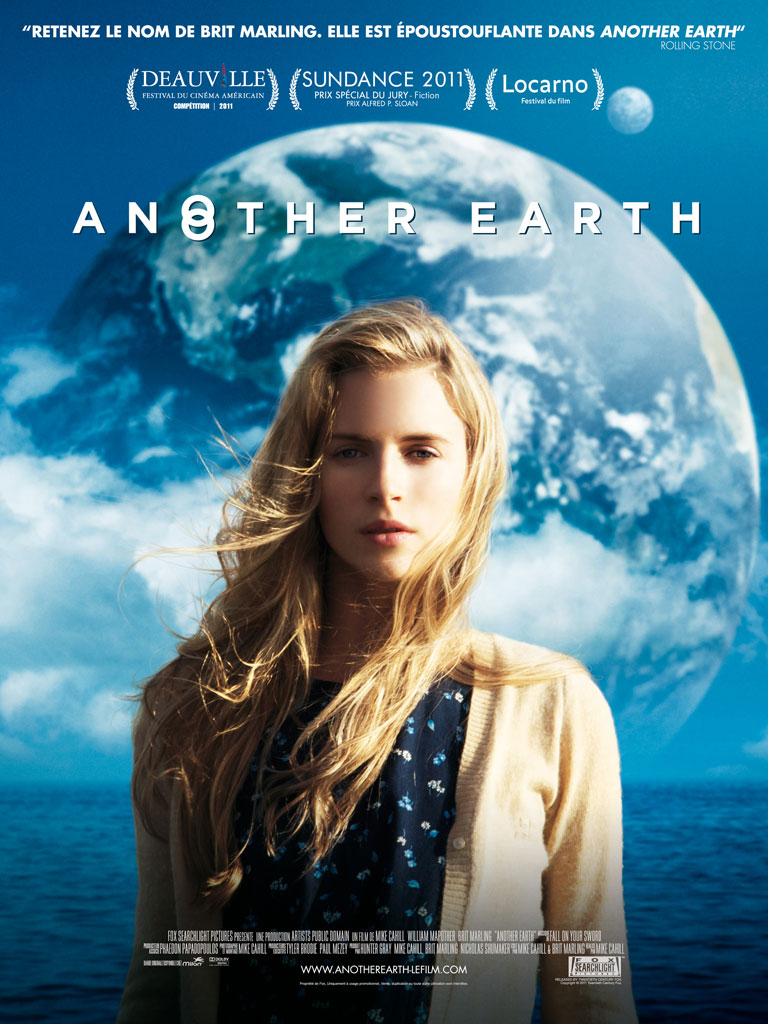
One such story is the 2011’s Another Earth, written by Brit Marling and Mike Cahill. Directed by Mike Cahill, Another Earth gives us a pretty unlikely scenario both in its romantic and sci-fi plots:
Just as another Earth appears, 17-year-old Rhoda (Brit Marling) celebrates her acceptance at MIT. On her way back home, drunk and fascinated by this second earth, she loses control of her vehicle and crashes into the car of John Burroughs (William Mapother), killing his pregnant wife and 5-year-old son, and putting him in a coma.
She’s out after four years in prison. She’s still fascinated by this second earth, but this time for different reasons. Contact is made, and it’s discovered that the inhabitants are us – our parallel selves. Space travel is planned, and Rhonda tries her luck by submitting an essay.
As expected, she finds it hard to readjust to the world and deal with the guilt. She takes a cleaning job to be away from people. She also researches the accident, and finds out John, who used to be a respected composer and professor, is awake.
She goes to his house to apologize but ends up telling him that the company she works for offers free cleaning trials.
Rhoda keeps coming, and they slowly connect. They become pretty much the only person the other feels good around again.
As the second earth becomes closer and competition results approach, we are left one of the most interesting humane conflicts.
So do you tell the guy you’ve just started a relationship with that you’re the one who killed his family? Do you just leave him in this world to discover your other self in another earth?
*
There’re many questions the movie brings to mind, and we will get to that in a bit.
But let’s talk about how sci-fi takes the romance to another level, and the romance saves you from delving too much into the sci-fi ,which as a fan of the movie, I loved.
When I wrote about the movie on Facebook, one of my friends suggested it sounded like a lifetime movie – if not for the sci-fi. And on the surface, it might sound like that. But it is not. And to give more details, I will give spoilers. You’ve been warned. (It’s not to late to save the post, watch the movie and come back.)
They don’t move on with each other, not entirely. He still has a big whole left in his heart. Granted, he could move on a little with her, had she not told him the truth. However, she can’t let him ask her to stay without telling him what she has done.
And the end couldn’t have felt more right or bittersweet: she gives him her ticket after discovering that the two earths have a four-year time difference. He can go instead of her, and with luck, his family will still be alive.
The last scene is even better. She’s visited by her Earth 2 self. She seems more put together. Better dressed. Like how she would have looked if she didn’t have an accident and went to college instead of prison.
Of course how she ended up on Earth 1 is up to each viewer’s interpretation.
I’d like to think she got some closure by knowing she didn’t crash, or at least didn’t kill people.
I’d like to think John got his closure by seeing his family is fine and all right.
The cynics believe John might challenge and try to replace the second John.
I’d like to think they will somehow have the technology and he’ll come back. Otherwise it’ll be a weird two of the different-but-the-same dad situation.
What Another Earth Makes Us Ask
Is it enough or not that she got only 4 years?
It was an accident, but she was drunk. She was distracted. Frankly, as a judge, I would have been more furious that she was smart enough to be accepted by MIT and stupid enough not to have called a cab/parent. (Yes, there wouldn’t be a movie otherwise, but the amount of sentencing is fair debating ground.)
And I don’t think she thought it was enough either. She was understandably a mess, deliberately injured herself, and she wanted an alienated presence.
She kind of lived like she was still in prison most of the time.
Should she have gone to apologize?
Would you want an apology in a situation like that? Would that help anyone? Reliving the unthinkable? Would it help her move on or make her feel even worse after making him relive things?
Hell, he could have killed her right then, and she’d probably not fought.
Should she have told him who she was?
Which is more selfless- letting him live a happier lie or make him not only face the tragedy again with vengeance?
How would you feel if you’d started a relationship with the person who accidentally killed your family?
As opinionated as I’m about most things, part of me wanted him not to know. He was just starting to live a little again.
Of course the right thing would be to either tell him the truth right away or not contact him at all. Because let’s face it, if he wanted a confrontation, he’d have made it happen. (We learn in the movie how he prevented it, and how he didn’t know her identity.)
But probably more prominently:
Would you like to meet the other you? What would you say?
I’m still thinking. I’d love to hear your thoughts in the comments.
*
So there you go. A very humane and engaging story that mixes romance and sci-fi. I recommend it, though a bit of suspension of disbelief is required as with most movies.
And if you have other favorite unlikely onscreen couples, please share in the comments.